



MAP3K7/TAK1
Mitogen-activated protein kinase kinase kinase 7 (MAP3K7, also known as TAK1) is a serine/threonine kinase that functions as a central signaling hub integrating inputs from TGF-β, IL-1, and Wnt pathways[1][2]. TAK1 regulates key downstream signaling cascades including NF-κB, JNK, and p38 MAPK, thereby controlling cellular processes such as survival, proliferation, and differentiation[1][3][4][2]. Mechanistically, TAK1 activation requires interaction with binding partners TAB1 and TAB2/TAB3, and is modulated by phosphorylation and ubiquitination at key residues such as Lys562, which enables differential MAPK and IKK activation. Compared with related MAP3K isoforms, TAK1 exhibits tissue- and cell type-specific functions, including negative regulation of NF-κB and p38 MAPK in neutrophils, while promoting hematopoietic stem cell maintenance through TNF-dependent and independent mechanisms[3][5][6]. In developmental contexts, TAK1 enhances cardiogenic endoderm differentiation from mouse embryonic stem cells and regulates adipocyte commitment via BMP-PPARγ signaling[7][8]. Pathologically, MAP3K7 mutations or deletions are implicated in pediatric T-ALL, frontometaphyseal dysplasia, cardiospondylocarpofacial syndrome, and liver carcinogenesis, demonstrating its relevance in both hematologic and solid tissue disease models[9][10][11]. Pharmacologically, TAK1 can be selectively inhibited by type II small molecule inhibitors, such as NG25, which stabilize the DFG-out kinase conformation, enabling experimental modulation of its signaling for therapeutic applications[12][13].
References:
- [1]. Santoro R, et al. TAK-ing aim at chemoresistance: The emerging role of MAP3K7 as a target for cancer therapy. Drug Resist Updat. 2017 Nov;33-35:36-42. [Content Brief]
- [2]. Roh YS, et al. TAK1 regulates hepatic cell survival and carcinogenesis. J Gastroenterol. 2014 Feb;49(2):185-94. [Content Brief]
- [3]. Takaesu G, et al. TAK1 (MAP3K7) signaling regulates hematopoietic stem cells through TNF-dependent and -independent mechanisms. PLoS One. 2012;7(11):e51073. [Content Brief]
- [4]. Richter E, et al. Induction of Macrophage Function in Human THP-1 Cells Is Associated with Rewiring of MAPK Signaling and Activation of MAP3K7 (TAK1) Protein Kinase. Front Cell Dev Biol. 2016 Mar 30;4:21. [Content Brief]
- [5]. Ajibade AA, et al. TAK1 negatively regulates NF-κB and p38 MAP kinase activation in Gr-1+CD11b+ neutrophils. Immunity. 2012 Jan 27;36(1):43-54. [Content Brief]
- [6]. Suddason T, et al. Genetic insights into Map3k-dependent proliferative expansion of T cells. Cell Cycle. 2016 Aug 2;15(15):1956-60. [Content Brief]
- [7]. Hunter A, et al. TAK1/Map3k7 enhances differentiation of cardiogenic endoderm from mouse embryonic stem cells. J Mol Cell Cardiol. 2019 Dec;137:132-142. [Content Brief]
- [8]. Zhang Y, et al. BMP-TAK1 (MAP3K7) Induces Adipocyte Differentiation Through PPARγ Signaling. J Cell Biochem. 2017 Jan;118(1):204-210. [Content Brief]
- [9]. Wade EM, et al. Mutations in MAP3K7 that Alter the Activity of the TAK1 Signaling Complex Cause Frontometaphyseal Dysplasia. Am J Hum Genet. 2016 Aug 4;99(2):392-406. [Content Brief]
- [10]. Malato Y, et al. The MAP3K TAK1: a chock block to liver cancer formation. Hepatology. 2010 Oct;52(4):1506-9. [Content Brief]
- [11]. Micale L, et al. Insights into the molecular pathogenesis of cardiospondylocarpofacial syndrome: MAP3K7 c.737-7A > G variant alters the TGFβ-mediated α-SMA cytoskeleton assembly and autophagy. Biochim Biophys Acta Mol Basis Dis. 2020 Jun 1;1866(6):165742. [Content Brief]
- [12]. Tan L, et al. Discovery of type II inhibitors of TGFβ-activated kinase 1 (TAK1) and mitogen-activated protein kinase kinase kinase kinase 2 (MAP4K2). J Med Chem. 2015 Jan 8;58(1):183-96. [Content Brief]
- [13]. Nasehi F, et al. Analysis of potential TAK1/Map3k7 phosphorylation targets in hypertrophy and cachexia models of skeletal muscle. Biol Open. 2024 Sep 15;13(9):bio060487. [Content Brief]
All Product Categories
-
MAP3K7/TAK1 Related Products (11)
Related Products (11)

-
Antibodies (3)
- 1
-
Takinib
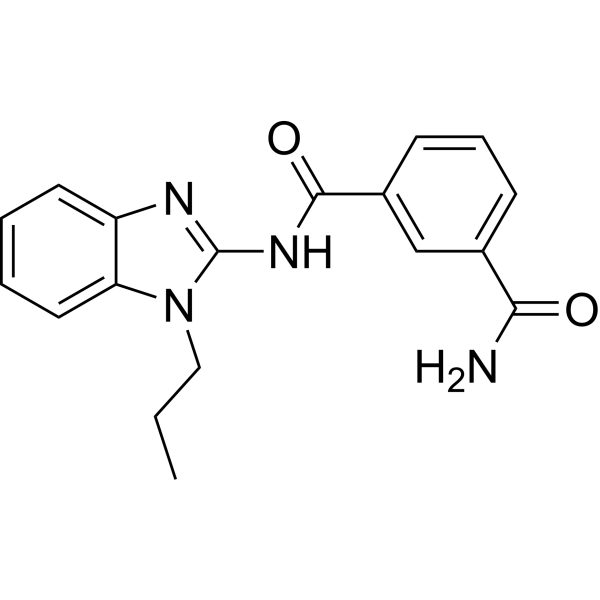 0 ImagesSynonyms: EDHS-206Takinib (EDHS-206) is an orally active and selective TAK1 inhibitor (IC50=9.5 nM), more than 1.5 log more potent than the second and third ranked targets, IRAK4 (120 nM) and IRAK1 (390 nM), respectively. Takinib is an inhibitor of autophosphorylated TAK1 that non-competitively binds within the ATP binding pocket. Takinib induces apoptosis following TNFα stimulation in cell models of rheumatoid arthritis and metastatic breast cancer. Takinib is also a P. falciparum protein kinase 9 (PfPK9) inhibitor (KD(app) of 0.46 μM).
-
NG25
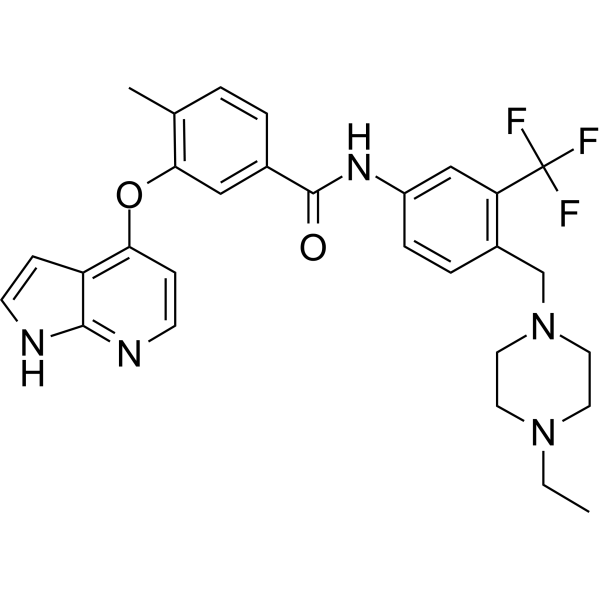 0 ImagesNG25 is a potent dual TAK1 and MAP4K2 inhibitor, with IC50s of 149 nM and 21.7 nM, respectively.
-
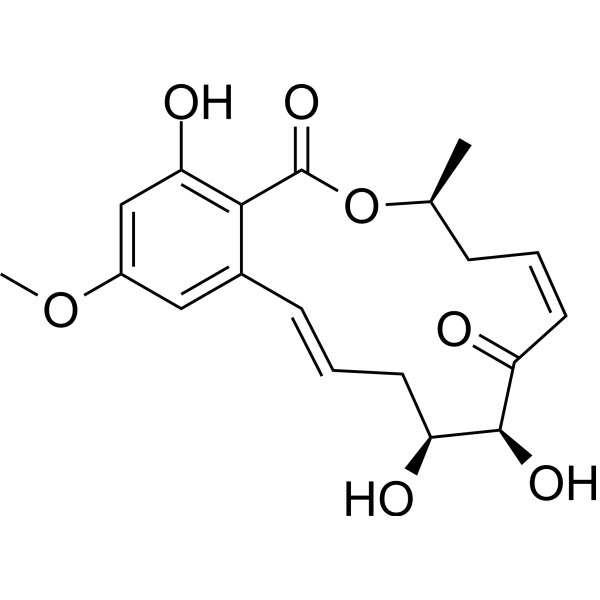
TAK1/MAP4K2 inhibitor 1
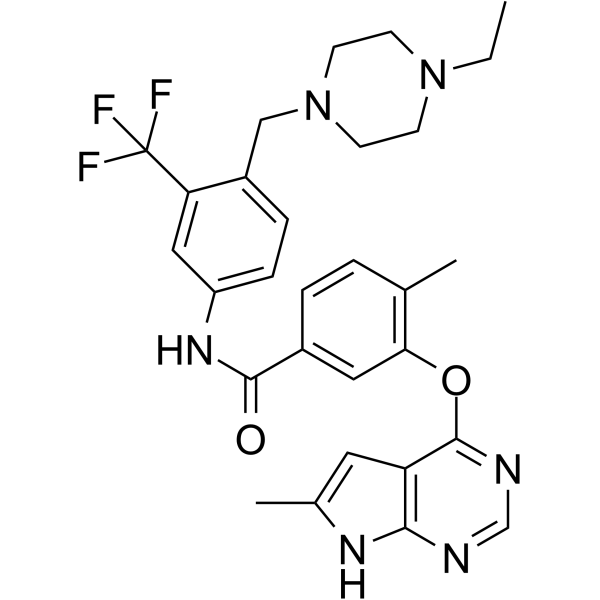 0 ImagesTAK1/MAP4K2 inhibitor 1 is a potent dual TGFβ-activated kinase 1 (TAK1) and mitogen-activated protein kinase kinase kinase kinase 2 (MAP4K2) inhibitor, with IC50s of 41.1 nM and 18.2 nM, respectively.
-
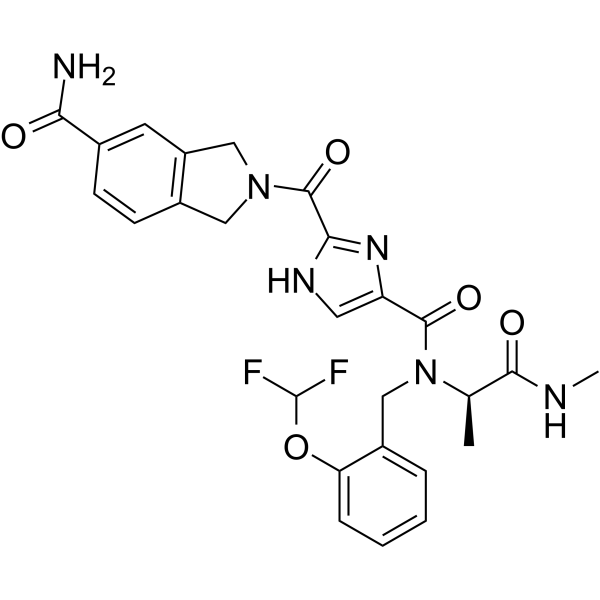
TAK-756
 0 ImagesCat. No.: HY-169949CAS No.: 3097983-41-7TAK-756 is a selective transforming growth factor β-activated kinase 1 (TAK1) inhibitor with a target pIC50 of 8.6. TAK-756 can inhibit TAK1 autophosphorylation and downstream NF-κB phosphorylation, suppress the production of inflammatory and catabolic factors such as MMP-3 and IL-6. TAK-756 exhibits anti-inflammatory effects in a rat joint inflammation model. TAK-756 can be used for the research of inflammatory joint disease, osteoarthritis.
-
CBP-501
 0 ImagesCat. No.: HY-16129CAS No.: 565434-85-7CBP-501, a cell-permeable calmodulin-binding peptide and a G2-abrogating drug candidate, inhibits the activity of multiple Ser216-specific kinases, such as MAPKAP-K2, C-Tak1, CHK1 and CHK2, with IC50 values of 0.9 μM, 1.4 μM 3.4 μM and 6.5 μM, respectively. CBP-501 is used for various types of cancer.
-
CBP-501 acetate
 0 ImagesCat. No.: HY-16129APurity: 99.75%CBP-501 acetate, a cell-permeable calmodulin-binding peptide and a G2-abrogating drug candidate, inhibits the activity of multiple Ser216-specific kinases, such as MAPKAP-K2, C-Tak1, CHK1 and CHK2, with IC50 values of 0.9 μM, 1.4 μM 3.4 μM and 6.5 μM, respectively. CBP-501 acetate is used for various types of cancer.
- 1




