



Microtubule/Tubulin
Microtubules are a component of the cytoskeleton, found throughout the cytoplasm. These tubular polymers of tubulin can grow as long as 50 micrometres, with an average length of 25 µm, and are highly dynamic. The outer diameter of a microtubule is about 24 nm while the inner diameter is about 12 nm. Microtubules are found in eukaryotic cells and are formed by the polymerization of a dimer of two globular proteins, alpha and beta tubulin. Tubulin is one of several members of a small family of globular proteins. The tubulin superfamily includes five distinct families, the alpha-, beta-, gamma-, delta-, and epsilon-tubulins and a sixth family which is present only in kinetoplastid protozoa. The most common members of the tubulin family are α-tubulin and β-tubulin, the proteins that make up microtubules. Microtubules are very important in a number of cellular processes. They are involved in maintaining the structure of the cell.
All Product Categories
-
Microtubule/Tubulin Inhibitors
(812)
View all products
-
Microtubule/Tubulin Agonists
(2)
View all products
-
Microtubule/Tubulin Antagonist
(1)
View all products
-
Microtubule/Tubulin Activators
(21)
View all products
-
Microtubule/Tubulin Modulators
(20)
View all products
-
Microtubule/Tubulin Inducers
(5)
View all products
-
Microtubule/Tubulin Degraders
(3)
View all products
-
Microtubule/Tubulin Controls
(19)
View all products
-
Microtubule/Tubulin Ligands
(5)
View all products
-
Microtubule/Tubulin Related Products (1003)
Related Products (1003)

-
Antibodies (69)
-
Parbendazole (Standard)
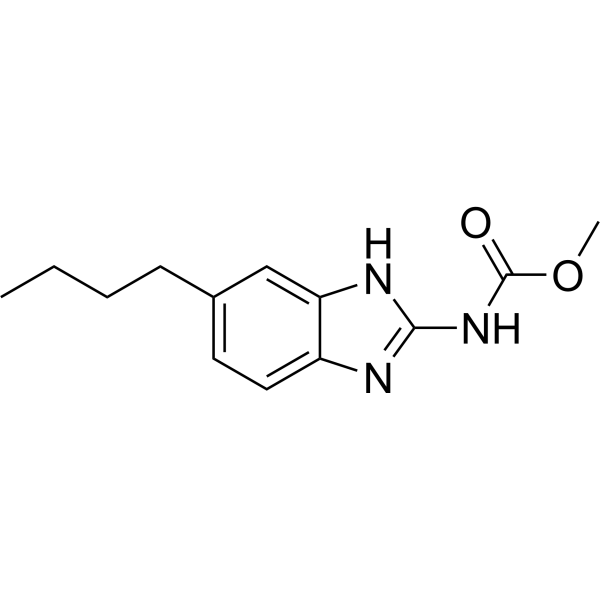 0 ImagesSynonyms: SKF 29044 (Standard)Parbendazole (Standard) (SKF 29044 (Standard)) is the analytical standard of Parbendazole (HY-115364). This product is intended for research and analytical applications. Parbendazole (SKF‑29044) is an orally active benzimidazole carbamate compound with multiple biological activities. Parbendazole binds to free tubulin and inhibits microtubule polymerization; it also activates the JNK/c‑Jun signaling axis and upregulates the expression of the downstream axonal repulsion factor Sema3A. Parbendazole upregulates KAL-1 mRNA expression, reduces nerve growth factor levels, and promotes the terminal differentiation of normal human epidermal keratinocytes. Parbendazole induces apoptosis in differentiated acute myeloid leukemia monocytes and exerts antileukemic activity in a mouse xenograft model of acute myeloid leukemia. Parbendazole exhibits broad-spectrum anthelmintic activity against various animal nematodes. Parbendazole is used in research related to acute myeloid leukemia and parasitic infections.
-
VEGFR-2-IN-51
 0 ImagesCat. No.: HY-159510VEGFR-2-IN-51 (compound 19) is an orally active dual-target inhibitor of VEGFR-2 (IC50=15.33 μM) and tubulin (IC50=0.76 μM) with anti-tumor activity. VEGFR-2-IN-51 induces tumor cell apoptosis by reducing mitochondrial membrane potential and increasing reactive oxygen species (ROS) levels. VEGFR-2-IN-51 exerts anti-angiogenic effects by blocking the VEGFR-2/PI3K/AKT signaling pathway. In addition, VEGFR-2-IN-51 has significant anti-proliferative activity against the gastric cancer cell line MGC-803 (IC50=0.005 μM).


-
Tubulin inhibitor 23
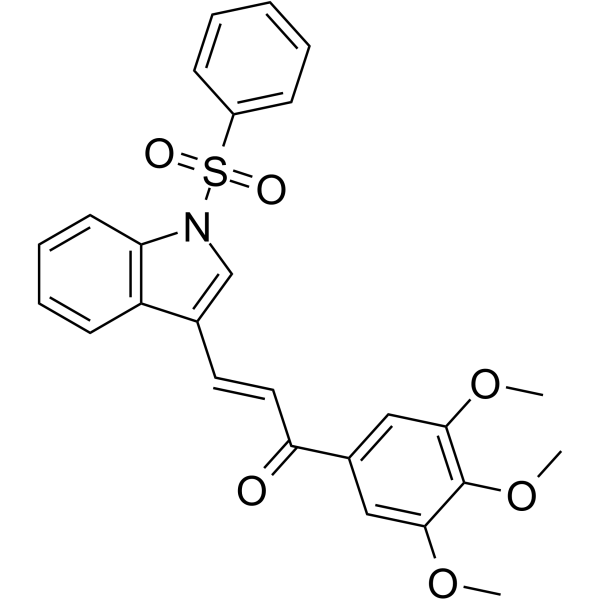 0 ImagesCat. No.: HY-144818CAS No.: 170488-57-0Tubulin inhibitor 23 is a potent Tubulin inhibitor with an IC50 of 4.8 µM. Tubulin inhibitor 23 induces cell apoptosis. Tubulin inhibitor 23 shows antiangiogenic activity in a dose-dependent manner. Tubulin inhibitor 23 has the potential for the research of leukaemia.
-
PROTAC HDAC8 Degrader-5
 0 ImagesCat. No.: HY-189151CAS No.: 3057302-21-0PROTAC HDAC8 Degrader-5 is a selective HDAC8 PROTAC degrader that mediates ubiquitination and proteasomal degradation through the formation of a ternary complex. PROTAC HDAC8 Degrader-5 degrades HDAC8 with a DC50 of 1.8 nM in MDA-MB-231 cells and a DC50 of 4.7 nM in Jurkat cells. PROTAC HDAC8 Degrader-5 inhibits cancer cell migration and proliferation, induces apoptosis through caspase 3/7 activation, and increases acetylated SMC3 and α-tubulin. PROTAC HDAC8 Degrader-5 is useful for cancer-related research, such as leukemia, triple-negative breast cancer, etc..
-
Tubulysin IM-1
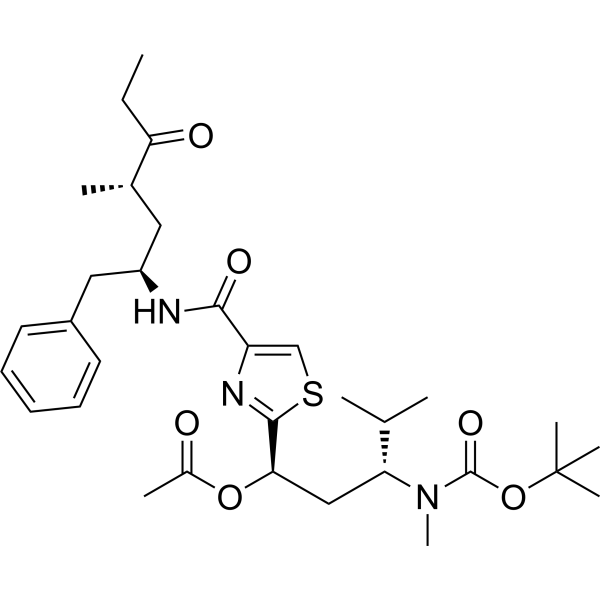 0 ImagesCat. No.: HY-130958Tubulysin IM-1 is a microtubule/Tubulin inhibitor that can act as an ADC cytotoxin (ADC Cytotoxin) and an anti-microtubule toxin (anti-microtubule toxins). Used for ADC synthesis.
-
Tubulin/HDAC-IN-3
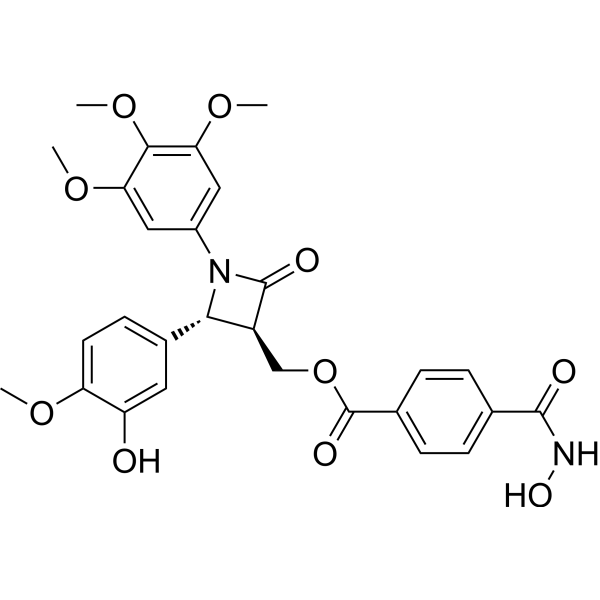 0 ImagesCat. No.: HY-149578Tubulin/HDAC-IN-3 (compound 12a) is a potent tubulin/HDAC dual inhibitor. Tubulin/HDAC-IN-3 effectively disrupts tubulin polymerization (IC50: 5.4 μM). Tubulin/HDAC-IN-3 exhibits potent HDAC1/8 inhibitory activities, with IC50 values of 0.155 and 0.177 μM, respectively. Tubulin/HDAC-IN-3 works through blocking cellular cycle, inducing apoptosis and inhibiting colony formation.
-
Tubulin polymerization/P-gp-IN-1
 0 ImagesCat. No.: HY-178466Tubulin polymerization/P-gp-IN-1 is a Tubulin polymerization/P-gp dual inhibitor. Tubulin polymerization/P-gp-IN-1 inhibits tubulin polymerization and induces G2/M arrest and apoptosis. Tubulin polymerization/P-gp-IN-1 reverses MDR by inhibiting P-gp efflux function. Tubulin polymerization/P-gp-IN-1 has dual functions: direct antitumor activity and reversal of P-gp-mediated Cisplatin (HY-17394) resistance. Tubulin polymerization/P-gp-IN-1 stable binds to the tubulin CBS (ΔG = −12.4 kcal/mol) and the P-gp hydrophobic lumen (ΔG = −10.8 kcal/mol). Tubulin polymerization/P-gp-IN-1 can be used for the study of drug-resistant cervical cancer.
-
WX-132-18B
 0 ImagesCat. No.: HY-138008CAS No.: 1415262-07-5WX-132-18B is a tubulin inhibitor with an IC50 of 0.45-0.99 nM. WX-132-18B selectively binds to the colchicine-binding site on tubulin, reduces microtubule content via depolymerization, and inhibits tubulin polymerization. WX-132-18B induces tumor cell cycle arrest, apoptosis and changes in nuclear membrane permeability, and decreases mitochondrial membrane potential. WX-132-18B exhibits antiproliferative activity against endothelial cells and human tumor cells, and inhibits the proliferation and growth of xenograft tumors in mice. WX-132-18B can be used in research related to sarcoma, non-small cell lung cancer, gastric cancer and breast cancer.
-
Tubulin polymerization-IN-42
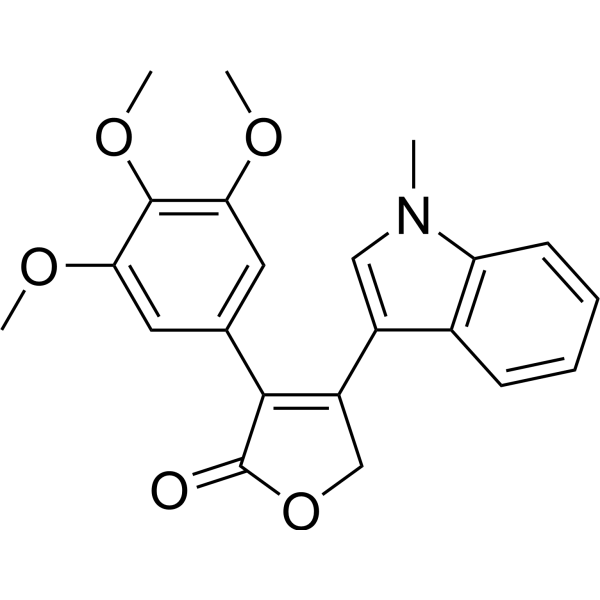 0 ImagesCat. No.: HY-155043CAS No.: 2640220-51-3Tubulin polymerization-IN-42 (compound 10j), an indole-substituted furanone, is an inhibitor of tubulin polymerization with anti-cancer activity.
-
Calythropsin
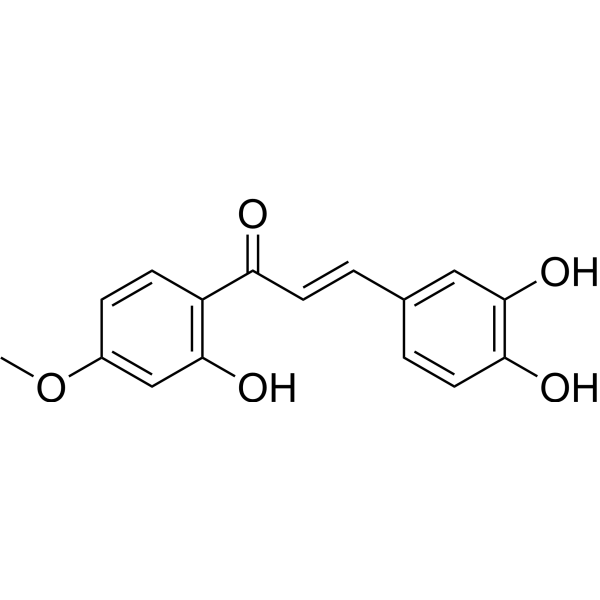 0 ImagesCat. No.: HY-N11766CAS No.: 152340-67-5Calythropsin is a cytotoxic chalcone, with weak effect on mitosis, and presumably also on tubulin polymerization.
-
Tubulin polymerization-IN-13
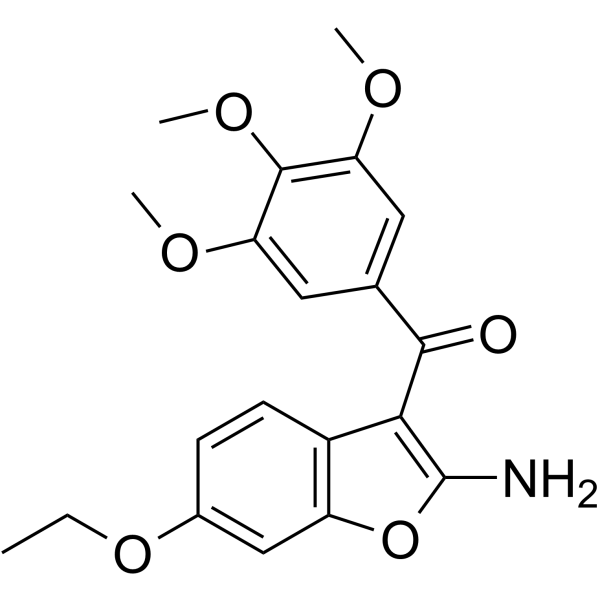 0 ImagesCat. No.: HY-146209CAS No.: 2426665-56-5
-
Simotaxel
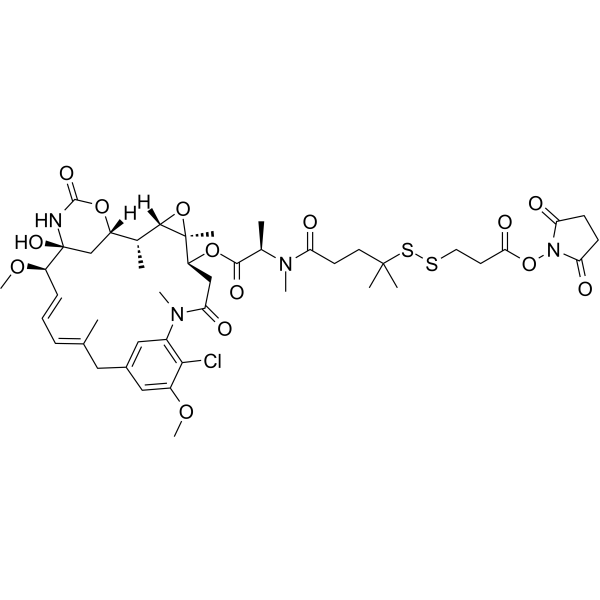
 0 ImagesCat. No.: HY-16457CAS No.: 791635-59-1Synonyms: MST 997Simotaxel (MST 997) is an orally active derivative of the taxane class. Simotaxel binds to β-tubulin and promotes tubulin polymerization (EC₅₀ = 0.9 μM), inhibits tubulin depolymerization, and causes cell cycle arrest at the G₂-M phase. Simotaxel disrupts the formation of the mitotic spindle and triggers the caspase-dependent apoptotic pathway (apoptosis). Simotaxel has inhibitory effects on Paclitaxel (HY-B0015) sensitive cell lines and overcomes drug resistance. Simotaxel can be used to study Paclitaxel / Docetaxel (HY-B0011) resistant solid tumors.
-
Tubulin inhibitor 14
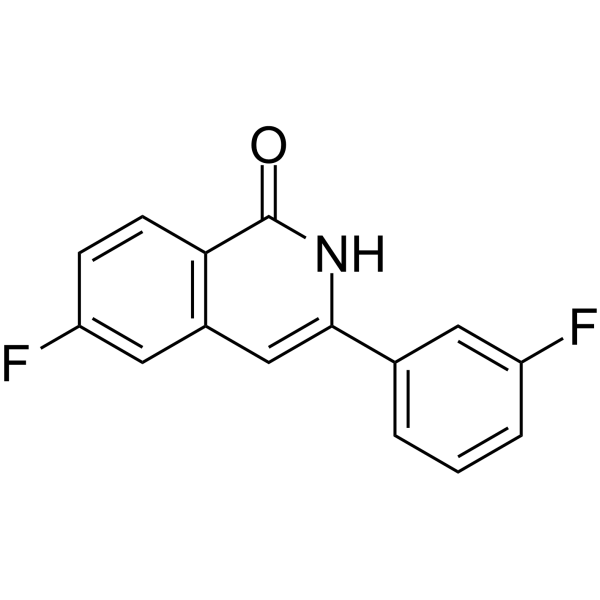 0 ImagesCat. No.: HY-145820CAS No.: 2767446-34-2Tubulin inhibitor 14 is a potent NQO2 (quinone oxidoreductase 2) inhibitor with an IC50 of 1.0 μM. Tubulin inhibitor 14 also inhibits tubulin polymerization and the formation of endothelial cell capillary-like tubes. Tubulin inhibitor 14 is a microtubule-destabilizing agent with potential tumor-selectivity and antiangiogenic and vascular disrupting features.
-
HDAC-IN-54
 0 ImagesCat. No.: HY-153514CAS No.: 2098896-13-8HDAC-IN-54 is a HDAC inhibitor with an IC50 of 25 nM against human HDAC1, 66 nM against HDAC2, 6.5 nM against HDAC3, and 281 nM against HDAC6. HDAC-IN-54 induces acetylation of α-tubulin and histone H3. HDAC-IN-54 acts synergistically with cisplatin to induce cancer cell apoptosis. HDAC-IN-54 can be used in research related to head and neck cancer, ovarian cancer, and tongue squamous cell carcinoma.
-
Tubulin polymerization-IN-4
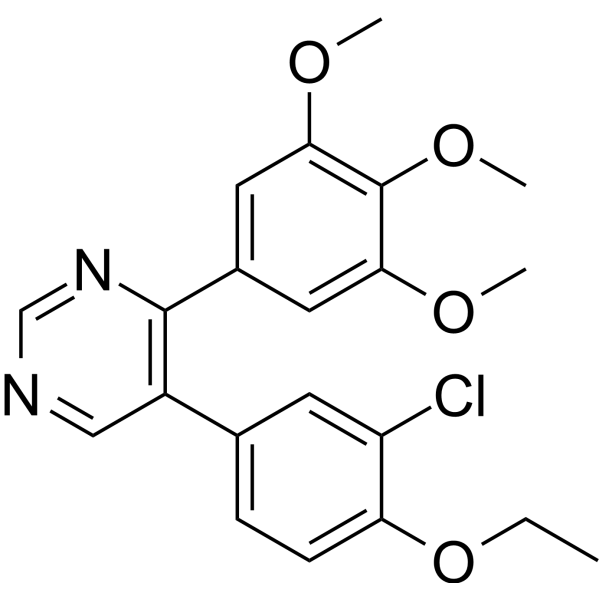 0 ImagesCat. No.: HY-144786CAS No.: 2835559-00-5Tubulin polymerization-IN-4 is a potent tubulin polymerization inhibitor with IC50 value of 4.6 μM. Tubulin polymerization-IN-4 can disrupt tubulin polymerization and vasculature, arrest the cell cycle at the G2/M phase, induce apoptosis, and suppress clonogenesis and migration in HeLa cells. Tubulin polymerization-IN-4 can be used for researching cervical cancer.
-
DNA-PK/HDAC6-IN-2
 0 ImagesCat. No.: HY-189675CAS No.: 3107156-58-8DNA-PK/HDAC6-IN-2 is an orally active and selective dual-target inhibitor of DNA-PK and HDAC6, with an IC50 of 34.22 nM for DNA-PK and an IC50 of 241.2 nM for HDAC6. DNA-PK/HDAC6-IN-2 upregulates Ac‑α‑tubulin, inhibits p‑DNA‑PK, and increases γ‑H2AX. DNA-PK/HDAC6-IN-2 exhibits antiproliferative activity against multiple solid tumor cell lines, induces apoptosis and cell cycle arrest, and inhibits migration and invasion. DNA-PK/HDAC6-IN-2 has in vivo antitumor efficacy in melanoma and breast cancer models and enhances the efficacy of Doxorubicin (HY-15142A). DNA-PK/HDAC6-IN-2 can be used for research on various cancers such as melanoma, breast cancer, and colorectal cancer.
-
ICD inducer-2
 0 ImagesCat. No.: HY-181673CAS No.: 3069681-35-9ICD inducer-2 is a immunogenic cell death inducer. ICD inducer-2 binds to the colchicine binding site on tubulin to inhibit tubulin polymerization. ICD inducer-2 exhibits broad-spectrum antiproliferative activity across multiple cancer cell lines. ICD inducer-2 inhibits cells migration, causes G2/M phase and induces apoptosis. ICD inducer-2 promotes infiltration of CD4+ and CD8+ T cells into the tumor microenvironment. ICD inducer-2 downregulates antiapoptotic protein Bcl-2, upregulates proapoptotic proteins Bax and Bim-1, and increases cleaved caspase 3, cleaved caspase 9, and cleaved PARP levels. ICD inducer-2 overcomes paclitaxel resistance in xenograft models and achieves tumor growth inhibition. ICD inducer-2 can be used for the research of cancer, such as lung carcinoma.




