



Microtubule/Tubulin Inducer
-
ST8155AA1
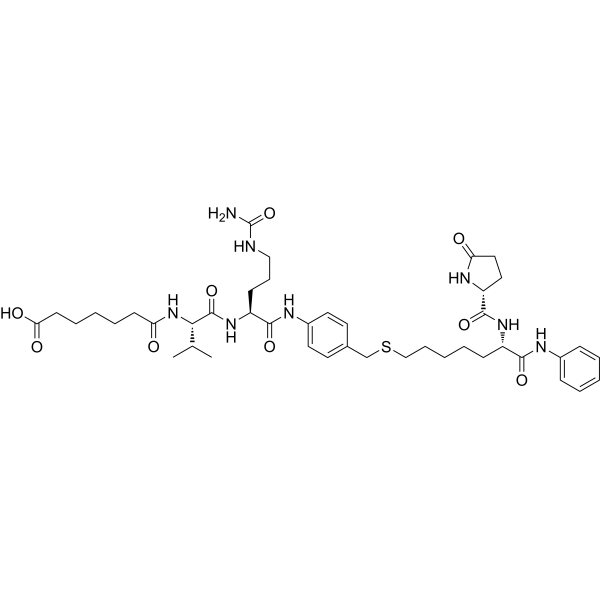 0 ImagesCat. No.: HY-112806CAS No.: 2247025-63-2
ST8155AA1 is a part of antibody agent conjugates (ADCs) charged with HDAC inhibitor. ST8155AA1 induces α-tubulin, histone H3/H4 acetylation via direct enzymatic inhibition. ST8155AA1 recognizes and binds EGFR, undergoes internalization into EGFR-expressing tumor cells. ST8155AA1 inhibits cancer cell proliferation and exerts activity in mouse tumor models. ST8155AA1 can be used for the research of non-small cell lung cancer.
-
HDAC6-IN-65
 0 ImagesCat. No.: HY-178110CAS No.: 3028442-70-5
HDAC6-IN-65 is a selective HDAC6 inhibitor (IC50 = 0.9 nM) and also exhibits a certain suppressive effect on HDAC3 (IC50 = 39.4 nM). HDAC6-IN-65 can induce the accumulation of α-tubulin (ac-tubulin) and acetylated histone H3 (ac-histone H3, a class I HDAC inhibition marker) in Neuro-2a cells. HDAC6-IN-65 can be used for the study of melanoma.
-
NCT-10b
 0 ImagesCat. No.: HY-123699CAS No.: 908860-09-3
NCT-10b is a selective HDAC6 inhibitor. NCT-10b mediates preferential α-tubulin acetylation without major histone H4 acetylation.NCT-10b can be used for the research of multiple myeloma.
-
TCS 2210
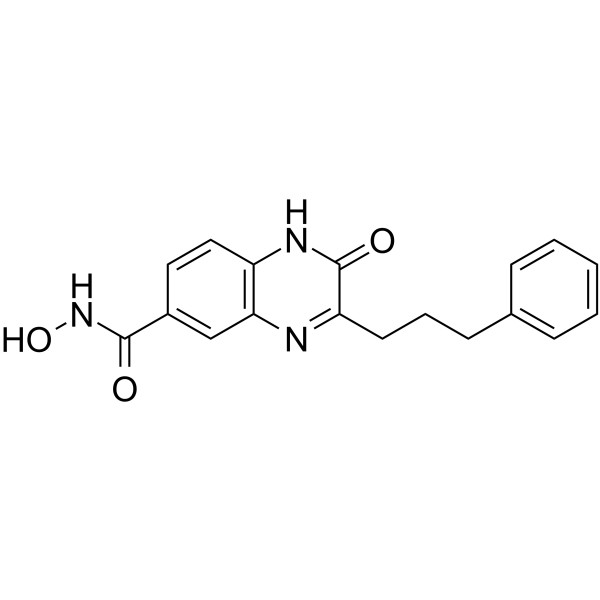 0 ImagesCat. No.: HY-108438CAS No.: 1201916-31-5
TCS 2210 (compound 1) is a neuronal differentiation inducer in mesenchymal stem cells (MSCs). TCS 2210 increases expression of the neuronal markers β-III tubulin and neuron-specific enolase (NSE).
-
HDAC6-IN-67
 0 ImagesCat. No.: HY-178351CAS No.: 2196247-20-6
HDAC6-IN-67 is a selective HDAC6 inhibitor (IC50 = 17.15 nM) that exhibits 19-fold selectivity over HDAC1. HDAC6-IN-67 selectively inhibits HDAC6 by interacting with Ser531 and His614. HDAC6-IN-67 induces apoptosis by inducing the cleavage of caspases 9, 8, 3, and PARP, upregulating Bax expression, and downregulating Bcl-2 expression. HDAC6-IN-67 effectively induces the acetylation of α-tubulin, without affecting histone H3 acetylation in MCF-7/ADR cells. HDAC6-IN-67 can be used for the study of breast cancer.



