



Microtubule/Tubulin
Microtubules are a component of the cytoskeleton, found throughout the cytoplasm. These tubular polymers of tubulin can grow as long as 50 micrometres, with an average length of 25 µm, and are highly dynamic. The outer diameter of a microtubule is about 24 nm while the inner diameter is about 12 nm. Microtubules are found in eukaryotic cells and are formed by the polymerization of a dimer of two globular proteins, alpha and beta tubulin. Tubulin is one of several members of a small family of globular proteins. The tubulin superfamily includes five distinct families, the alpha-, beta-, gamma-, delta-, and epsilon-tubulins and a sixth family which is present only in kinetoplastid protozoa. The most common members of the tubulin family are α-tubulin and β-tubulin, the proteins that make up microtubules. Microtubules are very important in a number of cellular processes. They are involved in maintaining the structure of the cell.
All Product Categories
-
Microtubule/Tubulin Inhibitors
(812)
View all products
-
Microtubule/Tubulin Agonists
(2)
View all products
-
Microtubule/Tubulin Antagonist
(1)
View all products
-
Microtubule/Tubulin Activators
(21)
View all products
-
Microtubule/Tubulin Modulators
(20)
View all products
-
Microtubule/Tubulin Inducers
(5)
View all products
-
Microtubule/Tubulin Degraders
(3)
View all products
-
Microtubule/Tubulin Controls
(19)
View all products
-
Microtubule/Tubulin Ligands
(5)
View all products
-
Microtubule/Tubulin Related Products (1003)
Related Products (1003)

-
Antibodies (69)
-
Disorazol A
 0 ImagesCat. No.: HY-N14734CAS No.: 158181-47-6Disorazol A1 is an tubulin inhibitor with antifungal activity. Disorazol A1 functions by inhibiting tubulin polymerization, interfering with microtubule formation, blocking mitosis, thus arresting the cell cycle at the G2/M phase and inducing apoptosis. Disorazol A1 also exhibits an inhibitory effect against L929 mouse fibroblasts with an IC50 value of 3 pM. Disorazol A1 causes the accumulation of p53 protein in the cell nucleus. Disorazol A1 is promising for research of cancers.
-
N-(Mal-PEG4)-N-(PEG4-Val-Cit-PAB-MMAE)-N-(PEG4-Val-Cit-PAB-Exatecan)
 0 ImagesCat. No.: HY-177680N-(Mal-PEG4)-N-(PEG4-Val-Cit-PAB-MMAE)-N-(PEG4-Val-Cit-PAB-Exatecan) is a drug-linker conjugate for ADC (Drug-Linker Conjugate for ADC), consisting of a tubulin polymerization inhibitor MMAE (HY-15162) and a DNA topoisomerase I inhibitor Exatecan (HY-13631), and an ADC linker composition. N-(Mal-PEG4)-N-(PEG4-Val-Cit-PAB-MMAE)-N-(PEG4-Val-Cit-PAB-Exatecan) can be used for synthesis of ADCs and for cancer research.
-
Combretastatin A-1 phosphate tetrasodium
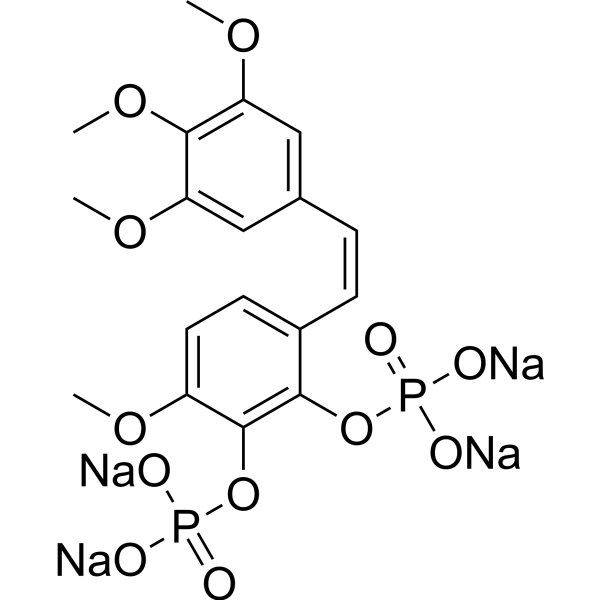 0 ImagesCat. No.: HY-16146CAS No.: 288847-34-7Synonyms: OXi-4503 tetrasodiumCombretastatin A-1 phosphate (OXi-4503) tetrasodium, a proagent of Combretastatin A-1, is a microtubule polymerization inhibitor that binds to the colchicine-binding site of tubulin. Combretastatin A-1 phosphate tetrasodium inhibits the Wnt/β-catenin pathway through tubulin depolymerization mediated AKT deactivation. Combretastatin A-1 phosphate tetrasodium exhibits anti-tumor and anti-vascular effects.
-
Microtubule inhibitor 6
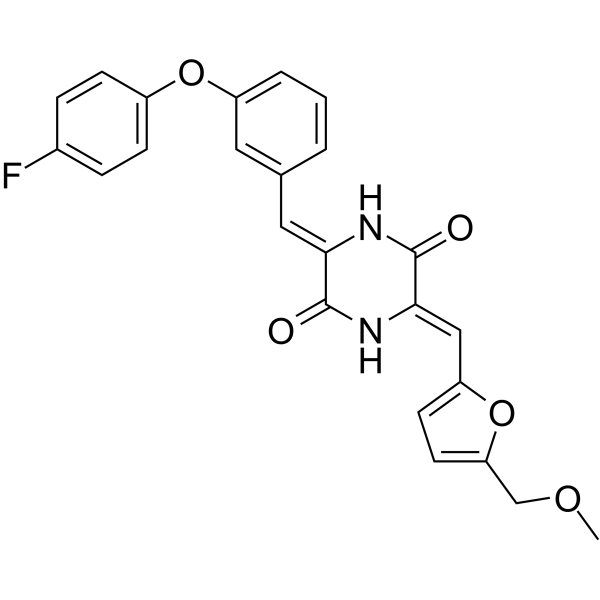 0 ImagesCat. No.: HY-147727CAS No.: 2416338-64-0Microtubule inhibitor 6 (compound 17o) is a potent microtubule inhibitor. Microtubule inhibitor 6 shows cytotoxicity with IC50s of 14.0, 6.6, 7.0 nM for NCI-H460, BxPC-3, HT-29 cells, respectively. Microtubule inhibitor 6 efficiently inhibits microtubule polymerization.
-
HDAC1-IN-5
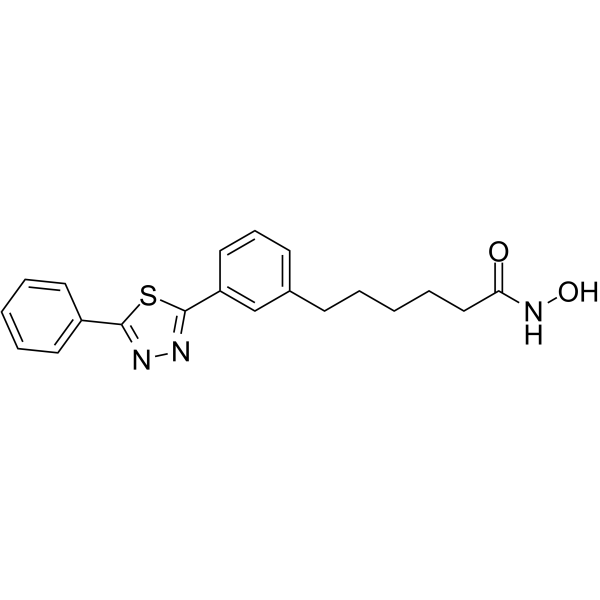 0 ImagesCat. No.: HY-151153HDAC1-IN-5 is a potent HDAC1 inhibitor with IC50 values of 15 nM and 20 nM for HDAC1 and HDAC6, respectively. HDAC1-IN-5 can enhance the acetylation of histone H3 and α-tubulin, as well as promote the activation of caspase 3 in cancer cells, thereby inducing apoptosis. HDAC1-IN-5 induces chromatin damage by binding with DNA. HDAC1-IN-5 has strong inhibitory activity against tumor growth in xenograft mice.
-
Tubulin/AKT1-IN-1
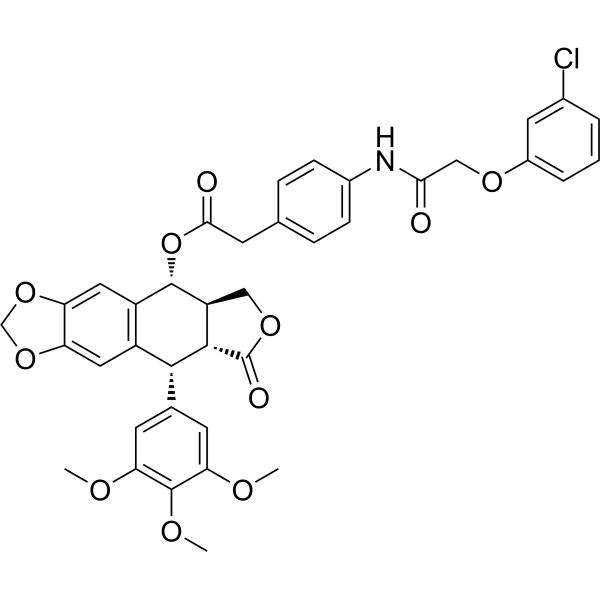 0 ImagesCat. No.: HY-154960CAS No.: 2988927-63-3Tubulin/AKT1-IN-1 (Compound D1-1) is an inhibitor of tubulin polymerization and AKT pathway activation. Tubulin/AKT1-IN-1 significantly inhibits the proliferation and metastasis of H1975 cells and slightly induced their apoptosis and can be used for non-small-cell lung cancer (NSCLC) research .
-
Myelin Basic Protein (Porcine)
 0 ImagesCat. No.: HY-NP208Myelin Basic Protein (Porcine), the second most abundant protein in central nervous system myelin, is responsible for adhesion of the cytosolic surfaces of multilayered compact myelin. Myelin Basic Protein (Porcine) mediates interactions with actin and tubulin and effect of post-translational modifications.
-
Microtubule-IN-15
 0 ImagesCat. No.: HY-180148Microtubule-IN-15 (Compound 10v) is a microtubule inhibitor. Microtubule-IN-15 inhibits the polymerization of tubulin, thereby preventing the formation of the spindle apparatus in cell mitosis and blocking the cell cycle at the G2/M phase. Microtubule-IN-15 induces a decrease in mitochondrial membrane potential and a burst of reactive oxygen species (ROS), promoting tumor cell apoptosis. Microtubule-IN-15 can be used for the study of non-small cell lung cancer and liver cancer.
-
Tubulin polymerization-IN-90
 0 ImagesCat. No.: HY-182081CAS No.: 3006800-41-2Tubulin polymerization-IN-90 is a tubulin polymerization inhibitor. Tubulin polymerization-IN-90 disrupts tubulin polymerization by binding to the nocodazole-binding site on β-tubulin. Tubulin polymerization-IN-90 induces the release of extracellular vesicles marked by the tetraspanin CD63. Tubulin polymerization-IN-90 induces the release of IL-8 from cells. Tubulin polymerization-IN-90 reduces the viability of cancer cells. Tubulin polymerization-IN-90 can be used in the research of cancers such as acute T-lymphoblastic leukemia.
-
Alestramustine
 0 ImagesCat. No.: HY-119587CAS No.: 139402-18-9Alestramustine is an antineoplastic cytostatic agent that disrupts microtubule function by binding to microtubule-associated proteins and β-tubulin through its active metabolites, effectively inhibiting cell division.
-
Tubulin polymerization-IN-88
 0 ImagesCat. No.: HY-181074Tubulin polymerization-IN-88 is a tubulin inhibitor that blocks tubulin polymerization, leading to microtubule destabilization and disruption of the mitotic spindle. Tubulin polymerization-IN-88 induces G2/M phase arrest and apoptosis in cancer cells, and inhibits cancer cell migration and self-renewal of cancer stem cells. It exhibits in vitro anti-proliferative activity against cancer cells with selectivity over normal cells. Tubulin polymerization-IN-88 also demonstrates in vivo anti-cancer activity without significant toxicity. Tubulin polymerization-IN-88 is applicable for research on glioblastoma, lung cancer, endometrial cancer, ovarian cancer, and leukemia.
-
PbQ
 0 ImagesCat. No.: HY-D3153CAS No.: 2693397-68-9PbQ is a tubulin inhibitor (with an IC50 of 5 μM against goat tubulin) and a fluorescent probe for cuprous ions Cu (I). PbQ can penetrate the membrane of peripheral blood mononuclear cells, form a stable 1:1 complex with Cu+ ions, and exhibits low toxicity and good biocompatibility toward macrophage cell lines. In addition, PbQ promotes tubulin degradation and disrupts the microtubule network in lung epithelial cells without affecting actin. PbQ also possesses genotoxicity by forming DNA base adducts, and it can activate caspase-3 and apoptosis-related genes, induce loss of mitochondrial membrane potential, and trigger cell apoptosis. PbQ can be used in studies related to chronic obstructive pulmonary disease.
-
Tubulin-IN-55
 0 ImagesCat. No.: HY-175874CAS No.: 353258-94-3Tubulin-IN-55 is a tubulin inhibitor. Tubulin-IN-55 disrupts the PI3K/Akt signaling pathway in cancer cells. Tubulin-IN-55 exerts broad-spectrum anti-proliferative activity against multiple tumor cells (HeLa, HCT116, 4T1, A549, H1299, MDA-MB231). Tubulin-IN-55 induces G2/M phase arrest and apoptosis, and inhibits tumor cell migration/invasion in cancer cells. Tubulin-IN-55 demonstrates potent antitumor efficacy in orthotopic autologous transplantation mice. Tubulin-IN-55 can be used for the study of cancer.
-
Tubulin polymerization-IN-73
 0 ImagesCat. No.: HY-170568CAS No.: 3077842-16-8Tubulin polymerization-IN-73 (Compound 37) is an inhibitor for microtubule polymerization with an IC50 of 1.8 μM. Tubulin polymerization-IN-73 arrests the cell cycle at G2/M phase, induces apoptosis in A549 cell, inhibits the proliferation of A549 WT and A549/T resistant cell with IC50 of 0.023 μM and 0.057 μM. Tubulin polymerization-IN-73 exhibits antitumor efficacy in mouse model.
-
Angustilongine M
 0 ImagesCat. No.: HY-178417CAS No.: 2732914-43-9Angustilongine M is a microtubule-targeting antitumor alkaloid (IC50=0.2 μM against HT-29 cells). Angustilongine M induces G0/G1 cell cycle arrest and mitochondrial apoptosis via tubulin polymerization promotion. Angustilongine M is promising for research of colorectal cancer and other solid tumors.
-
Microtubule inhibitor 7
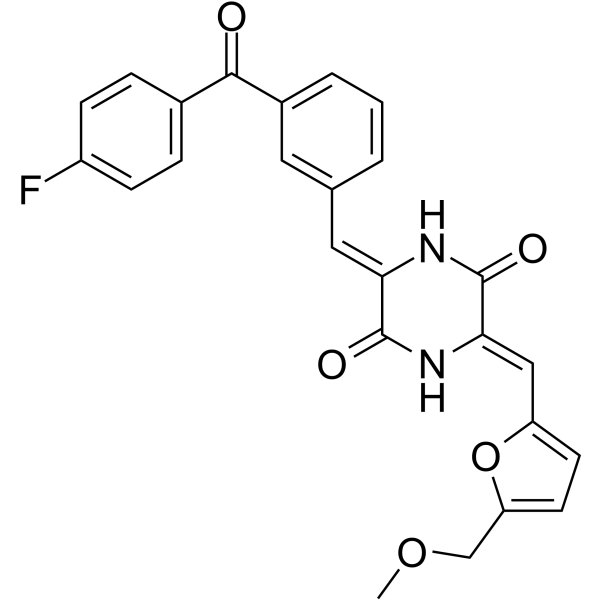 0 ImagesCat. No.: HY-147728CAS No.: 2416338-65-1Compounds 17O (ic50= 14.0 nm, NCI-H460) and 17p (ic50= 2.9 nm, NCI-H460) and furan groups showed effective cytotoxic activity against various human cancer cell lines at the nanomolar level.
-
Dolastatinol
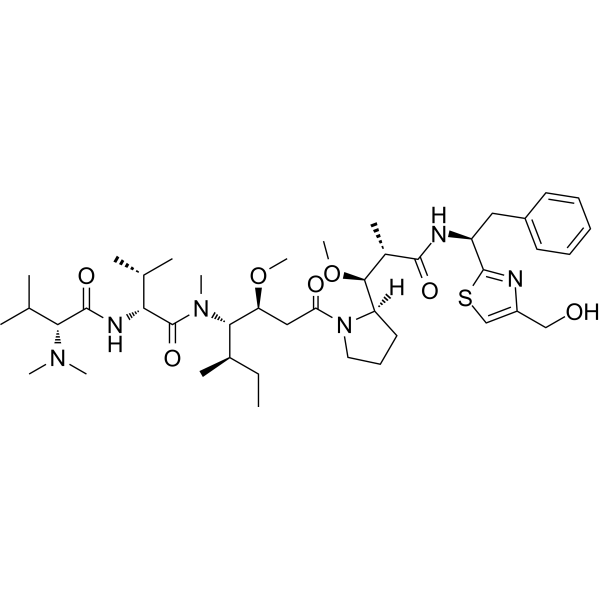 0 ImagesCat. No.: HY-139625CAS No.: 2759918-83-5Dolastatinol is a synthetic analog of dolastatin 10 and low nanomolar inhibitor of tubulin polymerization.
-
Tubulin-IN-61
 0 ImagesCat. No.: HY-179160Tubulin-IN-61 is a tubulin polymerization inhibitor with an IC50 of ≤7.63 μM. Tubulin-IN-61 induces early apoptosis and triggers significant G2/M phase arrest. Tubulin-IN-61 elevates intracellular ROS levels. Tubulin-IN-61 shows high activity against MCF-7 cells with an IC50 of 5.61 μM. Tubulin-IN-61 can be used for the research of breast cancer.
-
Tubulin/NRP1-IN-1
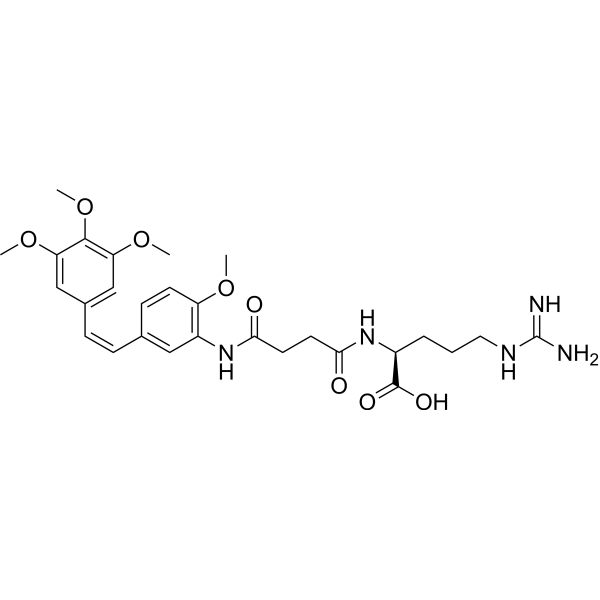 0 ImagesCat. No.: HY-163062CAS No.: 2983719-82-8Tubulin/NRP1-IN-1 (compound TN-2) is a dual inhibitor of Tubulin and NRP1 with IC50s of 0.71 and 0.85 μM, respectively. Tubulin/NRP1-IN-1 significantly inhibits the viability of prostate tumor cell lines and induces apoptosis.
-
Tubulin inhibitor 36
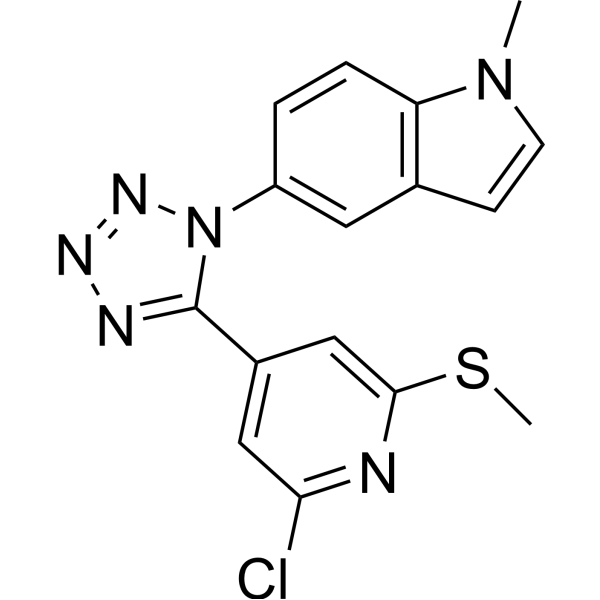 0 ImagesCat. No.: HY-149374Tubulin inhibitor 36 (Compound 10) is a novel and potent tubulin inhibitor and inhibits the polymerization of microtubular protein then induces apoptosis with an IC50 value of 1.5±0.1 μM. Tubulin inhibitor 36 (Compound 10) has significant anti-mitotic effect and exhibits activities against glioblastoma cells. Tubulin inhibitor 36 (Compound 10) has anti-tumor effects and can be used for glioblastoma multiforme (GBM) research.




