



Drug Derivative
Drug derivative
Drug derivatives are derived from parent compounds. They replace or add atoms and groups through chemical reactions to optimize the various properties of the parent compound and reduce side effects. The application of drug derivatives provides a diverse compound library for drug research and development and accelerates the discovery of new drugs. For example, urea derivatives Glibenclamide can prolong the blood sugar-lowering effect of anti-diabetic drugs.
References:
- [1]. Vardanyan RS, et al. Fentanyl-related compounds and derivatives: current status and future prospects for pharmaceutical applications. Future Med Chem. 2014 Mar;6(4):385-412.x
- [2]. Ghosh AK, et al. Urea Derivatives in Modern Drug Discovery and Medicinal Chemistry. J Med Chem. 2020 Mar 26;63(6):2751-2788.x
All Product Categories
-
Drug Derivative Inhibitors
(12)
View all products
-
Drug Derivative Agonist
(1)
View all products
-
Drug Derivative Activator
(1)
View all products
-
Drug Derivative Chemical
(1)
View all products
-
Drug Derivative Inducer
(1)
View all products
-
Drug Derivative Controls
(38)
View all products
-
Drug Derivative Substrate
(1)
View all products
-
Drug Derivative Related Products (3977)
Related Products (3977)

-
Thalidomide-4-Br
 0 ImagesThalidomide-4-Br (compound 53) is a compound with a bromodomain. Thalidomide-4-Br can be used in the research of inflammation, tumor and neurology.
-
3-Ketoadipic acid
 0 ImagesCat. No.: HY-W718418CAS No.: 689-31-63-Ketoadipic acid is a dicarboxylic acid containing a keto group that can be isolated from Brazilian propolis (Et-Bra). Brazilian propolis exhibits antibacterial, antifungal, and antiparasitic activities.
-
Ethyl pivaloylacetate
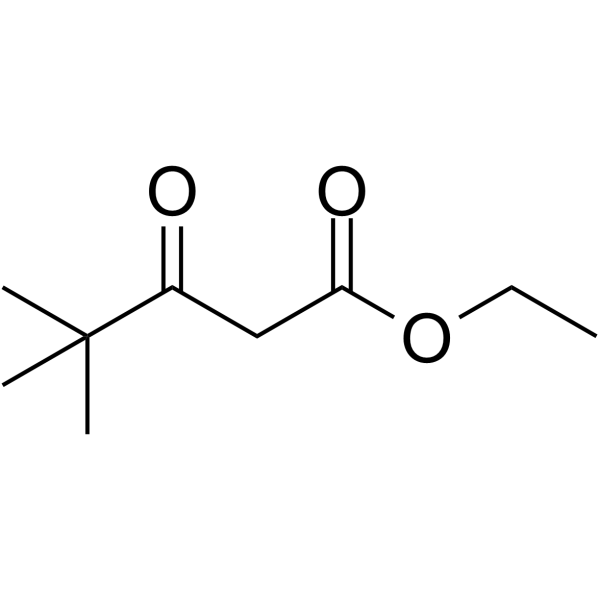 0 ImagesCat. No.: HY-W076971CAS No.: 17094-34-7Ethyl pivaloylacetate is a β-ketoester. Ethyl pivaloylacetate can be uesd as the substrate to evaluate the activity and stereoselectivity of the ketoreductase tool-box.
-
Calcium N5-methyltetrahydrofolate
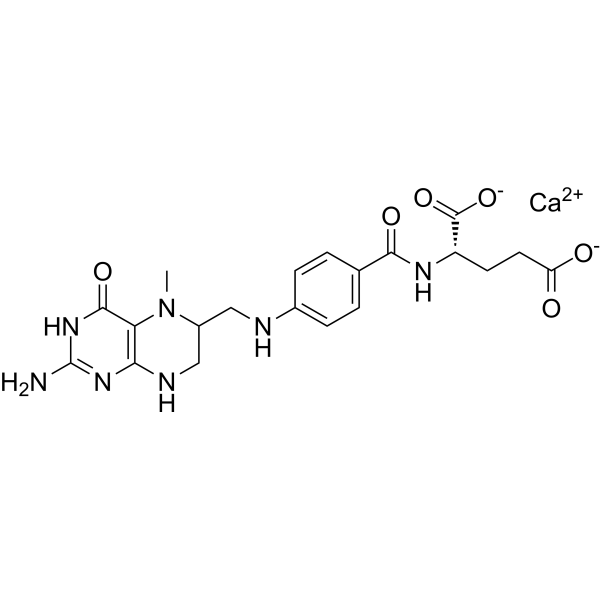 0 ImagesSynonyms: NSC173328; 5-Methyl THF calciumCalcium N5-methyltetrahydrofolate (NSC173328; 5-Methyl THF (calcium)), Levomefolic acid (HY-14781) derivative, is a folic acid supplement. Calcium N5-methyltetrahydrofolate can be used for the research of neural tube defects, infertility, non-hodgkin's lymphoma, endometriosis.
-
18-Hydroxyoctadecanoic acid
 0 ImagesSynonyms: Octadecanoic acid, 18-hydroxy18-Hydroxyoctadecanoic acid (Octadecanoic acid, 18-hydroxy) is an ester product.
-
9-Oxooctadecanoic acid
 0 ImagesCat. No.: HY-W670044CAS No.: 4114-74-3Synonyms: 9-Oxostearic acid; 9-Ketostearic acid9-Oxooctadecanoic acid (9-Oxostearic acid; 9-Ketostearic acid) is an ester product.
-
Ticagrelor acetonide
 0 ImagesSynonyms: Isopropylidene ticagrelorTicagrelor acetonide (Isopropylidene ticagrelor) (Compound 7) is a drug intermediate that can be used for the synthesis of lysine-specific demethylase (LSD1) inhibitors.
-
Cyclo(RGDfK(Mal))
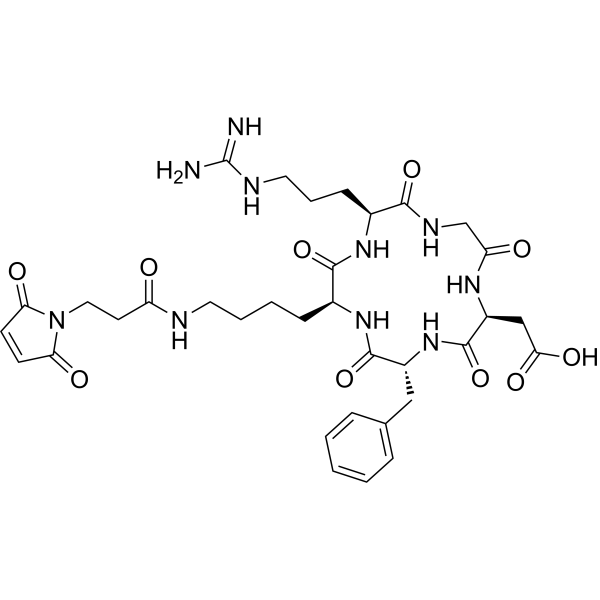 0 ImagesCyclo(RGDfK(Mal)) is a pentapeptide. Cyclo(RGDfK(Mal)) improves the attachment and infiltration of human pluripotent stem cells. Cyclo(RGDfK(Mal)) can be used for 3D stem cell culture and expansion.
-
Sitosterol sulfate trimethylamine
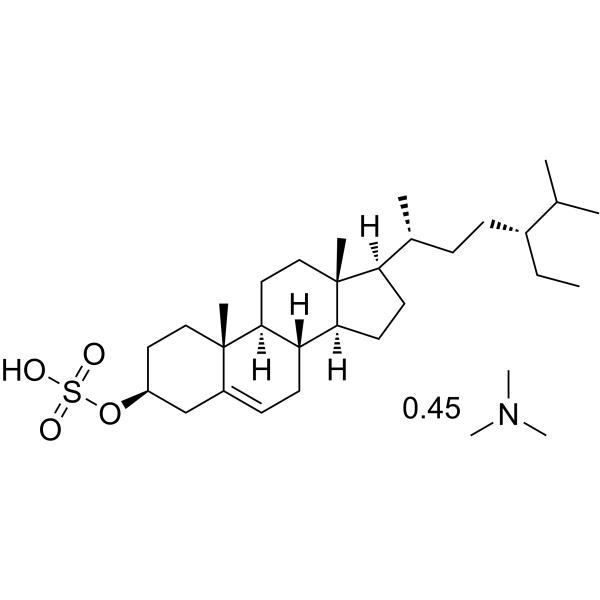 0 ImagesCat. No.: HY-N10478ASitosterol sulfate (trimethylamine) is an active compound. Sitosterol sulfate can be used in a variety of biological research.
-
Chlorphenesin carbamate
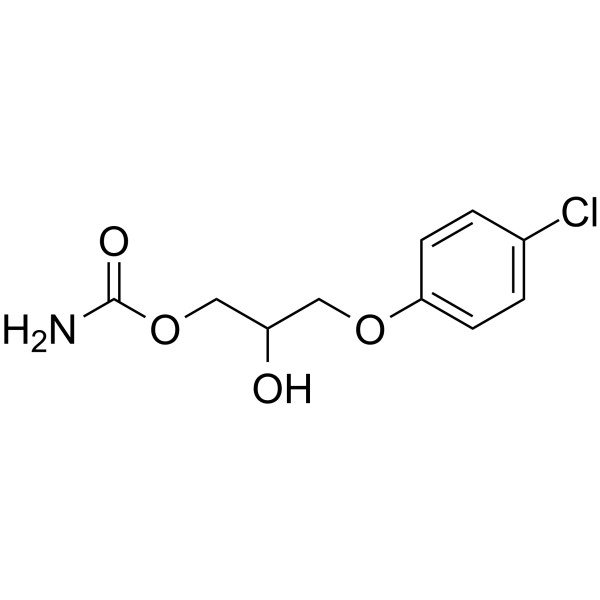 0 ImagesChlorphenesin carbamate is a centrally acting skeletal muscle relaxant, as well as a derivate of Chlorphenesin (HY-A0133). Chlorphenesin carbamate can be used for the research of pain and discomfort related to skeletal muscle trauma and inflammation. Chlorphenesin carbamate is a selective blocker of polysynaptic pathways at the spinal and supra-spinal levels. Antinociceptive effect.
-
Dihydrojasmonic acid
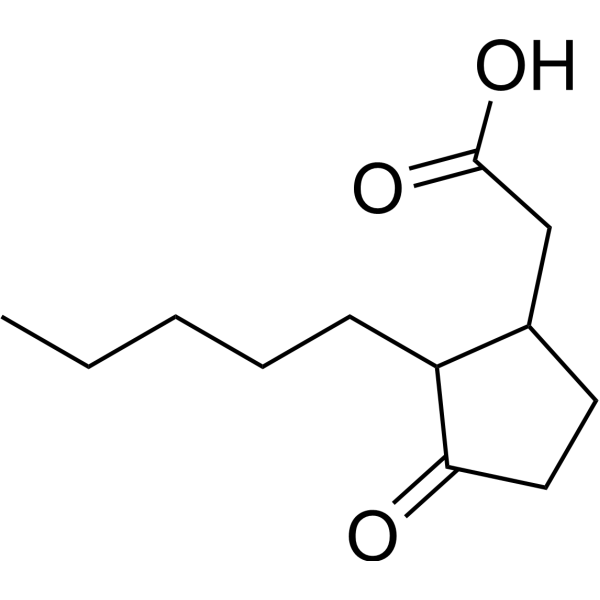 0 ImagesDihydrojasmonic acid is a pentacyclic oxygen-containing lipid plant growth regulator related to Jasmonic acid (HY-122464), with activities including growth inhibition, promotion of leaf senescence, and induction of the accumulation of some plant secondary metabolites. Dihydrojasmonic acid serves as a substrate for metabolic modification and undergoes biotransformation via side-chain hydroxylation, glycosylation, and amino acid conjugation in the aerial parts and seedlings of barley (Hordeum vulgare). Dihydrojasmonic acid inhibits the growth of dwarf rice seedlings and can induce the synthesis of secondary metabolites in some plant cell culture species, with its activity being species-dependent. Dihydrojasmonic acid is involved in studies related to the regulation of plant growth and development.
-
Toluquinone
 0 ImagesCat. No.: HY-W010480CAS No.: 553-97-9Toluquinone is a Toluquinol analogue. Toluquinone shows lower growth inhibitory activity against a panel of cancer cell lines of breast adenocarcinoma, promyelocytic leukemia, glioblastoma, fibrosarcoma, and colorectal adenocarcinoma than Toluquinol.
-
Paclitaxel-2′-succinate NHS ester
 0 ImagesPaclitaxel-2′-succinate NHS ester is a paclitaxel derivative with a succinic acid linker, in which the carboxyl group is activated by the NHS ester. The NHS ester group is highly reactive toward amino or hydroxyl groups and can be used to conjugate with other molecules such as peptides, proteins, antibodies, enzymes or polymers. Paclitaxel-2′-succinate NHS ester can be used in the development of nanomedicines and in the study of cancer therapy.
-
Pyrithioxin dihydrochloride
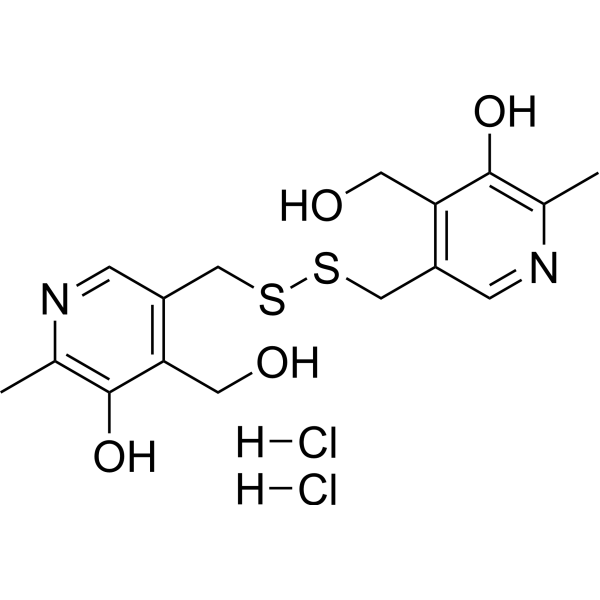 0 ImagesSynonyms: Pyritinol dihydrochloride; Pyridoxine disulfide dihydrochloride; Vitamin B6 disulfide dihydrochloridePyrithioxin (Pyritinol) dihydrochloride is the dihydrochloride salt of Pyrithioxin (HY-B0910). Pyrithioxin (Pyritinol) is an orally active neurodynamic compound. Pyrithioxin can promote the metabolism of glucose and amino acids, increase carotid blood flow and improve cerebral blood flow. Pyrithioxin exhibits anti-inflammation, anti-tumor and neuroprotective effect. Pyrithioxin can be used for the researches of cancer, inflammation, immunology, metabolic and neurological disease such as cerebral infarct, epilepsy, fibrosarcomas and rheumatoid polyarthritis.
-
VK-II-86
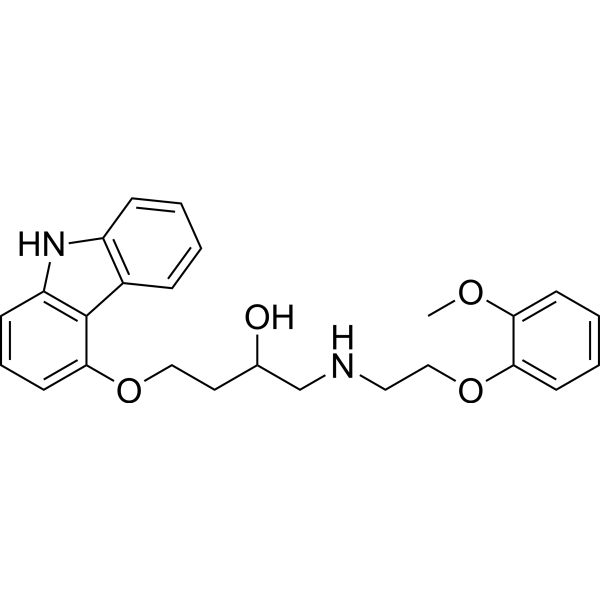 0 ImagesCat. No.: HY-111013CAS No.: 955371-84-3VK-II-86 is a Carvedilol (HY-B0006) analogue lacking antagonist activity at β-adrenoceptors, in hypokalaemia. VK-II-86 prevents hypokalaemia-induced ventricular arrhythmia through multi-channel effects. VK-II-86 prevents all hypokalaemia-induced changes in ion channel activity and oxidative stress.
-
3,6-Dihydroxyxanthone
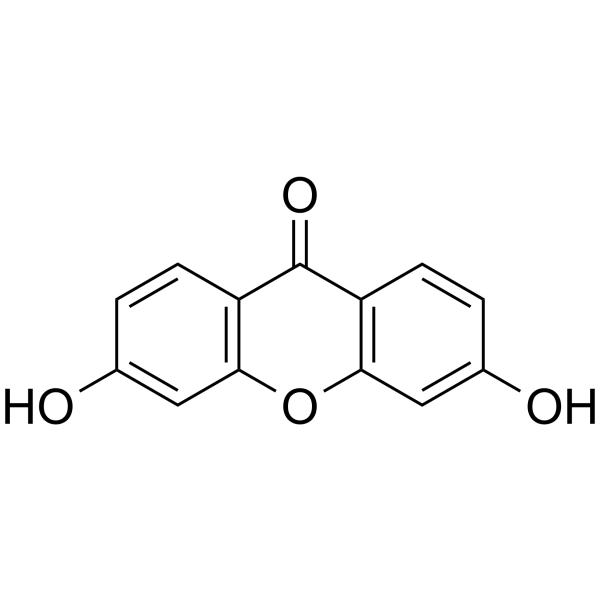 0 Images3,6-Dihydroxyxanthone (compound 3) is a xanthone derivatives. 3,6-Dihydroxyxanthone (compound 3) has anticancer activity. 3,6-Dihydroxyxanthone (compound 3) can be used for cancer research.



