



iGluR
Ionotropic glutamate receptors
iGluR (ionotropic glutamate receptor) is a ligand-gated ion channel that is activated by the neurotransmitter glutamate. iGluR are integral membrane proteins compose of four large subunits that form a central ion channel pore. Sequence similarity among all known glutamate receptor subunits, including the AMPA, kainate, NMDA, and δ receptors.
AMPA receptors are the main charge carriers during basal transmission, permitting influx of sodium ions to depolarise the postsynaptic membrane. NMDA receptors are blocked by magnesium ions and therefore only permit ion flux following prior depolarisation. This enables them to act as coincidence detectors for synaptic plasticity. Calcium influx through NMDA receptors leads to persistent modifications in the strength of synaptic transmission.
iGluR Isoform Specific Products
All Product Categories
-
iGluR Inhibitors
(132)
View all products
-
iGluR Agonists
(128)
View all products
-
iGluR Antagonists
(347)
View all products
-
iGluR Activators
(35)
View all products
-
iGluR Modulators
(93)
View all products
-
iGluR MDM2 Inhibitor
(1)
View all products
-
iGluR Controls
(5)
View all products
-
iGluR Ligands
(3)
View all products
-
iGluR Related Products (827)
Related Products (827)

-
Antibodies (11)
-
iGluR Isoform Comparison
-
L-Aspartic acid-13C4,15N,d3
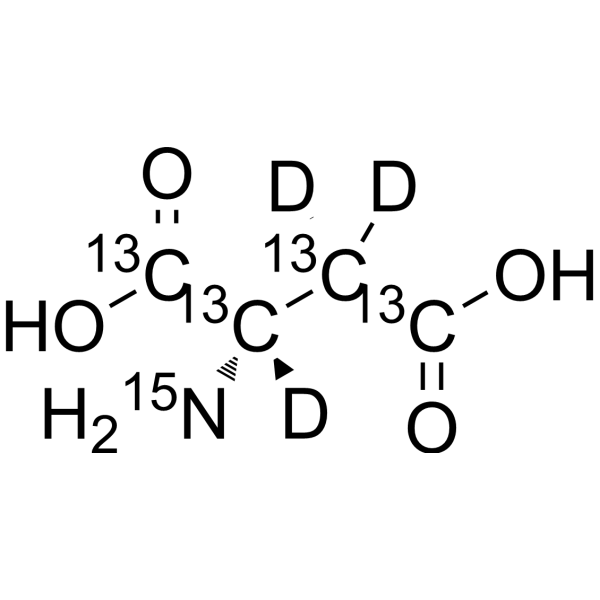 0 ImagesCat. No.: HY-N0666S5CAS No.: 1217475-13-2L-Aspartic acid-13C4,15N,d3 is the 15N, deuterated, 13C-labeled L-Aspartic acid (HY-N0666). L-Aspartic acid is a NMDA receptor agonist and acidic amino acid. L-Aspartic acid has no independent analgesic activity. L-Aspartic acid can antagonize the analgesic effects of D-Aspartic acid and Morphine. L-Aspartic acid regulates polymorph transformation, crystal growth/aggregation and nucleation processes of calcium carbonate, and can serve as a biomineralization template. L-Aspartic acid promotes burst firing of central neurons. L-Aspartic acid can be used in studies related to cerebral ischemia and epilepsy.
-
Neramexane hydrochloride
 0 ImagesNeramexane hydrochloride is an oral N-methyl-D-aspartate (NMDA) receptor antagonist, as a potential neuroprotectant for various central nervous system disorders, including Alzheimer's disease, and for the potential study of drug and alcohol dependence, and pain.
-
gamma-DGG TFA
 0 ImagesSynonyms: γDGG TFA; γ-D-Glutamylglycine TFA
-
3,5-Dihydroxy-2-naphthoic acid
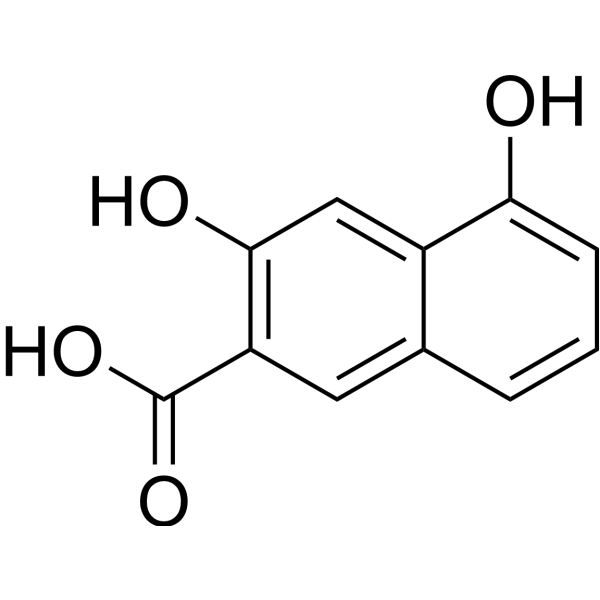 0 Images3,5-Dihydroxy-2-naphthoic acid is a Naphthoic acid derivative. Naphthoic acid is a NMDA receptor allosteric modulator.
-
PEAQX
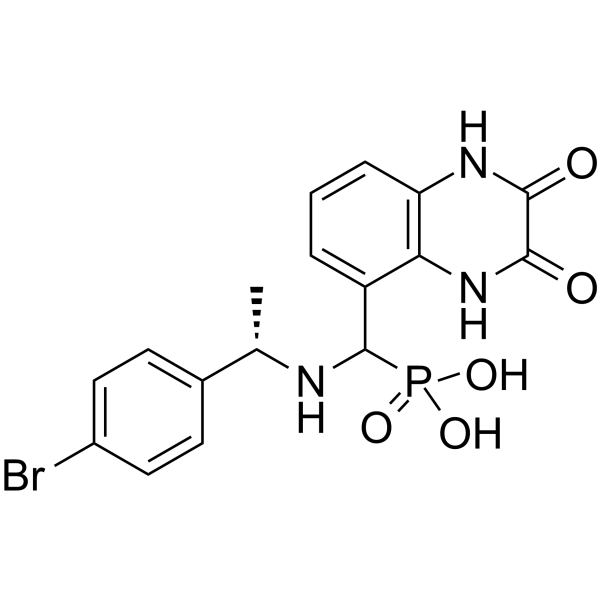 0 ImagesCat. No.: HY-12294CAS No.: 459836-30-7Synonyms: NVP-AAM077
-
Decanoic acid (Standard)
 0 ImagesDecanoic acid (Standard) is the analytical standard of Decanoic acid. This product is intended for research and analytical applications. Decanoic acid is a key component of the medium-chain triglyceride (MCT) found in coconut oil. Decanoic acid is a brain-penetrant and non-competitive inhibitor of AMPA receptor showing antiseizure activity in rats. Decanoic acid reduces tyrosinase activity and inhibits melanosome maturation. Decanoic acid suppresses the phosphorylation of c-Met and induced apoptosis in hepatocellular carcinoma (HCC) cells by inhibiting the expression of various oncogenic proteins, which is promising for research in the field of mTORC1 signaling, HCC and epilepsy.
-
SDZ 220-581 Ammonium salt
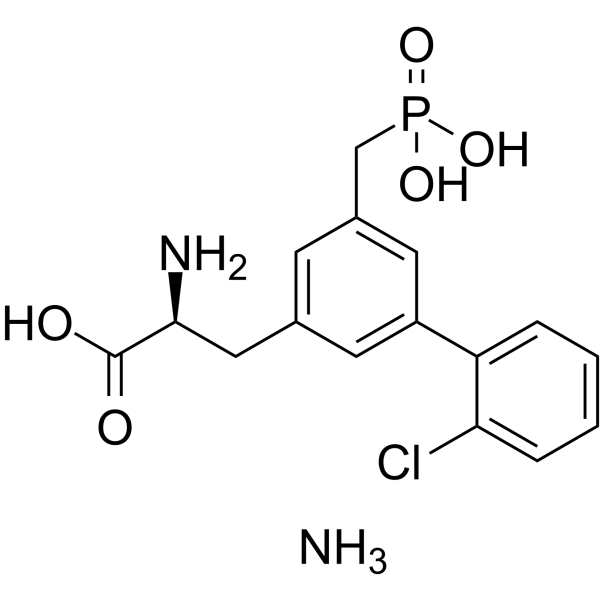 0 ImagesSDZ 220-581 Ammonium salt is an orally active, potent, competitive NMDA receptor antagonist with pKi value of 7.7.
-
Fanapanel hydrate
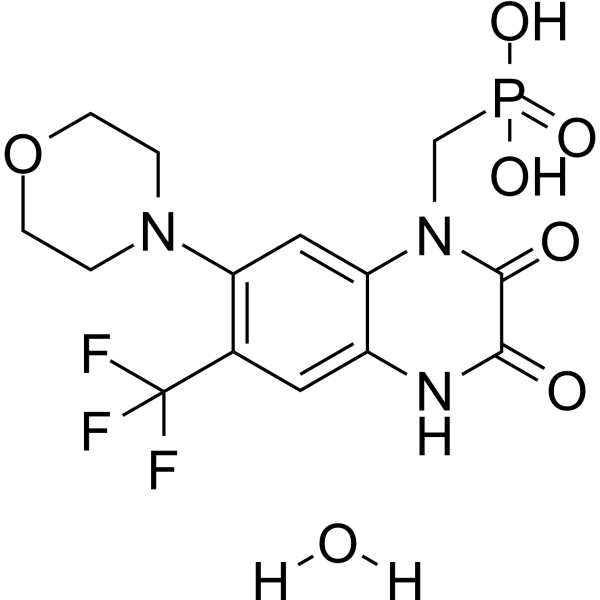 0 ImagesSynonyms: ZK200775 hydrate; MPQX hydrateFanapanel hydrate (ZK200775 hydrate) is a highly selective AMPA/kainate antagonist with little activity against NMDA; have Ki values of 3.2 nM, 100 nM, and 8.5 μM against quisqualate, kainate, and NMDA, respectively.
-
SDZ 220-581 hydrochloride
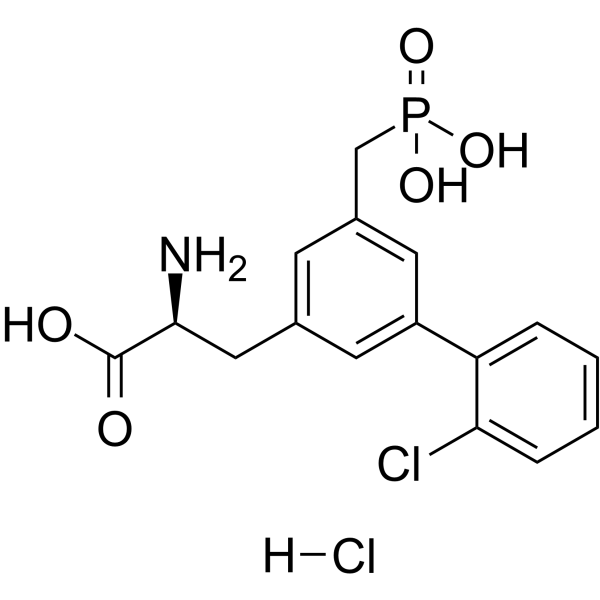 0 ImagesSDZ 220-581 hydrochloride is an orally active, potent, competitive NMDA receptor antagonist with pKi value of 7.7.
-
(S)-(-)-5-Fluorowillardiine
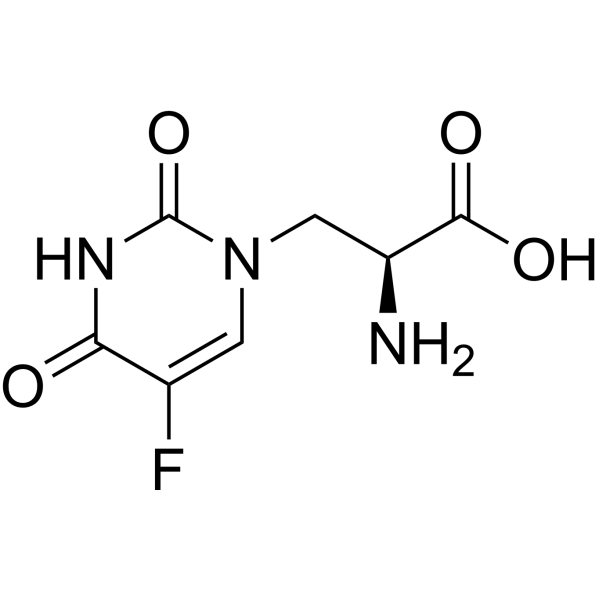 0 ImagesCat. No.: HY-16713CAS No.: 140187-23-1Synonyms: (5S)-Fluorowillardiine; (S)-5-Fluorowillardiine(S)-(-)-5-Fluorowillardiine ((5S)-Fluorowillardiine; (S)-5-Fluorowillardiine) is a potent, highly selective non-NMDA ionotropic glutamate receptor (iGluR, AMPA/Kainate receptor) agonist. (S)-(-)-5-Fluorowillardiine activates high-affinity AMPA-preferring receptors (EC50 = 0.70 μM) and low-affinity kainate-preferring receptors (EC50 = 170 μM), thereby inducing biphasic dose-dependent neurotoxicity/excitotoxicity. (S)-(-)-5-Fluorowillardiine is applicable to research related to schizophrenia, temporal lobe epilepsy, and bipolar disorder.
-
Meclofenoxate hydrochloride (Standard)
 0 ImagesSynonyms: Centrophenoxine hydrochloride (Standard)Meclofenoxate (hydrochloride) (Standard) is the analytical standard of Meclofenoxate (hydrochloride). This product is intended for research and analytical applications. Meclofenoxate hydrochloride is an ester synthesized from DMAE and pCPA, which has the activity of stimulating memory and improving cognition.
-
Indole-2-carboxylic acid (Standard)
 0 ImagesIndole-2-carboxylic acid (Standard) is the analytical standard of Indole-2-carboxylic acid. This product is intended for research and analytical applications. Indole-2-carboxylic acid is a strong inhibitor of lipid peroxidation. Indole-2-carboxylic acid (I2CA) specifically and competitively inhibits the potentiation by glycine of NMDA-gated current.
-
Coluracetam (Standard)
 0 ImagesSynonyms: MKC-231 (Standard)Coluracetam (Standard) is the analytical standard of Coluracetam. This product is intended for research and analytical applications. Coluracetam (MKC-231) is a new choline absorption enhancer.
-
NMDA-IN-1
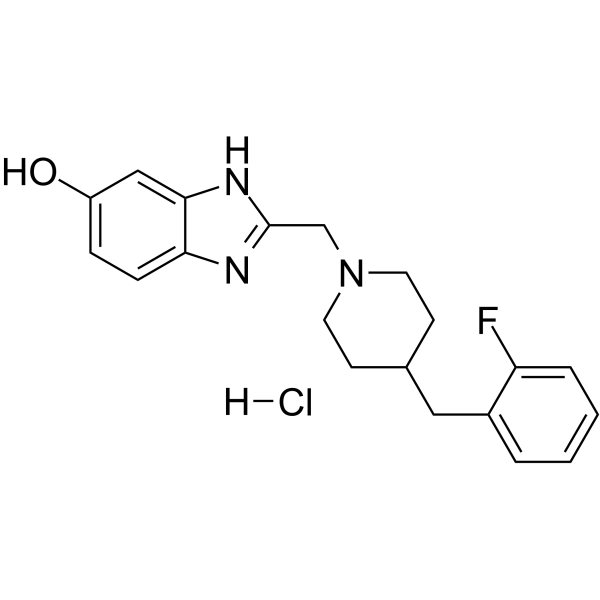 0 ImagesNMDA-IN-1 is a potent and NR2B-selective NMDA antagonist with Ki of 0.85 nM; NR2B Ca2+ influx IC50 is 9.7 nM; no activities on NR2A, NR2C, NR2D, hERG-channel and α1-adrenergic receptor.
-
L-Phenylalanine-d7
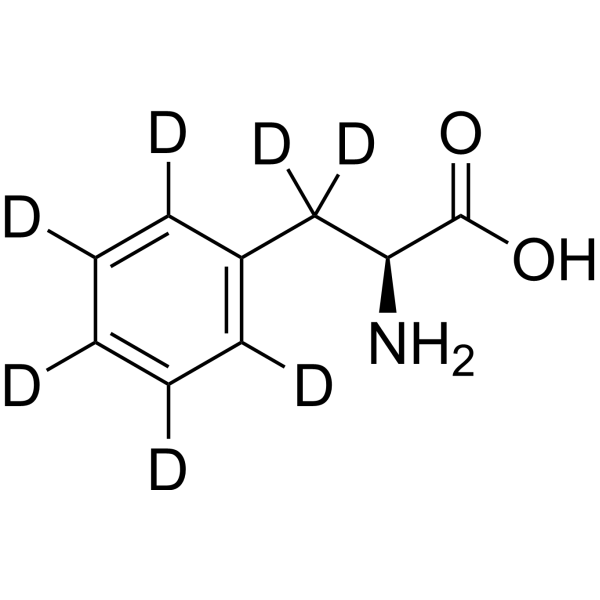 0 ImagesSynonyms: (S)-2-Amino-3-phenylpropionic acid-d7L-Phenylalanine-d7 is the deuterium labeled L-Phenylalanine. L-Phenylalanine ((S)-2-Amino-3-phenylpropionic acid) is an essential amino acid isolated from Escherichia coli. L-Phenylalanine is a α2δ subunit of voltage-dependent Ca+ channels antagonist with a Ki of 980 nM. L-phenylalanine is a competitive antagonist for the glycine- and glutamate-binding sites of N-methyl-D-aspartate receptors (NMDARs) (KB of 573 μM ) and non-NMDARs, respectively. L-Phenylalanine is widely used in the production of food flavors and pharmaceuticals.
-
NMDAR antagonist 3
 0 ImagesCat. No.: HY-W008038CAS No.: 39512-49-7NMDAR antagonist 3 (Compound 2) is an antagonist of the NMDA receptor. NMDAR antagonist 3 has a certain but weak inhibitory activity against the NR1A/2B subtype of the NMDA receptor.
-
Becampanel
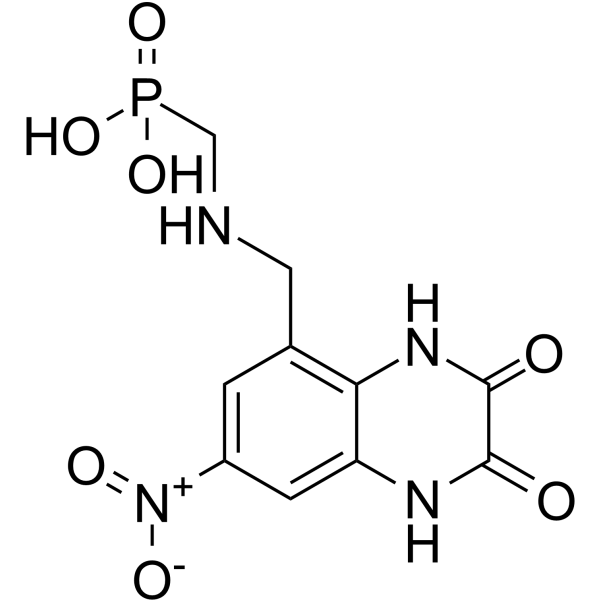 0 ImagesCat. No.: HY-15073CAS No.: 188696-80-2Synonyms: AMP 397Becampanel (AMP397) is the first competitive AMPA antagonist and an antiepileptic agent.
-
Topiramate-13C6
 0 ImagesCat. No.: HY-B0122SSynonyms: McN 4853-13C6; RWJ 17021-13C6Topiramate-13C6 (McN 4853-13C6) is the 13C labeled isotope of Topiramate (HY-B0122). Topiramate (McN 4853) is a broad-spectrum antiepileptic agent. Topiramate is a GluR5 receptor antagonist. Topiramate produces its antiepileptic effects through enhancement of GABAergic activity, inhibition of kainate/AMPA receptors, inhibition of voltage-sensitive sodium and calcium channels, increases in potassium conductance, and inhibition of carbonic anhydrase.
-
CFM-2
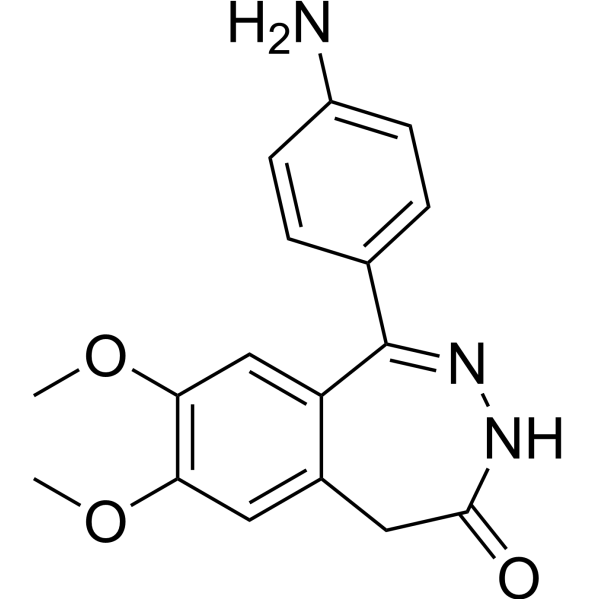 0 ImagesCFM-2 is a potent and selective non-competitive AMPAR antagonist. CFM-2 possesses anticonvulsant activity in various models of seizures.
-
4,5,6,7-Tetrahydroindazole
 0 ImagesCat. No.: HY-W066579CAS No.: 2305-79-54,5,6,7-Tetrahydroindazole acts as an Antimicrobial agent, an interleukin-2-induced T-cell kinase inhibitor, a positive allosteric modulator of AMPA receptors, and a ligand for CYP2E1, with a Kd1 value of 0.023 μM for its binding to rabbit-derived CYP2E1. 4,5,6,7-Tetrahydroindazole scavenges DPPH free radicals. It exhibits anti-tumor, anti-tuberculosis, and anti-inflammatory activities.




