



iGluR
Ionotropic glutamate receptors
iGluR (ionotropic glutamate receptor) is a ligand-gated ion channel that is activated by the neurotransmitter glutamate. iGluR are integral membrane proteins compose of four large subunits that form a central ion channel pore. Sequence similarity among all known glutamate receptor subunits, including the AMPA, kainate, NMDA, and δ receptors.
AMPA receptors are the main charge carriers during basal transmission, permitting influx of sodium ions to depolarise the postsynaptic membrane. NMDA receptors are blocked by magnesium ions and therefore only permit ion flux following prior depolarisation. This enables them to act as coincidence detectors for synaptic plasticity. Calcium influx through NMDA receptors leads to persistent modifications in the strength of synaptic transmission.
iGluR Isoform Specific Products
All Product Categories
-
iGluR Inhibitors
(131)
View all products
-
iGluR Agonists
(131)
View all products
-
iGluR Antagonists
(347)
View all products
-
iGluR Activators
(35)
View all products
-
iGluR Modulators
(94)
View all products
-
iGluR MDM2 Inhibitor
(1)
View all products
-
iGluR Controls
(5)
View all products
-
iGluR Ligands
(3)
View all products
-
iGluR Related Products (830)
Related Products (830)

-
Antibodies (11)
-
iGluR Isoform Comparison
-
Besonprodil
 0 ImagesCat. No.: HY-105403CAS No.: 253450-09-8Synonyms: CI-1041; Co 200461; PD 0196860Besonprodil (CI-1041) is a potent NMDA antagonist.
-
LSP-GR3 sodium scrambled negative control
 0 ImagesCat. No.: HY-148828CLSP-GR3 sodium scrambled negative control is the sequence scrambled negative control of LSP-GR3 sodium.
-
MN-05
 0 ImagesCat. No.: HY-126939CAS No.: 1835197-63-1MN-05 is a dual neuroprotective and vasodilatory NMDA receptor inhibitor.MN-05 blocks calcium influx, reduces free radical production, and maintains mitochondrial membrane potential in cortical neurons exposed to glutamate.MN-05 dilates aortic rings against phenylephrine-induced contraction.MN-05 protects neurons against glutamate-induced injury in vitro.MN-05 can be used for the research of neurodegenerative diseases.
-
D-AP4
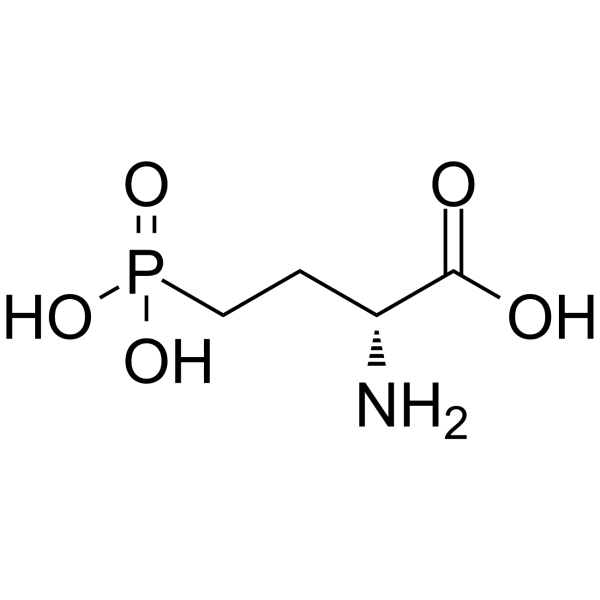 0 ImagesCat. No.: HY-100781CAS No.: 78739-01-2Synonyms: D-APB; D-2-Amino-4-phosphonobutyric acidD-AP4 (D-APB; D-2-Amino-4-phosphonobutyric acid), a phosphono analogue of glutamate, is an NMDA broad spectrum excitatory amino acid receptor antagonist. D-AP4 also is an agonist for a quisqualate-sensitized AP6 site in hippocampus. D-AP4 inhibits AMPA receptor-stimulated 57Co2+ influx in cultured cerebellar granule cells (IC50 ≥ 100 μM).
-
L-Phenylalanine-d1
 0 ImagesCat. No.: HY-178251SCAS No.: 55836-70-9L-Phenylalanine-d is the deuterium labeled L-Phenylalanine (HY-N0215). L-Phenylalanine ((S)-2-Amino-3-phenylpropionic acid) is an essential amino acid isolated from Escherichia coli. L-Phenylalanine is a α2δ subunit of voltage-dependent Ca2+ channels antagonist with a Ki of 980 nM. L-phenylalanine is a competitive antagonist for the glycine- and glutamate-binding sites of N-methyl-D-aspartate receptors (NMDARs) (KB of 573 μM ) and non-NMDARs, respectively. L-Phenylalanine is widely used in the production of food flavors and pharmaceuticals.
-
AMPA receptor modulator-7
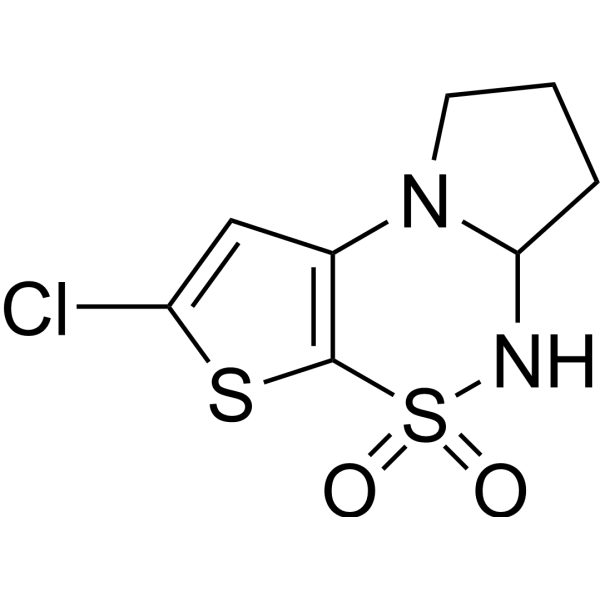 0 ImagesCat. No.: HY-161090AMPA receptor modulator-7 (compound 36) is a modulator of AMPA receptor. AMPA receptor modulator-7 has oral activity and can penetrate the blood-brain barrier.
-
17alpha-Hydroxywithanolide D
 0 ImagesCat. No.: HY-17032517alpha-Hydroxywithanolide D is the allosteric modulator for NMDA receptor with an IC50 of 44.24 nM. 17alpha-Hydroxywithanolide D exhibits neuroprotective activity and can be used in research of Alzheimer's disease disease.
-
4-Chlorokynurenine
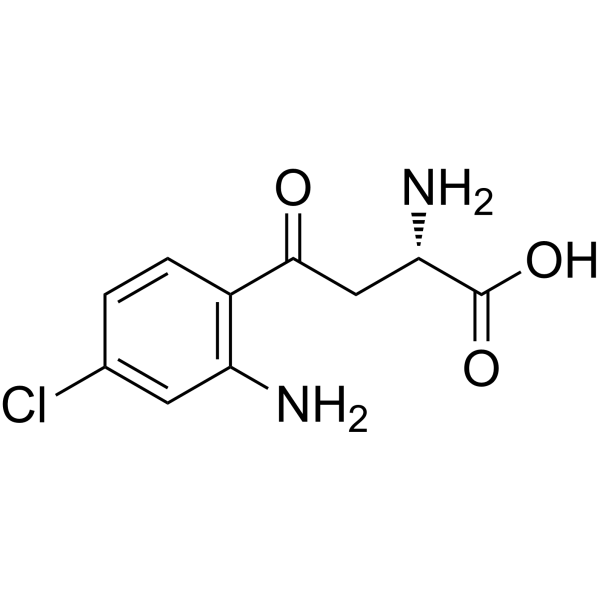 0 ImagesSynonyms: 4-Cl-KYN; AV-1014-Chlorokynurenine (4-Cl-KYN) is a prodrug of 7-Chlorokynurenic acid (NMDA receptor antagonist) (HY-100811). 4-Chlorokynurenine has orally activity and blood-brain permeability. 4-Chlorokynurenine can reduce depressive symptoms and neurotoxicity. 4-Chlorokynurenine can be used for the research of neurological disease, such as depression and seizure.
-
L-Aspartic acid potassium (Standard)
 0 ImagesCat. No.: HY-N0666ARCAS No.: 1115-63-5L-Aspartic acid potassium (Standard) is the analytical standard of L-Aspartic acid potassium (HY-N0666A). This product is intended for research and analytical applications. L-Aspartic acid potassium (potassium L-aspartate) is a NMDA receptor agonist and acidic amino acid. L-Aspartic acid potassium has no independent analgesic activity. L-Aspartic acid potassium can antagonize the analgesic effects of D-Aspartic acid and Morphine. L-Aspartic acid potassium regulates polymorph transformation, crystal growth/aggregation and nucleation processes of calcium carbonate, and can serve as a biomineralization template. L-Aspartic acid potassium promotes burst firing of central neurons. L-Aspartic acid potassium can be used in studies related to cerebral ischemia and epilepsy.
-
gamma-DGG acetate
 0 ImagesCat. No.: HY-100785ACAS No.: 2935387-13-4Synonyms: γDGG acetate; γ-D-Glutamylglycine acetategamma-DGG acetate (γDGG acetate) is a competitive AMPA receptor blocker. gamma-DGG acetate is also a reversible Excitatory post-synaptic potentials (e.p.s.p.s) antagonist.
-
NS3763
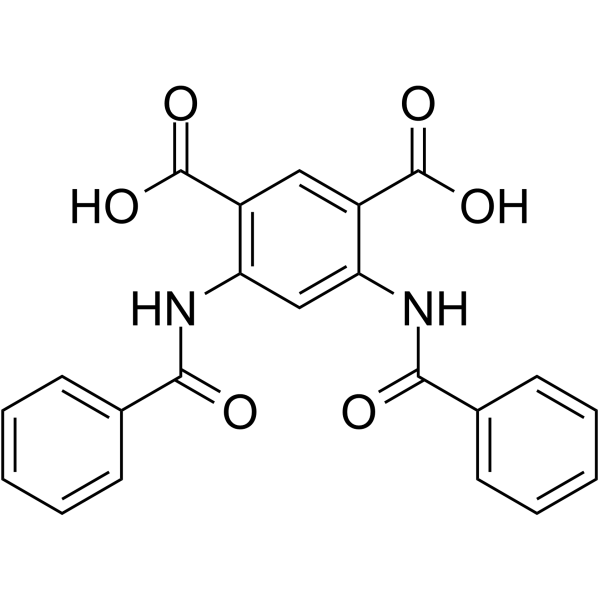 0 ImagesCat. No.: HY-107603CAS No.: 70553-45-6NS3763 is a selective and noncompetitive GLUK5 receptor antagonist with an IC50 of 1.6 µM. NS3763 does not show significant antagonistic properties on GLUK6, AMPA or NMDA receptors.
-
N,N-Dimethylglycine-d3 hydrochloride
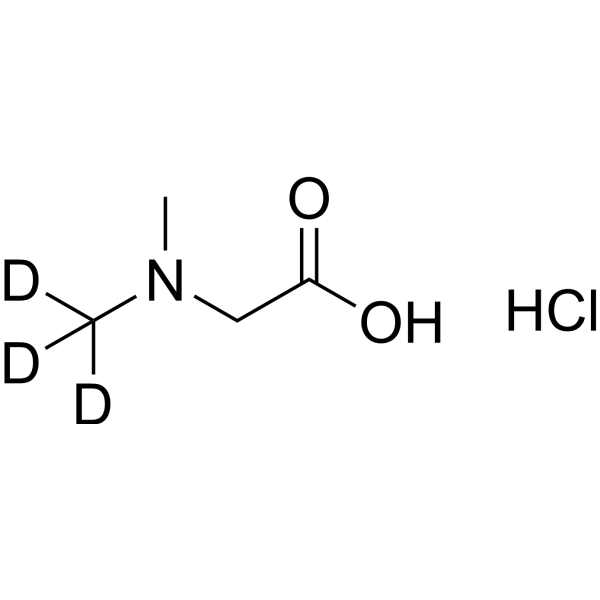 0 ImagesCat. No.: HY-W001158S1CAS No.: 1219795-14-8Synonyms: Dimethylglycine-d3 hydrochloride; DMG-d3 hydrochloride; N-Methylsarcosine-d3 hydrochlorideN,N-Dimethylglycine-d3 (Dimethylglycine-d3) hydrochloride is the deuterium labeled N,N-Dimethylglycine hydrochloride (HY-W001158). N,N-Dimethylglycine (Dimethylglycine) hydrochloride, a natural N-methylated glycine, is a nutrient supplement and acts as an NMDAR glycine site partial agonist. N,N-Dimethylglycine hydrochloride is a methyl donor that can improve immunity, act as an antioxidant to prevent oxidative stress, and scavenge excess free radicals. N,N-Dimethylglycine hydrochloride has antidepressant-like and surfactant effects.
-
Conantokin R
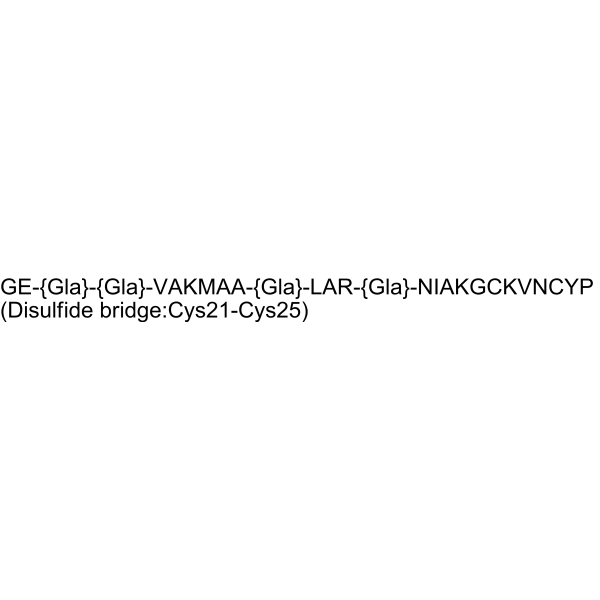 0 ImagesCat. No.: HY-P1285CAS No.: 202925-60-8Synonyms: Con-RConantokin R (Con-R) is an NMDA receptor peptide antagonist with an IC50 of 93 nM. Conantokin R binds Zn2+ and Mg2+ with Kds of 0.15 μM and 6.5 μM, respectively. Conantokin R shows anticonvulsant activity.
-
Ensaculin free base
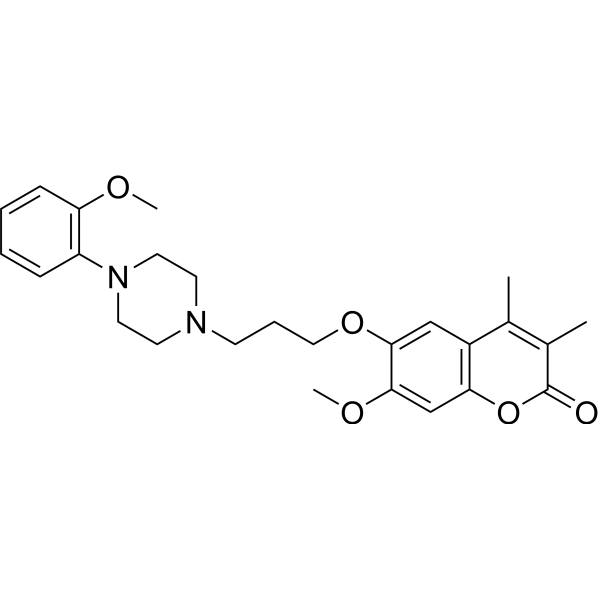 0 ImagesCat. No.: HY-19225ACAS No.: 155773-59-4Synonyms: KA-672; AnseculinEnsaculin free base (KA-672) is a NMDA antagonist and have high affinities to serotonergic 5-HT1A and 5-HT7 receptors, adrenergic α1, and dopaminergic D2 and D3 receptors. Ensaculin free base is a memory-enhancing agent. Ensaculin free base has the potential as an antidementia agent acting on various transmitter systems.
-
NMDA-IN-1 dihydrochloride
 0 ImagesCat. No.: HY-12962ACAS No.: 1784252-90-9NMDA-IN-1 dihydrochloride is a selective NMDA NR2B antagonist with a Ki of 0.85 nM; NR2B Ca2+ influx IC50 is 9.7 nM. NMDA-IN-1 dihydrochloride inhibits Glu/Gly stimulated Ca2+ flux in Ltk- cells expressing the hNR1a/NR2B with a IC50 of 9.7 nM. NMDA-IN-1 dihydrochloride has no activities on NR2A, NR2C, NR2D, hERG-channel and α1-adrenergic receptor. NMDA-IN-1 dihydrochloride shows excellent activity in the mechanical hyperalgesia assay in rats. NMDA-IN-1 dihydrochloride can be used for the studies of stroke, parkinson, and neuropathic pain.
-
Piracetam (Standard)
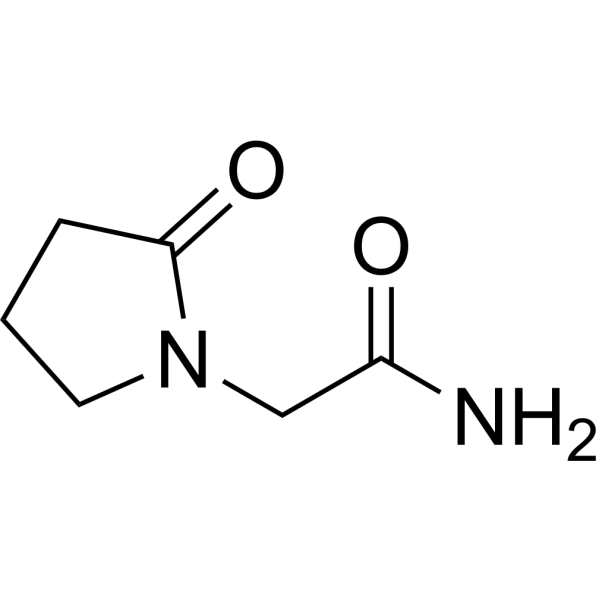 0 ImagesPiracetam (Standard) is the analytical standard of Piracetam. This product is intended for research and analytical applications. Piracetam (UCB-6215) is a cyclic derivative of the neurotransmitter gamma-aminobutyric acid (GABA), used in treatment of a wide range of cognitive disorders.
-
Sepimostat dimethanesulfonate
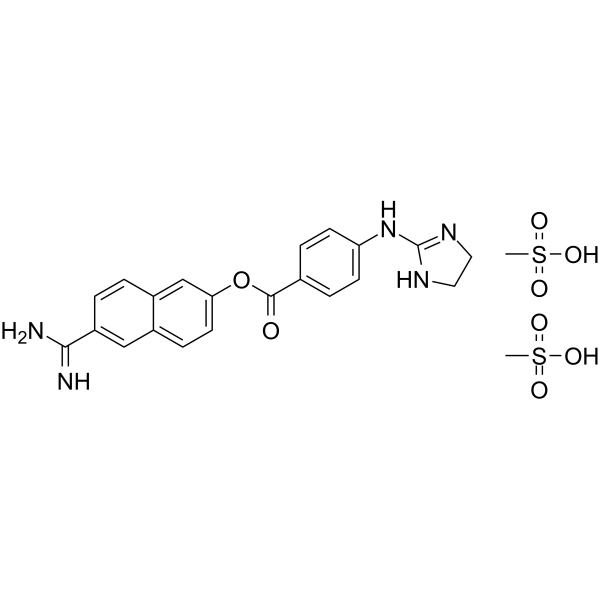 0 ImagesCat. No.: HY-136299ACAS No.: 103926-82-5Synonyms: FUT-187Sepimostat dimethanesulfonate (FUT-187) exhibits neuroprotective activity via NR2B N-methyl-D-aspartate receptor antagonism at the Ifenprodil-binding site of the NR2B subunit. Sepimostat dimethanesulfonate inhibits the Ifenprodil binding with a Ki value of 27.7 µM.
-
Nevadistinel
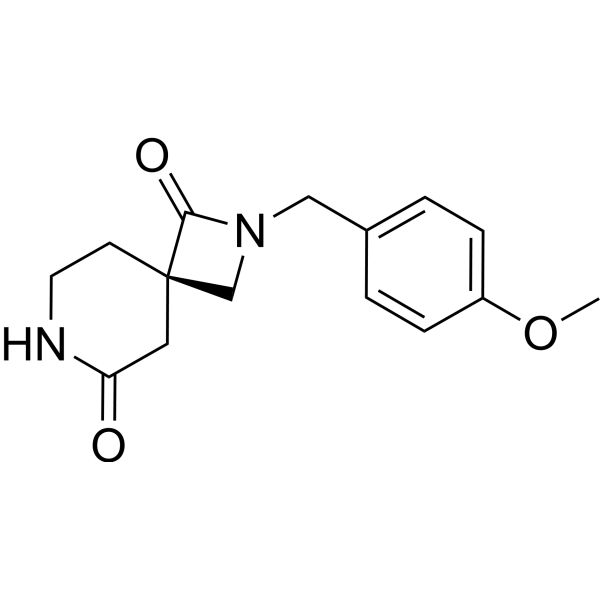 0 ImagesCat. No.: HY-156626CAS No.: 2181816-92-0Synonyms: NYX-458; NYX-3054Nevadistinel (NYX-458; NYX-3054) is a positive allosteric modulator of N-methyl-D-aspartate (NMDA) receptor. Nevadistinel can be used to inhibit cognitive impairment associated with neurodegenerative diseases, such as mild cognitive impairment, mild Alzheimer's disease, Parkinson's disease, Lewy body disease.
-
L-Phenylalanine-13C9,15N,d8
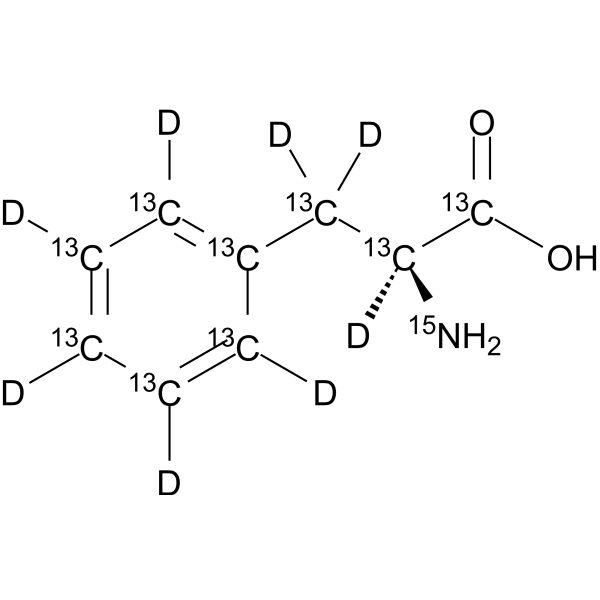 0 ImagesCat. No.: HY-N0215S9CAS No.: 1994331-22-4Synonyms: (S)-2-Amino-3-phenylpropionic acid-13C9,15N,d8L-Phenylalanine-13C9,15N,d8 is the deuterium, 13C-, and 15-labeled L-Phenylalanine. L-Phenylalanine ((S)-2-Amino-3-phenylpropionic acid) is an essential amino acid isolated from Escherichia coli. L-Phenylalanine is a α2δ subunit of voltage-dependent Ca+ channels antagonist with a Ki of 980 nM. L-phenylalanine is a competitive antagonist for the glycine- and glutamate-binding sites of N-methyl-D-aspartate receptors (NMDARs) (KB of 573 μM ) and non-NMDARs, respectively. L-Phenylalanine is widely used in the production of food flavors and pharmaceuticals.




