



mAChR
Muscarinic acetylcholine receptor
mAChRs (muscarinic acetylcholine receptors) are acetylcholine receptors that form G protein-receptor complexes in the cell membranes of certainneurons and other cells. They play several roles, including acting as the main end-receptor stimulated by acetylcholine released from postganglionic fibersin the parasympathetic nervous system. mAChRs are named as such because they are more sensitive to muscarine than to nicotine. Their counterparts are nicotinic acetylcholine receptors (nAChRs), receptor ion channels that are also important in the autonomic nervous system. Many drugs and other substances (for example pilocarpineand scopolamine) manipulate these two distinct receptors by acting as selective agonists or antagonists. Acetylcholine (ACh) is a neurotransmitter found extensively in the brain and the autonomic ganglia.
mAChR Isoform Specific Products
All Product Categories
-
mAChR Inhibitors
(115)
View all products
-
mAChR Agonists
(151)
View all products
-
mAChR Antagonists
(325)
View all products
-
mAChR Activators
(20)
View all products
-
mAChR Modulators
(48)
View all products
-
mAChR Inducer
(1)
View all products
-
mAChR Controls
(9)
View all products
-
mAChR Ligands
(10)
View all products
-
mAChR Related Products (731)
Related Products (731)

-
Antibodies (2)
-
mAChR Isoform Comparison
-
Oxyphencyclimine
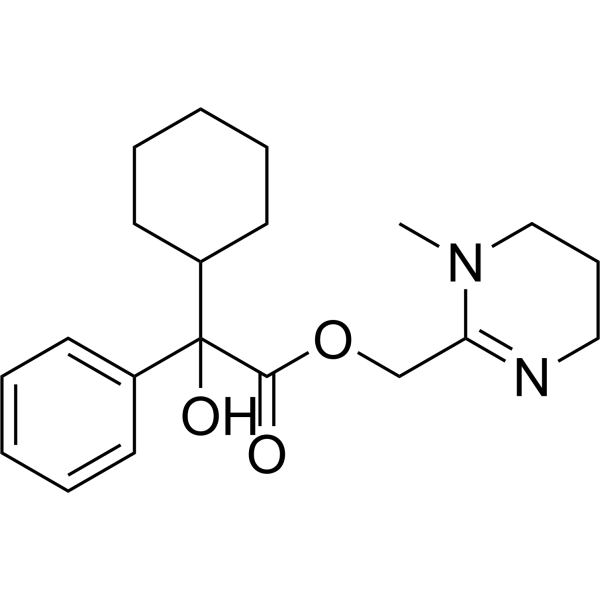 0 ImagesOxyphencyclimine is an orally active muscarinic receptor (mAChR) antagonist. Oxyphencyclimine is effective in reducing ulceration index and increasing pepsin activity in rat gastric ulcer model. Oxyphencyclimine can be used in studies of peptic ulcer disease and gastrointestinal spasm.
-
Benztropine-13C,d3 mesylate
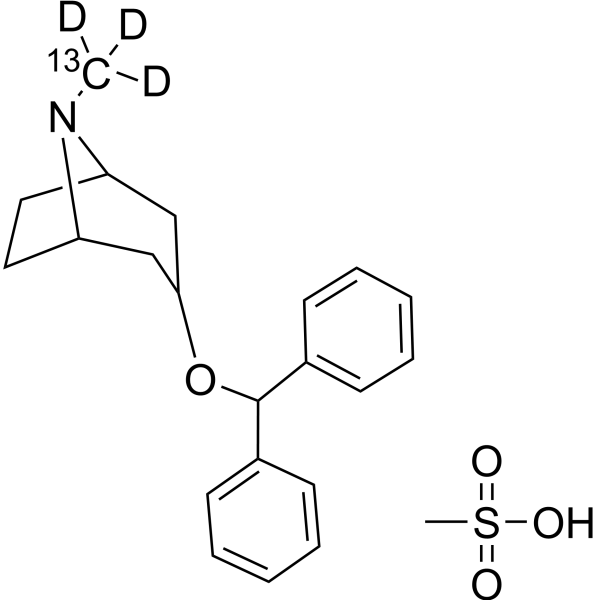 0 ImagesCat. No.: HY-B0520ASBenztropine-13C,d3 (mesylate) is the 13C- and deuterium labeled Benztropine (mesylate). Benztropine mesylate (Benzatropine mesylate) is an orally active centrally acting anticholinergic agent that can be used for Parkinson's disease research. Benztropine mesylate is an anti-histamine agent and a dopamine re-uptake inhibitor. Benztropine mesylate is also a human D2 dopamine receptor allosteric antagonist. Benztropine mesylate also has anti-CSCs (cancer stem cells) effects.
-
CI-933
 0 ImagesCat. No.: HY-106740CAS No.: 91829-95-7CI-933 is a nootropic. CI-933 can be used for the research of neurological disease.
-
Petiline
 0 ImagesCat. No.: HY-N15736CAS No.: 26989-18-4Petiline is a steroidal alkaloid found in Petilium raddeanum, acting as a selective antagonist of M cholinergic receptors. Petiline exerts anticholinergic effects (e.g., reducing vagal influence on the heart) by competitively blocking M cholinergic receptors, and also has central excitatory, cardiotonic, and spasmolytic activities. Petiline is promising for research of cholinergic system-related diseases (e.g., arrhythmia, intestinal spasm) .
-
Milameline
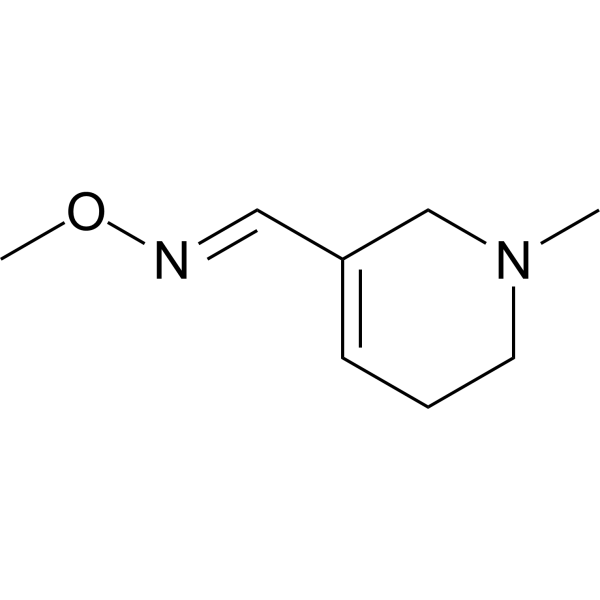 0 ImagesCat. No.: HY-135460CAS No.: 139886-32-1Synonyms: CI-979; RU35926Milameline (CI-979; RU35926) is a nonselective, partical and orally active muscarinic receptor agonist that improves cognition. Milameline has equal affinity for different subtypes of human muscarinic receptors with IC50 of 1.3 µM for M1-, 1.1 µM for M2-, 1.5 µM for M3-, and 1.9 µM for M4-muscarinic receptors. Milameline has a higher affinity for sites [3H]CMD (IC50 = 20 nM), than [3H]QNB, (IC50 = 3059 nM). Milameline produces both central and peripheral cholinergic effects and reverses the cognitive deficits induced by Scopolamine (HY-N0296). Milameline can be used for the study of Alzheimer’s Disease.
-
Atropine hydrobromide
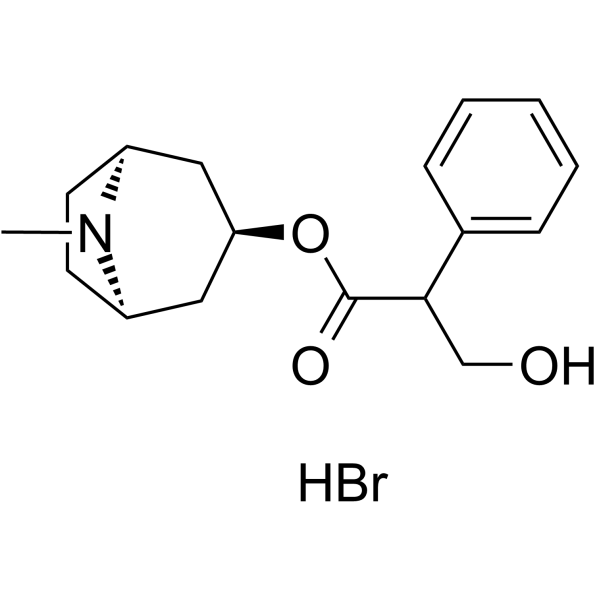 0 ImagesSynonyms: Tropine tropate hydrobromide; DL-Hyoscyamine hydrobromideAtropine (Tropine tropate) hydrobromide is a competitive muscarinic acetylcholine receptor (mAChR) antagonist with IC50 values of 0.39 and 0.71 nM for Human mAChR M4 and Chicken mAChR M4, respectively. Atropine hydrobromide inhibits ACh-induced relaxations in human pulmonary veins. Atropine hydrobromide can be used for research of anti-myopia and bradycardia.
-
M1R modulator-1
 0 ImagesCat. No.: HY-183487CAS No.: 2257498-40-9M1R modulator-1 is an orally effective positive allosteric modulator of muscarinic M1R, with an IP value of 0.88 nM. M1R modulator-1 can be used in constipation-related research.
-
Biperiden lactate
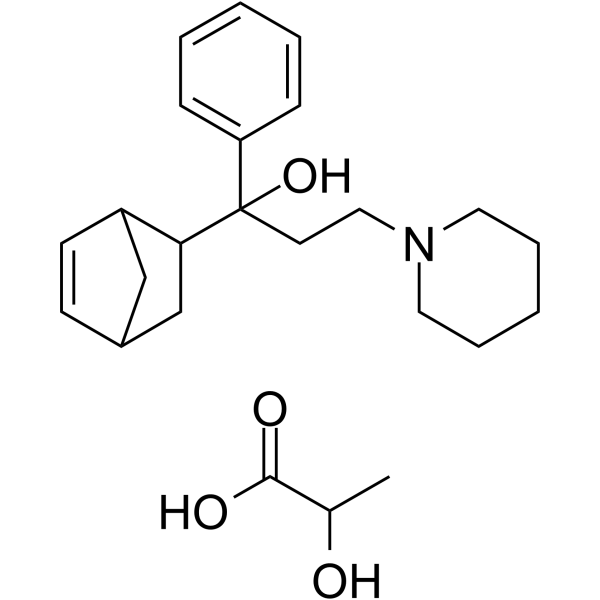 0 ImagesBiperiden (KL 373) lactate is an orally active non-selective muscarinic receptor antagonist that competitively binds to M1 muscarinic receptors. Biperiden (KL 373) lactate inhibits acetylcholine and enhances dopamine signaling in the central nervous system. Biperiden (KL 373) lactate has the potential for the research of Parkinson's disease and other related psychiatric disorders.
-
FK 584
 0 ImagesCat. No.: HY-19228CAS No.: 138951-54-9FK 584 is a potent detrusor muscle contraction inhibitor. FK 584 possesses potent antimuscarinic activity and weak calcium channel blocking activity. FK 584 has demonstrated potent detrusor muscle inhibitory activity in various experimental models with a manageable risk of mydriasis. FK 584 can be used to study overactive bladder (OAB).
-
(R,R)-Glycopyrrolate
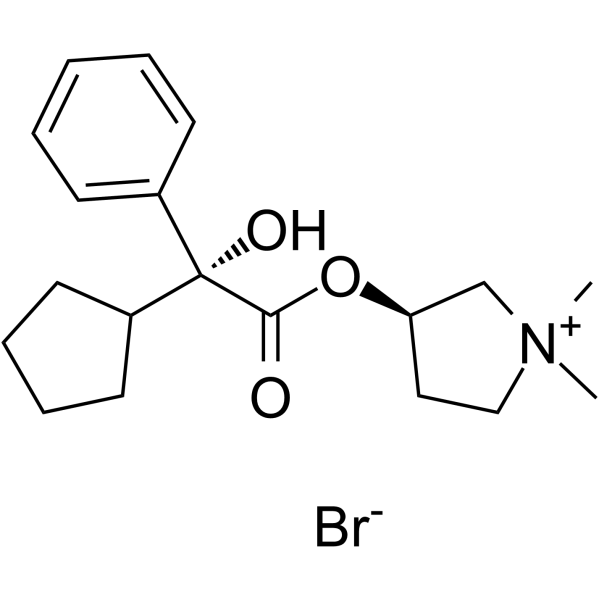 0 ImagesCat. No.: HY-B0761CAS No.: 475468-09-8Synonyms: (R,R)-Glycopyrronium bromide; (R,R)-Glycopyrrolate bromide(R,R)-Glycopyrrolate ((R,R)-Glycopyrronium (bromide); (R,R)-Glycopyrrolate (bromide)) is an anticholinergic agent. (R,R)-Glycopyrrolate ((R,R)-Glycopyrronium (bromide); (R,R)-Glycopyrrolate (bromide)) has the ability to reduce the frequency of drooling in vivo with developmental disabilities.
-
Muscarinic toxin 3
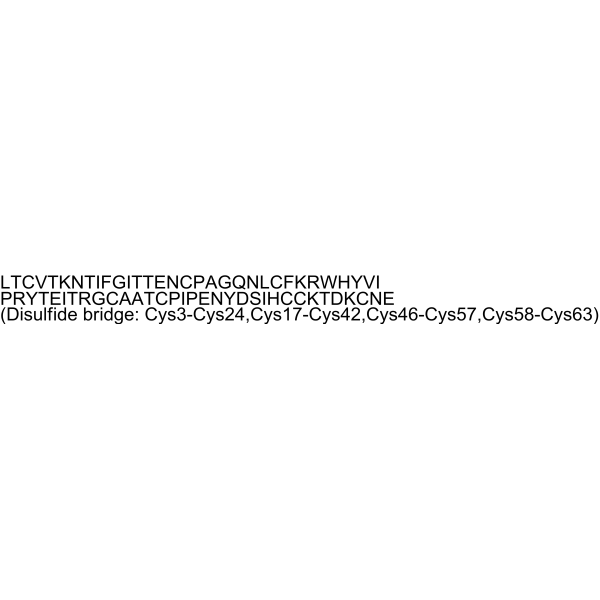 0 ImagesCat. No.: HY-P5846CAS No.: 873336-87-9Synonyms: MT3Muscarinic toxin 3 (MT3) is a potent and non-competitive mAChR and adrenoceptors antagonist with pIC50s of 6.71, 8.79, 8.86, 7.57, 8.13, 8.49, <6.5, 7.29 against M1, M4, α1A, α1B, α1D,α2A,α2B and α2C receptors, respectively. Muscarinic toxin 3 displays prominent adrenoceptor activity.
-
M4 mAChR Modulator-1
 0 ImagesCat. No.: HY-159177M4 mAChR Modulator-1 (compound 23i) is a M4 mAChR positive allosteric modulator (PAM). M4 mAChR Modulator-1 exhibits significantly greater cooperativity with ACh in β-arrestin recruitment over G protein activation. M4 mAChR Modulator-1 displays weak PAM effect in G protein-mediated responses, but strong PAM effect in β-arrestin recruitment.
-
Xanomeline-d11
 0 ImagesCat. No.: HY-105182SCAS No.: 2475185-31-8Synonyms: LY-246708-d11Xanomeline-d11 (LY-246708-d11) is the deuterium labeled Xanomeline (HY-105182). Xanomeline, as an effective and selective muscarinic type 1 and type 4 (M1/M4) receptor agonist, increases neuronal excitability. Xanomeline can be used for the research of neurological disorders, such as schizophrenia.
-
VU6077564
 0 ImagesCat. No.: HY-187355VU6077564 is a reversible competitive antagonist of M1 mAChR, with an IC50 of 31 nM in human (CHO cells) and 39.5 nM in rats. VU6077564 promotes axon growth of sensory neurons from adult rat dorsal root ganglia cultured in vitro. VU6077564 can be used for the research of peripheral neuropathy.
-
Lu 26-046
 0 ImagesCat. No.: HY-120329CAS No.: 143756-51-8Lu 26-046 is the agonist for muscarinic M1 receptor and M2 receptor and a weak antagonist for M3 receptor, with Ki of 0.51, 26 and 5 nM, respectively. Lu 26-046 exhibits specific stimulus property, that can be recognized by rats.
-
CI-1002
 0 ImagesCat. No.: HY-19181CAS No.: 149028-28-4Synonyms: PD 142676CI-1002 (PD 142676) is a potent acetylcholinesterase (AChE) and muscarinic antagonist. CI-1002 can be used for the study of the cognitive dysfunction of Alzheimer's disease (AD).
-
ADS1017
 0 ImagesCat. No.: HY-170444CAS No.: 1383657-36-0ADS1017 is the antagonist for histamine receptor and muscarinic receptor, that exhibits good affinities to hH3R, hH4R, hM2R and hM4R with pKi of 6.8, 5.5, 7.4 and 7.2. ADS1017 exhibits analgesic and anti-allodynic efficacy in mice Capsaicin (HY-10448)-or Oxaliplatin (HY-17371)-induced pain models.
-
Nebracetam
 0 ImagesCat. No.: HY-113970CAS No.: 97205-34-0Synonyms: WEB 1881 FUNebracetam (WEB 1881 FU) is an orally active M1 muscarinic receptor agonist. Nebracetam can induce an increase in intracellular Ca2+ concentration, with an EC50 value of 1.59 mM. Nebracetam exhibits neuroprotective activity and the ability to improve cognitive impairment. Nebracetam can be used in the research of neurological diseases such as Alzheimer's disease.

-
AF-DX 384 methanesulfonate
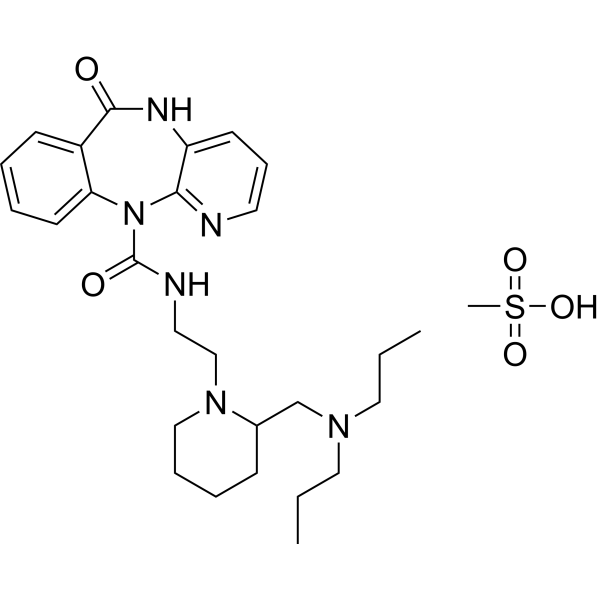 0 ImagesCat. No.: HY-124223CAS No.: 118290-27-0AF-DX 384 (methanesulfonate) is a selective antagonist of M2 and M4 muscarinic acetylcholine receptors (Kis=6.03 and 10 nM, respectively). AF-DX 384 (methanesulfonate) reverses deficits in novel object recognition and passive avoidance in aged rats, as well as in young rats with impairments induced by scopolamine.




