



mTOR
Mammalian target of Rapamycin
mTOR (mammalian target of Rapamycin) is a protein that in humans is encoded by the mTOR gene. mTOR is a serine/threonine protein kinase that regulates cell growth, cell proliferation, cell motility, cell survival, protein synthesis, and transcription. mTOR belongs to the phosphatidylinositol 3-kinase-related kinase protein family. mTOR integrates the input from upstream pathways, including growth factors and amino acids. mTOR also senses cellular nutrient, oxygen, and energy levels. The mTOR pathway is dysregulated in human diseases, such as diabetes, obesity, depression, and certain cancers. Rapamycin inhibits mTOR by associating with its intracellular receptor FKBP12. The FKBP12-rapamycin complex binds directly to the FKBP12-Rapamycin Binding (FRB) domain of mTOR, inhibiting its activity.
mTOR Isoform Specific Products
All Product Categories
-
mTOR Inhibitors
(551)
View all products
-
mTOR Agonists
(8)
View all products
-
mTOR Antagonist
(1)
View all products
-
mTOR Activators
(78)
View all products
-
mTOR Modulators
(16)
View all products
-
mTOR p53 Inhibitor
(1)
View all products
-
mTOR Degraders
(2)
View all products
-
mTOR Control
(1)
View all products
-
mTOR Substrate
(1)
View all products
-
mTOR Ligands
(2)
View all products
-
mTOR Related Products (701)
Related Products (701)

-
Antibodies (14)
-
mTOR Signaling Pathway
-
mTOR Isoform Comparison
-
ICSN3250 hydrochloride
 0 ImagesCat. No.: HY-112774ACAS No.: 1561902-79-1ICSN3250 hydrochloride is a halitulin analogue and a mTORC1 inhibitor. ICSN3250 hydrochloride directly binds to mTOR's FRB domain and displaces phosphatidic acid (PA), reversing mTORC1 activation. ICSN3250 hydrochloride shows high cytotoxicity in cancer cells (nanomolar concentration) through a caspase-independent cell death mechanism. ICSN3250 hydrochloride specifically inhibits the mTORC1 pathway, inducing autophagy and G0-G1 cell-cycle arrest in cancer cells. ICSN3250 hydrochloride can be used for the study of cancer .
-
Tirzepatide sodium
 0 ImagesCat. No.: HY-P1731CSynonyms: LY3298176 sodiumTirzepatide sodium (LY3298176 sodium) is a dual glucose-dependent insulinotropic polypeptide (GIP) and glucagon-like peptide-1 (GLP-1) receptor agonist. Tirzepatide sodium exerts anti-apoptotic and pro-differentiation effects via the pAkt/CREB/BDNF cascade and miRNA in neurons; in the heart, it promotes BCAA catabolism and inhibits the mTOR pathway by mediating the dephosphorylation of BCKDHA; meanwhile, it effectively reduces insulin and leptin levels and suppresses inflammatory responses at the systemic level. Tirzepatide sodium can be used for research on myocardial infarction, colon cancer, diabetes, diabetic cognitive impairment, neurodegeneration, diabetes-related neuropathy, and obesity.
-
PI3K/mTOR-IN-18
 0 ImagesCat. No.: HY-176854CAS No.: 1220699-39-7PI3K/mTOR-IN-18 (Compound 12) is a highly selective dual PI3K/mTOR inhibitor. PI3K/mTOR-IN-18 shows antitumor effects via competitive binding to PI3Kα (Ki=0.130 nM) and mTOR (Ki=0.111 nM). PI3K/mTOR-IN-18 blocks the PI3K/AKT/mTOR pathway and inhibits tumor cell proliferation (IC50=144 nM). PI3K/mTOR-IN-18 is promising for research of solid tumors (e.g., breast, NSCLC).
-
PI3K/mTOR Inhibitor-14
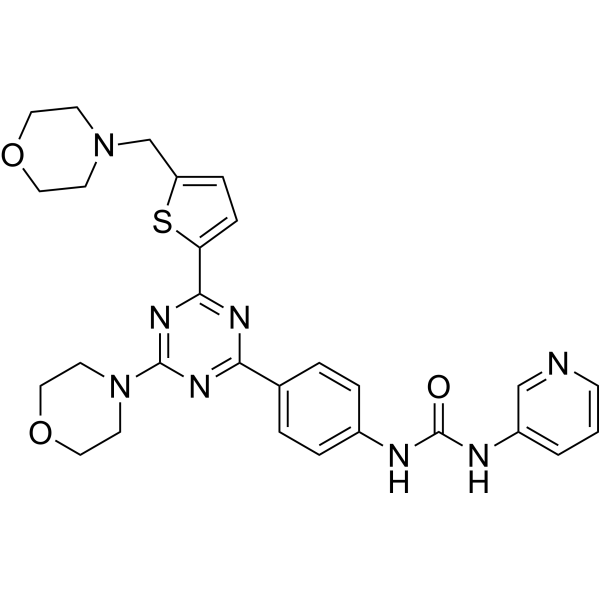 0 ImagesCat. No.: HY-156445CAS No.: 2919684-77-6
-
mTOR/HDAC6-IN-1
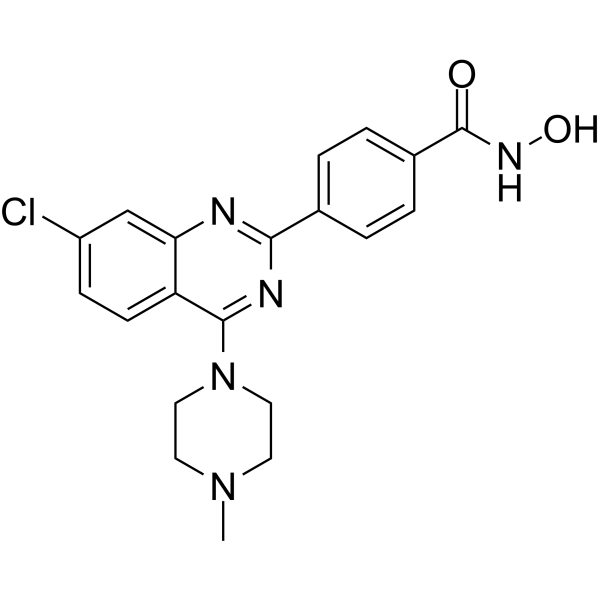 0 ImagesCat. No.: HY-144449CAS No.: 2986747-52-6
-
Daporinad hydrochloride
 0 ImagesCat. No.: HY-50876ACAS No.: 2727965-45-7Synonyms: FK866 hydrochloride; APO866 hydrochlorideDaporinad (FK866) hydrochloride is a non-competitive inhibitor of nicotinamide phosphoribosyltransferase (Nampt), with a Ki value of 0.3 nM. Daporinad hydrochloride depletes NAD+ and ATP levels, inhibits mTORC1 and MAPK/ERK pathways, and activates TFEB to induce autophagy. Daporinad hydrochloride causes the depletion of the endoplasmic reticulum Ca²⁺ pool, ultimately weakening the mitogen-induced Ca²⁺ signal and the activation and function of T cells. Daporinad hydrochloride induces cell cycle arrest and apoptosis, and inhibits cell proliferation. Daporinad hydrochloride can be used for the study of myeloma, liver cancer, and immunosuppression.
-
Phanginin H
 0 ImagesCat. No.: HY-N21627CAS No.: 1011528-65-6Phanginin H is an Autophagy inducer with an IC50 of 18.13 μM in PANC-1 cells. Phanginin H induces Reactive Oxygen Species accumulation and mitochondrial depolarization, activates AMPK signaling, inhibits mTORC1/ULK signaling and promotes autophagic flux, and simultaneously induces G2/M phase cell cycle arrest, thereby inhibiting PANC-1 cell proliferation, spheroid formation, and migration. Phanginin H can be used in research related to pancreatic ductal adenocarcinoma.
-
ROR1-IN-3
 0 ImagesCat. No.: HY-174382ROR1-IN-3 (Compound 24d) is a potent and highly selective ROR1 kinase inhibitor (IC50 = 17.6 nM). ROR1-IN-3 demonstrates robust antitumor activity and inhibitory effect against ROR1 both in vitro and in vivo. ROR1-IN-3 has robust antiproliferative efficacy in vitro and in vivo. ROR1-IN-3 induces apoptosis in cancer cell lines. ROR1-IN-3 inhibits ROR1 downstream AKT/mTOR and NF-κB signaling pathway. ROR1-IN-3 can be studied in antitumor research.
-
Bisdemethoxycurcumin
 0 ImagesCat. No.: HY-N2942CAS No.: 52328-96-8Bisdemethoxycurcumin is an orally effective curcuminoid. Bisdemethoxycurcumin downregulates pro-inflammatory cytokines in macrophages by inhibiting the phosphorylation of PI3K/Akt and p38 MAPK. Bisdemethoxycurcumin relieves autophagy inhibition and promotes lipophagy to clear vascular smooth muscle foam cells by inhibiting the PDK1/Akt/mTOR pathway. Bisdemethoxycurcumin activates the cAMP/Epac/AMPKα axis and the NRF2/HO-1 antioxidant axis, thereby indirectly inhibiting the phosphorylation of NF-κB p65 and pro-inflammatory outputs such as IL-1β/IL-6/TNF-α, so as to alleviate pulmonary oxidative stress, inflammatory infiltration and pulmonary edema. Bisdemethoxycurcumin blocks NLRP3-mediated pyroptosis and protects cartilage extracellular matrix degradation by activating NRF2/HO-1. Bisdemethoxycurcumin also exerts a synergistic effect with potassium iodide against Candida.
-
PI3K/mTOR Inhibitor-7
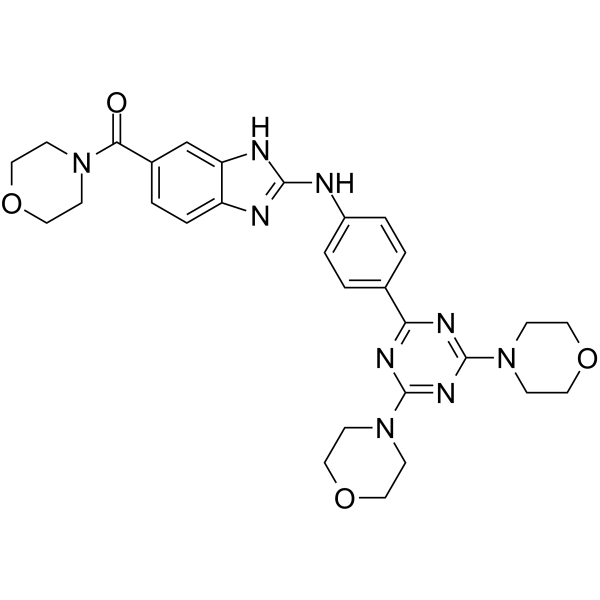 0 ImagesCat. No.: HY-147614CAS No.: 2456295-65-9PI3K/mTOR Inhibitor-7 (Compound 19i) is a potent and dual inhibitor of PI3K/mTOR. PI3K/mTOR Inhibitor-7 shows 4.7-fold higher potency than the positive control gedatolisib (0.3 vs. 1.4 μM, IC50 values). PI3K/mTOR Inhibitor-7 significantly suppresses the PI3K/Akt/mTOR signaling pathway at 10 μM. PI3K/mTOR Inhibitor-7 has the potential for the research of cancer diseases.
-
PI3K/Akt/mTOR-IN-7
 0 ImagesCat. No.: HY-183272CAS No.: 2925588-01-6PI3K/Akt/mTOR-IN-7 is an AKT/mTOR and JAK2/STAT3 inhibitor. PI3K/Akt/mTOR-IN-7 restores p-Akt, p-mTOR, and p-STAT3 expression, reduces pro-apoptotic Caspase-3 mRNA expression. PI3K/Akt/mTOR-IN-7 reduces intracellular ROS accumulation and inhibits NO production. PI3K/Akt/mTOR-IN-7 can be used for research on stroke, Alzheimer's disease and Parkinson's disease.
-
CAII/VII-IN-1
 0 ImagesCat. No.: HY-178362CAS No.: 3085155-69-4CAII/VII-IN-1 is an orally active hCA II (KI = 12.3 nM), and hCA VII (KI = 22.6 nM) inhibitor, showing no significant activity against hCA I. CAII/VII-IN-1 shows excellent neuroprotective activity in vivo Pilocarpine (HY-B0726A)-induced seizure model. CAII/VII-IN-1 can upregulate KCC2 and inhibit mTOR, exerting neuroprotective effects. CAII/VII-IN-1 does not show any significant neurotoxic effects or alterations in liver and kidney function. CAII/VII-IN-1 can be used for the study of epilepsy.
-
PI3K/Akt/mTOR-IN-6
 0 ImagesCat. No.: HY-180853PI3K/Akt/mTOR-IN-6 (Compound JW4) is an orally active PI3K/Akt/mTOR pathway inhibitor. PI3K/Akt/mTOR-IN-6 induces Apoptosis in cells via the mitochondrial pathway. PI3K/Akt/mTOR-IN-6 shows potent anti-NSCLC activity.
-
Topo I/II-IN-2
 0 ImagesCat. No.: HY-170912Topo I/II-IN-2 (Compound 3g) is an inhibitor of Topo I and Topo II. Topo I/II-IN-2 inhibits NCI-H446 cells and NCI-H1048 cells with IC50s of 1.30 μM and 1.42 μM, respectively. Topo I/II-IN-2 induces mitochondrial Apoptosis, mitochondrial dysfunction and activity generation. Topo I/II-IN-2 inhibits the PI3K/Akt/mTOR pathway. Topo I/II-IN-2 prevents SCLC (small cell lung cancer) cell proliferation, invasion, and migration in vitro. .
-
α-Solanine (Standard)
 0 ImagesCat. No.: HY-N6602RCAS No.: 20562-02-1α-Solanine (Standard) is the analytical standard of α-Solanine. This product is intended for research and analytical applications. α-solanine, a bioactive component and one of the major steroidal glycoalkaloids in Solanum nigrum, has been observed to inhibit growth and induce apoptosis in cancer cells.
-
Sialorphin
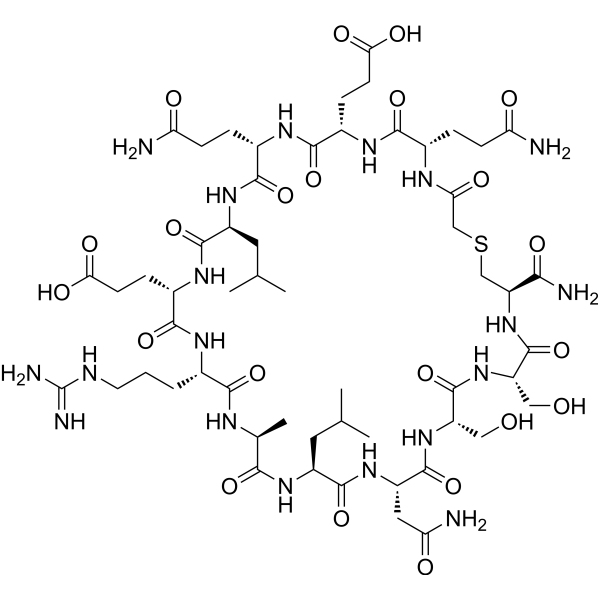
 0 ImagesCat. No.: HY-P11642CAS No.: 131748-26-0Sialorphin is a neutral endopeptidase (NEP) and aminopeptidase N (APN) inhibitor that responds to androgen signals. Sialorphin blocks the degradation of endogenous opioid peptides and interacts with μ-, δ-, κ-opioid receptors. Sialorphin regulates the ERK/mTOR signaling pathway by inducing cell cycle arrest, enhancing ERK1/2 activity, and reducing the phosphorylation levels of mTOR, 4E-BP1, p70S6K; accordingly, Sialorphin exhibits antiproliferative activity against colorectal cancer, glioma and prostate cancer cells without cytotoxicity. In addition, Sialorphin also produces antinociceptive responses, regulates sexual behavior, relaxes corpus cavernosum smooth muscle, and alleviates experimental colitis. Sialorphin is also a copper (II) ion-binding ligand. Sialorphin has been used in mechanistic studies related to cancer, pain management and inflammatory bowel disease.
-
Nur77 modulator 3
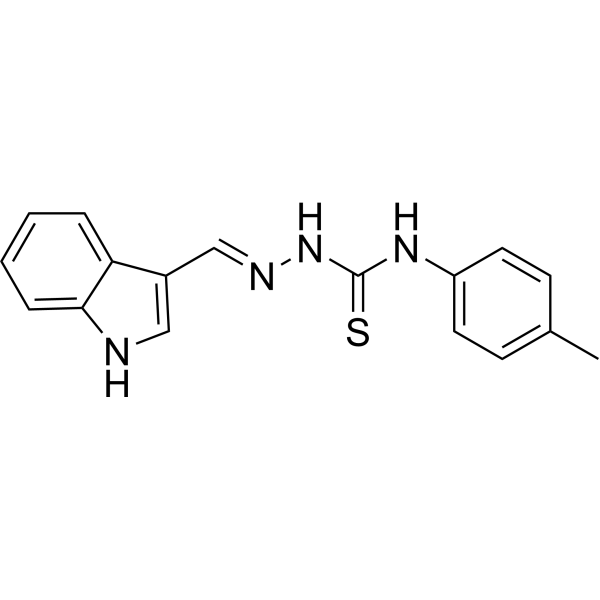 0 ImagesNur77 modulator 3 is a Nur77 modulator. Nur77 modulator 3 induces Nur77 expression, inhibits hepatic stellate cells (HSCs) activation, and reduces extracellular matrix (ECM) deposition. Nur77 modulator 3 enhances Nur77-denpendent autophagic flux and significantly inhibits the mTORC1 signaling pathway. Nur77 modulator 3 ameliorates HSCs activation, inflammation and hepatic fibrosis in vivo.
-
ALK-IN-31
 0 ImagesCat. No.: HY-173493CAS No.: 3043840-25-8ALK-IN-31 (Compound Ld-10) is an orally active ALK inhibitor (IC50: 1135 nM). ALK-IN-31 exhibits excellent antiproliferative activity against lung cancer H2228 cells with an IC50 value of 1.35 μM. ALK-IN-31 induces apoptosis and arrests cell proliferation in the G0/G1 phase by affecting mitochondrial function. ALK-IN-31 exerts its anti-tumor effect by downregulating the expression of p-AKT and p-mTOR in the PI3K-AKT-mTOR signaling pathway downstream of ALK. ALK-IN-31 can be used in the study of non-small cell lung cancer (NSCLC).




