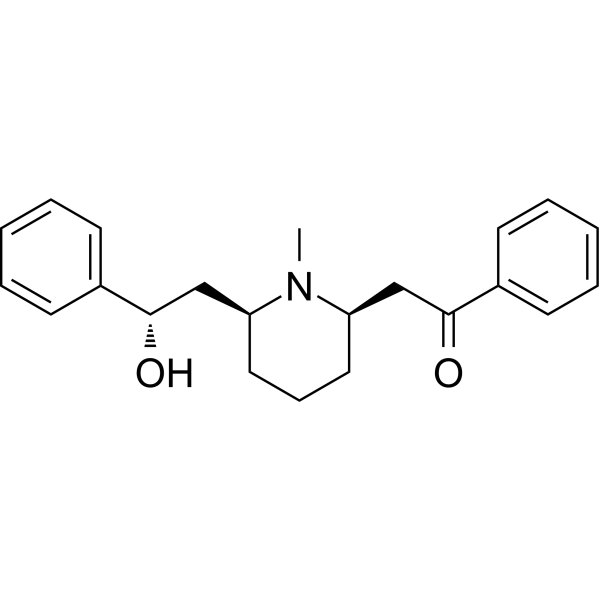
nAChR
Nicotinic acetylcholine receptors
nAChRs (nicotinic acetylcholine receptors) are neuron receptor proteins that signal for muscular contraction upon a chemical stimulus. They are cholinergic receptors that form ligand-gated ion channels in the plasma membranes of certain neurons and on the presynaptic and postsynaptic sides of theneuromuscular junction. Nicotinic acetylcholine receptors are the best-studied of the ionotropic receptors. Like the other type of acetylcholine receptor-the muscarinic acetylcholine receptor (mAChR)-the nAChR is triggered by the binding of the neurotransmitter acetylcholine (ACh). Just as muscarinic receptors are named such because they are also activated by muscarine, nicotinic receptors can be opened not only by acetylcholine but also by nicotine —hence the name "nicotinic".
All Product Categories
-
nAChR Related Products (481)
Related Products (481)

-
Antibodies (5)
-
(±)-Nornicotine (Standard)
 0 ImagesSynonyms: Nornicotine (Standard)(±)-Nornicotine (Standard) is the analytical standard of (±)-Nornicotine (HY-W002112). This product is intended for research and analytical applications. (±)-Nornicotine is a major metabolite of Nicotine. (±)-Nornicotine is a partial nAChRs agonist, specifically activating receptor subtypes containing α7 and α6 subunits. (±)-Nornicotine disrupts β-catenin and ZO-1, and induces F-actin depolymerization. (±)-Nornicotine supports self-administration behavior. (±)-Nornicotine can be used in the research of atherosclerosis, Alzheimer's disease, and schizophrenia.
-
Sazetidine A hydrochloride
 0 ImagesCat. No.: HY-14319ACAS No.: 1197329-42-2Sazetidine A hydrochloride is a potent ligand for the α4β2 nicotinic acetylcholine receptor, exhibiting high binding affinities and selectivity towards this subtype. Sazetidine A hydrochloride demonstrates promising pharmacological properties that could potentially contribute to the development of therapies targeting nicotinic receptor-related conditions. Sazetidine A hydrochloride has been implicated in studies examining the binding affinities of various analogs, highlighting its significance in understanding subtype selectivity among nAChR ligands.
-
Mecamylamine hydrochloride-13C4,15N
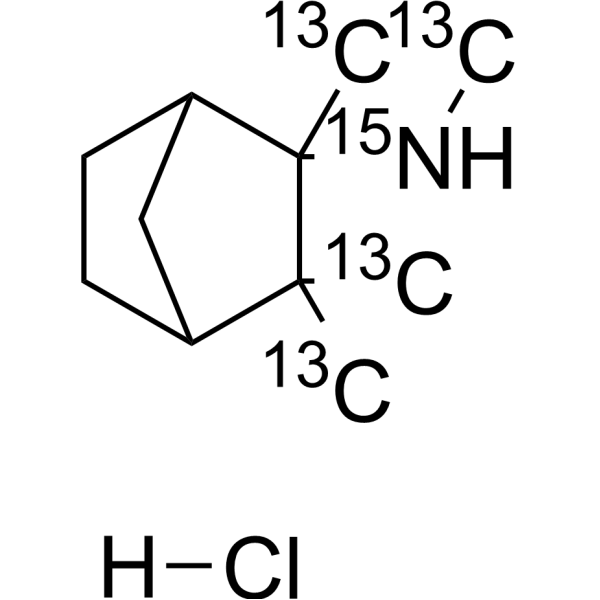 0 ImagesCat. No.: HY-B1395S1Mecamylamine (hydrochloride)-13C4,15N is the 13C-labeled and 15N-labeled Mecamylamine hydrochloride. Mecamylamine hydrochloride is an orally active, nonselective, noncompetitive nAChR antagonist that can treat various neuropsychiatric disorders. Mecamylamine hydrochloride is originally used as a ganglionic blocker in treating hypertension. Mecamylamine hydrochloride can easily crosses the blood-brain barrier.
-
A 844606
 0 ImagesCat. No.: HY-107677CAS No.: 861119-08-6A 844606 is a highly potent and selective α4β2 nAChR agonist. A 844606 can be used in the study of schizophrenia, Huntington's disease, Alzheimer's disease, and Parkinson's disease.
-
Migrastatin
 0 ImagesCat. No.: HY-121452CAS No.: 314245-65-3Migrastatin is a typical Fascin1 inhibitor. Migrastatin is isolated from a cultured broth of Streptomyces sp. MK929-43F1. Migrastatin inhibits tumor cell migration.
-
VU6007496
 0 ImagesCat. No.: HY-168025CAS No.: 2127101-85-1VU6007496 is a highly selective and CNS penetrant M1 positive allosteric modulator (PAM). VU6007496 shows excellent pharmacokinetics (PK).
-
VU6001221
 0 ImagesCat. No.: HY-123858CAS No.: 2002495-17-0VU6001221 is a blood-brain barrier permeable Choline Transporter (CHT) inhibitor (IC50 = 270 nM). VU6001221 increases the likelihood of extracellular choline elevation activating synaptic α7 nicotine ACh receptors. VU6001221 attenuates potassium-induced ACh levels in the prefrontal cortex.
-
Dinotefuran (Standard)
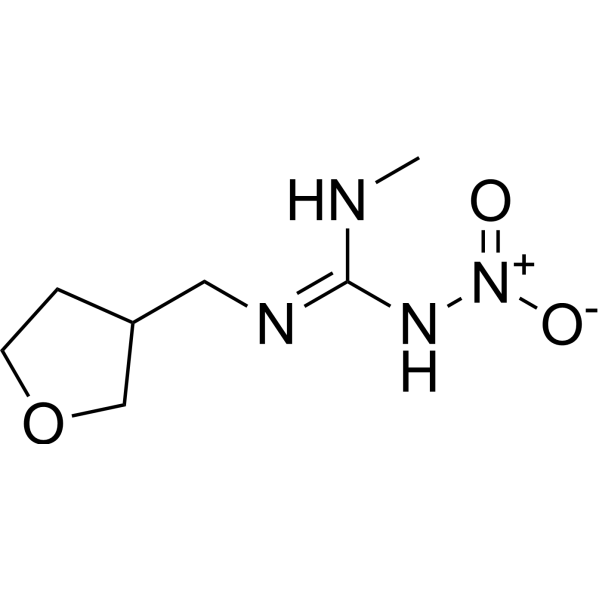 0 ImagesSynonyms: MTI-446 (Standard)Dinotefuran (Standard) is the analytical standard of Dinotefuran. This product is intended for research and analytical applications.
-
Altinicline
 0 ImagesCat. No.: HY-14318CAS No.: 179120-92-4Synonyms: SIB-1508Y free baseAltinicline (SIB-1508Y free base) is a selective α4β2 nicotinic acetylcholine receptor (nAChR) agonist, with no activity against α7 or α1β1γδ nAChRs and only extremely low activity against α3β4 nAChRs. Altinicline reverses escape deficits and increases avoidance responses. Altinicline is applicable to research related to depression.
-
Lemairamin
 0 ImagesSynonyms: Wgx-50Lemairamin (Wgx-50) is a hydroxylamine compound. Lemairamin can be isolated from the pericarps of the Zanthoxylum plants. Lemairamin activates α7nAChR, stimulates the expression of IL-10 and POMC. Lemairamin shows a decrease in Akt. Lemairamin attenuates DSS-induced intestinal inflammation. Lemairamin alleviates pain hypersensitivity.
-
(R)-Dinotefuran
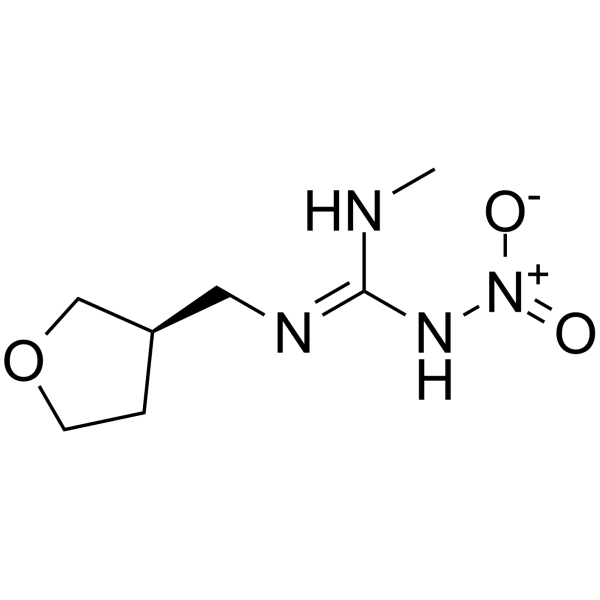 0 ImagesCat. No.: HY-B0827ACAS No.: 406466-53-3Synonyms: (R)-MTI-446(R)-Dinotefuran ((R)-MTI-446), a neonicotinoid pesticide, exhibits comparative insecticidal activities (1.7-2.4 times) to typical sucking pests Aphis gossypii and Apolygus lucorum compared to racemic mixtures by inhibiting nicotinic acetylcholine receptors. (R)-Dinotefuran has a good efficacy in controlling target pests while minimizing hazard to honeybees.
-
Anabasine hydrochloride
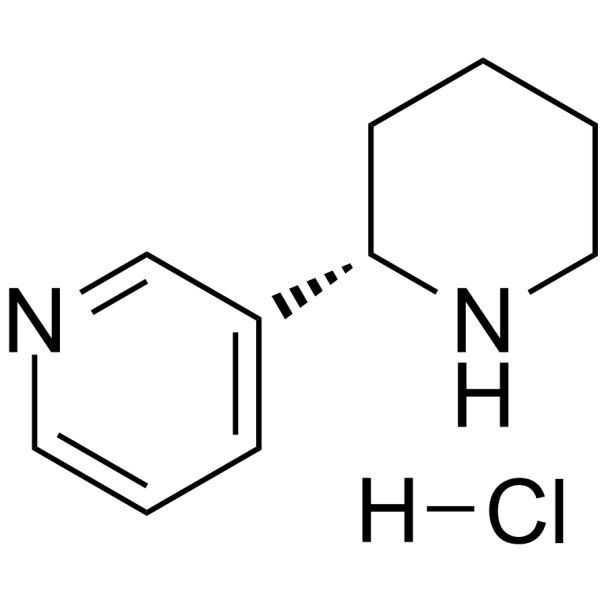 0 ImagesCat. No.: HY-W014928CAS No.: 53912-89-3Synonyms: (S)-Anabasine hydrochloride; (+)-Anabasine hydrochlorideAnabasine ((S)-Anabasine) hydrochloride is an alkaloid that found as a minor component in tobacco (Nicotiana). Anabasine is a botanical pesticide nicotine, acts as a full agonist of nicotinic acetylcholine receptors (nAChRs). Anabasine induces depolarization of TE671 cells endogenously expressing human fetal muscle-type nAChRs (EC50=0.7 µM).
-
Nanofin-d5
 0 ImagesCat. No.: HY-B1191S1Synonyms: 2,6-Lupetidine-d5
-
Chlorisondamine
 0 ImagesChlorisondamine is a nicotinic antagonist that acts as a ganglionic blocker and has been utilized to evaluate the neurogenic contributions to blood pressure and sympathetic vasomotor tone in animal models. Chlorisondamine has demonstrated antihypertensive properties, primarily being assessed through its effects on blood pressure, cardiac output, and heart rate in various experimental settings, particularly in mice.
-
nAChR agonist CMPI hydrochloride
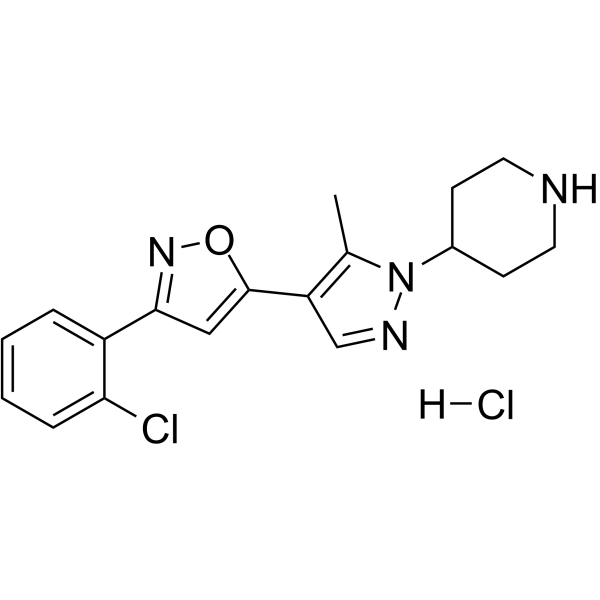 0 ImagesCat. No.: HY-136258CAS No.: 2250025-94-4nAChR agonist CMPI hydrochloride is a potent and selective positive allosteric modulator (PAM) of nAChR containing a α4:α4 subunit interface. nAChR agonist CMPI hydrochloride enhances the response of (α4)3(β2)2 nAChR to ACh (10 µM) with an EC50 of 0.26 µM. nAChR agonist CMPI hydrochloride has potential for the research of nicotine dependence and many neuropsychiatric conditions associated with decreased brain cholinergic activity.
-
SEN 78702
 0 ImagesCat. No.: HY-18176CAS No.: 1205530-63-7SEN 78702 is an orally active, selective, full α7 nAChR agonist, with a pEC50 of 6.13. SEN 78702 has an acceptable hERG inhibition (IC50: 15.8 μM). SEN 78702 induces memory enhancement.
-
(-)-Anatoxin A
 0 ImagesCat. No.: HY-134045CAS No.: 92142-32-0