



nAChR
Nicotinic acetylcholine receptors
nAChRs (nicotinic acetylcholine receptors) are neuron receptor proteins that signal for muscular contraction upon a chemical stimulus. They are cholinergic receptors that form ligand-gated ion channels in the plasma membranes of certain neurons and on the presynaptic and postsynaptic sides of theneuromuscular junction. Nicotinic acetylcholine receptors are the best-studied of the ionotropic receptors. Like the other type of acetylcholine receptor-the muscarinic acetylcholine receptor (mAChR)-the nAChR is triggered by the binding of the neurotransmitter acetylcholine (ACh). Just as muscarinic receptors are named such because they are also activated by muscarine, nicotinic receptors can be opened not only by acetylcholine but also by nicotine —hence the name "nicotinic".
All Product Categories
-
nAChR Related Products (475)
Related Products (475)

-
Antibodies (5)
-
WrFr-OCH3
 0 ImagesCat. No.: HY-P11860WrFr-OCH3 is a competitive nAChR inhibitor, with IC50 values of 291.9 nM, 25.3 nM, 477.5 nM and 36.5 nM against hα1β1εδ nAChR, hα9α10 nAChR, hα7 nAChR and hα9 nAChR, respectively. WrFr-OCH3 exhibits analgesic and muscle relaxant effects, reduces forelimb grip strength in rats, and alleviates Oxaliplatin (HY-17371)-induced cold allodynia in rats. WrFr-OCH3 can be used in studies related to cold allodynia.
-
nAChR modulator-1
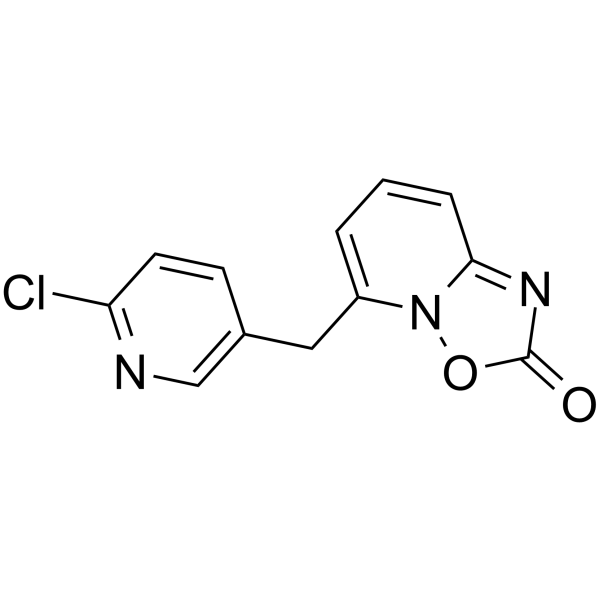 0 ImagesCat. No.: HY-145299CAS No.: 1902218-84-1
-
(R)-(+)-Anatabine
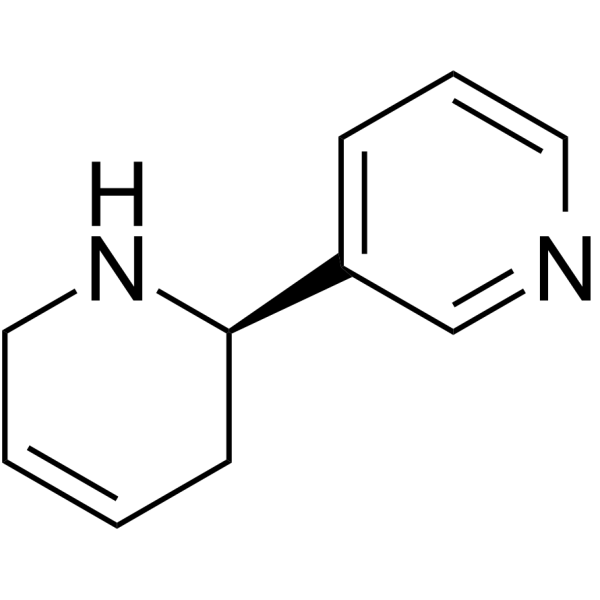 0 ImagesCat. No.: HY-126047BCAS No.: 126454-22-6(R)-(+)-Anatabine is an less active R-enantiomer of Anatabine. Anatabine is a potent α4β2 nAChR agonist. Anatabine inhibits NF-κB activation lower amyloid-β (Aβ) production by preventing the β-cleavage of amyloid precursor protein (APP). Anatabine has anti-inflammatory effects and has the potential for neurodegenerative disorders treatment.
-
Altinicline maleate
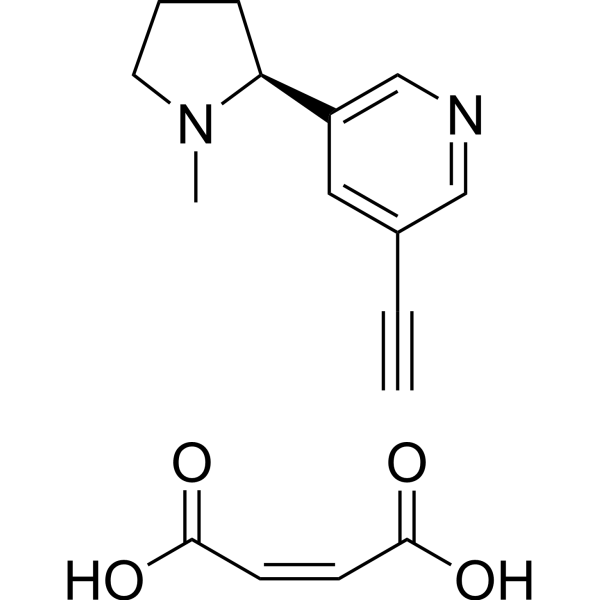 0 ImagesCat. No.: HY-107681CAS No.: 192231-16-6Synonyms: SIB-1508YAltinicline (maleate) is an orally active and selective nAChR agonist. Altinicline (maleate) has the potential to study parkinsonism. Altinicline (maleate) is a click chemistry reagent, it contains an Alkyne group and can undergo copper-catalyzed azide-alkyne cycloaddition (CuAAc) with molecules containing Azide groups.
-
(±)-Nornicotine-d7
 0 ImagesCat. No.: HY-W002112S1Synonyms: Nornicotine-d7(±)-Nornicotine-d7 is the deuterium labeled (±)-Nornicotine (HY-W002112). (±)-Nornicotine is a major metabolite of Nicotine. (±)-Nornicotine is a partial nAChRs agonist, specifically activating receptor subtypes containing α7 and α6 subunits. (±)-Nornicotine disrupts β-catenin and ZO-1, and induces F-actin depolymerization. (±)-Nornicotine supports self-administration behavior. (±)-Nornicotine can be used in the research of atherosclerosis, Alzheimer's disease, and schizophrenia.
-
Pancuronium dibromide (Standard)
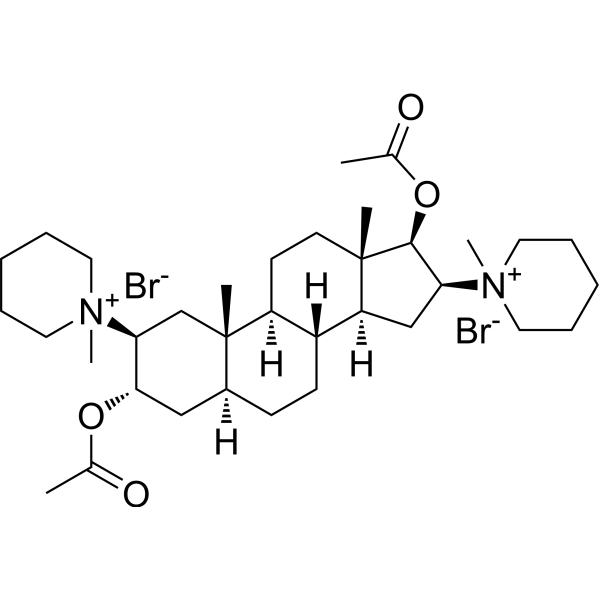 0 ImagesCat. No.: HY-B0429RCAS No.: 15500-66-0Pancuronium (dibromide) (Standard) is the analytical standard of Pancuronium (dibromide). This product is intended for research and analytical applications. Pancuronium dibromide, a bis-quaternary steroid, is a neuromuscular relaxant. Pancuronium dibromide inhibits neuromuscular transmission by competing with acetylcholine for binding sites on nACh receptors. Pancuronium dibromide also inhibits cardiac muscarinic receptors and has a sympathomimetic action.
-
Varenicline-d4 hydrochloride
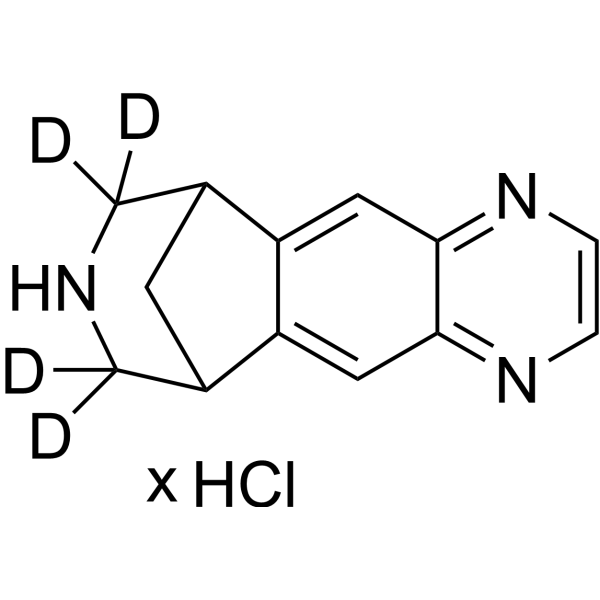 0 ImagesCat. No.: HY-10019AS1Varenicline-d4 hydrochloride is a deuterium labeled Varenicline (dihydrochloride) (HY-10019A). Varenicline (CP 526555) dihydrochloride is a potent partial agonist for α4β2 nicotinic acetylcholine receptor (nAChR) with an EC50 value of 2.3 μM. Varenicline dihydrochloride is a full agonist for α3β4 and α7 nAChRs with EC50 values of 55 μM and 18 μM, respectively. Varenicline dihydrochloride is a nicotinic ligand based on the structure of cytosine, and has the potential for smoking cessation treatment.
-
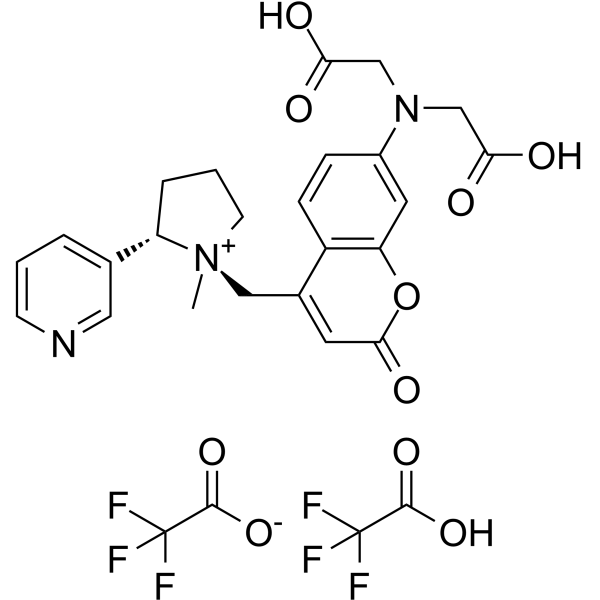
Nitenpyram-d3-1
 0 ImagesCat. No.: HY-B0820S1Nitenpyram-d3-1 is the deuterium labeled Nitenpyram (HY-B0820). Nitenpyram is a calss of neonicotinoid and an insect nicotinic acetylcholine receptor (nAChR) agonist with an IC50 of 14 nM. Nitenpyram is an oral fast-acting insecticide used to suppress sucking insects on companion animals.
-
Nelonicline citrate
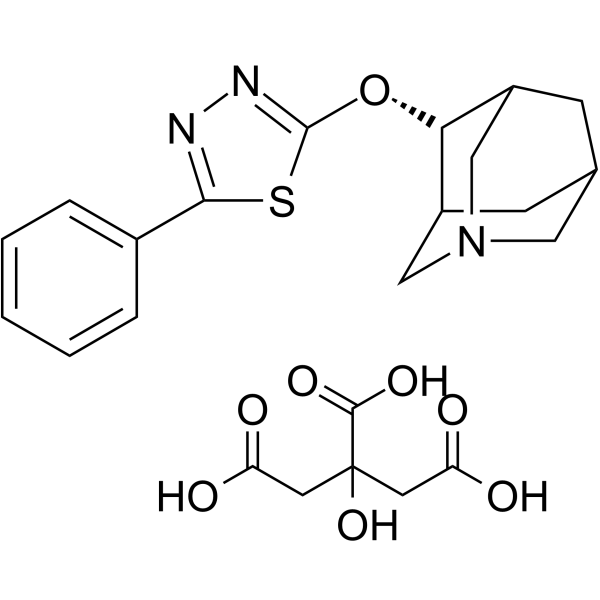 0 ImagesCat. No.: HY-16748ACAS No.: 1026136-84-4Synonyms: ABT-126 citrateNelonicline (ABT-126) citrate is an orally active and selective α7 nicotinic receptor agonist with high affinity to α7 nAChRs in human brain (Ki=12.3 nM). Nelonicline citrate is used for the research of shizophrenia and Alzheimer's disease.
-
(S)-Dinotefuran
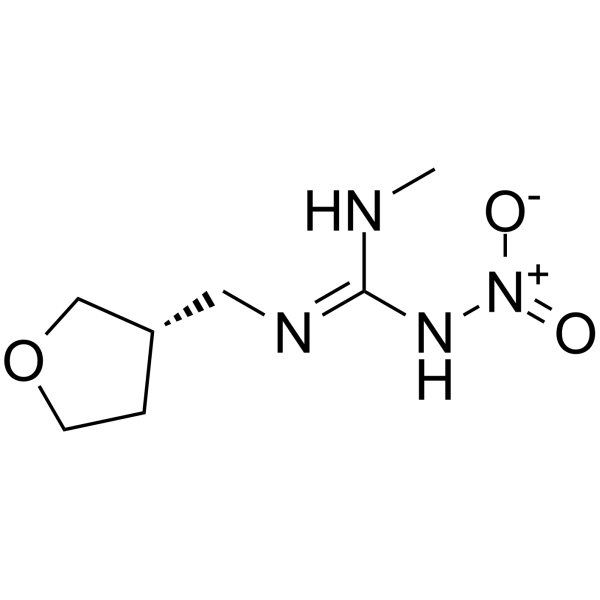 0 ImagesCat. No.: HY-B0827BCAS No.: 322639-07-6Synonyms: (S)-MTI-446(S)-Dinotefuran ((S)-MTI-446), a neonicotinoid pesticide, is toxic by binding to α8 subunit of nAChR of honeybee Apis mellifera (Apis mellifera Linnaeus). (S)-Dinotefuran shows more toxic than R-dinotefuran to honeybee Apis mellifera.
-
SIB 1663
 0 ImagesCat. No.: HY-105330CAS No.: 179064-11-0SIB 1663 is a conformationally restricted analog of nicotine. SIB-1663 selectively activatedα2β4 and α4β4 human recombinant neuronal nAChRs. SIB 1663 can increase DA and NE release. SIB 1663 can be used for the research of neurological disease.
-
DSPE-PEG3400-RVG29
 0 ImagesCat. No.: HY-172705ADSPE-PEG3400-RVG29 is a PEG conjugate composed of DSPE and rabies virus glycoprotein 29 (RVG29). RVG29 specifically binds to nicotinic acetylcholine receptors (nAChR) at the blood-brain barrier (BBB), crosses the BBB, and mediates receptor-dependent transcytosis. DSPE-PEG3400-RVG29 can be used for brain-targeted drug delivery, surface modification of nanocarriers, as well as gene and nucleic acid delivery. DSPE-PEG3400-RVG29 is applicable to research related to hypoxic-ischemic brain injury, Parkinson's disease, and other conditions
-
Epibatidine
 0 ImagesCat. No.: HY-169742CAS No.: 140111-52-0Epibatidine is a nicotinic acetylcholine receptor (nAChR) agonist, with an IC50 of 70 pM, a Ki of 43 pM for rat nAChR, a Kd range of 1.5-60 nM for human α7 nAChR, a Kd of 15 nM for rat α4β2 nAChR, and a Kd of 0.5 μM for rat α3β4 nAChR. Epibatidine selectively activates central nAChRs and binds to muscarinic acetylcholine receptors (mAChR). It is used in research on pain, Alzheimer's disease, Parkinson's disease, and schizophrenia-related pain.
-
JN403
 0 ImagesCat. No.: HY-111051CAS No.: 942606-12-4JN403 is an orally active and selective α7 nicotinic acetylcholine receptor agonist. JN403 can be used in the study of central nervous system disorders.
-
(S)-Norzopiclone
 0 ImagesCat. No.: HY-U00199ACAS No.: 151776-26-0Synonyms: (S)-N-Desmethyl zopiclone; SEP-174559(S)-Norzopiclone ((S)-N-Desmethyl zopiclone; SEP-174559) is a metabolite of Zopiclone with anxiolytic and anticonvulsant effects. (S)-Norzopiclone has benzodiazepine-like actions at γ2-bearing subtypes of the GABAA receptor and inhibits nACh and NMDA receptors.
-
WYE-103914
 0 ImagesCat. No.: HY-10554CAS No.: 1204607-09-9WYE-103914 is an orally active α7 nAChR (EC50 = 0.49 µM for rat α7 nAChR, EC50 = 0.57 µM for human α7 nAChR) agonist. WYE-103914 exhibits the ability to enhance memory in multiple cognitive models. WYE-103914 is used in combination with antipsychotic drugs. WYE-103914 can be used for research on schizophrenia.
-
rel-S-(+)-Mecamylamine hydrochloride
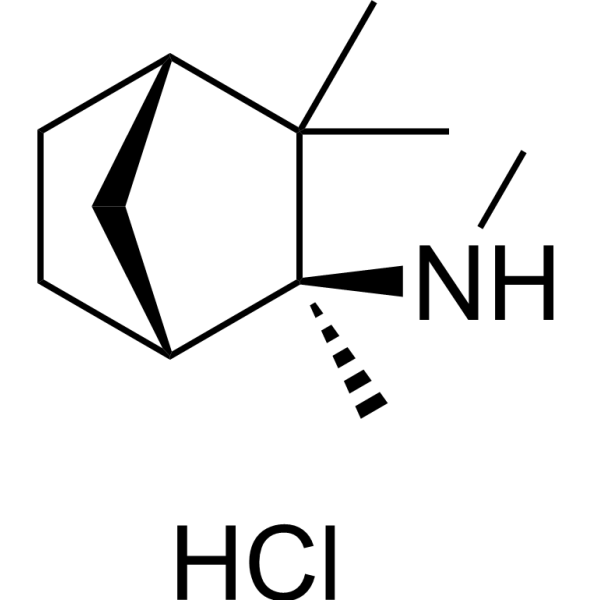 0 ImagesCat. No.: HY-13047ACAS No.: 110691-49-1Synonyms: rel-Dexmecamylamine hydrochloride; rel-TC-5214 hydrochloriderel-S-(+)-Mecamylamine hydrochloride is a known antihypertensive drug .
-
Ebiratide
 0 ImagesCat. No.: HY-19648CAS No.: 105611-68-5Synonyms: HOE-427 free baseEbiratide (HOE-427 free base) is an ACTH 4-9 derivative, which acts directly on the central nervous system and exhibits memory-enhancing efficacy. Ebiratide enhances acetycholine (ACh) metabolism in rat brain.
-
IND8
 0 ImagesCat. No.: HY-116488CAS No.: 1778682-59-9IND8 is a α7 nAChR activator and cognitive enhancer. IND8 mediates cognitive enhancement by activating α7 nAChR . IND8 improves spatial working memory, episodic short-term memory and spatial long-term memory in amnesic mice induced by Scopolamine (HY-N0296). IND8 improves memory function in mice with delayed natural memory decline. IND8 can be used in research related to Alzheimer's disease.




