



Nurr1/NR4A2
Nurr1/NR4A2 is an orphan nuclear receptor required for the development and maintenance of midbrain dopaminergic neurons, with Nurr1-deficient mice failing to generate these neurons and adult Nurr1 loss reducing dopamine markers[1][2]. Mechanistically, Nurr1 supports dopamine homeostasis by regulating genes linked to dopamine synthesis, storage, and reuptake, including TH, VMAT, DAT, and AADC[3]. In neuroinflammatory Parkinson’s disease models, Nurr1 also represses NF-κB-dependent inflammatory gene expression in microglia and astrocytes through a Nurr1/CoREST pathway, thereby protecting dopaminergic neurons from inflammation-induced death[4]. In immune disease models, NR4A2 promotes pathogenic T-cell cytokine production in MS/EAE but can also induce Foxp3 and suppress cytokines in CD4+ T-cell differentiation, showing context-dependent immune functions[5][6]. Compared with related NR4A isoforms NR4A1/Nur77 and NR4A3/NOR1, NR4A2 shares family-level DNA-binding similarity but has a distinct, experimentally emphasized role in dopaminergic neuron maintenance and Nurr1-targeted neuroprotection[2][7]. For experimental applications, Nurr1 agonists such as amodiaquine, chloroquine, glafenine, SA00025, C-DIM12, and 4A7C-301 provide chemical tools to activate Nurr1 transcriptional or anti-inflammatory functions in Parkinson’s disease and neuroinflammation models[3][8][9][10].
References:
- [1]. Zetterström RH, et al. Dopamine neuron agenesis in Nurr1-deficient mice. Science. 1997 Apr 11;276(5310):248-50. [Content Brief]
- [2]. Kadkhodaei B, et al. Nurr1 is required for maintenance of maturing and adult midbrain dopamine neurons. J Neurosci. 2009 Dec 16;29(50):15923-32. [Content Brief]
- [3]. Smith GA, et al. A Nurr1 agonist causes neuroprotection in a Parkinson's disease lesion model primed with the toll-like receptor 3 dsRNA inflammatory stimulant poly(I:C). PLoS One. 2015 Mar 27;10(3):e0121072. [Content Brief]
- [4]. Saijo K, et al. A Nurr1/CoREST pathway in microglia and astrocytes protects dopaminergic neurons from inflammation-induced death. Cell. 2009 Apr 3;137(1):47-59. [Content Brief]
- [5]. Doi Y, et al. Orphan nuclear receptor NR4A2 expressed in T cells from multiple sclerosis mediates production of inflammatory cytokines. Proc Natl Acad Sci U S A. 2008 Jun 17;105(24):8381-6. [Content Brief]
- [6]. Sekiya T, et al. The nuclear orphan receptor Nr4a2 induces Foxp3 and regulates differentiation of CD4+ T cells. Nat Commun. 2011;2:269. [Content Brief]
- [7]. Rabezanahary H, et al. Live virus neutralizing antibodies against pre and post Omicron strains in food and retail workers in Québec, Canada. Heliyon. 2024 May 21;10(10):e31026. [Content Brief]
- [8]. Kim CH, et al. Nuclear receptor Nurr1 agonists enhance its dual functions and improve behavioral deficits in an animal model of Parkinson's disease. Proc Natl Acad Sci U S A. 2015 Jul 14;112(28):8756-61. [Content Brief]
- [9]. De Miranda BR, et al. The Nurr1 Activator 1,1-Bis(3'-Indolyl)-1-(p-Chlorophenyl)Methane Blocks Inflammatory Gene Expression in BV-2 Microglial Cells by Inhibiting Nuclear Factor κB. Mol Pharmacol. 2015 Jun;87(6):1021-34. [Content Brief]
- [10]. Kim W, et al. An optimized Nurr1 agonist provides disease-modifying effects in Parkinson's disease models. Nat Commun. 2023 Jul 18;14(1):4283. [Content Brief]
-
Nurr1/NR4A2 Related Products (17)
Related Products (17)

- 1
-
Amodiaquine
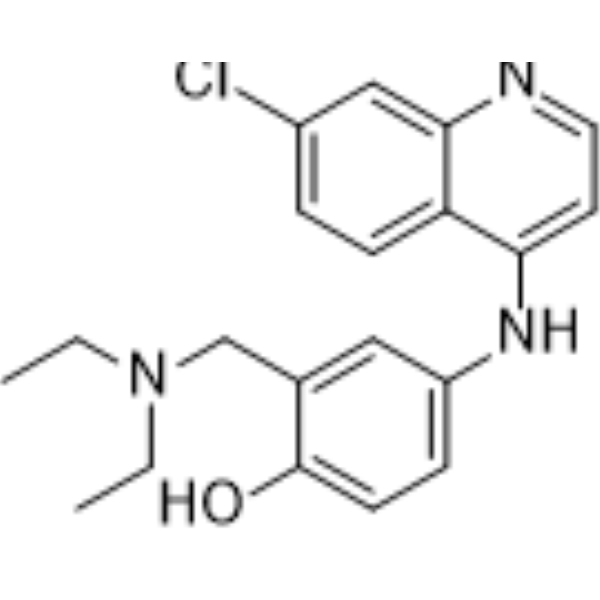 0 ImagesAmodiaquine (Amodiaquin), a 4-aminoquinoline class of antimalarial agent, is a potent and orally active histamine N-methyltransferase inhibitor. Amodiaquine is also a Nurr1 agonist and specifically binds to Nurr1-LBD (ligand binding domain) with an EC50 of ~20 μM. Anti-inflammatory effect.
-
Amodiaquine dihydrochloride dihydrate
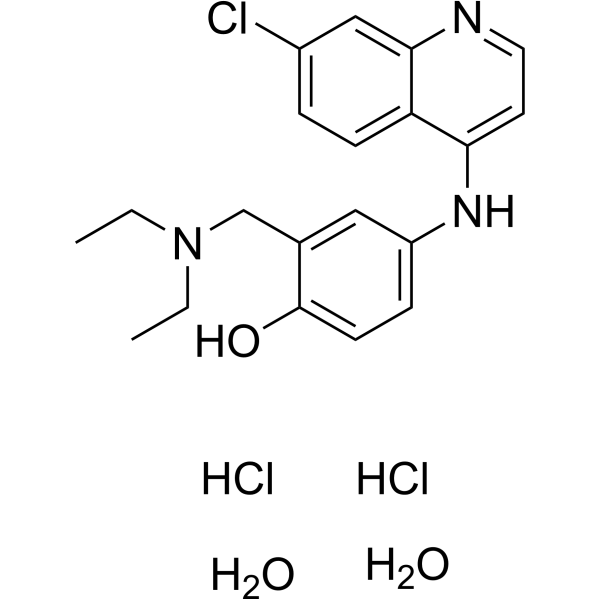 0 ImagesAmodiaquine dihydrochloride dihydrate (Amodiaquin dihydrochloride dihydrate), a 4-aminoquinoline class of antimalarial agent, is a potent and orally active histamine N-methyltransferase inhibitor. Amodiaquine dihydrochloride dihydrate is also a Nurr1 agonist and specifically binds to Nurr1-LBD (ligand binding domain) with an EC50 of ~20 μM. Anti-inflammatory effect.
-
Amodiaquine dihydrochloride
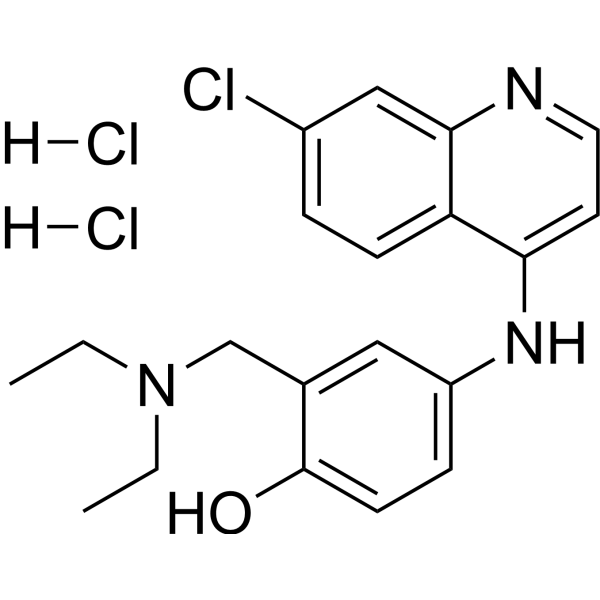 0 ImagesAmodiaquine dihydrochloride (Amodiaquin dihydrochloride), a 4-aminoquinoline class of antimalarial agent, is a potent and orally active histamine N-methyltransferase inhibitor with a Ki of 18.6 nM. Amodiaquine dihydrochloride is also a Nurr1 agonist and specifically binds to Nurr1-LBD (ligand binding domain) with an EC50 of ~20 μM. Anti-inflammatory effect.
-
C-DIM12
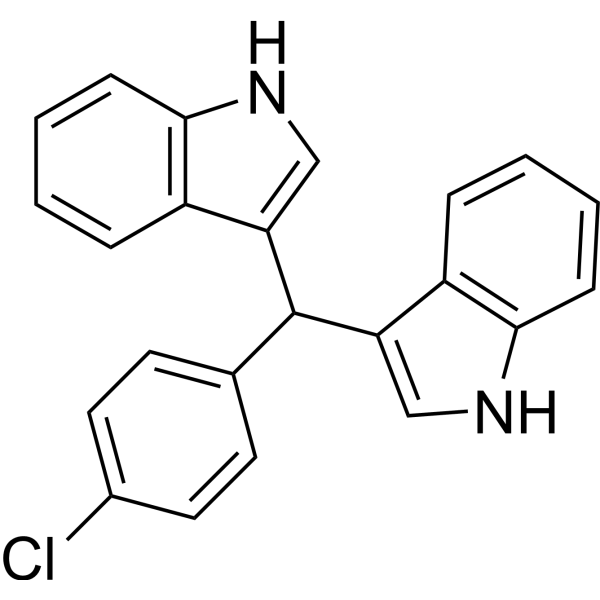 0 ImagesSynonyms: DIM-C-pPhClC-DIM12 is a potent, orally active Nurr1 modulator. C-DIM12 inhibits the tumor growth and autophagy, and induces the cell apoptosis. C-DIM12 has anti-inflammatory and neuroprotective effects, and can be used for cancer and neurological disease study.
-
IP7e
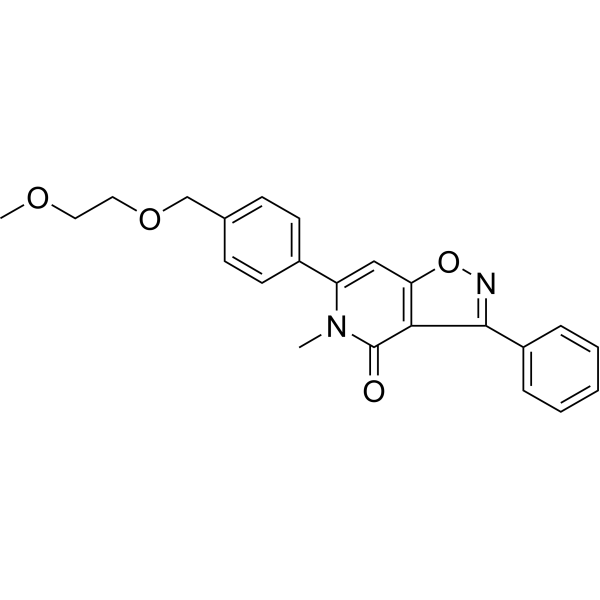 0 ImagesIP7e is a potent, brain-penetrant and orally active Nurr1 activator with an EC50 value of 3.9 nM.
-
SR10098
 0 ImagesCat. No.: HY-W193645CAS No.: 850705-30-5SR10098 is a benzimidazole-based Nurr1 activator with an EC50 of 24 nM against full-length Nurr1. SR10098 does not directly bind to the ligand-binding domain of Nurr1, regulates transcription via a Nurr1-independent pathway, and exhibits no significant cytotoxicity. SR10098 can be used in studies of Nurr1-related diseases, such as Alzheimer's disease and Parkinson's disease.
-
Nurr1 inverse agonist-1
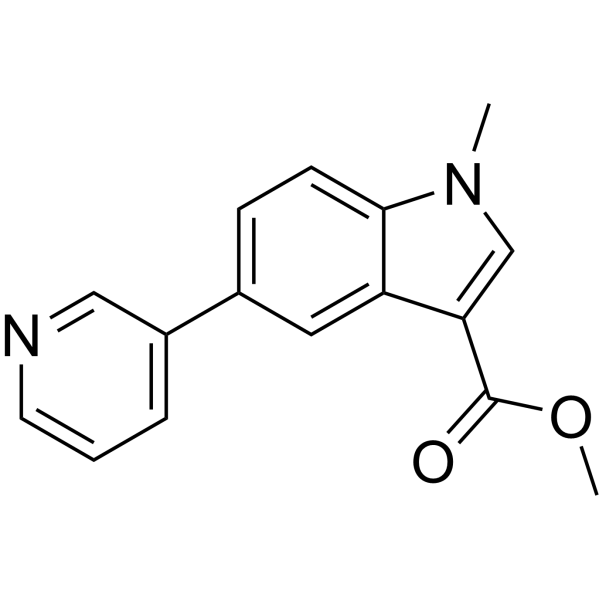 0 ImagesNurr1 inverse agonist-1 is an inverse agonist tool for the neuroprotective transcription factor Nurr1.
-
Nurr1 agonist 2
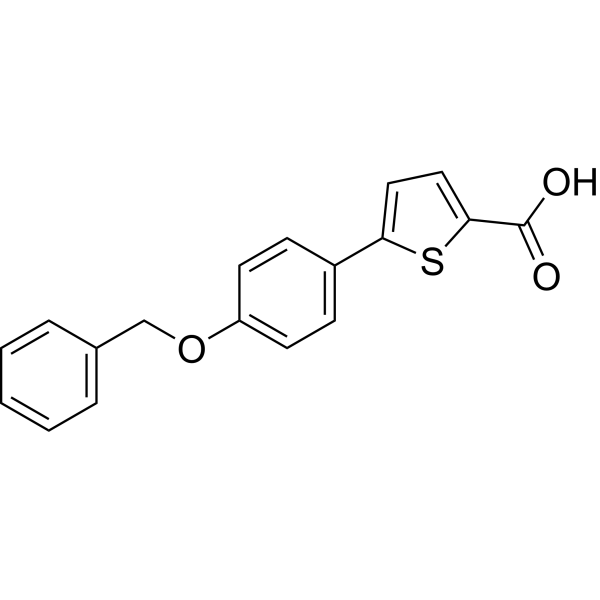 0 ImagesNurr1 agonist 2 (Compound 7) is a Nurr1 agonist (EC50: 0.07 μM). Nurr1 agonist 2 binds to the recombinant Nurr1 ligand binding domain (LBD) with a Kd value of 0.14 μM. Nurr1 agonist 2 increases the Nurr1-regulated genes tyrosine hydroxylase (TH) and vesicular amino acid transporter 2 (VMAT2) mRNA expression.
-
DIM-3,5-Cl2
 0 ImagesDIM-3,5-Cl2 is an inverse NR4A1/NR4A2 agonist with KD values of 7.7 μM and 12.0 μM for NR4A1 and NR4A2, respectively. DIM-3,5-Cl2 acts as an inverse agonist to downregulate pro-oncogenic and proendometriotic gene products, and as an agonist to enhance NR4A1/2/Sp1/Sp4-mediated CD71 transactivation. DIM-3,5-Cl2 induces ferroptosis via ROS formation, lipoperoxidation, MDA production, and reduced GPX4, SLC7A11 expression. DIM-3,5-Cl2 induces apoptosis via PARP and caspase-3 cleavage, reduced BCL-2 expression, and inhibits cancer cell viability. DIM-3,5-Cl2 can be used for the research of triple negative breast cancer, endometriosis, and colorectal cancer.
-
Nurr1 agonist 12
 0 ImagesCat. No.: HY-173025Purity: 99.62%Nurr1 agonist 12 (Compound 37) is the agonist for nuclear receptor-associated protein 1 (Nurr1) that activates the transcriptional activity of Nurr1 with an EC50 of 0.06 μM. Nurr1 agonist 12 activates the human response elements NBRE, NurRE, and DR5 with EC50 of 0.07 μM, 0.027 μM, and 0.014 μM, respectively. Nurr1 agonist 12 induces the expression of Nurr1-regulated neurotrophic genes, such as tyrosine hydroxylase (TH), SOD1/2, BDNF, Sestrin 3, and BIRC5 (Survivin). Nurr1 agonist 12 exhibits neuroprotective efficacy against Paraquat-induced neurotoxicity.
-
Nurr1 agonist 14
 0 ImagesCat. No.: HY-175352Purity: 99.42%Nurr1 agonist 14 (Compound 32) is a Nurr1 agonist with an EC50 of 0.09 μM for Nurr1. Nurr1 agonist 14 has significant neuroprotective activity with no influence of residual DHODH inhibition. Nurr1 agonist 14 upregulates neuroprotective genes including SOD2, SESN3, BIRC5, XIAP, FLRT2 and CRMP4 in dopaminergic neurons. Nurr1 agonist 14 can be used for neurodegenerative diseases such as Alzheimer′s disease (AD), Parkinson′s disease (PD) and multiple sclerosis (MS) research.
-
Nurr1 agonist 9
 0 ImagesCat. No.: HY-163801Nurr1 agonist 9 (Compound 36) is an agonist for Nurr1 with an EC50 of 0.090 µM and a Kd of 0.17 µM. Nurr1 agonist 9 activates the Nurr1 homodimer (NurRE, EC50=0.094 µM) and the Nurr1-RXR heterodimer (DR5, EC50=0.165 µM). Nurr1 agonist 9 induces the expression of Nurr1-regulated tyrosine hydroxylase (TH) in organoid Parkinson's Disease model. Nurr1 agonist 9 is human brain endothelial cell barrier prmeable.
-
Nurr1 agonist 13
 0 ImagesCat. No.: HY-174340Nurr1 agonist 13 (Compound 1) is a potent nuclear receptor related 1 (Nurr1, NR4A2) agonist with an EC50 value of 0.06 μM. Nurr1 agonist 13 is promising for research of neurodegenerative diseases such as Parkinson's disease, Alzheimer's disease, and multiple sclerosis.

-
Nurr1/RXR agonist 1
 0 ImagesNurr1/RXR dual agonist 1 is a dual activator of Nurr1 (EC50 = 2.6 µM) and RXR with Ks of 0.6 and 1.1 µM, respectively. Nurr1/RXR dual agonist 1 exclusively activates the heterodimer response element DR5 by selectively destabilizing the Nurr1 homodimer and stabilizing the Nurr1:RXR heterodimer. Nurr1/RXR dual agonist 1 enhances expression of a specific subset of neuroprotective Nurr1 target genes while avoiding induction of genes associated with potential off-target effects in neuronal cells. Nurr1/RXR dual agonist 1 can be used for neurodegenerative diseases research.
-
Nurr1 agonist 5
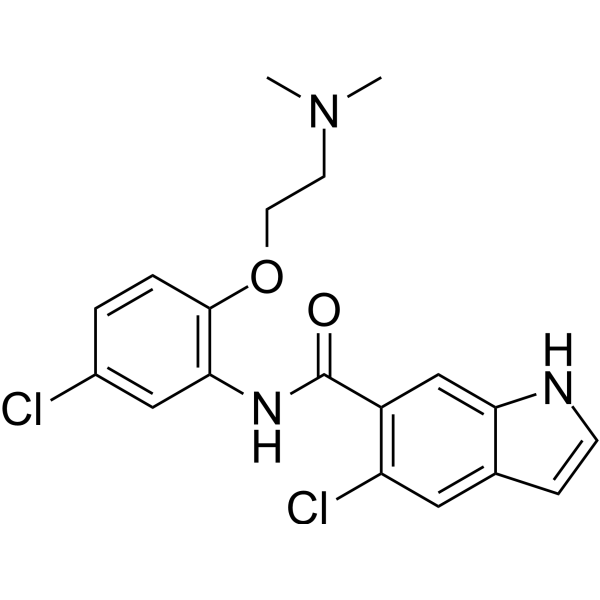 0 ImagesCat. No.: HY-149608CAS No.: 3033875-32-7Nurr1 agonist 5 (compound 5o) is a neuroprotective transcription factor Nurr1 agonist with a Kd of 0.5 μM and an EC50 of 3 μM.
-
NR4A agonist-2
 0 ImagesCat. No.: HY-181588NR4A agonist-2 is a selective pan-NR4A agonist designed based on Vidofludimus (HY-14908), with a Kd of 0.10 μM against NR4A1, and EC50 values of 0.098 μM, 0.092 μM and 0.09 μM against Nur77, Nurr1, NOR-1, respectively. NR4A agonist-2 exhibits 47-fold selectivity over DHODH, and shows no cytotoxic activity at concentrations up to 10 μM. By binding to a specific surface pocket in the ligand-binding domain of Nurr1, NR4A agonist-2 inhibits the formation of Nurr1 homodimers, activates response elements such as NBRE, NurRE, DR5, and then potently induces the expression of neuroprotective genes including BDNF, SOD2, thereby exerting neuroprotective activity. NR4A agonist-2 can be used in the research of neurodegenerative diseases such as Parkinson's disease, dementia and multiple sclerosis.
- 1



