



Amodiaquine dihydrochloride
Based on 12 publication(s) in Google Scholar
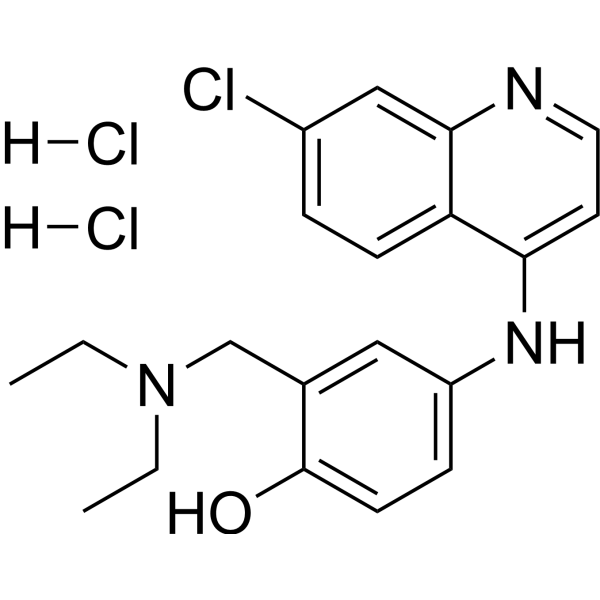
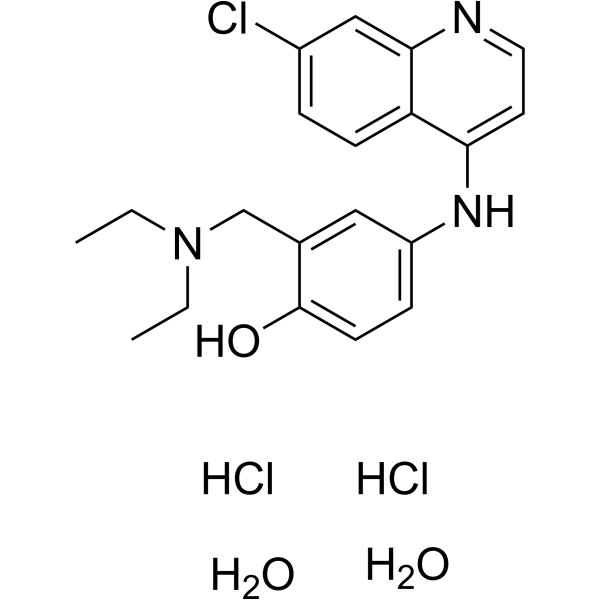
Amodiaquine dihydrochloride (Amodiaquin dihydrochloride), a 4-aminoquinoline class of antimalarial agent, is a potent and orally active histamine N-methyltransferase inhibitor with a Ki of 18.6 nM. Amodiaquine dihydrochloride is also a Nurr1 agonist and specifically binds to Nurr1-LBD (ligand binding domain) with an EC50 of ~20 μM. Anti-inflammatory effect.
For research use only. We do not sell to patients.
- Purity : 99.97%
- CAS No.: 69-44-3
- Formula: C20H24Cl3N3O
- Molecular Weight:428.78
-
Storage:
4°C, sealed storage, away from moisture and light
* In solvent : -80°C, 6 months; -20°C, 1 month (sealed storage, away from moisture and light)

To place orders, for customer services and technical support, please contact: MedChemExpress USA
Tel: 609-228-6898 E-mail: [email protected] [email protected]


-
 Biological Activity
-
Chemical Information
-
Solvent & Solubility
- Purity & Documentation
- References
-
 Help & FAQs


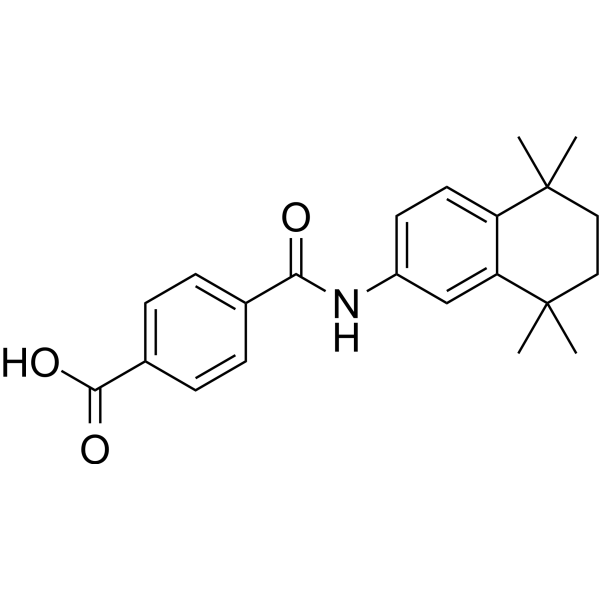
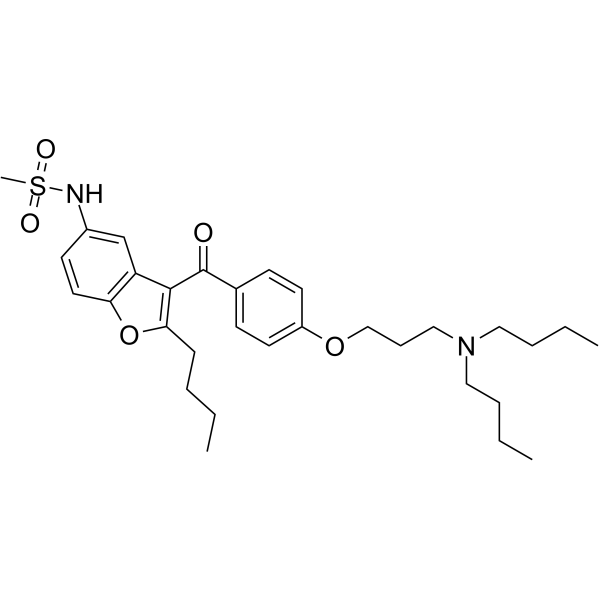
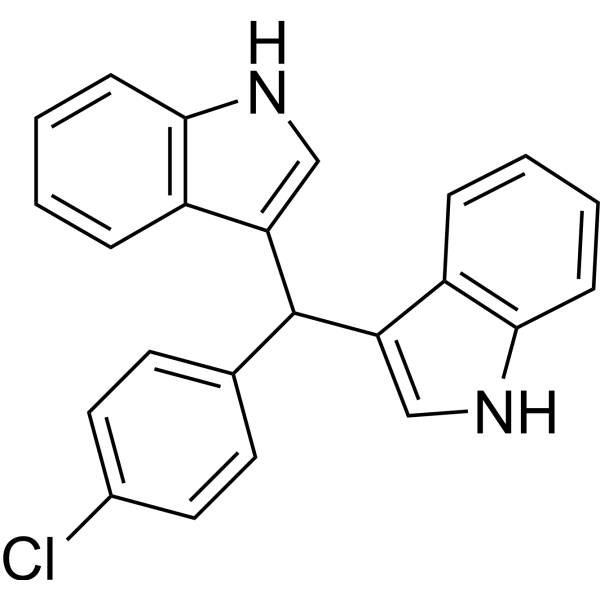


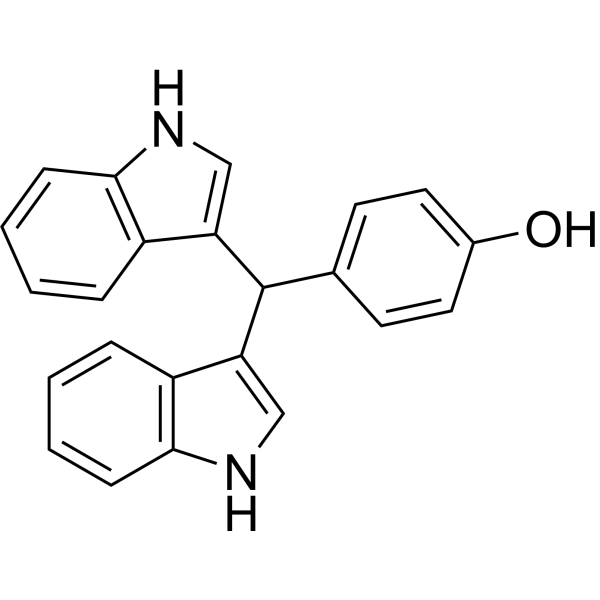
Publications Citing Use of MedChemExpress (MCE) Amodiaquine dihydrochloride
More- Adv Sci (Weinh). 2026 Jan 26:e15009. [Abstract]
- Pharmacol Res. 2023 May:191:106717. [Abstract]
- BMC Chem. 2025 Jan 30;19(1):28. [Abstract]
- Bioorg Chem. 2024 Jun:147:107412. [Abstract]
- Cell Signal. 2025 Jul:131:111706. [Abstract]
- J Virol. 2024 Feb 20;98(2):e0121623. [Abstract]
- Metab Brain Dis. 2021 Apr;36(4):609-625. [Abstract]
- Biochem Biophys Res Commun. 2020 Feb 19;522(4):862-868. [Abstract]
- Biol Pharm Bull. 2022 Apr 1;45(4):438-445. [Abstract]
- Cell Press Blue. 2026 Apr 22.
- Research Square Print. September 20th, 2022.
- Oxid Med Cell Longev. 2021 Feb 10.
 Customer Validation & Images

-
Bio/Physico-chemical Assay

-
Flow Cytometry

-
In Vivo Efficacy Study

-
In Vivo Efficacy Study

-
Flow Cytometry

All Nuclear Hormone Receptor 4A/NR4A Isoforms
MoreAll Parasite Isoforms
MoreAll Histone Methyltransferase Isoforms
More

Biological Activity
Description
IC50 & Target
|
Plasmodium |
Nurr1/NR4A2 |
Cellular Effect
|
Cell Line

|
Type | Value | Description | References |
|---|---|---|---|---|
| Huh-7 | CC50 |
12.3 μM
Compound: 45
|
Cytotoxicity against human Huh-7 cells
Cytotoxicity against human Huh-7 cells
|
[PMID: 32283298] |
In Vitro
Amodiaquine (10-20 μM; 4 hours) treatment suppresses LPS-induced expression of proinflammatory cytokines (IL-1β, interleukin-6, TNF-α and iNOS) in a dose-dependent manner[1].
Amodiaquine (5 μM; 24 hours) significantly inhibits neurotoxin (6-OHDA-induced cell death in primary dopamine cells as examined by the number of TH+ neurons and dopamine uptake. The neuroprotective effect of Amodiaquine is also observed in rat PC12 cells[1].
MedChemExpress (MCE) has not independently confirmed the accuracy of these methods. They are for reference only.
-
Cell Line:Primary microglia
-
Concentration:10 µM, 15 µM, 20 µM
-
Incubation Time:4 hours
-
Result:Suppressed LPS-induced expression of proinflammatory cytokines (IL-1β, interleukin-6, TNF-α and iNOS) in a dose-dependent manner.
In Vivo
MedChemExpress (MCE) has not independently confirmed the accuracy of these methods. They are for reference only.
-
Animal Model:Male ICR mice (8-10 weeks of age) induced ntracerebral hemorrhage (ICH)[2]
-
Dosage:40 mg/kg
-
Administration:Intraperitoneal injection; daily; for 3 days
-
Result:Diminished perihematomal activation of microglia/macrophages and astrocytes.


Chemical Information
-
CAS No. 69-44-3
-
Appearance Solid
-
Molecular Weight 428.78
-
Formula C20H24Cl3N3O
-
Color Light yellow to yellow
-
SMILES
[H]Cl.[H]Cl.OC1=CC=C(NC2=CC=NC3=CC(Cl)=CC=C23)C=C1CN(CC)CC
-
Synonyms
Amodiaquin dihydrochloride
-
Shipping
Room temperature in continental US; may vary elsewhere.
-
Storage
4°C, sealed storage, away from moisture and light
* In solvent : -80°C, 6 months; -20°C, 1 month (sealed storage, away from moisture and light)


Publications (12)
-
Journal Impact Factor
-
Most Recent
-
Adv Sci (Weinh)
Amodiaquine Enhances Anti-Melanoma Efficacy of Attenuated Salmonella via Targeting Glutathione Reductase in Neutrophils. [Abstract]2026 Jan 26:e15009. PMID: 41588921
Amodiaquine dihydrochloride purchased from MedChemExpress. Usage Cited in: Adv Sci (Weinh). 2026 Jan 26:e15009. [Abstract]
IC50 values of AQ (Amodiaquine) for neutrophils.
Amodiaquine dihydrochloride purchased from MedChemExpress. Usage Cited in: Adv Sci (Weinh). 2026 Jan 26:e15009. [Abstract]
Effects of AQ (Amodiaquine, 100 mg/kg per mouse, 100 µL per mouse, daily, ip) on neutrophil phagocytosis of VNP-RFP in vitro and in vivo.
Amodiaquine dihydrochloride purchased from MedChemExpress. Usage Cited in: Adv Sci (Weinh). 2026 Jan 26:e15009. [Abstract]
Tumor growth curve after VNP combined with AQ (Amodiaquine) treatment.
Amodiaquine dihydrochloride purchased from MedChemExpress. Usage Cited in: Adv Sci (Weinh). 2026 Jan 26:e15009. [Abstract]
Distribution of VNP in the mouse heart, liver, spleen, lung, kidney, and tumor after combined treatment with VNP and AQ (Amodiaquine). The dilution ratio of the tissue homogenate is indicated in the corresponding panel.
Amodiaquine dihydrochloride purchased from MedChemExpress. Usage Cited in: Adv Sci (Weinh). 2026 Jan 26:e15009. [Abstract]
Changes in the proportion of neutrophils among immune cells in the blood of mice following treatment with VNP combined with AQ (Amodiaquine).

Amodiaquine dihydrochloride purchased from MedChemExpress. Usage Cited in: Adv Sci (Weinh). 2026 Jan 26:e15009. [Abstract]
The effect of high concentrations of AQ (Amodiaquine, 800 μM) on the interaction between target proteins and AQ (Amodiaquine)-P (20 μM).
-
Pharmacol Res
Protective effect of Nr4a2 (Nurr1) against LPS-induced depressive-like behaviors via regulating activity of microglia and CamkII neurons in anterior cingulate cortex. [Abstract]2023 May:191:106717. PMID: 36948326 -
BMC Chem
Development and experimental validation of a machine learning model for the prediction of new antimalarials. [Abstract]2025 Jan 30;19(1):28. PMID: 39885590 -
Bioorg Chem
Identification of FTY720 and COH29 as novel topoisomerase I catalytic inhibitors by experimental and computational studies. [Abstract]2024 Jun:147:107412. PMID: 38696845 -
Cell Signal
Paeoniflorin-6'-O-benzene sulfonate inhibits keratinocyte proliferation by restoring GRK2-JAK1 colocalization in mouse model of psoriasis. [Abstract]2025 Jul:131:111706. PMID: 40037425 -
J Virol
2024 Feb 20;98(2):e0121623. PMID: 38236006 -
Metab Brain Dis
The orphan nuclear receptor Nurr1 agonist amodiaquine mediates neuroprotective effects in 6-OHDA Parkinson's disease animal model by enhancing the phosphorylation of P38 mitogen-activated kinase but not PI3K/AKT signaling pathway. [Abstract]2021 Apr;36(4):609-625. PMID: 33507465 -
Biochem Biophys Res Commun
Combinatorial screening of a panel of FDA-approved drugs identifies several candidates with anti-Ebola activities. [Abstract]2020 Feb 19;522(4):862-868. PMID: 31806372 -
Biol Pharm Bull
Inhibition of Stearoyl-CoA Desaturase 1 Potentiates Anti-tumor Activity of Amodiaquine in Non-small Cell Lung Cancer. [Abstract]2022 Apr 1;45(4):438-445. PMID: 35110426 -
-
-


Solvent & Solubility
In Vitro:
DMSO : 125 mg/mL (291.52 mM; Need ultrasonic; Hygroscopic DMSO has a significant impact on the solubility of product, please use newly opened DMSO)
H2O : 50 mg/mL (116.61 mM; Need ultrasonic)
Please refer to the solubility information to select the appropriate solvent. Once prepared, please aliquot and store the solution to prevent product inactivation from repeated freeze-thaw cycles.
Storage method and period of stock solution: -80°C, 6 months; -20°C, 1 month (sealed storage, away from moisture and light). When stored at -80°C, please use it within 6 months. When stored at -20°C, please use it within 1 month.
* Note: If you choose water as the stock solution, please dilute it to the working solution, then filter and sterilize it with a 0.22 μm filter before use.
Please refer to the solubility information to select the appropriate solvent. Once prepared, please aliquot and store the solution to prevent product inactivation from repeated freeze-thaw cycles.
Storage method and period of stock solution: -80°C, 6 months; -20°C, 1 month (sealed storage, away from moisture and light). When stored at -80°C, please use it within 6 months. When stored at -20°C, please use it within 1 month.
* Note: If you choose water as the stock solution, please dilute it to the working solution, then filter and sterilize it with a 0.22 μm filter before use.
Concentration (start) × Volume (start) = Concentration (final) × Volume (final)
In Vivo:
Select the appropriate dissolution method based on your experimental animal and administration route.
- For the following dissolution methods, please ensure to first prepare a clear stock solution using an In Vitro approach and then sequentially add co-solvents:
- To ensure reliable experimental results, the clarified stock solution can be appropriately stored based on storage conditions. As for the working solution for In Vivo experiments, it is recommended to prepare freshly and use it on the same day.
- The percentages shown for the solvents indicate their volumetric ratio in the final prepared solution. If precipitation or phase separation occurs during preparation, heat and/or sonication can be used to aid dissolution.
Add each solvent one by one: 10% DMSO 40% PEG300 5% Tween-80 45% Saline
Solubility: ≥ 2.08 mg/mL (4.85 mM); Clear solution
This protocol yields a clear solution of ≥ 2.08 mg/mL (saturation unknown).
Taking 1 mL working solution as an example, add 100 μL DMSO stock solution (20.8 mg/mL) to 400 μL PEG300, and mix evenly; then add 50 μL Tween-80 and mix evenly; then add 450 μL Saline to adjust the volume to 1 mL.
Preparation of Saline: Dissolve 0.9 g sodium chloride in ddH₂O and dilute to 100 mL to obtain a clear Saline solution.
Add each solvent one by one: 10% DMSO 90% (20% SBE-β-CD in Saline)
Solubility: ≥ 2.08 mg/mL (4.85 mM); Clear solution
This protocol yields a clear solution of ≥ 2.08 mg/mL (saturation unknown).
Taking 1 mL working solution as an example, add 100 μL DMSO stock solution (20.8 mg/mL) to 900 μL 20% SBE-β-CD in Saline, and mix evenly.
Preparation of 20% SBE-β-CD in Saline (4°C, storage for one week): 2 g SBE-β-CD powder is dissolved in 10 mL Saline, completely dissolve until clear.
In Vivo Dissolution Calculator
Please enter the basic information of animal experiments:
-
-
-
-
Recommended: Prepare an additional quantity of animals to account for potential losses during experiments.
Working solution concentration: 0.22 mg/mL
This product has good water solubility, please refer to the measured solubility data in water/PBS/Saline for details.


Purity & Documentation
-
Data Sheet (285 KB)
-
SDS (393 KB)
- English - EN (393 KB)
- Français - FR (393 KB)
- Deutsch - DE (393 KB)
- Norwegian - NO (393 KB)
- Español - ES (393 KB)
- Swedish - SV (393 KB)
- Italian - IT (393 KB)
- Korean - KR (393 KB)
- Portuguese - PT (393 KB)
-
Handling Instructions (2659 KB)
References
[1]. Chun-Hyung Kim, et al. Nuclear receptor Nurr1 agonists enhance its dual functions and improve behavioral deficits in an animal model of Parkinson's disease. Proc Natl Acad Sci U S A. 2015 Jul 14;112(28):8756-61. [Content Brief]
[2]. Keita Kinoshita, et al. A Nurr1 agonist amodiaquine attenuates inflammatory events and neurological deficits in a mouse model of intracerebral hemorrhage. J Neuroimmunol. 2019 May 15;330:48-54. [Content Brief]
[3]. Akira Yokoyama, et al. Effect of amodiaquine, a histamine N-methyltransferase inhibitor, on, Propionibacterium acnes and lipopolysaccharide-induced hepatitis in mice. Eur J Pharmacol. 2007 Mar 8;558(1-3):179-84. [Content Brief]
[4]. M T HOEKENGA. The treatment of acute malaria with single oral doses of amodiaquin, chloroquine, hydroxychloroquine and pyrimethamine. Am J Trop Med Hyg. 1954 Sep;3(5):833-8. [Content Brief]
[5]. John R Horton, et al. Structural basis for inhibition of histamine N-methyltransferase by diverse drugs. J Mol Biol. 2005 Oct 21;353(2):334-344. [Content Brief]


Complete Stock Solution Preparation Table
Please refer to the solubility information to select the appropriate solvent. Once prepared, please aliquot and store the solution to prevent product inactivation from repeated freeze-thaw cycles.
Storage method and period of stock solution: -80°C, 6 months; -20°C, 1 month (sealed storage, away from moisture and light). When stored at -80°C, please use it within 6 months. When stored at -20°C, please use it within 1 month.
| Optional Solvent | Concentration Solvent Mass | 1 mg | 5 mg | 10 mg | 25 mg |
|---|---|---|---|---|---|
| H2O / DMSO | 1 mM | 2.3322 mL | 11.6610 mL | 23.3220 mL | 58.3050 mL |
| 5 mM | 0.4664 mL | 2.3322 mL | 4.6644 mL | 11.6610 mL | |
| 10 mM | 0.2332 mL | 1.1661 mL | 2.3322 mL | 5.8305 mL | |
| 15 mM | 0.1555 mL | 0.7774 mL | 1.5548 mL | 3.8870 mL | |
| 20 mM | 0.1166 mL | 0.5830 mL | 1.1661 mL | 2.9152 mL | |
| 25 mM | 0.0933 mL | 0.4664 mL | 0.9329 mL | 2.3322 mL | |
| 30 mM | 0.0777 mL | 0.3887 mL | 0.7774 mL | 1.9435 mL | |
| 40 mM | 0.0583 mL | 0.2915 mL | 0.5830 mL | 1.4576 mL | |
| 50 mM | 0.0466 mL | 0.2332 mL | 0.4664 mL | 1.1661 mL | |
| 60 mM | 0.0389 mL | 0.1943 mL | 0.3887 mL | 0.9717 mL | |
| 80 mM | 0.0292 mL | 0.1458 mL | 0.2915 mL | 0.7288 mL | |
| 100 mM | 0.0233 mL | 0.1166 mL | 0.2332 mL | 0.5830 mL |
* Note: If you choose water as the stock solution, please dilute it to the working solution, then filter and sterilize it with a 0.22 μm filter before use.


Amodiaquine dihydrochloride Related Classifications
HY-B1322B Related Classifications
 Powered by Bioz