1. Membrane Transporter/Ion Channel Neuronal Signaling Anti-infection Apoptosis
  2. Calcium Channel SARS-CoV Apoptosis
  3. Thapsigargin

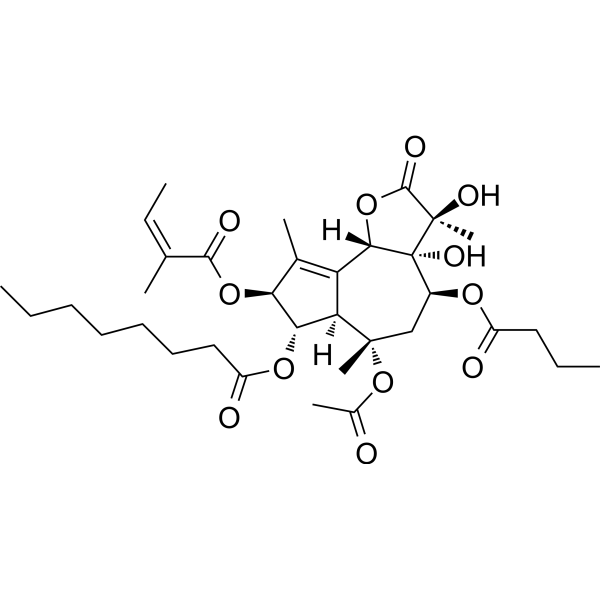
Thapsigargin, an endoplasmic reticulum (ER) stress inducer, is an inhibitor of microsomal Ca2+-ATPase. Thapsigargin efficiently inhibits coronavirus (HCoV-229E, MERS-CoV, SARS-CoV-2) replication in different cell types.

연구목적의 판매만을 진행합니다. 환자를 대상으로 한 판매는 하지 않습니다.

CAS No. : 67526-95-8

사이즈 가격 재고 수량
1 mg 해외재고보유
5 mg 해외재고보유
10 mg 해외재고보유
25 mg 해외재고보유
50 mg 해외재고보유
100 mg   견적 받기  
200 mg   견적 받기  

* 장바구니에 담기 전 물품의 수량을 선택해 주십시오.

This product is a controlled substance and not for sale in your territory.

고객리뷰

Based on 138 publication(s) in Google Scholar

Top Publications Citing Use of Products

138 Publications Citing Use of MCE Thapsigargin

Cell Imaging/Staining
Flow Cytometry
RT-PCR
WB

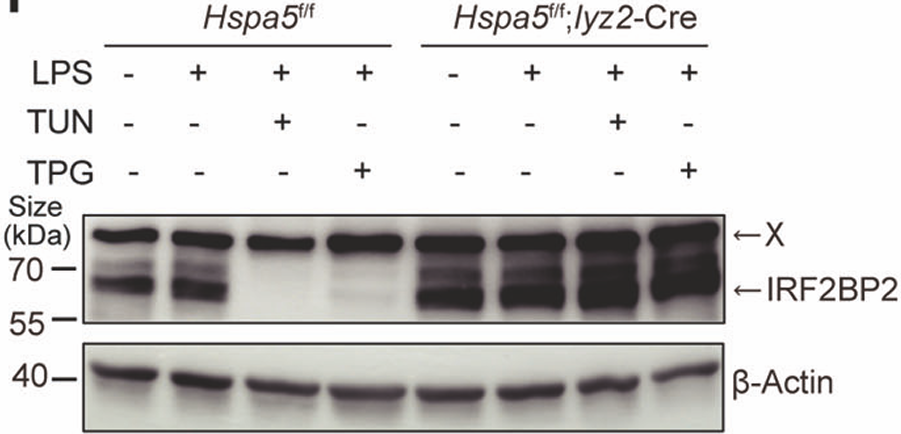
    Thapsigargin purchased from MedChemExpress. Usage Cited in: Signal Transduct Target Ther. 2024 Dec 30;9(1):367.  [Abstract]

    Tunicamycin (0.1 μM; 18 h) significantly reduces the protein abundance of IRF2BP2 in LPS-stimulated macrophages in a BiP-dependent manner.

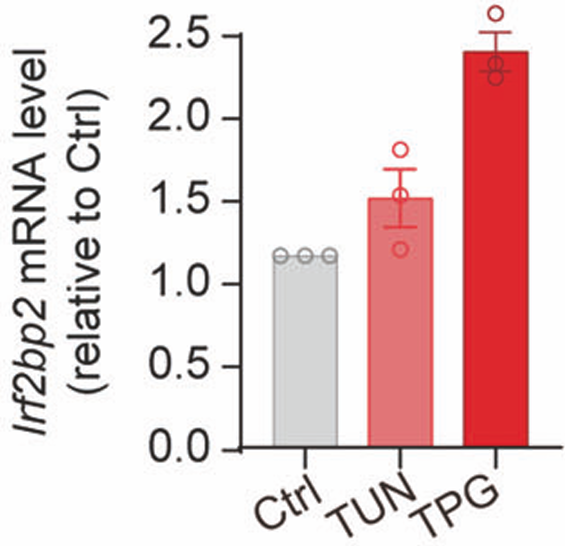
    Thapsigargin purchased from MedChemExpress. Usage Cited in: Signal Transduct Target Ther. 2024 Dec 30;9(1):367.  [Abstract]

    Tunicamycin (0.1 μM; 18 h) doesn't decrease the mRNA levels of Irf2bp2 in LPS-stimulated macrophages.

    Thapsigargin purchased from MedChemExpress. Usage Cited in: Inflammation. 2025 Oct;48(5):3146-3155.  [Abstract]

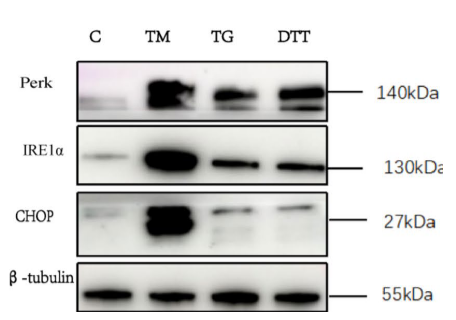
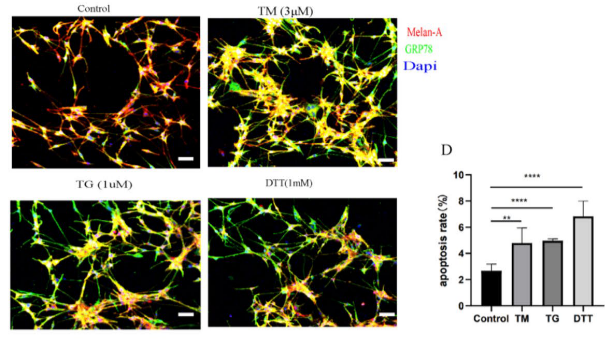
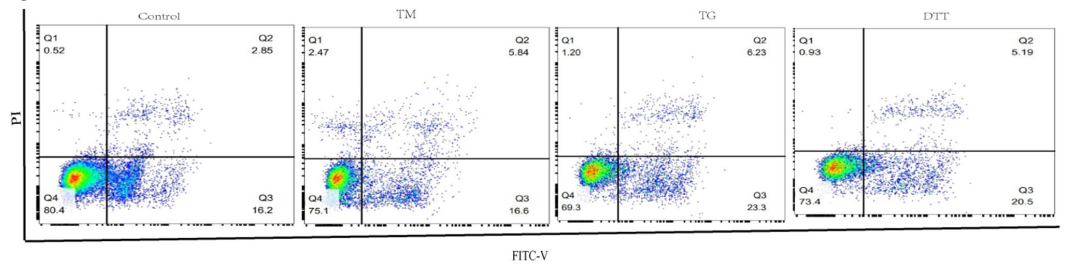
    The melanocytes were treated with TM (3 μM), thapsigargin (1 μM), or DTT (1 mM) for 24 h to induce ER stress.

    Thapsigargin purchased from MedChemExpress. Usage Cited in: Inflammation. 2025 Oct;48(5):3146-3155.  [Abstract]

    The melanocytes were treated with TM (3 μM), thapsigargin (1 μM), or DTT (1 mM) for 24 h to induce ER stress.

    Thapsigargin purchased from MedChemExpress. Usage Cited in: Inflammation. 2025 Oct;48(5):3146-3155.  [Abstract]

    The melanocytes were treated with TM (3 μM), thapsigargin (1 μM), or DTT (1 mM) for 24 h to induce ER stress. ER stress induced an increase in the apoptosis of melanocytes.

    Thapsigargin purchased from MedChemExpress. Usage Cited in: Cell. 2024 Apr 25;187(9):2288-2304.e27.  [Abstract]

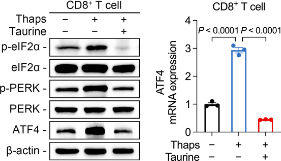
    Thapsigargin (10 nM) increases p-PERK, p-eIF2α, and ATF4 expressions as well as CD8+ T cell death and dysfunction in human CD8+ T cells.

    Thapsigargin purchased from MedChemExpress. Usage Cited in: Microbiol Spectr. 2022 Dec 21;10(6):e0328222.  [Abstract]

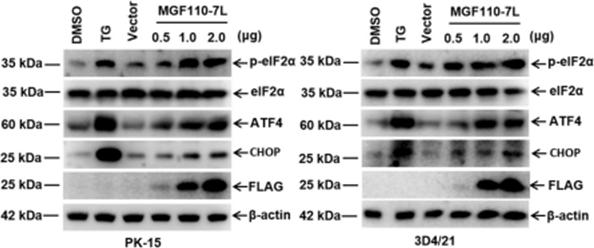
    Both PK-15 and 3D4/21cells are transfected with MGF110-7L-expressing plasmids with an increasing dose or empty vector and treated with Thapsigargin (TG) as positive controls. TG significant increases the levels of phosphorylated eIF2a (P-eIF2a) and ATF4 protein in the cells.
    • Biological Activity

    • 순도&문서

    • References

    • 고객리뷰

    제품 설명

    Thapsigargin, an endoplasmic reticulum (ER) stress inducer, is an inhibitor of microsomal Ca2+-ATPase. Thapsigargin efficiently inhibits coronavirus (HCoV-229E, MERS-CoV, SARS-CoV-2) replication in different cell types[1][2][3][4][5].

    IC50 & Target

    Ca2+-ATPase[1]

    Cellular Effect
    Cell Line Type Value Description References
    CCRF S-180 IC50
    30 1
    Compound: 3; TPG
    Cytotoxicity against mouse CCRF S-180 cells incubated for 48 hrs by sulforhodamine B staining based ELISA
    Cytotoxicity against mouse CCRF S-180 cells incubated for 48 hrs by sulforhodamine B staining based ELISA
    [PMID: 33289552]
    CCRF S-180 IC50
    30 1
    Compound: 3; TPG
    Cytotoxicity against mouse CCRF S-180 cells incubated for 48 hrs by sulforhodamine B staining based ELISA
    Cytotoxicity against mouse CCRF S-180 cells incubated for 48 hrs by sulforhodamine B staining based ELISA
    [PMID: 33289552]
    CCRF-CEM IC50
    0.27 3
    Compound: 6
    Cytotoxicity against human CCRF-CEM cells assessed as cell viability after 48 hrs by celltiter-blue assay
    Cytotoxicity against human CCRF-CEM cells assessed as cell viability after 48 hrs by celltiter-blue assay
    [PMID: 22582991]
    EL4 IC50
    1.4 3
    Compound: thapsigargin
    Cytotoxicity against mouse EL4 cells assessed as growth inhibition after 48 hrs by sulforhodamine B assay
    Cytotoxicity against mouse EL4 cells assessed as growth inhibition after 48 hrs by sulforhodamine B assay
    [PMID: 25951057]
    CCRF-CEM IC50
    0.27 3
    Compound: 6
    Cytotoxicity against human CCRF-CEM cells assessed as cell viability after 48 hrs by celltiter-blue assay
    Cytotoxicity against human CCRF-CEM cells assessed as cell viability after 48 hrs by celltiter-blue assay
    [PMID: 22582991]
    CCRF-CEM IC50
    0.27 3
    Compound: 6
    Cytotoxicity against human CCRF-CEM cells assessed as cell viability after 48 hrs by celltiter-blue assay
    Cytotoxicity against human CCRF-CEM cells assessed as cell viability after 48 hrs by celltiter-blue assay
    [PMID: 22582991]
    EL4 IC50
    0.1 3
    Compound: 3; TPG
    Cytotoxicity against mouse EL4 cells incubated for 48 hrs by sulforhodamine B staining based ELISA
    Cytotoxicity against mouse EL4 cells incubated for 48 hrs by sulforhodamine B staining based ELISA
    [PMID: 33289552]
    EL4 IC50
    0.1 3
    Compound: 3; TPG
    Cytotoxicity against mouse EL4 cells incubated for 48 hrs by sulforhodamine B staining based ELISA
    Cytotoxicity against mouse EL4 cells incubated for 48 hrs by sulforhodamine B staining based ELISA
    [PMID: 33289552]
    EL4 IC50
    0.1 3
    Compound: 3; TPG
    Cytotoxicity against mouse EL4 cells incubated for 48 hrs by sulforhodamine B staining based ELISA
    Cytotoxicity against mouse EL4 cells incubated for 48 hrs by sulforhodamine B staining based ELISA
    [PMID: 33289552]
    EL4 IC50
    1.4 3
    Compound: thapsigargin
    Cytotoxicity against mouse EL4 cells assessed as growth inhibition after 48 hrs by sulforhodamine B assay
    Cytotoxicity against mouse EL4 cells assessed as growth inhibition after 48 hrs by sulforhodamine B assay
    [PMID: 25951057]
    EL4 IC50
    1.4 3
    Compound: thapsigargin
    Cytotoxicity against mouse EL4 cells assessed as growth inhibition after 48 hrs by sulforhodamine B assay
    Cytotoxicity against mouse EL4 cells assessed as growth inhibition after 48 hrs by sulforhodamine B assay
    [PMID: 25951057]
    HL-60 IC50
    0.007 3
    Compound: 6
    Cytotoxicity against human HL60 cells assessed as cell viability after 48 hrs by celltiter-blue assay
    Cytotoxicity against human HL60 cells assessed as cell viability after 48 hrs by celltiter-blue assay
    [PMID: 22582991]
    CCRF S-180 IC50
    30 1
    Compound: 3; TPG
    Cytotoxicity against mouse CCRF S-180 cells incubated for 48 hrs by sulforhodamine B staining based ELISA
    Cytotoxicity against mouse CCRF S-180 cells incubated for 48 hrs by sulforhodamine B staining based ELISA
    [PMID: 33289552]
    HL-60 IC50
    0.007 3
    Compound: 6
    Cytotoxicity against human HL60 cells assessed as cell viability after 48 hrs by celltiter-blue assay
    Cytotoxicity against human HL60 cells assessed as cell viability after 48 hrs by celltiter-blue assay
    [PMID: 22582991]
    K562 IC50
    0.17 3
    Compound: 6
    Cytotoxicity against human K562 cells assessed as cell viability after 48 hrs by celltiter-blue assay
    Cytotoxicity against human K562 cells assessed as cell viability after 48 hrs by celltiter-blue assay
    [PMID: 22582991]
    K562 IC50
    0.17 3
    Compound: 6
    Cytotoxicity against human K562 cells assessed as cell viability after 48 hrs by celltiter-blue assay
    Cytotoxicity against human K562 cells assessed as cell viability after 48 hrs by celltiter-blue assay
    [PMID: 22582991]
    MCF-10A IC50
    2.4 3
    Compound: thapsigargin
    Cytotoxicity against human MCF10A cells assessed as growth inhibition
    Cytotoxicity against human MCF10A cells assessed as growth inhibition
    [PMID: 25951057]
    MCF7 IC50
    2.3 3
    Compound: 3; TPG
    Cytotoxicity against human MCF7 cells incubated for 48 hrs by sulforhodamine B staining based ELISA
    Cytotoxicity against human MCF7 cells incubated for 48 hrs by sulforhodamine B staining based ELISA
    [PMID: 33289552]
    MCF7 GI50
    5 3
    Compound: Thapsigargin
    Cytotoxicity against human MCF7 cells after 24 hrs by CellTiter-Glo assay
    Cytotoxicity against human MCF7 cells after 24 hrs by CellTiter-Glo assay
    [PMID: 30528127]
    MCF7 IC50
    2.7 3
    Compound: thapsigargin
    Cytotoxicity against human MCF7 cells assessed as growth inhibition after 48 hrs by sulforhodamine B assay
    Cytotoxicity against human MCF7 cells assessed as growth inhibition after 48 hrs by sulforhodamine B assay
    [PMID: 25951057]
    MCF7 IC50
    2.7 3
    Compound: thapsigargin
    Cytotoxicity against human MCF7 cells assessed as growth inhibition after 48 hrs by sulforhodamine B assay
    Cytotoxicity against human MCF7 cells assessed as growth inhibition after 48 hrs by sulforhodamine B assay
    [PMID: 25951057]
    HL-60 IC50
    0.007 3
    Compound: 6
    Cytotoxicity against human HL60 cells assessed as cell viability after 48 hrs by celltiter-blue assay
    Cytotoxicity against human HL60 cells assessed as cell viability after 48 hrs by celltiter-blue assay
    [PMID: 22582991]
    MCF7 GI50
    5 3
    Compound: Thapsigargin
    Cytotoxicity against human MCF7 cells after 24 hrs by CellTiter-Glo assay
    Cytotoxicity against human MCF7 cells after 24 hrs by CellTiter-Glo assay
    [PMID: 30528127]
    K562 IC50
    0.17 3
    Compound: 6
    Cytotoxicity against human K562 cells assessed as cell viability after 48 hrs by celltiter-blue assay
    Cytotoxicity against human K562 cells assessed as cell viability after 48 hrs by celltiter-blue assay
    [PMID: 22582991]
    MCF7 IC50
    2.3 3
    Compound: 3; TPG
    Cytotoxicity against human MCF7 cells incubated for 48 hrs by sulforhodamine B staining based ELISA
    Cytotoxicity against human MCF7 cells incubated for 48 hrs by sulforhodamine B staining based ELISA
    [PMID: 33289552]
    PC-3 IC50
    2.4 3
    Compound: thapsigargin
    Cytotoxicity against human PC3 cells assessed as growth inhibition after 48 hrs by sulforhodamine B assay
    Cytotoxicity against human PC3 cells assessed as growth inhibition after 48 hrs by sulforhodamine B assay
    [PMID: 25951057]
    PC-3 IC50
    2.4 3
    Compound: thapsigargin
    Cytotoxicity against human PC3 cells assessed as growth inhibition after 48 hrs by sulforhodamine B assay
    Cytotoxicity against human PC3 cells assessed as growth inhibition after 48 hrs by sulforhodamine B assay
    [PMID: 25951057]
    MCF-10A IC50
    2.4 3
    Compound: thapsigargin
    Cytotoxicity against human MCF10A cells assessed as growth inhibition
    Cytotoxicity against human MCF10A cells assessed as growth inhibition
    [PMID: 25951057]
    MCF7 GI50
    5 3
    Compound: Thapsigargin
    Cytotoxicity against human MCF7 cells after 24 hrs by CellTiter-Glo assay
    Cytotoxicity against human MCF7 cells after 24 hrs by CellTiter-Glo assay
    [PMID: 30528127]
    MCF7 IC50
    2.3 3
    Compound: 3; TPG
    Cytotoxicity against human MCF7 cells incubated for 48 hrs by sulforhodamine B staining based ELISA
    Cytotoxicity against human MCF7 cells incubated for 48 hrs by sulforhodamine B staining based ELISA
    [PMID: 33289552]
    MCF7 IC50
    2.7 3
    Compound: thapsigargin
    Cytotoxicity against human MCF7 cells assessed as growth inhibition after 48 hrs by sulforhodamine B assay
    Cytotoxicity against human MCF7 cells assessed as growth inhibition after 48 hrs by sulforhodamine B assay
    [PMID: 25951057]
    PC-3 IC50
    2.4 3
    Compound: thapsigargin
    Cytotoxicity against human PC3 cells assessed as growth inhibition after 48 hrs by sulforhodamine B assay
    Cytotoxicity against human PC3 cells assessed as growth inhibition after 48 hrs by sulforhodamine B assay
    [PMID: 25951057]
    In Vitro

    Thapsigargin (0.001- 1 μM; for 2 and 4 days) arrests cell proliferations in MH7A human rheumatoid arthritis synovial cells in a time- and dose-dependent manner[2].
    Thapsigargin (0.001- 1 μM; for 2 and 4 days) induces cell apoptosis in MH7A cells in a time- and dose-dependent manner[2].
    Thapsigargin (0.001- 1 μM; for 2 and 4 days) impairs mTOR activity and leads to cyclin D1 expressions in MH7A cells[2].
    Thapsigargin inhibits Ca2+ entry into human neutrophil granulocytes[1].
    Thapsigargin inhibits the carbachol-evoked [Ca2+]i-transients with (IC50=0.353 nM) or without (IC50=0.448 nM) a KCl-prestimulation, but an additional small component, with a much lower sensitivity (IC50=4814 nM), is observed in the absence of a KCl-prestimulation. In contrast, the KCl-evoked [Ca2+]i-transients displayed only one component with a very low sensitivity to Thapsigargin in both absence (IC50=3343 nM) and presence (IC50=6858 nM) of a carbachol-prestimulation[3].
    Thapsigargin also phosphorylate p38 MAPK by Ca2+ influx through SOCE, leading to suppression of TNF-α-induced NF-κB phosphorylation[6].

    MedChemExpress (MCE) has not independently confirmed the accuracy of these methods. They are for reference only.

    Cell Proliferation Assay[2]

    Cell Line: MH7A human rheumatoid arthritis synovial cells
    Concentration: 0.001, 0.1, and 1 μM
    Incubation Time: For 2 and 4 days
    Result: Arrested cell proliferations in a time- and dose-dependent manner.

    Apoptosis Analysis[2]

    Cell Line: MH7A human rheumatoid arthritis synovial cells
    Concentration: 0.001, 0.1, and 1 μM
    Incubation Time: For 2 and 4 days
    Result: Induces cell apoptosis in a time- and dose-dependent manner.

    Western Blot Analysis[2]

    Cell Line: MH7A human rheumatoid arthritis synovial cells
    Concentration: 0.001, 0.1, and 1 μM
    Incubation Time: For 2 and 4 days
    Result: Impairs mTOR activity and leads to cyclin D1 expressions
    In Vivo

    Thapsigargin (Injection; 0.25 ug/g, 0.5 ug/g and 1 ug/g; 24 hours) significant increases of 2 to 5-fold in chemokine and pro-inflammatory expression. Thapsigargin is more sensitive to inducing a systemic immune response[4].

    MedChemExpress (MCE) has not independently confirmed the accuracy of these methods. They are for reference only.

    Animal Model: Male Balb/c mice (20-25 g)[4]
    Dosage: 0.25 ug/g, 0.5 ug/g and 1 ug/g
    Administration: Injection; 24 hours
    Result: Increased of 2 to 5-fold in chemokine and pro-inflammatory expression.
    분자량

    650.75

    화학식

    C34H50O12

    CAS No.
    Appearance

    Solid

    Color

    White to off-white

    SMILES

    CCCCCCCC(O[C@@H]1[C@@H](OC(/C(C)=C\C)=O)C(C)=C2[C@@]1([H])[C@@](C)(OC(C)=O)C[C@H](OC(CCC)=O)[C@@]([C@@]3(O)C)(O)[C@@]2([H])OC3=O)=O

    Structure Classification
    Initial Source
    선적

    Room temperature in continental US; may vary elsewhere.

    보관

    -20°C, sealed storage, away from moisture and light

    *In solvent : -80°C, 6 months; -20°C, 1 month (sealed storage, away from moisture and light)

    용액&용해도
    In Vitro: 

    DMSO : 50 mg/mL (76.83 mM; Need ultrasonic; Hygroscopic DMSO has a significant impact on the solubility of product, please use newly opened DMSO)

    H2O : < 0.1 mg/mL (insoluble)

    Preparing
    Stock Solutions
    Concentration Solvent Mass 1 mg 5 mg 10 mg
    1 mM 1.5367 mL 7.6834 mL 15.3669 mL
    5 mM 0.3073 mL 1.5367 mL 3.0734 mL
    View the Complete Stock Solution Preparation Table

    * Please refer to the solubility information to select the appropriate solvent. Once prepared, please aliquot and store the solution to prevent product inactivation from repeated freeze-thaw cycles.
    Storage method and period of stock solution: -80°C, 6 months; -20°C, 1 month (sealed storage, away from moisture and light). When stored at -80°C, please use it within 6 months. When stored at -20°C, please use it within 1 month.

    • 몰농도 계산기

    • 농도 희석 계산기

    Mass (g) = Concentration (mol/L) × Volume (L) × Molecular Weight (g/mol)

    Mass
    =
    Concentration
    ×
    Volume
    ×
    Molecular Weight *

    Concentration (start) × Volume (start) = Concentration (final) × Volume (final)

    This equation is commonly abbreviated as: C1V1 = C2V2

    Concentration (start)

    C1

    ×
    Volume (start)

    V1

    =
    Concentration (final)

    C2

    ×
    Volume (final)

    V2

    In Vivo:

    Select the appropriate dissolution method based on your experimental animal and administration route.

    For the following dissolution methods, please ensure to first prepare a clear stock solution using an In Vitro approach and then sequentially add co-solvents:
    To ensure reliable experimental results, the clarified stock solution can be appropriately stored based on storage conditions. As for the working solution for in vivo experiments, it is recommended to prepare freshly and use it on the same day.
    The percentages shown for the solvents indicate their volumetric ratio in the final prepared solution. If precipitation or phase separation occurs during preparation, heat and/or sonication can be used to aid dissolution.

    • Protocol 1

      Add each solvent one by one:  10% DMSO    90% Saline

      Solubility: 5 mg/mL (7.68 mM); Suspended solution; Need ultrasonic

    • Protocol 2

      Add each solvent one by one:  10% DMSO    40% PEG300    5% Tween-80    45% Saline

      Solubility: ≥ 2.08 mg/mL (3.20 mM); Clear solution

      This protocol yields a clear solution of ≥ 2.08 mg/mL (saturation unknown).

      Taking 1 mL working solution as an example, add 100 μL DMSO stock solution (20.8 mg/mL) to 400 μL PEG300, and mix evenly; then add 50 μL Tween-80 and mix evenly; then add 450 μL Saline to adjust the volume to 1 mL.

      Preparation of Saline: Dissolve 0.9 g sodium chloride in ddH₂O and dilute to 100 mL to obtain a clear Saline solution.
    In Vivo Dissolution Calculator
    Please enter the basic information of animal experiments:

    Dosage

    mg/kg

    Animal weight
    (per animal)

    g

    Dosing volume
    (per animal)

    μL

    Number of animals

    Recommended: Prepare an additional quantity of animals to account for potential losses during experiments.
    Please enter your animal formula composition:
    %
    DMSO +
    +
    %
    Tween-80 +
    %
    Saline
    Recommended: Keep the proportion of DMSO in working solution below 2% if your animal is weak.
    The co-solvents required include: DMSO, . All of co-solvents are available by MedChemExpress (MCE). , Tween 80. All of co-solvents are available by MedChemExpress (MCE).
    Calculation results:
    Working solution concentration: mg/mL
    Method for preparing stock solution: mg drug dissolved in μL  DMSO (Stock solution concentration: mg/mL).

    *In solvent : -80°C, 6 months; -20°C, 1 month (sealed storage, away from moisture and light)

    The concentration of the stock solution you require exceeds the measured solubility. The following solution is for reference only. If necessary, please contact MedChemExpress (MCE).
    Method for preparing in vivo working solution for animal experiments: Take μL DMSO stock solution, add μL . μL , mix evenly, next add μL Tween 80, mix evenly, then add μL Saline.
     If the continuous dosing period exceeds half a month, please choose this protocol carefully.
    Please ensure that the stock solution in the first step is dissolved to a clear state, and add co-solvents in sequence. You can use ultrasonic heating (ultrasonic cleaner, recommended frequency 20-40 kHz), vortexing, etc. to assist dissolution.
    순도&문서

    Purity: 99.95%

    References

    Complete Stock Solution Preparation Table

    * Please refer to the solubility information to select the appropriate solvent. Once prepared, please aliquot and store the solution to prevent product inactivation from repeated freeze-thaw cycles.
    Storage method and period of stock solution: -80°C, 6 months; -20°C, 1 month (sealed storage, away from moisture and light). When stored at -80°C, please use it within 6 months. When stored at -20°C, please use it within 1 month.

    Optional Solvent Concentration Solvent Mass 1 mg 5 mg 10 mg 25 mg
    DMSO 1 mM 1.5367 mL 7.6834 mL 15.3669 mL 38.4172 mL
    5 mM 0.3073 mL 1.5367 mL 3.0734 mL 7.6834 mL
    10 mM 0.1537 mL 0.7683 mL 1.5367 mL 3.8417 mL
    15 mM 0.1024 mL 0.5122 mL 1.0245 mL 2.5611 mL
    20 mM 0.0768 mL 0.3842 mL 0.7683 mL 1.9209 mL
    25 mM 0.0615 mL 0.3073 mL 0.6147 mL 1.5367 mL
    30 mM 0.0512 mL 0.2561 mL 0.5122 mL 1.2806 mL
    40 mM 0.0384 mL 0.1921 mL 0.3842 mL 0.9604 mL
    50 mM 0.0307 mL 0.1537 mL 0.3073 mL 0.7683 mL
    60 mM 0.0256 mL 0.1281 mL 0.2561 mL 0.6403 mL
    • No file chosen (Maximum size is: 1024 Kb)
    • If you have published this work, please enter the PubMed ID.
    • Your name will appear on the site.
    Help & FAQs
    • Do most proteins show cross-species activity?

      Species cross-reactivity must be investigated individually for each product. Many human cytokines will produce a nice response in mouse cell lines, and many mouse proteins will show activity on human cells. Other proteins may have a lower specific activity when used in the opposite species.

    최근 본 상품:

    온라인 문의

    Your information is safe with us. * Required Fields.

    상품명


    Requested Quantity *

    고객명 *


    호칭

    메일주소 *


    전화번호 *

    Department


    회사명 *

    City

    Country or Region *


    비고

    대량구매 문의

    Inquiry Information

    상품명:
    Thapsigargin
    Cat. No.:
    HY-13433
    수량:
    MCE Japan Authorized Agent: