1. Metabolic Enzyme/Protease Anti-infection
  2. Lactate Dehydrogenase Bacterial
  3. (R)-GNE-140

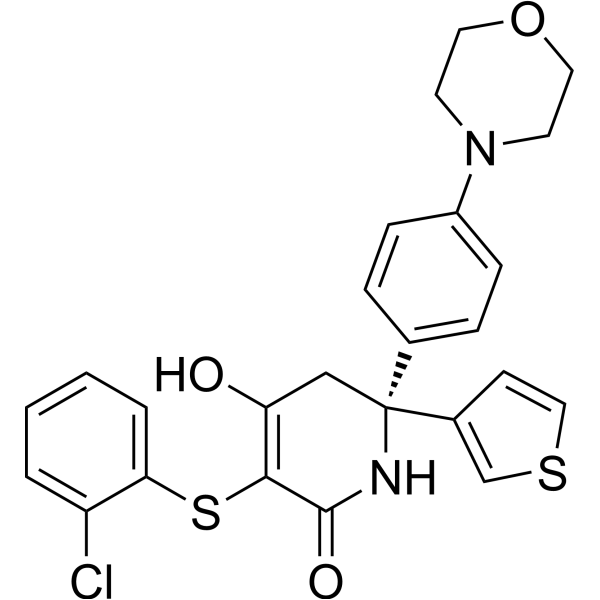
(R)-GNE-140 is a potent inhibitor of lactate dehydrogenase (LDH) A, B and C, with IC50 values of 3, 5 and 5 nM against LDHA, LDHB, LDHC, respectively. (R)-GNE-140 blocks the conversion of pyruvate to lactate, reduces lactate production and histone lysine lactylation, and inhibits glycolysis. (R)-GNE-140 attenuates cardiac hypertrophy, alleviates PM2.5-induced pulmonary inflammation and fibrosis, blocks MRSA-induced Arg1 expression. (R)-GNE-140 is applicable to research related to pathological cardiac hypertrophy, pulmonary fibrosis, MRSA infection and pancreatic cancer.

연구목적의 판매만을 진행합니다. 환자를 대상으로 한 판매는 하지 않습니다.

CAS No. : 2003234-63-5

사이즈 가격 재고 수량
무료 샘플 (0.1 - 0.2 mg)   지금 신청하기  
Solid + Solvent (Highly Recommended)
10 mM * 1 mL in DMSO
ready for reconstitution
해외재고보유
Solution
10 mM * 1 mL in DMSO 해외재고보유
Solid
5 mg 해외재고보유
10 mg 해외재고보유
25 mg 해외재고보유
50 mg 해외재고보유
100 mg 해외재고보유
200 mg   견적 받기  
500 mg   견적 받기  

* 장바구니에 담기 전 물품의 수량을 선택해 주십시오.

This product is a controlled substance and not for sale in your territory.

고객리뷰

Based on 19 publication(s) in Google Scholar

Other Forms of (R)-GNE-140:

Top Publications Citing Use of Products

    (R)-GNE-140 purchased from MedChemExpress. Usage Cited in: Adv Sci (Weinh). 2025 Nov 26:e08645.  [Abstract]

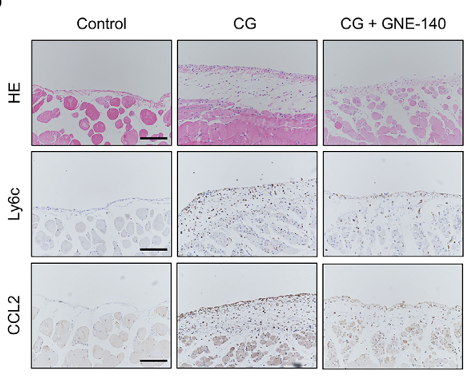
    Mice received intraperitoneal injections of 0.1% CG or saline, with or without GNE-140 treatment (5 μg/g body weight, three times weekly), starting on day 7. Representative images of H&E, CCL2, and Ly6c immunostaining in peritoneal tissues were shown.

    (R)-GNE-140 purchased from MedChemExpress. Usage Cited in: Adv Sci (Weinh). 2025 Nov 26:e08645.  [Abstract]

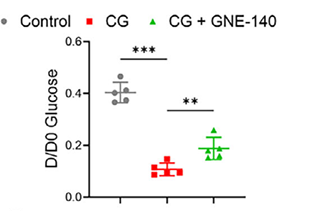
    Mice received intraperitoneal injections of 0.1% CG or saline, with or without GNE-140 treatment (5 μg/g body weight, three times weekly), starting on day 7. The D/D0 glucose ratio was measured.

    (R)-GNE-140 purchased from MedChemExpress. Usage Cited in: Adv Sci (Weinh). 2025 Dec 5:e20444.  [Abstract]

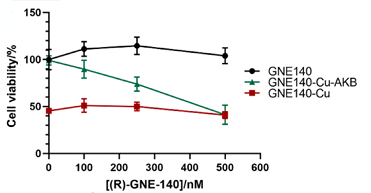
    Viability of SH-SY5Y cells after 24 h treatment with 1 mM AKB, 500 μM CuSO4, and (R)-GNE-140 was measured.

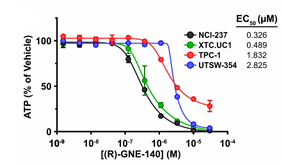
    (R)-GNE-140 purchased from MedChemExpress. Usage Cited in: Cancer Discov. 2023 Aug 4;13(8):1884-1903.  [Abstract]

    Viability assay for cells treated with (R)-GNE-140 for 3 days was performed.

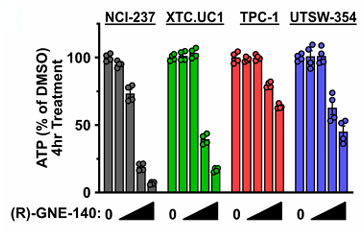
    (R)-GNE-140 purchased from MedChemExpress. Usage Cited in: Cancer Discov. 2023 Aug 4;13(8):1884-1903.  [Abstract]

    ATP levels in cells treated with (R)-GNE-140 for 4 hours were measured. Concentrations were 0.041, 0.37, 3.33, and 30 μM (R)-GNE-140.
    • Biological Activity

    • 순도&문서

    • References

    • 고객리뷰

    제품 설명

    (R)-GNE-140 is a potent inhibitor of lactate dehydrogenase (LDH) A, B and C, with IC50 values of 3, 5 and 5 nM against LDHA, LDHB, LDHC, respectively. (R)-GNE-140 blocks the conversion of pyruvate to lactate, reduces lactate production and histone lysine lactylation, and inhibits glycolysis. (R)-GNE-140 attenuates cardiac hypertrophy, alleviates PM2.5-induced pulmonary inflammation and fibrosis, blocks MRSA-induced Arg1 expression. (R)-GNE-140 is applicable to research related to pathological cardiac hypertrophy, pulmonary fibrosis, MRSA infection and pancreatic cancer[1][2][3][4].

    IC50 & Target

    LDHA

    3 nM (IC50)

    LDHB

    5 nM (IC50)

    Cellular Effect
    Cell Line Type Value Description References
    A549 IC50
    0.36 3
    Compound: Gen140
    Antiproliferative activity against human A549 cells assessed as reduction in cell viability at incubated for 72 hrs by MTT assay
    Antiproliferative activity against human A549 cells assessed as reduction in cell viability at incubated for 72 hrs by MTT assay
    [PMID: 31129449]
    A549 IC50
    0.36 3
    Compound: Gen140
    Antiproliferative activity against human A549 cells assessed as reduction in cell viability at incubated for 72 hrs by MTT assay
    Antiproliferative activity against human A549 cells assessed as reduction in cell viability at incubated for 72 hrs by MTT assay
    [PMID: 31129449]
    A673 IC50
    2.63 3
    Compound: 3
    Cytotoxicity against human A673 cells after 48 hrs by CellTiter-Glo assay
    Cytotoxicity against human A673 cells after 48 hrs by CellTiter-Glo assay
    [PMID: 29120638]
    A673 IC50
    2.63 3
    Compound: 3
    Cytotoxicity against human A673 cells after 48 hrs by CellTiter-Glo assay
    Cytotoxicity against human A673 cells after 48 hrs by CellTiter-Glo assay
    [PMID: 29120638]
    A549 IC50
    0.36 3
    Compound: Gen140
    Antiproliferative activity against human A549 cells assessed as reduction in cell viability at incubated for 72 hrs by MTT assay
    Antiproliferative activity against human A549 cells assessed as reduction in cell viability at incubated for 72 hrs by MTT assay
    [PMID: 31129449]
    A673 IC50
    2.63 3
    Compound: 3
    Cytotoxicity against human A673 cells after 48 hrs by CellTiter-Glo assay
    Cytotoxicity against human A673 cells after 48 hrs by CellTiter-Glo assay
    [PMID: 29120638]
    MG-63 IC50
    0.66 3
    Compound: 1
    Antiproliferative activity against human MG63 cells after 72 hrs by MTT assay
    Antiproliferative activity against human MG63 cells after 72 hrs by MTT assay
    [PMID: 29861142]
    MG-63 IC50
    0.66 3
    Compound: 1
    Antiproliferative activity against human MG63 cells after 72 hrs by MTT assay
    Antiproliferative activity against human MG63 cells after 72 hrs by MTT assay
    [PMID: 29861142]
    MIA PaCa-2 IC50
    0.48 3
    Compound: Gen140
    Antiproliferative activity against human MIAPaCa2 cells assessed as reduction in cell viability incubated for 72 hrs by MTT assay
    Antiproliferative activity against human MIAPaCa2 cells assessed as reduction in cell viability incubated for 72 hrs by MTT assay
    [PMID: 31129449]
    MIA PaCa-2 IC50
    0.48 3
    Compound: Gen140
    Antiproliferative activity against human MIAPaCa2 cells assessed as reduction in cell viability incubated for 72 hrs by MTT assay
    Antiproliferative activity against human MIAPaCa2 cells assessed as reduction in cell viability incubated for 72 hrs by MTT assay
    [PMID: 31129449]
    MIA PaCa-2 IC50
    1.24 3
    Compound: 3
    Cytotoxicity against human MIAPaCa2 cells after 48 hrs by CellTiter-Glo assay
    Cytotoxicity against human MIAPaCa2 cells after 48 hrs by CellTiter-Glo assay
    [PMID: 29120638]
    MIA PaCa-2 IC50
    1.24 3
    Compound: 3
    Cytotoxicity against human MIAPaCa2 cells after 48 hrs by CellTiter-Glo assay
    Cytotoxicity against human MIAPaCa2 cells after 48 hrs by CellTiter-Glo assay
    [PMID: 29120638]
    MG-63 IC50
    0.66 3
    Compound: 1
    Antiproliferative activity against human MG63 cells after 72 hrs by MTT assay
    Antiproliferative activity against human MG63 cells after 72 hrs by MTT assay
    [PMID: 29861142]
    MIA PaCa-2 IC50
    0.48 3
    Compound: Gen140
    Antiproliferative activity against human MIAPaCa2 cells assessed as reduction in cell viability incubated for 72 hrs by MTT assay
    Antiproliferative activity against human MIAPaCa2 cells assessed as reduction in cell viability incubated for 72 hrs by MTT assay
    [PMID: 31129449]
    MIA PaCa-2 IC50
    1.24 3
    Compound: 3
    Cytotoxicity against human MIAPaCa2 cells after 48 hrs by CellTiter-Glo assay
    Cytotoxicity against human MIAPaCa2 cells after 48 hrs by CellTiter-Glo assay
    [PMID: 29120638]
    In Vitro

    (R)-GNE-140 (10 μM; 48 h) reduces intracellular lactate levels, decreases the surface area of neonatal mouse cardiomyocytes, downregulates the expression of cardiac hypertrophy markers, and inhibits multiple histone lysine lactylation modifications, thereby alleviating angiotensin II (Ang II)-induced hypertrophy of neonatal mouse cardiomyocytes (NMCM)[1].
    Pretreatment of mouse RAW264.7 macrophages with (R)-GNE-140 (10 μM; 4 h) inhibits PM2.5-induced glycolysis, histone lactylation, pro-fibrotic gene expression and cytokine secretion, and partially reverses macrophage-mediated epithelial-mesenchymal transition (EMT) in MLE-12 cells[2].
    (R)-GNE-140 (6-12 h) inhibits MSM-induced Arg1 mRNA expression in MRSA-infected THP1 cells at 6 h and 12 h post-infection[3].
    (R)-GNE-140 (6-12 h) blocks MSM-induced Arg1 protein expression in THP1 cells infected with MRSA at 6 h and 12 h post-infection[3].
    (R)-GNE-140 (Compound 29-R) can inhibit lactate production in human pancreatic cancer MiaPaca2 cells, with its IC50 being 0.67 μM[4].

    MedChemExpress (MCE) has not independently confirmed the accuracy of these methods. They are for reference only.

    In Vivo

    (R)-GNE-140 (5 mg/kg; i.t.; once every other day; 4 weeks) reduces PM2.5-induced pulmonary inflammation and fibrosis in male C57BL/6 J mice by inhibiting glycolysis and subsequent histone lactylation[2].

    MedChemExpress (MCE) has not independently confirmed the accuracy of these methods. They are for reference only.

    Animal Model: C57BL/6 J (male, intratracheal instillation of PM2.5 once every other day for 4 weeks)[2]
    Dosage: 5 mg/kg
    Administration: i.t.; once every other day; 4 weeks (administered 4 h prior to each PM2.5 dose)
    Result: Significantly reduced PM2.5-induced peribronchial inflammation scores by 41%.
    Reduced collagenous fiber area by 31%.
    Reduced macrophage infiltration by 39%.
    Decreased lung collagen content by 28%.
    Decreased LDH activity by 31%.
    Decreased lactate content by 55%.
    Attenuated PM2.5-induced up-regulation of histone lactylation.
    Restored the expression of epithelial (ZO-1, E-cadherin) and mesenchymal (N-cadherin, vimentin) markers to near control levels.
    분자량

    499.04

    화학식

    C25H23ClN2O3S2

    CAS No.
    Appearance

    Solid

    Color

    Off-white to yellow

    SMILES

    O=C1N[C@@](C2=CSC=C2)(C3=CC=C(N4CCOCC4)C=C3)CC(O)=C1SC5=CC=CC=C5Cl

    선적

    Room temperature in continental US; may vary elsewhere.

    보관
    Powder -20°C 3 years
    4°C 2 years
    In solvent -80°C 1 year
    -20°C 6 months
    용액&용해도
    In Vitro: 

    DMSO : ≥ 50 mg/mL (100.19 mM; Hygroscopic DMSO has a significant impact on the solubility of product, please use newly opened DMSO)

    *"≥" means soluble, but saturation unknown.

    Preparing
    Stock Solutions
    Concentration Solvent Mass 1 mg 5 mg 10 mg
    1 mM 2.0038 mL 10.0192 mL 20.0385 mL
    5 mM 0.4008 mL 2.0038 mL 4.0077 mL
    View the Complete Stock Solution Preparation Table

    * Please refer to the solubility information to select the appropriate solvent. Once prepared, please aliquot and store the solution to prevent product inactivation from repeated freeze-thaw cycles.
    Storage method and period of stock solution: -80°C, 1 year; -20°C, 6 months. When stored at -80°C, please use it within 1 year. When stored at -20°C, please use it within 6 months.

    • 몰농도 계산기

    • 농도 희석 계산기

    Mass (g) = Concentration (mol/L) × Volume (L) × Molecular Weight (g/mol)

    Mass
    =
    Concentration
    ×
    Volume
    ×
    Molecular Weight *

    Concentration (start) × Volume (start) = Concentration (final) × Volume (final)

    This equation is commonly abbreviated as: C1V1 = C2V2

    Concentration (start)

    C1

    ×
    Volume (start)

    V1

    =
    Concentration (final)

    C2

    ×
    Volume (final)

    V2

    In Vivo:

    Select the appropriate dissolution method based on your experimental animal and administration route.

    For the following dissolution methods, please ensure to first prepare a clear stock solution using an In Vitro approach and then sequentially add co-solvents:
    To ensure reliable experimental results, the clarified stock solution can be appropriately stored based on storage conditions. As for the working solution for in vivo experiments, it is recommended to prepare freshly and use it on the same day.
    The percentages shown for the solvents indicate their volumetric ratio in the final prepared solution. If precipitation or phase separation occurs during preparation, heat and/or sonication can be used to aid dissolution.

    • Protocol 1

      Add each solvent one by one:  10% DMSO    40% PEG300    5% Tween-80    45% Saline

      Solubility: ≥ 2.5 mg/mL (5.01 mM); Clear solution

      This protocol yields a clear solution of ≥ 2.5 mg/mL (saturation unknown).

      Taking 1 mL working solution as an example, add 100 μL DMSO stock solution (25.0 mg/mL) to 400 μL PEG300, and mix evenly; then add 50 μL Tween-80 and mix evenly; then add 450 μL Saline to adjust the volume to 1 mL.

      Preparation of Saline: Dissolve 0.9 g sodium chloride in ddH₂O and dilute to 100 mL to obtain a clear Saline solution.
    • Protocol 2

      Add each solvent one by one:  10% DMSO    90% (20% SBE-β-CD in Saline)

      Solubility: 2.5 mg/mL (5.01 mM); Suspended solution; Need ultrasonic

      This protocol yields a suspended solution of 2.5 mg/mL. Suspended solution can be used for oral and intraperitoneal injection.

      Taking 1 mL working solution as an example, add 100 μL DMSO stock solution (25.0 mg/mL) to 900 μL 20% SBE-β-CD in Saline, and mix evenly.

      Preparation of 20% SBE-β-CD in Saline (4°C, storage for one week): 2 g SBE-β-CD powder is dissolved in 10 mL Saline, completely dissolve until clear.
    In Vivo Dissolution Calculator
    Please enter the basic information of animal experiments:

    Dosage

    mg/kg

    Animal weight
    (per animal)

    g

    Dosing volume
    (per animal)

    μL

    Number of animals

    Recommended: Prepare an additional quantity of animals to account for potential losses during experiments.
    Please enter your animal formula composition:
    %
    DMSO +
    +
    %
    Tween-80 +
    %
    Saline
    Recommended: Keep the proportion of DMSO in working solution below 2% if your animal is weak.
    The co-solvents required include: DMSO, . All of co-solvents are available by MedChemExpress (MCE). , Tween 80. All of co-solvents are available by MedChemExpress (MCE).
    Calculation results:
    Working solution concentration: mg/mL
    Method for preparing stock solution: mg drug dissolved in μL  DMSO (Stock solution concentration: mg/mL).
    The concentration of the stock solution you require exceeds the measured solubility. The following solution is for reference only. If necessary, please contact MedChemExpress (MCE).
    Method for preparing in vivo working solution for animal experiments: Take μL DMSO stock solution, add μL . μL , mix evenly, next add μL Tween 80, mix evenly, then add μL Saline.
     If the continuous dosing period exceeds half a month, please choose this protocol carefully.
    Please ensure that the stock solution in the first step is dissolved to a clear state, and add co-solvents in sequence. You can use ultrasonic heating (ultrasonic cleaner, recommended frequency 20-40 kHz), vortexing, etc. to assist dissolution.
    순도&문서

    Purity: 99.73%

    References

    Complete Stock Solution Preparation Table

    * Please refer to the solubility information to select the appropriate solvent. Once prepared, please aliquot and store the solution to prevent product inactivation from repeated freeze-thaw cycles.
    Storage method and period of stock solution: -80°C, 1 year; -20°C, 6 months. When stored at -80°C, please use it within 1 year. When stored at -20°C, please use it within 6 months.

    Optional Solvent Concentration Solvent Mass 1 mg 5 mg 10 mg 25 mg
    DMSO 1 mM 2.0038 mL 10.0192 mL 20.0385 mL 50.0962 mL
    5 mM 0.4008 mL 2.0038 mL 4.0077 mL 10.0192 mL
    10 mM 0.2004 mL 1.0019 mL 2.0038 mL 5.0096 mL
    15 mM 0.1336 mL 0.6679 mL 1.3359 mL 3.3397 mL
    20 mM 0.1002 mL 0.5010 mL 1.0019 mL 2.5048 mL
    25 mM 0.0802 mL 0.4008 mL 0.8015 mL 2.0038 mL
    30 mM 0.0668 mL 0.3340 mL 0.6679 mL 1.6699 mL
    40 mM 0.0501 mL 0.2505 mL 0.5010 mL 1.2524 mL
    50 mM 0.0401 mL 0.2004 mL 0.4008 mL 1.0019 mL
    60 mM 0.0334 mL 0.1670 mL 0.3340 mL 0.8349 mL
    80 mM 0.0250 mL 0.1252 mL 0.2505 mL 0.6262 mL
    100 mM 0.0200 mL 0.1002 mL 0.2004 mL 0.5010 mL
    • No file chosen (Maximum size is: 1024 Kb)
    • If you have published this work, please enter the PubMed ID.
    • Your name will appear on the site.
    Help & FAQs
    • Do most proteins show cross-species activity?

      Species cross-reactivity must be investigated individually for each product. Many human cytokines will produce a nice response in mouse cell lines, and many mouse proteins will show activity on human cells. Other proteins may have a lower specific activity when used in the opposite species.

    최근 본 상품:

    온라인 문의

    Your information is safe with us. * Required Fields.

    상품명


    Requested Quantity *

    고객명 *


    호칭

    메일주소 *


    전화번호 *

    Department


    회사명 *

    City

    Country or Region *


    비고

    대량구매 문의

    Inquiry Information

    상품명:
    (R)-GNE-140
    Cat. No.:
    HY-100742A
    수량:
    MCE Japan Authorized Agent: