



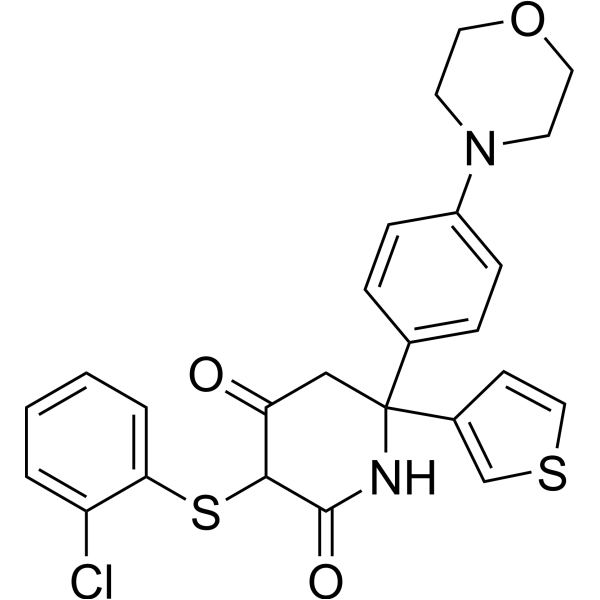
GNE-140 racemate
Based on 9 publication(s) in Google Scholar
GNE-140 racemate is a racemic mixture of (R)-GNE-140 (HY-100742A) and (S)-GNE-140 (HY-100742B), and also a tautomer of GNE-140 (HY-118241). GNE-140 racemate is an orally active lactate dehydrogenase inhibitor, with an IC50 of 3 nM against human LDHA and an IC50 of 5 nM against LDHB. GNE-140 racemate reduces the phosphorylation level and total protein expression of p38 MAPK, and inhibits EGF-induced AKT phosphorylation. GNE-140 racemate decreases lactate production, regulates glycolysis, the pentose phosphate pathway and nucleotide biosynthesis, increases extracellular pH, inhibits cell proliferation, migration and invasion, and induces caspase-3 activation and ROS accumulation. GNE-140 racemate can be used in research related to breast cancer, cystic fibrosis and pancreatic cancer.
For research use only. We do not sell to patients.
- Purity : 99.25%
- CAS No.: 1802977-61-2
- Formula: C25H23ClN2O3S2
- Molecular Weight:499.04
-
Storage:Powder -20°C, 3 years , 4°C, 2 years ; In solvent -80°C, 2 years , -20°C, 1 year

To place orders, for customer services and technical support, please contact: MedChemExpress USA
Tel: 609-228-6898 E-mail: [email protected] [email protected]


-
 Biological Activity
-
Chemical Information
-
Solvent & Solubility
- Purity & Documentation
- References
-
 Help & FAQs


-
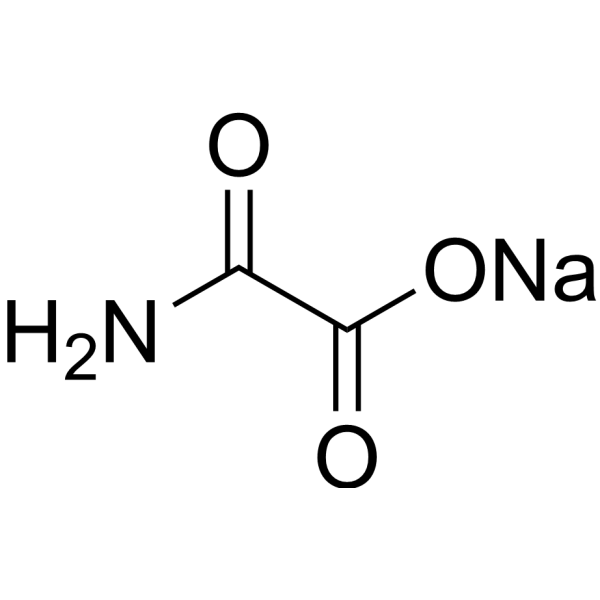
HY-W013032A
Oxamic acid sodiumLDH-A Inhibitor -
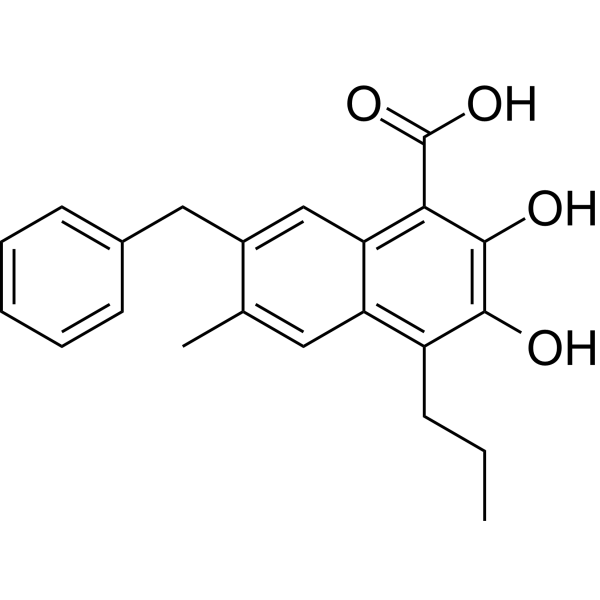
HY-16214
FX-11LDHA Inhibitor -
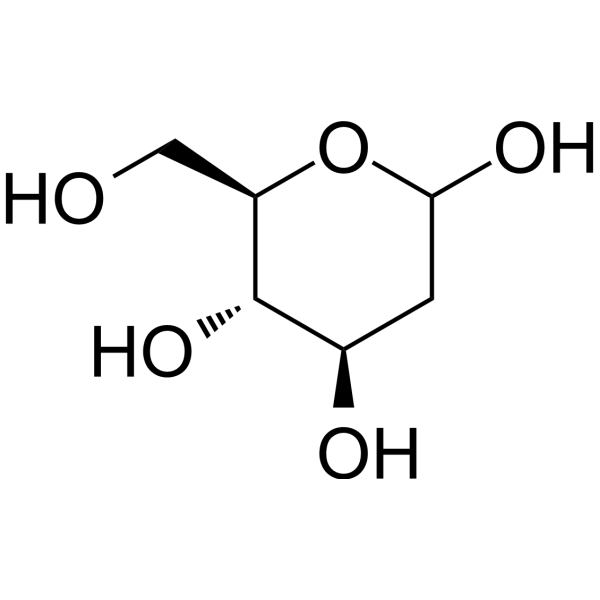
HY-13966
2-Deoxy-D-glucoseGlycolysis Inhibitor -
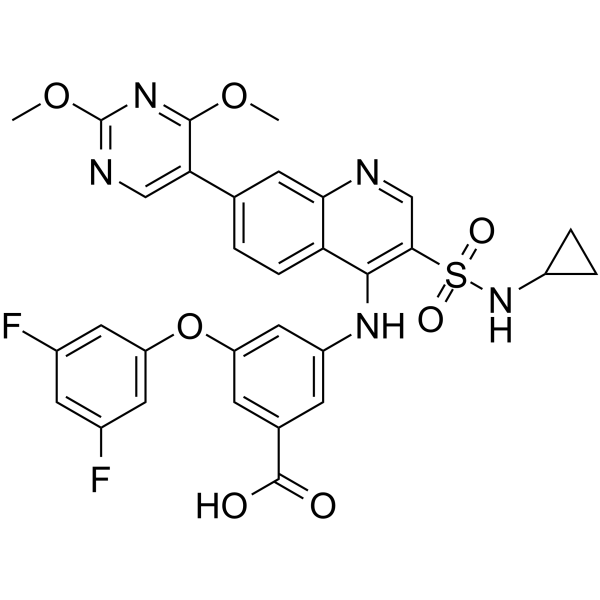
HY-100681
GSK2837808ALDHA Inhibitor -
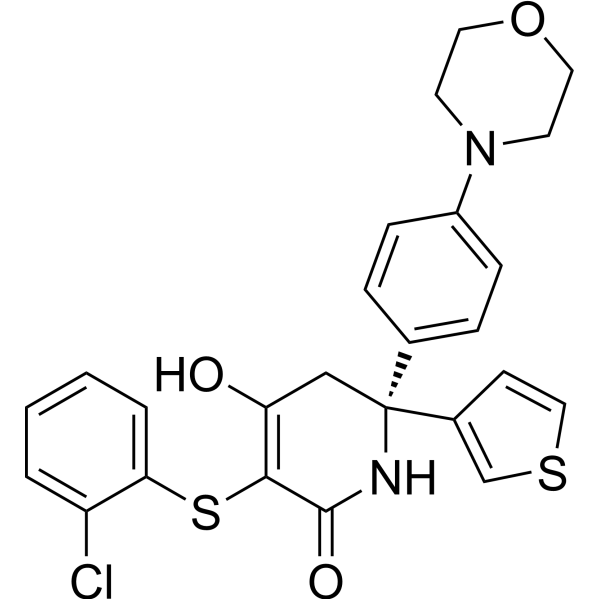
HY-100742A
(R)-GNE-140LDHA Inhibitor -
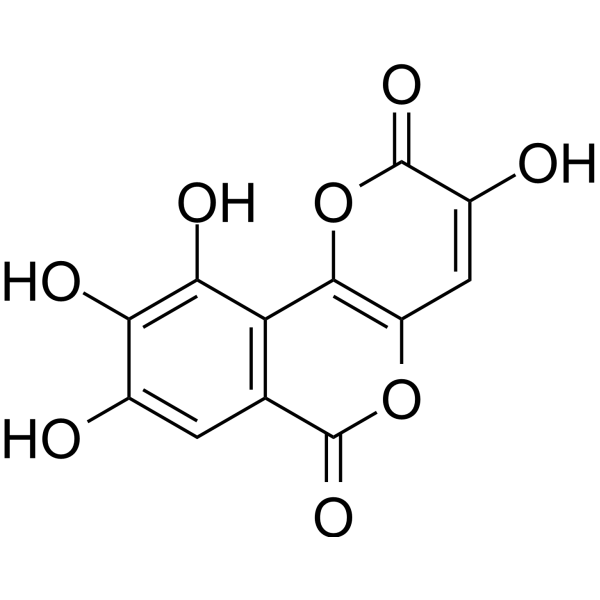
HY-W040118
GalloflavinLactate Dehydrogenase Inhibitor -

HY-N6782
OligomycinH+-ATP-Synthase Inhibitor -
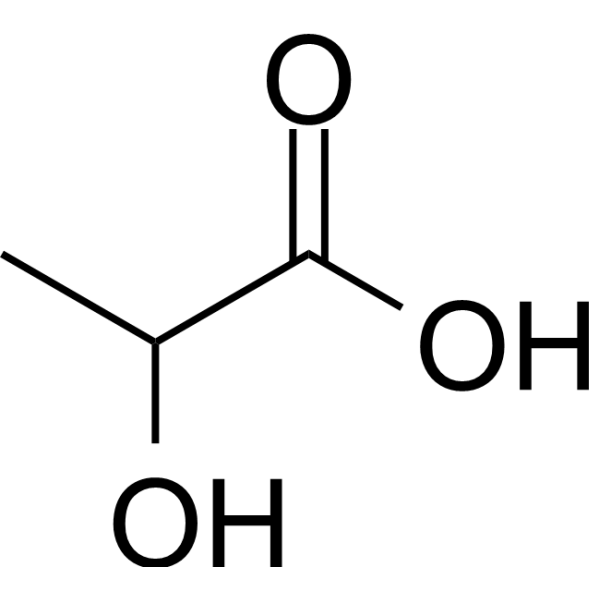
HY-B2227
Lactic acidGlycolysis Production -
HY-B2227B
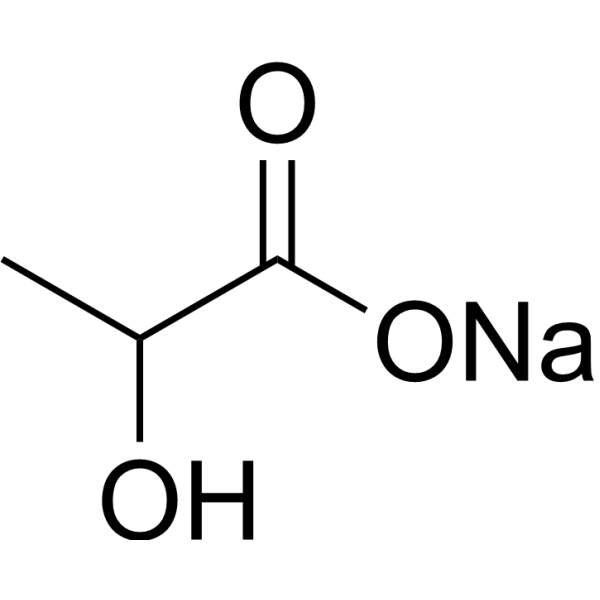
Lactic acid sodium (60% w/w in water)Glycolysis Production -
HY-B0215
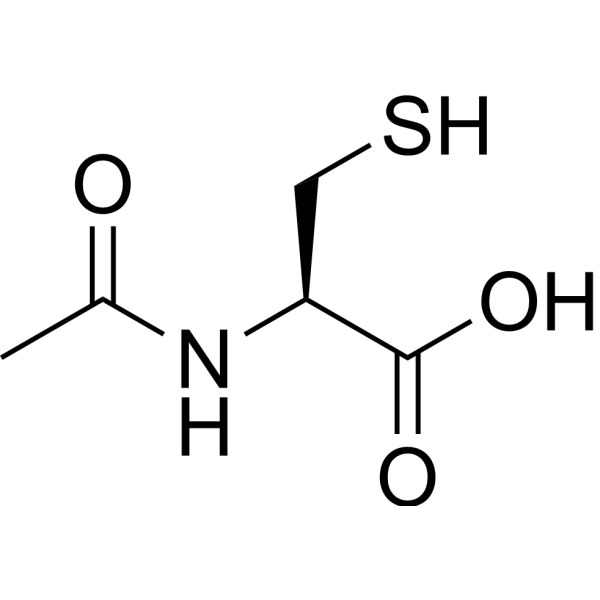
AcetylcysteineMucolytic Agent -
HY-B1756
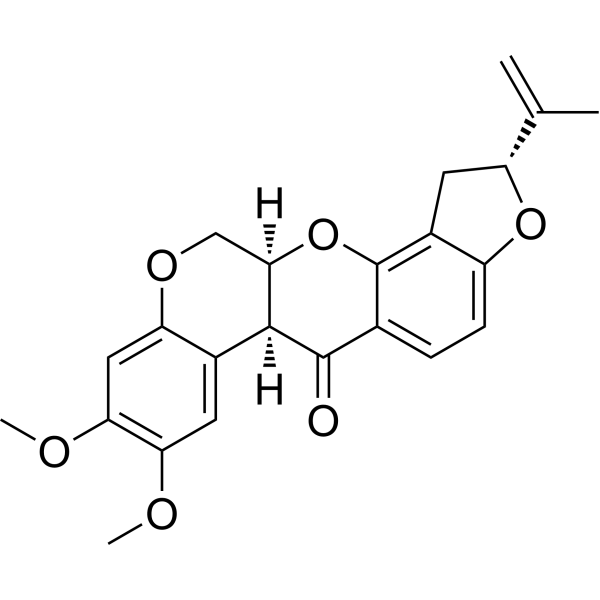
RotenoneMitochondrial Complex I Inhibitor -
HY-N0822
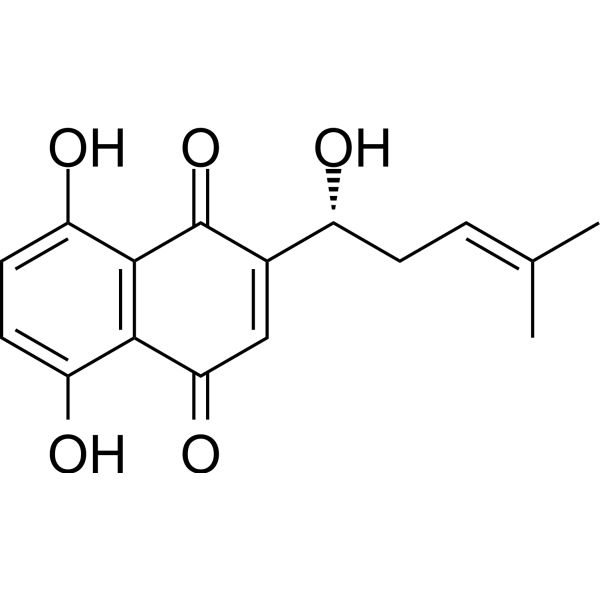
ShikoninChloride Channel Inhibitor
Publications Citing Use of MedChemExpress (MCE) GNE-140 racemate
More- Gastroenterology. 2024 May;166(5):772-786.e14. [Abstract]
- Nat Commun. 2023 Jul 14;14(1):4129. [Abstract]
- Int J Biol Macromol. 2025 Sep 10:147598. [Abstract]
- Int J Biol Macromol. 2025 Apr 10;309(Pt 3):142858. [Abstract]
- J Anim Sci Biotechnol. 2025 Dec 18;16(1):174. [Abstract]
- Cell Mol Life Sci. 2019 Apr;76(8):1579-1593. [Abstract]
- Biochim Biophys Acta Mol Basis Dis. 2022 Dec 1;1868(12):166550. [Abstract]
- Am J Physiol Heart Circ Physiol. 2021 Jun 1;320(6):H2222-H2239. [Abstract]
- bioRxiv. 2024 June 27.
All EGFR Isoforms
MoreAll Caspase Isoforms
More

Biological Activity
Description
|
LDHA 3 nM (IC50) |
LDHB 5 nM (IC50) |
p38 MAPK |
Akt |
Caspase-3 |
Cellular Effect
|
Cell Line

|
Type | Value | Description | References |
|---|---|---|---|---|
| MIA PaCa-2 | IC50 |
0.67 μM
|
Reduction of cellular lactate levels in human MIA PaCa-2 pancreatic cancer cells after 6 hours of exposure.
Reduction of cellular lactate levels in human MIA PaCa-2 pancreatic cancer cells after 6 hours of exposure.
|
27479743 |
| MIA PaCa-2 | IC50 |
0.43 μM
|
Inhibition of proliferation in human MIA PaCa-2 pancreatic cancer cells.
Inhibition of proliferation in human MIA PaCa-2 pancreatic cancer cells.
|
27479743 |
| MIA PaCa-2 | IC50 |
0.47 μM
|
Reduction of glucose uptake in human MIA PaCa-2 pancreatic cancer cells after 6 hours of exposure.
Reduction of glucose uptake in human MIA PaCa-2 pancreatic cancer cells after 6 hours of exposure.
|
27479743 |
In Vitro
GNE-140 (200-300 μM) racemate inhibits intracellular LDH activity in pII ER- breast cancer cells[1].
GNE-140 (200-300 μM) racemate reduces extracellular lactate levels in ER− breast cancer cells[1].
GNE-140 (0.001-100 μM; 6 h) racemate inhibits LDHA activity in MIA PaCa-2 human pancreatic cancer cells, reducing lactate levels with an IC50 of 0.67 μM and increasing pyruvate levels after 6 hours of treatment[3].
GNE-140 (2 μM; 24 h) racemate alters global metabolism in MIA PaCa-2 human pancreatic cancer cells treated with 2 μM for 24 hours, increasing levels of glycolytic and pentose phosphate pathway metabolites without substantially affecting oxidative phosphorylation-associated metabolites[3].
GNE-140 (0.001-100 μM; 6 h) racemate reduces glucose uptake in MIA PaCa-2 human pancreatic cancer cells with an IC50 of 0.47 μM after 6 hours of treatment[3].
GNE-140 (2 μM; 6 h) racemate redirects glucose carbon flux away from lactate production and toward pyruvate, alanine, and pentose phosphate pathway metabolites in MIA PaCa-2 human pancreatic cancer cells treated with 2 μM for 6 hours, without increasing glutamine-dependent TCA cycle flux[3].
GNE-140 (72 h) racemate synergizes with AMPK inhibitor, S6K inhibitor, and Phenformin (HY-16397) to reduce viability and shift metabolism away from oxidative phosphorylation in MIA PaCa-2 human pancreatic cancer cells[3].
GNE-140 (200-300 μM; 4 days) inhibits proliferation of pII ER− breast cancer cells after 4 days of incubation at concentrations of 200 μM and 300 μM, with no effect seen after 1 day of incubation[1].
GNE-140 (200-300 μM; 24 h) racemate inhibits motility of pII ER- breast cancer cells after 24 h of incubation at concentrations of 200 μM and 300 μM[1].
GNE-140 (200-300 μM; 48 h) racemate inhibits invasion of pII ER- breast cancer cells after 48 h of incubation at concentrations of 200 μM and 300 μM[1].
GNE-140 (100-300 μM; 4 days) racemate inhibits proliferation of YS1.2 ER+ breast cancer cells after 4 days of incubation at concentrations of 100 μM, 200 μM, and 300 μM, with no effect seen after 1 day of incubation[1].
GNE-140 (200-300 μM; 24 h) racemate inhibits motility of YS1.2 ER+ breast cancer cells after 24 h of incubation at concentrations of 200 μM and 300 μM[1].
GNE-140 (200 μM; 30 min pre-incubation prior to 30 min EGF stimulation) racemate reduces EGF-induced phosphorylation of p38 MAPK and AKT, and lowers total p38 MAPK levels, in pII ER- breast cancer cells without altering EGF-induced phosphorylation of ERK1/2, Src, or NF-κB[1].
GNE-140 (0.001-100 μM) racemate inhibits proliferation of MIA PaCa-2 human pancreatic cancer cells with an IC50 of 0.43 μM, with potency dependent on cellular LDHA expression levels[3].
GNE-140 (72 h) racemate inhibits proliferation of 13% (4/30) of tested human pancreatic cancer cell lines with IC50 values below 5 μM, with sensitive lines relying more on glycolysis (lower baseline OCR) than resistant lines that rely on oxidative phosphorylation[3].
GNE-140 (200-300 μM; 4 days) racemate inhibits proliferation of MCF10A normal breast epithelial cells after 4 days of incubation at concentrations of 200 μM and 300 μM[1].
GNE-140 (1 μM; 72 h) racemate increases the extracellular pH of cultured IB3-1 CF lung epithelial cells[2].
GNE-140 racemate potently inhibits purified human LDHA, LDHB, and LDHC enzymes with nanomolar potency, shows no appreciable inhibition of MDH-1/MDH-2, and is highly selective against a broad panel of kinases[3].
GNE-140 (2 μM; 1-5 days) racemate induces caspase-3 activation starting at 1-2 days and cell death starting at 3 days in MIA PaCa-2 human pancreatic cancer cells treated with 2 μM, and sustained inhibition for more than 2 days is required to drive irreversible cell death[3].
GNE-140 (10 μM; 0-48 h) racemate increases reactive oxygen species levels in a time-dependent manner in MIA PaCa-2 human pancreatic cancer cells treated with 10 μM[3].
MedChemExpress (MCE) has not independently confirmed the accuracy of these methods. They are for reference only.
-
Cell Line:pII ER- breast cancer cells
-
Concentration:0.01-300 μM (4-day incubation); 200-300 μM (1-day incubation)
-
Incubation Time:4 days (for 0.01-300 μM); 1 day (for 200-300 μM)
-
Result:Inhibited pII cell viability on day 4 at concentrations of 200 μM and 300 μM.
Showed no effect on day 1 at 200 μM and 300 μM.
-
Cell Line:pII ER- breast cancer cells
-
Concentration:200-300 μM
-
Incubation Time:24 h
-
Result:Inhibited pII cell motility, as measured by reduced scratch closure, compared to untreated controls.
-
Cell Line:pII ER- breast cancer cells
-
Concentration:200-300 μM
-
Incubation Time:48 h
-
Result:Inhibited pII cell invasion compared to untreated controls.
-
Cell Line:YS1.2 ER+ breast cancer cells
-
Concentration:0.01-300 μM (4-day incubation); 200-300 μM (1-day incubation)
-
Incubation Time:4 days (for 0.01-300 μM); 1 day (for 200-300 μM)
-
Result:Inhibited YS1.2 cell viability on day 4 at concentrations of 100 μM, 200 μM, and 300 μM.
Showed no effect on day 1 at 200 μM and 300 μM.
-
Cell Line:YS1.2 ER+ breast cancer cells
-
Concentration:200-300 μM
-
Incubation Time:24 h
-
Result:Inhibited YS1.2 cell motility, as measured by reduced scratch closure, compared to untreated controls.
-
Cell Line:MCF10A normal breast epithelial cells
-
Concentration:0.01-300 μM
-
Incubation Time:4 days
-
Result:Inhibited MCF10A cell viability on day 4 at concentrations of 200 μM and 300 μM compared to untreated controls.
-
Cell Line:pII ER- breast cancer cells
-
Concentration:200 μM
-
Incubation Time:30 min pre-incubation prior to 30 min EGF stimulation
-
Result:Reduced EGF-induced phosphorylation of p38 MAPK and AKT compared to EGF-only treated cells.
Reduced total p38 MAPK protein levels compared to EGF-only treated cells.
Did not affect EGF-induced phosphorylation of ERK1/2, Src, or NF-κB.
In Vivo
MedChemExpress (MCE) has not independently confirmed the accuracy of these methods. They are for reference only.
-
Animal Model:NCR nu/nu (female, immunocompromised, subcutaneous implantation of human MIA PaCa-2-SHT2 cells)[3]
-
Dosage:100 mg/kg (7-day metabolite measurement; 21-day tumor growth assessment); 200 mg/kg (7-day metabolite measurement; 21-day tumor growth assessment); 400 mg/kg (7-day metabolite measurement; 21-day tumor growth assessment)
-
Administration:p.o.; BID; 7 days (metabolite measurement); p.o.; BID; 21 days (tumor growth assessment)
-
Result:Showed dose-dependent reduction in tumor lactate levels 1 h after final dose of 100, 200, or 400 mg/kg.
Showed dose-dependent increases in tumor pyruvate and glycerol-3-phosphate levels 1 h after final dose of 100, 200, or 400 mg/kg.
Detected no significant changes in tumor lactate, pyruvate, or glycerol-3-phosphate levels 6 h after final dose of 100, 200, or 400 mg/kg.
Resulted in no tumor growth inhibition compared to vehicle control after 21 days of treatment with 100, 200, or 400 mg/kg.


Chemical Information
-
CAS No. 1802977-61-2
-
Appearance Solid
-
Molecular Weight 499.04
-
Formula C25H23ClN2O3S2
-
Color White to off-white
-
SMILES
O=C(C1SC2=CC=CC=C2Cl)NC(C3=CSC=C3)(C4=CC=C(N5CCOCC5)C=C4)CC1=O
-
Shipping
Room temperature in continental US; may vary elsewhere.
-
Storage
Powder -20°C 3 years 4°C 2 years In solvent -80°C 2 years -20°C 1 year


Publications (9)
-
Journal Impact Factor
-
Most Recent
-
Gastroenterology
2024 May;166(5):772-786.e14. PMID: 38272100 -
Nat Commun
2023 Jul 14;14(1):4129. PMID: 37452018 -
Int J Biol Macromol
Targeting and reversing tumor acidic microenvironment with bacterial cellulose-based micelles to enhance immune infiltration. [Abstract]2025 Sep 10:147598. PMID: 40939806 -
Int J Biol Macromol
Histone lactylation regulates early embryonic development through m6A methyltransferase METTL3 in goats. [Abstract]2025 Apr 10;309(Pt 3):142858. PMID: 40216110 -
J Anim Sci Biotechnol
Glutamine relieves feed restriction-induced ruminal epithelial function damage through histone lysine lactylation in yaks. [Abstract]2025 Dec 18;16(1):174. PMID: 41408320 -
Cell Mol Life Sci
Impairment of CFTR activity in cultured epithelial cells upregulates the expression and activity of LDH resulting in lactic acid hypersecretion. [Abstract]2019 Apr;76(8):1579-1593. PMID: 30599064 -
Biochim Biophys Acta Mol Basis Dis
Integrated application of transcriptome and metabolomics reveals potential therapeutic targets for the polarization of atherosclerotic macrophages. [Abstract]2022 Dec 1;1868(12):166550. PMID: 36150660 -
Am J Physiol Heart Circ Physiol
Periostin promotes arterial calcification through PPARγ-related glucose metabolism reprogramming. [Abstract]2021 Jun 1;320(6):H2222-H2239. PMID: 33834866 -


Solvent & Solubility
In Vitro:
DMSO : 20 mg/mL (40.08 mM; Need ultrasonic; Hygroscopic DMSO has a significant impact on the solubility of product, please use newly opened DMSO)
Please refer to the solubility information to select the appropriate solvent. Once prepared, please aliquot and store the solution to prevent product inactivation from repeated freeze-thaw cycles.
Storage method and period of stock solution: -80°C, 2 years; -20°C, 1 year. When stored at -80°C, please use it within 2 years. When stored at -20°C, please use it within 1 year.
Please refer to the solubility information to select the appropriate solvent. Once prepared, please aliquot and store the solution to prevent product inactivation from repeated freeze-thaw cycles.
Storage method and period of stock solution: -80°C, 2 years; -20°C, 1 year. When stored at -80°C, please use it within 2 years. When stored at -20°C, please use it within 1 year.
Concentration (start) × Volume (start) = Concentration (final) × Volume (final)


Purity & Documentation
-
Data Sheet (312 KB)
-
SDS (393 KB)
- English - EN (393 KB)
- Français - FR (393 KB)
- Deutsch - DE (393 KB)
- Norwegian - NO (393 KB)
- Español - ES (393 KB)
- Swedish - SV (393 KB)
- Italian - IT (393 KB)
- Korean - KR (393 KB)
- Portuguese - PT (393 KB)
-
Handling Instructions (2659 KB)
References
[1]. Khajah MA, et al. The effect of lactate dehydrogenase inhibitors on proliferation, motility and invasion of breast cancer cells highlights a new role for lactate. Molecular medicine reports. 2024 Jan;29(1):12. [Content Brief]
[2]. Valdivieso ÁG, et al. Impairment of CFTR activity in cultured epithelial cells upregulates the expression and activity of LDH resulting in lactic acid hypersecretion. Cellular and molecular life sciences : CMLS. 2019 Apr;76(8):1579-1593. [Content Brief]
[3]. Boudreau A, et al. Metabolic plasticity underpins innate and acquired resistance to LDHA inhibition. Nature chemical biology. 2016 Oct;12(10):779-86. [Content Brief]
[4]. Ji JJ, et al. Kallistatin/Serpina3c inhibits cardiac fibrosis after myocardial infarction by regulating glycolysis via Nr4a1 activation. Biochimica et biophysica acta. Molecular basis of disease. 2022 Sep 01;1868(9):166441. [Content Brief]


Complete Stock Solution Preparation Table
Please refer to the solubility information to select the appropriate solvent. Once prepared, please aliquot and store the solution to prevent product inactivation from repeated freeze-thaw cycles.
Storage method and period of stock solution: -80°C, 2 years; -20°C, 1 year. When stored at -80°C, please use it within 2 years. When stored at -20°C, please use it within 1 year.
| Optional Solvent | Concentration Solvent Mass | 1 mg | 5 mg | 10 mg | 25 mg |
|---|---|---|---|---|---|
| DMSO | 1 mM | 2.0038 mL | 10.0192 mL | 20.0385 mL | 50.0962 mL |
| 5 mM | 0.4008 mL | 2.0038 mL | 4.0077 mL | 10.0192 mL | |
| 10 mM | 0.2004 mL | 1.0019 mL | 2.0038 mL | 5.0096 mL | |
| 15 mM | 0.1336 mL | 0.6679 mL | 1.3359 mL | 3.3397 mL | |
| 20 mM | 0.1002 mL | 0.5010 mL | 1.0019 mL | 2.5048 mL | |
| 25 mM | 0.0802 mL | 0.4008 mL | 0.8015 mL | 2.0038 mL | |
| 30 mM | 0.0668 mL | 0.3340 mL | 0.6679 mL | 1.6699 mL | |
| 40 mM | 0.0501 mL | 0.2505 mL | 0.5010 mL | 1.2524 mL |


GNE-140 racemate Related Classifications
HY-100742 Related Classifications
 Powered by Bioz