



Immunotherapy for Colorectal Cancer
-
Immunotherapy for Colorectal Cancer (14)

- 1

- Formula: C60H71F2N9O7S
- Molecular Weight: 1100.32
MCB-36 is a pan-KRAS PROTAC degrader that recruits VHL, with a Kd value of approximately 1 pM against KRAS, and it does not affect KRAS transcription. MCB-36 continuously degrades various KRAS mutants, inhibits oncogenic KRAS signaling pathways, reduces p-ERK levels, and induces apoptosis, thereby suppressing the growth of KRAS-dependent cancer cells. In vivo, MCB-36 inhibits tumor growth, overcomes resistance to KRAS G12C inhibitors, remodels the tumor immune microenvironment and enhances immune cell infiltration. MCB-36 can be used in research related to colorectal cancer and lung cancer.

- Formula: C17H15BrO3
- Molecular Weight: 347.20
ERG245 is a selective amino acid aminotransferase (BCAT1) inhibitor with a human IC50 of 0.5 nM. ERG245 enhances oxidative phosphorylation (OXPHOS) in CD8+ T cells by specifically inhibiting BCAT1 activity, thereby increasing the cytotoxicity of CD8+ T cells. ERG245 shows anti-inflammatory and anti-tumor activities. ERG245 can be used for the researches of cancer anf inflammation, such as colitis and colon cancer.

- Formula: C62H87N5O11S
- Molecular Weight: 1110.45
NR-V04 is a selective NR4A1 PROTAC degrader. NR-V04 forms a ternary complex with NR4A1 and the VHL E3 ligase, mediates proteasome-dependent degradation of NR4A1. NR-V04 induces tumor-infiltrating B cells and effector memory CD8+ T cells and reduces monocytic myeloid-derived suppressor cells in tumor microenvironments. NR-V04 can be used for the research of melanoma and colon cancer.
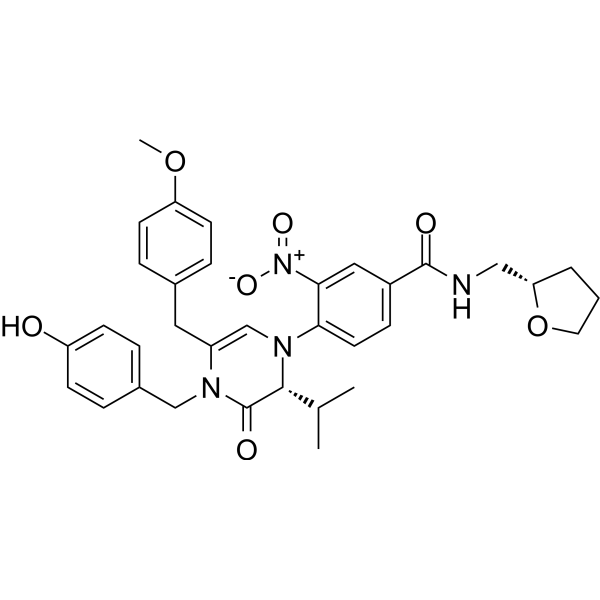
- Formula: C34H38N4O7
- Molecular Weight: 614.69
SB24011 is a STING modulator and a TRIM29-STING protein-protein interaction inhibitor. SB24011 blocks TRIM29-induced K48-linked specific ubiquitination by binding to STING, thereby upregulating intracellular STING protein levels. SB24011 enhances inflammatory cytokine expression and STING-mediated immune responses, and exhibits abscopal antitumor activity that promotes tumor regression and activates T cell infiltration. When combined with STING agonists or anti-PD1 antibodies, SB24011 synergistically enhances antitumor responses. SB24011 is suitable for research related to colon cancer and melanoma.
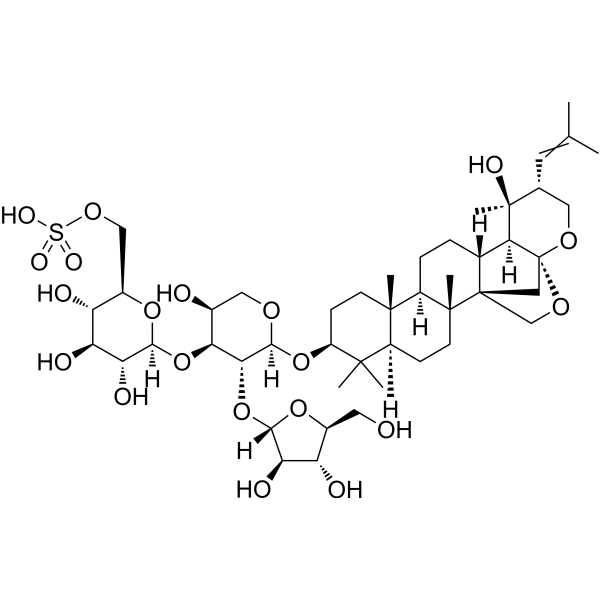
- Formula: C46H74O20S
- Molecular Weight: 979.13
Bacopaside I is an orally active aquaporin AQP1 inhibitor and PKC modulator with neuroprotective and anticancer activities. Bacopaside I specifically blocks the water channel and cGMP-gated ion channel activities of AQP1 without affecting AQP4, thereby inhibiting the migration of colon cancer cells expressing AQP1. Bacopaside I activates the Akt pathway by interacting with PI3K, specifically inhibits MAO-A, effectively alleviates neuron necrosis and apoptosis induced by oxygen-glucose deprivation, reduces oxidative stress, and regulates the surface expression of neuroreceptors. When combined with Bacopaside II (HY-N6016), Bacopaside I significantly reduces the viability, proliferation and invasion ability of breast cancer cells, and binds to the pregnane X receptor (PXR). Bacopaside I is applicable to the research of colon cancer, breast cancer, vascular dementia, cerebral ischemia and other related diseases.

- Formula: C33H32N2O5Se
- Molecular Weight: 615.58
PD-L1-IN-12 is an orally active and potent selenium-containing small-molecule PD-L1 inhibitor (KD = 9.06 nM). PD-L1-IN-12 can mediate the internalization of PD-L1 and strongly block hPD-1 and hPD-L1 interaction (IC50 = 5.2 nM). PD-L1-IN-12 can be used in colorectal cancer immunology research.

- Formula: C26H23N5O4S
- Molecular Weight: 501.56
NSC850143 is an antiproliferative agent. NSC850143 induces antiproliferative and cytotoxic effects in aggressive tumor cells. NSC850143 can be used in the research of cancers such as leukemia, non-small cell lung cancer, colon cancer, central nervous system cancer, melanoma, ovarian cancer, renal cancer, prostate cancer and breast cancer.

- Formula: C30H26N4O3
- Molecular Weight: 490.55
HDAC1-IN-14 is an indole-based benzamide selective HDAC1 inhibitor with an IC50 of 77 nM. HDAC1-IN-14 acts as an antiproliferative agent, with GI50 values ranging from nanomolar to low micromolar levels in various cancer cells. HDAC1-IN-14 induces G0-G1 cell cycle arrest in colon cancer cells. HDAC1-IN-14 upregulates the expression of Caspase-3, Cyto-C and Bax, and downregulates the expression of AKT-1. HDAC1-IN-14 can be used in research related to leukemia, non-small cell lung cancer, colon cancer, central nervous system cancer, melanoma, ovarian cancer, renal cancer, prostate cancer and breast cancer.

- Formula: C46H42ClFN6O8
- Molecular Weight: 861.31
PROTAC PD-L1 degrader-2 is a PD-L1 PROTAC degrader with an IC50 of 197.4 nM and a Kd of 301 nM. PROTAC PD-L1 degrader-2 induces PD-L1 endocytosis, drives degradation via the proteasomal and lysosomal pathways, and inhibits the PD-1/PD-L1 interaction. As an immune activator, PROTAC PD-L1 degrader-2 increases the levels of CD4+, CD8+, granzyme B and perforin. PROTAC PD-L1 degrader-2 can be used in studies related to colon cancer immunology.
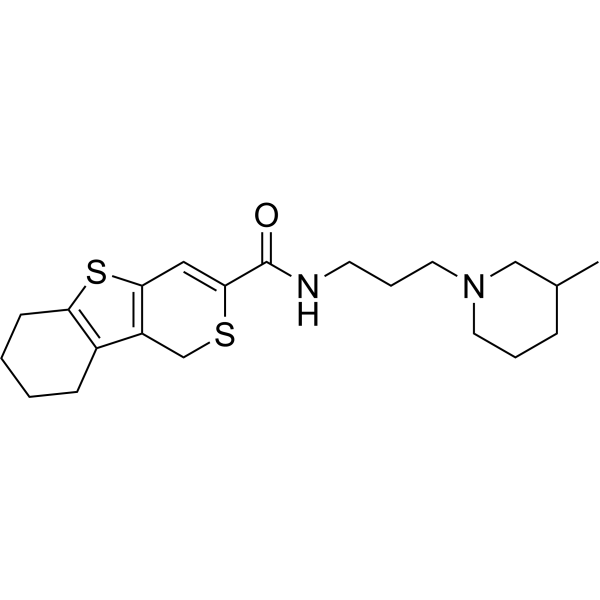
- Formula: C21H30N2OS2
- Molecular Weight: 390.61
E722-2648 is an inhibitor targeting the BCL9 and β-catenin complex with antitumor activity. E722-2648 blocks complex formation by disrupting the interaction between the two proteins, thereby inhibiting β-catenin-mediated transcriptional activity and downregulating the expression of WNT target genes. E722-2648 effectively inhibits tumor growth in colon cancer xenograft models and colorectal cancer mouse models. E722-2648 can be used for the research of colon cancer and colorectal cancer.

- Formula: C22H25N7O2S
- Molecular Weight: 451.54
HM-279 is a potent and orally active ALK5 inhibitor with an IC50 of 4.7 nM. HM-279 shows cross-reactivity with ALK7 (IC50 = 6.8 nM), but HM-279 has fair to good selectivity against other TGF-β receptor family kinases, with 4.5-693-fold selectivity. HM-279 demonstrates antitumor activity in vivo through CD8+ T cell immunity. HM-279 can be used for the research of colon cancer.

- Formula: C6H10N4O2
- Molecular Weight: 170.17
INSP-0154 is a potent creatine kinase B (CKB)/creatine transporter (SLC6A8) inhibitor. INSP-0154 binds to the SLC6A8 occluded pocket, prevents creatine transport into cells, and protects SLC6A8 cysteine residue C144 from irreversible inactivation. INSP-0154 inhibits creatine uptake in mouse heart tissue. INSP-0154 can be used for the research of cancer.

- Formula: C17H14BrN3OS
- Molecular Weight: 388.28

AT1412 is a CD9-binding antibody. AT1412 binds to the tetraspanin protein CD9 and modulates CD9 function by enhancing T cell adhesion to endothelial cells (HUVECs) and transendothelial migration. AT1412 binds to B-ALL cell lines but not to T-ALL. AT1412 induces antibody-dependent cellular cytotoxicity in B-ALL cell lines. AT1412 binds to melanoma cells, B-ALL, gastric cancer, colorectal cancer, and pancreatic cancer cells [1] .
- 1



