



SB24011

Based on 1 Customer Validation
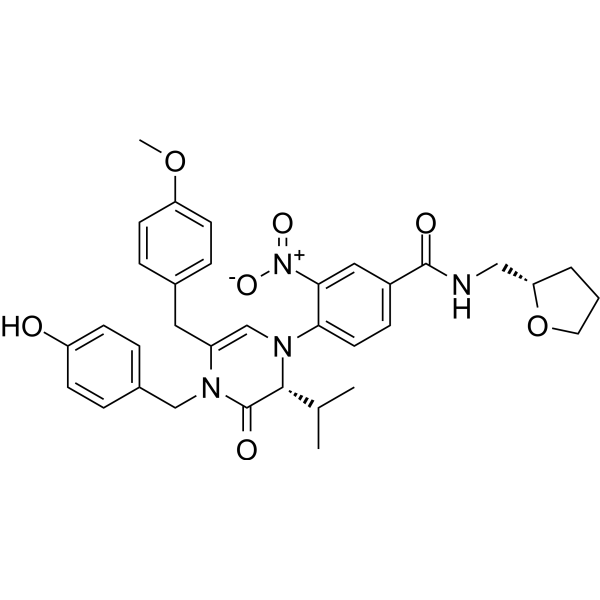
SB24011 is a STING modulator and a TRIM29-STING protein-protein interaction inhibitor. SB24011 blocks TRIM29-induced K48-linked specific ubiquitination by binding to STING, thereby upregulating intracellular STING protein levels. SB24011 enhances inflammatory cytokine expression and STING-mediated immune responses, and exhibits abscopal antitumor activity that promotes tumor regression and activates T cell infiltration. When combined with STING agonists or anti-PD1 antibodies, SB24011 synergistically enhances antitumor responses. SB24011 is suitable for research related to colon cancer and melanoma.
For research use only. We do not sell to patients.
- Purity : 99.7%
- CAS No.: 1497415-41-4
- Formula: C34H38N4O7
- Molecular Weight:614.69
-
Storage:Powder -20°C, 3 years ; In solvent -80°C, 6 months , -20°C, 1 month

To place orders, for customer services and technical support, please contact: MedChemExpress USA
Tel: 609-228-6898 E-mail: [email protected] [email protected]


-
 Biological Activity
-
Chemical Information
- Protocols
- Purity & Documentation
- References
-
 Help & FAQs




Biological Activity
Description
In Vitro
SB24011 (5-20 μM; 24 h) shows no cytotoxicity in Raw264.7 murine macrophage-like cells[2].
SB24011 (5-20 μM; 18 h; 10 μM; 18, 24 h) upregulates cellular STING protein levels in A431 human skin squamous carcinoma cells[2].
SB24011 (20 μM; 3, 6 h) enhances cGAMP-induced activation of the STING downstream signaling pathway (phosphorylation of STING, TBK1, IRF3) in Raw264.7 murine macrophage-like cells[2].
SB24011 (20 μM; 3, 6 h) augments cGAMP-induced proinflammatory cytokine mRNA expression (ifnb, il6, il15) in Raw264.7 murine macrophage-like cells[2].
SB24011 (5-20 μM) dose-dependently augments cGAMP-induced proinflammatory cytokine mRNA expression (ifnb, il6) in Raw264.7 murine macrophage-like cells[2].
MedChemExpress (MCE) has not independently confirmed the accuracy of these methods. They are for reference only. Further protocols information, click here.
-
Cell Line:A431 human skin squamous carcinoma cells
-
Concentration:5-20 μM (18 h incubation); 10 μM (18, 24 h incubation)
-
Incubation Time:18 h (5,10,20 μM); 18 h, 24 h (10 μM)
-
Result:Increased cellular STING protein levels in a time- and dose-dependent manner.
Elevated the STING/actin band ratio by 2.1-, 2.9-, and 3.2-fold at 5, 10, and 20 μM, respectively, compared to vehicle.
-
Cell Line:Raw264.7 murine macrophage-like cells
-
Concentration:20 μM
-
Incubation Time:3 h, 6 h
-
Result:Enhanced cGAMP-induced phosphorylation of STING, TBK1, and IRF3 at both 3 h and 6 h post-treatment.
-
Cell Line:Raw264.7 murine macrophage-like cells
-
Concentration:20 μM
-
Incubation Time:3 h, 6 h
-
Result:Enhanced cGAMP-induced mRNA expression of ifnb (310% increase at 3 h, 30% increase at 6 h), il-6 (1100% increase at 3 h, 3500% increase at 6 h), il-15 (1800% increase at 3 h, 2700% increase at 6 h), and an additional cytokine (800% increase at 3 h, 1500% increase at 6 h) at 3 h compared to cGAMP alone.
Observed similar enhancements at 6 h.
Parmacokinetics
In Vivo
SB24011 (1-3 μg per head; intratumoral injection; first and third of four total injections; once every 2 days over 8 days) dose-dependently potentiates cGAMP-mediated anticancer immunity in wild-type C57BL/6J mice with B16F10 melanoma, reducing tumor growth and enhancing effector T cell activity[2].
SB24011 (3 μg per head; intratumoral injection; last two of three total cGAMP injections)-mediated potentiation of cGAMP anticancer efficacy is strictly dependent on functional STING in C57BL/6J mice with B16F10 melanoma[2].
SB24011 (1-3 μg per head; intratumoral injection; once every 4 days) dose-dependently potentiates anti-PD-1 antibody-mediated anticancer immunity in BALB/c mice with CT26 colorectal tumors, producing synergistic tumor growth inhibition[2].
SB24011 promotes tumor regression and T-cell infiltration in syngeneic mouse cancer models, and induces the abscopal effect when combined with anti-PD-1 treatment[3].
MedChemExpress (MCE) has not independently confirmed the accuracy of these methods. They are for reference only.
-
Animal Model:BALB/c mice (flanks implanted with CT26 murine colon carcinoma cells, tumors grown to ~100 mm3)[2]
-
Dosage:1 μg per head; 3 μg per head
-
Administration:intratumoral injection; first and third of four total injections (once every 2 days over 8 days)
-
Result:Reduced tumor volume and mass in a dose-dependent manner.
Increased the proportion of CD3+ T cells (of CD45+ cells) and CD8+ T cells (of CD45+ cells), reduced the proportion of total myeloid-derived suppressor cells (MDSCs, of CD45+ cells), and increased the proportion of CD8+ T cells expressing IFN-γ, granzyme B, and perforin (of CD45+ cells) compared to cGAMP alone.
Increased intracellular STING levels (measured as mean fluorescence intensity) in M1 macrophages and dendritic cells within the tumor microenvironment.
Induced superior distal tumor growth inhibition (abscopal effect).


Chemical Information
-
CAS No. 1497415-41-4
-
Appearance Solid
-
Molecular Weight 614.69
-
Formula C34H38N4O7
-
Color Yellow to orange
-
SMILES
O=C(NC[C@H]1OCCC1)C2=CC=C(N3[C@H](C(C)C)C(N(CC4=CC=C(O)C=C4)C(CC5=CC=C(OC)C=C5)=C3)=O)C([N+]([O-])=O)=C2
-
Shipping
Room temperature in continental US; may vary elsewhere.
-
Storage
Powder -20°C 3 years In solvent -80°C 6 months -20°C 1 month

Protocols
-
RNA extraction experimental
By lysing cells, releasing RNA, and removing impurities such as proteins and DNA, high-purity RNA products are finally obtained. The commonly used traditional method is the guanidine isothiocyanate/phenol/chloroform method (Trizol), which is suitable for a variety of animal materials including animal tissues, microorganisms, cultured cells, etc., and most plant materials.
-
Pull-down
The pull-down assay is an in vitro technique used to detect physical interactions between two or more proteins and an invaluable tool for confirming a predicted protein-protein interaction or identifying novel interacting partners. This method typically involves the use of affinity purification with various wash and elution steps.
-
Immunoprecipitation
Immunoprecipitation (IP) is an experimental method that uses the principle of antibody specific binding to purify and enrich target proteins.
-
Protocol for Bimolecular Fluorescence Complementation (BiFC) Assay
Bimolecular fluorescence complementation detects protein-protein proximity in living or fixed cells by fusing two candidate interaction partners to nonfluorescent N- and C-terminal fragments of a fluorescent protein; when the partners interact or remain close enough, the fluorescent fragments complement, mature, and generate a fluorescent signal at the site of the protein complex. The BiFC readout is fluorescence intensity and subcellular localization of the reconstituted fluorophore, which reflects formation or stabilization of a protein complex rather than direct biochemical binding kinetics; BiFC is therefore useful for mapping where interactions occur in cancer cells, neurons, macrophages, organoid-derived cells, or drug-screening systems, but results should be validated by independent assays such as co-IP or Western blot. BiFC signal formation is delayed by fluorophore maturation and can stabilize otherwise transient complexes, so it is not a real-time reversible interaction assay
-
Research Protocol for Inflammation-related Diseases
The NLRP3 inflammasome is a cytosolic innate immune signaling platform that integrates priming signals and danger-signal activation to promote caspase-1 activation, maturation of IL-1β and IL-18, and gasdermin D-mediated pyroptotic cell death. The core experimental logic is to determine whether inflammatory disease phenotypes are driven by increased NLRP3 expression, ASC-containing inflammasome assembly, caspase-1 cleavage, GSDMD cleavage, and extracellular release of IL-1β/IL-18 rather than by nonspecific cell injury alone. The pathway is strongly linked to inflammation-related disease phenotypes because monosodium urate crystals activate NALP3/NLRP3 inflammasome signaling in gout-like crystal inflammation, cholesterol crystals activate NLRP3 inflammasomes in atherogenesis models, and DSS-induced intestinal inflammation has been reported to involve NLRP3 inflammasome activity. However, experimental colitis studies also show context-dependent protective effects of NLRP3 inflammasome co
-
Subcutaneous Cell-Line-Derived Xenograft
Subcutaneous cell-line-derived xenograft (CDX) models are established by implanting cultured human cancer cell lines into immunodeficient mice, where the injected cells form localized tumors that can be monitored in vivo as a measure of tumorigenic potential, growth kinetics, and treatment response. These models are widely used in oncology research because they allow reproducible tumor formation and enable comparative assessment of tumor growth between different cell lines or genetic manipulations in a controlled in vivo microenvironment. Subcutaneous implantation of cancer cells in immunodeficient mice is a standard approach for evaluating tumor growth behavior and therapeutic response across multiple cancer types, including prostate, esophageal, pancreatic, and colon cancer models.
-
Research Protocol for Cancer Immunology
Cancer immunology studies how the immune system recognizes, suppresses, edits, or fails to eliminate malignant cells through tumor antigen release, antigen presentation, T-cell priming, immune trafficking, tumor-cell killing, and feedback inhibition in the tumor microenvironment. The cancer-immunity cycle links tumor antigenicity, dendritic-cell priming, CD8+ T-cell infiltration, cytotoxic function, and immune-checkpoint regulation to tumor rejection or immune escape. Immune-checkpoint pathways such as PD-1/PD-L1 and CTLA-4 suppress antitumor T-cell activity and can be therapeutically blocked, but many tumors remain resistant because of poor antigen presentation, weak T-cell infiltration, suppressive myeloid cells, regulatory T cells, and tumor-intrinsic immune-exclusion programs. Unresolved questions include which immune-cell states predict response, how tumor-intrinsic pathways exclude immune cells, how myeloid suppression limits checkpoint blockade, and which combination strategies
-
Co-Immunoprecipitation
Co-immunoprecipitation technology can verify protein interaction based on the specific immune reaction between antibodies and antigens.
-
Protocol for Yeast Two-Hybrid (Y2H) Assay
The yeast two-hybrid assay detects binary protein-protein interactions by separating a transcription factor into a DNA-binding domain fused to a "bait" protein and a transcriptional activation domain fused to a "prey" protein; if bait and prey interact in yeast, the transcription factor is reconstituted and activates reporter genes such as HIS3, ADE2, lacZ, MEL1, or other selectable/readable reporters. The readout is yeast growth on selective medium and/or reporter activity, which reflects proximity-dependent transcriptional activation in the yeast nucleus rather than direct biochemical binding in the original mammalian, tumor, neuronal, macrophage, or organoid context. Because yeast two-hybrid can generate false positives and false negatives, interaction claims should be validated using independent assays such as co-immunoprecipitation, Western blot, immunofluorescence colocalization, BiFC, pull-down, or mammalian two-hybrid assays.


Purity & Documentation
-
Data Sheet (279 KB)
-
SDS (251 KB)
- English - EN (251 KB)
- Français - FR (251 KB)
- Deutsch - DE (251 KB)
- Norwegian - NO (251 KB)
- Español - ES (251 KB)
- Swedish - SV (251 KB)
- Italian - IT (251 KB)
- Korean - KR (251 KB)
- Portuguese - PT (251 KB)
-
Handling Instructions (2659 KB)
References

Calculators
Concentration (start) × Volume (start) = Concentration (final) × Volume (final)


SB24011 Related Classifications
HY-128481 Related Classifications
 Powered by Bioz