



Mecamylamine hydrochloride
Based on 8 publication(s) in Google Scholar
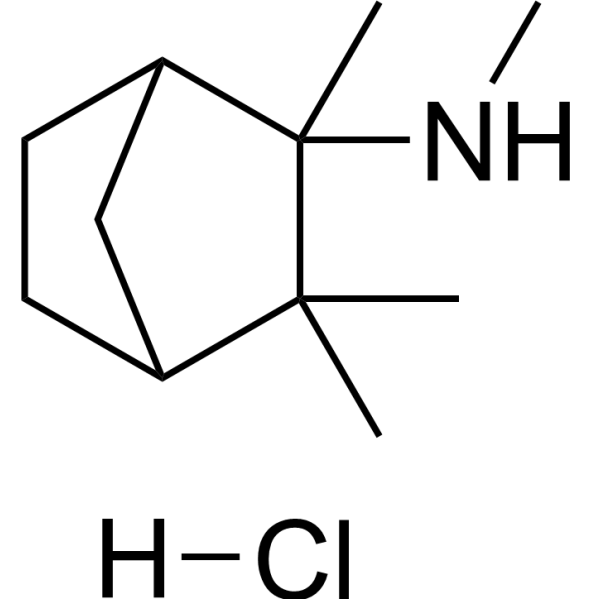
Mecamylamine hydrochloride is an orally active, nonselective, noncompetitive nAChR antagonist. Mecamylamine hydrochloride is also a ganglionic blocker. Mecamylamine hydrochloride can across the blood-brain barrier. Mecamylamine hydrochloride can be used in the research of neuropsychiatric disorders, hypertension, antidepressant area.
For research use only. We do not sell to patients.
- Purity : 98.0%
- CAS No.: 826-39-1
- Formula: C11H22ClN
- Molecular Weight:203.75
-
Storage:
4°C, sealed storage, away from moisture
* In solvent : -80°C, 6 months; -20°C, 1 month (sealed storage, away from moisture)

To place orders, for customer services and technical support, please contact: MedChemExpress USA
Tel: 609-228-6898 E-mail: [email protected] [email protected]


-
 Biological Activity
-
Chemical Information
-
Solvent & Solubility
- Purity & Documentation
- References
-
 Help & FAQs



Publications Citing Use of MedChemExpress (MCE) Mecamylamine hydrochloride
More- Cancer Cell. 2026 Jul 24:S1535-6108(26)00305-3.
- Nat Commun. 2023 Apr 17;14(1):2182. [Abstract]
- Acta Pharmacol Sin. 2024 Jun;45(6):1160-1174. [Abstract]
- Cell Biosci. 2024 Dec 3;14(1):146. [Abstract]
- Glia. 2026 Aug;74(8):e70183. [Abstract]
- bioRxiv. 2026 May 3.
- bioRxiv. 2024 November 03.
- bioRxiv. 2023 Jul 6.
 Customer Validation & Images

-
In Vivo Efficacy Study
-
In Vivo Efficacy Study
-
In Vivo Efficacy Study
-
Bio/Physico-chemical Assay
All Histamine Receptor Isoforms
More

Biological Activity
Description
IC50 & Target
In Vitro
Mecamylamine hydrochloride (0.5-9 μM, bath administered) increases the firing frequency of identified 5-HT DRN (dorsal raphe nucleus) neurons[1].
Mecamylamine hydrochloride (0.5-9 μM, bath administered) increases the glutamatergic and decreases the GABAergic input of 5-HT DRN neurons[1].
Mecamylamine hydrochloride (1 mM, 5 min) blocks the histamine receptor and the histamine-induced contractions in helically cut strips of rabbit aorta[2].
Mecamylamine hydrochloride (1-100 nM, 30 min) dose-dependently attenuates endothelial tube formation in HDMVECs[4].
MedChemExpress (MCE) has not independently confirmed the accuracy of these methods. They are for reference only.
-
Cell Line:SCG neurons
-
Concentration:10 μM
-
Incubation Time:48 h
-
Result:Reduced the nicotine-facilitated increase in ERK1/2.
In Vivo
Mecamylamine hydrochloride (intraperitoneal injection, 0.5-1 mg/kg) has antidepressant-like effects in both the TST (tail suspension test) and FST (forced swim test) in C57BL/6J mice, which are dependent on both β2 and α7 subunits[5].
MedChemExpress (MCE) has not independently confirmed the accuracy of these methods. They are for reference only.
-
Animal Model:Choroidal neovascularization (CNV) mice model[1]
-
Dosage:50 mg/kg/day, 2 days
-
Administration:Subcutaneous pumps implanted beneath the skin of the back, 200 μL and mean pumping rate of 0.5 μL/h.
-
Result:Suppressed the development of CNV at Bruch’s membrane rupture sites in the absence of nicotine.
-
Animal Model:C57BL/6J mice[5]
-
Dosage:0.5-1 mg/kg
-
Administration:Intraperitoneal injection
-
Result:Had no effect in β2 knockout mice and α7 knockout mice, but decreased immobility time in wildtype littermates in the FST.


Chemical Information
-
CAS No. 826-39-1
-
Appearance Solid
-
Molecular Weight 203.75
-
Formula C11H22ClN
-
Color White to off-white
-
SMILES
CC1(C)C(NC)(C)C2CCC1C2.[H]Cl
-
Shipping
Room temperature in continental US; may vary elsewhere.
-
Storage
4°C, sealed storage, away from moisture
* In solvent : -80°C, 6 months; -20°C, 1 month (sealed storage, away from moisture)


Publications (8)
-
Journal Impact Factor
-
Most Recent
-
-
Nat Commun
Plasticity in ventral pallidal cholinergic neuron-derived circuits contributes to comorbid chronic pain-like and depression-like behaviour in male mice. [Abstract]2023 Apr 17;14(1):2182. PMID: 37069246 -
Acta Pharmacol Sin
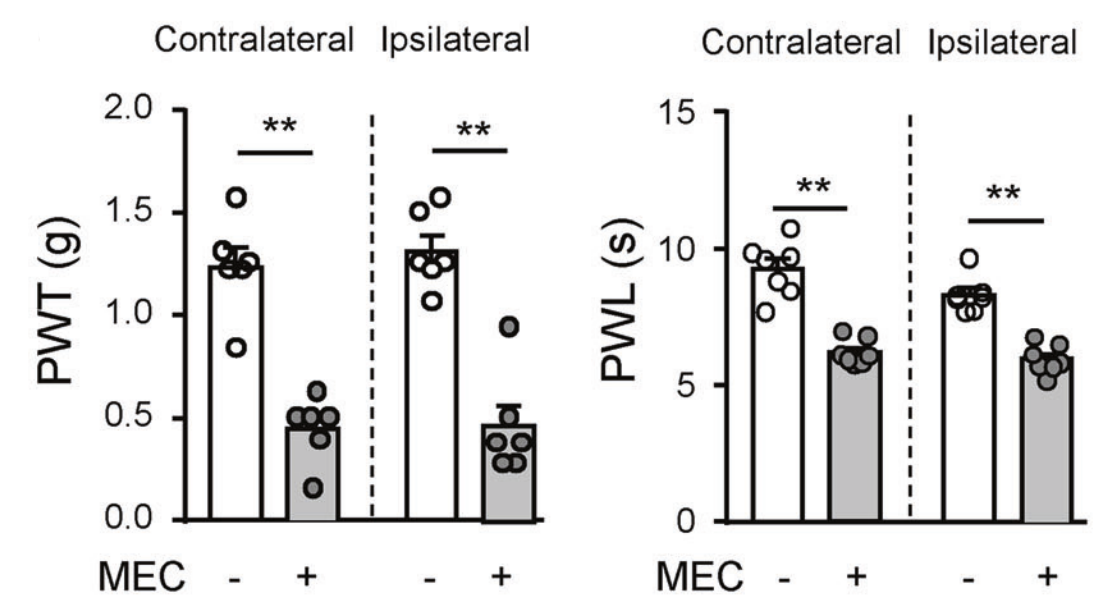
α4 nicotinic receptors on GABAergic neurons mediate a cholinergic analgesic circuit in the substantia nigra pars reticulata. [Abstract]2024 Jun;45(6):1160-1174. PMID: 38438581
Mecamylamine hydrochloride purchased from MedChemExpress. Usage Cited in: Acta Pharmacol Sin. 2024 Jun;45(6):1160-1174. [Abstract]
Injection of Mecamylamine hydrochloride (MEC) (100 μM; 300 nL) into the SNr of mice reduced both mechanical and thermal thresholds on both hind paws.
-
Cell Biosci
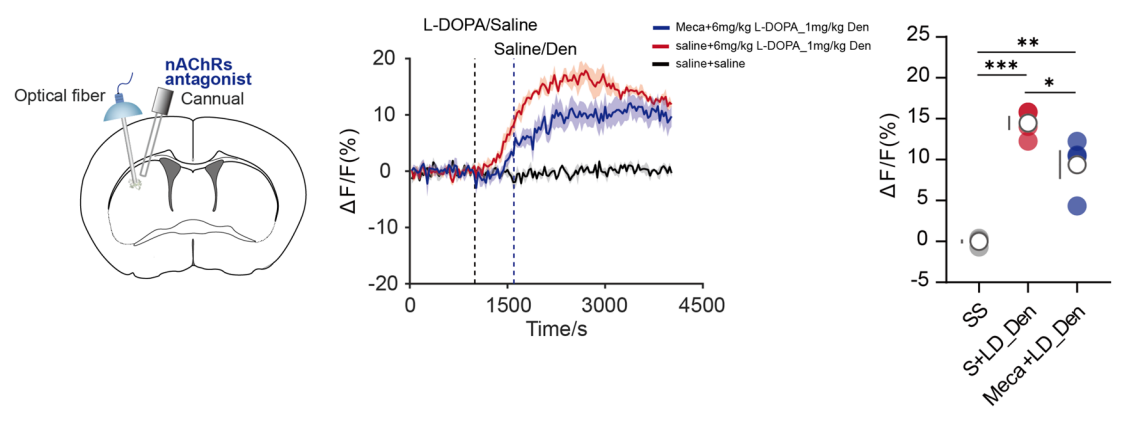
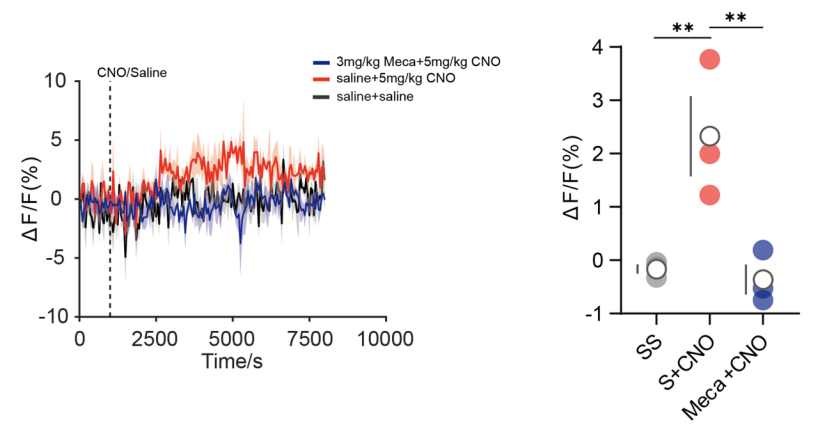
Enhancing striatal acetylcholine facilitates dopamine release and striatal output in parkinsonian mice. [Abstract]2024 Dec 3;14(1):146. PMID: 39627827
Mecamylamine hydrochloride purchased from MedChemExpress. Usage Cited in: Cell Biosci. 2024 Dec 3;14(1):146. [Abstract]
Mecamylamine hydrochloride (Meca) (50uM; 500 nL; i.c.) effectively decreased the power of Den-induced more DA release events in parkinsonian mice.
Mecamylamine hydrochloride purchased from MedChemExpress. Usage Cited in: Cell Biosci. 2024 Dec 3;14(1):146. [Abstract]
Mecamylamine hydrochloride (Meca) (3 mg/kg; i.p.) blocked the CNO-induced (5 mg/kg) increase in DA concentration in 6-OHDA-lesioned ChAT-Cre mice.
-
Glia
Sustained Neuronal Stimulation Activates Paraventricular Thalamus Astrocytes for Chronicity of Neuropathic Pain in Mice. [Abstract]2026 Aug;74(8):e70183. PMID: 42231639 -
-
-
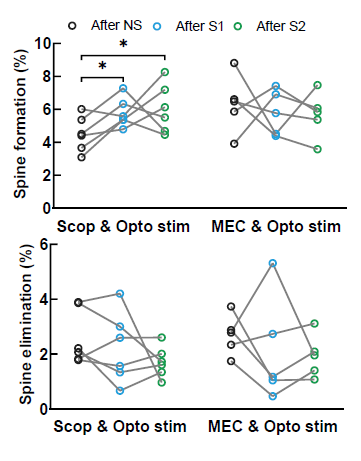
Mecamylamine hydrochloride purchased from MedChemExpress. Usage Cited in: bioRxiv. 2023 Jul 6.
Mecamylamine hydrochloride (MEC) (1 mg/kg i.p.) blocked nAChRs and abolished the ACh-induced spine formation in ChAT-Cre × YFP-H mice.


Solvent & Solubility
In Vitro:
H2O : 100 mg/mL (490.80 mM; Need ultrasonic)
DMSO : 31.25 mg/mL (153.37 mM; Need ultrasonic; Hygroscopic DMSO has a significant impact on the solubility of product, please use newly opened DMSO)
Please refer to the solubility information to select the appropriate solvent. Once prepared, please aliquot and store the solution to prevent product inactivation from repeated freeze-thaw cycles.
Storage method and period of stock solution: -80°C, 6 months; -20°C, 1 month (sealed storage, away from moisture). When stored at -80°C, please use it within 6 months. When stored at -20°C, please use it within 1 month.
* Note: If you choose water as the stock solution, please dilute it to the working solution, then filter and sterilize it with a 0.22 μm filter before use.
Please refer to the solubility information to select the appropriate solvent. Once prepared, please aliquot and store the solution to prevent product inactivation from repeated freeze-thaw cycles.
Storage method and period of stock solution: -80°C, 6 months; -20°C, 1 month (sealed storage, away from moisture). When stored at -80°C, please use it within 6 months. When stored at -20°C, please use it within 1 month.
* Note: If you choose water as the stock solution, please dilute it to the working solution, then filter and sterilize it with a 0.22 μm filter before use.
Concentration (start) × Volume (start) = Concentration (final) × Volume (final)
In Vivo:
Select the appropriate dissolution method based on your experimental animal and administration route.
- For the following dissolution methods, please ensure to first prepare a clear stock solution using an In Vitro approach and then sequentially add co-solvents:
- To ensure reliable experimental results, the clarified stock solution can be appropriately stored based on storage conditions. As for the working solution for In Vivo experiments, it is recommended to prepare freshly and use it on the same day.
- The percentages shown for the solvents indicate their volumetric ratio in the final prepared solution. If precipitation or phase separation occurs during preparation, heat and/or sonication can be used to aid dissolution.
Add each solvent one by one: 10% DMSO 40% PEG300 5% Tween-80 45% Saline
Solubility: ≥ 2.08 mg/mL (10.21 mM); Clear solution
This protocol yields a clear solution of ≥ 2.08 mg/mL (saturation unknown).
Taking 1 mL working solution as an example, add 100 μL DMSO stock solution (20.8 mg/mL) to 400 μL PEG300, and mix evenly; then add 50 μL Tween-80 and mix evenly; then add 450 μL Saline to adjust the volume to 1 mL.
Preparation of Saline: Dissolve 0.9 g sodium chloride in ddH₂O and dilute to 100 mL to obtain a clear Saline solution.
Add each solvent one by one: 10% DMSO 90% (20% SBE-β-CD in Saline)
Solubility: ≥ 2.08 mg/mL (10.21 mM); Clear solution
This protocol yields a clear solution of ≥ 2.08 mg/mL (saturation unknown).
Taking 1 mL working solution as an example, add 100 μL DMSO stock solution (20.8 mg/mL) to 900 μL 20% SBE-β-CD in Saline, and mix evenly.
Preparation of 20% SBE-β-CD in Saline (4°C, storage for one week): 2 g SBE-β-CD powder is dissolved in 10 mL Saline, completely dissolve until clear.
In Vivo Dissolution Calculator
Please enter the basic information of animal experiments:
-
-
-
-
Recommended: Prepare an additional quantity of animals to account for potential losses during experiments.
Working solution concentration: 0.22 mg/mL
This product has good water solubility, please refer to the measured solubility data in water/PBS/Saline for details.


Purity & Documentation
-
Data Sheet (284 KB)
-
SDS (479 KB)
- English - EN (479 KB)
- Français - FR (479 KB)
- Deutsch - DE (479 KB)
- Norwegian - NO (479 KB)
- Español - ES (479 KB)
- Swedish - SV (479 KB)
- Italian - IT (479 KB)
- Korean - KR (479 KB)
- Portuguese - PT (479 KB)
-
Handling Instructions (2659 KB)
References
[1]. Omar Hernández-González, et al. Mechanisms of stimulatory effects of mecamylamine on the dorsal raphe neurons. Brain Res Bull. 2020 Nov;164:289-298. [Content Brief]
[2]. C P Robinson, et al. The influence of mecamylamine on contractions induced by different agonists and on the role of calcium ions in the isolated rabbit aorta. J Pharmacol Exp Ther. 1976 Apr;197(1):57-65. [Content Brief]
[3]. Mahadevappa P Badanavalu, et al. Nicotine is neuroprotective to neonatal neurons of sympathetic ganglion in rat. Auton Neurosci. 2019 Jan;216:25-32. [Content Brief]
[4]. Katsuji Kiuchi, et al. Mecamylamine suppresses Basal and nicotine-stimulated choroidal neovascularization. Invest Ophthalmol Vis Sci. 2008 Apr;49(4):1705-11. [Content Brief]
[5]. Rabenstein RL, et al. The nicotinic antagonist mecamylamine has antidepressant-like effects in wild-type but not beta2- or alpha7-nicotinic acetylcholine receptor subunit knockout mice. Psychopharmacology (Berl). 2006 Dec;189(3):395-401. [Content Brief]


Complete Stock Solution Preparation Table
Please refer to the solubility information to select the appropriate solvent. Once prepared, please aliquot and store the solution to prevent product inactivation from repeated freeze-thaw cycles.
Storage method and period of stock solution: -80°C, 6 months; -20°C, 1 month (sealed storage, away from moisture). When stored at -80°C, please use it within 6 months. When stored at -20°C, please use it within 1 month.
| Optional Solvent | Concentration Solvent Mass | 1 mg | 5 mg | 10 mg | 25 mg |
|---|---|---|---|---|---|
| DMSO / H2O | 1 mM | 4.9080 mL | 24.5399 mL | 49.0798 mL | 122.6994 mL |
| 5 mM | 0.9816 mL | 4.9080 mL | 9.8160 mL | 24.5399 mL | |
| 10 mM | 0.4908 mL | 2.4540 mL | 4.9080 mL | 12.2699 mL | |
| 15 mM | 0.3272 mL | 1.6360 mL | 3.2720 mL | 8.1800 mL | |
| 20 mM | 0.2454 mL | 1.2270 mL | 2.4540 mL | 6.1350 mL | |
| 25 mM | 0.1963 mL | 0.9816 mL | 1.9632 mL | 4.9080 mL | |
| 30 mM | 0.1636 mL | 0.8180 mL | 1.6360 mL | 4.0900 mL | |
| 40 mM | 0.1227 mL | 0.6135 mL | 1.2270 mL | 3.0675 mL | |
| 50 mM | 0.0982 mL | 0.4908 mL | 0.9816 mL | 2.4540 mL | |
| 60 mM | 0.0818 mL | 0.4090 mL | 0.8180 mL | 2.0450 mL | |
| 80 mM | 0.0613 mL | 0.3067 mL | 0.6135 mL | 1.5337 mL | |
| 100 mM | 0.0491 mL | 0.2454 mL | 0.4908 mL | 1.2270 mL |
* Note: If you choose water as the stock solution, please dilute it to the working solution, then filter and sterilize it with a 0.22 μm filter before use.


Mecamylamine hydrochloride Related Classifications
HY-B1395 Related Classifications
 Powered by Bioz