



PD-1/PD-L1-IN-NP19

Based on 1 Customer Validation
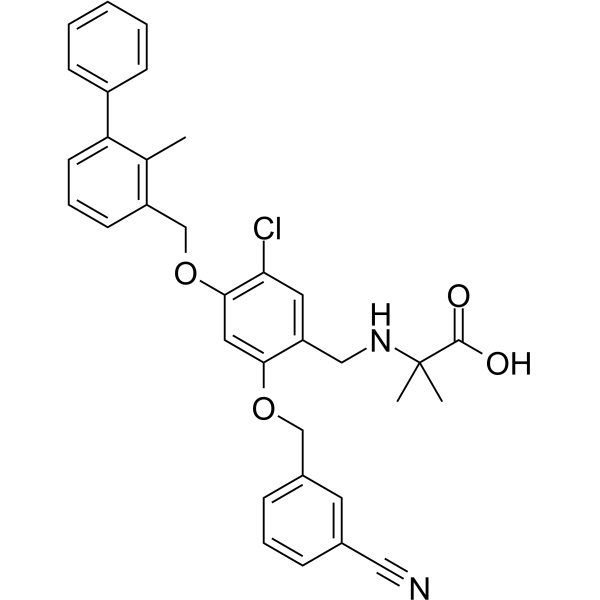
PD-1/PD-L1-IN-NP19 is a PD-1/PD-L1 inhibitor, with an IC50 of 12.5 nM for human PD-1/PD-L1 interaction. PD-1/PD-L1-IN-NP19 could activate the immune microenvironment in tumor, which may contribute to its antitumor effects.
For research use only. We do not sell to patients.
- Purity : 98.25%
- CAS No.: 2377916-66-8
- Formula: C33H31ClN2O4
- Molecular Weight:555.06
-
Storage:Powder -20°C, 3 years , 4°C, 2 years ; In solvent -80°C, 6 months , -20°C, 1 month

To place orders, for customer services and technical support, please contact: MedChemExpress USA
Tel: 609-228-6898 E-mail: [email protected] [email protected]


-
 Biological Activity
-
Chemical Information
-
Solvent & Solubility
- Protocols
- Purity & Documentation
- References
-
 Help & FAQs


-
HY-134884
INCB086550PD-L1 Inhibitor -
HY-102011
BMS-1166PD-1/PD-L1 Interaction Inhibitor -
HY-19745
BMS-202 -
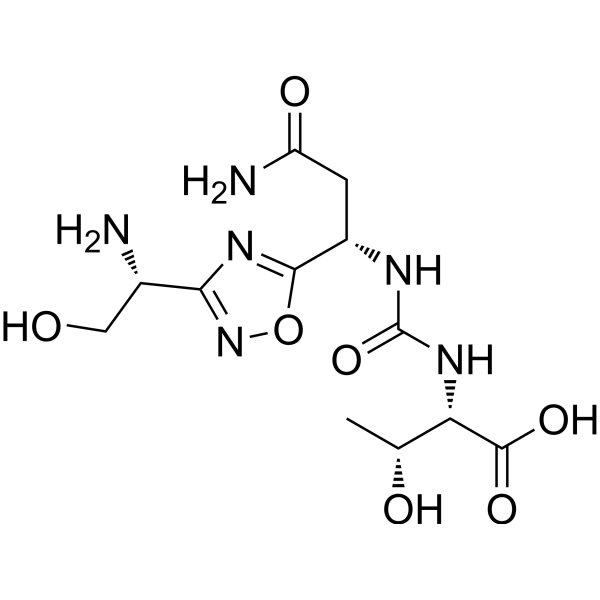
HY-101093
CA-170VISTA/PD-L1 Inhibitor -
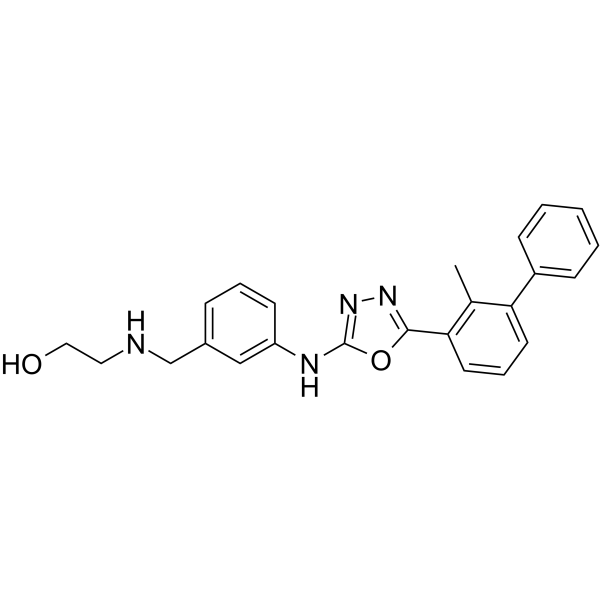
HY-144258
PD-1/PD-L1-IN-14PD-1/PD-L1 Inhibitor -
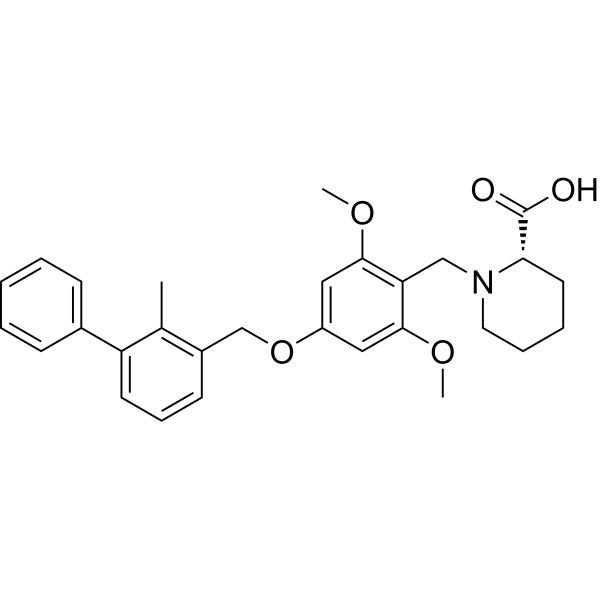
HY-19991
BMS-1PD-1/PD-L1 PPI Inhibitor -
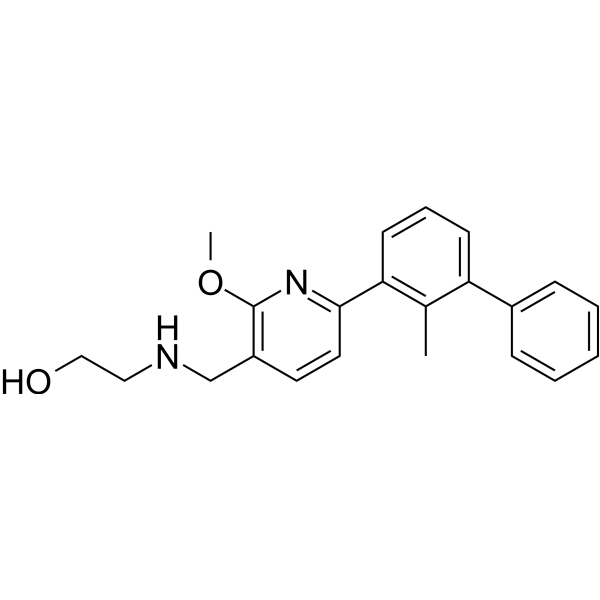
HY-132192
PD-1/PD-L1-IN-9PD-1/PD-L1 Interaction Inhibitor -
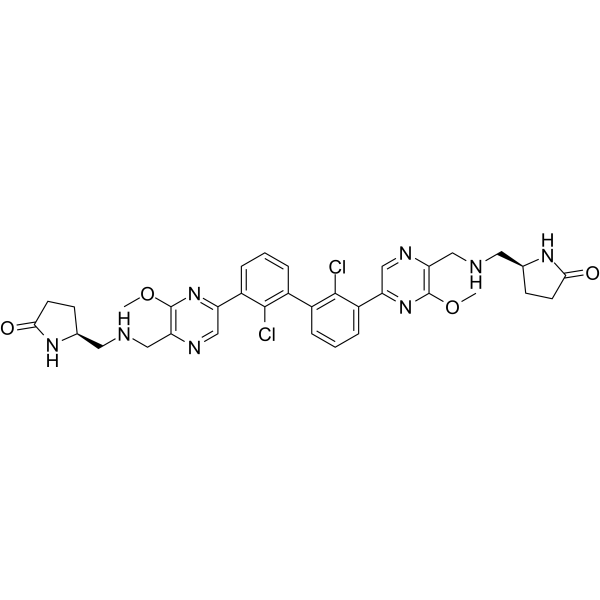
HY-138407
EvixapodlinPD-1/PD-L1 PPI Inhibitor -
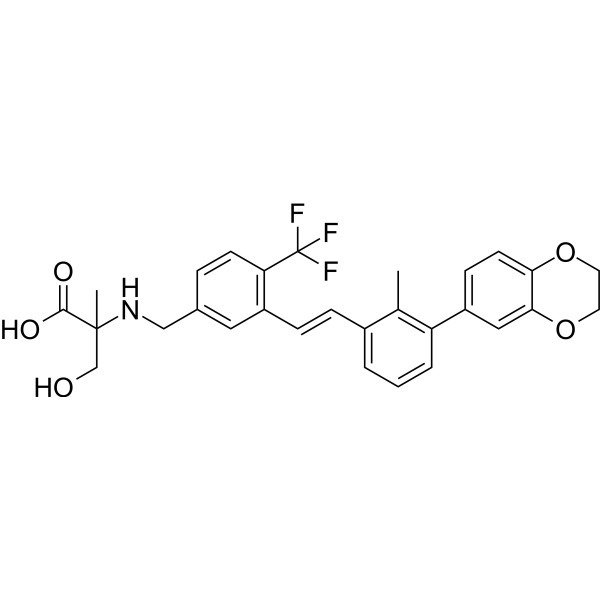
HY-153064
MAX-10181PD-1/PD-L1 Inhibitor -
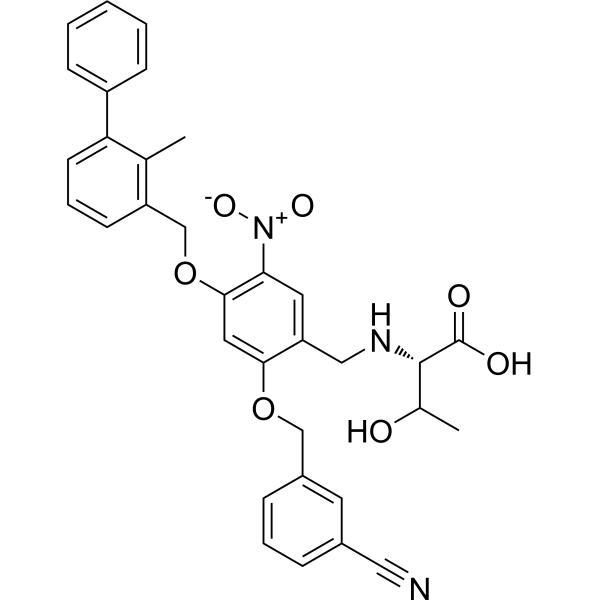
HY-132202
PD-1/PD-L1-IN-10PD-1/PD-L1 Inhibitor -
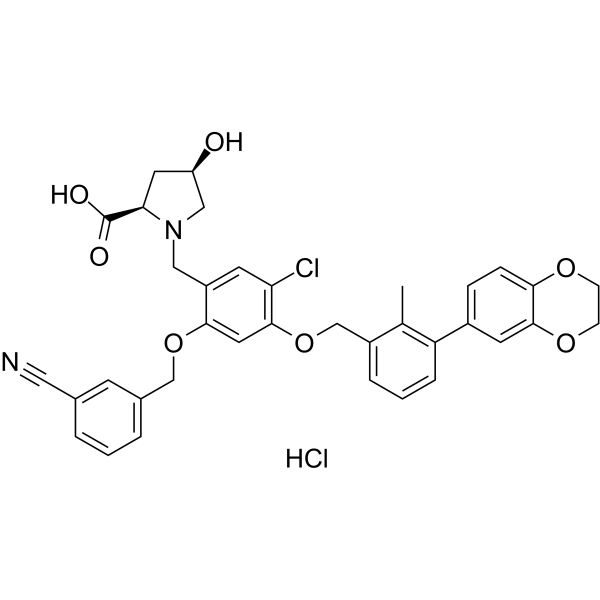
HY-102011A
BMS-1166 hydrochloridePD-1/PD-L1 Interaction Inhibitor -
HY-155959
PD-1/PD-L1-IN-33PD-1/PD-L1 Inhibitor


Biological Activity
Description
IC50 & Target
IC50: 12.5 nM (human PD-1/PD-L1)[1]
Cellular Effect
|
Cell Line

|
Type | Value | Description | References |
|---|---|---|---|---|
| A549 | IC50 |
>10 μM
Compound: NP19
|
Cytotoxicity against human A549 cells assessed as reduction in cell viability measured after 48 hrs by MTT assay
Cytotoxicity against human A549 cells assessed as reduction in cell viability measured after 48 hrs by MTT assay
|
[PMID: 32667799] |
| B16-F10 | IC50 |
>10 μM
Compound: NP19
|
Cytotoxicity against mouse B16/F10 cells assessed as reduction in cell viability measured after 48 hrs by MTT assay
Cytotoxicity against mouse B16/F10 cells assessed as reduction in cell viability measured after 48 hrs by MTT assay
|
[PMID: 32667799] |
| HEK293 | IC50 |
>1 μM
Compound: NP19
|
Inhibition of mouse biotin-labelled C-terminal Fc-fused/Avi-tagged PD1/Fc-fused PDL1 expressed in HEK293 cells protein-protein interaction measured after 2 hrs by ELISA
Inhibition of mouse biotin-labelled C-terminal Fc-fused/Avi-tagged PD1/Fc-fused PDL1 expressed in HEK293 cells protein-protein interaction measured after 2 hrs by ELISA
|
[PMID: 32667799] |
| HEK293 | IC50 |
12.5 nM
Compound: NP19
|
Inhibition of human C-terminal Ig-Fc-tagged PD1 (Leu25 to Gln167 residues) expressed in HEK293 cells/human C-terminal epitope-His-tagged PDL1 (Phe19 to Arg238 residues) expressed in HEK293 cells protein-protein interaction preincubated for 15 mins with PD
Inhibition of human C-terminal Ig-Fc-tagged PD1 (Leu25 to Gln167 residues) expressed in HEK293 cells/human C-terminal epitope-His-tagged PDL1 (Phe19 to Arg238 residues) expressed in HEK293 cells protein-protein interaction preincubated for 15 mins with PD
|
[PMID: 32667799] |
| MCF7 | IC50 |
>10 μM
Compound: NP19
|
Cytotoxicity against human MCF7 cells assessed as reduction in cell viability measured after 48 hrs by MTT assay
Cytotoxicity against human MCF7 cells assessed as reduction in cell viability measured after 48 hrs by MTT assay
|
[PMID: 32667799] |
| U-251 | IC50 |
>20 μM
Compound: NP19
|
Antiproliferative activity against human U-251 cells incubated for 72 hrs by MTT assay
Antiproliferative activity against human U-251 cells incubated for 72 hrs by MTT assay
|
[PMID: 38739112] |
| U-87MG ATCC | IC50 |
>20 μM
Compound: NP19
|
Antiproliferative activity against human U-87 MG cells incubated for 72 hrs by MTT assay
Antiproliferative activity against human U-87 MG cells incubated for 72 hrs by MTT assay
|
[PMID: 38739112] |
In Vitro
PD-1/PD-L1-IN-NP19 (compound NP19) (0.37-10 μM; 72 h) significantly elevates the production of IFN-γ in a dose dependent manner from T cells co-cultured with tumor cells[1].
PD-1/PD-L1-IN-NP19 exhibits much lower activity for inhibiting mouse PD-1/PD-L1 interaction with an IC50 in the micromolar range (>1µM), as compared to the inhibition of human PD1/PD-L1 interaction (IC50=12.5 nM)[1].
PD-1/PD-L1-IN-NP19 (10 µM; 48 h) displays no apparent cytotoxic effects on A549, MCF-7, and B16-F10 cells at a concentration of 10 µM[1].
MedChemExpress (MCE) has not independently confirmed the accuracy of these methods. They are for reference only. Further protocols information, click here.
In Vivo
PD-1/PD-L1-IN-NP19 (25 mg/kg; i.p. daily for 14 d) demonstrates significant antitumor efficacy with a tumor growth inhibition (TGI) of 76.5% and is well tolerated in an H22 hepatoma mouse model[1].
PD-1/PD-L1-IN-NP19 (1 mg/kg; i.v.) shows the half time (t1/2=1.5±0.5 h), clearance rate (CL=0.9±0.2 L/h/kg) and apparent distribution volume (Vss=2.1±0.5 L/kg) in rats[1].
PD-1/PD-L1-IN-NP19 (10 mg/kg; p.o.) shows the oral absorption (Tmax=0.6±0.2 h), long half-life (t1/2=10.9±7.7 h) and oral bioavailability (F=5%) in rats[1].
MedChemExpress (MCE) has not independently confirmed the accuracy of these methods. They are for reference only.
-
Animal Model:BALB/c mice (6-8 weeks) with B16-F10 melanoma tumors[1]
-
Dosage:25, 50, 100 mg/kg
-
Administration:Intragastric gavage once daily for 15 days
-
Result:Inhibited the growth of melanoma tumors up to 51.1, 75 and 80.9% at dose of 25, 50, 100 mg/kg, respectively.
Exhibited normal physical activity and increased body weights slightly.
-
Animal Model:Male Sprague-Dawley rats[1]
-
Dosage:1 mg/kg for i.v. and 10 mg/kg for p.o. (Pharmacokinetic Analysis)
-
Administration:I.v. and p.o.
-
Result:I.v.: t1/2=1.5 h; Cmax=1751 μg/L; CL=0.9 L/h/kg.
P.o.: t1/2=10.9 h; Cmax=69.5 μg/L; CL=23.1 L/h/kg.


Chemical Information
-
CAS No. 2377916-66-8
-
Appearance Solid
-
Molecular Weight 555.06
-
Formula C33H31ClN2O4
-
Color White to off-white
-
SMILES
CC(C)(NCC1=CC(Cl)=C(OCC2=C(C)C(C3=CC=CC=C3)=CC=C2)C=C1OCC4=CC=CC(C#N)=C4)C(O)=O
-
Shipping
Room temperature in continental US; may vary elsewhere.
-
Storage
Powder -20°C 3 years 4°C 2 years In solvent -80°C 6 months -20°C 1 month


Solvent & Solubility
In Vitro:
DMSO : 2 mg/mL (3.60 mM; Need ultrasonic; Hygroscopic DMSO has a significant impact on the solubility of product, please use newly opened DMSO)
Please refer to the solubility information to select the appropriate solvent. Once prepared, please aliquot and store the solution to prevent product inactivation from repeated freeze-thaw cycles.
Storage method and period of stock solution: -80°C, 6 months; -20°C, 1 month. When stored at -80°C, please use it within 6 months. When stored at -20°C, please use it within 1 month.
Please refer to the solubility information to select the appropriate solvent. Once prepared, please aliquot and store the solution to prevent product inactivation from repeated freeze-thaw cycles.
Storage method and period of stock solution: -80°C, 6 months; -20°C, 1 month. When stored at -80°C, please use it within 6 months. When stored at -20°C, please use it within 1 month.
Concentration (start) × Volume (start) = Concentration (final) × Volume (final)

Protocols
-
Cell Cytotoxicity Assay
Cytotoxicity assays are usually based on the assessment of cell membrane damage, which can also be indirectly detected by measuring cell viability. Detection methods include MTT assay, CKK-8 assay, LDH assay and ATP assay, etc.


Purity & Documentation
-
Data Sheet (274 KB)
-
SDS (251 KB)
- English - EN (251 KB)
- Français - FR (251 KB)
- Deutsch - DE (251 KB)
- Norwegian - NO (251 KB)
- Español - ES (251 KB)
- Swedish - SV (251 KB)
- Italian - IT (251 KB)
- Korean - KR (251 KB)
- Portuguese - PT (251 KB)
-
Handling Instructions (2659 KB)
References


Complete Stock Solution Preparation Table
Please refer to the solubility information to select the appropriate solvent. Once prepared, please aliquot and store the solution to prevent product inactivation from repeated freeze-thaw cycles.
Storage method and period of stock solution: -80°C, 6 months; -20°C, 1 month. When stored at -80°C, please use it within 6 months. When stored at -20°C, please use it within 1 month.
| Optional Solvent | Concentration Solvent Mass | 1 mg | 5 mg | 10 mg | 25 mg |
|---|---|---|---|---|---|
| DMSO | 1 mM | 1.8016 mL | 9.0080 mL | 18.0161 mL | 45.0402 mL |


PD-1/PD-L1-IN-NP19 Related Classifications
HY-131347 Related Classifications
 Powered by Bioz