1. Search Result
Search Result
Results for "

estrogen-dependent

" in MedChemExpress (MCE) Product Catalog:

25

Inhibitors & Agonists

2

Biochemical Assay Reagents

2

Natural
Products

1

Isotope-Labeled Compounds

Cat. No. Product Name Target Research Areas Chemical Structure
  • HY-133668

    Drug Metabolite Cytochrome P450 PPAR Endocrinology Cancer
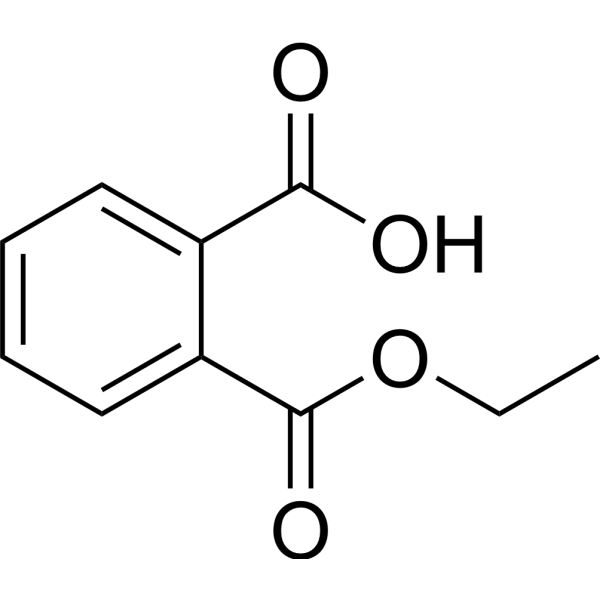
    Monoethyl phthalate is an orally active PDX-1 activator and the major hydrolytic metabolite of Diethyl phthalate (HY-Y0284) in vivo, with reproductive toxicity. Monoethyl phthalate targets aromatase (aromatase/CYP19A1) and PPAR to induce cell proliferation. The plasma protein binding rate of Monoethyl phthalate in rats and humans is lower than that of Diethyl phthalate. It exhibits significant enterohepatic circulation in rats and mainly accumulates in liver tissues. Monoethyl phthalate shows no estrogenic activity in estrogen-dependent human breast cancer cells. Monoethyl phthalate can be used in studies of reproductive toxicity and related environmental endocrine disruption mechanisms .
    Monoethyl phthalate
  • HY-103450

    Estrogen Receptor/ERR Endocrinology Cancer
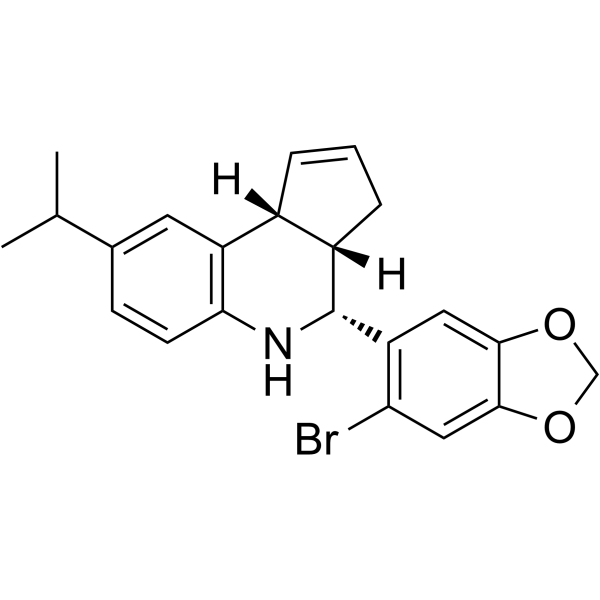
    G-36 is a cell-permeable nonsteroidal antagonist of the G protein-coupled estrogen receptor (GPER/GPR30), which selectively inhibits estrogen-mediated PI3K activation through GPER, rather than Erα. G-36 also inhibits estrogen-mediated calcium mobilization (IC50=112 nM). G-36 is promising for research in the field of cancer .
    G36
  • HY-164764

    Estrogen Receptor/ERR Endocrinology
    ADX61623 is a potent follicle stimulating hormone (FSH) receptor (FSHR) negative allosteric modulator (NAM). ADX61623 shows luteinizing hormone receptor (LH-R) activity and is not active on thyroid-stimulating hormone (TSH) receptors. ADX61623 can be used for the study of estrogen dependent disease .
    ADX61623
  • HY-W007664

    Drug Intermediate Cytochrome P450 Cancer
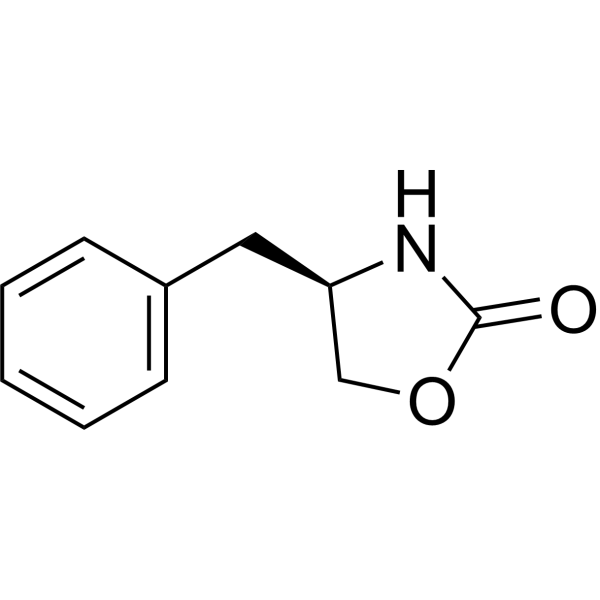
    (R)-4-Benzyl-2-oxazolidinone is an oxazolidinone-type auxiliary that enables highly stereoselective asymmetric alkylation reactions. (R)-4-Benzyl-2-oxazolidinone is applied in the total synthesis of natural products and pharmaceutical preparations. Especially in pharmaceutical research and development, (R)-4-Benzyl-2-oxazolidinone not only serves as a key precursor for the synthesis of aromatase inhibitors, but also can be used in studies related to estrogen-dependent breast cancer .
    (R)-4-Benzyl-2-oxazolidinone
  • HY-105184

    Cytochrome P450 Endocrinology
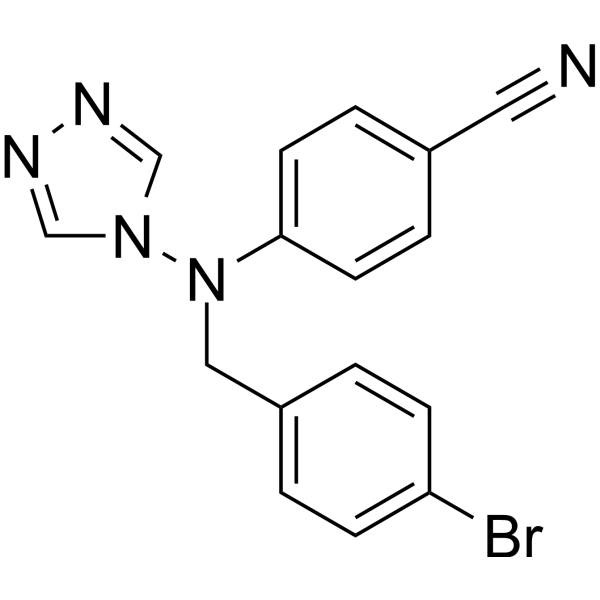
    YM511 is a highly specific non-steroidal aromatase inhibitor. YM511 inhibits aromatase activities in microsomes from rat ovary and human placenta competitively (IC50s of 0.4 and 0.12 nM, respectively). YM511 slightly inhibits production of other steroid hormones. YM511 has the potential for suppressing estrogen-dependent action research without affecting serum levels of other steroid hormones .
    YM511
  • HY-W002734

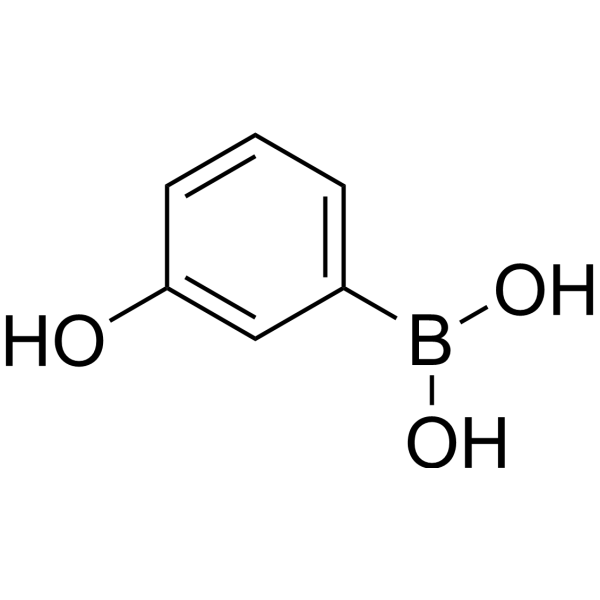
    3-Hydroxybenzeneboronic acid

    Drug Intermediate Endocrinology
    (3-Hydroxyphenyl)boronic acid (3-Hydroxybenzeneboronic acid) is a drug intermediate that can be used for the synthesis of 17β-hydroxysteroid dehydrogenase type 1 inhibitors .
    (3-Hydroxyphenyl)boronic acid
  • HY-14247B
    Fadrozole hydrochloride hemihydrate
    2 Publications Verification

    CGS 16949A hemihydrate; (Rac)-FAD286 hydrochloride hemihydrate

    Cytochrome P450 Endocrinology Cancer
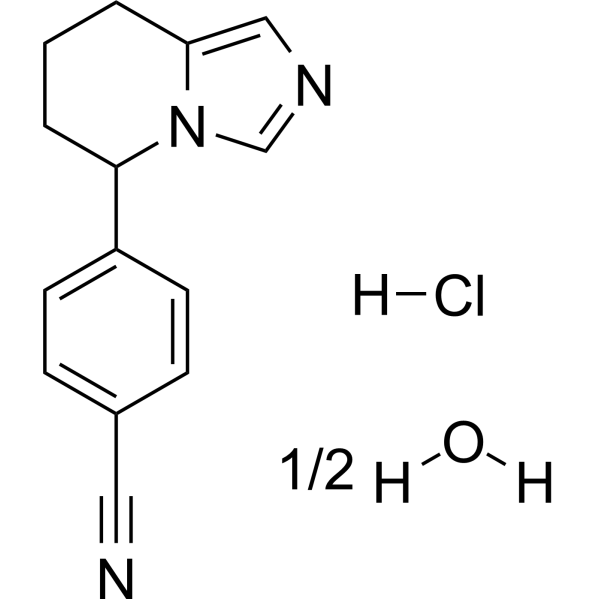
    Fadrozole hydrochloride hemihydrate is an orally active, potent, selective and nonsteroidal aromatase inhibitor, with an IC50 of 6.4 nM. Fadrozole hydrochloride hemihydrate inhibits the production of estrogen and progesterone, with IC50 values of 0.03 and 120 μM. Fadrozole hydrochloride hemihydrate shows prevention of spontaneous tumours. Fadrozole hydrochloride hemihydrate can be used for the research of estrogen-dependent disease and cancer .
    Fadrozole hydrochloride hemihydrate
  • HY-129433

    17β-HSD Endocrinology
    17β-HSD1-IN-2 (PBRM) is a non-estrogenic and steroidal covalent irreversible inhibitor of 17β-Hydroxysteroid dehydrogenase type 1 (17β-HSD1) (Ki=368 nM). 17β-HSD1-IN-2 can be used for the research of estrogen-dependent disorders .
    17β-HSD1-IN-2
  • HY-123868

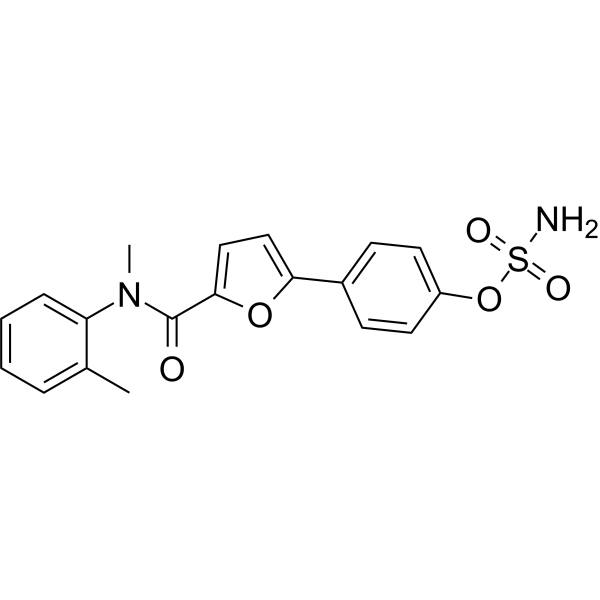
    Steroid Sulfatase Cancer
    KW-2581 is a steroidal selective steroid sulfatase (STS) inhibitor with an IC50 of 4 nM. KW-2581 inhibits STS activity of ZR-75-1 cells with an IC50 of 13 nM. KW-2581 inhibits the E1S-stimulated growth of ZR-75-1 cells with an IC50 of 0.18 nM. KW-2581 inhibits sulfated-estrogen dependent growth of breast cancer cells both in vitro and in vivo. KW-2581 induced regression in E1S-induced tumor growth. KW-2581 can be studied in research on hormone receptors-positive breast cancer .
    KW-2581
  • HY-135593

    Others Endocrinology
    LY88074 analog 1 is a benzothiophene compound with nitrogen-containing non-basic side chains, Compound 26, extracted from patent EP0747380A1. LY88074 analog 1 is an agent for alleviating the symptoms of post-menopausal symptoms, such as osteoporosis, cardiovascular related pathological conditions, and estrogen-dependent cancer. LY88074 analog 1 can be used alone or in combination with estrogen or progestin .
    LY88074 analog 1
  • HY-106056

    D 16726

    Estrogen Receptor/ERR Cancer
    Zindoxifene is a partial anti-estrogen. Zindoxifene works primarily by binding to estrogen receptors, thereby inhibiting the growth of estrogen-dependent tumor cells. Zindoxifene is able to exhibit the dual properties of estrogen agonists and antagonists and can be used in research and development to target estrogen-dependent tumors, such as prostate and breast cancer .
    Zindoxifene
  • HY-151201

    Steroid Sulfatase Cancer
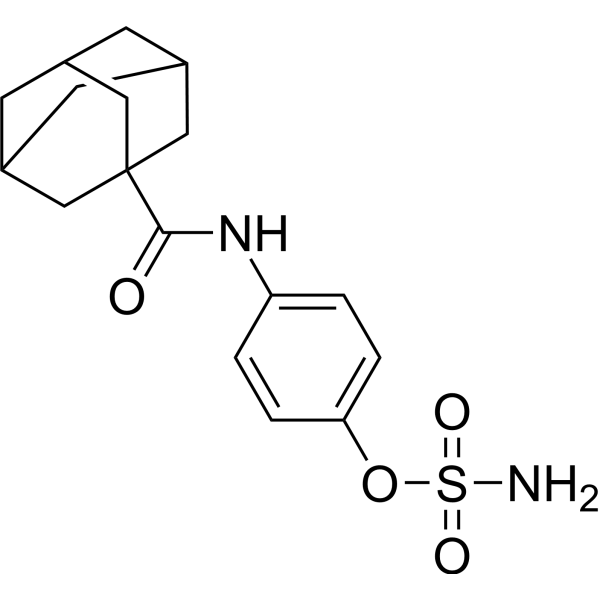
    Steroid sulfatase/17β-HSD1-IN-3 (compound 19) is a dual inhibitor of steroid sulfatase (STS) and 17β-hydroxysteroid dehydrogenase type 1 (17β HSD1). Steroid sulfatase/17β-HSD1-IN-3 irreversibly inhibits hSTS activity with anIC50 value of 27 nM. Steroid sulfatase/17β-HSD1-IN-3 can be used in the study of endometriosis and other estrogen-dependent diseases .
    Steroid sulfatase/17β-HSD1-IN-3
  • HY-151202

    Steroid Sulfatase Cancer
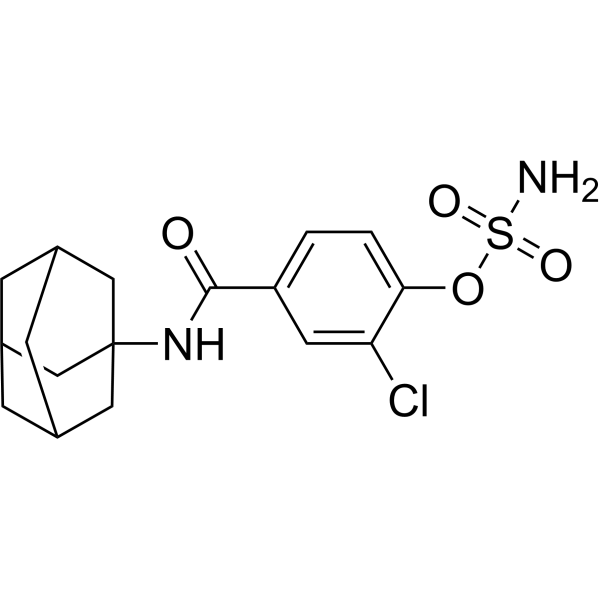
    Steroid sulfatase/17β-HSD1-IN-4 (compound 37) is a dual inhibitor of steroid sulfatase (STS) and 17β-hydroxysteroid dehydrogenase type 1 (17β HSD1). Steroid sulfatase/17β-HSD1-IN-4 irreversibly inhibits hSTS activity with anIC50 value of 63 nM. Steroid sulfatase/17β-HSD1-IN-4 can be used in the study of endometriosis and other estrogen-dependent diseases .
    Steroid sulfatase/17β-HSD1-IN-4
  • HY-113986B

    (S)-Fadrozole; (S)-CGS 16949A free base; (S)-FAD286

    Cytochrome P450 Inflammation/Immunology Endocrinology Cancer
    (S)-Dexfadrostat ((S)-Fadrozole) is an aromatase inhibitor with an IC50 of 4.6 nM in human placental microsomes in vitro. (S)-Dexfadrostat can be used in the study of estrogen-dependent breast cancer, gynecomastia, and systemic lupus erythematosus .
    (S)-Dexfadrostat
  • HY-150542

    Steroid Sulfatase Cancer
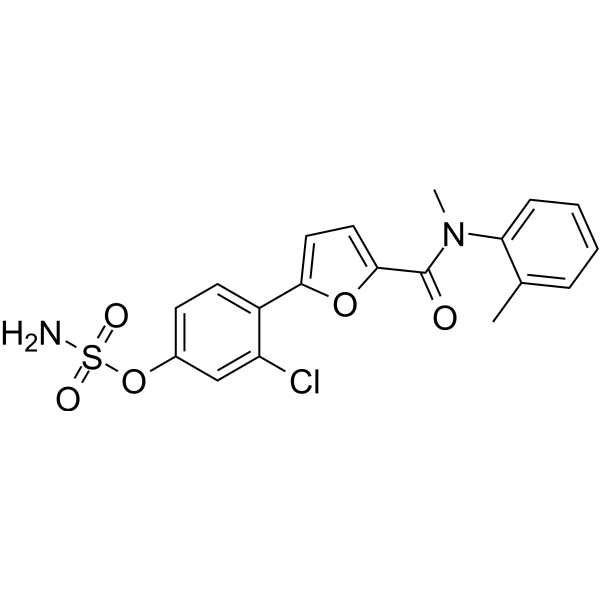
    Steroid sulfatase -IN-2 is an active steroid sulfatase (STS) inhibitor with an IC50 value of 109.5 nM. Steroid sulfatase-IN-2 can be used for the research of hormone-dependent cancers, such as estrogen-dependent breast and endometrial cancer .
    Steroid sulfatase-IN-2
  • HY-150543

    Steroid Sulfatase Cancer
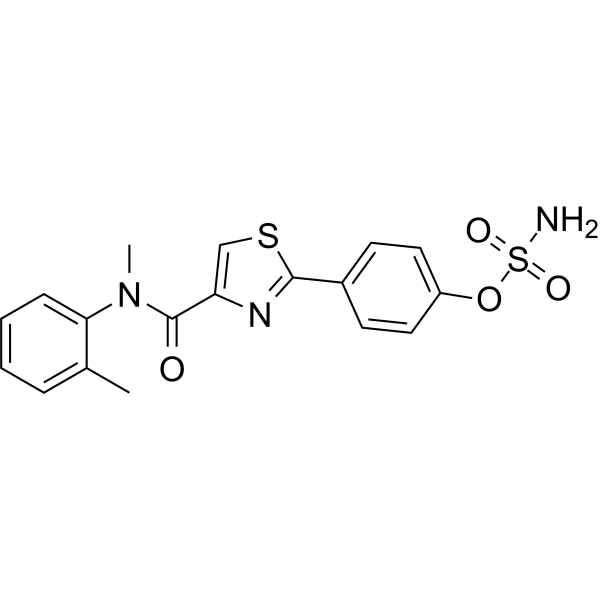
    Steroid sulfatase-IN-3 (compound 1q) is a potent STS (Steroid sulfatase) inhibitor, with an IC50 of 25.8 nM. Steroid sulfatase-IN-3 shows antiproliferative activity against T-47D estrogen-dependent breast cancer cells, with an IC50 of 1.04 µM .
    Steroid sulfatase-IN-3
  • HY-173279

    Cytochrome P450 Endocrinology
    CYP19A1-IN-1 (Compound 9) is a CYP19A1 inhibitor with an IC50 of 271 nM. CYP19A1-IN-1 inhibits the activity of converting androgens to estrogens by binding to CYP19A1. CYP19A1-IN-1 can be used in the research of sex hormone-related diseases such as estrogen-dependent breast cancer .
    CYP19A1-IN-1
  • HY-151199

    Steroid Sulfatase Endocrinology Cancer
    Steroid sulfatase/17β-HSD1-IN-1 is a potent steroid sulfatase and 17β-hydroxysteroid dehydrogenase type 1 (17β-HSD1) inhibitor with an IC50 value of 28 nM for cellular human steroid sulfatase. Steroid sulfatase/17β-HSD1-IN-1 can be used to research estrogen-dependent diseases .
    Steroid sulfatase/17β-HSD1-IN-1
  • HY-171477

    Estrogen Receptor/ERR Cancer
    Metahexestrol is an estrogen receptor (E2R) inhibitor with antitumor activity. It significantly inhibits the proliferation of estrogen receptor-positive MCF-7 human breast cancer cells (ED50 = 1.0 μM). Additionally, Metahexestrol also exhibits inhibitory effects in estrogen receptor-negative MDA-MB-231 cells, and its antiproliferative activity cannot be reversed by estrogen, suggesting that its mechanism of action may be partially independent of the E2R pathway. Metahexestrol can be used in research on estrogen-dependent breast cancer .
    Metahexestrol
  • HY-133668S

    Isotope-Labeled Compounds Drug Metabolite Cytochrome P450 PPAR Cancer
    Monoethyl phthalate-d4 is the deuterium labeled Monoethyl phthalate. Monoethyl phthalate is an orally active PDX-1 activator and the major hydrolytic metabolite of Diethyl phthalate (HY-Y0284) in vivo, with reproductive toxicity. Monoethyl phthalate targets aromatase (aromatase/CYP19A1) and PPAR to induce cell proliferation. The plasma protein binding rate of Monoethyl phthalate in rats and humans is lower than that of Diethyl phthalate. It exhibits significant enterohepatic circulation in rats and mainly accumulates in liver tissues. Monoethyl phthalate shows no estrogenic activity in estrogen-dependent human breast cancer cells. Monoethyl phthalate can be used in studies of reproductive toxicity and related environmental endocrine disruption mechanisms .
    Monoethyl phthalate-d4
  • HY-123500

    Cytochrome P450 Cancer
    CGP-45688 is an orally active non-steroidal aromatase inhibitor with an ED50 of 30-100 μg/kg. CGP-45688 can reduce the level of estrogen in the body, thereby inhibiting the growth of estrogen-dependent tumors. CGP-45688 inhibits the growth of estrogen-dependent breast tumors in rat models. CGP-45688 disrupts the ovarian cycle and inhibits the weight of the uterus. CGP-45688 can be used for the study of breast cancer .
    CGP-45688
  • HY-180420

    Cytochrome P450 Cancer
    Tan-931 is a non-competitive and selective inhibitor of aromatase , with an IC50 is 17.2 μM and a Ki of 40 μM for human aromatase, and an IC50 of 162 μM for rat aromatase. Tan-931 reduces plasma estradiol-17β level and weight of ovaries and uterus in PMSG (HY-N12634)-treated female rats. Tan-931 can be used for the research of estrogen-dependent metastatic breast cancer .
    Tan-931
  • HY-176560

    Estrogen Receptor/ERR Metabolic Disease Cancer
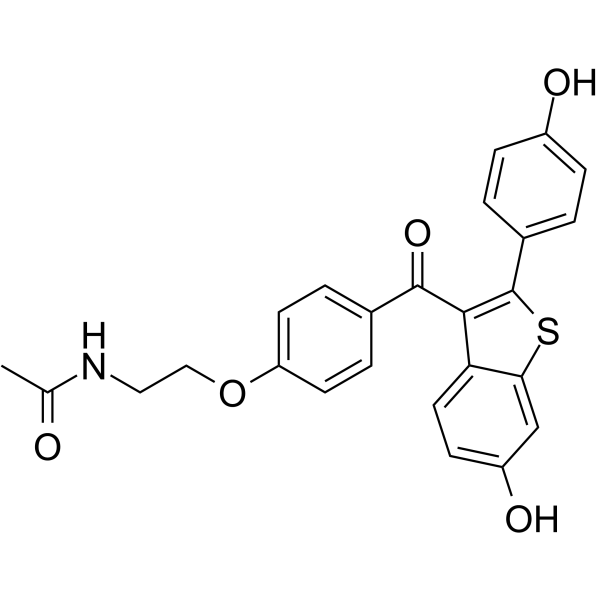
    Raloxifene alkene (Compound 101) is a serum cholesterol clearance agent. Raloxifene alkene has significant anti-proliferation activity against breast adenocarcinoma cells. Raloxifene alkene effectively reduces serum cholesterol level without significant uterine weight and increase of number oieosinoohils in the stromallaver of ovarleclomized rat models. Raloxifene alkene can be used for post-menopausasyndrome, particularly osteoporosis, estrogen-dependent breast and uterine carcinoma research .
    Raloxifene alkene
  • HY-105184R

    Cytochrome P450 Reference Standards Endocrinology
    YM511 (Standard) is the analytical standard of YM511 (HY-105184). This product is intended for research and analytical applications. YM511 is a highly specific non-steroidal aromatase inhibitor. YM511 inhibits aromatase activities in microsomes from rat ovary and human placenta competitively (IC50s of 0.4 and 0.12 nM, respectively). YM511 slightly inhibits production of other steroid hormones. YM511 has the potential for suppressing estrogen-dependent action research without affecting serum levels of other steroid hormones .
    YM511 (Standard)
  • HY-103450R

    Reference Standards Estrogen Receptor/ERR Endocrinology Cancer
    G36 (Standard) is the analytical standard of G36 (HY-103450). This product is intended for research and analytical applications. G-36 is a cell-permeable nonsteroidal antagonist of the G protein-coupled estrogen receptor (GPER/GPR30), which selectively inhibits estrogen-mediated PI3K activation through GPER, rather than Erα. G-36 also inhibits estrogen-mediated calcium mobilization (IC50=112 nM). G-36 is promising for research in the field of cancer .
    G36 (Standard)

Inquiry Online

Your information is safe with us. * Required Fields.

Salutation


Country or Region *

Applicant Name *


Organization Name *

Department *


Email Address *


Product Name *

Cat. No.


Requested quantity *

Phone Number *


Remarks

Inquiry Online

Inquiry Information

Product Name:
Cat. No.:
Quantity:
MCE Japan Authorized Agent:

