
1. Search Result
Search Result
Results for "

Aβ aggregation inhibition

" in MedChemExpress (MCE) Product Catalog:

19

Inhibitors & Agonists

1

Isotope-Labeled Compounds

Targets Recommended:
Cat. No. Product Name Target Research Areas Chemical Structure
  • HY-13270

    E7010

    Microtubule/Tubulin Autophagy Apoptosis Cancer
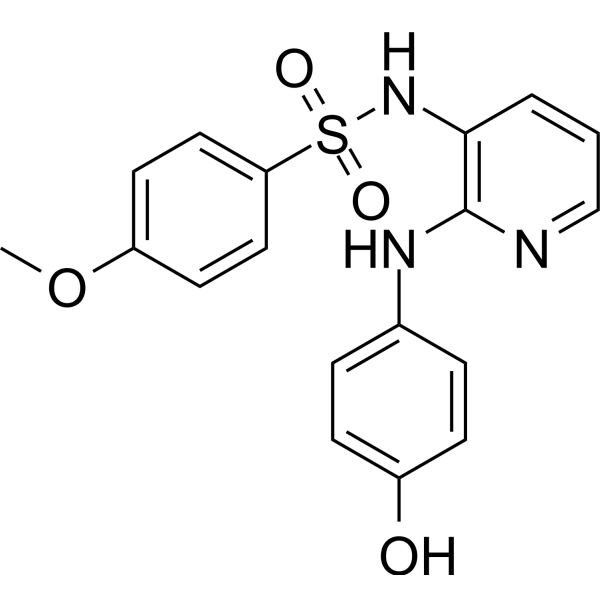
    ABT-751 (E7010) is a novel, highly orally bioavailable sulfonamides antimitotic compound and tubulin binder. It prevents tubulin aggregation by binding to the colchicine site on β-tubulin, leading to cell cycle arrest in G2/M phase and inducing apoptosis, thus effectively preventing cell division. ABT-751 induces autophagy by inhibiting the AKT/MTOR signaling pathway. ABT-751 showed significant inhibition against various types of cancer cells, including lung, gastric, colon, and breast cancer .
    ABT-751
  • HY-179496

    GSK-3 Cholinesterase (ChE) Amyloid-β Neurological Disease
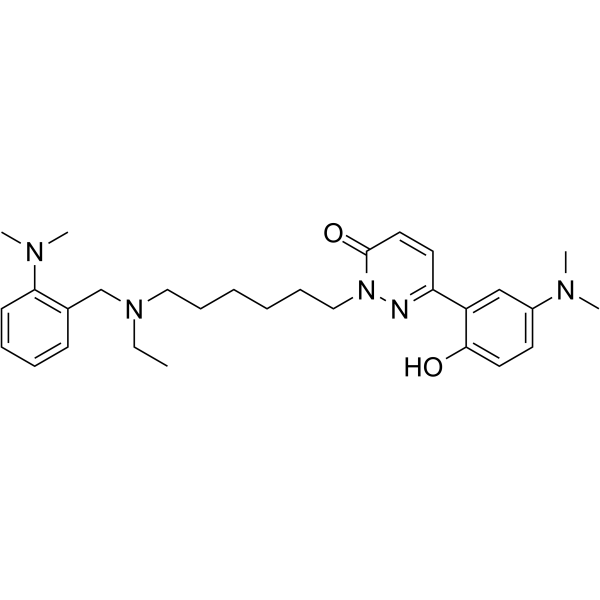
    ChE/GSK-3β-IN-1 (compound 18o) is a potent dual ChE/GSK-3β inhibitor. ChE/GSK-3β-IN-1 exhibits dual inhibition of AChE (IC50 = 1.7 μM), butyrylcholinesterase (BChE) (IC50 = 5.3 μM), and GSK-3β (IC50 = 5.7 μM). ChE/GSK-3β-IN-1 inhibits Aβ1-42 self-aggregation. ChE/GSK-3β-IN-1 can be used for Alzheimer’s disease (AD) research .
    ChE/GSK-3β-IN-1
  • HY-146142

    Cholinesterase (ChE) Amyloid-β Neurological Disease
    AChE/BuChE-IN-2 (Compound 5f) is an orally active AChE and BuChE inhibitor with IC50 values of 0.72 μM and 0.16 μM, respectively. AChE/BuChE-IN-2 shows a non-competitive inhibition with AChE and shows potent self-induced β-amyloid (Aβ) aggregation inhibition with an IC50 of 62.52 μM. AChE/BuChE-IN-2 can cross the BBB .
    AChE/BuChE-IN-2
  • HY-144324

    Cholinesterase (ChE) Neurological Disease
    AChE-IN-6 (Compound 12a) is an optimal multifunctional ligand with significant inhibition of AChE (EeAChE, IC50 = 0.20 μM; HuAChE, IC50 = 37.02 nM) and anti-Aβ activity (IC50 = 1.92 μM for self-induced Aβ1-42 aggregation; IC50 = 1.80 μM for disaggregation of Aβ1-42 fibrils; IC50 = 2.18 μM for Cu2+-induced Aβ1-42 aggregation; IC50 = 1.17 μM for disaggregation of Cu2+-induced Aβ1-42 fibrils). AChE-IN-6 has the potential for the research of Alzheimer's disease .
    AChE-IN-6
  • HY-B1588S

    Amyloid-β HIV 11β-HSD Infection Neurological Disease Inflammation/Immunology
    Carbenoxolone-d4 is deuterium labeled Carbenoxolone. Carbenoxolone, a semi-synthetic derivative of glycyrrhetinic acid, has previously been used for the management of dyspepsia and peptic ulcer because of its anti-inflammatory properties . Carbenoxolone, a general hemichannel and gap junction inhibitor, has the therapeutic potential of carbenoxolone in the research of chronic liver disease . Carbenoxolone is a suitable candidate for the inhibition of Aβ42 aggregation and the therapeutic potential of Cbx against AD . Carbenoxolone is small molecule Pannexin1 (Panx1,is an ATP release channel) inhibitor, attenuate Panx1 channel activity through modulation of the first extracellular loop .Carbenoxolone is an 11β-hydroxysteroid dehydrogenase type 1 (11β-HSD1) inhibitor that converts inactive glucocorticoid into an active form. Carbenoxolone has antiviral activity against DENV infection targeting the virus itself .
    Carbenoxolone-d4
  • HY-13325

    Drug Derivative Amyloid-β Neurological Disease
    Aβ aggregation modulator-1 is a stimulator of amyloid-β (Aβ) fibrillogenesis. Aβ aggregation modulator-1 binds hydrophobic residues in Aβ peptides and stabilizes β-sheet-rich protofibrils and fibrils. Aβ aggregation modulator-1 accelerates Aβ polymerization and reduces concentrations of small, toxic Aβ oligomers in heterogeneous aggregation reactions. Aβ aggregation modulator-1 suppresses long-term potentiation (LTP) inhibition by Aβ oligomers in hippocampal brain slices. Aβ aggregation modulator-1 can be used for the study of Alzheimer's disease (AD) .
    Aβ aggregation modulator-1
  • HY-155365

    Cholinesterase (ChE) GSK-3 Amyloid-β Neurological Disease
    hAChE-IN-5 (compound 49) is a potent hAChE and hBuChE inhibitor with IC50 values of 0.17 μM and 0.17 μM, respectively. hAChE-IN-5 shows potent GSK3β inhibition with an IC50 value of 0.21 μM. hAChE-IN-5 is used as tau protein aggregation and Aβ1-42 self-aggregation inhibitor. hAChE-IN-5 can bind virtually with the PAS affecting Aβ aggregation, thus preventing Aβ-dependent neurotoxicity. hAChE-IN-5 can penetrate BBB and has the potential for multi-targeted anti-Alzheimer's agents research .
    hAChE-IN-5
  • HY-121586

    Bay g 6575

    Lipoxygenase Cardiovascular Disease
    Nafazatrom (Bay g 6575) is an orally active cardioprotective agent that protects against ischemic damage. Nafazatrom dose-dependently inhibits neutrophil aggregation, superoxide anion generation, arachidonic acid metabolism, and to a lesser extent the release of β-glucosidase, platelet aggregation or arachidonic acid in vitro. Acid metabolism has no significant effect. In a dog ischemia-reperfusion model, Nafazatrom (10 mg/kg; po) reduced infarct size and the occurrence of arrhythmias and rescued ischemic myocardial function without affecting any hemodynamic changes. The basis of Nafazatrom's cardioprotection may be inhibition of neutrophil function and cellular infiltration in vitro .
    Nafazatrom
  • HY-158978

    Cholinesterase (ChE) Monoamine Oxidase Neurological Disease
    Multitarget AD inhibitor-2 (Compound VN-19) is a multitargeting inhibitor acetylcholinesterase (AChE, IC50=0.14 μM), butyrylcholinesterase (BChE, IC50=11.6 μM), monoamine oxidase B (MAO B, IC50=0.45 μM). Multitarget AD inhibitor-2 inhibits self-induced aggregation of amyloid beta protein Aβ1-42 (inhibition rate is 47.3% at 20 μM), and downregulates the level of ROS in SH-SY5Y (80 inhibition rate at 25 μM). Multitarget AD inhibitor-2 ameliorates the cognitive decline in Scopolamine (HY-N0296)-induced Alzheimer’s Disease zebrafish models .
    Multitarget AD inhibitor-2
  • HY-150563

    Monoamine Oxidase Amyloid-β Neurological Disease Inflammation/Immunology
    Neuroinflammatory-IN-2 is a potent anti-neuroinflammatory agent with an IC50 value of 10.30 μM for MAO-B, and 96.33% inhibition of Aβ1-42 aggregation at 25 μM. Neuroinflammatory-IN-2 has neuroprotective activity in H2O2-induced PC-12 cell injury. Neuroinflammatory-IN-2 also has biometal chelating abilities, antioxidant activity, anti-neuroinflammatory activity and appropriate BBB permeability. Neuroinflammatory-IN-2 can be used for researching Alzheimer’s disease .
    Neuroinflammatory-IN-2
  • HY-144790

    Amyloid-β Cholinesterase (ChE) Monoamine Oxidase Neurological Disease
    AChE-IN-12 is a potent and blood-brain barrier (BBB) penetrant acetylcholinesterase (AChE) with IC50s of 0.41 μM and 1.88 μM for rat AChE and electric eel AChE. AChE-IN-12 is also a good antioxidant (ORAC = 3.3 eq), selective metal chelator and huMAO-B inhibitor (IC50 = 8.8 μM). AChE-IN-12 has remarkable inhibition of self- and Cu 2+-induced Aβ1-42 aggregation, as well as exhibits a good neuroprotective effect. AChE-IN-12 can be used for researching Alzheimer’s disease .
    AChE-IN-12
  • HY-13270A

    E7010 hydrochloride

    Microtubule/Tubulin Autophagy Apoptosis Cancer
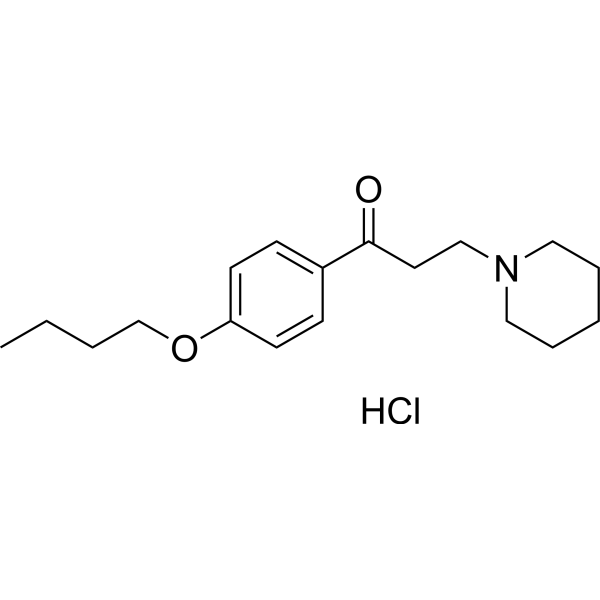
    ABT-751 (E7010) hydrochloride is a novel, highly orally bioavailable sulfonamides antimitotic compound and tubulin binder. It prevents tubulin aggregation by binding to the colchicine site on β-tubulin, leading to cell cycle arrest in G2/M phase and inducing apoptosis, thus effectively preventing cell division. ABT-751 (E7010) hydrochloride induces autophagy by inhibiting the AKT/MTOR signaling pathway. ABT-751 (E7010) hydrochloride showed significant inhibition against various types of cancer cells, including lung, gastric, colon, and breast cancer .
    ABT-751 hydrochloride
  • HY-13270R

    E7010 (Standard)

    Microtubule/Tubulin Autophagy Apoptosis Reference Standards Cancer
    ABT-751 (Standard) is the analytical standard of ABT-751. This product is intended for research and analytical applications. ABT-751 (E7010) is a novel, highly orally bioavailable sulfonamides antimitotic compound and tubulin binder. It prevents tubulin aggregation by binding to the colchicine site on β-tubulin, leading to cell cycle arrest in G2/M phase and inducing apoptosis, thus effectively preventing cell division. ABT-751 induces autophagy by inhibiting the AKT/MTOR signaling pathway. ABT-751 showed significant inhibition against various types of cancer cells, including lung, gastric, colon, and breast cancer .
    ABT-751 (Standard)
  • HY-123745

    Amyloid-β Neurological Disease
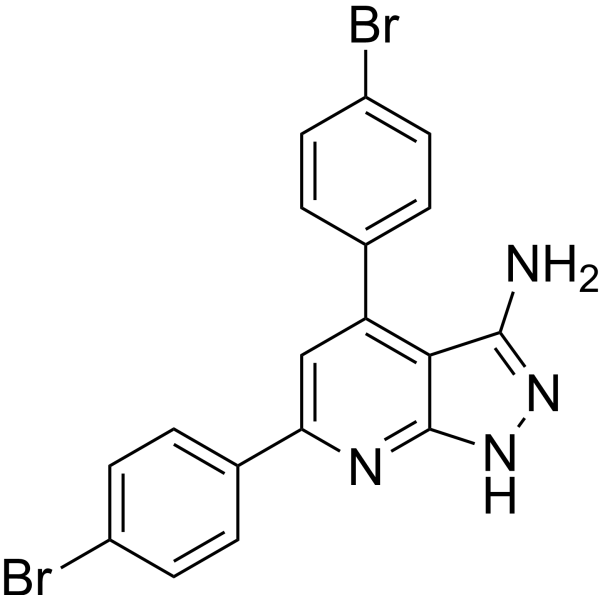
    Aβ aggregation-IN-6 is an Aβ aggregation inhibitor with ~60-70% inhibition of Aβ17-40 aggregation. Aβ aggregation-IN-6 stabilizes Aβ dimer assembly, binds to Aβ steric-zipper assembly. Aβ aggregation-IN-6 can be used for the research of alzheimer's disease .
    Aβ aggregation-IN-6
  • HY-173282

    Amyloid-β Neurological Disease
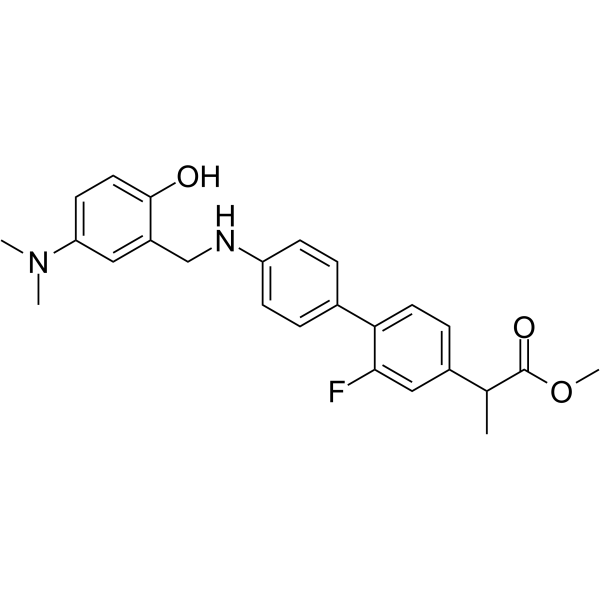
    Aβ aggregation-IN-2 (Compound 8i) is an inhibitor of amyloid-β protein (Aβ42) aggregation, showing approximately 91% inhibition of Aβ42 aggregation at 25 μM. It also exhibits Aβ42 disaggregation effects and antioxidant activity. Aβ aggregation-IN-2 can be used for research in the field of Alzheimer's disease .
    Aβ aggregation-IN-2
  • HY-180843

    Tau Protein Amyloid-β Cholinesterase (ChE) Monoamine Oxidase Reactive Oxygen Species (ROS) Neurological Disease
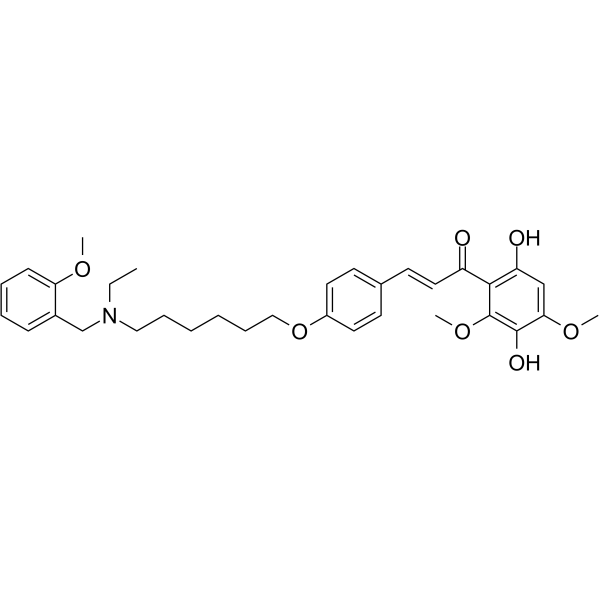
    Aβ/tau aggregation-IN-4 (Compound D21) is an Aβ/tau aggregation inhibitor. Aβ/tau aggregation-IN-4 promotes the degradation of Aβ40/42 (Aβ40, IC50 = 2.151 μM; Aβ42, IC50 = 3.622 μM). Aβ/tau aggregation-IN-4 shows selective AChE inhibition (IC50: 5.56 μM). Aβ/tau aggregation-IN-4 inhibits MAO-A and MAO-B with IC50s of 0.59 μM and 0.09 μM, respectively. Aβ/tau aggregation-IN-4 suppresses intracellular ROS levels. Aβ/tau aggregation-IN-4 can be used in the research of Alzheimer's disease .
    Aβ/tau aggregation-IN-4
  • HY-180842

    Monoamine Oxidase Amyloid-β Tau Protein Cholinesterase (ChE) Neurological Disease
    MAO-B-IN-50 (Compound C20) is a selective MAO-B inhibitor with an IC50 value of 0.06 μM. MAO-B-IN-50 shows good inhibitory effects on the aggregation of Aβ40/42 and Tau proteins, with overall IC50 values around 1 μM. MAO-B-IN-50 exhibits potent and selective AChE inhibition (IC50 = 1.78 μM). MAO-B-IN-50 can be used in the research of Alzheimer's disease .
    MAO-B-IN-50
  • HY-179621

    Cholinesterase (ChE) Amyloid-β Neurological Disease
    EQ-04 is a highly selective positive allosteric modulator (PAM) of α7 nAChR. EQ-04 has no direct inhibitory activity on AChE and BChE. EQ-04 inhibits aggregation. EQ-04 has safe cytotoxicity and potent neuroprotective activity. EQ-04 can be used for the study of Alzheimer's disease.
    EQ-04
  • HY-W657887

    Histone Methyltransferase GSK-3 Tau Protein Amyloid-β Glucocorticoid Receptor Androgen Receptor Adrenergic Receptor Neurological Disease
    GSK-3β/G9a-IN-1 (Compound T2) is an orally active, selective, blood-brain-barrier permeable, competitive G9a (substrate-competitive, IC50: 1.1 μM) and GSK-3β (ATP competitive, IC50: 0.8 μM) inhibitor. GSK-3β/G9a-IN-1 is a potent H3K9me2 inhibitor that reshapes chromatin landscape. GSK-3β/G9a-IN-1 lowers tau phosphorylation, reduces Aβ aggregation. GSK-3β/G9a-IN-1 displays inhibition toward glucocorticoid receptor, androgen receptor, and alpha-2A adrenergic receptor. GSK-3β/G9a-IN-1 also upregulates SAGA complex members such as Eny2 and Sgf29. GSK-3β/G9a-IN-1 markedly improves memory, restores social behaviors, and increases synaptic complexity in late-onset Alzheimer’s disease .
    GSK-3β/G9a-IN-1

Inquiry Online

Your information is safe with us. * Required Fields.

Salutation


Country or Region *

Applicant Name *


Organization Name *

Department *


Email Address *


Product Name *

Cat. No.


Requested quantity *

Phone Number *


Remarks

Inquiry Online

Inquiry Information

Product Name:
Cat. No.:
Quantity:
MCE Japan Authorized Agent:

