Delivery of temperature sensitive items including proteins and kits will be paused on 6/19 for the Juneteenth holiday. For urgent orders please contact customer service.
Adakitug (BMS-986253) is a CHO-expressed human antibody targeting CXCL8/IL-8. Adakitug contains huIgG1 heavy chain and huκ light chain, with a predicted molecular weight (MW) of 144.94 kDa. The isotype control for Adakitug can refer to Human IgG1 kappa, Isotype Control (HY-P99001). Adakitug exhibits anti-tumor activity and can be applied in tumor research .
CXCL8 (54-72) is a C-terminal peptide based on the chemokine CXCL8. CXCL8 (54-72) has an interaction between a long and highly positively charged C-terminal region and a negative charge on the GAG that binds to the GAG. CXCL8 (54-72) can inhibit the adhesion and migration of neutrophils and adhesion of endothelial cells. CXCL8 (54-72) can be used to study chemokines in inflammatory response .
ABX-IL8 is a human-derived antibody expressed in CHO cells, targeting CXCL8/IL-8. ABX-IL8 contains a huIgG2 heavy chain and a huκ light chain, with a predicted molecular weight (MW) of 143.94 kDa. The isotype control for ABX-IL8 can refer to Human IgG2 kappa, Isotype Control (HY-P99002).
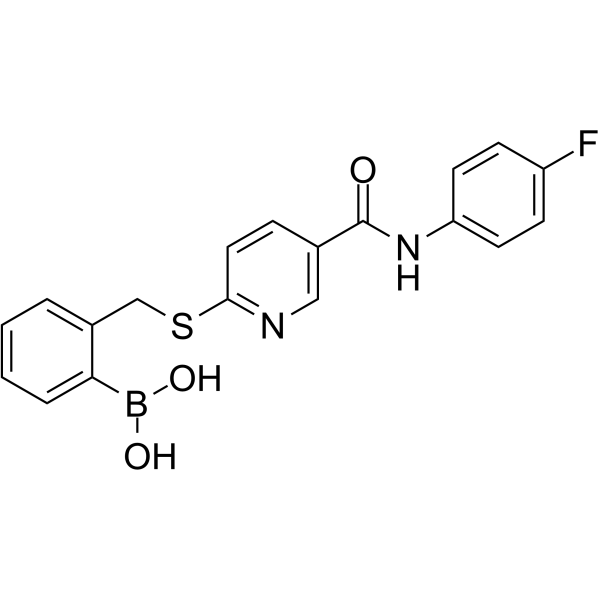
SX-517 is a dual CXCR2/1 antagonist, containing boronic acid. SX-517 inhibits CXCL1-induced Ca 2+ flux (IC50=38 nM), and antagonizes CXCL8-induced [(35)S]GTPγS binding (IC50=60 nM) and ERK1/2 phosphorylation. SX-517 has significant ability for inflammation suppression, in both humanized polymorphonuclear (PMN) cells and in murine model .
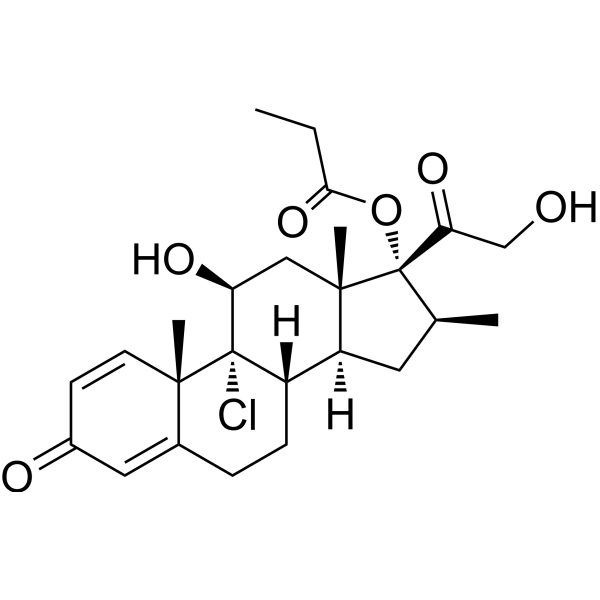
Beclomethasone 17-propionate (Beclomethasone-17-monopropionate), an active metabolite of Beclomethasone dipropionate (HY-13571), is a glucocorticoid receptor (GR) agonist. Beclomethasone 17-propionate exhibits greater affinity for GR than Beclomethasone dipropionate. Beclomethasone 17-propionate effectively suppresses cytokine production in chronic obstructive pulmonary disease (COPD) lung macrophages .
Anti-CXCL8/IL-8 Antibody is a human antibody expressed in CHO cells that targets CXCL8/IL-8. The Anti-CXCL8/IL-8 Antibody is composed of a huIgG1 heavy chain and a huκ light chain, with a predicted molecular weight (MW) of 145 kDa. The isotype control for Anti-CXCL8/IL-8 Antibody can be referenced as Human IgG1 kappa, Isotype Control (HY-P99001).
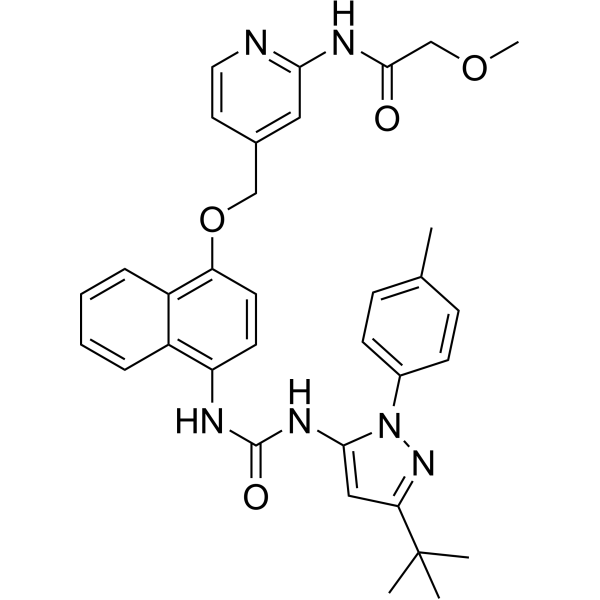
JNJ-49095397 (RV568) is an inhaled narrow-spectrum kinase inhibitor (NSKI) against both the α and γ isoforms of p38 MAPK. JNJ-49095397 also inhibits SRC kinase family, specifically haematopoietic kinase (HCK) JNJ-49095397 shows potent anti-inflammatory effects and can be used for the research of chronic obstructive pulmonary disease (COPD) and asthma .
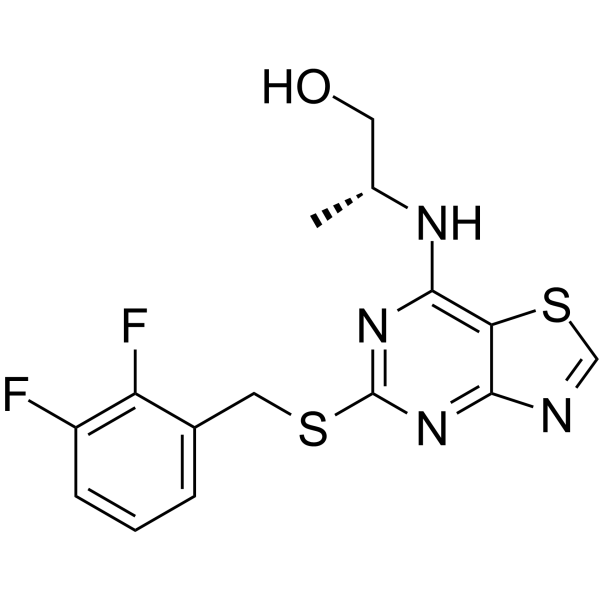
CXCL-CXCR1/2-IN-1 is an orally active ELR +CXCL-CXCR1/2 pathway inhibitor with an EC50 of 42.7 nM for CXCR2 . CXCL-CXCR1/2-IN-1 shows anticancer and antiangiogenic effects .
CXCL8 Human Pre-designed siRNA Set A contains three designed siRNAs for CXCL8 gene (Human), as well as a negative control, a positive control, and a FAM-labeled negative control.
NPSR1 antagonist-1 is a potent and peripherally restricted neuropeptide S receptor 1 (NPSR1) antagonist. NPSR1 antagonist-1 can inhibit IL-6, PTGS2, IL-20, and CXCL8 expression. NPSR1 antagonist-1 can reduce TNF-α cytokine levels. NPSR1 antagonist-1 can be used for the research of inflammation, such as peritonitis .
pCXCL8-1aa is an anti-inflammatory peptide. pCXCL8-1aa competitively inhibits the binding of CXCL8 to glycosaminoglycans such as heparin sulfate (HS) by binding with high affinity. This reduces the presentation of CXCL8 on the surface of vascular endothelial cells, thereby inhibiting neutrophil migration and inflammatory responses. pCXCL8-1aa can be used to study inflammatory diseases such as rheumatoid arthritis .
E70K is a CXCL8 C-terminal peptide with a substitution of glutamic acid (E) 70 with lysine (K). E70K can reduce neutrophil adhesion and migration during inflammation .
CXCR2 antagonist 4 (compound 7) is a potent CXCR2 antagonist with an IC50 value of 0.13 μM. CXCR2 antagonist 4 can inhibit CXCL8-induced cytosolic calcium increase (IC50 = 27 μM). CXCR2 antagonist 4 can be used for researching anticancer .
Human IL8 mRNA encodes the human interleukin 8 (IL8) protein, a member of the CXC chemokine family. IL8 is a major mediator of the inflammatory response. It also functions as a chemotactic factor by guiding the neutrophils to the site of infection.
CX4338 is a CXCL8-mediated chemokine inhibitor with the activity of inhibiting CXCR2-mediated cell migration. CX4338 selectively inhibits CXCR2-mediated β-arrestin-2 recruitment and receptor internalization while enhancing CXCR2-mediated MAPK activation. CX4338 also inhibited CXCL8-induced chemotaxis, showing efficacy in CXCR2-overexpressing cells and human neutrophils. In vivo, CX4338 significantly reduced LPS-induced neutrophil numbers in mouse bronchoalveolar lavage fluid. The mechanism of action of CX4338 is to selectively inhibit CXCR2-mediated β-arrestin-2 activation, which is sufficient to inhibit CXCL8-mediated chemotaxis .
Beclomethasone 17-propionate (Standard) is the analytical standard of Beclomethasone 17-propionate. This product is intended for research and analytical applications. Beclomethasone 17-propionate (Beclomethasone-17-monopropionate), an active metabolite of Beclomethasone dipropionate (HY-13571), is a glucocorticoid receptor (GR) agonist. Beclomethasone 17-propionate exhibits greater affinity for GR than Beclomethasone dipropionate. Beclomethasone 17-propionate effectively suppresses cytokine production in chronic obstructive pulmonary disease (COPD) lung macrophages[1][2][3].
Hexaprofen is a 2-arylpropionic acid derivative. Hexaprofen inhibits CXCL8-induced chemotaxis, while no activity is detected against CXCL1-induced chemotaxis .
CXCL8 (54-72) is a C-terminal peptide based on the chemokine CXCL8. CXCL8 (54-72) has an interaction between a long and highly positively charged C-terminal region and a negative charge on the GAG that binds to the GAG. CXCL8 (54-72) can inhibit the adhesion and migration of neutrophils and adhesion of endothelial cells. CXCL8 (54-72) can be used to study chemokines in inflammatory response .
pCXCL8-1aa is an anti-inflammatory peptide. pCXCL8-1aa competitively inhibits the binding of CXCL8 to glycosaminoglycans such as heparin sulfate (HS) by binding with high affinity. This reduces the presentation of CXCL8 on the surface of vascular endothelial cells, thereby inhibiting neutrophil migration and inflammatory responses. pCXCL8-1aa can be used to study inflammatory diseases such as rheumatoid arthritis .
E70K is a CXCL8 C-terminal peptide with a substitution of glutamic acid (E) 70 with lysine (K). E70K can reduce neutrophil adhesion and migration during inflammation .
Adakitug (BMS-986253) is a CHO-expressed human antibody targeting CXCL8/IL-8. Adakitug contains huIgG1 heavy chain and huκ light chain, with a predicted molecular weight (MW) of 144.94 kDa. The isotype control for Adakitug can refer to Human IgG1 kappa, Isotype Control (HY-P99001). Adakitug exhibits anti-tumor activity and can be applied in tumor research .
ABX-IL8 is a human-derived antibody expressed in CHO cells, targeting CXCL8/IL-8. ABX-IL8 contains a huIgG2 heavy chain and a huκ light chain, with a predicted molecular weight (MW) of 143.94 kDa. The isotype control for ABX-IL8 can refer to Human IgG2 kappa, Isotype Control (HY-P99002).
Anti-CXCL8/IL-8 Antibody is a human antibody expressed in CHO cells that targets CXCL8/IL-8. The Anti-CXCL8/IL-8 Antibody is composed of a huIgG1 heavy chain and a huκ light chain, with a predicted molecular weight (MW) of 145 kDa. The isotype control for Anti-CXCL8/IL-8 Antibody can be referenced as Human IgG1 kappa, Isotype Control (HY-P99001).
IL-8/CXCL8 protein, a vital chemotactic factor, orchestrates inflammatory responses by attracting neutrophils, basophils, and T-cells to clear pathogens. It activates neutrophils and binds to CXCR1/CXCR2 receptors, initiating downstream signaling pathways. IL-8/CXCL8 homodimerizes, disrupted by tick evasin-3, and interacts with TNFAIP6, potentially regulating chemokine activity in the inflammatory microenvironment. IL-8/CXCL8 Protein, Cynomolgus (HEK293, His) is the recombinant cynomolgus-derived IL-8/CXCL8 protein, expressed by HEK293 , with N-His labeled tag.
IL-8/CXCL8 protein, a vital chemotactic factor, orchestrates inflammatory responses by attracting neutrophils, basophils, and T-cells to clear pathogens. It activates neutrophils and binds to CXCR1/CXCR2 receptors, initiating downstream signaling pathways. IL-8/CXCL8 homodimerizes, disrupted by tick evasin-3, and interacts with TNFAIP6, potentially regulating chemokine activity in the inflammatory microenvironment. IL-8/CXCL8 Protein, Human (Biotinylated, HEK293, His-Avi) is the recombinant human-derived IL-8/CXCL8 protein, expressed by HEK293 , with C-Avi, C-His labeled tag. The total length of IL-8/CXCL8 Protein, Human (Biotinylated, HEK293, His-Avi) is 72 a.a., with molecular weight of ~14 kDa.
CXCL8 protein, a crucial chemotactic factor, drives inflammatory responses by attracting neutrophils, basophils, and T-cells, contributing to pathogen clearance. It plays a pivotal role in activating neutrophils and binds to CXCR1/CXCR2 receptors, initiating downstream signaling pathways. CXCL8 homodimerizes and interacts with TNFAIP6, potentially regulating chemokine activity in the inflammatory microenvironment. IL-8/CXCL8 Protein, Rhesus macaque (HEK293, His) is the recombinant rhesus macaque-derived CXCL8 protein, expressed by HEK293, with C-His labeled tag.
IL-8/CXCL8 protein, a vital chemotactic factor, orchestrates inflammatory responses by attracting neutrophils, basophils, and T-cells to clear pathogens. It activates neutrophils and binds to CXCR1/CXCR2 receptors, initiating downstream signaling pathways. IL-8/CXCL8 homodimerizes, disrupted by tick evasin-3, and interacts with TNFAIP6, potentially regulating chemokine activity in the inflammatory microenvironment. IL-8/CXCL8 Protein, Porcine is the recombinant Porcine-derived IL-8/CXCL8 protein, expressed by E. coli , with tag free.
Interleukin-8 (IL-8), also known as CXCL8 or NAP-1, is a pro-inflammatory CXC chemokine. IL-8 acts on human neutrophils via two receptors, CXCR1 and CXCR2. IL-8 has a conserved Glu-Leu-Arg (ELR) N-terminal motif, and is an agonist for CXCR1/CXCR2. IL-8 is produced by various cells including leukocytes, endothelial cells, and epithelial cells. IL-8/CXCL8 Protein, Human (HEK293, His) is produced in HEK293 cells with six C-Terminal His-tags. It consists of 79 amino acids (E21-S99).
CXCL8 protein, a crucial chemotactic factor, drives inflammatory responses by attracting neutrophils, basophils, and T-cells, contributing to pathogen clearance. It plays a pivotal role in activating neutrophils and binds to CXCR1/CXCR2 receptors, initiating downstream signaling pathways. CXCL8 homodimerizes and interacts with TNFAIP6, potentially regulating chemokine activity in the inflammatory microenvironment. IL-8/CXCL8 Protein, Rhesus macaque (His) is the recombinant Rhesus Macaque-derived CXCL8 protein, expressed by E. coli , with N-6*His labeled tag.
IL-8/CXCL8 protein, a vital chemotactic factor, orchestrates inflammatory responses by attracting neutrophils, basophils, and T-cells to clear pathogens. It activates neutrophils and binds to CXCR1/CXCR2 receptors, initiating downstream signaling pathways. IL-8/CXCL8 homodimerizes, disrupted by tick evasin-3, and interacts with TNFAIP6, potentially regulating chemokine activity in the inflammatory microenvironment. IL-8/CXCL8 Protein, Human (HEK293) is the recombinant human-derived IL-8/CXCL8 protein, expressed by HEK293, with tag free.
IL-8/CXCL8 protein, a vital chemotactic factor, orchestrates inflammatory responses by attracting neutrophils, basophils, and T-cells to clear pathogens. It activates neutrophils and binds to CXCR1/CXCR2 receptors, initiating downstream signaling pathways. IL-8/CXCL8 homodimerizes, disrupted by tick evasin-3, and interacts with TNFAIP6, potentially regulating chemokine activity in the inflammatory microenvironment. Animal-Free IL-8/CXCL8 Protein, Human (His) is the recombinant human-derived animal-FreeIL-8/CXCL8 protein, expressed by E. coli , with C-His labeled tag. This product is for cell culture use only.
IL-8/CXCL8 protein, a vital chemotactic factor, orchestrates inflammatory responses by attracting neutrophils, basophils, and T-cells to clear pathogens. It activates neutrophils and binds to CXCR1/CXCR2 receptors, initiating downstream signaling pathways. IL-8/CXCL8 homodimerizes, disrupted by tick evasin-3, and interacts with TNFAIP6, potentially regulating chemokine activity in the inflammatory microenvironment. Animal-Free IL-8/CXCL8 Protein, Pig (His) is the recombinant pig-derived animal-FreeIL-8/CXCL8 protein, expressed by E. coli , with C-His labeled tag. This product is for cell culture use only.
Interleukin-8 (IL-8), also known as CXCL8 or NAP-1, is a pro-inflammatory CXC chemokine. IL-8 acts on human neutrophils via two receptors, CXCR1 and CXCR2. IL-8 has a conserved Glu-Leu-Arg (ELR) N-terminal motif, and is an agonist for CXCR1/CXCR2. IL-8 is produced by various cells including leukocytes, endothelial cells, and epithelial cells. IL-8/CXCL8 Protein, Human is produced in E.coil.
Interleukin-8 (IL-8), also known as CXCL8 or NAP-1, is a pro-inflammatory CXC chemokine. IL-8 acts on human neutrophils via two receptors, CXCR1 and CXCR2. IL-8 has a conserved Glu-Leu-Arg (ELR) N-terminal motif, and is an agonist for CXCR1/CXCR2. IL-8 is produced by various cells including leukocytes, endothelial cells, and epithelial cells. IL-8/CXCL8 Protein, Canine is produced in E.coil, and consists of 79 amino acids (A23-P101).
Interleukin-8 (IL-8), also known as CXCL8 or NAP-1, is a pro-inflammatory CXC chemokine. IL-8 acts on human neutrophils via two receptors, CXCR1 and CXCR2. IL-8 has a conserved Glu-Leu-Arg (ELR) N-terminal motif, and is an agonist for CXCR1/CXCR2. IL-8 is produced by various cells including leukocytes, endothelial cells, and epithelial cells. IL-8/CXCL8 Protein, Rhesus Macaque is produced in E.coil, and consists of 79 amino acids (A23-P101).
Interleukin-8 (IL-8), also known as CXCL8 or NAP-1, is a pro-inflammatory CXC chemokine. IL-8 acts on human neutrophils via two receptors, CXCR1 and CXCR2. IL-8 has a conserved Glu-Leu-Arg (ELR) N-terminal motif, and is an agonist for CXCR1/CXCR2. IL-8 is produced by various cells including leukocytes, endothelial cells, and epithelial cells. IL-8/CXCL8 Protein, Human (HEK293, Fc) is produced in HEK293 cells with a N-Terminal Fc-tag.
Interleukin-8 (IL-8), also known as CXCL8 or NAP-1, is a pro-inflammatory CXC chemokine. IL-8 acts on human neutrophils via two receptors, CXCR1 and CXCR2. IL-8 has a conserved Glu-Leu-Arg (ELR) N-terminal motif, and is an agonist for CXCR1/CXCR2. IL-8 is produced by various cells including leukocytes, endothelial cells, and epithelial cells. IL-8/CXCL8 Protein, Human (77a.a, HEK293) is produced in HEK293 cells, and consists of 77 amino acids (A23-S99).
Interleukin-8 (IL-8), also known as CXCL8 or NAP-1, is a pro-inflammatory CXC chemokine. IL-8 acts on human neutrophils via two receptors, CXCR1 and CXCR2. IL-8 has a conserved Glu-Leu-Arg (ELR) N-terminal motif, and is an agonist for CXCR1/CXCR2. IL-8 is produced by various cells including leukocytes, endothelial cells, and epithelial cells. IL-8/CXCL8 Protein, Human (CHO) is produced in CHO cells, and consists of 77 amino acids (A23-S99).
Interleukin-8 (IL-8), also known as CXCL8 or NAP-1, is a pro-inflammatory CXC chemokine. IL-8 acts on human neutrophils via two receptors, CXCR1 and CXCR2. IL-8 has a conserved Glu-Leu-Arg (ELR) N-terminal motif, and is an agonist for CXCR1/CXCR2. IL-8 is produced by various cells including leukocytes, endothelial cells, and epithelial cells. IL-8/CXCL8 Protein, Human (72a.a) is produced in E.coil, and consists of 72 amino acids (S28-S99).
CXCL8 Human Pre-designed siRNA Set A contains three designed siRNAs for CXCL8 gene (Human), as well as a negative control, a positive control, and a FAM-labeled negative control.
Human IL8 mRNA encodes the human interleukin 8 (IL8) protein, a member of the CXC chemokine family. IL8 is a major mediator of the inflammatory response. It also functions as a chemotactic factor by guiding the neutrophils to the site of infection.
Western blot analysis of extracts from THP-1(lane 2(20μg), Jurkat (lane 3(20μg) and NIH3T3(lane 4(20μg) using FOXO1A (HY-P80132) Rabbit mAb. Proteins were transferred
to a PVDF membrane and blocked with 5% non-fat milk in TBST for 2 hour at room temperature. The primary antibody (1/1000) and Loading control antibody (Beta Actin, HY-P80438, 1/10000) was
used in 5% non-fat milk in TBST at 4°C overnight. Goat Anti-Mouse/Rabbit IgG-HRP Secondary Antibody (1/10000) was used for 1 hour at room temperature.
Western blot analysis of extracts from THP-1(lane 2(20μg), Jurkat (lane 3(20μg) and NIH3T3(lane 4(20μg) using FOXO1A (HY-P80132) Rabbit mAb. Proteins were transferred
to a PVDF membrane and blocked with 5% non-fat milk in TBST for 2 hour at room temperature. The primary antibody (1/1000) and Loading control antibody (Beta Actin, HY-P80438, 1/10000) was
used in 5% non-fat milk in TBST at 4°C overnight. Goat Anti-Mouse/Rabbit IgG-HRP Secondary Antibody (1/10000) was used for 1 hour at room temperature.
Western blot analysis of extracts from THP-1(lane 2(20μg), Jurkat (lane 3(20μg) and NIH3T3(lane 4(20μg) using FOXO1A (HY-P80132) Rabbit mAb. Proteins were transferred
to a PVDF membrane and blocked with 5% non-fat milk in TBST for 2 hour at room temperature. The primary antibody (1/1000) and Loading control antibody (Beta Actin, HY-P80438, 1/10000) was
used in 5% non-fat milk in TBST at 4°C overnight. Goat Anti-Mouse/Rabbit IgG-HRP Secondary Antibody (1/10000) was used for 1 hour at room temperature.
Western blot analysis of extracts from THP-1(lane 2(20μg), Jurkat (lane 3(20μg) and NIH3T3(lane 4(20μg) using FOXO1A (HY-P80132) Rabbit mAb. Proteins were transferred
to a PVDF membrane and blocked with 5% non-fat milk in TBST for 2 hour at room temperature. The primary antibody (1/1000) and Loading control antibody (Beta Actin, HY-P80438, 1/10000) was
MedchemExpress Validation 03
Western blot analysis of extracts from THP-1(lane 2(20μg), Jurkat (lane 3(20μg) and NIH3T3(lane 4(20μg) using FOXO1A (HY-P80132) Rabbit mAb. Proteins were transferred
MedchemExpress Validation 04
Western blot analysis of extracts from THP-1(lane 2(20μg), Jurkat (lane 3(20μg) and NIH3T3(lane 4(20μg) using FOXO1A (HY-P80132) Rabbit mAb. Proteins were transferred
to a PVDF membrane and blocked with 5% non-fat milk in TBST for 2 hour at room temperature. The primary antibody (1/1000) and Loading control antibody (Beta Actin, HY-P80438, 1/10000) was
used in 5% non-fat milk in TBST at 4°C overnight. Goat Anti-Mouse/Rabbit IgG-HRP Secondary Antibody (1/10000) was used for 1 hour at room temperature.
MedchemExpress Validation
Western blot analysis of extracts from THP-1(lane 2(20μg), Jurkat (lane 3(20μg) and NIH3T3(lane 4(20μg) using FOXO1A (HY-P80132) Rabbit mAb. Proteins were transferred
to a PVDF membrane and blocked with 5% non-fat milk in TBST for 2 hour at room temperature. The primary antibody (1/1000) and Loading control antibody (Beta Actin, HY-P80438, 1/10000) was
used in 5% non-fat milk in TBST at 4°C overnight. Goat Anti-Mouse/Rabbit IgG-HRP Secondary Antibody (1/10000) was used for 1 hour at room temperature.
Western blot analysis of extracts from THP-1(lane 2(20μg), Jurkat (lane 3(20μg) and NIH3T3(lane 4(20μg) using FOXO1A (HY-P80132) Rabbit mAb. Proteins were transferred
to a PVDF membrane and blocked with 5% non-fat milk in TBST for 2 hour at room temperature. The primary antibody (1/1000) and Loading control antibody (Beta Actin, HY-P80438, 1/10000) was
used in 5% non-fat milk in TBST at 4°C overnight. Goat Anti-Mouse/Rabbit IgG-HRP Secondary Antibody (1/10000) was used for 1 hour at room temperature.
MedchemExpress Validation
Western blot analysis of extracts from THP-1(lane 2(20μg), Jurkat (lane 3(20μg) and NIH3T3(lane 4(20μg) using FOXO1A (HY-P80132) Rabbit mAb. Proteins were transferred
to a PVDF membrane and blocked with 5% non-fat milk in TBST for 2 hour at room temperature. The primary antibody (1/1000) and Loading control antibody (Beta Actin, HY-P80438, 1/10000) was
used in 5% non-fat milk in TBST at 4°C overnight. Goat Anti-Mouse/Rabbit IgG-HRP Secondary Antibody (1/10000) was used for 1 hour at room temperature.
MedchemExpress Validation
Western blot analysis of extracts from THP-1(lane 2(20μg), Jurkat (lane 3(20μg) and NIH3T3(lane 4(20μg) using FOXO1A (HY-P80132) Rabbit mAb. Proteins were transferred
to a PVDF membrane and blocked with 5% non-fat milk in TBST for 2 hour at room temperature. The primary antibody (1/1000) and Loading control antibody (Beta Actin, HY-P80438, 1/10000) was
used in 5% non-fat milk in TBST at 4°C overnight. Goat Anti-Mouse/Rabbit IgG-HRP Secondary Antibody (1/10000) was used for 1 hour at room temperature.
MedchemExpress Validation
Western blot analysis of extracts from THP-1(lane 2(20μg), Jurkat (lane 3(20μg) and NIH3T3(lane 4(20μg) using FOXO1A (HY-P80132) Rabbit mAb. Proteins were transferred
to a PVDF membrane and blocked with 5% non-fat milk in TBST for 2 hour at room temperature. The primary antibody (1/1000) and Loading control antibody (Beta Actin, HY-P80438, 1/10000) was
used in 5% non-fat milk in TBST at 4°C overnight. Goat Anti-Mouse/Rabbit IgG-HRP Secondary Antibody (1/10000) was used for 1 hour at room temperature.
MedchemExpress Validation
Western blot analysis of extracts from THP-1(lane 2(20μg), Jurkat (lane 3(20μg) and NIH3T3(lane 4(20μg) using FOXO1A (HY-P80132) Rabbit mAb. Proteins were transferred
to a PVDF membrane and blocked with 5% non-fat milk in TBST for 2 hour at room temperature. The primary antibody (1/1000) and Loading control antibody (Beta Actin, HY-P80438, 1/10000) was
used in 5% non-fat milk in TBST at 4°C overnight. Goat Anti-Mouse/Rabbit IgG-HRP Secondary Antibody (1/10000) was used for 1 hour at room temperature.
MedchemExpress Validation
Western blot analysis of extracts from THP-1(lane 2(20μg), Jurkat (lane 3(20μg) and NIH3T3(lane 4(20μg) using FOXO1A (HY-P80132) Rabbit mAb. Proteins were transferred
to a PVDF membrane and blocked with 5% non-fat milk in TBST for 2 hour at room temperature. The primary antibody (1/1000) and Loading control antibody (Beta Actin, HY-P80438, 1/10000) was
used in 5% non-fat milk in TBST at 4°C overnight. Goat Anti-Mouse/Rabbit IgG-HRP Secondary Antibody (1/10000) was used for 1 hour at room temperature.
MedchemExpress Validation
Western blot analysis of extracts from THP-1(lane 2(20μg), Jurkat (lane 3(20μg) and NIH3T3(lane 4(20μg) using FOXO1A (HY-P80132) Rabbit mAb. Proteins were transferred
to a PVDF membrane and blocked with 5% non-fat milk in TBST for 2 hour at room temperature. The primary antibody (1/1000) and Loading control antibody (Beta Actin, HY-P80438, 1/10000) was
used in 5% non-fat milk in TBST at 4°C overnight. Goat Anti-Mouse/Rabbit IgG-HRP Secondary Antibody (1/10000) was used for 1 hour at room temperature.
MedChemExpress values your privacy and your trust is important to us. We use cookies to enhance your website experience. Some cookies are necessary to run the website.
Privacy and Cookie Policy