Search Result
Results for "
Diels-Alder cycloaddition
" in MedChemExpress (MCE) Product Catalog:
1
Biochemical Assay Reagents
| Cat. No. |
Product Name |
Target |
Research Areas |
Chemical Structure |
-
- HY-W053709A
-
|
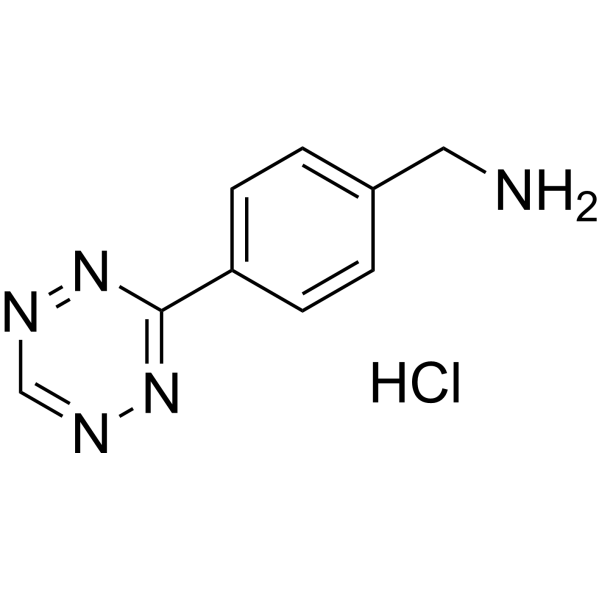
(4-(1,2,4,5-Tetrazin-3-yl)phenyl)methanamine (monohydrochloride); Tetrazine-NH2 monohydrochloride
|
Biochemical Assay Reagents
|
Cancer
|
|
Tetrazine-Amine monohydrochloride is the monohydrochloride form of Tetrazine-Amine (HY-W053709). Tetrazine-amine is a Tetrazine linker that can be used to covalently label living cells by cycloaddition . Tetrazine-Amine (monohydrochloride) is a click chemistry reagent, it contains a Tetrazine group that can undergo an inverse electron demand Diels-Alder reaction (iEDDA) with molecules containing TCO groups.
|
-
-
- HY-134599
-
|
|
Biochemical Assay Reagents
|
Cancer
|
|
(2E)-TCO-PNB ester is an active reaction substrate with the properties of trans-cyclooctene derivatives. The core chemical property of (2E)-TCO-PNB ester is its ability to undergo efficient inverse electron-demand Diels-Alder (IEDDA) cycloaddition with tetrazine groups. (2E)-TCO-PNB ester can be used in ligation reactions to verify the integrity of tetrazine groups, and also serves as a key synthetic raw material for the preparation of the prodrug TCO-DOX. (2E)-TCO-PNB ester is applied in research related to drug synthesis and bioorthogonal chemistry .
|
-

-
- HY-140313
-
|
|
ADC Linker
|
Cancer
|
|
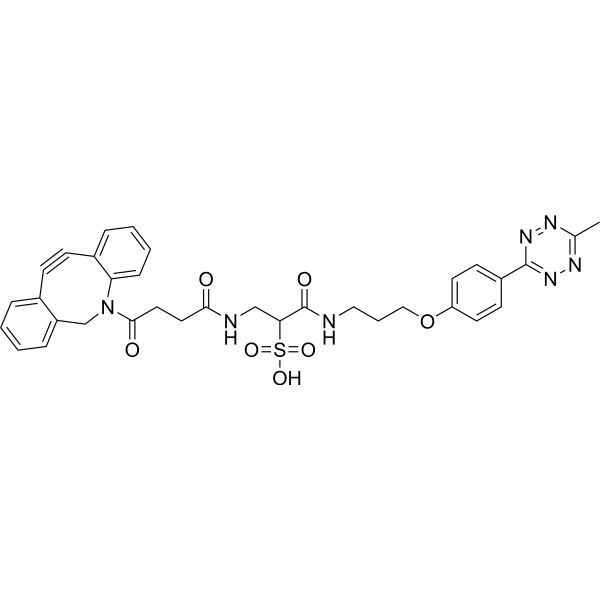
Methyltetrazine-DBCO is a non-cleavable ADC linker used in the synthesis of antibody-drug conjugates (ADCs) . Methyltetrazine-DBCO is a click chemistry reagent, it contains a DBCO group that can undergo strain-promoted alkyne-azide cycloaddition (SPAAC) with molecules containing Azide groups. Methyltetrazine-DBCO also contains a Tetrazine group that can undergo an inverse electron demand Diels-Alder reaction (iEDDA) with molecules containing TCO groups.
|
-
-
- HY-W017831
-
|
|
Biochemical Assay Reagents
Drug Intermediate
|
Others
|
|
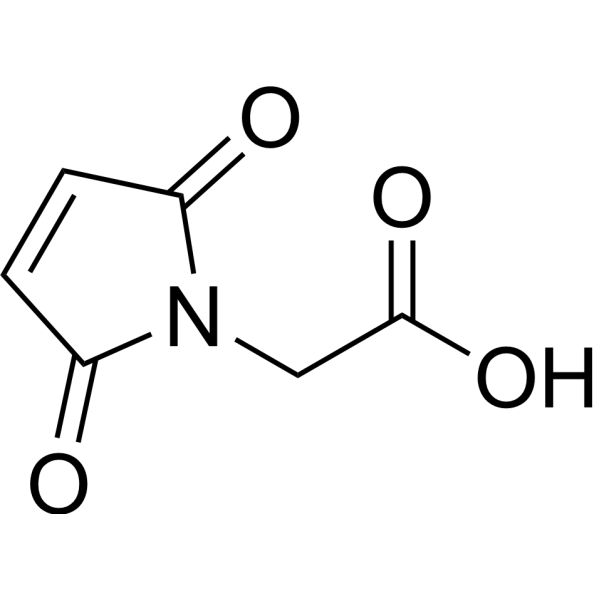
2-Maleimido acetic acid is a maleimide-containing carboxylic acid ligand used to prepare Pt(IV) complexes capable of undergoing Diels-Alder reaction with furan derivatives for drug targeting and delivery applications .
|
-
-
- HY-W053709
-
|
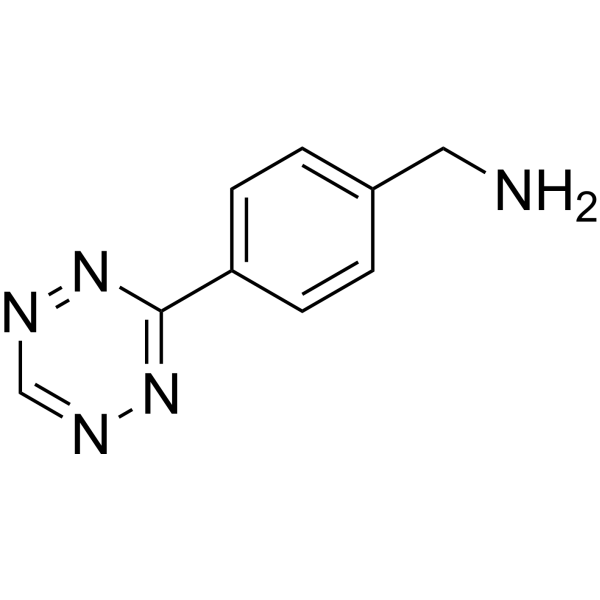
(4-(1,2,4,5-Tetrazin-3-yl)phenyl)methanamine; Tetrazine-NH2
|
MOFs
|
Cancer
|
|
Tetrazine-Amine ((4-(1,2,4,5-Tetrazin-3-yl)phenyl)methanamine) is a tetrazine linker that can be used to covalently label live cells through a cycloaddition . Tetrazine-Amine is a click chemistry reagent, it contains a Tetrazine group that can undergo an inverse electron demand Diels-Alder reaction (iEDDA) with molecules containing TCO groups.
|
-
-
- HY-D1071
-
|
|
Fluorescent Dye
|
Others
|
|
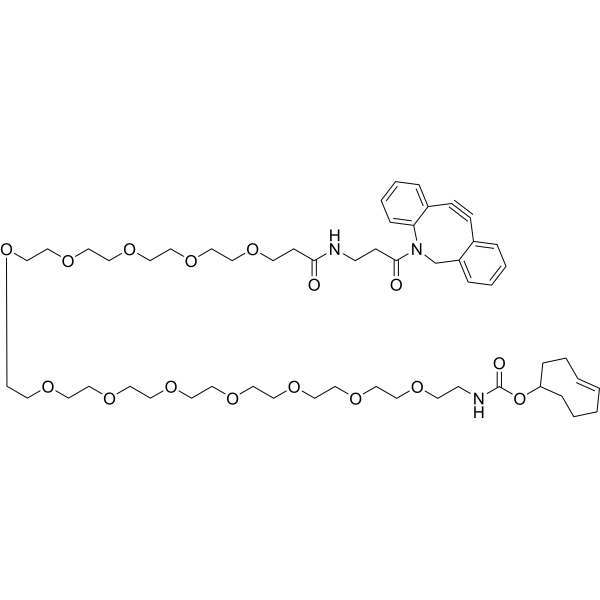
DBCO-PEG12-TCO cantains a TCO and a DBCO moiety. TCO group can specifically react with terrahydrazine. DBCO-PEG12-TCO is a click chemistry reagent, it contains a DBCO group that can undergo strain-promoted alkyne-azide cycloaddition (SPAAC) with molecules containing Azide groups. DBCO-PEG12-TCO also contains a TCO group that can undergo an inverse electron demand Diels-Alder reaction (iEDDA) with molecules containing Tetrazine groups.
|
-
-
- HY-133428
-
|
|
ADC Linker
|
Cancer
|
|
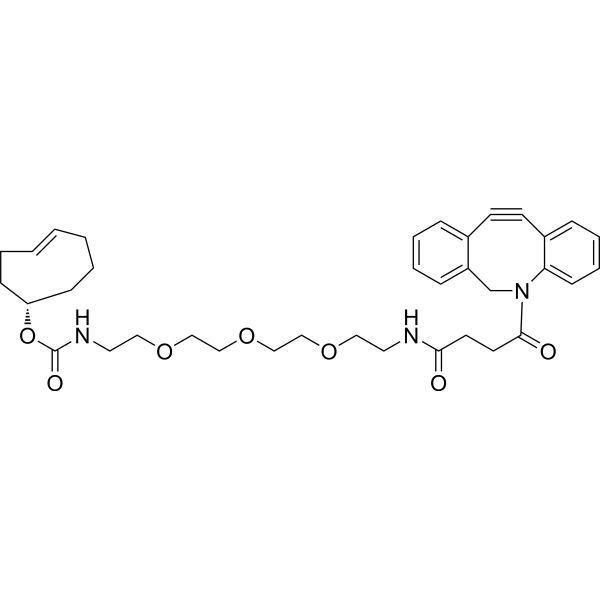
DBCO-PEG3-TCO is a non-cleavable 3 unit PEG ADC linker used in the synthesis of antibody-drug conjugates (ADCs) . DBCO-PEG3-TCO is a click chemistry reagent, it contains a DBCO group that can undergo strain-promoted alkyne-azide cycloaddition (SPAAC) with molecules containing Azide groups. DBCO-PEG3-TCO also contains a TCO group that can undergo an inverse electron demand Diels-Alder reaction (iEDDA) with molecules containing Tetrazine groups.
|
-
-
- HY-155887
-
|
DSPE-PEG-NH2, MW 3400 ammonium
|
Liposome
|
Cancer
|
|
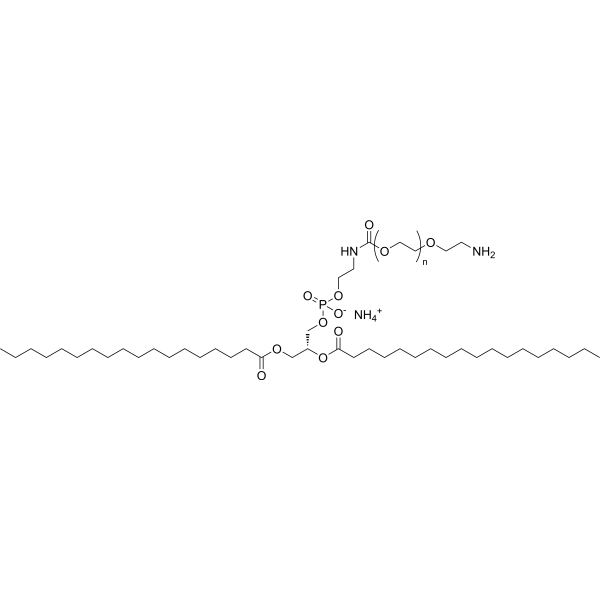
DSPE-PEG-Amine (DSPE-PEG-NH2), MW 3400 ammonium is an amino-functionalized PEGylated phospholipid. It serves not only as a key component for preparing σ receptor-targeted liposomes (such as anisamide-modified lipids) but also as a starting material for synthesizing click chemistry- and tumor-targeted lipids including DSPE-PEG-DBCO (HY-155788) and DSPE-PEG2000-TCO (HY-170704). DSPE-PEG-Amine, MW 3400 ammonium effectively modulates the ζ potential of nanoparticles, enables complexation with nucleic acids or proteins to protect DNA from nuclease degradation, and supports ligand conjugation on the nanoparticle surface. It is used in studies related to DU-145 tumors, breast cancer, and other relevant research .
|
-
-
- HY-151682
-
|
|
Amino Acid Derivatives
|
Others
|
|
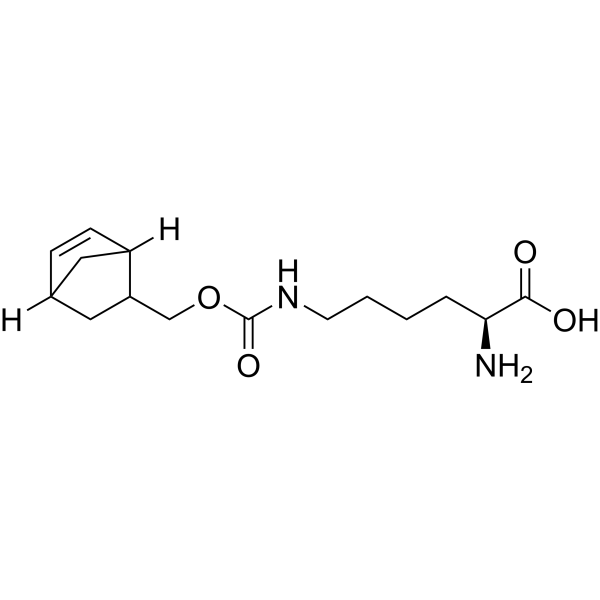
H-L-Lys(Norbornene-methoxycarbonyl)-OH is a Norbornene (HY-W013021)-derivatized lysine that can be click-functionalized. H-L-Lys(Norbornene-methoxycarbonyl)-OH can be used for the mild and selective modification of proteins in a copper-free click reaction .
|
-
-
- HY-D2744
-
|
|
Fluorescent Dye
|
Others
|
|
BP Fluor 488 TCO reacts with tetrazines to produce a stable, covalent linkage, also referred to as the inverse-electron demand Diels-Alder cycloaddition reaction. This reaction is extremely fast (k > 800 M-1 s-1), selective, biocompatible, and does not require Cu-catalyst or elevated temperatures. Such excellent reaction rate constants are unparalleled by any other bioorthogonal reaction pair described to date.
|
-

-
- HY-136079
-
|
|
ADC Linker
|
Cancer
|
|
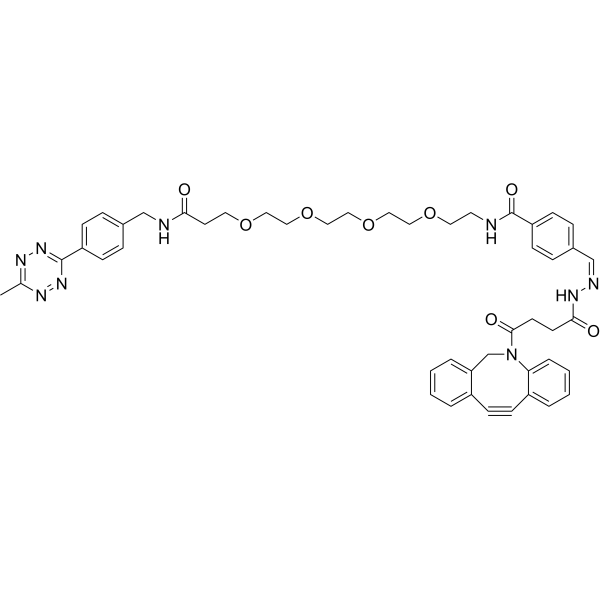
Methyltetrazine-PEG4-hydrazone-DBCO is a cleavable 4 unit PEG ADC linker used in the synthesis of antibody-drug conjugates (ADCs) . Methyltetrazine-PEG4-hydrazone-DBCO is a click chemistry reagent, it contains a DBCO group that can undergo strain-promoted alkyne-azide cycloaddition (SPAAC) with molecules containing Azide groups. Methyltetrazine-PEG4-hydrazone-DBCO also contains a Tetrazine group that can undergo an inverse electron demand Diels-Alder reaction (iEDDA) with molecules containing TCO groups.
|
-
-
- HY-140310
-
|
|
ADC Linker
PROTAC Linkers
|
Cancer
|
|
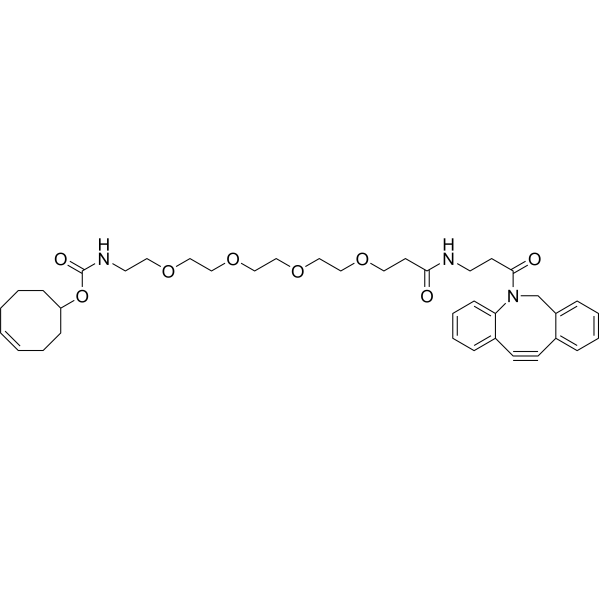
TCO-PEG4-DBCO is a PEG-based PROTAC linker can be used in the synthesis of PROTACs. TCO-PEG4-DBCO is a cleavable ADC linker used in the synthesis of antibody-drug conjugates (ADCs) . TCO-PEG4-DBCO is a click chemistry reagent, it contains a DBCO group that can undergo strain-promoted alkyne-azide cycloaddition (SPAAC) with molecules containing Azide groups. TCO-PEG4-DBCO also contains a TCO group that can undergo an inverse electron demand Diels-Alder reaction (iEDDA) with molecules containing Tetrazine groups.
|
-
-
- HY-151824
-
|
|
ADC Linker
|
Others
|
|
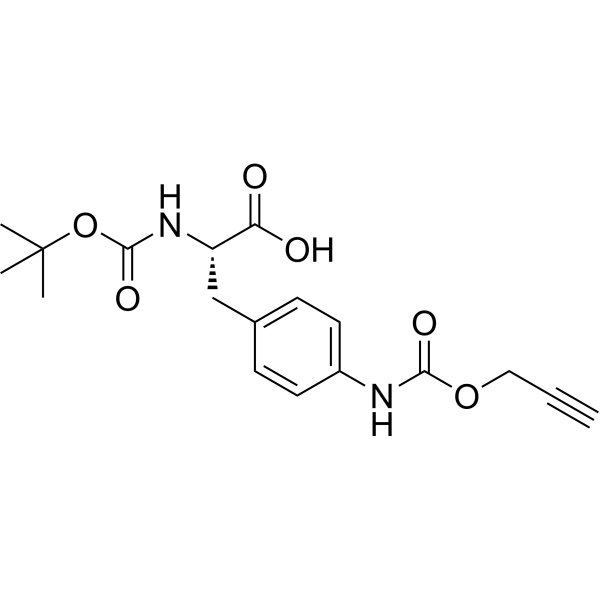
Boc-L-Phe(4-NH-Poc)-OH is a click chemistry reagent containing an azide group. Used as an orthogonally protected building block in peptide synthesis. Propargyloxycarbonyl, commonly abbreviated as Poc or Pryoc, can either be used as alkyne component for standard Click conjugation or in combination with tetrazine linkers in copper-free Diels-Alder type Click reactions. It also has applications as unusual protecting group for amines, hydroxy functions and as esters. All 3 are stable to neat TFA, but can be cleaved at ambient temperature with Co2(CO)8 in TFA:DCM. Deprotection with other transition metals like palladium have also been reported . Boc-L-Phe(4-NH-Poc)-OH is a click chemistry reagent, it contains an Alkyne group and can undergo copper-catalyzed azide-alkyne cycloaddition (CuAAc) with molecules containing Azide groups.
|
-
-
- HY-W714234
-
|
|
Biochemical Assay Reagents
|
Others
|
|
Endo-BCN CE-phosphoramidite is a stable and one of the most reactive cyclooctynes for copper-free click chemistry. Unlike dibenzocyclooctyne (DBCO), BCN is reactive both to azides (strain-promoted azyde-alkyne cycloaddition, SPAAC) and tetrazines (inverse electron demand Diels-Alder reaction, IEDDA).
|
-

-
- HY-140312
-
|
|
PROTAC Linkers
|
Cancer
|
|
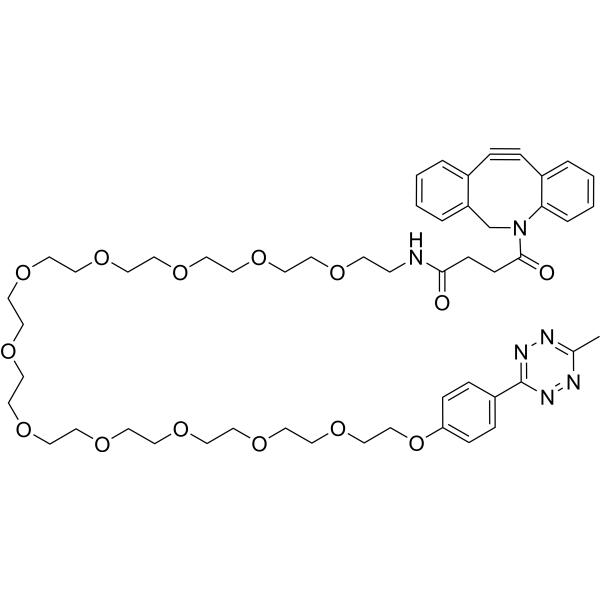
Methyltetrazine-PEG12-DBCO is a PEG-based PROTAC linker that can be used in the synthesis of PROTACs . Methyltetrazine-PEG12-DBCO is a click chemistry reagent, it contains a DBCO group that can undergo strain-promoted alkyne-azide cycloaddition (SPAAC) with molecules containing Azide groups. Methyltetrazine-PEG12-DBCO also contains a Tetrazine group that can undergo an inverse electron demand Diels-Alder reaction (iEDDA) with molecules containing TCO groups.
|
-
-
- HY-130508
-
|
|
PROTAC Linkers
|
Cancer
|
|
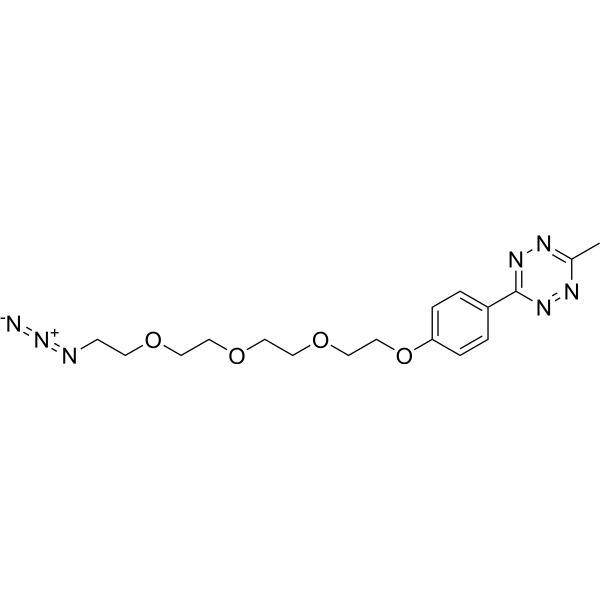
Methyltetrazine-Ph-PEG4-azide is a PEG-based PROTAC linker that can be used in the synthesis of PROTACs . Methyltetrazine-Ph-PEG4-azide is a click chemistry reagent, it contains a Tetrazine group that can undergo an inverse electron demand Diels-Alder reaction (iEDDA) with molecules containing TCO groups. It contains an azide group and can undergo copper-catalyzed azide-alkyne cycloaddition (CuAAc) with molecules containing alkyne groups. It can also undergo ring strain-promoted alkyne-azide cycloaddition (SPAAC) with molecules containing DBCO or BCN groups.
|
-
-
- HY-151837
-
|
|
ADC Linker
|
Others
|
|
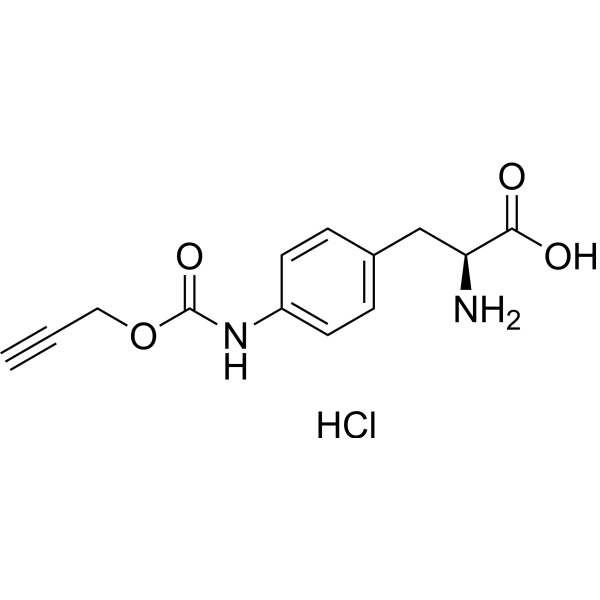
H-L-Phe(4-NH-Poc)-OH (hydrochloride) is a click chemistry reagent containing an azide group. Used as a modified Phe or Tyr analogue in protein and peptide biosynthesis. Propargyloxycarbonyl, commonly abbreviated as Poc or Pryoc, can either be used as alkyne component for standard Click conjugation or in combination with tetrazine linkers in copper-free Diels-Alder type Click reactions. It also has applications as unusual protecting group for amines, hydroxy functions and as esters. All 3 are stable to neat TFA, but can be cleaved at ambient temperature with Co2(CO)8 in TFA:DCM. Deprotection with other transition metals like palladium have also been reported . H-L-Phe(4-NH-Poc)-OH (hydrochloride) is a click chemistry reagent, it contains an Alkyne group and can undergo copper-catalyzed azide-alkyne cycloaddition (CuAAc) with molecules containing Azide groups.
|
-
-
- HY-140313A
-
|
|
ADC Linker
|
Cancer
|
|
Methyltetrazine-DBCO TEA is a non-cleavable ADC linker used in the synthesis of antibody-drug conjugates (ADCs). Methyltetrazine-DBCO TEA is a click chemistry reagent, it contains a DBCO group that can undergo strain-promoted alkyne-azide cycloaddition (SPAAC) with molecules containing Azide groups. Methyltetrazine-DBCO TEA also contains a Tetrazine group that can undergo an inverse electron demand Diels-Alder reaction (iEDDA) with molecules containing TCO groups .
|
-

-
- HY-151833
-
|
|
ADC Linker
|
Others
|
|
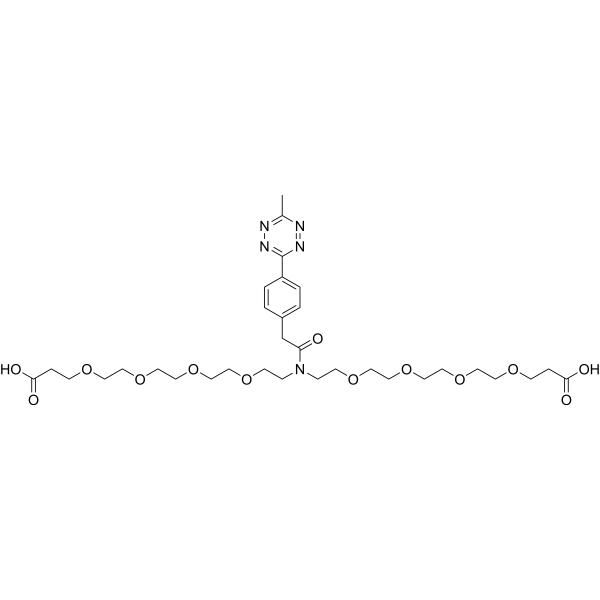
Methyltetrazine-amido-N-bis(PEG4-acid) is a click chemistry reagent containing an azide group. Methyltetrazine-amido-N-bis(PEG4-acid) is a PEG derivative that contains a methyltetrazine group and two acid groups. This reagent can react with TCO-containing compounds to form a stable covalent bond without the catalysis of Cu or elevated temperatures. The inverse-electron demand Diels-Alder cycloaddition reaction of TCO with tetrazines is the fastest bioorthogonal reaction with exceptional selectivity. The terminal carboxylic acid can react with primary amine groups in the presence of activators (e.g. EDC, or HATU) to form a stable amide bond. PEG linker increases the water solubility of the compound. Reagent grade, for research use only . Methyltetrazine-amido-N-bis(PEG4-acid) is a click chemistry reagent, it contains a Tetrazine group that can undergo an inverse electron demand Diels-Alder reaction (iEDDA) with molecules containing TCO groups.
|
-
-
- HY-W800708
-
|
|
Biochemical Assay Reagents
|
Others
|
|
N-(TCO)-N-bis(PEG4-acid) is a branched click chemistry reagent with a terminal TCO group and two terminal carboxylic acids. This reagent can react with tetrazine-containing molecule to form a stable covalent bond . The inverse-electron demand Diels-Alder cycloaddition reaction of TCO with tetrazines is the fastest bioorthogonal reaction with exceptional selectivity. The terminal carboxylic acids can react with primary amino groups in the presence of activators (e.g. EDC, HATU ).
|
-

-
- HY-W800721
-
|
|
Biochemical Assay Reagents
|
Others
|
|
Methyltetrazine-amido-bis-(carboxyethoxymethyl)-methane is a click chemistry PEG reagent which contains three carboxylic acid groups and a methyltetrazine group. This reagent can react with TCO-containing compounds to form a stable covalent bond without the catalysis of Cu or elevated temperatures. The inverse-electron demand Diels-Alder cycloaddition reaction of TCO with tetrazines is the fastest bioorthogonal reaction with exceptional selectivity. The terminal carboxylic acid can react with primary amine groups in the presence of activators (e.g. EDC, or HATU) to form a stable amide bond.
|
-

-
- HY-W800718
-
|
|
Biochemical Assay Reagents
|
Others
|
|
Methyltetrazine-amido-Tri-(acid-PEG1-ethoxymethyl)-methane is a click chemistry PEG reagent which contains three carboxylic acid groups and a methyltetrazine group. This reagent can react with TCO-containing compounds to form a stable covalent bond without the catalysis of Cu or elevated temperatures. The inverse-electron demand Diels-Alder cycloaddition reaction of TCO with tetrazines is the fastest bioorthogonal reaction with exceptional selectivity. The terminal carboxylic acid can react with primary amine groups in the presence of activators (e.g. EDC, or HATU) to form a stable amide bond.
|
-

-
- HY-W422109
-
|
|
Drug Derivative
|
Others
|
|
4-(6-Methyl-1,2,4,5-tetrazin-3-yl) benzoic acid is an asymmetric tetrazine derivative and a bioorthogonal reaction partner. 4-(6-Methyl-1,2,4,5-tetrazin-3-yl) benzoic acid can be conjugated with Bevacizumab (HY-P9906) via EDC/NHS activation while retaining the VEGF-binding affinity of the antibody, thus constructing a targeting agent for pretargeted immuno-PET/NIRF imaging .
|
-

| Cat. No. |
Product Name |
Type |
-
- HY-D1071
-
|
|
Fluorescent Dyes
|
|
DBCO-PEG12-TCO cantains a TCO and a DBCO moiety. TCO group can specifically react with terrahydrazine. DBCO-PEG12-TCO is a click chemistry reagent, it contains a DBCO group that can undergo strain-promoted alkyne-azide cycloaddition (SPAAC) with molecules containing Azide groups. DBCO-PEG12-TCO also contains a TCO group that can undergo an inverse electron demand Diels-Alder reaction (iEDDA) with molecules containing Tetrazine groups.
|
-
- HY-D2744
-
|
|
Fluorescent Dyes
|
|
BP Fluor 488 TCO reacts with tetrazines to produce a stable, covalent linkage, also referred to as the inverse-electron demand Diels-Alder cycloaddition reaction. This reaction is extremely fast (k > 800 M-1 s-1), selective, biocompatible, and does not require Cu-catalyst or elevated temperatures. Such excellent reaction rate constants are unparalleled by any other bioorthogonal reaction pair described to date.
|
| Cat. No. |
Product Name |
Type |
-
- HY-155887
-
|
DSPE-PEG-NH2, MW 3400 ammonium
|
Biochemical Assay Reagents
|
|
DSPE-PEG-Amine (DSPE-PEG-NH2), MW 3400 ammonium is an amino-functionalized PEGylated phospholipid. It serves not only as a key component for preparing σ receptor-targeted liposomes (such as anisamide-modified lipids) but also as a starting material for synthesizing click chemistry- and tumor-targeted lipids including DSPE-PEG-DBCO (HY-155788) and DSPE-PEG2000-TCO (HY-170704). DSPE-PEG-Amine, MW 3400 ammonium effectively modulates the ζ potential of nanoparticles, enables complexation with nucleic acids or proteins to protect DNA from nuclease degradation, and supports ligand conjugation on the nanoparticle surface. It is used in studies related to DU-145 tumors, breast cancer, and other relevant research .
|
| Cat. No. |
Product Name |
|
Classification |
-
- HY-W053709A
-
|
(4-(1,2,4,5-Tetrazin-3-yl)phenyl)methanamine (monohydrochloride); Tetrazine-NH2 monohydrochloride
|
|
Tetrazine
|
|
Tetrazine-Amine monohydrochloride is the monohydrochloride form of Tetrazine-Amine (HY-W053709). Tetrazine-amine is a Tetrazine linker that can be used to covalently label living cells by cycloaddition . Tetrazine-Amine (monohydrochloride) is a click chemistry reagent, it contains a Tetrazine group that can undergo an inverse electron demand Diels-Alder reaction (iEDDA) with molecules containing TCO groups.
|
-
- HY-140313
-
|
|
|
DBCO
ADC Synthesis
Tetrazine
|
|
Methyltetrazine-DBCO is a non-cleavable ADC linker used in the synthesis of antibody-drug conjugates (ADCs) . Methyltetrazine-DBCO is a click chemistry reagent, it contains a DBCO group that can undergo strain-promoted alkyne-azide cycloaddition (SPAAC) with molecules containing Azide groups. Methyltetrazine-DBCO also contains a Tetrazine group that can undergo an inverse electron demand Diels-Alder reaction (iEDDA) with molecules containing TCO groups.
|
-
- HY-W053709
-
|
(4-(1,2,4,5-Tetrazin-3-yl)phenyl)methanamine; Tetrazine-NH2
|
|
Tetrazine
|
|
Tetrazine-Amine ((4-(1,2,4,5-Tetrazin-3-yl)phenyl)methanamine) is a tetrazine linker that can be used to covalently label live cells through a cycloaddition . Tetrazine-Amine is a click chemistry reagent, it contains a Tetrazine group that can undergo an inverse electron demand Diels-Alder reaction (iEDDA) with molecules containing TCO groups.
|
-
- HY-D1071
-
|
|
|
DBCO
|
|
DBCO-PEG12-TCO cantains a TCO and a DBCO moiety. TCO group can specifically react with terrahydrazine. DBCO-PEG12-TCO is a click chemistry reagent, it contains a DBCO group that can undergo strain-promoted alkyne-azide cycloaddition (SPAAC) with molecules containing Azide groups. DBCO-PEG12-TCO also contains a TCO group that can undergo an inverse electron demand Diels-Alder reaction (iEDDA) with molecules containing Tetrazine groups.
|
-
- HY-133428
-
|
|
|
DBCO
ADC Synthesis
TCO
|
|
DBCO-PEG3-TCO is a non-cleavable 3 unit PEG ADC linker used in the synthesis of antibody-drug conjugates (ADCs) . DBCO-PEG3-TCO is a click chemistry reagent, it contains a DBCO group that can undergo strain-promoted alkyne-azide cycloaddition (SPAAC) with molecules containing Azide groups. DBCO-PEG3-TCO also contains a TCO group that can undergo an inverse electron demand Diels-Alder reaction (iEDDA) with molecules containing Tetrazine groups.
|
-
- HY-151682
-
|
|
|
TCO
Labeling and Fluorescence Imaging
|
|
H-L-Lys(Norbornene-methoxycarbonyl)-OH is a Norbornene (HY-W013021)-derivatized lysine that can be click-functionalized. H-L-Lys(Norbornene-methoxycarbonyl)-OH can be used for the mild and selective modification of proteins in a copper-free click reaction .
|
-
- HY-D2744
-
|
|
|
TCO
|
|
BP Fluor 488 TCO reacts with tetrazines to produce a stable, covalent linkage, also referred to as the inverse-electron demand Diels-Alder cycloaddition reaction. This reaction is extremely fast (k > 800 M-1 s-1), selective, biocompatible, and does not require Cu-catalyst or elevated temperatures. Such excellent reaction rate constants are unparalleled by any other bioorthogonal reaction pair described to date.
|
-
- HY-136079
-
|
|
|
DBCO
Tetrazine
ADC Synthesis
|
|
Methyltetrazine-PEG4-hydrazone-DBCO is a cleavable 4 unit PEG ADC linker used in the synthesis of antibody-drug conjugates (ADCs) . Methyltetrazine-PEG4-hydrazone-DBCO is a click chemistry reagent, it contains a DBCO group that can undergo strain-promoted alkyne-azide cycloaddition (SPAAC) with molecules containing Azide groups. Methyltetrazine-PEG4-hydrazone-DBCO also contains a Tetrazine group that can undergo an inverse electron demand Diels-Alder reaction (iEDDA) with molecules containing TCO groups.
|
-
- HY-140310
-
|
|
|
DBCO
PROTAC Synthesis
ADC Synthesis
TCO
|
|
TCO-PEG4-DBCO is a PEG-based PROTAC linker can be used in the synthesis of PROTACs. TCO-PEG4-DBCO is a cleavable ADC linker used in the synthesis of antibody-drug conjugates (ADCs) . TCO-PEG4-DBCO is a click chemistry reagent, it contains a DBCO group that can undergo strain-promoted alkyne-azide cycloaddition (SPAAC) with molecules containing Azide groups. TCO-PEG4-DBCO also contains a TCO group that can undergo an inverse electron demand Diels-Alder reaction (iEDDA) with molecules containing Tetrazine groups.
|
-
- HY-151824
-
|
|
|
Alkynes
|
|
Boc-L-Phe(4-NH-Poc)-OH is a click chemistry reagent containing an azide group. Used as an orthogonally protected building block in peptide synthesis. Propargyloxycarbonyl, commonly abbreviated as Poc or Pryoc, can either be used as alkyne component for standard Click conjugation or in combination with tetrazine linkers in copper-free Diels-Alder type Click reactions. It also has applications as unusual protecting group for amines, hydroxy functions and as esters. All 3 are stable to neat TFA, but can be cleaved at ambient temperature with Co2(CO)8 in TFA:DCM. Deprotection with other transition metals like palladium have also been reported . Boc-L-Phe(4-NH-Poc)-OH is a click chemistry reagent, it contains an Alkyne group and can undergo copper-catalyzed azide-alkyne cycloaddition (CuAAc) with molecules containing Azide groups.
|
-
- HY-140312
-
|
|
|
Tetrazine
DBCO
PROTAC Synthesis
|
|
Methyltetrazine-PEG12-DBCO is a PEG-based PROTAC linker that can be used in the synthesis of PROTACs . Methyltetrazine-PEG12-DBCO is a click chemistry reagent, it contains a DBCO group that can undergo strain-promoted alkyne-azide cycloaddition (SPAAC) with molecules containing Azide groups. Methyltetrazine-PEG12-DBCO also contains a Tetrazine group that can undergo an inverse electron demand Diels-Alder reaction (iEDDA) with molecules containing TCO groups.
|
-
- HY-130508
-
|
|
|
Tetrazine
Azide
PROTAC Synthesis
|
|
Methyltetrazine-Ph-PEG4-azide is a PEG-based PROTAC linker that can be used in the synthesis of PROTACs . Methyltetrazine-Ph-PEG4-azide is a click chemistry reagent, it contains a Tetrazine group that can undergo an inverse electron demand Diels-Alder reaction (iEDDA) with molecules containing TCO groups. It contains an azide group and can undergo copper-catalyzed azide-alkyne cycloaddition (CuAAc) with molecules containing alkyne groups. It can also undergo ring strain-promoted alkyne-azide cycloaddition (SPAAC) with molecules containing DBCO or BCN groups.
|
-
- HY-151837
-
|
|
|
Alkynes
|
|
H-L-Phe(4-NH-Poc)-OH (hydrochloride) is a click chemistry reagent containing an azide group. Used as a modified Phe or Tyr analogue in protein and peptide biosynthesis. Propargyloxycarbonyl, commonly abbreviated as Poc or Pryoc, can either be used as alkyne component for standard Click conjugation or in combination with tetrazine linkers in copper-free Diels-Alder type Click reactions. It also has applications as unusual protecting group for amines, hydroxy functions and as esters. All 3 are stable to neat TFA, but can be cleaved at ambient temperature with Co2(CO)8 in TFA:DCM. Deprotection with other transition metals like palladium have also been reported . H-L-Phe(4-NH-Poc)-OH (hydrochloride) is a click chemistry reagent, it contains an Alkyne group and can undergo copper-catalyzed azide-alkyne cycloaddition (CuAAc) with molecules containing Azide groups.
|
-
- HY-140313A
-
|
|
|
DBCO
|
|
Methyltetrazine-DBCO TEA is a non-cleavable ADC linker used in the synthesis of antibody-drug conjugates (ADCs). Methyltetrazine-DBCO TEA is a click chemistry reagent, it contains a DBCO group that can undergo strain-promoted alkyne-azide cycloaddition (SPAAC) with molecules containing Azide groups. Methyltetrazine-DBCO TEA also contains a Tetrazine group that can undergo an inverse electron demand Diels-Alder reaction (iEDDA) with molecules containing TCO groups .
|
-
- HY-151833
-
|
|
|
Tetrazine
|
|
Methyltetrazine-amido-N-bis(PEG4-acid) is a click chemistry reagent containing an azide group. Methyltetrazine-amido-N-bis(PEG4-acid) is a PEG derivative that contains a methyltetrazine group and two acid groups. This reagent can react with TCO-containing compounds to form a stable covalent bond without the catalysis of Cu or elevated temperatures. The inverse-electron demand Diels-Alder cycloaddition reaction of TCO with tetrazines is the fastest bioorthogonal reaction with exceptional selectivity. The terminal carboxylic acid can react with primary amine groups in the presence of activators (e.g. EDC, or HATU) to form a stable amide bond. PEG linker increases the water solubility of the compound. Reagent grade, for research use only . Methyltetrazine-amido-N-bis(PEG4-acid) is a click chemistry reagent, it contains a Tetrazine group that can undergo an inverse electron demand Diels-Alder reaction (iEDDA) with molecules containing TCO groups.
|
-
- HY-W422109
-
|
|
|
Tetrazine
|
|
4-(6-Methyl-1,2,4,5-tetrazin-3-yl) benzoic acid is an asymmetric tetrazine derivative and a bioorthogonal reaction partner. 4-(6-Methyl-1,2,4,5-tetrazin-3-yl) benzoic acid can be conjugated with Bevacizumab (HY-P9906) via EDC/NHS activation while retaining the VEGF-binding affinity of the antibody, thus constructing a targeting agent for pretargeted immuno-PET/NIRF imaging .
|
| Cat. No. |
Product Name |
|
Classification |
-
- HY-155887
-
|
DSPE-PEG-NH2, MW 3400 ammonium
|
|
Pegylated Lipids
|
|
DSPE-PEG-Amine (DSPE-PEG-NH2), MW 3400 ammonium is an amino-functionalized PEGylated phospholipid. It serves not only as a key component for preparing σ receptor-targeted liposomes (such as anisamide-modified lipids) but also as a starting material for synthesizing click chemistry- and tumor-targeted lipids including DSPE-PEG-DBCO (HY-155788) and DSPE-PEG2000-TCO (HY-170704). DSPE-PEG-Amine, MW 3400 ammonium effectively modulates the ζ potential of nanoparticles, enables complexation with nucleic acids or proteins to protect DNA from nuclease degradation, and supports ligand conjugation on the nanoparticle surface. It is used in studies related to DU-145 tumors, breast cancer, and other relevant research .
|
Your information is safe with us. * Required Fields.
Inquiry Information
- Product Name:
- Cat. No.:
- Quantity:
- MCE Japan Authorized Agent:








