



DSPE-PEG-Amine, MW 3400 ammonium

Based on 1 Customer Validation
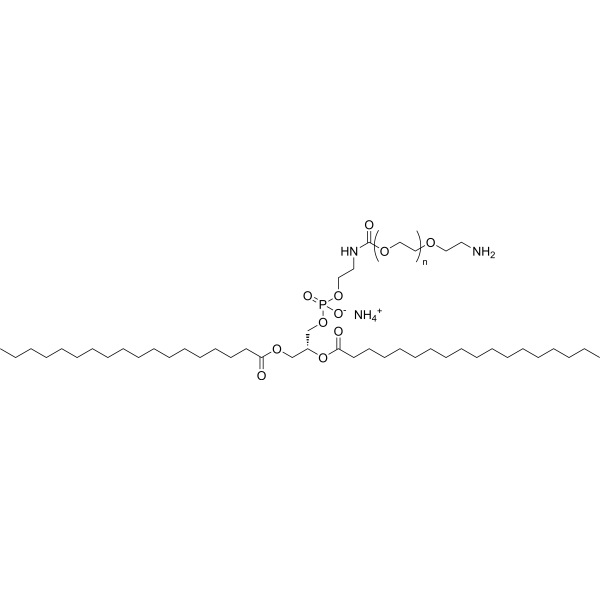
DSPE-PEG-Amine (DSPE-PEG-NH2), MW 3400 ammonium is an amino-functionalized PEGylated phospholipid. It serves not only as a key component for preparing σ receptor-targeted liposomes (such as anisamide-modified lipids) but also as a starting material for synthesizing click chemistry- and tumor-targeted lipids including DSPE-PEG-DBCO (HY-155788) and DSPE-PEG2000-TCO (HY-170704). DSPE-PEG-Amine, MW 3400 ammonium effectively modulates the ζ potential of nanoparticles, enables complexation with nucleic acids or proteins to protect DNA from nuclease degradation, and supports ligand conjugation on the nanoparticle surface. It is used in studies related to DU-145 tumors, breast cancer, and other relevant research.
For research use only. We do not sell to patients.
- Purity : 99.21%
- CAS No.: 474922-26-4
- Formula: (C2H4O)nN2O10P.NH3
- Molecular Weight:3400 (Average)
-
Storage:
-20°C, sealed storage, away from moisture
* In solvent : -80°C, 6 months; -20°C, 1 month (sealed storage, away from moisture)

To place orders, for customer services and technical support, please contact: MedChemExpress USA
Tel: 609-228-6898 E-mail: [email protected] [email protected]


-
 Biological Activity
-
Chemical Information
-
Solvent & Solubility
- Purity & Documentation
- References
-
 Help & FAQs


-
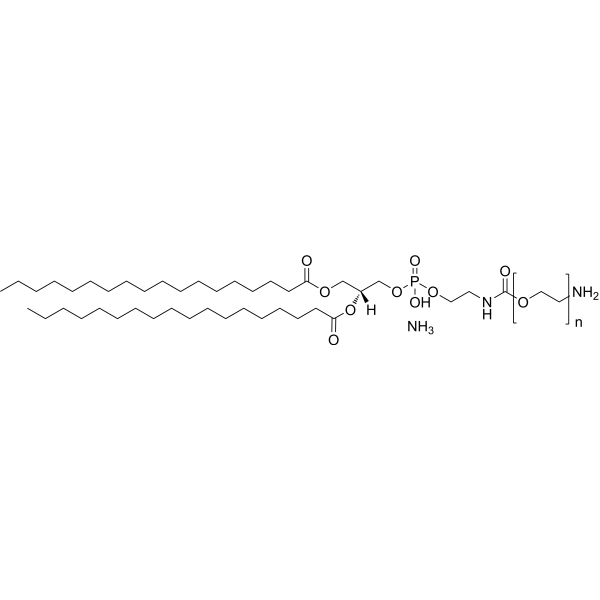
HY-125924
DSPE-PEG-Amine, MW 2000 ammonium -
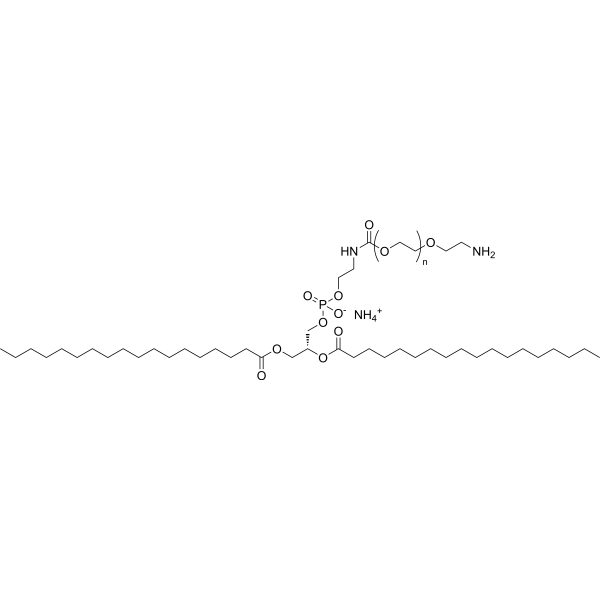
HY-W440823A
DSPE-PEG1000-Amine ammonium -
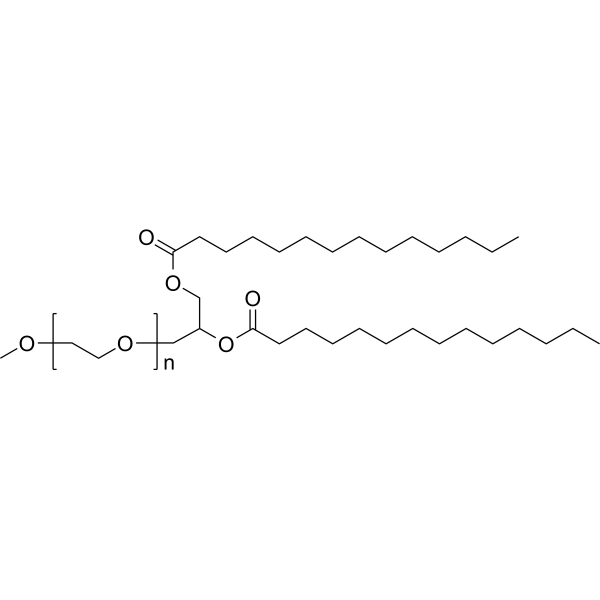
HY-112764
mPEG2000-DMG -

HY-125924A
DSPE-PEG20000-Amine ammonium -
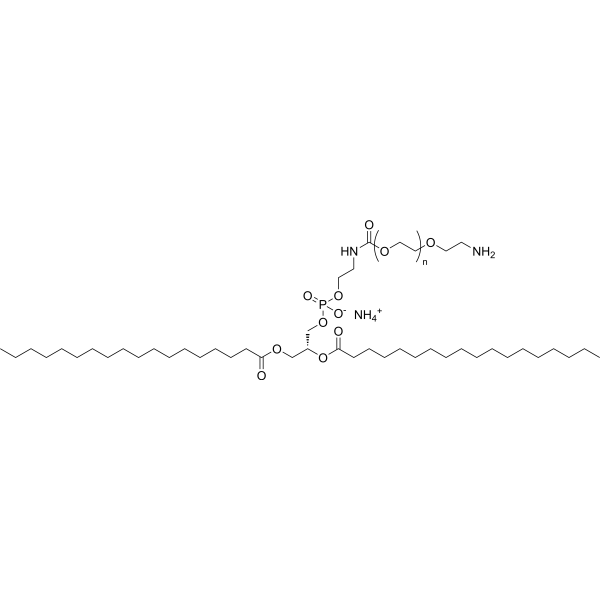
HY-155907
DSPE-PEG5000-Amine ammonium -
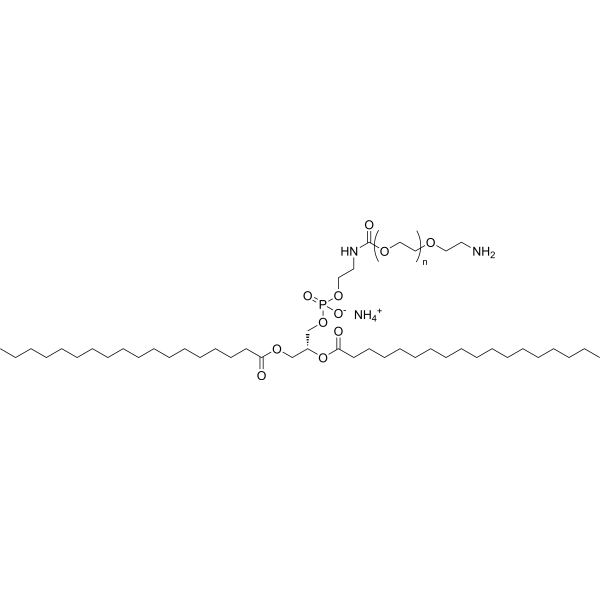
HY-155908
DSPE-PEG10000-Amine ammonium -
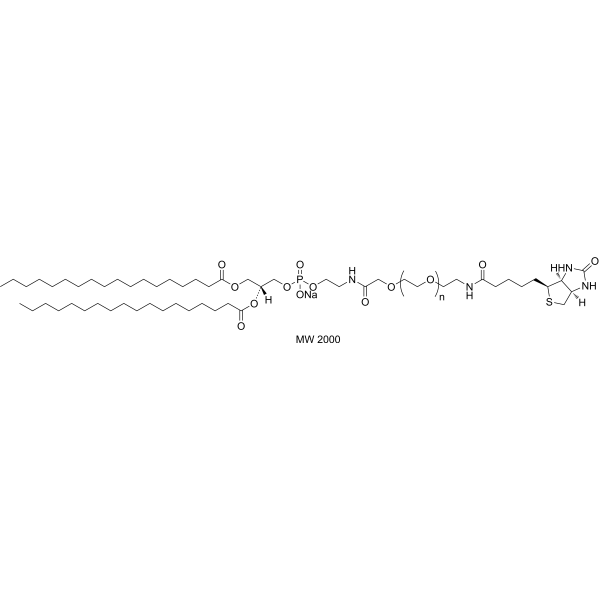
HY-140736
DSPE-PEG2000-Biotin -
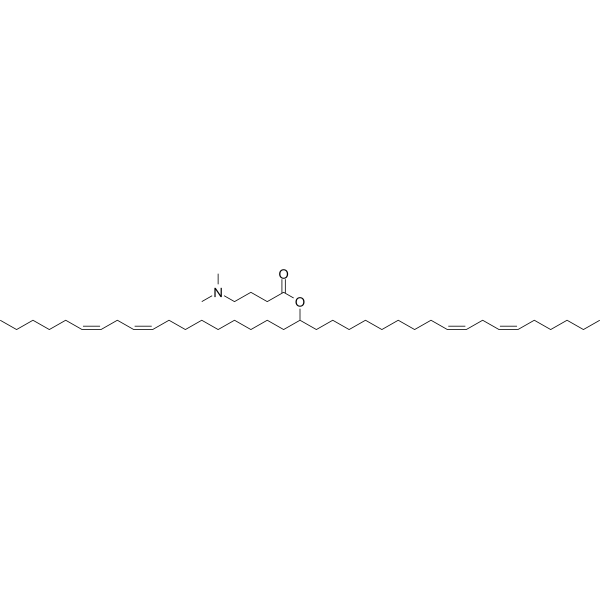
HY-112251
D-Lin-MC3-DMA -

HY-112764GL
mPEG2000-DMG (GMP Like) -
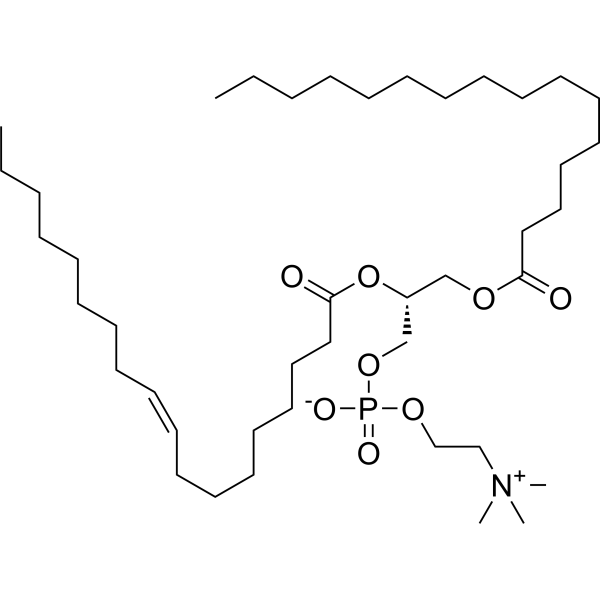
HY-130462
1-Palmitoyl-2-oleoyl-sn-glycero-3-PC -
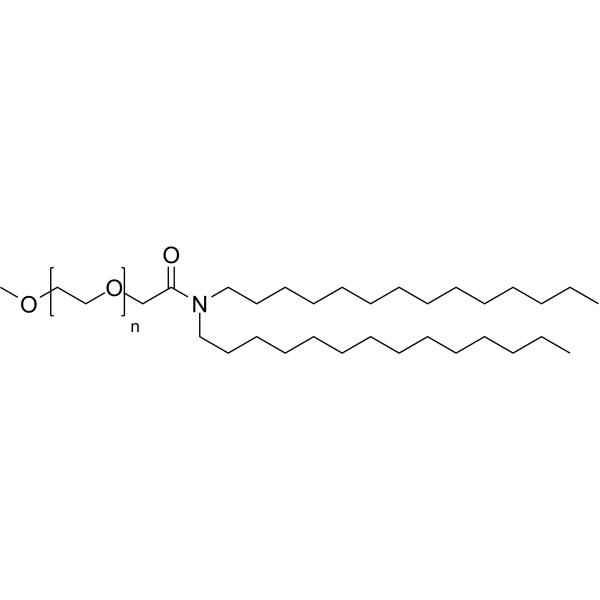
HY-138300
ALC-0159 -

HY-130462R
1-Palmitoyl-2-oleoyl-sn-glycero-3-PC (Standard)


Biological Activity
Description
In Vitro
DSPE-PEG-Amine, MW 3400 ammonium can react with sulfo-NHS-DBCO via an amide bond to form DSPE-PEG-DBCO, and liposomes containing this lipid can successfully target azide-modified A549 tumor cells in vitro through copper-free click chemistry[1].
DSPE-PEG-Amine, MW 3400 ammonium (0.12 mg) can impart a positive surface charge to PLGA-lecithin-PEG core-shell nanoparticles while maintaining an average particle size of approximately 105 nm, which distinguishes them from negatively charged nanoparticles prepared with other DSPE-PEG end groups[2].
MedChemExpress (MCE) has not independently confirmed the accuracy of these methods. They are for reference only.
In Vivo
DBCO-liposomes (prepared using DSPE-PEG-Amine, MW 3400 ammonium) can successfully target azide-modified A549 tumors in immunocompetent mice via copper-free click chemistry[1].
MedChemExpress (MCE) has not independently confirmed the accuracy of these methods. They are for reference only.


Chemical Information
-
CAS No. 474922-26-4
-
Appearance Solid
-
Molecular Weight 3400 (Average)
-
Formula (C2H4O)nN2O10P.NH3
-
Color White to off-white
-
SMILES
O=C(O[C@@H](COP(OCCNC(OCCOCCN)=O)([O-])=O)COC(CCCCCCCCCCCCCCCCC)=O)CCCCCCCCCCCCCCCCC.[NH4+].[n]
-
Synonyms
DSPE-PEG-NH2, MW 3400 ammonium
-
Shipping
Room temperature in continental US; may vary elsewhere.
-
Storage
-20°C, sealed storage, away from moisture
* In solvent : -80°C, 6 months; -20°C, 1 month (sealed storage, away from moisture)


Solvent & Solubility
In Vitro:
Ethanol : 100 mg/mL (Need ultrasonic)
In Vivo:
Select the appropriate dissolution method based on your experimental animal and administration route.
- For the following dissolution methods, please ensure to first prepare a clear stock solution using an In Vitro approach and then sequentially add co-solvents:
- To ensure reliable experimental results, the clarified stock solution can be appropriately stored based on storage conditions. As for the working solution for In Vivo experiments, it is recommended to prepare freshly and use it on the same day.
- The percentages shown for the solvents indicate their volumetric ratio in the final prepared solution. If precipitation or phase separation occurs during preparation, heat and/or sonication can be used to aid dissolution.
Add each solvent one by one: 10% EtOH 40% PEG300 5% Tween-80 45% Saline
Solubility: ≥ 5 mg/mL; Clear solution
This protocol yields a clear solution of ≥ 5 mg/mL (saturation unknown).
Taking 1 mL working solution as an example, add 100 μL EtOH stock solution (50.0 mg/mL) to 400 μL PEG300, and mix evenly; then add 50 μL Tween-80 and mix evenly; then add 450 μL Saline to adjust the volume to 1 mL.
Preparation of Saline: Dissolve 0.9 g sodium chloride in ddH₂O and dilute to 100 mL to obtain a clear Saline solution.
Add each solvent one by one: 10% EtOH 90% (20% SBE-β-CD in Saline)
Solubility: ≥ 5 mg/mL; Clear solution
This protocol yields a clear solution of ≥ 5 mg/mL (saturation unknown).
Taking 1 mL working solution as an example, add 100 μL EtOH stock solution (50.0 mg/mL) to 900 μL 20% SBE-β-CD in Saline, and mix evenly.
Preparation of 20% SBE-β-CD in Saline (4°C, storage for one week): 2 g SBE-β-CD powder is dissolved in 10 mL Saline, completely dissolve until clear.
Add each solvent one by one: 10% EtOH 90% Corn Oil
Solubility: 5 mg/mL; Suspended solution; Need ultrasonic
This protocol yields a suspended solution of 5 mg/mL. Suspended solution can be used for oral and intraperitoneal injection.
Taking 1 mL working solution as an example, add 100 μL EtOH stock solution (50.0 mg/mL) to 900 μL Corn oil, and mix evenly.
In Vivo Dissolution Calculator
Please enter the basic information of animal experiments:
-
-
-
-
Recommended: Prepare an additional quantity of animals to account for potential losses during experiments.
Working solution concentration: 0.22 mg/mL


Purity & Documentation
-
Data Sheet (272 KB)
-
SDS (394 KB)
- English - EN (394 KB)
- Français - FR (394 KB)
- Deutsch - DE (394 KB)
- Norwegian - NO (394 KB)
- Español - ES (394 KB)
- Swedish - SV (394 KB)
- Italian - IT (394 KB)
- Korean - KR (394 KB)
- Portuguese - PT (394 KB)
-
Handling Instructions (2659 KB)
References

Calculators
Concentration (start) × Volume (start) = Concentration (final) × Volume (final)


DSPE-PEG-Amine, MW 3400 ammonium Related Classifications
HY-155887 Related Classifications
 Powered by Bioz
Keywords
- DSPE-PEG-Amine, MW 3400
- 474922-26-4
- DSPE-PEG-NH2, MW 3400
- Liposome
- A549 tumor cells
- breast cancer
- nanoparticle surface charge tuning
- DU-145 tumors
- sigma receptor
- copper-free click chemistry
- immunocompetent mice
- inverse electron demand Diels-Alder cycloaddition
- targeted liposome preparation
- nude mouse DU-145 prostate cancer xenograft model
- Inhibitor
- inhibitor
- inhibit