



DSPE-PEG2000-Biotin

Based on 1 Customer Validation
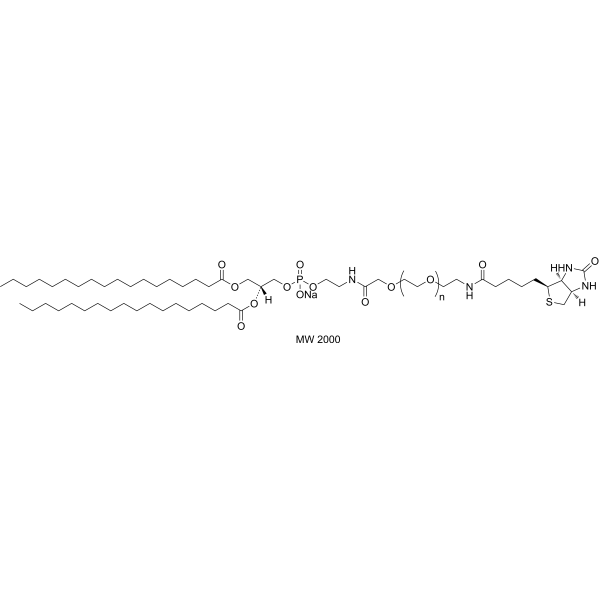
DSPE-PEG2000-Biotin is a biotin-labeled PEG derivative composed of phospholipid (DSPE), a hydrophilic polyethylene glycol chain (PEG2000) and a biotin tag. DSPE-PEG2000-Biotin is widely used in scientific research for constructing targeted liposomes, micelles and lipid nanoparticles for drug delivery and cell binding experiments.
For research use only. We do not sell to patients.
- Purity : 99.93%
- CAS No.: 385437-57-0
- Molecular Weight:2000 (Average)
-
Storage:Powder -20°C, 3 years ; In solvent -80°C, 6 months , -20°C, 1 month

To place orders, for customer services and technical support, please contact: MedChemExpress USA
Tel: 609-228-6898 E-mail: [email protected] [email protected]


-
 Biological Activity
-
Chemical Information
-
Solvent & Solubility
- Purity & Documentation
- References
-
 Help & FAQs


-
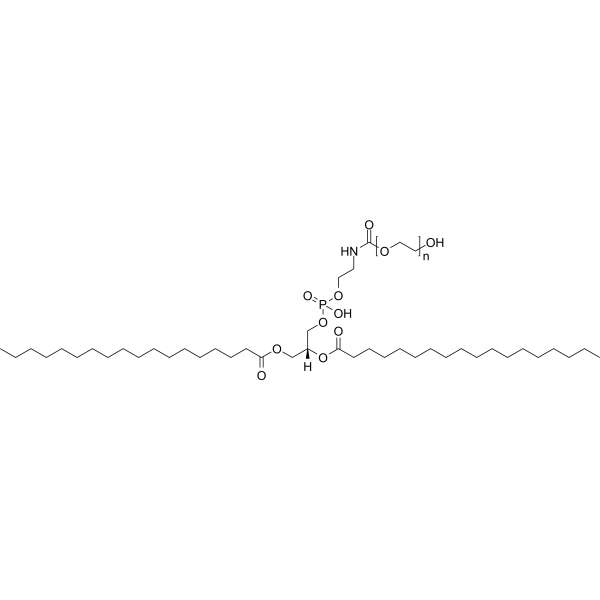
HY-142979
DSPE-PEG 2000PEG Lipid -
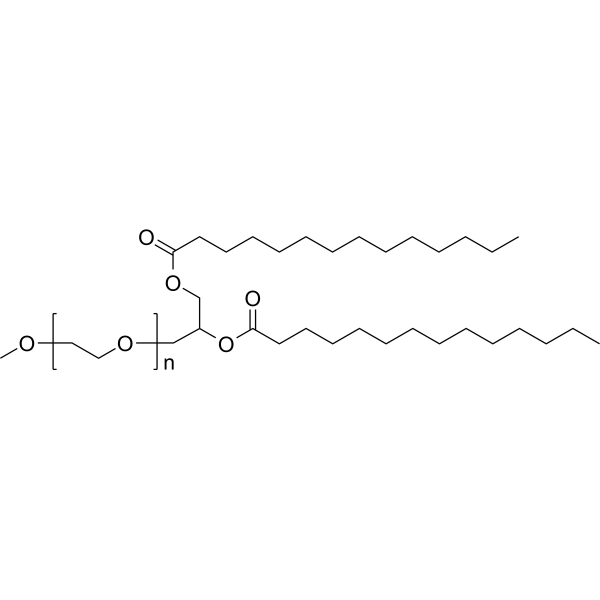
HY-112764
mPEG2000-DMGLiposome -
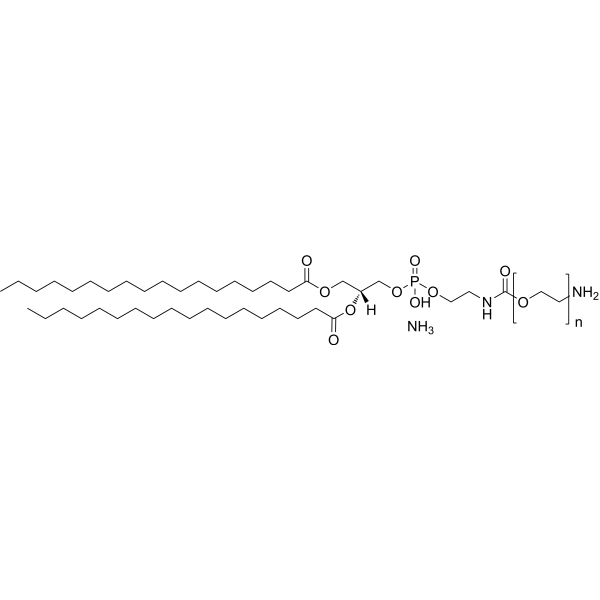
HY-125924
DSPE-PEG-Amine, MW 2000 ammoniumSolid Lipid Nanoparticles Surface-Modifier -

HY-W040193
DSPCLiposome Compound -
HY-140736A
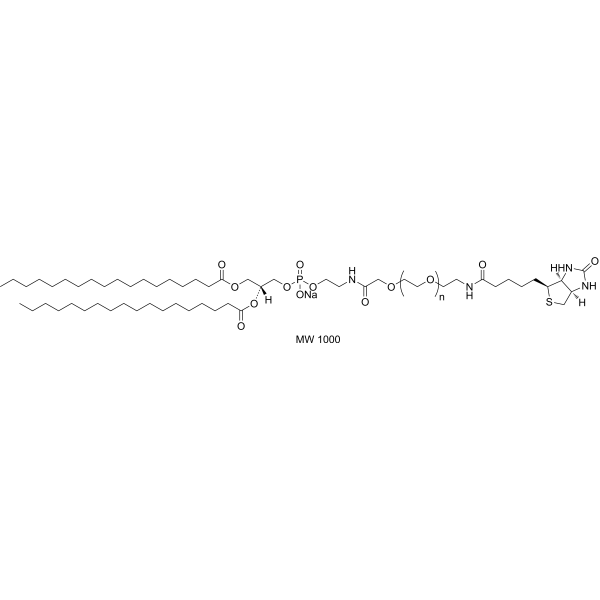
DSPE-PEG1000-BiotinLipid-Polymer Conjugat -
HY-140736B
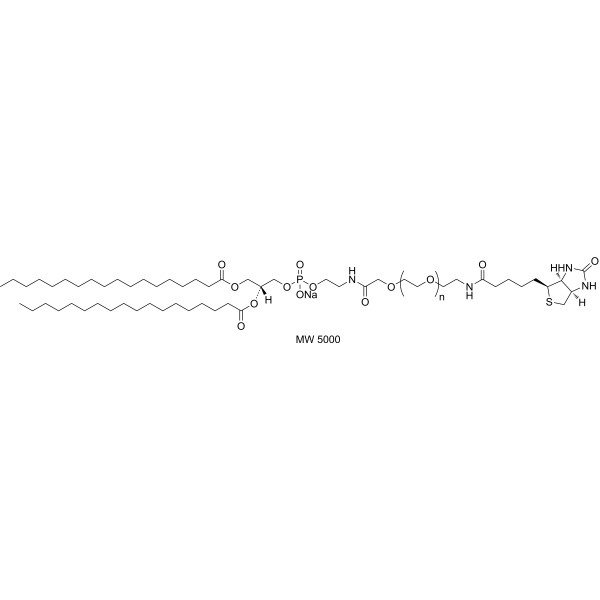
DSPE-PEG5000-BiotinLipid-Polymer Conjugat -
HY-W440823A
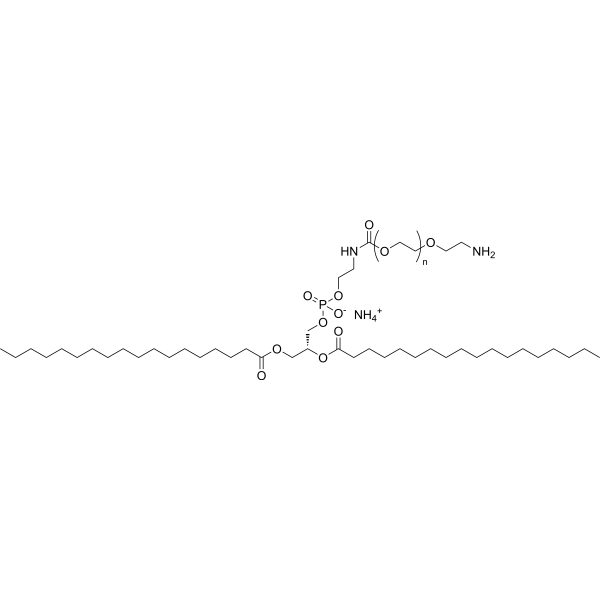
DSPE-PEG1000-Amine ammoniumPEG Derivative -
HY-112530
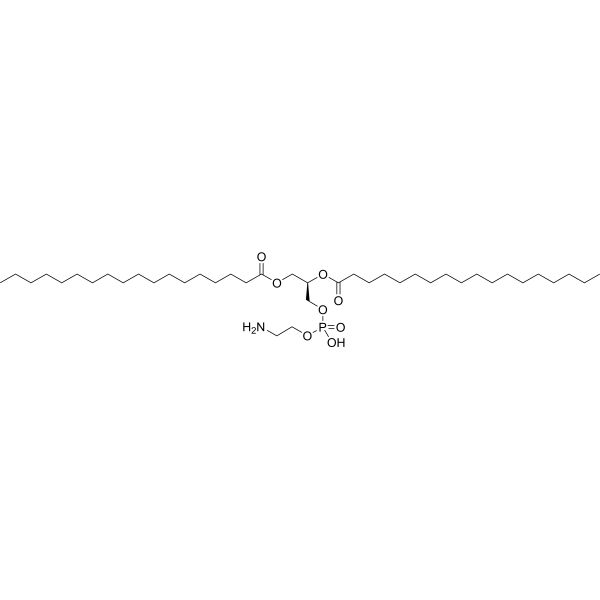
1,2-Distearoyl-sn-glycero-3-phosphorylethanolaminePhosphoethanolamine (PE) Lipid -

HY-138300
ALC-0159Liposome -
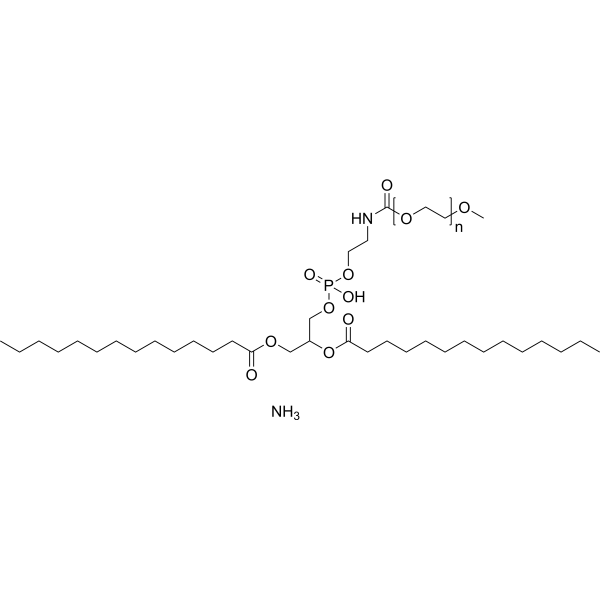
HY-144006
DMPE-PEG2000 ammoniumPEG-Phospholipid Conjugate -
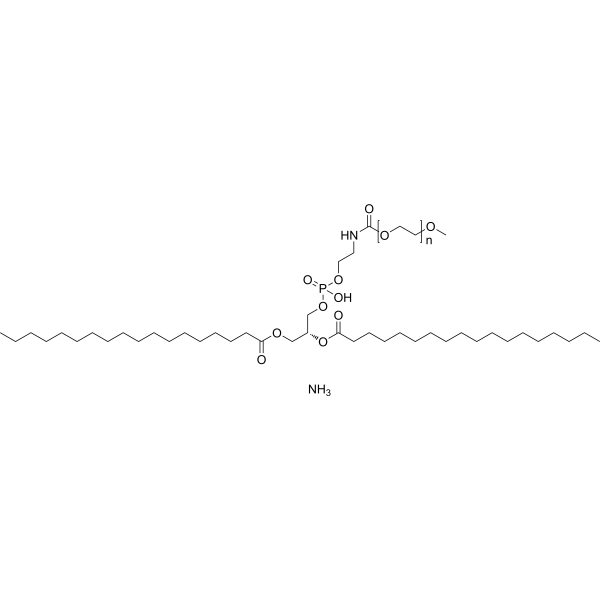
HY-144013
18:0 mPEG2000 PE ammoniumPEG-Phospholipid Conjugate -
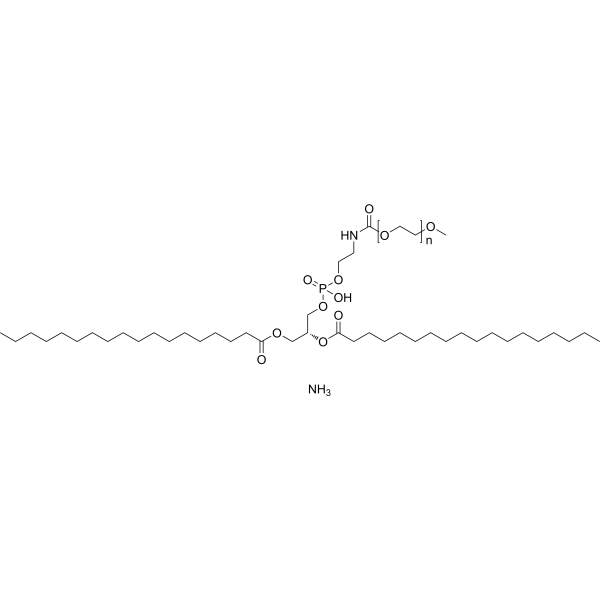
HY-144013H
18:0 mPEG5000 PE ammoniumAmphiphilic Polymer Material


Biological Activity
Description
IC50 & Target
|
PEGs |
In Vitro
DSPE-PEG-Biotin promotes the targeted delivery of the biotin-directed Salinomycin (HY-15597) (DTSS) nanoplatform to the tumor microenvironment, enhances cellular uptake of nanoparticle payloads, and improves the surface hydrophilicity and stability of nanoparticles[1].
DSPE-PEG2000-Biotin enables targeted accumulation of the assembled aggregation-induced emission (AIE)/Biotin-M micelles in tumor cells/tissues without impairing the micelles' sonosensitivity or AIE properties; meanwhile, it enhances the internalization of micelles by 4T1 tumor cells, and this uptake process can be inhibited by pre-treated free biotin[2].
MedChemExpress (MCE) has not independently confirmed the accuracy of these methods. They are for reference only. .
In Vivo
MedChemExpress (MCE) has not independently confirmed the accuracy of these methods. They are for reference only.


Chemical Information
-
CAS No. 385437-57-0
-
Appearance Solid
-
Molecular Weight 2000 (Average)
-
Color White to off-white
-
SMILES
CCCCCCCCCCCCCCCCCC(O[C@](COP(OCCNC(COCCOCCNC(CCCC[C@@H]1SC[C@@](N2)([H])[C@]1([H])NC2=O)=O)=O)(O[Na])=O)([H])COC(CCCCCCCCCCCCCCCCC)=O)=O.[MW 2000].[n]
-
Shipping
Room temperature in continental US; may vary elsewhere.
-
Storage
Powder -20°C 3 years In solvent -80°C 6 months -20°C 1 month


Solvent & Solubility
In Vitro:
DMSO : 25 mg/mL (Need ultrasonic; Hygroscopic DMSO has a significant impact on the solubility of product, please use newly opened DMSO)
H2O : 5 mg/mL (Need ultrasonic)
In Vivo:
Select the appropriate dissolution method based on your experimental animal and administration route.
- For the following dissolution methods, please ensure to first prepare a clear stock solution using an In Vitro approach and then sequentially add co-solvents:
- To ensure reliable experimental results, the clarified stock solution can be appropriately stored based on storage conditions. As for the working solution for In Vivo experiments, it is recommended to prepare freshly and use it on the same day.
- The percentages shown for the solvents indicate their volumetric ratio in the final prepared solution. If precipitation or phase separation occurs during preparation, heat and/or sonication can be used to aid dissolution.
Add each solvent one by one: 10% DMSO 40% PEG300 5% Tween-80 45% Saline
Solubility: ≥ 2.5 mg/mL; Clear solution
This protocol yields a clear solution of ≥ 2.5 mg/mL (saturation unknown).
Taking 1 mL working solution as an example, add 100 μL DMSO stock solution (25.0 mg/mL) to 400 μL PEG300, and mix evenly; then add 50 μL Tween-80 and mix evenly; then add 450 μL Saline to adjust the volume to 1 mL.
Preparation of Saline: Dissolve 0.9 g sodium chloride in ddH₂O and dilute to 100 mL to obtain a clear Saline solution.
Add each solvent one by one: 10% DMSO 90% (20% SBE-β-CD in Saline)
Solubility: ≥ 2.5 mg/mL; Clear solution
This protocol yields a clear solution of ≥ 2.5 mg/mL (saturation unknown).
Taking 1 mL working solution as an example, add 100 μL DMSO stock solution (25.0 mg/mL) to 900 μL 20% SBE-β-CD in Saline, and mix evenly.
Preparation of 20% SBE-β-CD in Saline (4°C, storage for one week): 2 g SBE-β-CD powder is dissolved in 10 mL Saline, completely dissolve until clear.
In Vivo Dissolution Calculator
Please enter the basic information of animal experiments:
-
-
-
-
Recommended: Prepare an additional quantity of animals to account for potential losses during experiments.
Please enter your animal formula composition:
-
%DMSO +
Recommended: Keep the proportion of DMSO in working solution below 2% if your animal is weak.
-
%+
-
+%Tween-80 + +
-
%Saline +
The co-solvents required include: DMSO, . All of co-solvents are available by MedChemExpress (MCE). , Tween 80. All of co-solvents are available by MedChemExpress (MCE).
Working solution concentration: 0.22 mg/mL
Method for preparing stock solution: mg drug dissolved in μL DMSO. Stock solution concentration: mg/mL.
1. Take μL DMSO stock solution;
2. Add μL .
μL , mix evenly;
3. Then add μL Tween 80, mix evenly;
4. Then add μL
Please ensure that the stock solution in the first step is dissolved to a clear state, and add co-solvents in sequence. You can use ultrasonic heating (ultrasonic cleaner, recommended frequency 20-40 kHz), vortexing, etc. to assist dissolution.


Purity & Documentation
-
Data Sheet (273 KB)
-
SDS (394 KB)
- English - EN (394 KB)
- Français - FR (394 KB)
- Deutsch - DE (394 KB)
- Norwegian - NO (394 KB)
- Español - ES (394 KB)
- Swedish - SV (394 KB)
- Italian - IT (394 KB)
- Korean - KR (394 KB)
- Portuguese - PT (394 KB)
-
Handling Instructions (2659 KB)
References
[1]. Wang L, et al. Self-assembly driven nano-salinomycin for high-efficiency cancer immunotherapy by reticulum stress mediated stemness suppression. Biomaterials. 2026 Feb;325:123632. [Content Brief]
[2]. Deng K, et al. Tumor-targeted AIE polymeric micelles mediated immunogenic sonodynamic therapy inhibits cancer growth and metastasis. Nanoscale. 2023 May 04;15(17):8006-8018. [Content Brief]

Calculators
Concentration (start) × Volume (start) = Concentration (final) × Volume (final)


DSPE-PEG2000-Biotin Related Classifications
HY-140736 Related Classifications
 Powered by Bioz
Keywords
- DSPE-PEG2000-Biotin
- 385437-57-0
- Biochemical Assay Reagents
- Liposome
- singlet oxygen
- reactive oxygen species
- tumor cell surface integrins
- 4T1 tumor
- immunogenic cell death
- tumor microenvironment
- anti-angiogenic effects
- systemic antitumor immune activation
- breast cancer
- 4T1 breast cancer cells
- Inhibitor
- inhibitor
- inhibit