






Search Result
Results for "
HIV TAT protein
" in MedChemExpress (MCE) Product Catalog:
| Cat. No. |
Product Name |
Target |
Research Areas |
Chemical Structure |
-
- HY-P0281
-
|
TAT(47-57); HIV-1 TAT protein (47-57)
|
HIV
|
Infection
|
|
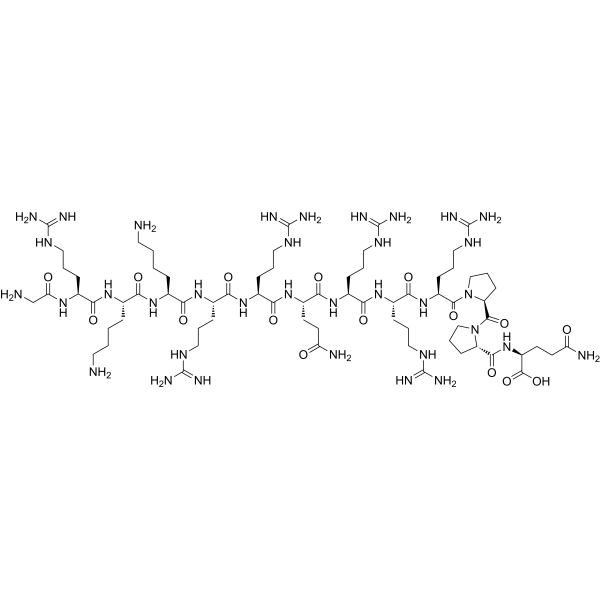
TAT (YGRKKRRQRRR) is derived from the transactivator of transcription (TAT) of human immunodeficiency virus-1 (HIV-1) and is a cell-penetrating peptide. TAT can increase the yields and the solubility of heterologous proteins .
|
-
-
- HY-P2260
-
|
|
CHIKV
Autophagy
HIV
|
Infection
|
|
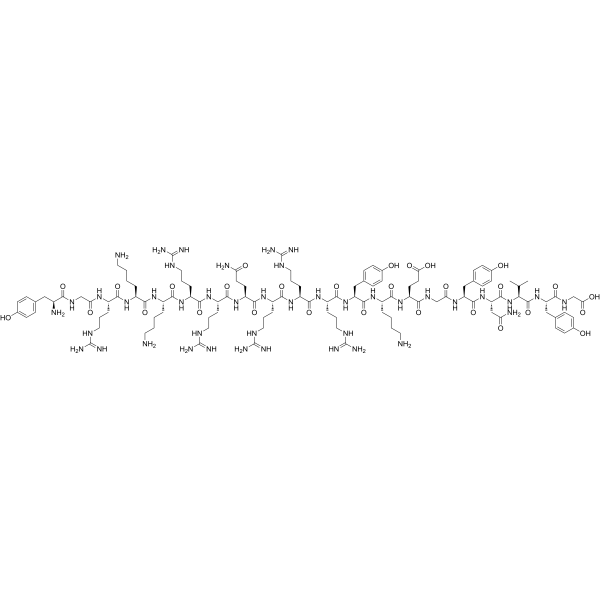
Tat-beclin 1, a peptide derived from a region of the autophagy protein (beclin 1), is a potent inducer of autophagy and interacts with negative regulator of autophagy, GAPR-1 (GLIPR2). Tat-beclin 1 decreases the accumulation of polyglutamine expansion protein aggregates and the replication of several pathogens (including HIV-1) in vitro, and reduces mortality in mice infected with chikungunya (CHIKV) or West Nile virus (WNV) .
|
-
-
- HY-19149
-
|
|
HIV
Apoptosis
|
Infection
Inflammation/Immunology
Cancer
|
|
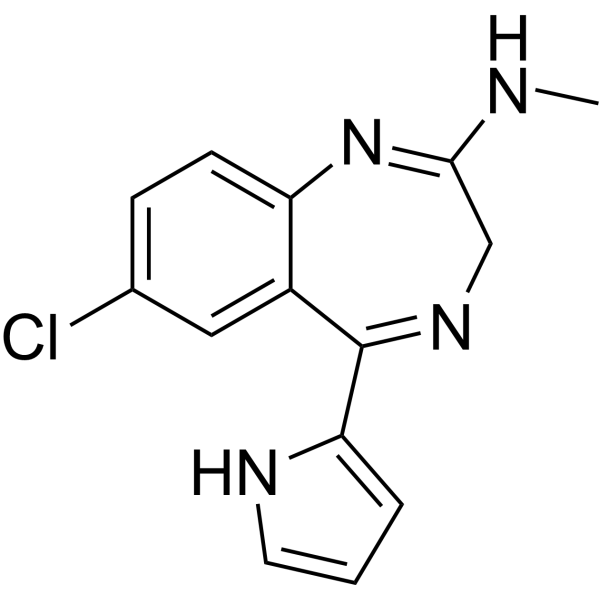
Ro24-7429 is a potent and orally active HIV-1 transactivator protein Tat antagonist. Ro24-7429 is also a runt-related transcription factor 1 (RUNX1) inhibitor. Ro24-7429 has anti-HIV, antifibrotic and anti-inflammatory effects .
|
-
-
- HY-P0281A
-
|
TAT(47-57) TFA; HIV-1 TAT protein (47-57) TFA
|
HIV
|
Infection
|
|
TAT TFA (YGRKKRRQRRR) is derived from the transactivator of transcription (TAT) of human immunodeficiency virus (HIV-1) and is a cell-penetrating peptide. TAT can increase the yields and the solubility of heterologous proteins .
|
-
-
- HY-P1491
-
|
|
HIV
|
Infection
|
|
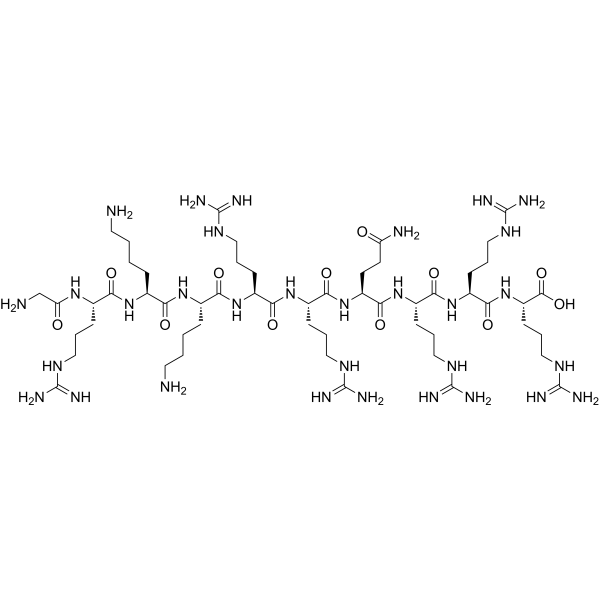
HIV-1 TAT (48-60) is a cell-penetrating peptide derived from the human immunodeficient virus (HIV)-1 Tat protein residue 48-60. It has been used to deliver exogenous macromolecules into cells in a non-disruptive way.
|
-
-
- HY-P2259
-
|
|
iGluR
HIV Integrase
Adenosine Receptor
|
Cardiovascular Disease
Neurological Disease
|
|
TAT-GluA2 3Y is a blood-brain barrier-permeable AMPA receptor inhibitory peptide that crosses cell membranes via the HIV-1 TAT protein domain. TAT-GluA2 3Y blocks the endocytosis of AMPA receptors, including the internalization of GluA1/GluA2 subunits, by disrupting interactions with the AP2, Brag2 and Syt3-GluA2 complexes, while also inhibiting long-term depression. TAT-GluA2 3Y blocks hypoxia-mediated AMPAR internalization, alleviates A1R-induced persistent synaptic inhibition, and reduces cerebral ischemic volume, neurological deficits and spatial memory deficits. TAT-GluA2 3Y blocks the effect of NLRP3 deficiency on fear generalization, inhibits amphetamine-induced behavioral/neurochemical sensitization, weakens the unconditioned stimulus-conditioned stimulus association of morphine, and promotes the extinction of morphine CPP. TAT-GluA2 3Y can be used in studies related to fear generalization, ischemic stroke, hypoxia, drug addiction and opioid addiction .
|
-
-
- HY-P4125A
-
|
|
HIV
Fluorescent Dye
|
Others
|
|
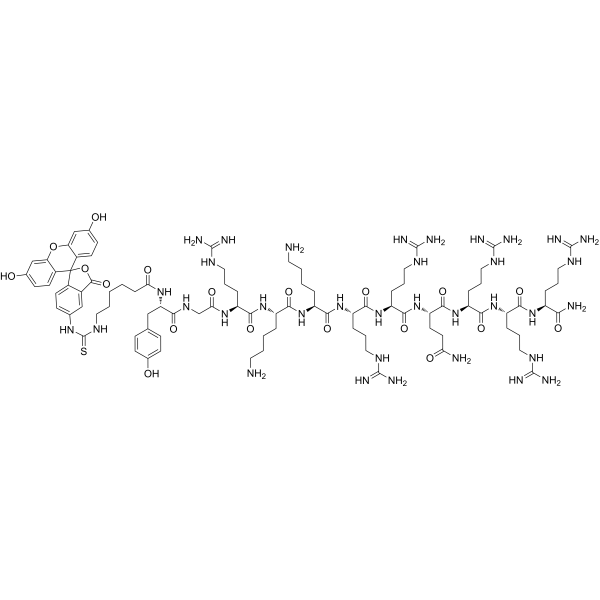
FITC-LC-TAT (47-57) acetate is a FITC-labeled TAT peptide (HY-P0281) (λex: 493 nm, λem: 522 nm). Derived from the trans-activator of transcription (TAT) of immunodeficiency virus (HIV-1), TAT enhances the yield of heterologous proteins .
|
-
-
- HY-P1801A
-
|
Cys-[HIV-TAT (47-57)] TFA
|
HIV
Drug Derivative
|
Others
|
|
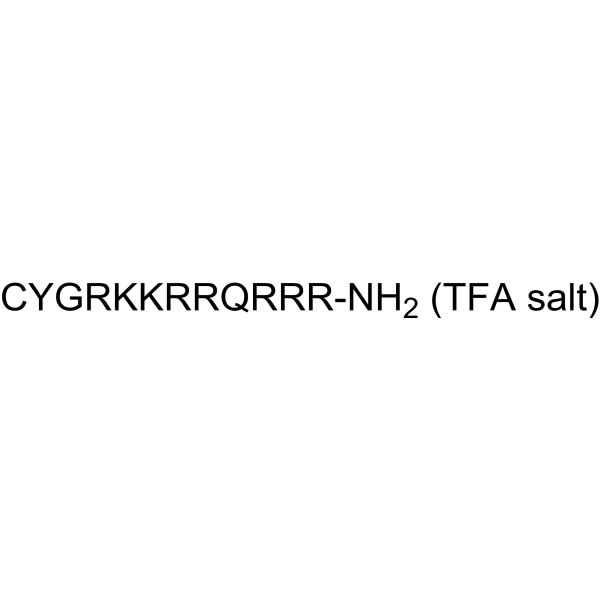
Cys-TAT(47-57) (Cys-[HIV-Tat (47-57)]) TFA, TAT (HY-P0281) derivative, is a Cysteine (HY-Y0337)-tagged cell-penetrating peptide (CPP) derived from the HIV TAT protein. Cys-TAT(47-57) TFA can be used for the research for the research of drug delivery .
|
-
-
- HY-P2260B
-
|
|
HIV
|
Infection
|
|
Tat-beclin 1 scrambled is the scrambled part and a scrambled control of Tat-beclin 1 (HY-P2260), which is derived from a region of the autophagy protein, beclin 1. beclin 1 induces autophagy via binding human immunodeficiency virus, HIV-1 Nef and interacting with negative regulator GAPR-1 (GLIPR2). Tat-beclin 1 decreases the accumulation of polyglutamine expansion protein aggregates and the replication of several pathogens, such as HIV-1. Tat-beclin 1 also reduces mortality in mice infected with chikungunya or West Nile virus .
|
-
-
- HY-P4125
-
|
|
HIV
Fluorescent Dye
|
Infection
|
|
FITC-LC-TAT (47-57) is a FITC-labeled TAT peptide (HY-P0281) (λex: 493 nm, λem: 522 nm). Derived from the trans-activator of transcription (TAT) of human immunodeficiency virus (HIV-1), TAT enhances the yield of heterologous proteins .
|
-
-
- HY-P1801
-
|
Cys-[HIV-TAT (47-57)]
|
HIV
Drug Derivative
|
Others
|
|
Cys-TAT(47-57) (Cys-[HIV-Tat (47-57)]), TAT (HY-P0281) derivative, is a Cysteine (HY-Y0337)-tagged cell-penetrating peptide (CPP) derived from the HIV TAT protein. Cys-TAT(47-57) can be used for the research for the research of drug delivery .
|
-
-
- HY-P0281B
-
|
TAT(47-57) aceTATe; HIV-1 TAT protein (47-57) aceTATe
|
HIV
|
Infection
|
|
TAT (TAT(47-57)) acetate is derived from the transactivator of transcription (TAT) of human immunodeficiency virus-1 (HIV-1) and is a cell-penetrating peptide. TAT acetate can increase the yields and the solubility of heterologous proteins .
|
-
-
- HY-P1575
-
|
|
HIV
|
Infection
|
|
TAT (48-57) is a cell-permeable peptide, derived from HIV-1 transactivator of transcription (Tat) protein residue 48-57.
|
-
-
- HY-P4101
-
|
|
HIV
|
Infection
|
|
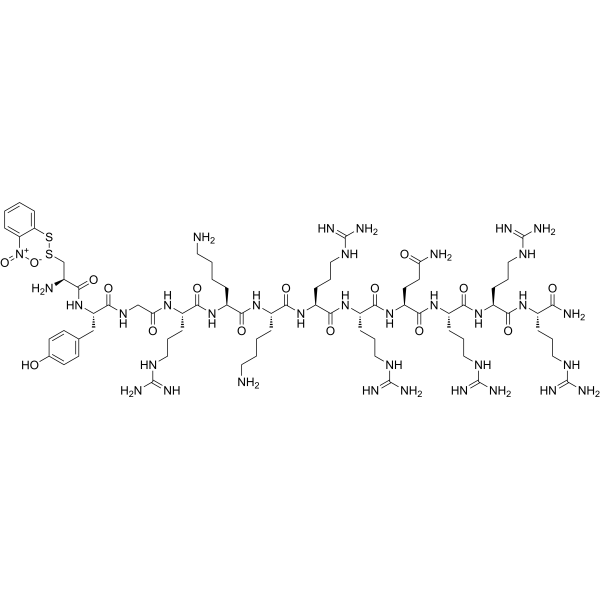
Cys(Npys)-TAT (47-57) is a peptide fragment of TAT peptide and it is able to interact with plasmid DNA electrostatically. Cys(Npys)-TAT (47-57) is corresponding to the transduction domain of TAT with an activated cysteine residue C. TAT is a small nuclear transcriptional activator protein encoded by HIV-1 .
|
-
-
- HY-P2260C
-
|
|
HIV
|
Infection
|
|
Tat-beclin 1 scrambled TFA is the scrambled part and a scrambled control of Tat-beclin 1 (HY-P2260), which is derived from a region of the autophagy protein, beclin 1. beclin 1 induces autophagy via binding human immunodeficiency virus, HIV-1 Nef and interacting with negative regulator GAPR-1 (GLIPR2). Tat-beclin 1 decreases the accumulation of polyglutamine expansion protein aggregates and the replication of several pathogens, such as HIV-1. Tat-beclin 1 also reduces mortality in mice infected with chikungunya or West Nile virus .
|
-
-
- HY-P5320
-
|
|
Apoptosis
|
Others
|
|
TAT-BH4 (Bcl-xL) localized mainly at the mitochondria, prevents apoptotic cell death. TAT-BH4 (Bcl-xL) is a fusion peptide that combines the N-terminal cysteine conjugated protein transduction domain of HIV TAT protein (amino acids 49 to 57) with the Bcl-xL BH4 peptide. TAT-BH4 can be used for research of diseases caused by accelerated apoptosis .
|
-
-
- HY-P11152
-
|
|
HIV
|
Infection
Inflammation/Immunology
|
|
HIV-1 tat Protein (1-9) occurs extracellularly and has a role in the immunosuppression of non-HIV-1-infected T cells in acquired AIDS. HIV-1 tat Protein (1-9) is an inhibitor of DP IV. HIV-1 tat Protein (1-9) can be synthesized by phase peptide synthesis with Fmoc (N-(9-fluorenyl)methoxycarbonyl) technique using the peptide synthesizer 431A. HIV-1 tat Protein (1-9) can be studied in research on HIV-1 .
|
-
-
- HY-P1575A
-
|
|
HIV
|
Infection
|
|
TAT (48-57) (TFA) is a cell-permeable peptide, derived from HIV-1 transactivator of transcription (Tat) protein residue 48-57 .
|
-
-
- HY-P10357
-
|
|
HIV
iGluR
|
Infection
Inflammation/Immunology
|
|
TAT-CBD3, a 15-amino acid peptide from CRMP2, fused to the TAT cell-penetrating motif of the HIV-1 protein, disrupts CRMP2-NMDAR interaction without change in NMDAR localization .
|
-
-
- HY-P2260A
-
|
|
Autophagy
HIV
|
Infection
|
|
Tat-beclin 1 TFA, a peptide derived from a region of the autophagy protein (beclin 1), is a potent inducer of autophagy and interacts with negative regulator of autophagy, GAPR-1 (GLIPR2). Tat-beclin 1 TFA decreases the accumulation of polyglutamine expansion protein aggregates and the replication of several pathogens (including HIV-1) in vitro, and reduces mortality in mice infected with chikungunya (CHIKV) or West Nile virus (WNV) .
|
-
-
- HY-P2493
-
|
|
HIV
|
Others
|
|
(Cys47)-HIV-1 tat Protein (47-57) has membrane translocation function and can be used to derivatize the surface of magnetic pharmaceuticals and substantially facilitated their uptake into target cells .
|
-
-
- HY-P5320A
-
|
|
Apoptosis
|
Others
|
|
TAT-BH4 (Bcl-xL) TFA is localized mainly at the mitochondria, prevents apoptotic cell death. TAT-BH4 (Bcl-xL) is a fusion peptide that combines the N-terminal cysteine conjugated protein transduction domain of HIV TAT protein (amino acids 49 to 57) with the Bcl-xL BH4 peptide. TAT-BH4 TFA can be used for research of diseases caused by accelerated apoptosis .
|
-
-
- HY-P10824
-
|
|
Amyloid-β
|
Neurological Disease
|
|
RI-OR2-TAT is a brain-penetrant inhibitor of β-Amyloid oligomerization, which is produced by adding the HIV protein transduction domain TAT to RI-OR2. RI-OR2-TAT binds to Aβ42 fibrils with a Kd value of 58-125 nM. RI-OR2-TAT reduces Aβ aggregation and plaque levels, reduces activation of microglia and oxidative damage, and increases the number of young neurons in the dentate gyrus .
|
-
-
- HY-115829
-
|
|
HIV
|
Infection
|
|
APA-H-MPO hydrochloride is an inhibitor of PCAF bromodomain/Tat-AcK50 interaction with potential for anti-HIV/AIDS. APA-H-MPO hydrochloride can effectively inhibit the binding of PCAF bromodomain to Tat-AcK50. APA-H-MPO hydrochloride showed low cytotoxicity in preliminary cell studies. APA-H-MPO hydrochloride is considered a potential candidate for a promising inhibitory strategy targeting the host cell protein PCAF BRD to block HIV replication .
|
-
-
- HY-P5395
-
|
|
HIV
|
Others
|
|
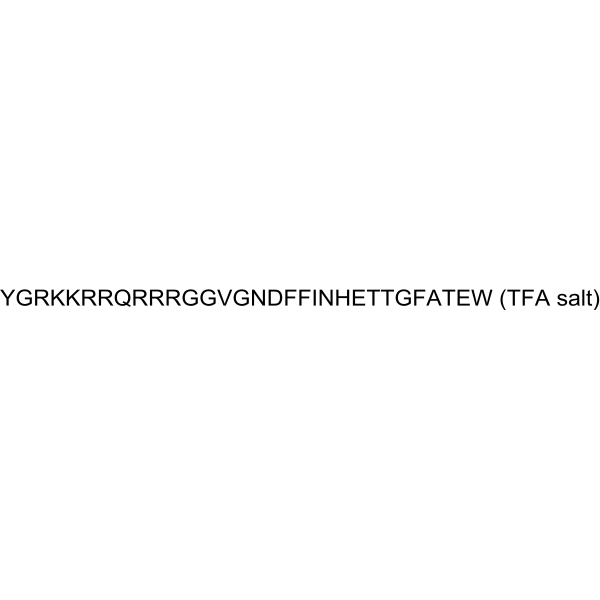
TAT-GluR23A Fusion Peptide is a biological active peptide. (This is the GluR23A sequence, a control inactive peptide used as a mutant counterpart to glutamate receptor endocytosis inhibitor (GluR23Y), connected to an 11 amino acid cell permeable HIV Trans-Activator of Transcription (TAT) protein transduction domain (PTD). GluR23A is derived from GluR23Y amino acids 869 to 877, with Ala substituted for Tyr, and thus lacking essential phosphorylation sites.Control peptide of HY-P2259)
|
-
-
- HY-P10357A
-
|
|
HIV
iGluR
|
Infection
Inflammation/Immunology
|
|
Tat-CBD3 TFA, a 15-amino acid peptide from CRMP2, fused to the TAT cell-penetrating motif of the HIV-1 protein, disrupts CRMP2-NMDAR interaction without change in NMDAR localization .
|
-
-
- HY-P0281F
-
|
Cy5-TAT(47-57) aceTATe; Cy5-HIV-1 TAT protein (47-57) aceTATe
|
Fluorescent Dye
|
Others
|
|
Cy5-TAT acetate is a TAT peptide labeled with CY5 (HY-D0821) (Ex= 600-620 nm, Em= 670 nm). Cy5-TAT acetate can be used for fluorescence microscopy especially single-molecule fluorescence imaging .
|
-
| Cat. No. |
Product Name |
Target |
Research Area |
-
- HY-P0281
-
|
TAT(47-57); HIV-1 TAT protein (47-57)
|
HIV
|
Infection
|
|
TAT (YGRKKRRQRRR) is derived from the transactivator of transcription (TAT) of human immunodeficiency virus-1 (HIV-1) and is a cell-penetrating peptide. TAT can increase the yields and the solubility of heterologous proteins .
|
-
- HY-P2260
-
|
|
CHIKV
Autophagy
HIV
|
Infection
|
|
Tat-beclin 1, a peptide derived from a region of the autophagy protein (beclin 1), is a potent inducer of autophagy and interacts with negative regulator of autophagy, GAPR-1 (GLIPR2). Tat-beclin 1 decreases the accumulation of polyglutamine expansion protein aggregates and the replication of several pathogens (including HIV-1) in vitro, and reduces mortality in mice infected with chikungunya (CHIKV) or West Nile virus (WNV) .
|
-
- HY-P0281A
-
|
TAT(47-57) TFA; HIV-1 TAT protein (47-57) TFA
|
HIV
|
Infection
|
|
TAT TFA (YGRKKRRQRRR) is derived from the transactivator of transcription (TAT) of human immunodeficiency virus (HIV-1) and is a cell-penetrating peptide. TAT can increase the yields and the solubility of heterologous proteins .
|
-
- HY-P1491
-
|
|
HIV
|
Infection
|
|
HIV-1 TAT (48-60) is a cell-penetrating peptide derived from the human immunodeficient virus (HIV)-1 Tat protein residue 48-60. It has been used to deliver exogenous macromolecules into cells in a non-disruptive way.
|
-
- HY-P2259
-
|
|
iGluR
HIV Integrase
Adenosine Receptor
|
Cardiovascular Disease
Neurological Disease
|
|
TAT-GluA2 3Y is a blood-brain barrier-permeable AMPA receptor inhibitory peptide that crosses cell membranes via the HIV-1 TAT protein domain. TAT-GluA2 3Y blocks the endocytosis of AMPA receptors, including the internalization of GluA1/GluA2 subunits, by disrupting interactions with the AP2, Brag2 and Syt3-GluA2 complexes, while also inhibiting long-term depression. TAT-GluA2 3Y blocks hypoxia-mediated AMPAR internalization, alleviates A1R-induced persistent synaptic inhibition, and reduces cerebral ischemic volume, neurological deficits and spatial memory deficits. TAT-GluA2 3Y blocks the effect of NLRP3 deficiency on fear generalization, inhibits amphetamine-induced behavioral/neurochemical sensitization, weakens the unconditioned stimulus-conditioned stimulus association of morphine, and promotes the extinction of morphine CPP. TAT-GluA2 3Y can be used in studies related to fear generalization, ischemic stroke, hypoxia, drug addiction and opioid addiction .
|
-
- HY-P4125A
-
|
|
HIV
Fluorescent Dye
|
Others
|
|
FITC-LC-TAT (47-57) acetate is a FITC-labeled TAT peptide (HY-P0281) (λex: 493 nm, λem: 522 nm). Derived from the trans-activator of transcription (TAT) of immunodeficiency virus (HIV-1), TAT enhances the yield of heterologous proteins .
|
-
- HY-P1801A
-
|
Cys-[HIV-TAT (47-57)] TFA
|
HIV
Drug Derivative
|
Others
|
|
Cys-TAT(47-57) (Cys-[HIV-Tat (47-57)]) TFA, TAT (HY-P0281) derivative, is a Cysteine (HY-Y0337)-tagged cell-penetrating peptide (CPP) derived from the HIV TAT protein. Cys-TAT(47-57) TFA can be used for the research for the research of drug delivery .
|
-
- HY-P2260B
-
|
|
HIV
|
Infection
|
|
Tat-beclin 1 scrambled is the scrambled part and a scrambled control of Tat-beclin 1 (HY-P2260), which is derived from a region of the autophagy protein, beclin 1. beclin 1 induces autophagy via binding human immunodeficiency virus, HIV-1 Nef and interacting with negative regulator GAPR-1 (GLIPR2). Tat-beclin 1 decreases the accumulation of polyglutamine expansion protein aggregates and the replication of several pathogens, such as HIV-1. Tat-beclin 1 also reduces mortality in mice infected with chikungunya or West Nile virus .
|
-
- HY-P4125
-
|
|
HIV
Fluorescent Dye
|
Infection
|
|
FITC-LC-TAT (47-57) is a FITC-labeled TAT peptide (HY-P0281) (λex: 493 nm, λem: 522 nm). Derived from the trans-activator of transcription (TAT) of human immunodeficiency virus (HIV-1), TAT enhances the yield of heterologous proteins .
|
-
- HY-P1801
-
|
Cys-[HIV-TAT (47-57)]
|
HIV
Drug Derivative
|
Others
|
|
Cys-TAT(47-57) (Cys-[HIV-Tat (47-57)]), TAT (HY-P0281) derivative, is a Cysteine (HY-Y0337)-tagged cell-penetrating peptide (CPP) derived from the HIV TAT protein. Cys-TAT(47-57) can be used for the research for the research of drug delivery .
|
-
- HY-P0281B
-
|
TAT(47-57) aceTATe; HIV-1 TAT protein (47-57) aceTATe
|
HIV
|
Infection
|
|
TAT (TAT(47-57)) acetate is derived from the transactivator of transcription (TAT) of human immunodeficiency virus-1 (HIV-1) and is a cell-penetrating peptide. TAT acetate can increase the yields and the solubility of heterologous proteins .
|
-
- HY-P1575
-
|
|
HIV
|
Infection
|
|
TAT (48-57) is a cell-permeable peptide, derived from HIV-1 transactivator of transcription (Tat) protein residue 48-57.
|
-
- HY-P4101
-
|
|
HIV
|
Infection
|
|
Cys(Npys)-TAT (47-57) is a peptide fragment of TAT peptide and it is able to interact with plasmid DNA electrostatically. Cys(Npys)-TAT (47-57) is corresponding to the transduction domain of TAT with an activated cysteine residue C. TAT is a small nuclear transcriptional activator protein encoded by HIV-1 .
|
-
- HY-P2260C
-
|
|
HIV
|
Infection
|
|
Tat-beclin 1 scrambled TFA is the scrambled part and a scrambled control of Tat-beclin 1 (HY-P2260), which is derived from a region of the autophagy protein, beclin 1. beclin 1 induces autophagy via binding human immunodeficiency virus, HIV-1 Nef and interacting with negative regulator GAPR-1 (GLIPR2). Tat-beclin 1 decreases the accumulation of polyglutamine expansion protein aggregates and the replication of several pathogens, such as HIV-1. Tat-beclin 1 also reduces mortality in mice infected with chikungunya or West Nile virus .
|
-
- HY-P5320
-
|
|
Apoptosis
|
Others
|
|
TAT-BH4 (Bcl-xL) localized mainly at the mitochondria, prevents apoptotic cell death. TAT-BH4 (Bcl-xL) is a fusion peptide that combines the N-terminal cysteine conjugated protein transduction domain of HIV TAT protein (amino acids 49 to 57) with the Bcl-xL BH4 peptide. TAT-BH4 can be used for research of diseases caused by accelerated apoptosis .
|
-
- HY-P11152
-
|
|
HIV
|
Infection
Inflammation/Immunology
|
|
HIV-1 tat Protein (1-9) occurs extracellularly and has a role in the immunosuppression of non-HIV-1-infected T cells in acquired AIDS. HIV-1 tat Protein (1-9) is an inhibitor of DP IV. HIV-1 tat Protein (1-9) can be synthesized by phase peptide synthesis with Fmoc (N-(9-fluorenyl)methoxycarbonyl) technique using the peptide synthesizer 431A. HIV-1 tat Protein (1-9) can be studied in research on HIV-1 .
|
-
- HY-P1575A
-
|
|
HIV
|
Infection
|
|
TAT (48-57) (TFA) is a cell-permeable peptide, derived from HIV-1 transactivator of transcription (Tat) protein residue 48-57 .
|
-
- HY-P10357
-
|
|
HIV
iGluR
|
Infection
Inflammation/Immunology
|
|
TAT-CBD3, a 15-amino acid peptide from CRMP2, fused to the TAT cell-penetrating motif of the HIV-1 protein, disrupts CRMP2-NMDAR interaction without change in NMDAR localization .
|
-
- HY-P2260A
-
|
|
Autophagy
HIV
|
Infection
|
|
Tat-beclin 1 TFA, a peptide derived from a region of the autophagy protein (beclin 1), is a potent inducer of autophagy and interacts with negative regulator of autophagy, GAPR-1 (GLIPR2). Tat-beclin 1 TFA decreases the accumulation of polyglutamine expansion protein aggregates and the replication of several pathogens (including HIV-1) in vitro, and reduces mortality in mice infected with chikungunya (CHIKV) or West Nile virus (WNV) .
|
-
- HY-P2493
-
|
|
HIV
|
Others
|
|
(Cys47)-HIV-1 tat Protein (47-57) has membrane translocation function and can be used to derivatize the surface of magnetic pharmaceuticals and substantially facilitated their uptake into target cells .
|
-
- HY-P5320A
-
|
|
Apoptosis
|
Others
|
|
TAT-BH4 (Bcl-xL) TFA is localized mainly at the mitochondria, prevents apoptotic cell death. TAT-BH4 (Bcl-xL) is a fusion peptide that combines the N-terminal cysteine conjugated protein transduction domain of HIV TAT protein (amino acids 49 to 57) with the Bcl-xL BH4 peptide. TAT-BH4 TFA can be used for research of diseases caused by accelerated apoptosis .
|
-
- HY-P10824
-
|
|
Amyloid-β
|
Neurological Disease
|
|
RI-OR2-TAT is a brain-penetrant inhibitor of β-Amyloid oligomerization, which is produced by adding the HIV protein transduction domain TAT to RI-OR2. RI-OR2-TAT binds to Aβ42 fibrils with a Kd value of 58-125 nM. RI-OR2-TAT reduces Aβ aggregation and plaque levels, reduces activation of microglia and oxidative damage, and increases the number of young neurons in the dentate gyrus .
|
-
- HY-P5395
-
|
|
HIV
|
Others
|
|
TAT-GluR23A Fusion Peptide is a biological active peptide. (This is the GluR23A sequence, a control inactive peptide used as a mutant counterpart to glutamate receptor endocytosis inhibitor (GluR23Y), connected to an 11 amino acid cell permeable HIV Trans-Activator of Transcription (TAT) protein transduction domain (PTD). GluR23A is derived from GluR23Y amino acids 869 to 877, with Ala substituted for Tyr, and thus lacking essential phosphorylation sites.Control peptide of HY-P2259)
|
-
- HY-P10357A
-
|
|
HIV
iGluR
|
Infection
Inflammation/Immunology
|
|
Tat-CBD3 TFA, a 15-amino acid peptide from CRMP2, fused to the TAT cell-penetrating motif of the HIV-1 protein, disrupts CRMP2-NMDAR interaction without change in NMDAR localization .
|
-
- HY-P0281F
-
|
Cy5-TAT(47-57) aceTATe; Cy5-HIV-1 TAT protein (47-57) aceTATe
|
Fluorescent Dye
|
Others
|
|
Cy5-TAT acetate is a TAT peptide labeled with CY5 (HY-D0821) (Ex= 600-620 nm, Em= 670 nm). Cy5-TAT acetate can be used for fluorescence microscopy especially single-molecule fluorescence imaging .
|
| Cat. No. |
Product Name |
Category |
Target |
Chemical Structure |
| Cat. No. |
Compare |
Product Name |
Application |
Reactivity |
Image |
Compare Products
|
| Products |
|
| Cat. No. |
|
| Host |
|
| Reactivity |
|
| Application |
|
Dilution Ratio |
|
| Molecular Weight |
|
| Conjugation |
|
| Clonality |
|
| Immunogen |
|
| Appearance |
|
| Isotype |
|
| Gene ID |
|
| SwissProt ID |
|
| Purity |
|
| Formulation |
|
| Free Sample |
Yes
No
|
| Size |
* This product has been "discontinued".
Optimized version of product available:
|
Your information is safe with us. * Required Fields.
Inquiry Information
- Product Name:
- Cat. No.:
- Quantity:
- MCE Japan Authorized Agent:

