Search Result
Results for "
KRAS or HRAS
" in MedChemExpress (MCE) Product Catalog:
1
Isotope-Labeled Compounds
| Cat. No. |
Product Name |
Target |
Research Areas |
Chemical Structure |
-
- HY-148439
-
|
RMC-6236; RAS-IN-2
|
Ras
PERK
|
Cancer
|
|
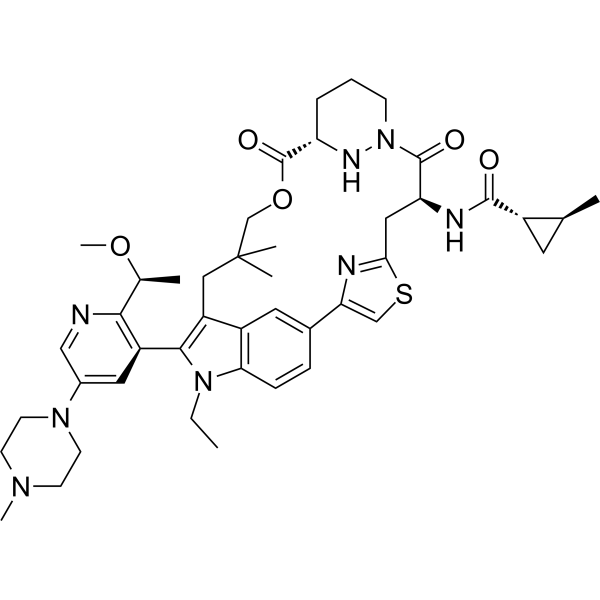
Daraxonrasib (RMC-6236) is an orally active, non-covalent RAS (ON) inhibitor. Daraxonrasib disrupts the interaction of wild-type or mutant RAS proteins with the RAS binding domain of BRAF, with EC50 values ranging from 28-220 nM for wild-type KRAS, NRAS, HRAS, and multiple oncogenic RAS variants. Daraxonrasib inhibits pERK. Daraxonrasib has anti-tumor activity against KRAS mutant tumors .
|
-
-
- HY-156498
-
RMC-7977
Maximum Cited Publications
14 Publications Verification
|
Ras
ERK
Raf
Ribosomal S6 Kinase (RSK)
AMPK
Apoptosis
PARP
|
Cancer
|
|
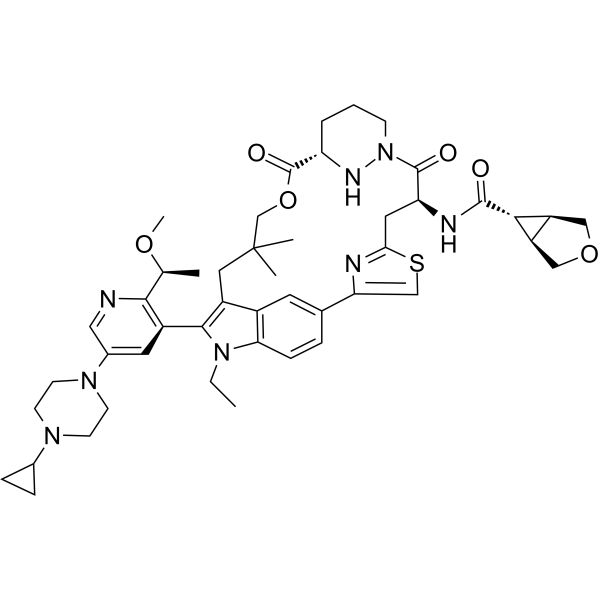
RMC-7977 is an orally active triple-complex RAS inhibitor that can simultaneously bind to cyclophilin A (CYPA) (Kd = 195 nM) and KRAS (G12V) (Kd = 292 μM). It exhibits broad-spectrum inhibitory activity against KRAS, NRAS, and HRAS proteins and their various wild-type and mutant variants. RMC-7977 induces apoptosis by inhibiting the phosphorylation of ERK, CRAF, and RSK, as well as increasing PARP cleavage. This leads to tumor regression, reduces resistance in KRAS G12C cancer models, and demonstrates good tolerability across various RAS cancer models .
|
-
-
- HY-173632
-
|
|
Ras
|
Cancer
|
|
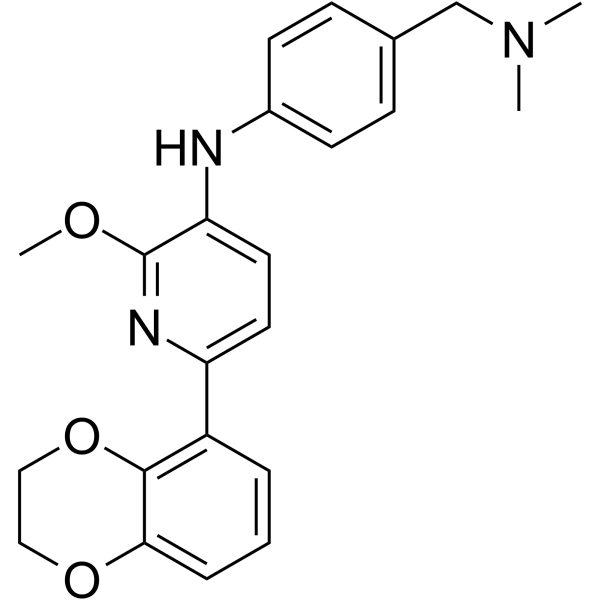
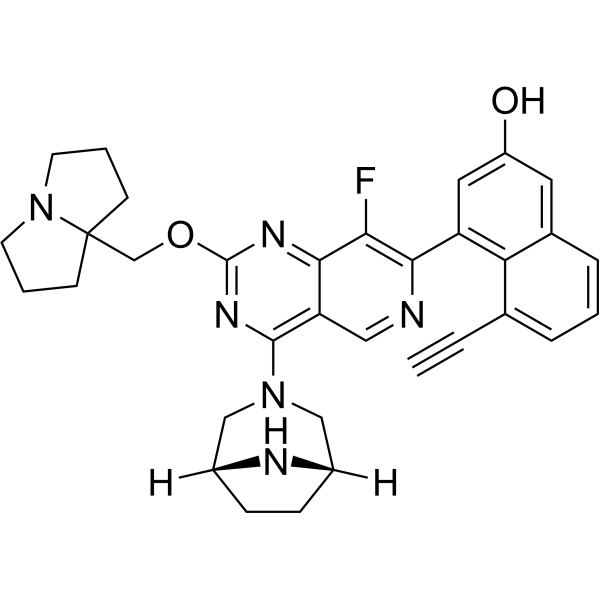
AMG410 is a non-covalent and selective pan-KRAS inhibitor with IC50 values of 1-4 nM for KRAS G12D, KRAS G12V, and KRAS G13D. AMG410 shows greater than 100-fold selectivity against both HRAS and NRAS. AMG410 is a dual GTP(on)- and GDP(off)-state inhibitor (Kd(GDP-state) of 1 nM; Kd(GTP-state) of 22 nM). AMG410 blocks KRAS signaling in a cycling state-independent manner and also blocks proliferation in wildtype KRAS-amplified tumor cells. AMG410 can be used for the study of colorectal, pancreatic, and lung cancers .
|
-
-
- HY-15136
-
Lonafarnib
Maximum Cited Publications
14 Publications Verification
Sch66336
|
Farnesyl Transferase
Ras
Autophagy
|
Infection
Neurological Disease
Cancer
|
|
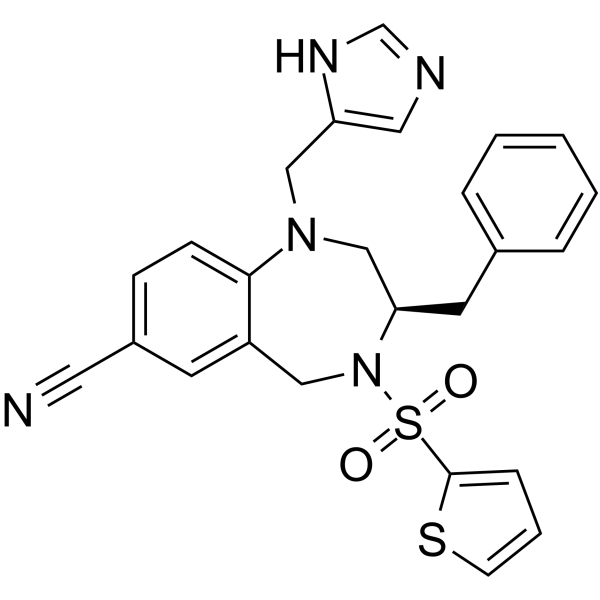
Lonafarnib (Sch66336) is a potent and orally active, and CNS-penetrant farnesyl transferase (FTase) inhibitor. Lonafarnib inhibits the activities of H-ras, K-ras and N-ras with IC50 values of 1.9 nM, 5.2 nM and 2.8 nM, respectively. Lonafarnib also has anti-hepatitis delta virus (HDV) activities .
|
-
-
- HY-16373
-
|
LNK-754; OSI-754
|
Farnesyl Transferase
|
Cancer
|
|
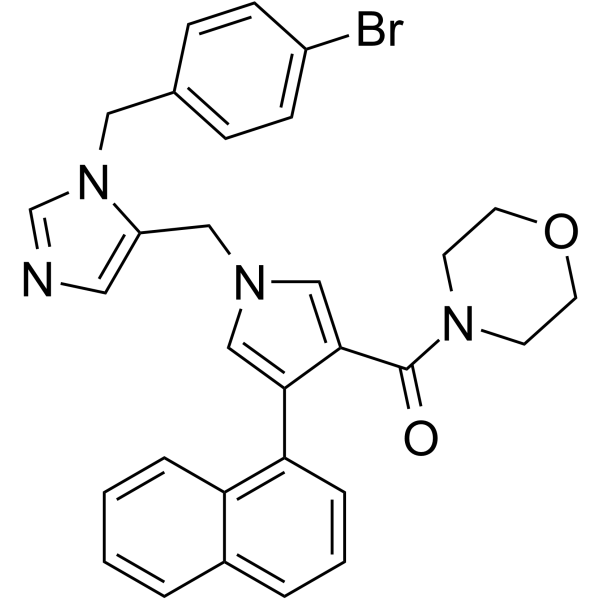
CP-609754 (LNK-754) is a potent and reversible farnesyltransferase inhibitor with potential anticancer activity.The IC50 for inhibiting farnesylation of recombinant human H-Ras is 0.57 ng/mL and recombinant K-Ras is 46 ng/mL . CP-609754 is a click chemistry reagent, it contains an Alkyne group and can undergo copper-catalyzed azide-alkyne cycloaddition (CuAAc) with molecules containing Azide groups.
|
-
-
- HY-176786
-
|
|
PROTACs
Ras
Apoptosis
PERK
p38 MAPK
Caspase
TNF Receptor
|
Cancer
|
|
MCB-36 is a VHL-recruiting pan-KRAS PROTAC degrader without affecting KRAS transcription. MCB-36 exhibits minimal effects on HRAS and NRAS protein levels. MCB-36 binds to the GDP-loaded state of G12D, G12C, G12V, and wild-type KRAS with high affinities Kd ≈ 1 pM). MCB-36 decreases p-ERK levels, leading to cell apoptosis. MCB-36 effectively suppress KRAS G12C inhibitor-resistant cancer cells and remodel the tumor immune microenvironment. MCB-36 can be used for the study of colorectal cancer and lung cancer (Pink: Target protein ligand; Blue: E3 ligand (HY-112078); Black: Linker (HY-W091879)) .
|
-
-
- HY-16111
-
|
|
Farnesyl Transferase
Ras
|
Cancer
|
|
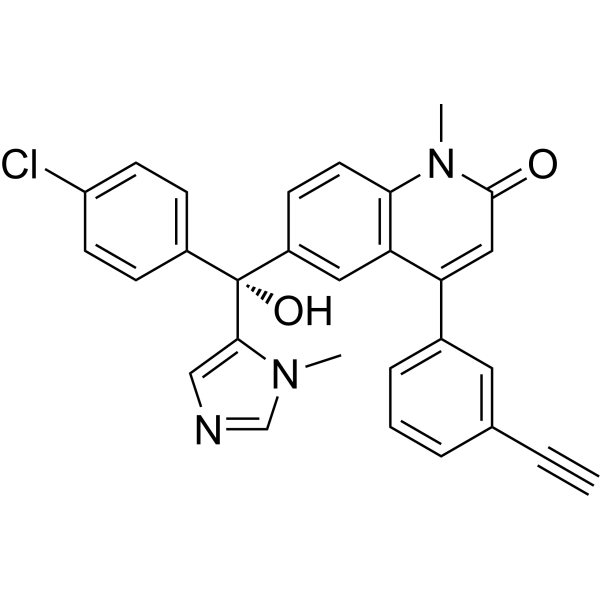
BMS-214662 is a farnesyl transferase inhibitor. BMS-214662 can effectively block the localization and function of Ras protein in the cell membrane by inhibiting the pro-group modification of Ras protein, thereby exerting anti-tumor activity. BMS-214662 has an IC50 value of 1.3 nM for H-Ras and 8.4 nM for K-Ras. BMS-214662 can be used to study Ras-related tumor diseases .
|
-
-
- HY-15879
-
-
-
- HY-B0984
-
|
|
Calcium Channel
Ras
STING
Autophagy
|
Infection
Cardiovascular Disease
Cancer
|
|
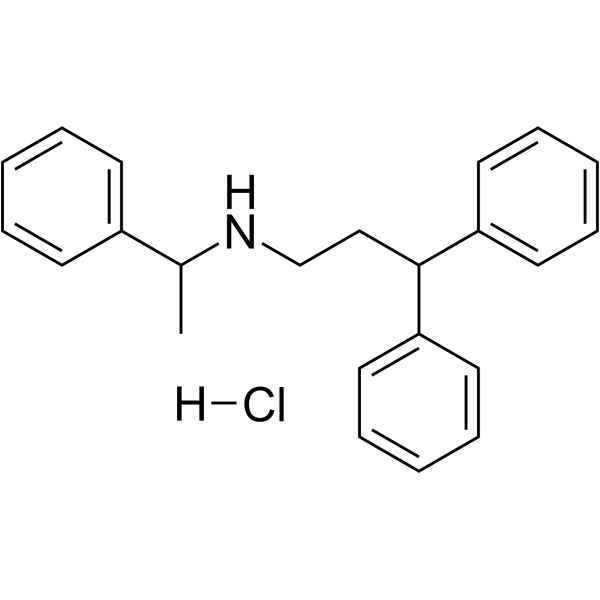
Fendiline hydrochloride, a diphenylalkylamine type of antianginal agent, is an L-type calcium channel blocker (IC50 of 17 µM). Fendiline hydrochloride is also a selective K-Ras inhibitor, and has no effect on H-Ras and N-Ras. Fendiline hydrochloride inhibits K-Ras plasma membrane localization (IC50 of 9.64 μM), inhibits K-Ras signal output and blocks the proliferation of pancreatic, colon, lung, and endometrial cancer cell lines expressing oncogenic mutant K-Ras. Fendiline hydrochloride is a STING agonist and is able to inhibit the growth of multiple refractory cold tumors (MC38, CT26 and B16F10) .
|
-
-
- HY-15873A
-
|
|
Farnesyl Transferase
Ras
p38 MAPK
|
Cancer
|
|
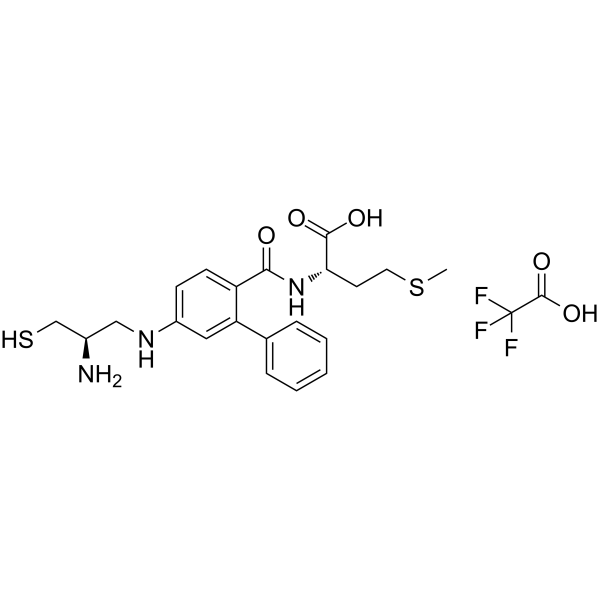
FTI 276 TFA is a farnesyltransferase (FTase) inhibitor with an IC50 of 0.5 nM, and it exhibits selectivity for FTase over geranylgeranyltransferase I (GGTase I). FTI 276 TFA blocks the farnesylation of H-Ras and K-Ras4B, causes inactive Ras-Raf complexes to accumulate in the cytoplasm, and inhibits constitutive MAPK activation. FTI 276 TFA reduces the number, incidence and volume of tumors, and restricts the growth of tumors expressing activated K-ras. FTI 276 TFA can be used in research related to pulmonary adenoma .
|
-
-
- HY-B0984A
-
|
|
Calcium Channel
Ras
STING
Autophagy
|
Infection
Cardiovascular Disease
Cancer
|
|
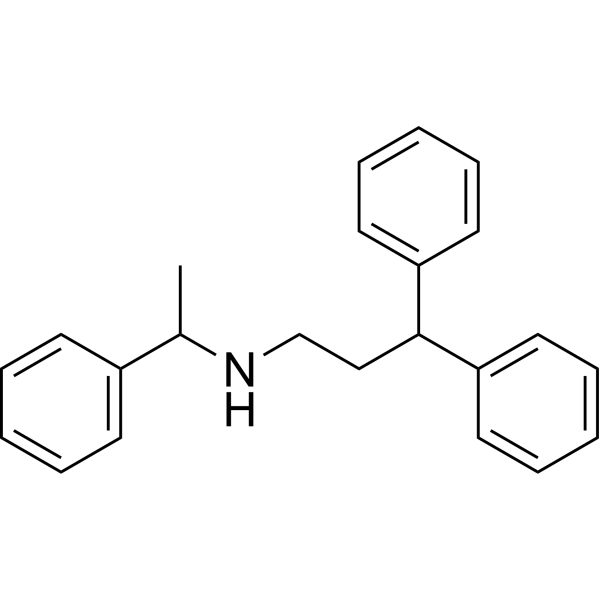
Fendiline, a diphenylalkylamine type of antianginal agent, is an L-type calcium channel blocker (IC50 of 17 µM). Fendiline is also a selective K-Ras inhibitor, and has no effect on H-Ras and N-Ras. Fendiline inhibits K-Ras plasma membrane localization (IC50 of 9.64 μM), inhibits K-Ras signal output and blocks the proliferation of pancreatic, colon, lung, and endometrial cancer cell lines expressing oncogenic mutant K-Ras. Fendiline is a STING agonist and is able to inhibit the growth of multiple refractory cold tumors (MC38, CT26 and B16F10) .
|
-
-
- HY-176785S
-
|
|
Ras
Apoptosis
p38 MAPK
Caspase
TNF Receptor
|
Cancer
|
|
MCB-294 is a dual-state pan-KRAS inhibitor that selectively inhibits KRAS over NRAS and HRAS. MCB-294 capable of binding both the active (GTP-bound) and inactive (GDP-bound) forms of KRAS with Kds of approximately 1 pM and 10 nM, respectively. MCB-294 broadly impairs the growth of hTERT-HPNE cells expressing G12D, G12C, G12V, G12S, G13D, and wild-type KRAS, with IC50s of approximately 700 nM. MCB-294 induces irreversible apoptosis in KRAS-mutated tumors. MCB-294 effectively suppress KRAS G12C inhibitor-resistant cancer cells and remodel the tumor immune microenvironment. MCB-294 can be used for the study of pancreatic cancer, colorectal cancer and lung cancer .
|
-
-
- HY-122862
-
|
|
Ras
|
Cancer
|
|
RAS inhibitor Abd-7, a potent RAS-binding compound (Kd=51 nM), is a RAS-effector protein-protein interaction (PPI) inhibitor. RAS inhibitor Abd-7 interacts with RAS inside the cells, prevents RAS-effector interactions and inhibits endogenous RAS-dependent signaling. RAS inhibitor Abd-7 impairs the PPI of various mutant KRAS proteins with PI3K, CRAF and RALGDS as well as NRAS Q61H and HRAS G12V .
|
-
-
- HY-145962A
-
|
|
Ras
|
Cancer
|
|
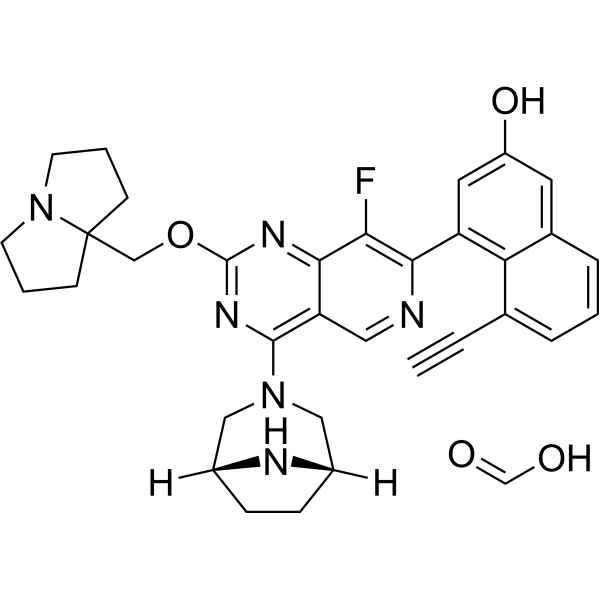
MRTX-EX185 formic is a potent KRAS (G12D) inhibitor with an IC50 of 90 nM. MRTX-EX185 formic can binds both GDP-loaded and active GNP states of KRAS and KRAS (G12D). MRTX-EX185 formic exhibits broad-spectrum binding properties with IC50s of 110, 290, 130 and 240 nM for KRAS WT, KRAS (G12C), KRAS (Q61H), KRAS (G13D). MRTX-EX185 formic also binds GDP-loaded HRAS. MRTX-EX185 formic can be used to study various RAS-driven tumors (such as pancreatic cancer) .
|
-
-
- HY-B0984R
-
|
|
Calcium Channel
Ras
STING
Autophagy
Reference Standards
|
Infection
Cardiovascular Disease
Cancer
|
|
Fendiline (hydrochloride) (Standard) is the analytical standard of Fendiline (hydrochloride). This product is intended for research and analytical applications. Fendiline hydrochloride, a diphenylalkylamine type of antianginal agent, is an L-type calcium channel blocker (IC50 of 17 µM). Fendiline hydrochloride is also a selective K-Ras inhibitor, and has no effect on H-Ras and N-Ras. Fendiline hydrochloride inhibits K-Ras plasma membrane localization (IC50 of 9.64 μM), inhibits K-Ras signal output and blocks the proliferation of pancreatic, colon, lung, and endometrial cancer cell lines expressing oncogenic mutant K-Ras. Fendiline hydrochloride is a STING agonist and is able to inhibit the growth of multiple refractory cold tumors (MC38, CT26 and B16F10) .
|
-
-
- HY-16111A
-
|
|
Farnesyl Transferase
Ras
|
Cancer
|
|
BMS-214662 hydrochloride is an inhibitor of farnesyltransferase (Farnesyl Transferase). BMS-214662 hydrochloride can effectively block the localization and function of Ras proteins on the cell membrane by inhibiting the prenylation modification of Ras proteins, thereby exerting anti-tumor activity. The IC50 value of BMS-214662 hydrochloride for H-Ras is 1.3 nM, and for K-Ras it is 8.4 nM. BMS-214662 hydrochloride can be used in the research of tumor diseases related to Ras .
|
-
-
- HY-115489
-
|
|
Ras
|
Cancer
|
|
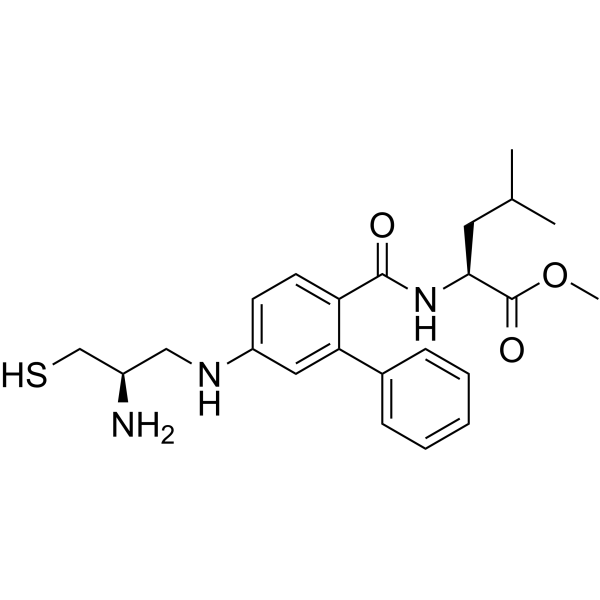
GGTI-286, a potent and cell-permeable GGTase I inhibitor, is 25-fold more potent (IC50=2 μM) than the corresponding methyl ester of FTI-276 (HY-15873A). GGTI-286 selectively inhibits geranylgeranylation of Rap1A over farnesylation of H-Ras in NIH3T3 cells (IC50s=2 and >30 μM, respectively). GGTI-286 also potently inhibits oncogenic K-Ras4B stimulation with an IC50 of 1 μM .
|
-
-
- HY-115489A
-
|
|
Protein Prenyltransferase
|
Cancer
|
|
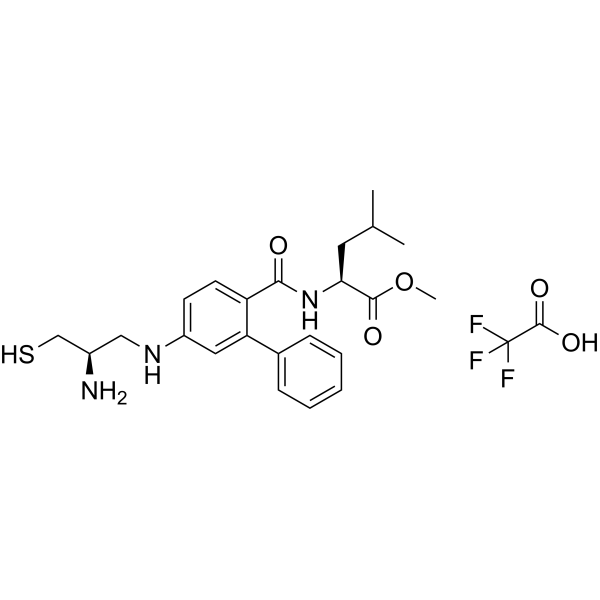
GGTI-286 TFA, a potent and cell-permeable GGTase I inhibitor, is 25-fold more potent (IC50=2 μM) than the corresponding methyl ester of FTI-276 (HY-15873A). GGTI-286 TFA selectively inhibits geranylgeranylation of Rap1A over farnesylation of H-Ras in NIH3T3 cells (IC50s=2 and >30 μM, respectively). GGTI-286 TFA also potently inhibits oncogenic K-Ras4B stimulation with an IC50 of 1 μM .
|
-
-
- HY-15136B
-
|
Sch66336 racemate
|
Farnesyl Transferase
|
Infection
Cancer
|
|
(Rac)-Lonafarnib (Sch66336 racemate) is the racemate of Lonafarnib. Lonafarnib is a potent and orally active farnesyl transferase (FTase) inhibitor. Lonafarnib inhibits the activities of H-ras, K-ras and N-ras with IC50 values of 1.9 nM, 5.2 nM and 2.8 nM, respectively. Lonafarnib also has anti-hepatitis delta virus (HDV) activities .
|
-
-
- HY-128762
-
|
|
Phospholipase
|
Cancer
|
|
ML256 is a covalent lipoprotein-associated phospholipase A2 (Lp-PLA2 inhibitor. ML256 can be used for the study of neoplasms harboring a constitutively active variant of one or both of KRAS or HRAS .
|
-
-
- HY-145962
-
|
|
Ras
|
Cancer
|
|
MRTX-EX185 is a potent KRAS (G12D) inhibitor with an IC50 of 90 nM. MRTX-EX185 can binds both GDP-loaded and active GNP states of KRAS and KRAS (G12D). MRTX-EX185 exhibits broad-spectrum binding properties with IC50s of 110, 290, 130 and 240 nM for KRAS WT, KRAS (G12C), KRAS (Q61H), KRAS (G13D). MRTX-EX185 also binds GDP-loaded HRAS. MRTX-EX185 can be used to study various RAS-driven tumors (such as pancreatic cancer) .
|
-
-
- HY-116428
-
|
|
Farnesyl Transferase
Ras
TGF-β Receptor
Apoptosis
|
Cancer
|
|
L-744832 is a farnesyl transferase inhibitor. L-744832 effectively inhibits the farnesylation of H-Ras and N-Ras, but has little effect on K-Ras treatment. L-744832 not only directly targets the oncogenic pathway by inhibiting Ras farnesylation, but also enhances radiosensitivity by restoring TGF-β signaling through epigenetic reprogramming. L-744832 can induce cell cycle arrest and apoptosis. L-744832 can be used in combination therapy studies for Ras-driven tumors such as pancreatic cancer .
|
-
-
- HY-W1126467
-
|
|
Ras
|
Cancer
|
|
RAS-IN-5 (Example 2) is a RAS inhibitor. RAS-IN-5 significantly inhibits the interaction between RAF1 and active KRAS mutant protein or HRAS WT protein. RAS-IN-5 significantly inhibits the cell viability of KRAS, NRAS, and EGFR mutant cells. RAS-IN-5 can be used in the research of colorectal cancer, liver cancer, and non-small cell lung cancer .
|
-
-
- HY-15136R
-
|
Sch66336 (Standard)
|
Reference Standards
Farnesyl Transferase
Ras
Autophagy
|
Infection
Cancer
|
|
Lonafarnib (Standard) is the analytical standard of Lonafarnib. This product is intended for research and analytical applications. Lonafarnib (Sch66336) is a potent and orally active farnesyl transferase (FTase) inhibitor. Lonafarnib inhibits the activities of H-ras, K-ras and N-ras with IC50 values of 1.9 nM, 5.2 nM and 2.8 nM, respectively. Lonafarnib also has anti-hepatitis delta virus (HDV) activities.
|
-
-
- HY-117807
-
|
|
Ras
Farnesyl Transferase
VEGFR
|
Cancer
|
|
A-176120 is a selective inhibitor of farnesyl transferase (IC50=1.2 nM) based on a farnesyl pyrophosphate (FPP) analog, with superior selectivity against GGTaseI (IC50=423 nM), GGTaseII (IC50=3000 nM), and SSase (IC50>10 μM). A-176120 inhibits ras processing in H-ras transformed NIH3T3 cells and HCT116 K-ras mutant cells (ED50=1.6 and 0.5 μM, respectively). A-176120 has antiangiogenic and antitumor activities in vivo and reduces capillary structure formation and VEGF secretion .
|
-
-
- HY-120763
-
|
|
Farnesyl Transferase
|
Cancer
|
|
LB42908 is a potent, selective and orally active farnesyltransferase inhibitor. LB42908 inhibits farnesylation of H-Ras, K-Ras with IC50 values of 0.9 nM, 2.4 nM for H-Ras, K-Ras, respectively. LB42908 shows antiproliferative activity. LB42908 shows antitumor activity .
|
-
-
- HY-117935
-
|
|
Ras
|
Cancer
|
|
GGTI-286 hydrochloride, a potent GGTase I inhibitor, is 25-fold more potent (IC50=2 μM) than the corresponding methyl ester of FTI-276 (HY-15873A). GGTI-286 hydrochloride selectively inhibits geranylgeranylation of Rap1A over farnesylation of H-Ras in NIH3T3 cells (IC50s =2 and >30 μM, respectively). GGTI-286 hydrochloride also potently inhibits oncogenic K-Ras4B stimulation with an IC50 of 1 μM .
|
-
-
- HY-173632A
-
|
|
Ras
|
Cancer
|
|
AMG410 diTFA is a non-covalent and selective pan-KRAS inhibitor with IC50 values of 1-4 nM for KRAS G12D, KRAS G12V, and KRAS G13D. AMG410 diTFA shows greater than 100-fold selectivity against both HRAS and NRAS. AMG410 diTFA is a dual GTP(on)- and GDP(off)-state inhibitor (Kd(GDP-state) of 1 nM; Kd(GTP-state) of 22 nM). AMG410 diTFA blocks KRAS signaling in a cycling state-independent manner and also blocks proliferation in wildtype KRAS-amplified tumor cells. AMG410 diTFA can be used for the study of colorectal, pancreatic, and lung cancers .
|
-
-
- HY-134505
-
|
|
Ras
Phospholipase
ERK
Akt
|
Cancer
|
|
Avicin G is a sphingomyelinase inhibitor and plasma membrane disruptor. Avicin G inhibits the enzymatic activities of neutral sphingomyelinases (SMPD2/3) and acid sphingomyelinase (SMPD1), elevates intracellular sphingomyelin levels, and alters the distribution of sphingomyelin. Avicin G interferes with the lateral segregation of GTP- and GDP-bound H-Ras, inhibits the signal output of oncogenic K-Ras and H-Ras, reduces the phosphorylation of ERK and Akt, increases lysosomal pH, and inhibits the endocytic recycling of epidermal growth factor receptor. Avicin G can be used in research related to pancreatic ductal adenocarcinoma and non-small cell lung cancer .
|
-
-
- HY-181420A
-
|
|
Ras
Phosphatase
ERK
Apoptosis
|
Cancer
|
|
BBO-11818 is an orally active, highly selective (relative to NRAS and HRAS), non-covalent pan-KRAS inhibitor (IC50=28-120 nM). BBO-11818 specifically binds to the Switch-II/Helix 3 pocket, disrupts the KRAS:RAF1 interaction by inducing conformational changes, and blocks the MAPK signaling pathway. BBO-11818 exhibits significant anti-tumor activity, which not only inhibits cell proliferation and induces apoptosis, but also drives tumor regression in xenograft models. BBO-11818 produces synergistic effects when combined with Cetuximab (HY-P9905), anti-PD-1 antibody or PI3Kα inhibitor. BBO-11818 is used in the research of KRAS mutation-related malignancies such as pancreatic cancer, non-small cell lung cancer and colorectal cancer .
|
-
-
- HY-181420
-
|
|
ERK
Apoptosis
Phosphatase
Ras
|
Cancer
|
|
(S,R,S)-BBO-11818 is an orally active, highly selective (relative to NRAS and HRAS), non-covalent pan-KRAS inhibitor (IC50=28-120 nM). (S,R,S)-BBO-11818 specifically binds to the Switch-II/Helix 3 pocket, disrupts the KRAS:RAF1 interaction by inducing conformational changes, and blocks the MAPK signaling pathway. (S,R,S)-BBO-11818 exhibits significant anti-tumor activity, which not only inhibits cell proliferation and induces apoptosis, but also drives tumor regression in xenograft models. (S,R,S)-BBO-11818 produces synergistic effects when combined with Cetuximab (HY-P9905), anti-PD-1 antibody or PI3Kα inhibitor. (S,R,S)-BBO-11818 is used in the research of KRAS mutation-related malignancies such as pancreatic cancer, non-small cell lung cancer and colorectal cancer .
|
-
-
- HY-175870A
-
|
|
Ras
ERK
|
Cancer
|
|
(7R)-Eras-4001 is an orally active KRAS mutant inhibitor with remarkable selectivity for H-RAS and N-RAS. (7R)-Eras-4001 effectively suppresses cancer cell viability by blocking downstream signaling pathways mediated by RAF family proteins, inhibiting the formation of the KRAS G12D-RAF1 RBD complex and the phosphorylation of ERK1/2. (7R)-Eras-4001 induces tumor growth inhibition and regression in a dose-dependent manner, and also reduces plasma ERK1/2 phosphorylation levels. (7R)-Eras-4001 exerts a synergistic effect with anti-PD-1 Cetuximab (HY-P9905). (7R)-Eras-4001 can be used in research on non-small cell lung cancer, pancreatic cancer, colorectal cancer, and ovarian cancer .
|
-
| Cat. No. |
Product Name |
Category |
Target |
Chemical Structure |
-
- HY-134505
-
|
|
Structural Classification
Acacia victoriae Benth.
Terpenoids
Plants
Pentacyclic Triterpenoids
Fabaceae
Source Classification
|
Ras
Phospholipase
ERK
Akt
|
|
Avicin G is a sphingomyelinase inhibitor and plasma membrane disruptor. Avicin G inhibits the enzymatic activities of neutral sphingomyelinases (SMPD2/3) and acid sphingomyelinase (SMPD1), elevates intracellular sphingomyelin levels, and alters the distribution of sphingomyelin. Avicin G interferes with the lateral segregation of GTP- and GDP-bound H-Ras, inhibits the signal output of oncogenic K-Ras and H-Ras, reduces the phosphorylation of ERK and Akt, increases lysosomal pH, and inhibits the endocytic recycling of epidermal growth factor receptor. Avicin G can be used in research related to pancreatic ductal adenocarcinoma and non-small cell lung cancer .
|
-
| Cat. No. |
Product Name |
Chemical Structure |
-
- HY-176785S
-
|
|
|
MCB-294 is a dual-state pan-KRAS inhibitor that selectively inhibits KRAS over NRAS and HRAS. MCB-294 capable of binding both the active (GTP-bound) and inactive (GDP-bound) forms of KRAS with Kds of approximately 1 pM and 10 nM, respectively. MCB-294 broadly impairs the growth of hTERT-HPNE cells expressing G12D, G12C, G12V, G12S, G13D, and wild-type KRAS, with IC50s of approximately 700 nM. MCB-294 induces irreversible apoptosis in KRAS-mutated tumors. MCB-294 effectively suppress KRAS G12C inhibitor-resistant cancer cells and remodel the tumor immune microenvironment. MCB-294 can be used for the study of pancreatic cancer, colorectal cancer and lung cancer .
|
-
| Cat. No. |
Product Name |
|
Classification |
-
- HY-16373
-
|
LNK-754; OSI-754
|
|
Alkynes
|
|
CP-609754 (LNK-754) is a potent and reversible farnesyltransferase inhibitor with potential anticancer activity.The IC50 for inhibiting farnesylation of recombinant human H-Ras is 0.57 ng/mL and recombinant K-Ras is 46 ng/mL . CP-609754 is a click chemistry reagent, it contains an Alkyne group and can undergo copper-catalyzed azide-alkyne cycloaddition (CuAAc) with molecules containing Azide groups.
|
-
- HY-176786
-
|
|
|
Alkynes
|
|
MCB-36 is a VHL-recruiting pan-KRAS PROTAC degrader without affecting KRAS transcription. MCB-36 exhibits minimal effects on HRAS and NRAS protein levels. MCB-36 binds to the GDP-loaded state of G12D, G12C, G12V, and wild-type KRAS with high affinities Kd ≈ 1 pM). MCB-36 decreases p-ERK levels, leading to cell apoptosis. MCB-36 effectively suppress KRAS G12C inhibitor-resistant cancer cells and remodel the tumor immune microenvironment. MCB-36 can be used for the study of colorectal cancer and lung cancer (Pink: Target protein ligand; Blue: E3 ligand (HY-112078); Black: Linker (HY-W091879)) .
|
-
- HY-176785S
-
|
|
|
Alkynes
|
|
MCB-294 is a dual-state pan-KRAS inhibitor that selectively inhibits KRAS over NRAS and HRAS. MCB-294 capable of binding both the active (GTP-bound) and inactive (GDP-bound) forms of KRAS with Kds of approximately 1 pM and 10 nM, respectively. MCB-294 broadly impairs the growth of hTERT-HPNE cells expressing G12D, G12C, G12V, G12S, G13D, and wild-type KRAS, with IC50s of approximately 700 nM. MCB-294 induces irreversible apoptosis in KRAS-mutated tumors. MCB-294 effectively suppress KRAS G12C inhibitor-resistant cancer cells and remodel the tumor immune microenvironment. MCB-294 can be used for the study of pancreatic cancer, colorectal cancer and lung cancer .
|
-
- HY-145962A
-
|
|
|
Alkynes
|
|
MRTX-EX185 formic is a potent KRAS (G12D) inhibitor with an IC50 of 90 nM. MRTX-EX185 formic can binds both GDP-loaded and active GNP states of KRAS and KRAS (G12D). MRTX-EX185 formic exhibits broad-spectrum binding properties with IC50s of 110, 290, 130 and 240 nM for KRAS WT, KRAS (G12C), KRAS (Q61H), KRAS (G13D). MRTX-EX185 formic also binds GDP-loaded HRAS. MRTX-EX185 formic can be used to study various RAS-driven tumors (such as pancreatic cancer) .
|
-
- HY-145962
-
|
|
|
Alkynes
|
|
MRTX-EX185 is a potent KRAS (G12D) inhibitor with an IC50 of 90 nM. MRTX-EX185 can binds both GDP-loaded and active GNP states of KRAS and KRAS (G12D). MRTX-EX185 exhibits broad-spectrum binding properties with IC50s of 110, 290, 130 and 240 nM for KRAS WT, KRAS (G12C), KRAS (Q61H), KRAS (G13D). MRTX-EX185 also binds GDP-loaded HRAS. MRTX-EX185 can be used to study various RAS-driven tumors (such as pancreatic cancer) .
|
Your information is safe with us. * Required Fields.
Inquiry Information
- Product Name:
- Cat. No.:
- Quantity:
- MCE Japan Authorized Agent:

