



Fendiline hydrochloride
Based on 3 publication(s) in Google Scholar
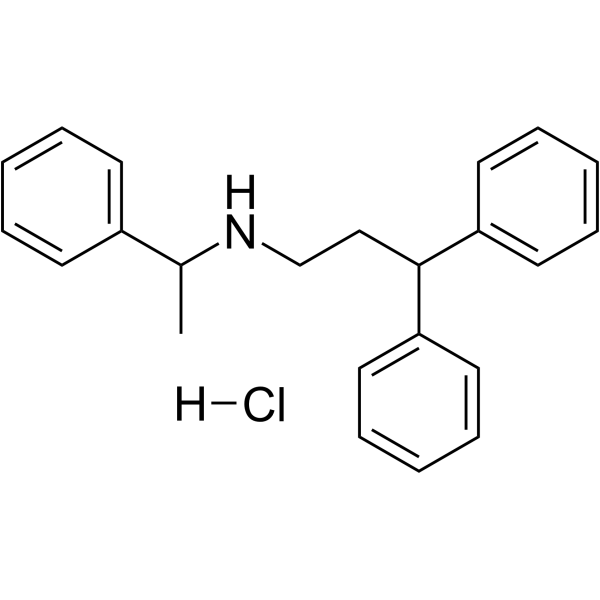
Fendiline hydrochloride, a diphenylalkylamine type of antianginal agent, is an L-type calcium channel blocker (IC50 of 17 µM). Fendiline hydrochloride is also a selective K-Ras inhibitor, and has no effect on H-Ras and N-Ras. Fendiline hydrochloride inhibits K-Ras plasma membrane localization (IC50 of 9.64 μM), inhibits K-Ras signal output and blocks the proliferation of pancreatic, colon, lung, and endometrial cancer cell lines expressing oncogenic mutant K-Ras. Fendiline hydrochloride is a STING agonist and is able to inhibit the growth of multiple refractory cold tumors (MC38, CT26 and B16F10).
For research use only. We do not sell to patients.
- Purity : 99.78%
- CAS No.: 13636-18-5
- Formula: C23H26ClN
- Molecular Weight:351.91
-
Storage:
4°C, sealed storage, away from moisture
* In solvent : -80°C, 6 months; -20°C, 1 month (sealed storage, away from moisture)

To place orders, for customer services and technical support, please contact: MedChemExpress USA
Tel: 609-228-6898 E-mail: [email protected] [email protected]


-
 Biological Activity
-
Chemical Information
-
Solvent & Solubility
- Protocols
- Purity & Documentation
- References
-
 Help & FAQs


-
HY-15142
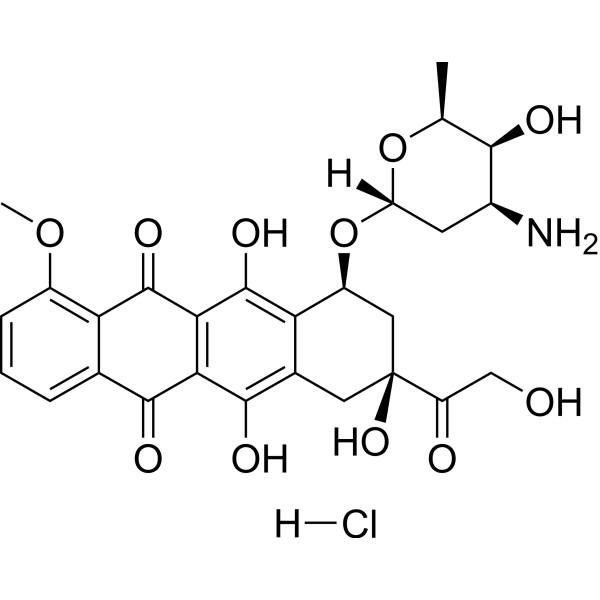
Doxorubicin hydrochlorideTopoisomerase Inhibitor -

HY-B0984R
Fendiline hydrochloride (Standard)L-type Calcium Channel Blocker -
HY-B1378
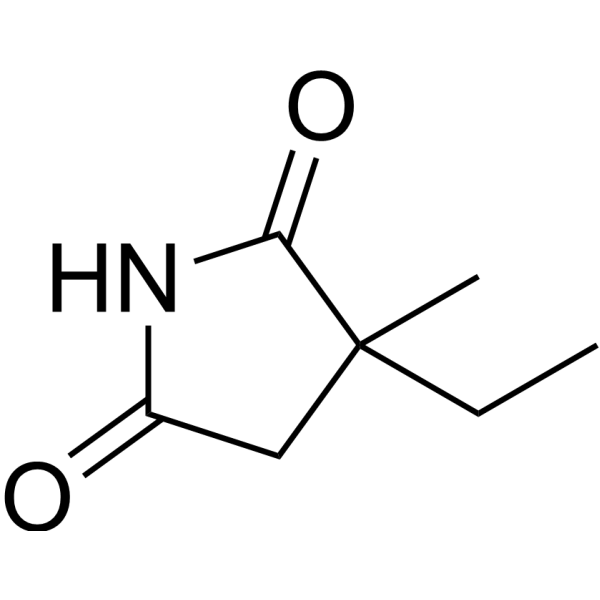
EthosuximideCalcium Channel Inhibitor -
HY-B0317B
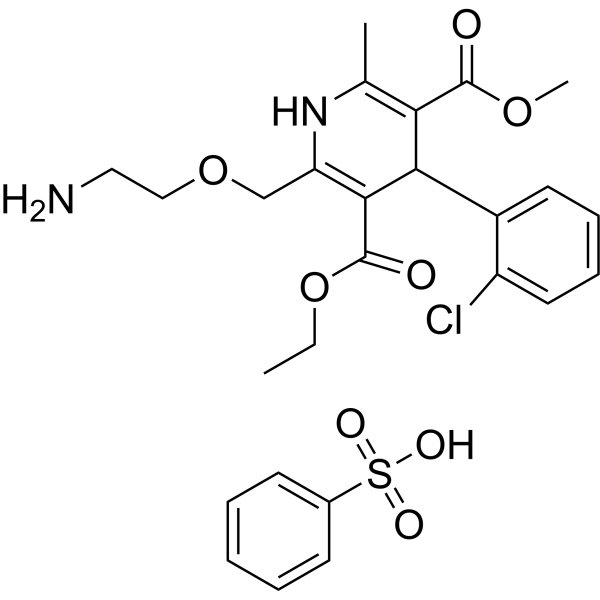
Amlodipine besylateCalcium Channel Blocker -
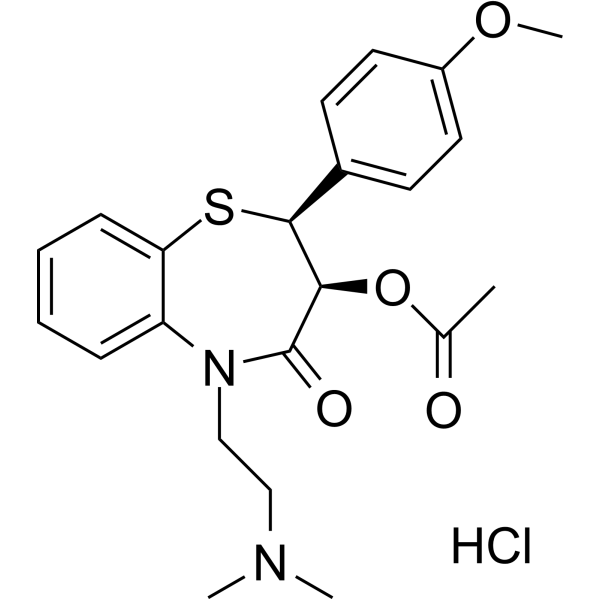
HY-14656
Diltiazem hydrochloride -
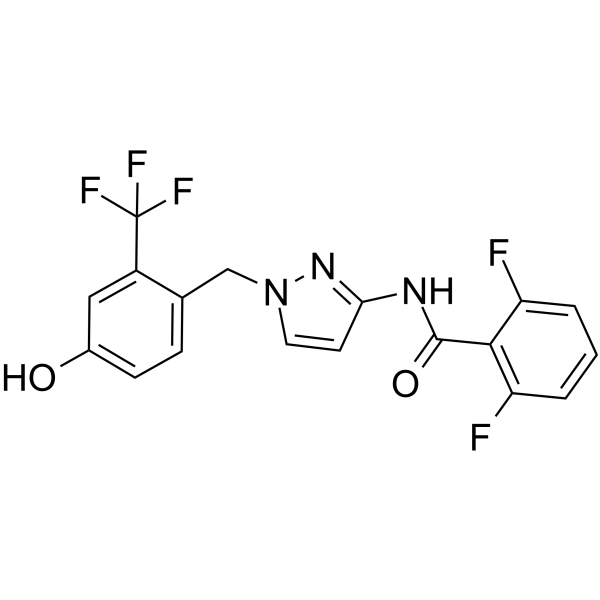
HY-12507
GSK-7975ACRAC Channel Inhibitor -
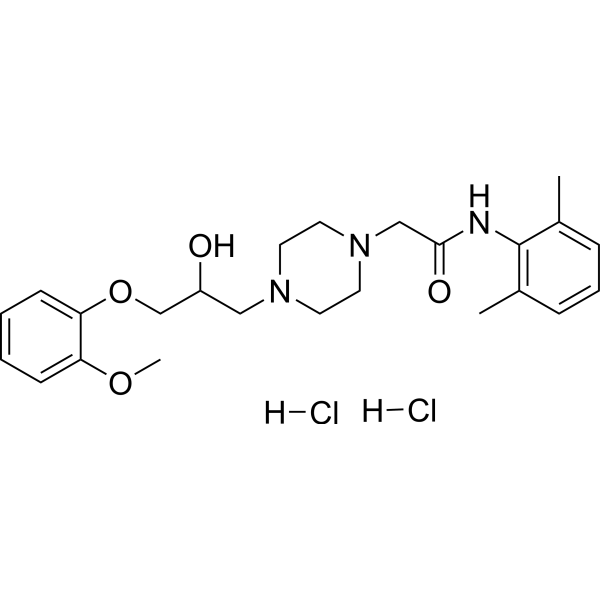
HY-17401
Ranolazine dihydrochlorideSodium Current/FAO Inhibitor -
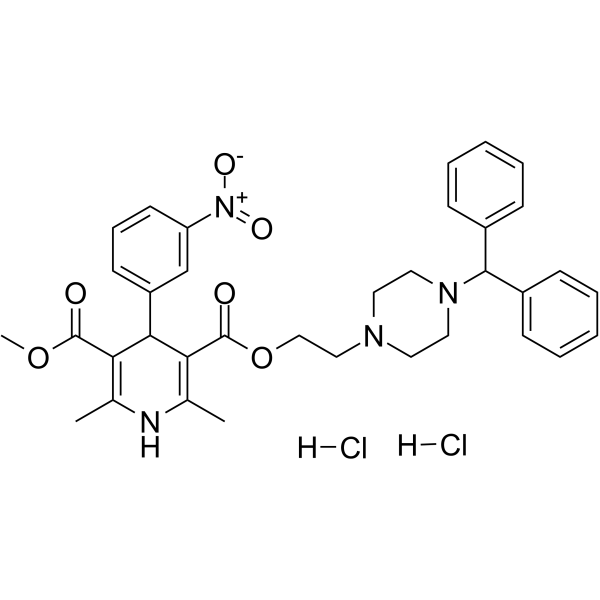
HY-17403
Manidipine dihydrochlorideCalcium Channel Antagonist -
HY-16952A
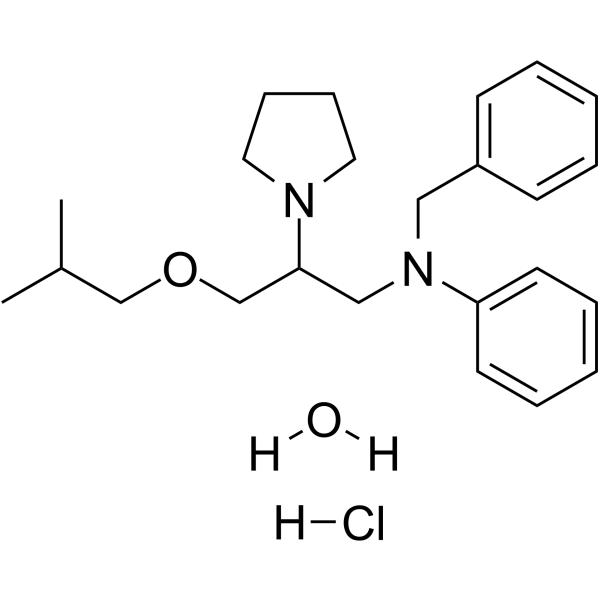
Bepridil hydrochloride hydrateCalcium Channel Antagonist -
HY-108608
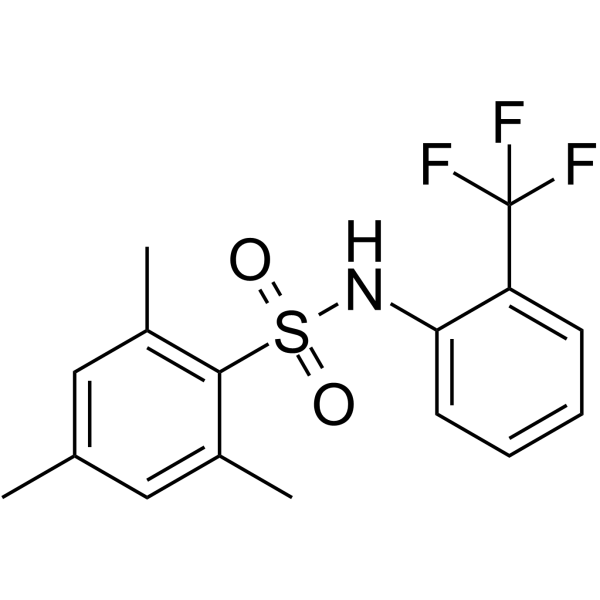
o-3M3FBSActive Compound -
HY-B0317BR
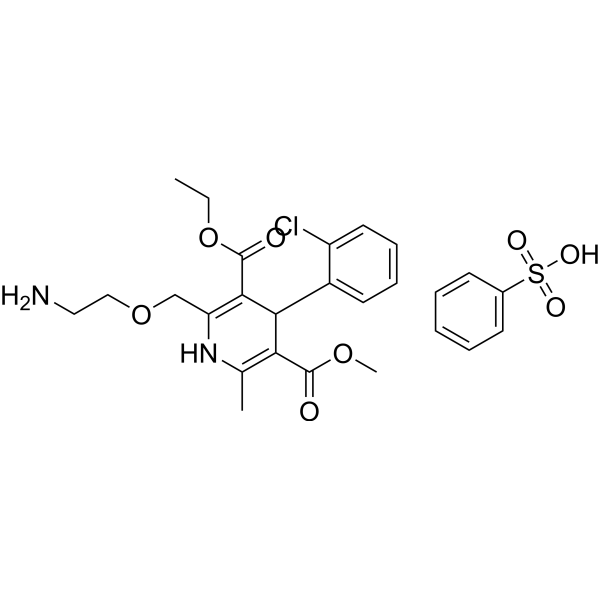
Amlodipine (besylate) (Standard)Calcium Channel Blocker -
HY-14744A
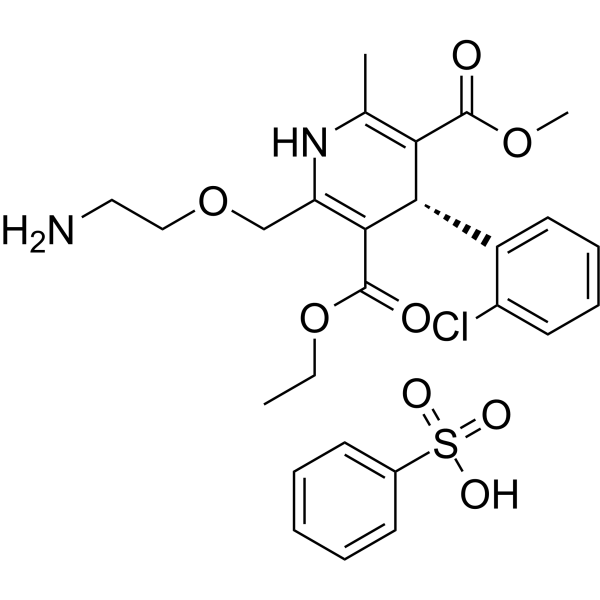
Levamlodipine besylateCalcium Channel Blocker
Publications Citing Use of MedChemExpress (MCE) Fendiline hydrochloride
MoreAll Calcium Channel Isoforms
More

Biological Activity
Description
In Vitro
Fendiline (0.3-100 µM) hydrochloride applies extracellularly inhibited the calcium channel current (ICa) in a concentration- and time-dependent manner[1].
Fendiline hydrochloride does not inhibit K-Ras posttranslational processing but significantly reduced nanoclustering of K-Ras and redistributed K-Ras from the plasma membrane to the endoplasmic reticulum (ER), Golgi apparatus, endosomes, and cytosol[2].
Fendiline (17 µM; 48 h) hydrochloride significantly inhibits signaling downstream of constitutively active K-Ras and endogenous K-Ras signaling in cells transformed by oncogenic H-Ras[2].
Fendiline (0-1.25 μM; 72 h) hydrochloride blocks the proliferation of pancreatic, colon, lung, and endometrial cancer cell lines expressing oncogenic mutant K-Ras[2].
Fendiline hydrochloride competes for [3H]Yohimbine binding to human platelets α2-adrenergic receptors with a Kd of 2.6 µM[3].
Fendiline (M335) (5-40 μM; 4 h) hydrochloride activates the STING-TBK1-IRF3 axis and induces autophagy (LC3-II upregulation) in a concentration-dependent manner in THP-1 cells[4].
Fendiline (20 μM; 4 h) hydrochloride fails to activate pTBK1, pIRF3, or upregulate IFNB, ISG15, CXCL10, and IL6 in THP-STING KO cells[4].
Fendiline (10-30 μM; 6 h) hydrochloride reduces the viral infection efficiency in a dose - dependent manner in THP-1 cells infected with HSV-1-GFP[4].
Fendiline (20 μM; 6 h) hydrochloride shows stronger antiviral activity against HSV-1-GFP in HeLa-STOE cells overexpressing STING than in STING-deficient HeLa cells[4].
MedChemExpress (MCE) has not independently confirmed the accuracy of these methods. They are for reference only. Further protocols information, click here.
-
Cell Line:MDCK cells stably expressing K-RasG12V
-
Concentration:2.5 µM, 5 µM, 7.5 µM, 10 µM, 12.5 µM, 15 µM
-
Incubation Time:48 h
-
Result:Inhibited the ERK and Akt activation with IC50s of 9.49 μM and 6.97 μM, respectively.
-
Cell Line:MDCK cells stably expressing K-RasG12V
-
Concentration:17 µM
-
Incubation Time:48 h
-
Result:Significantly reduced pMEK, pERK, and pAkt levels in BHK and MDCK cells expressing constitutively active H-RasG12V.
-
Cell Line:THP-1 cells
-
Concentration:5 μM, 10 μM, 20 μM, 40 μM
-
Incubation Time:2 h, 4 h, 6 h, 8 h
-
Result:The protein expression of pTBK1, pIRF3, and LC3-II increased in a concentration-dependent manner, indicating the activation of the STING pathway and autophagy.
In Vivo
Fendiline (5-20 mg/kg; intraperitoneal injection; every 2 days; 20 days) hydrochloride in BALB/c mice inoculated with CT26 or B16F10 tumors inhibits tumor growth in a dose - dependent manner and activates the systemic immune system (increasing CD45+, CD3+, CD8+, and NK+ cells in the spleen)[4].
MedChemExpress (MCE) has not independently confirmed the accuracy of these methods. They are for reference only.
-
Animal Model:C57BL/6J mice (female, 6-8 weeks old,) with subcutaneous MC38 tumors[4].
-
Dosage:300 μg
-
Administration:Intratumoral injection, every 2 days, for 20 days
-
Result:The tumor growth inhibition rate (TGI) was 82%.
There was no significant weight loss or organ toxicity.
-
Animal Model:BALB/c mice (female, 6-8 weeks old) with subcutaneous CT26 or B16F10 tumors[4].
-
Dosage:5 mg/kg, 10 mg/kg, 20 mg/kg
-
Administration:Intraperitoneal injection, every 2 days, for 20 days
-
Result:There was a dose-dependent tumor growth inhibition.
There was no significant systemic toxicity.


Chemical Information
-
CAS No. 13636-18-5
-
Appearance Solid
-
Molecular Weight 351.91
-
Formula C23H26ClN
-
Color White to off-white
-
SMILES
CC(NCCC(C1=CC=CC=C1)C2=CC=CC=C2)C3=CC=CC=C3.[H]Cl
-
Shipping
Room temperature in continental US; may vary elsewhere.
-
Storage
4°C, sealed storage, away from moisture
* In solvent : -80°C, 6 months; -20°C, 1 month (sealed storage, away from moisture)


Publications (3)
-
Journal Impact Factor
-
Most Recent
-
ACS Nano
2025 Aug 26;19(33):30525-30543. PMID: 40811768 -
J Adv Res
Calcium Influx: An Essential Process by which α-Synuclein Regulates Morphology of Erythrocytes. [Abstract]2024 Aug:62:187-198. PMID: 37714326 -
Mol Pharm
Radionuclide-Aided Improvement of the Therapeutic Efficacy of Novel Antibody-Drug Conjugates against HER2-Expressing Cancers. [Abstract]2025 Jul 7;22(7):3793-3802. PMID: 40448644


Solvent & Solubility
In Vitro:
DMSO : ≥ 30 mg/mL (85.25 mM; Hygroscopic DMSO has a significant impact on the solubility of product, please use newly opened DMSO)
H2O : 1.82 mg/mL (5.17 mM; ultrasonic and warming and heat to 60°C)
* "≥" means soluble, but saturation unknown.
Please refer to the solubility information to select the appropriate solvent. Once prepared, please aliquot and store the solution to prevent product inactivation from repeated freeze-thaw cycles.
Storage method and period of stock solution: -80°C, 6 months; -20°C, 1 month (sealed storage, away from moisture). When stored at -80°C, please use it within 6 months. When stored at -20°C, please use it within 1 month.
* Note: If you choose water as the stock solution, please dilute it to the working solution, then filter and sterilize it with a 0.22 μm filter before use.
Please refer to the solubility information to select the appropriate solvent. Once prepared, please aliquot and store the solution to prevent product inactivation from repeated freeze-thaw cycles.
Storage method and period of stock solution: -80°C, 6 months; -20°C, 1 month (sealed storage, away from moisture). When stored at -80°C, please use it within 6 months. When stored at -20°C, please use it within 1 month.
* Note: If you choose water as the stock solution, please dilute it to the working solution, then filter and sterilize it with a 0.22 μm filter before use.
Concentration (start) × Volume (start) = Concentration (final) × Volume (final)
In Vivo:
Select the appropriate dissolution method based on your experimental animal and administration route.
- For the following dissolution methods, please ensure to first prepare a clear stock solution using an In Vitro approach and then sequentially add co-solvents:
- To ensure reliable experimental results, the clarified stock solution can be appropriately stored based on storage conditions. As for the working solution for In Vivo experiments, it is recommended to prepare freshly and use it on the same day.
- The percentages shown for the solvents indicate their volumetric ratio in the final prepared solution. If precipitation or phase separation occurs during preparation, heat and/or sonication can be used to aid dissolution.
Add each solvent one by one: 10% DMSO 40% PEG300 5% Tween-80 45% Saline
Solubility: ≥ 2.08 mg/mL (5.91 mM); Clear solution
This protocol yields a clear solution of ≥ 2.08 mg/mL (saturation unknown).
Taking 1 mL working solution as an example, add 100 μL DMSO stock solution (20.8 mg/mL) to 400 μL PEG300, and mix evenly; then add 50 μL Tween-80 and mix evenly; then add 450 μL Saline to adjust the volume to 1 mL.
Preparation of Saline: Dissolve 0.9 g sodium chloride in ddH₂O and dilute to 100 mL to obtain a clear Saline solution.
Add each solvent one by one: 10% DMSO 90% (20% SBE-β-CD in Saline)
Solubility: ≥ 2.08 mg/mL (5.91 mM); Clear solution
This protocol yields a clear solution of ≥ 2.08 mg/mL (saturation unknown).
Taking 1 mL working solution as an example, add 100 μL DMSO stock solution (20.8 mg/mL) to 900 μL 20% SBE-β-CD in Saline, and mix evenly.
Preparation of 20% SBE-β-CD in Saline (4°C, storage for one week): 2 g SBE-β-CD powder is dissolved in 10 mL Saline, completely dissolve until clear.
In Vivo Dissolution Calculator
Please enter the basic information of animal experiments:
-
-
-
-
Recommended: Prepare an additional quantity of animals to account for potential losses during experiments.
Please enter your animal formula composition:
-
%DMSO +
Recommended: Keep the proportion of DMSO in working solution below 2% if your animal is weak.
-
%+
-
+%Tween-80 + +
-
%Saline +
The co-solvents required include: DMSO, . All of co-solvents are available by MedChemExpress (MCE). , Tween 80. All of co-solvents are available by MedChemExpress (MCE).
Working solution concentration: 0.22 mg/mL
Method for preparing stock solution: mg drug dissolved in μL DMSO. Stock solution concentration: mg/mL. * In solvent : -80°C, 6 months; -20°C, 1 month (sealed storage, away from moisture)
1. Take μL DMSO stock solution;
2. Add μL .
μL , mix evenly;
3. Then add μL Tween 80, mix evenly;
4. Then add μL
Please ensure that the stock solution in the first step is dissolved to a clear state, and add co-solvents in sequence. You can use ultrasonic heating (ultrasonic cleaner, recommended frequency 20-40 kHz), vortexing, etc. to assist dissolution.

Protocols
-
Cell Cytotoxicity Assay
Cytotoxicity assays are usually based on the assessment of cell membrane damage, which can also be indirectly detected by measuring cell viability. Detection methods include MTT assay, CKK-8 assay, LDH assay and ATP assay, etc.
-
Cell Viability Determination by MTT Colorimetric Assay
The following protocol uses the MTT colorimetric assay as a classic literature-established method for assessing cell viability/metabolic activity in cultured mammalian cells. MTT[3-(4,5-dimethylthiazol-2-yl)-2,5-diphenyltetrazolium bromide] is reduced by metabolically active cells to a colored formazan product; the amount of formazan is quantified spectrophotometrically and provides an indirect measure of metabolically active viable cells. Importantly, MTT reduction reflects cellular oxidoreductase/metabolic activity rather than an absolute direct count of living cells, so changes in cellular metabolism can alter the signal independently of cell number.


Purity & Documentation
-
Data Sheet (282 KB)
-
SDS (394 KB)
- English - EN (394 KB)
- Français - FR (394 KB)
- Deutsch - DE (394 KB)
- Norwegian - NO (394 KB)
- Español - ES (394 KB)
- Swedish - SV (394 KB)
- Italian - IT (394 KB)
- Korean - KR (394 KB)
- Portuguese - PT (394 KB)
-
Handling Instructions (2659 KB)
References
[1]. Tripathi O, et al. Fendiline inhibits L-type calcium channels in guinea-pig ventricular myocytes: a whole-cell patch-clamp study. Br J Pharmacol. 1993 Apr;108(4):865-9. [Content Brief]
[2]. van der Hoeven D, et al. Fendiline inhibits K-Ras plasma membrane localization and blocks K-Ras signal transmission. Mol Cell Biol. 2013 Jan;33(2):237-51. [Content Brief]
[3]. Motulsky HJ, et al. Interaction of verapamil and other calcium channel blockers with alpha 1- and alpha 2-adrenergic receptors. Circ Res. 1983 Feb;52(2):226-31. [Content Brief]
[4]. Zhao M, et al. M335, a novel small-molecule STING agonist activates the immune response and exerts antitumor effects. Eur J Med Chem. 2023 Dec 2;264:116018. [Content Brief]


Complete Stock Solution Preparation Table
Please refer to the solubility information to select the appropriate solvent. Once prepared, please aliquot and store the solution to prevent product inactivation from repeated freeze-thaw cycles.
Storage method and period of stock solution: -80°C, 6 months; -20°C, 1 month (sealed storage, away from moisture). When stored at -80°C, please use it within 6 months. When stored at -20°C, please use it within 1 month.
| Optional Solvent | Concentration Solvent Mass | 1 mg | 5 mg | 10 mg | 25 mg |
|---|---|---|---|---|---|
| H2O / DMSO | 1 mM | 2.8416 mL | 14.2082 mL | 28.4164 mL | 71.0409 mL |
| 5 mM | 0.5683 mL | 2.8416 mL | 5.6833 mL | 14.2082 mL | |
| DMSO | 10 mM | 0.2842 mL | 1.4208 mL | 2.8416 mL | 7.1041 mL |
| 15 mM | 0.1894 mL | 0.9472 mL | 1.8944 mL | 4.7361 mL | |
| 20 mM | 0.1421 mL | 0.7104 mL | 1.4208 mL | 3.5520 mL | |
| 25 mM | 0.1137 mL | 0.5683 mL | 1.1367 mL | 2.8416 mL | |
| 30 mM | 0.0947 mL | 0.4736 mL | 0.9472 mL | 2.3680 mL | |
| 40 mM | 0.0710 mL | 0.3552 mL | 0.7104 mL | 1.7760 mL | |
| 50 mM | 0.0568 mL | 0.2842 mL | 0.5683 mL | 1.4208 mL | |
| 60 mM | 0.0474 mL | 0.2368 mL | 0.4736 mL | 1.1840 mL | |
| 80 mM | 0.0355 mL | 0.1776 mL | 0.3552 mL | 0.8880 mL |
* Note: If you choose water as the stock solution, please dilute it to the working solution, then filter and sterilize it with a 0.22 μm filter before use.


Fendiline hydrochloride Related Classifications
HY-B0984 Related Classifications
 Powered by Bioz