
1. Search Result
Search Result
Results for "

L-Phenylalanine-d

" in MedChemExpress (MCE) Product Catalog:

47

Inhibitors & Agonists

3

Biochemical Assay Reagents

8

Peptides

4

Natural
Products

23

Isotope-Labeled Compounds

1

Oligonucleotides

Cat. No. Product Name Target Research Areas Chemical Structure
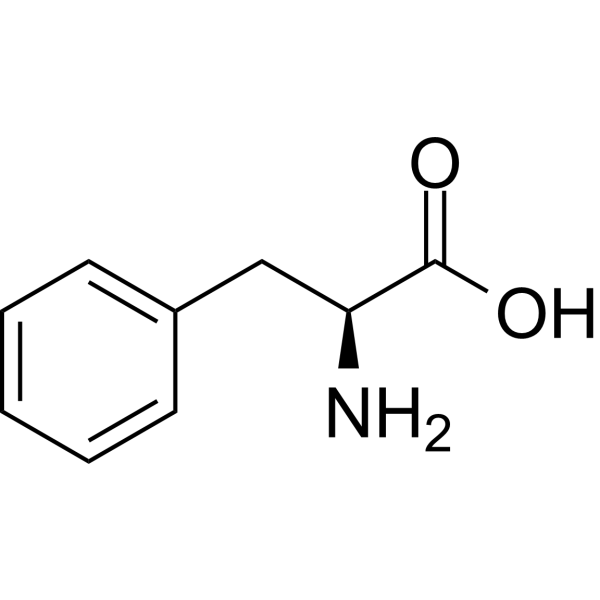
  • HY-N0215
    L-Phenylalanine
    5+ Cited Publications

    (S)-2-Amino-3-phenylpropionic acid

    Calcium Channel iGluR Endogenous Metabolite Ligands for E3 Ligase Metabolic Disease Cancer
    L-Phenylalanine ((S)-2-Amino-3-phenylpropionic acid) is an essential amino acid isolated from Escherichia coli. L-Phenylalanine is a α2δ subunit of voltage-dependent Ca + channels antagonist with a Ki of 980 nM. L-phenylalanine is a competitive antagonist for the glycine- and glutamate-binding sites of N-methyl-D-aspartate receptors (NMDARs) (KB of 573 μM ) and non-NMDARs, respectively. L-Phenylalanine is widely used in the production of food flavors and pharmaceuticals .
    L-Phenylalanine
  • HY-Y0068
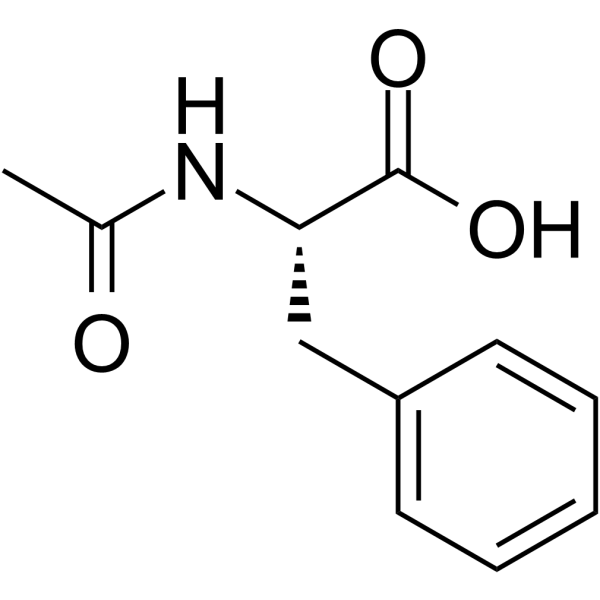
    N-Acetyl-L-phenylalanine
    1 Publications Verification

    N-AcetylPhenylalanine

    Endogenous Metabolite Endocrinology
    N-Acetyl-L-phenylalanine (N-Acetylphenylalanine) is a principal acylamino acid. N-Acetyl-L-phenylalanine can be synthesized from L-phenylalanine and acetyl-CoA. N-Acetyl-L-phenylalanine can be used in kidney research .
    N-Acetyl-L-phenylalanine
  • HY-N0215S12
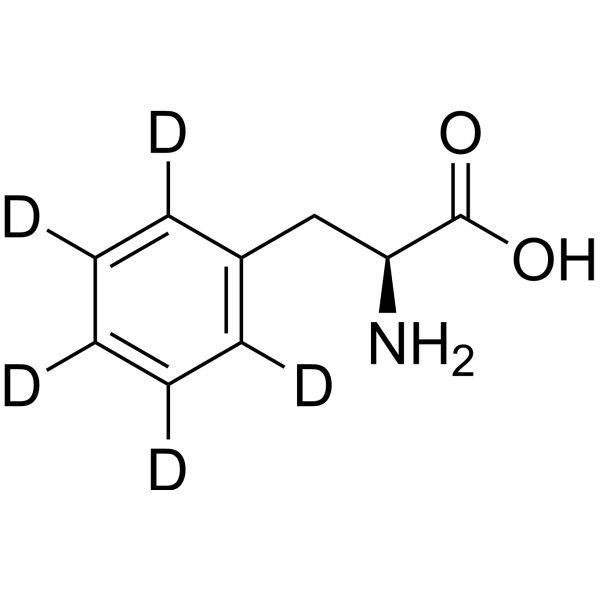
    L-Phenylalanine-d5
    1 Publications Verification

    (S)-2-Amino-3-phenylpropionic acid-d5

    Calcium Channel iGluR Endogenous Metabolite Metabolic Disease
    L-Phenylalanine-d5 is the deuterium labeled L-Phenylalanine. L-Phenylalanine ((S)-2-Amino-3-phenylpropionic acid) is an essential amino acid isolated from Escherichia coli. L-Phenylalanine is a α2δ subunit of voltage-dependent Ca+ channels antagonist with a Ki of 980 nM. L-phenylalanine is a competitive antagonist for the glycine- and glutamate-binding sites of N-methyl-D-aspartate receptors (NMDARs) (KB of 573 μM ) and non-NMDARs, respectively. L-Phenylalanine is widely used in the production of food flavors and pharmaceuticals .
    L-Phenylalanine-d5
  • HY-N0215S1
    L-Phenylalanine-d8
    1 Publications Verification

    (S)-2-Amino-3-phenylpropionic acid-d8

    Calcium Channel iGluR Endogenous Metabolite Metabolic Disease
    L-Phenylalanine-d8 is the deuterium labeled L-Phenylalanine. L-Phenylalanine ((S)-2-Amino-3-phenylpropionic acid) is an essential amino acid isolated from Escherichia coli. L-Phenylalanine is a α2δ subunit of voltage-dependent Ca+ channels antagonist with a Ki of 980 nM. L-phenylalanine is a competitive antagonist for the glycine- and glutamate-binding sites of N-methyl-D-aspartate receptors (NMDARs) (KB of 573 μM ) and non-NMDARs, respectively. L-Phenylalanine is widely used in the production of food flavors and pharmaceuticals .
    L-Phenylalanine-d8
  • HY-N0215S8
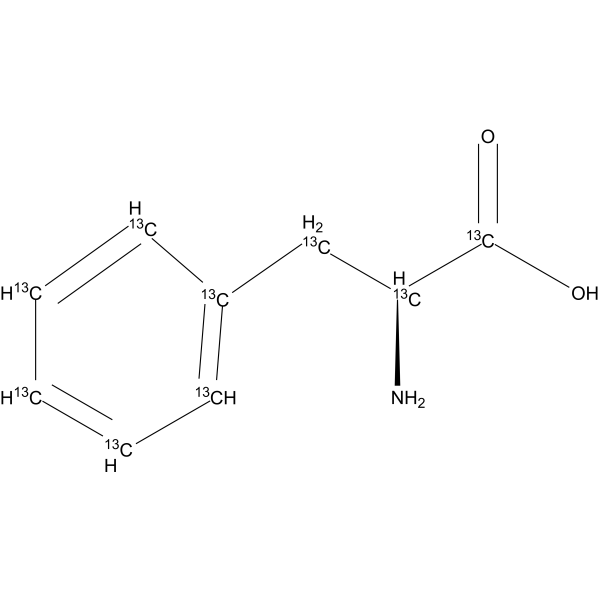
    L-Phenylalanine-13C6
    1 Publications Verification

    (S)-2-Amino-3-phenylpropionic acid-13C6

    Isotope-Labeled Compounds Calcium Channel iGluR Endogenous Metabolite Metabolic Disease
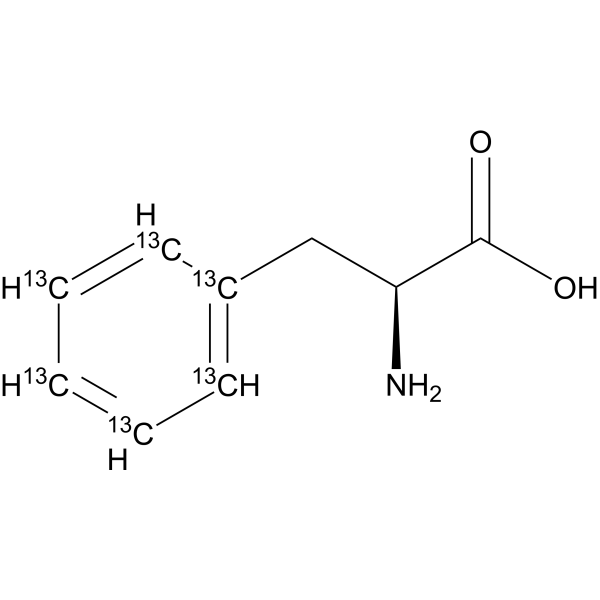
    L-Phenylalanine- 13C6 is the 13C-labeled L-Phenylalanine. L-Phenylalanine ((S)-2-Amino-3-phenylpropionic acid) is an essential amino acid isolated from Escherichia coli. L-Phenylalanine is a α2δ subunit of voltage-dependent Ca+ channels antagonist with a Ki of 980 nM. L-phenylalanine is a competitive antagonist for the glycine- and glutamate-binding sites of N-methyl-D-aspartate receptors (NMDARs) (KB of 573 μM ) and non-NMDARs, respectively. L-Phenylalanine is widely used in the production of food flavors and pharmaceuticals .
    L-Phenylalanine-13C6
  • HY-N0215S10
    L-Phenylalanine-13C9
    1 Publications Verification

    (S)-2-Amino-3-phenylpropionic acid-13C9

    Isotope-Labeled Compounds Calcium Channel iGluR Endogenous Metabolite Metabolic Disease
    L-Phenylalanine- 13C9 is the 13C-labeled L-Phenylalanine. L-Phenylalanine ((S)-2-Amino-3-phenylpropionic acid) is an essential amino acid isolated from Escherichia coli. L-Phenylalanine is a α2δ subunit of voltage-dependent Ca+ channels antagonist with a Ki of 980 nM. L-phenylalanine is a competitive antagonist for the glycine- and glutamate-binding sites of N-methyl-D-aspartate receptors (NMDARs) (KB of 573 μM ) and non-NMDARs, respectively. L-Phenylalanine is widely used in the production of food flavors and pharmaceuticals .
    L-Phenylalanine-13C9
  • HY-N0215R

    (S)-2-Amino-3-phenylpropionic acid (Standard)

    Reference Standards Calcium Channel iGluR Endogenous Metabolite Metabolic Disease
    L-Phenylalanine (Standard) is the analytical standard of L-Phenylalanine. This product is intended for research and analytical applications. L-Phenylalanine ((S)-2-Amino-3-phenylpropionic acid) is an essential amino acid isolated from Escherichia coli. L-Phenylalanine is a α2δ subunit of voltage-dependent Ca+ channels antagonist with a Ki of 980 nM. L-phenylalanine is a competitive antagonist for the glycine- and glutamate-binding sites of N-methyl-D-aspartate receptors (NMDARs) (KB of 573 μM ) and non-NMDARs, respectively. L-Phenylalanine is widely used in the production of food flavors and pharmaceuticals .
    L-Phenylalanine (Standard)
  • HY-N0215S5

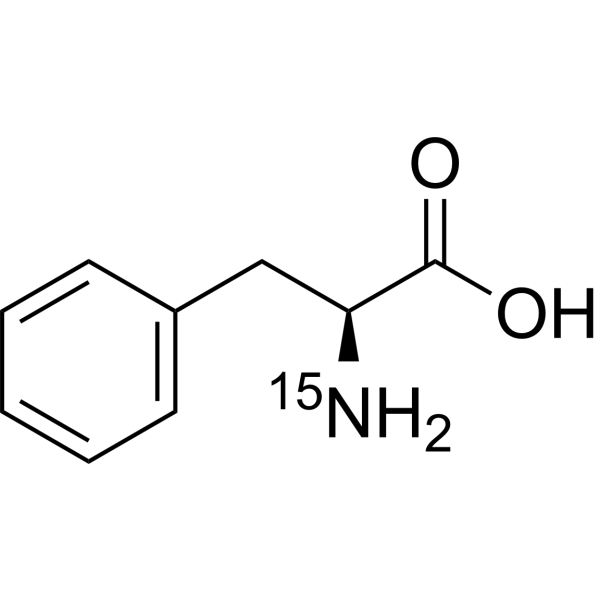
    (S)-2-Amino-3-phenylpropionic acid-15N

    Isotope-Labeled Compounds Calcium Channel iGluR Endogenous Metabolite Metabolic Disease
    L-Phenylalanine- 15N is the 15N-labeled L-Phenylalanine. L-Phenylalanine ((S)-2-Amino-3-phenylpropionic acid) is an essential amino acid isolated from Escherichia coli. L-Phenylalanine is a α2δ subunit of voltage-dependent Ca+ channels antagonist with a Ki of 980 nM. L-phenylalanine is a competitive antagonist for the glycine- and glutamate-binding sites of N-methyl-D-aspartate receptors (NMDARs) (KB of 573 μM ) and non-NMDARs, respectively. L-Phenylalanine is widely used in the production of food flavors and pharmaceuticals .
    L-Phenylalanine-15N
  • HY-N0215S11

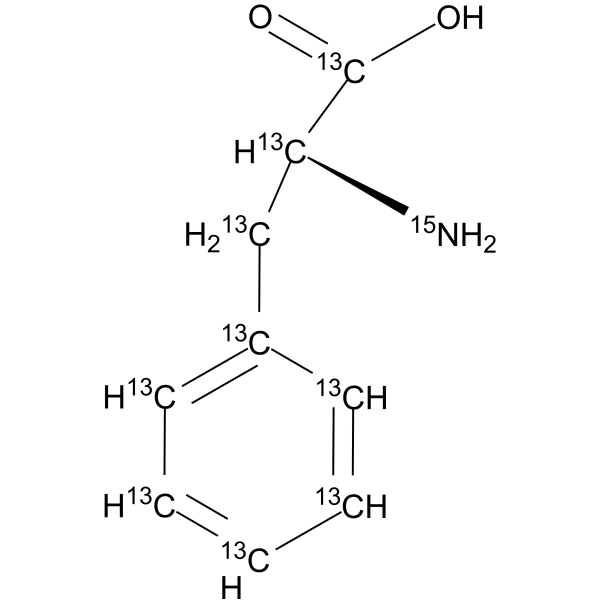
    (S)-2-Amino-3-phenylpropionic acid-13C9,15N

    Calcium Channel iGluR Endogenous Metabolite Metabolic Disease
    L-Phenylalanine- 13C9, 15N is the 13C- and 15N-labeled L-Phenylalanine. L-Phenylalanine ((S)-2-Amino-3-phenylpropionic acid) is an essential amino acid isolated from Escherichia coli. L-Phenylalanine is a α2δ subunit of voltage-dependent Ca+ channels antagonist with a Ki of 980 nM. L-phenylalanine is a competitive antagonist for the glycine- and glutamate-binding sites of N-methyl-D-aspartate receptors (NMDARs) (KB of 573 μM ) and non-NMDARs, respectively. L-Phenylalanine is widely used in the production of food flavors and pharmaceuticals .
    L-Phenylalanine-13C9,15N
  • HY-134230

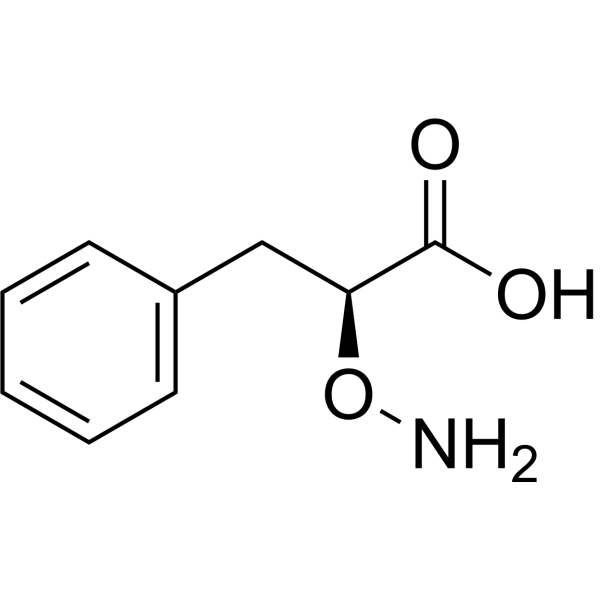
    L-α-aminooxy-β-phenylpropionic acid; AOPP

    Biochemical Assay Reagents Metabolic Disease
    L-2-Aminooxy-3-phenylpropanoic acid (L-α-aminooxy-β-phenylpropionic acid; AOPP) is an inhibitor of L-phenylalanine ammonia-lyase (PAL). L-2-Aminooxy-3-phenylpropanoic acid inhibits lignification without reducing the number of tracheary elements formed .
    L-2-Aminooxy-3-phenylpropanoic acid
  • HY-N0215S3

    (S)-2-Amino-3-phenylpropionic acid-d2

    Calcium Channel iGluR Endogenous Metabolite Metabolic Disease
    L-Phenylalanine-d2 is the deuterium labeled L-Phenylalanine. L-Phenylalanine ((S)-2-Amino-3-phenylpropionic acid) is an essential amino acid isolated from Escherichia coli. L-Phenylalanine is a α2δ subunit of voltage-dependent Ca+ channels antagonist with a Ki of 980 nM. L-phenylalanine is a competitive antagonist for the glycine- and glutamate-binding sites of N-methyl-D-aspartate receptors (NMDARs) (KB of 573 μM ) and non-NMDARs, respectively. L-Phenylalanine is widely used in the production of food flavors and pharmaceuticals .
    L-Phenylalanine-d2
  • HY-N0215S7
    L-Phenylalanine-3-13C
    1 Publications Verification

    (S)-2-Amino-3-phenylpropionic acid-3-13C

    Calcium Channel iGluR Endogenous Metabolite Metabolic Disease
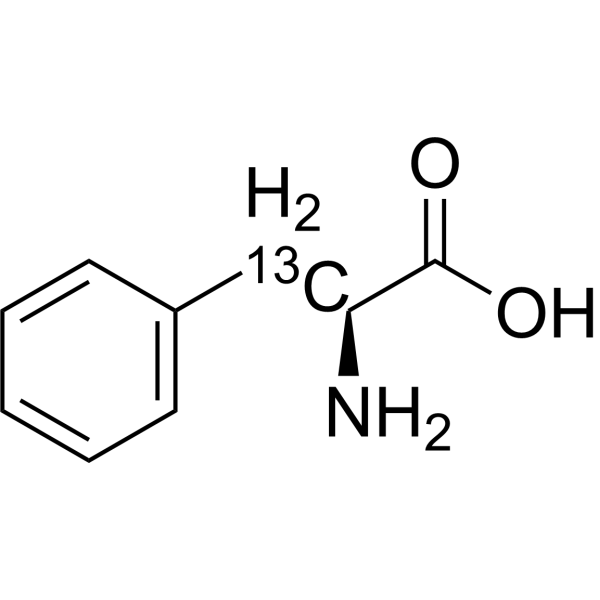
    L-Phenylalanine-3- 13C is the 13C-labeled L-Phenylalanine. L-Phenylalanine ((S)-2-Amino-3-phenylpropionic acid) is an essential amino acid isolated from Escherichia coli. L-Phenylalanine is a α2δ subunit of voltage-dependent Ca+ channels antagonist with a Ki of 980 nM. L-phenylalanine is a competitive antagonist for the glycine- and glutamate-binding sites of N-methyl-D-aspartate receptors (NMDARs) (KB of 573 μM ) and non-NMDARs, respectively. L-Phenylalanine is widely used in the production of food flavors and pharmaceuticals .
    L-Phenylalanine-3-13C
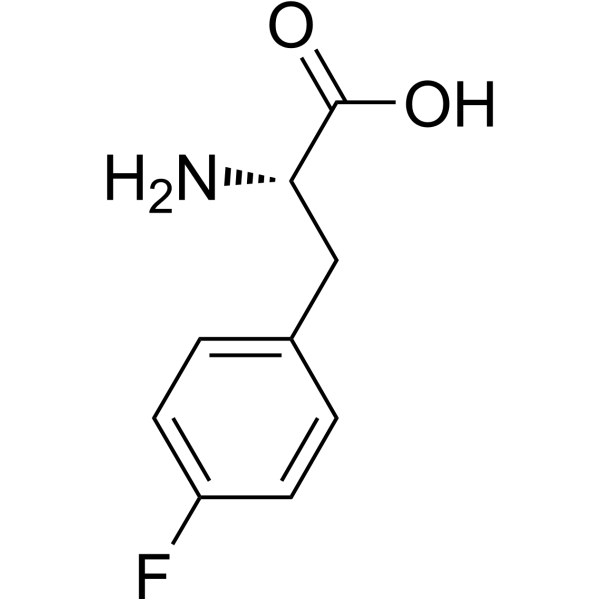
  • HY-W002291

    4-Fluoro-L-Phenylalanine

    Drug Derivative Infection
    p-Fluoro-L-phenylalanine (4-Fluoro-L-phenylalanine) is a fluorinated derivative of L-phenylalanine (HY-N0215). p-Fluoro-L-phenylalanine specifically binds to the L-leucine-specific receptor of Escherichia coli, with a Kd value of 0.26 μM .
    p-Fluoro-L-phenylalanine
  • HY-169794

    DNA/RNA Synthesis Others
    N-Palmitoyl-phenylalanine is an N-acyl amide that contains the long-chain saturated fatty acid Palmitic acid (HY-N0830) conjugated via an amide bond to the essential amino acid L-Phenylalanine (HY-N0215). N-Palmitoyl-phenylalanine inhibits pre-mRNA splicing in HeLa cell nuclear lysates (IC50 > 400 μM) but has no splicing activity in intact HeLa cells .
    N-Palmitoyl-phenylalanine
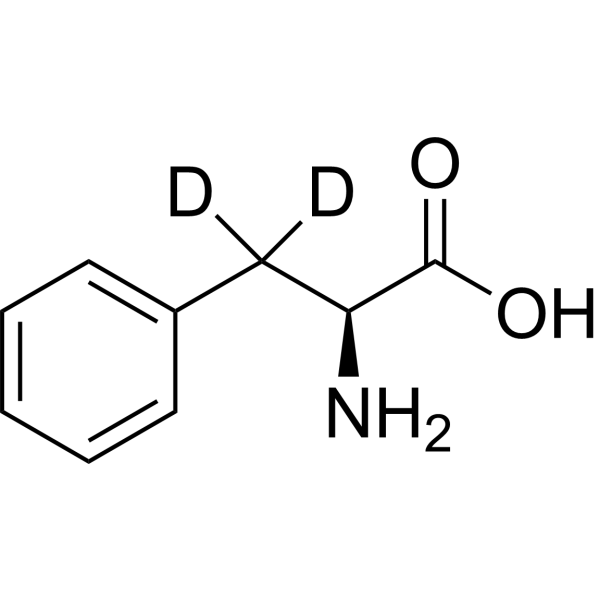
  • HY-178251S

    Isotope-Labeled Compounds Calcium Channel iGluR Endogenous Metabolite Metabolic Disease Cancer
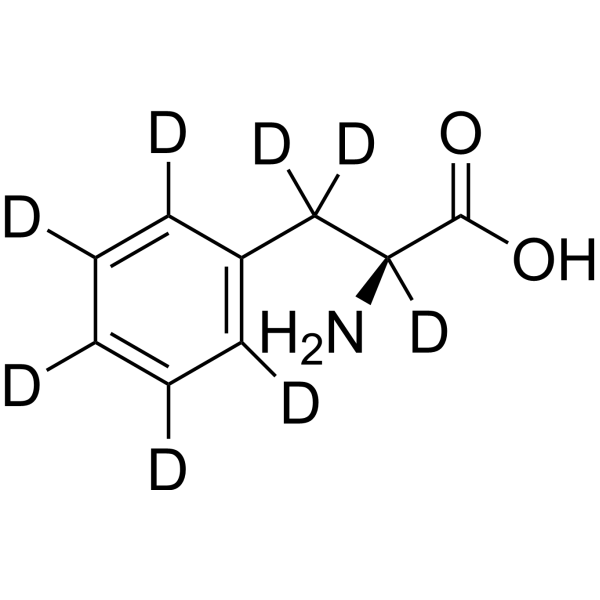
    L-Phenylalanine-d is the deuterium labeled L-Phenylalanine (HY-N0215). L-Phenylalanine ((S)-2-Amino-3-phenylpropionic acid) is an essential amino acid isolated from Escherichia coli. L-Phenylalanine is a α2δ subunit of voltage-dependent Ca 2+ channels antagonist with a Ki of 980 nM. L-phenylalanine is a competitive antagonist for the glycine- and glutamate-binding sites of N-methyl-D-aspartate receptors (NMDARs) (KB of 573 μM ) and non-NMDARs, respectively. L-Phenylalanine is widely used in the production of food flavors and pharmaceuticals .
    L-Phenylalanine-d
  • HY-N0215S2
    L-Phenylalanine-13C
    1 Publications Verification

    (S)-2-Amino-3-phenylpropionic acid-13C

    Isotope-Labeled Compounds Calcium Channel iGluR Endogenous Metabolite Metabolic Disease
    L-Phenylalanine- 13C is the 13C-labeled L-Phenylalanine. L-Phenylalanine ((S)-2-Amino-3-phenylpropionic acid) is an essential amino acid isolated from Escherichia coli. L-Phenylalanine is a α2δ subunit of voltage-dependent Ca+ channels antagonist with a Ki of 980 nM. L-phenylalanine is a competitive antagonist for the glycine- and glutamate-binding sites of N-methyl-D-aspartate receptors (NMDARs) (KB of 573 μM ) and non-NMDARs, respectively. L-Phenylalanine is widely used in the production of food flavors and pharmaceuticals .
    L-Phenylalanine-13C
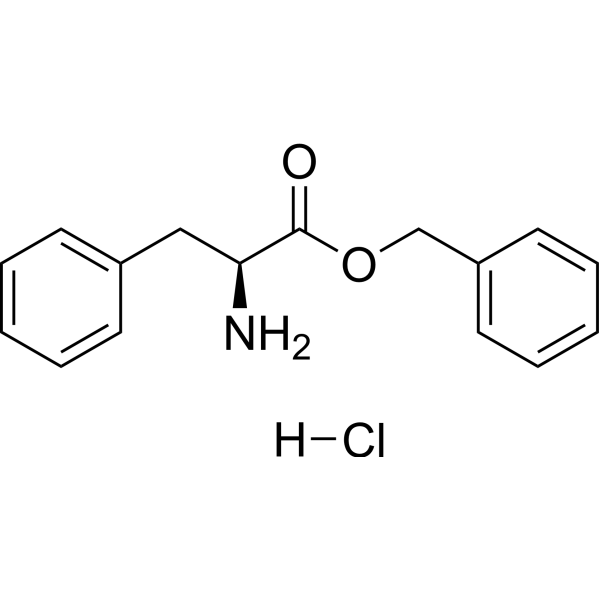
  • HY-79908A

    Amino Acid Derivatives Others
    L-Phenylalanine benzyl ester (hydrochloride) is a phenylalanine derivative .
    L-Phenylalanine benzyl ester hydrochloride
  • HY-P2964

    Endogenous Metabolite Metabolic Disease
    Phenylalanine dehydrogenase is an NAD +-dependent oxidoreductase targeting L-phenylalanine. Phenylalanine dehydrogenase catalyzes deamination to phenylpyruvate and NADH as part of amino acid metabolism regulation. Phenylalanine dehydrogenase is promising for research of phenylketonuria (PKU) .
    Phenylalanine dehydrogenase
  • HY-P2825

    TDC; TyrDC

    Endogenous Metabolite Others
    Tyrosine decarboxylase, Microorganism (TDC) is a tyrosine decarboxylase produced by microorganisms. Tyrosine decarboxylase is a PLP-dependent enzyme that catalyzes the decarboxylation of L-tyrosine, L-phenylalanine, and L-dopa to produce tyramine, 2-phenethylamine, and dopamine, respectively. Tyrosine decarboxylase mediates acid stress resistance, maintains intracellular pH homeostasis, and generates proton motive force .
    Tyrosine decarboxylase, Microorganism
  • HY-P10563

    BHV-1100

    CD38 Cancer
    Noraramtide (BHV-1100) is an antibody recruitment molecule. Noraramtide can specifically bind to CD38 molecules to recruit natural killer (NK) cells. Noraramtide enhances the ability of NK cells to kill tumor cells through antibody-dependent cellular cytotoxicity (ADCC). This mechanism allows NK cells to more effectively recognize and eliminate tumor cells while avoiding mutual killing between NK cells. Noraramtide can be used for the study of autologous cancer immunity .
    Noraramtide
  • HY-N0215S14

    (S)-2-Amino-3-phenylpropionic acid-15N,d8

    Isotope-Labeled Compounds Calcium Channel iGluR Endogenous Metabolite Metabolic Disease
    L-Phenylalanine- 15N,d8 is the deuterium and 15N-labeled L-Phenylalanine. L-Phenylalanine ((S)-2-Amino-3-phenylpropionic acid) is an essential amino acid isolated from Escherichia coli. L-Phenylalanine is a α2δ subunit of voltage-dependent Ca2+ channels antagonist with a Ki of 980 nM. L-phenylalanine is a competitive antagonist for the glycine- and glutamate-binding sites of N-methyl-D-aspartate receptors (NMDARs) (KB of 573 μM ) and non-NMDARs, respectively. L-Phenylalanine is widely used in the production of food flavors and pharmaceuticals .
    L-Phenylalanine-15N,d8
  • HY-79096

    Biochemical Assay Reagents Drug Intermediate Others
    Boc-L-phenylalanine is a Boc-protected L-phenylalanine that can be used in the synthesis of other active compounds. Boc-L-phenylalanine is also a capping agent .
    Boc-L-phenylalanine
  • HY-164431

    Amino Acid Derivatives Others
    4-(Azidomethyl)-L-phenylalanine is an unnatural amino acid with an azidomethyl group at position 4 of L-phenylalanine. 4-(Azidomethyl)-L-phenylalanine can be used as a reporter for probing protein hydration through addition of an azide group .
    4-(Azidomethyl)-L-phenylalanine
  • HY-P3350

    Bacterial Infection
    LS-BF1 is a stable and low toxic cationic antimicrobial peptide. LS-BF1 displays broad spectrum of antibacterial activity, including the challenging ESKAPE pathogens, by cell membrane disruptive mechanism. LS-BF1 shows good in vivo efficacy for elimination of bacteria in a mouse infection model[1].
    LS-BF1
  • HY-N0215S6

    2-Amino-3-phenylpropionic acid-d5 hydrochloride

    Isotope-Labeled Compounds Calcium Channel iGluR Endogenous Metabolite Metabolic Disease
    DL-Phenylalanine-d5 (hydrochloride) is the deuterium labeled DL-Phenylalanine hydrochloride. L-Phenylalanine hydrochloride is an essential amino acid isolated from Escherichia coli. L-Phenylalanine hydrochloride is a α2δ subunit of voltage-dependent Ca+ channels antagonist with a Ki of 980 nM. L-phenylalanine hydrochloride is a competitive antagonist for the glycine- and glutamate-binding sites of N-methyl-D-aspartate receptors (NMDARs) (KB of 573 μM ) and non-NMDARs, respectively. L-Phenylalanine hydrochloride is widely used in the production of food flavors and pharmaceuticals .
    DL-Phenylalanine-d5 hydrochloride
  • HY-N0215S

    (S)-2-Amino-3-phenylpropionic acid-d7

    Isotope-Labeled Compounds Calcium Channel iGluR Endogenous Metabolite Metabolic Disease
    L-Phenylalanine-d7 is the deuterium labeled L-Phenylalanine. L-Phenylalanine ((S)-2-Amino-3-phenylpropionic acid) is an essential amino acid isolated from Escherichia coli. L-Phenylalanine is a α2δ subunit of voltage-dependent Ca+ channels antagonist with a Ki of 980 nM. L-phenylalanine is a competitive antagonist for the glycine- and glutamate-binding sites of N-methyl-D-aspartate receptors (NMDARs) (KB of 573 μM ) and non-NMDARs, respectively. L-Phenylalanine is widely used in the production of food flavors and pharmaceuticals .
    L-Phenylalanine-d7
  • HY-N0215S13

    (S)-2-Amino-3-phenylpropionic acid-d1

    Isotope-Labeled Compounds Calcium Channel iGluR Endogenous Metabolite Metabolic Disease
    L-Phenylalanine-d is the deuterium labeled L-Phenylalanine. L-Phenylalanine ((S)-2-Amino-3-phenylpropionic acid) is an essential amino acid isolated from Escherichia coli. L-Phenylalanine is a α2δ subunit of voltage-dependent Ca+ channels antagonist with a Ki of 980 nM. L-phenylalanine is a competitive antagonist for the glycine- and glutamate-binding sites of N-methyl-D-aspartate receptors (NMDARs) (KB of 573 μM ) and non-NMDARs, respectively. L-Phenylalanine is widely used in the production of food flavors and pharmaceuticals .
    L-Phenylalanine-d1
  • HY-P2082

    GnRH Receptor Others
    [D-pGlu1,D-Phe2,D-NaI3,6]-Gn-RH is a gonadotropin-releasing hormone (Gn-RH) agonist that has a dose-dependent inhibitory activity on progesterone secretion from cultured human granulosa cells.
    [D-pGlu1,D-Phe2,D-NaI3,6]-Gn-RH
  • HY-79096S2

    Isotope-Labeled Compounds Biochemical Assay Reagents Drug Intermediate Others
    BOC-L-phenylalanine-d8 is the deuterium labeled BOC-L-phenylalanine (HY-79096). Boc-L-phenylalanine is a Boc-protected L-phenylalanine that can be used in the synthesis of other active compounds. Boc-L-phenylalanine is also a capping agent .
    BOC-L-phenylalanine-d8
  • HY-79096S1

    Isotope-Labeled Compounds Biochemical Assay Reagents Drug Intermediate Others
    BOC-L-phenylalanine-d5 is the deuterium labeled BOC-L-phenylalanine (HY-79096). Boc-L-phenylalanine is a Boc-protected L-phenylalanine that can be used in the synthesis of other active compounds. Boc-L-phenylalanine is also a capping agent .
    BOC-L-phenylalanine-d5
  • HY-105168

    Endothelin Receptor Cardiovascular Disease
    TAK 044 is an antagonist of Endothelin Receptor. TAK 044 strongly inhibits ET-induced deterioration in various animal models. TAK 044 can be used in study ET-related diseases such as acute myocardial infarction,acute renal failure, acute hepatic malfunction, and subarachnoid hemorrhage .
    TAK 044
  • HY-N0215S9

    (S)-2-Amino-3-phenylpropionic acid-13C9,15N,d8

    Isotope-Labeled Compounds Calcium Channel iGluR Endogenous Metabolite Metabolic Disease
    L-Phenylalanine- 13C9, 15N,d8 is the deuterium, 13C-, and 15-labeled L-Phenylalanine. L-Phenylalanine ((S)-2-Amino-3-phenylpropionic acid) is an essential amino acid isolated from Escherichia coli. L-Phenylalanine is a α2δ subunit of voltage-dependent Ca+ channels antagonist with a Ki of 980 nM. L-phenylalanine is a competitive antagonist for the glycine- and glutamate-binding sites of N-methyl-D-aspartate receptors (NMDARs) (KB of 573 μM ) and non-NMDARs, respectively. L-Phenylalanine is widely used in the production of food flavors and pharmaceuticals .
    L-Phenylalanine-13C9,15N,d8
  • HY-W013998S

    Gly-Phe-d2; H-Gly-Phe-OH-d2

    Isotope-Labeled Compounds Amino Acid Derivatives Others
    Glycyl-L-phenylalanine-d2 is a deuterium labeled Glycyl-L-phenylalanine (HY-W013998). Glycyl-L-phenylalanine is a phenylalanine derivative.
    Glycyl-L-phenylalanine-d2
  • HY-W329113

    Biochemical Assay Reagents Others
    L-Phenylalanine 7-amido-4-methylcoumarin (trifluoroacetate) is a biochemical reagent.
    L-Phenylalanine 7-amido-4-methylcoumarin trifluoroacetate
  • HY-79909

    Amino Acid Derivatives Others
    L-Phenylalanine, N-[N-[(1,1-dimethylethoxy)carbonyl]-D-leucyl]-, phenylmethyl ester is a phenylalanine derivative .
    L-Phenylalanine, N-[N-[(1,1-dimethylethoxy)carbonyl]-D-leucyl]-, phenylmethyl ester
  • HY-134230A

    L-α-aminooxy-β-phenylpropionic acid hydrobromide; AOPP hydrobromide

    Others Metabolic Disease
    L-2-Aminooxy-3-phenylpropanoic acid hydrobromide is a potent inhibitor of L-phenylalanine ammonia-lyase .
    L-2-Aminooxy-3-phenylpropanoic acid hydrobromide
  • HY-Y0068R

    N-AcetylPhenylalanine (Standard)

    Reference Standards Endogenous Metabolite Others
    N-Acetyl-L-phenylalanine (Standard) is the analytical standard of N-Acetyl-L-phenylalanine. This product is intended for research and analytical applications. N-Acetyl-L-phenylalanine (N-Acetylphenylalanine), the principal acylamino acid in Escherichia coli, is synthesized from L-phenylalanine and acetyl-CoA .
    N-Acetyl-L-phenylalanine (Standard)
  • HY-79096S

    Isotope-Labeled Compounds Biochemical Assay Reagents Drug Intermediate Metabolic Disease
    BOC-L-Phenylalanine- 13C is a 13C-labeled BOC-L-Phenylalanine (HY-79096). Boc-L-phenylalanine is a Boc-protected L-phenylalanine that can be used in the synthesis of other active compounds. Boc-L-phenylalanine is also a capping agent .
    BOC-L-Phenylalanine-13C
  • HY-W738480

    (R)-Tert-Butyl 2-amino-3-phenylpropanoate-d5

    Isotope-Labeled Compounds Others
    L-Phenylalanine tert-butyl ester-d5 ((R)-Tert-Butyl 2-amino-3-phenylpropanoate-d5) is the deuterium labeled (S)-tert-Butyl 2-amino-3-phenylpropanoate (HY-W108426).
    L-Phenylalanine tert-butyl ester-d5
  • HY-124886S

    N-PhenylacetylPhenylalanine-d7

    Isotope-Labeled Compounds Others
    N-(Phenylacetyl)-L-phenylalanine-d7 is the deuterium labeled N-(Phenylacetyl)-L-phenylalanine.
    N-(Phenylacetyl)-L-phenylalanine-d7
  • HY-E70939

    Amino Acid Decarboxylase Metabolic Disease
    L-Phenylalanine decarboxylase, Streptococcus faecalis (EC 4.1.1.53) belongs to the lyase family and is capable of cleaving carbon-carbon bonds. L-Phenylalanine decarboxylase, Streptococcus faecalis is involved in the metabolism of phenylalanine. This enzyme has one substrate, L-phenylalanine, and two products: phenylethylamine and CO2.
    L-Phenylalanine decarboxylase, Streptococcus faecalis
  • HY-N0215S16

    (S)-2-Amino-3-phenylpropionic acid-13C-1

    Isotope-Labeled Compounds Calcium Channel iGluR Endogenous Metabolite Ligands for E3 Ligase Metabolic Disease Cancer
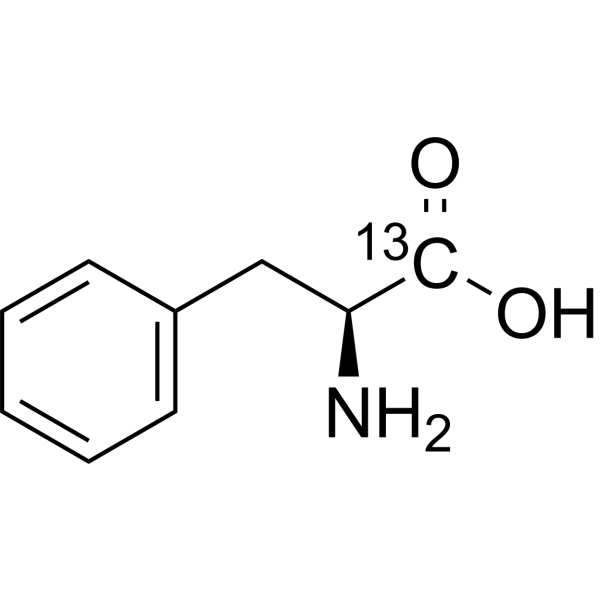
    L-Phenylalanine- 13C-1 ((S)-2-Amino-3-phenylpropionic acid- 13C-1) is the 13C-labeled L-Phenylalanine (HY-N0215). L-Phenylalanine ((S)-2-Amino-3-phenylpropionic acid) is an essential amino acid isolated from Escherichia coli. L-Phenylalanine is a α2δ subunit of voltage-dependent Ca 2+ channels antagonist with a Ki of 980 nM. L-phenylalanine is a competitive antagonist for the glycine- and glutamate-binding sites of N-methyl-D-aspartate receptors (NMDARs) (Kb of 573 μM ) and non-NMDARs, respectively. L-Phenylalanine is widely used in the production of food flavors and pharmaceuticals.
    L-Phenylalanine-13C-1
  • HY-P2964A

    Endogenous Metabolite Metabolic Disease
    L-Phenylalanine Dehydrogenase, Sporosarcina sp. (EC 1.4.1.20) is a member of a large family of amino-acid dehydrogenases, which has a two-domain, three-dimensional structure.
    L-Phenylalanine Dehydrogenase, Sporosarcina sp.
  • HY-124886

    N-PhenylacetylPhenylalanine

    Amino Acid Derivatives Others
    N-(Phenylacetyl)-L-phenylalanine (N-Phenylacetylphenylalanine) is an amino acid analog. N-(Phenylacetyl)-L-phenylalanine is produced via the enantioselective acylation of L-phenylalanine catalyzed by penicillin G acylase from Alcaligenes faecalis. N-(Phenylacetyl)-L-phenylalanine undergoes hydrolysis in aqueous media .
    N-(Phenylacetyl)-L-phenylalanine
  • HY-Y0068S

    N-AcetylPhenylalanine-13C2

    Isotope-Labeled Compounds Endogenous Metabolite Metabolic Disease
    N-Acetyl-L-phenylalanine- 13C2 (N-Acetylphenylalanine- 13C2) is the 13C-labeled N-Acetyl-L-phenylalanine (HY-Y0068). N-Acetyl-L-phenylalanine (N-Acetylphenylalanine) is a principal acylamino acid. N-Acetyl-L-phenylalanine can be synthesized from L-phenylalanine and acetyl-CoA. N-Acetyl-L-phenylalanine can be used in kidney research.
    N-Acetyl-L-phenylalanine-13C2
  • HY-W550859

    4-Sulfo-L-Phenylalanine

    Apoptosis Cancer
    H-Phe(4-SO3H)-OH (4-Sulfo-L-phenylalanine) is a L-phenylalanine (HY-N0215) derivative. H-Phe(4-SO3H)-OH induces apoptosis, chromatin margination, and inhibits cell growth in human colon cancer cells. H-Phe(4-SO3H)-OH can be used for the research of colon cancer .
    H-Phe(4-SO3H)-OH
  • HY-P4948

    Biochemical Assay Reagents Others
    Coumarin-phalloidin is a kind of phalloidin labeled with Coumarin (HY-N0709). Coumarin-phalloidin is a new type of actin probe that can be used for triple immunofluorescence microscopic observation of the cell skeleton .
    Coumarin-Phalloidin

Inquiry Online

Your information is safe with us. * Required Fields.

Salutation


Country or Region *

Applicant Name *


Organization Name *

Department *


Email Address *


Product Name *

Cat. No.


Requested quantity *

Phone Number *


Remarks

Inquiry Online

Inquiry Information

Product Name:
Cat. No.:
Quantity:
MCE Japan Authorized Agent:

