




Search Result
Results for "
Peptide nucleic acid
" in MedChemExpress (MCE) Product Catalog:
3
Biochemical Assay Reagents
| Cat. No. |
Product Name |
Target |
Research Areas |
Chemical Structure |
-
- HY-D0178
-
|
|
Biochemical Assay Reagents
|
Others
|
|
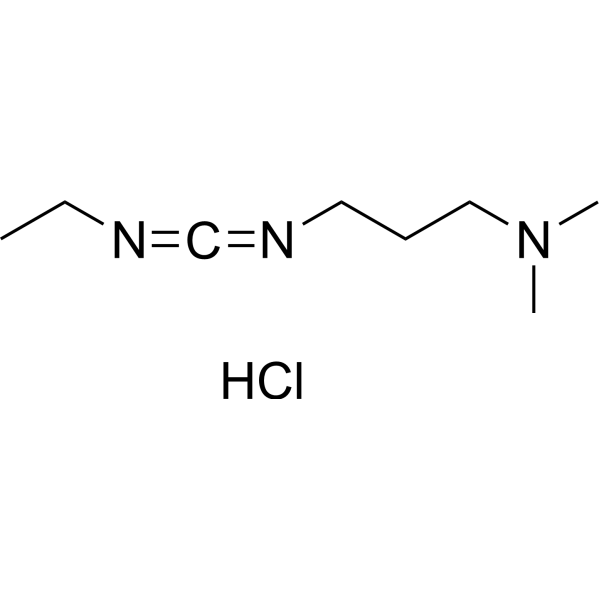
1-Ethyl-(3-dimethylaminopropyl)carbodiimide hydrochloride is a carbodiimide reagent that can form nucleic acid and compounds with amide bonds. 1-(3-Dimethylaminopropyl)-3-ethylcarbodiimide hydrochloride accelerates the formation reaction of esters, amides, and peptides, as a condensing and dehydrating agent, which are often used for polynucleotide synthesis, anhydroxydation, lactonization and esterification .
|
-
-
- HY-P0311
-
|
|
Bacterial
|
Infection
|
|
LAH4, an alpha-helix of the designed amphipathic peptide antibiotic, exhibits potent antimicrobial, nucleic acid transfection and cell penetration activities. LAH4 possesses high plasmid DNA delivery capacities. LAH4 has a strong affinity for anionic lipids found in the outer membrane of bacterial membranes .
|
-
-
- HY-P4076
-
|
|
HIV
DNA Alkylator/Crosslinker
|
Infection
|
|
MPG peptides, Pβ is an amphipathic cell-penetrating peptide. MPG peptides, Pβ consists of three components: the hydrophobic fusion sequence (GALFLGFLGAAGSTMGA) of HIV glycoprotein 41, a spacer domain (WSQP), and the nuclear localization signal (KKKRKV) of the large T antigen of Simian virus 40. MPG peptides, Pβ can form stable non-covalent complexes with nucleic acids (including DNA) through electrostatic interactions and improve their intracellular delivery. MPG peptides, Pβ can be used in studies of HIV-1-related immune responses .
|
-
-
- HY-P0311A
-
|
|
Bacterial
|
Infection
|
|
LAH4 TFA, an alpha-helix of the designed amphipathic peptide antibiotic, exhibits potent antimicrobial, nucleic acid transfection and cell penetration activities. LAH4 TFA possesses high plasmid DNA delivery capacities. LAH4 TFA has a strong affinity for anionic lipids found in the outer membrane of bacterial membranes .
|
-
-
- HY-P3150
-
|
|
Ser/Thr Protease
|
Others
|
|
Recombinant Proteinase K is a serine protease that cleaves the carboxy-terminated peptide bonds of aliphatic and aromatic amino acids. Recombinant Proteinase K can be used to digest proteins and remove contamination from nucleic acid preparations .
|
-
-
- HY-D2441
-
|
|
Fluorescent Dye
|
Cancer
|
|
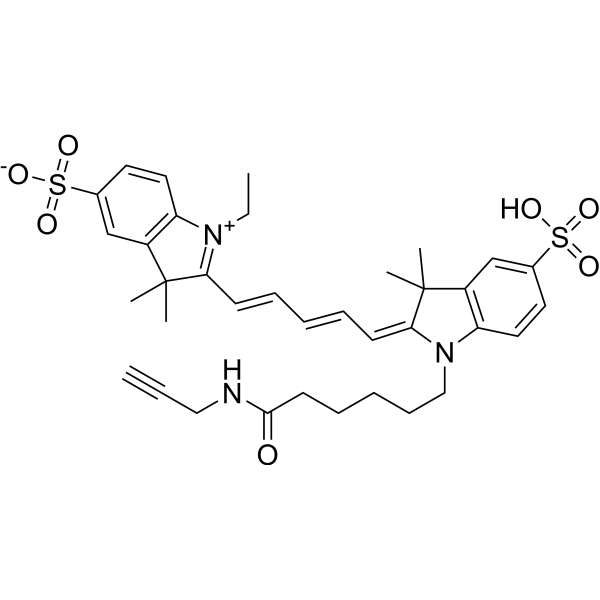
TAT-PEG-Cy3 is a fluorescent labeling reagent that combines Cy3 fluorescent dye, Cell membrane penetrating peptide (TAT) and polyethylene glycol (PEG). The Cy3 fluorophore is commonly used in applications such as immunolabeling, nucleic acid labeling, fluorescence microscopy, and flow cytometry. Cy3 has an emission maximum around 562-570 nm. TAT-PEG-Cy3 can be used for cell targeted delivery and biological imaging .
|
-
-
- HY-D2439
-
|
|
Fluorescent Dye
|
Cancer
|
|
RGD-PEG-Cy3 is a fluorescent labeling reagent that combines Cy3 fluorescent dye, peptide (RGD) and polyethylene glycol (PEG). The Cy3 fluorophore is commonly used in applications such as immunolabeling, nucleic acid labeling, fluorescence microscopy, and flow cytometry. Cy3 has an emission maximum around 562-570 nm. RGD is a peptide sequence (CRGDKGPDCiRGD) that binds to αvβ3 and αvβ5 integrin receptors on tumor neovasculogenesis to achieve specific tumor tissue targeting .
|
-
-
- HY-W540122
-
-
-
- HY-D2891
-
|
|
Fluorescent Dye
|
Others
|
|
5-TAMRA-DBCO is a fluorescent dye that combines 5-TAMRA (HY-15942) with a dibenzocyclooctyne (DBCO) moiety. 5-TAMRA-DBCO is able to copper-free click chemistry reactions with azide-functionalized molecules. 5-TAMRA-DBCO can be used for labeling proteins, peptides, nucleic acids (Ex/Em = 541/567 nm) .
|
-
-
- HY-W024881
-
|
2,3,3-Trimethylindolenine-5-sulfonic acid potassium salt
|
Drug Intermediate
|
Others
|
|
Potassium 2,3,3-trimethylindole-5-sulfonate (2,3,3-Trimethylindolenine-5-sulfonic acid potassium salt) is an indole derivative containing a sodium sulfonate group and is commonly used as a key intermediate in dye synthesis. Potassium 2,3,3-trimethylindole-5-sulfonate can be coupled to peptides, proteins, nucleic acids, RNA, DNA, carbohydrates, polymers, and small molecules via the sulfonyl substituent .
|
-
-
- HY-151738
-
|
|
ADC Linker
|
Others
|
|
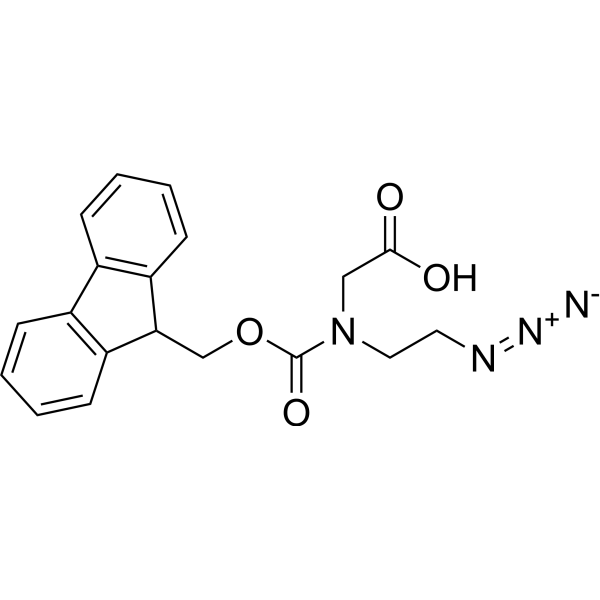
Fmoc-Aeg(N3)-OH is a click chemistry reagent containing an Azide. Alkylating the Nitrogen of an amide bond results in peptoid structures, which leads to conformational restrains, like N-methylation and allows backbone derivatisation. Altering cytotoxicity, bacterial cell selectivity and receptor pharmacology through formation of peptoid derivatives have been published for Cilengitide, Piscidin 1, and MC3, MC4 and MC5 receptor agonist. This building block enables design of macrocycles through intermolecular crosslinking or backbone stabilization through intermolecular ring-closure. This compound is a potential building block for the construction of (customized) peptide nucleic acids (PNAs) and for peptoid synthesis . Fmoc-Aeg(N3)-OH is a click chemistry reagent, it contains an Azide group and can undergo copper-catalyzed azide-alkyne cycloaddition reaction (CuAAc) with molecules containing Alkyne groups. It can also undergo strain-promoted alkyne-azide cycloaddition (SPAAC) reactions with molecules containing DBCO or BCN groups.
|
-
-
- HY-151778
-
|
|
ADC Linker
|
Others
|
|
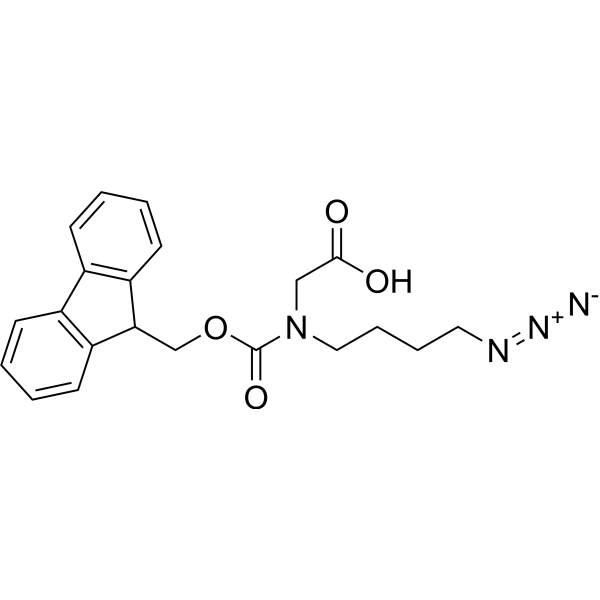
Fmoc-Abg(N3)-OH is a click chemistry reagent containing an azide group. Fmoc-Abg(N3)-OH has the potential to synthesize peptide nucleic acids (PNA) and peptoids. It contains an azide group and can undergo copper-catalyzed azide-alkyne cycloaddition (CuAAc) with molecules containing alkyne groups. It can also undergo ring strain-promoted alkyne-azide cycloaddition (SPAAC) with molecules containing DBCO or BCN groups.
|
-
-
- HY-108409
-
|
Etienic acid; Testosterone-17β-carboxylic acid; 3-Oxoandrost-4-ene-17β-carboxylic acid
|
Drug Derivative
|
Metabolic Disease
Cancer
|
|
Progesterone carboxylic acid (Testosterone-17β-carboxylic acid) is an androstenedione analogue. Progesterone carboxylic acid can conjugate with 20-mer peptide nucleic acid (PNA) and the conjugate has superior binding capacity on complementary DNA. Progesterone carboxylic acid can be used for cancers and type 2 diabetes (T2D) research .
|
-
-
- HY-P11351
-
|
|
DNA/RNA Synthesis
|
Cancer
|
|
Precursor-HhH is a nucleic acid-binding peptide capable of non-specific interactions with RNA and double-stranded DNA (dsDNA). Precursor-HhH is promising for research of nucleic acid-targeted therapeutics .
|
-
-
- HY-W320685
-
|
|
Drug Intermediate
|
Others
|
|
(S)-N-Boc-L-homoserine ethyl ester is a synthetic intermediate in the synthesis of unsaturated caprolactams and monomer units for oxy-peptide nucleic acids from the starting material L-homoserine.
|
-
-
- HY-P2853A
-
|
|
Biochemical Assay Reagents
|
Others
|
|
Hemocyanin-SMCC is a hemocyanin that can be used as a carrier protein to couple low molecular weight molecules such as peptides, nucleic acids, drugs or toxins to make them highly immunogenic.
|
-
-
- HY-W012443
-
|
|
Drug Intermediate
|
Others
|
|
3-(Trimethylsilyl)-1-propanesulfonic acid sodium is a compound derived from 1-propanesulfonic acid and trimethylsilyl. It can be used as a versatile reagent in the preparation of peptides, proteins, and nucleic acids .
|
-
-
- HY-P1566
-
|
|
HIV
|
Infection
|
|
MPG, HIV related is 27-aa peptide, derived from both the nuclear localisation sequence of SV40 large T antigen and the fusion peptide domain of HIV-1 gp41 and is a potent delivery agent for the generalised delivery of nucleic acids and of oligonucleotides into cultured cells.
|
-
-
- HY-W879234
-
|
Sulfo Cy5.5-DBCO
|
Fluorescent Dye
|
Others
|
|
TriSulfo-Cy5.5 DBCO is a near infrared (NIR) fluorescent anthocyanin fluorescent dye.TriSulfo-Cy5.5 DBCO can be used to label proteins, antibodies, peptides, nucleic acid molecules.
|
-
-
- HY-155995
-
|
MK-905
|
Biochemical Assay Reagents
|
Cancer
|
|
Pro-905 is a phosphite peptide with antitumor activity. Pro-905 delivers the active nucleotide antimetabolite thioguanosine monophosphate (TGMP) to the tumor. Pro-905 effectively prevents incorporation of purine salvage substrates into nucleic acids and inhibits colony formation in human malignant peripheral nerve sheath tumors (MPNST) cells. Pro-905 inhibits purine salvage incorporation to nucleic acids and prevents cell growth. Pro-905 inhibits the growth of MPNST and enhances the anti-tumor efficacy of JHU395 (HY-124778) .
|
-
-
- HY-174289
-
|
|
Biochemical Assay Reagents
|
Others
|
|
TMTHSI succinimide NHS ester is a highly efficient cyclic alkyne click reagent. TMTHSI succinimide NHS ester has the primary activity to rapidly undergo strain-promoted cycloaddition reactions with azides. TMTHSI succinimide NHS ester is easily functionalized and can be linked to a variety of small molecules and (peptides, nucleic acids) biologics via a variety of linkers .
|
-
-
- HY-D2758
-
|
|
Fluorescent Dye
|
Others
|
|
TAMRA DBCO, 5-isomer is a derivative of tetramethylrhodamine (TMR, TAMRA) containing a cyclooctyne moiety (dibenzocyclooctyne, DBCO). Pure 5-isomer. DBCO reacts quickly and efficiently with azides by simply mixing the components without the need for a copper catalyst (so-called sterically promoted cycloaddition reaction (SPAAC)). TAMRA DBCO can be used for the labeling of proteins, peptides, nucleic acids, and other molecules containing azide groups.
|
-
-
- HY-W025936
-
|
|
Drug Intermediate
|
Others
|
|
Fmoc‑PNA‑G (Bhoc)‑OH is a guanine-containing peptide nucleic acid monomer, in which both Bhoc on the nucleobase and Fmoc on the backbone serve as protecting groups. Fmoc‑PNA‑G (Bhoc)‑OH is applicable for the synthesis of peptide nucleic acids .
|
-
-
- HY-W784625
-
|
|
Drug Intermediate
|
Others
|
|
Boc-PNA-G(Z)-OH is a peptide nucleic acid (PNA) monomer that is used for the synthesis of peptide nucleic acid oligomers .
|
-
-
- HY-170991
-
|
|
Bacterial
Reactive Oxygen Species (ROS)
|
Infection
|
|
C12-rrw-NH2 (Compound Lip7) is an antibacterial agent against gram-positive bacteria, especially against Methicillin (HY-121544)-resistant Staphylococcus aureus (MRSA). C12-rrw-NH2 induces bacterial death via depolarizing the bacterial cytoplasmic membrane, disrupting the integrity of the bacterial membrane, leading to leakage of nucleic acid and protein and promoting the generation of Reactive Oxygen Species. C12-rrw-NH2 is potential to be used for research of developing high-stability antimicrobial peptides .
|
-
-
- HY-P11687
-
|
|
Drug Intermediate
|
Others
|
|
Fmoc-PNA-M(Boc)-OH is a peptide nucleic acid monomer with Fmoc and Boc protecting groups. Fmoc-PNA-M(Boc)-OH can be used for synthesis of peptide nucleic acid .
|
-
-
- HY-W784624
-
|
|
Drug Intermediate
|
Others
|
|
Boc‑PNA‑C (Z)‑OH is a cytosine-containing peptide nucleic acid monomer, in which the amino group and cytosine are protected by tert-butoxycarbonyl (Boc) and benzyloxycarbonyl groups, respectively. Boc‑PNA‑C (Z)‑OH can be used for the synthesis of peptide nucleic acids .
|
-
-
- HY-W665456
-
|
|
Drug Intermediate
|
Others
|
|
Fmoc‑PNA‑U‑OH is a peptide nucleic acid monomer that can be used for the synthesis of peptide nucleic acids (PNAs). Fmoc‑PNA‑U‑OH exhibits specific binding to adenine, resistance to enzymatic degradation, and strong hybridization properties. Fmoc‑PNA‑U‑OH can be applied in research fields such as gene diagnosis, molecular biology, and antisense therapy.
|
-
-
- HY-160513
-
|
|
DNA/RNA Synthesis
|
Others
|
|
Fmoc‑PNA‑Abasic(Boc)‑OH is a synthetic peptide nucleic acid modified with Fmoc and Boc protecting groups. Fmoc‑PNA‑Abasic(Boc)‑OH can be used in molecular biology research.
|
-
-
- HY-130510
-
|
|
Fluorescent Dye
|
Others
|
|
6-HEX dipivaloate is an amino-bindable fluorescent probe that can be used to label peptides and oligonucleotides. 6-HEX dipivaloate is widely used in nucleic acid sequencing and related research .
|
-
-
- HY-W402665
-
|
Fmoc-C(Bhoc)-Aeg-OH
|
Drug Intermediate
|
Metabolic Disease
|
|
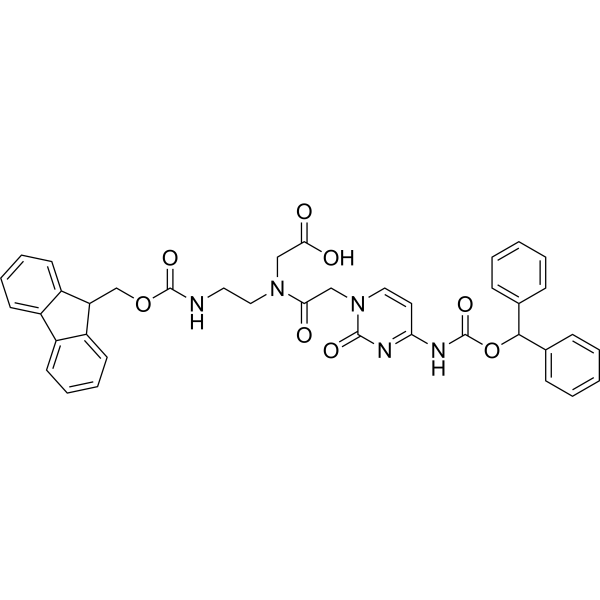
Fmoc-PNA-T-OH (Fmoc-C (Bhoc)-Aeg-OH) is a Bhoc-protected peptide nucleic acid (PNA) monomer. Fmoc-PNA-T-OH is used in the research of type 2 diabetes (t2d) .
|
-
-
- HY-W784623
-
|
|
Drug Intermediate
|
Others
|
|
Boc-PNA-A(Z)-OH is a Boc-protected peptide nucleic acid monomer with a benzyloxycarbonyl protecting group on the adenine base .
|
-
-
- HY-W784626
-
|
|
Drug Intermediate
|
Others
|
|
Boc-PNA-T-OH is a thymine-containing peptide nucleic acid monomer and solid-phase synthesis building block .
|
-
-
- HY-W574398
-
|
|
Biochemical Assay Reagents
|
Others
|
|
Fmoc-Aeg-OH is a peptide nucleic acid (PNA) backbone intermediate and an Fmoc-protected carboxylic acid. Fmoc-Aeg-OH can be coupled with base acetic acids to synthesize Fmoc-protected PNA monomers, including those with modified bases .
|
-
-
- HY-P11691
-
|
|
Biochemical Assay Reagents
|
Others
|
|
Fmoc-PNA-D (tetraBoc)-OH is an Fmoc/Boc-protected diaminopurine peptide nucleic acid (PNA) monomer suitable for standard Fmoc solid-phase synthesis. Fmoc-PNA-D (tetraBoc)-OH carries Boc-protected exocyclic amino groups and can be incorporated into pseudo-complementary PNA oligomers for applications in antigenic peptide nucleic acid and DNA nanotechnology research .
|
-
-
- HY-P11695
-
|
|
Biochemical Assay Reagents
|
Others
|
|
Fmoc-Aeg (Dde) is a protected aminoethylglycine (AEG) monomer used for solid-phase synthesis of peptide nucleic acids (PNAs). Fmoc-Aeg (Dde) contains the fluorenylmethoxycarbonyl (Fmoc) and 1-(4,4-dimethyl-2,6-dioxocyclohex-1-ylidene) ethyl (Dde) protecting groups .
|
-
-
- HY-108409R
-
|
Etienic acid (Standard); Testosterone-17β-carboxylic acid (Standard); 3-Oxoandrost-4-ene-17β-carboxylic acid (Standard)
|
Reference Standards
Drug Derivative
|
Metabolic Disease
Cancer
|
|
Progesterone carboxylic acid (Standard) is the analytical standard of Progesterone carboxylic acid (HY-108409). This product is intended for research and analytical applications. Progesterone carboxylic acid (Testosterone-17β-carboxylic acid) is an androstenedione analogue. Progesterone carboxylic acid can conjugate with 20-mer peptide nucleic acid (PNA) and the conjugate has superior binding capacity on complementary DNA. Progesterone carboxylic acid can be used for cancers and type 2 diabetes (T2D) research .
|
-
-
- HY-P11689
-
|
|
Biochemical Assay Reagents
|
Others
|
|
Fmoc-PNA-J (Bhoc)-OH is a protected peptide nucleic acid (PNA) monomer building block used for solid-phase synthesis of PNA oligomers. Fmoc-PNA-J (Bhoc)-OH carries Fmoc/Bhoc protecting groups and functions as a standard Fmoc-protected PNA monomer .
|
-
-
- HY-P11688
-
|
|
Biochemical Assay Reagents
|
Others
|
Fmoc-PNA-M (Bhoc)-OH is a standard peptide nucleic acid (PNA) monomer building block. Fmoc-PNA-M (Bhoc)-OH carries two protecting groups, Fmoc and Bhoc, and is specifically designed for solid-phase and automated PNA synthesis. Fmoc-PNA-M (Bhoc)-OH efficiently participates in the construction of sequence-specific PNA probes. Through its protecting group strategy, Fmoc-PNA-M (Bhoc)-OH ensures the accuracy and efficiency of PNA synthesis, and is one of the important raw materials for PNA synthesis at present .
|
-
-
- HY-W540123
-
|
|
Biochemical Assay Reagents
|
Cancer
|
Fmoc-PNA-A(Bhoc)-OH is a protected peptide nucleic acid (PNA) monomer carrying an adenine base. Fmoc-PNA-A(Bhoc)-OH contains Fmoc and benzhydryloxycarbonyl (Bhoc) protecting groups, and serves as a standard building block designed specifically for solid-phase PNA synthesis. Fmoc-PNA-A(Bhoc)-OH can be efficiently used to synthesize PNA-based sequence-specific hybridization probes. These probes have broad applications in molecular biology research; for example, they can be used in HER2-expressing tumor-related studies, providing tools for disease diagnosis and mechanism exploration .
|
-
-
- HY-W415169
-
|
|
Drug Intermediate
|
Others
|
|
H-Aeg(Fmoc)-OBzl hydrochloride is an Fmoc-protected aminoethylglycine derivative with benzyl ester and can be used for synthesis of peptide nucleic acid and protected oligomers.
|
-
-
- HY-P11696
-
|
|
Drug Intermediate
|
Others
|
|
H-Aeg(Fmoc)-OH hydrochloride is an Fmoc-protected aminoethylglycine monomer with a free carboxyl group and can be used for peptide nucleic acid synthesis.
|
-
-
- HY-P11679
-
|
|
DNA/RNA Synthesis
|
Others
|
|
Boc-PNA-U-OH is a protected peptide nucleic acid (PNA) monomer containing a uracil base, designed for solid-phase peptide synthesis (SPPS) using the Boc/Z protection strategy. Boc-PNA-U-OH acts as a building block in creating PNA oligomers that are neutral, stable, and used for antisense/antigene applications.
|
-
-
- HY-P11682
-
|
|
DNA/RNA Synthesis
|
Others
|
|
Boc-PNA-M(Z)-OH is a protected peptide nucleic acid (PNA) monomer used in solid-phase peptide synthesis (SPPS). Boc-PNA-M(Z)-OH consists of an adenyl base protected with a benzyloxycarbonyl (Z) group and a backbone protected with a tert-butyloxycarbonyl (Boc) group, typically used for creating PNA oligomers.
|
-
-
- HY-P11729
-
|
|
Biochemical Assay Reagents
|
Others
|
|
Mitochondria rRNA blocker is a PCR blocker based on peptide nucleic acid (PNA). Mitochondria rRNA blocker targets the conserved 16S rRNA sequence of mitochondria and can be used in research involving PCR, sequencing, and gene detection.
|
-
-
- HY-P11697
-
|
|
Drug Intermediate
|
Others
|
|
Fmoc-PNA-maleimide-OH is a Fmoc-protected functionalized peptide nucleic acid monomer featuring a maleimide group for thiol-reactive conjugation. Fmoc-PNA-maleimide-OH can be used in constructing PNA conjugates for molecular assembly applications.
|
-
-
- HY-P11730
-
|
|
Biochemical Assay Reagents
|
Others
|
|
Chloroplast rRNA blocker is a chloroplast rRNA-specific peptide nucleic acid (PNA) blocker. Chloroplast rRNA blocker targets the conserved 16S rRNA sequence in plants and can be used in research involving PCR, sequencing, and gene detection.
|
-
-
- HY-P11683
-
|
|
DNA/RNA Synthesis
|
Others
|
|
Boc-PNA-D(tetraZ)-OH is a specialized Peptide Nucleic Acid (PNA) monomer used in solid-phase peptide synthesis, featuring a N-tert-butoxycarbonyl (Boc) protected backbone and a 2,6-diaminopurine nucleobase. Boc-PNA-D(tetraZ)-OH helps increase PNA solubility and binding affinity, often used in molecular diagnostics.
|
-
-
- HY-P11759
-
|
|
Drug Derivative
|
Cancer
|
|
Myr-transportan-Cys is a derivative of the cell-penetrating peptide Transportan (HY-P1732), and its conjugated myristoyl group (Myr) enhances the interaction between the peptide and cell membranes. Myr-transportan-Cys integrates three key delivery functions: nucleic acid condensation, cell penetration, and endosomal escape. Myr-transportan-Cys can form immunostimulatory tandem peptide nanocomplexes (iTPNCs) for encapsulating and delivering immunostimulatory oligonucleotide cargos to tumors .
|
-
-
- HY-P11732
-
|
|
Bacterial
|
Infection
|
|
acpP PNA is a 10-mer peptide nucleic acid targeting the bacterial essential gene acpP. acpP PNA can inhibit bacterial growth and reduce the level of target transcripts, and still retains activity with double terminal mismatches. acpP PNA may also cause off-target effects .
|
-
- HY-D3049
-
|
|
Fluorescent Dye
|
Others
|
|
5(6)-carbonylated rhodamine 110 NHS ester is a reactive ester fluorescent reagent based on 5(6)-carbonylated rhodamine 110. NHS ester is a highly reactive ester capable of covalently coupling with primary amine groups in molecules such as proteins, peptides, amino sugars, and nucleic acids to form stable amide bonds (Ex/Em = 502/527 nm).
|
-
- HY-P11685
-
|
|
DNA/RNA Synthesis
|
Others
|
|
Fmoc-PNA-thioU(PMB)-OH is a nucleobase-modified peptide nucleic acid (PNA) monomer used in solid-phase synthesis. Fmoc-PNA-thioU(PMB)-OH features a thiouracil base protected with a p-methoxybenzyl (PMB) group on an Fmoc-protected backbone, designed for incorporating modified PNA bases into oligonucleotides to study binding properties.
|
-
- HY-P11686
-
|
|
DNA/RNA Synthesis
|
Others
|
|
Fmoc-PNA-G(Boc)-OH is a synthetic peptide nucleic acid (PNA) modified with Fmoc and Boc protecting groups, designed for precise synthesis and targeted binding to complementary DNA or RNA sequences. Fmoc-PNA-G(Boc)-OH serves as a versatile tool in molecular biology, offering robustness, specificity, and applicability across various research and diagnostic fields.
|
-
- HY-D3050
-
|
|
Fluorescent Dye
|
Others
|
|
5(6)-carbonylated rhodamine 110 X NHS ester is a reactive ester fluorescent reagent based on 5(6)-carbonylated rhodamine 110 X. NHS ester is a highly reactive ester capable of covalently coupling with primary amine groups in molecules such as proteins, peptides, amino sugars, and nucleic acids to form stable amide bonds (Ex/Em = 496/522 nm).
|
-
- HY-P11731
-
|
|
Biochemical Assay Reagents
|
Infection
|
|
Internal Transcribed Spacers (ITS) rRNA blocker is a peptide nucleic acid (PNA) blocker. Internal Transcribed Spacers (ITS) rRNA blocker binds and suppresses the amplification of the ITS2 rRNA region, a commonly overrepresented target sequence in fungal PCR. Internal Transcribed Spacers (ITS) rRNA blocker can be used in research involving PCR, sequencing, and gene detection.
|
-
- HY-D3053
-
|
|
Fluorescent Dye
|
Others
|
|
5(6)-Rhodamine 6G NHS ester is a reactive ester fluorescent reagent based on Rhodamine 6G (HY-D0309). NHS ester is a highly reactive ester capable of covalently coupling with primary amine groups in molecules such as proteins, peptides, amino sugars, and nucleic acids to form stable amide bonds (Ex/Em = 526/547 nm).
|
-
- HY-P11681
-
|
|
DNA/RNA Synthesis
|
Others
|
|
Boc-PNA-J(Z)-OH is a protected peptide nucleic acid (PNA) monomer used in solid-phase synthesis. Boc-PNA-J(Z)-OH features a 2,6-diaminopurine (J) base, protected by a carboxybenzyl (Z) group, attached to a Boc-protected aminoethylglycinate backbone. Boc-PNA-J(Z)-OH allows for the synthesis of PNA sequences with enhanced binding affinity and stability.
|
-
- HY-P11694
-
|
|
Biochemical Assay Reagents
|
Neurological Disease
|
|
Alloc-Aeg (Fmoc)-OH is a protected serine triphosphate building block and an Nα-Fmoc protected amino acid. Alloc-Aeg (Fmoc)-OH contains serine protected by α-N-allyloxycarbonyl (Alloc) and bis (allyl) phosphate groups, and it can be used in the synthesis of peptide nucleic acids (PNAs). Alloc-Aeg (Fmoc)-OH is applicable to research related to Alzheimer's disease .
|
-
- HY-P11684
-
|
|
DNA/RNA Synthesis
|
Others
|
|
Fmoc-PNA-C(Boc)-OH is a protected peptide nucleic acid (PNA) monomer for solid-phase synthesis. Fmoc-PNA-C(Boc)-OH possesses Fmoc-protected skeletal amino groups and Boc-protected cytosine bases, designed to construct stable synthetic DNA analogs. Fmoc-PNA-C(Boc)-OH can be used to prepare highly specific, enzyme-stable antisense probes and diagnostic probes.
|
-
- HY-P11680
-
|
|
DNA/RNA Synthesis
|
Others
|
|
BOC-PNA-thioU(PMB)-OH is a peptide nucleic acid (PNA) monomer characterized by a PMB protecting group on its thiouracil, which enhances its binding affinity to adenine. BOC-PNA-thioU(PMB)-OH exhibits excellent resistance to enzymatic degradation and strong hybridization properties, making it valuable for applications in gene diagnosis, antisense therapy, and other molecular biology fields requiring higher binding strength and greater functionalization.
|
-
- HY-P11733
-
|
|
Bacterial
|
Infection
|
(KFF)3K-acpP is an antibacterial agent conjugating of cell penetrating peptide (KFF)3K (HY-P10556) and acpP peptide nucleic acid. (KFF)3K-acpP binds to the translation start site region of acpP mRNA, sterically blocking ribosome binding and inhibiting translation of the acyl carrier protein. (KFF)3K-acpP induces bacterial envelope stress response pathways, and triggers depletion of outer membrane protein F (ompF) transcript. (KFF)3K-acpP can be used for the research of infections .
|
-
| Cat. No. |
Product Name |
Type |
-
- HY-D2441
-
|
|
Fluorescent Dyes
|
|
TAT-PEG-Cy3 is a fluorescent labeling reagent that combines Cy3 fluorescent dye, Cell membrane penetrating peptide (TAT) and polyethylene glycol (PEG). The Cy3 fluorophore is commonly used in applications such as immunolabeling, nucleic acid labeling, fluorescence microscopy, and flow cytometry. Cy3 has an emission maximum around 562-570 nm. TAT-PEG-Cy3 can be used for cell targeted delivery and biological imaging .
|
-
- HY-D2439
-
|
|
Fluorescent Dyes
|
|
RGD-PEG-Cy3 is a fluorescent labeling reagent that combines Cy3 fluorescent dye, peptide (RGD) and polyethylene glycol (PEG). The Cy3 fluorophore is commonly used in applications such as immunolabeling, nucleic acid labeling, fluorescence microscopy, and flow cytometry. Cy3 has an emission maximum around 562-570 nm. RGD is a peptide sequence (CRGDKGPDCiRGD) that binds to αvβ3 and αvβ5 integrin receptors on tumor neovasculogenesis to achieve specific tumor tissue targeting .
|
-
- HY-D2891
-
|
|
Fluorescent Dyes
|
|
5-TAMRA-DBCO is a fluorescent dye that combines 5-TAMRA (HY-15942) with a dibenzocyclooctyne (DBCO) moiety. 5-TAMRA-DBCO is able to copper-free click chemistry reactions with azide-functionalized molecules. 5-TAMRA-DBCO can be used for labeling proteins, peptides, nucleic acids (Ex/Em = 541/567 nm) .
|
-
- HY-W879234
-
|
Sulfo Cy5.5-DBCO
|
Fluorescent Dyes
|
|
TriSulfo-Cy5.5 DBCO is a near infrared (NIR) fluorescent anthocyanin fluorescent dye.TriSulfo-Cy5.5 DBCO can be used to label proteins, antibodies, peptides, nucleic acid molecules.
|
-
- HY-D2758
-
|
|
Fluorescent Dyes
|
|
TAMRA DBCO, 5-isomer is a derivative of tetramethylrhodamine (TMR, TAMRA) containing a cyclooctyne moiety (dibenzocyclooctyne, DBCO). Pure 5-isomer. DBCO reacts quickly and efficiently with azides by simply mixing the components without the need for a copper catalyst (so-called sterically promoted cycloaddition reaction (SPAAC)). TAMRA DBCO can be used for the labeling of proteins, peptides, nucleic acids, and other molecules containing azide groups.
|
-
- HY-130510
-
|
|
Fluorescent Dyes
|
|
6-HEX dipivaloate is an amino-bindable fluorescent probe that can be used to label peptides and oligonucleotides. 6-HEX dipivaloate is widely used in nucleic acid sequencing and related research .
|
-
- HY-D3049
-
|
|
Fluorescent Dyes
|
|
5(6)-carbonylated rhodamine 110 NHS ester is a reactive ester fluorescent reagent based on 5(6)-carbonylated rhodamine 110. NHS ester is a highly reactive ester capable of covalently coupling with primary amine groups in molecules such as proteins, peptides, amino sugars, and nucleic acids to form stable amide bonds (Ex/Em = 502/527 nm).
|
-
- HY-D3050
-
|
|
Fluorescent Dyes
|
|
5(6)-carbonylated rhodamine 110 X NHS ester is a reactive ester fluorescent reagent based on 5(6)-carbonylated rhodamine 110 X. NHS ester is a highly reactive ester capable of covalently coupling with primary amine groups in molecules such as proteins, peptides, amino sugars, and nucleic acids to form stable amide bonds (Ex/Em = 496/522 nm).
|
-
- HY-D3053
-
|
|
Fluorescent Dyes
|
|
5(6)-Rhodamine 6G NHS ester is a reactive ester fluorescent reagent based on Rhodamine 6G (HY-D0309). NHS ester is a highly reactive ester capable of covalently coupling with primary amine groups in molecules such as proteins, peptides, amino sugars, and nucleic acids to form stable amide bonds (Ex/Em = 526/547 nm).
|
| Cat. No. |
Product Name |
Type |
-
- HY-D0178
-
|
|
Biochemical Assay Reagents
|
|
1-Ethyl-(3-dimethylaminopropyl)carbodiimide hydrochloride is a carbodiimide reagent that can form nucleic acid and compounds with amide bonds. 1-(3-Dimethylaminopropyl)-3-ethylcarbodiimide hydrochloride accelerates the formation reaction of esters, amides, and peptides, as a condensing and dehydrating agent, which are often used for polynucleotide synthesis, anhydroxydation, lactonization and esterification .
|
-
- HY-P2853A
-
|
|
Biochemical Assay Reagents
|
|
Hemocyanin-SMCC is a hemocyanin that can be used as a carrier protein to couple low molecular weight molecules such as peptides, nucleic acids, drugs or toxins to make them highly immunogenic.
|
-
- HY-W012443
-
|
|
Biochemical Assay Reagents
|
|
3-(Trimethylsilyl)-1-propanesulfonic acid sodium is a compound derived from 1-propanesulfonic acid and trimethylsilyl. It can be used as a versatile reagent in the preparation of peptides, proteins, and nucleic acids .
|
| Cat. No. |
Product Name |
Target |
Research Area |
-
- HY-P0311
-
|
|
Bacterial
|
Infection
|
|
LAH4, an alpha-helix of the designed amphipathic peptide antibiotic, exhibits potent antimicrobial, nucleic acid transfection and cell penetration activities. LAH4 possesses high plasmid DNA delivery capacities. LAH4 has a strong affinity for anionic lipids found in the outer membrane of bacterial membranes .
|
-
- HY-P4076
-
|
|
HIV
DNA Alkylator/Crosslinker
|
Infection
|
|
MPG peptides, Pβ is an amphipathic cell-penetrating peptide. MPG peptides, Pβ consists of three components: the hydrophobic fusion sequence (GALFLGFLGAAGSTMGA) of HIV glycoprotein 41, a spacer domain (WSQP), and the nuclear localization signal (KKKRKV) of the large T antigen of Simian virus 40. MPG peptides, Pβ can form stable non-covalent complexes with nucleic acids (including DNA) through electrostatic interactions and improve their intracellular delivery. MPG peptides, Pβ can be used in studies of HIV-1-related immune responses .
|
-
- HY-P0311A
-
|
|
Bacterial
|
Infection
|
|
LAH4 TFA, an alpha-helix of the designed amphipathic peptide antibiotic, exhibits potent antimicrobial, nucleic acid transfection and cell penetration activities. LAH4 TFA possesses high plasmid DNA delivery capacities. LAH4 TFA has a strong affinity for anionic lipids found in the outer membrane of bacterial membranes .
|
-
- HY-P4084A
-
|
|
Peptides
|
Others
|
|
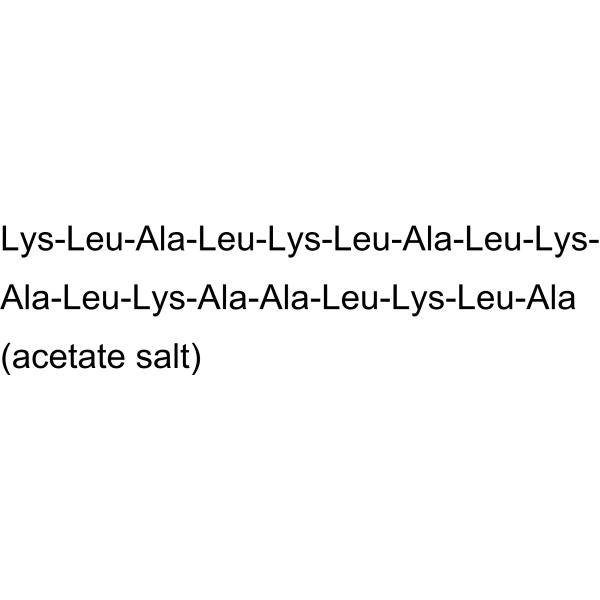
KLA seq acetate is a cell membrane-penetrating α-helical amphipathic model peptide. KLA seq acetate conjugates peptide nucleic acids (PNAs) for delivery to mammalian cells. KLA seq acetate covalently links targeted mRNA and fluorescein to form a delivery system that has low re-export and is less resistant to serum effects .
|
-
- HY-P11351
-
|
|
DNA/RNA Synthesis
|
Cancer
|
|
Precursor-HhH is a nucleic acid-binding peptide capable of non-specific interactions with RNA and double-stranded DNA (dsDNA). Precursor-HhH is promising for research of nucleic acid-targeted therapeutics .
|
-
- HY-P1566
-
|
|
HIV
|
Infection
|
|
MPG, HIV related is 27-aa peptide, derived from both the nuclear localisation sequence of SV40 large T antigen and the fusion peptide domain of HIV-1 gp41 and is a potent delivery agent for the generalised delivery of nucleic acids and of oligonucleotides into cultured cells.
|
-
- HY-W025936
-
|
|
Drug Intermediate
|
Others
|
|
Fmoc‑PNA‑G (Bhoc)‑OH is a guanine-containing peptide nucleic acid monomer, in which both Bhoc on the nucleobase and Fmoc on the backbone serve as protecting groups. Fmoc‑PNA‑G (Bhoc)‑OH is applicable for the synthesis of peptide nucleic acids .
|
-
- HY-W784625
-
|
|
Drug Intermediate
|
Others
|
|
Boc-PNA-G(Z)-OH is a peptide nucleic acid (PNA) monomer that is used for the synthesis of peptide nucleic acid oligomers .
|
-
- HY-P11687
-
|
|
Drug Intermediate
|
Others
|
|
Fmoc-PNA-M(Boc)-OH is a peptide nucleic acid monomer with Fmoc and Boc protecting groups. Fmoc-PNA-M(Boc)-OH can be used for synthesis of peptide nucleic acid .
|
-
- HY-W784624
-
|
|
Drug Intermediate
|
Others
|
|
Boc‑PNA‑C (Z)‑OH is a cytosine-containing peptide nucleic acid monomer, in which the amino group and cytosine are protected by tert-butoxycarbonyl (Boc) and benzyloxycarbonyl groups, respectively. Boc‑PNA‑C (Z)‑OH can be used for the synthesis of peptide nucleic acids .
|
-
- HY-W665456
-
|
|
Drug Intermediate
|
Others
|
|
Fmoc‑PNA‑U‑OH is a peptide nucleic acid monomer that can be used for the synthesis of peptide nucleic acids (PNAs). Fmoc‑PNA‑U‑OH exhibits specific binding to adenine, resistance to enzymatic degradation, and strong hybridization properties. Fmoc‑PNA‑U‑OH can be applied in research fields such as gene diagnosis, molecular biology, and antisense therapy.
|
-
- HY-160513
-
|
|
DNA/RNA Synthesis
|
Others
|
|
Fmoc‑PNA‑Abasic(Boc)‑OH is a synthetic peptide nucleic acid modified with Fmoc and Boc protecting groups. Fmoc‑PNA‑Abasic(Boc)‑OH can be used in molecular biology research.
|
-
- HY-W402665
-
|
Fmoc-C(Bhoc)-Aeg-OH
|
Drug Intermediate
|
Metabolic Disease
|
|
Fmoc-PNA-T-OH (Fmoc-C (Bhoc)-Aeg-OH) is a Bhoc-protected peptide nucleic acid (PNA) monomer. Fmoc-PNA-T-OH is used in the research of type 2 diabetes (t2d) .
|
-
- HY-W784623
-
|
|
Drug Intermediate
|
Others
|
|
Boc-PNA-A(Z)-OH is a Boc-protected peptide nucleic acid monomer with a benzyloxycarbonyl protecting group on the adenine base .
|
-
- HY-W784626
-
|
|
Drug Intermediate
|
Others
|
|
Boc-PNA-T-OH is a thymine-containing peptide nucleic acid monomer and solid-phase synthesis building block .
|
-
- HY-W574398
-
|
|
Biochemical Assay Reagents
|
Others
|
|
Fmoc-Aeg-OH is a peptide nucleic acid (PNA) backbone intermediate and an Fmoc-protected carboxylic acid. Fmoc-Aeg-OH can be coupled with base acetic acids to synthesize Fmoc-protected PNA monomers, including those with modified bases .
|
-
- HY-P11691
-
|
|
Biochemical Assay Reagents
|
Others
|
|
Fmoc-PNA-D (tetraBoc)-OH is an Fmoc/Boc-protected diaminopurine peptide nucleic acid (PNA) monomer suitable for standard Fmoc solid-phase synthesis. Fmoc-PNA-D (tetraBoc)-OH carries Boc-protected exocyclic amino groups and can be incorporated into pseudo-complementary PNA oligomers for applications in antigenic peptide nucleic acid and DNA nanotechnology research .
|
-
- HY-P11695
-
|
|
Biochemical Assay Reagents
|
Others
|
|
Fmoc-Aeg (Dde) is a protected aminoethylglycine (AEG) monomer used for solid-phase synthesis of peptide nucleic acids (PNAs). Fmoc-Aeg (Dde) contains the fluorenylmethoxycarbonyl (Fmoc) and 1-(4,4-dimethyl-2,6-dioxocyclohex-1-ylidene) ethyl (Dde) protecting groups .
|
-
- HY-P11689
-
|
|
Biochemical Assay Reagents
|
Others
|
|
Fmoc-PNA-J (Bhoc)-OH is a protected peptide nucleic acid (PNA) monomer building block used for solid-phase synthesis of PNA oligomers. Fmoc-PNA-J (Bhoc)-OH carries Fmoc/Bhoc protecting groups and functions as a standard Fmoc-protected PNA monomer .
|
-
- HY-P11688
-
|
|
Biochemical Assay Reagents
|
Others
|
Fmoc-PNA-M (Bhoc)-OH is a standard peptide nucleic acid (PNA) monomer building block. Fmoc-PNA-M (Bhoc)-OH carries two protecting groups, Fmoc and Bhoc, and is specifically designed for solid-phase and automated PNA synthesis. Fmoc-PNA-M (Bhoc)-OH efficiently participates in the construction of sequence-specific PNA probes. Through its protecting group strategy, Fmoc-PNA-M (Bhoc)-OH ensures the accuracy and efficiency of PNA synthesis, and is one of the important raw materials for PNA synthesis at present .
|
-
- HY-W540123
-
|
|
Biochemical Assay Reagents
|
Cancer
|
Fmoc-PNA-A(Bhoc)-OH is a protected peptide nucleic acid (PNA) monomer carrying an adenine base. Fmoc-PNA-A(Bhoc)-OH contains Fmoc and benzhydryloxycarbonyl (Bhoc) protecting groups, and serves as a standard building block designed specifically for solid-phase PNA synthesis. Fmoc-PNA-A(Bhoc)-OH can be efficiently used to synthesize PNA-based sequence-specific hybridization probes. These probes have broad applications in molecular biology research; for example, they can be used in HER2-expressing tumor-related studies, providing tools for disease diagnosis and mechanism exploration .
|
-
- HY-W415169
-
|
|
Drug Intermediate
|
Others
|
|
H-Aeg(Fmoc)-OBzl hydrochloride is an Fmoc-protected aminoethylglycine derivative with benzyl ester and can be used for synthesis of peptide nucleic acid and protected oligomers.
|
-
- HY-P11696
-
|
|
Drug Intermediate
|
Others
|
|
H-Aeg(Fmoc)-OH hydrochloride is an Fmoc-protected aminoethylglycine monomer with a free carboxyl group and can be used for peptide nucleic acid synthesis.
|
-
- HY-P11679
-
|
|
DNA/RNA Synthesis
|
Others
|
|
Boc-PNA-U-OH is a protected peptide nucleic acid (PNA) monomer containing a uracil base, designed for solid-phase peptide synthesis (SPPS) using the Boc/Z protection strategy. Boc-PNA-U-OH acts as a building block in creating PNA oligomers that are neutral, stable, and used for antisense/antigene applications.
|
-
- HY-P11682
-
|
|
DNA/RNA Synthesis
|
Others
|
|
Boc-PNA-M(Z)-OH is a protected peptide nucleic acid (PNA) monomer used in solid-phase peptide synthesis (SPPS). Boc-PNA-M(Z)-OH consists of an adenyl base protected with a benzyloxycarbonyl (Z) group and a backbone protected with a tert-butyloxycarbonyl (Boc) group, typically used for creating PNA oligomers.
|
-
- HY-P11729
-
|
|
Biochemical Assay Reagents
|
Others
|
|
Mitochondria rRNA blocker is a PCR blocker based on peptide nucleic acid (PNA). Mitochondria rRNA blocker targets the conserved 16S rRNA sequence of mitochondria and can be used in research involving PCR, sequencing, and gene detection.
|
-
- HY-P11697
-
|
|
Drug Intermediate
|
Others
|
|
Fmoc-PNA-maleimide-OH is a Fmoc-protected functionalized peptide nucleic acid monomer featuring a maleimide group for thiol-reactive conjugation. Fmoc-PNA-maleimide-OH can be used in constructing PNA conjugates for molecular assembly applications.
|
-
- HY-P11730
-
|
|
Biochemical Assay Reagents
|
Others
|
|
Chloroplast rRNA blocker is a chloroplast rRNA-specific peptide nucleic acid (PNA) blocker. Chloroplast rRNA blocker targets the conserved 16S rRNA sequence in plants and can be used in research involving PCR, sequencing, and gene detection.
|
-
- HY-P11683
-
|
|
DNA/RNA Synthesis
|
Others
|
|
Boc-PNA-D(tetraZ)-OH is a specialized Peptide Nucleic Acid (PNA) monomer used in solid-phase peptide synthesis, featuring a N-tert-butoxycarbonyl (Boc) protected backbone and a 2,6-diaminopurine nucleobase. Boc-PNA-D(tetraZ)-OH helps increase PNA solubility and binding affinity, often used in molecular diagnostics.
|
-
- HY-P11759
-
|
|
Drug Derivative
|
Cancer
|
|
Myr-transportan-Cys is a derivative of the cell-penetrating peptide Transportan (HY-P1732), and its conjugated myristoyl group (Myr) enhances the interaction between the peptide and cell membranes. Myr-transportan-Cys integrates three key delivery functions: nucleic acid condensation, cell penetration, and endosomal escape. Myr-transportan-Cys can form immunostimulatory tandem peptide nanocomplexes (iTPNCs) for encapsulating and delivering immunostimulatory oligonucleotide cargos to tumors .
|
-
- HY-P11732
-
|
|
Bacterial
|
Infection
|
|
acpP PNA is a 10-mer peptide nucleic acid targeting the bacterial essential gene acpP. acpP PNA can inhibit bacterial growth and reduce the level of target transcripts, and still retains activity with double terminal mismatches. acpP PNA may also cause off-target effects .
|
-
- HY-P11685
-
|
|
DNA/RNA Synthesis
|
Others
|
|
Fmoc-PNA-thioU(PMB)-OH is a nucleobase-modified peptide nucleic acid (PNA) monomer used in solid-phase synthesis. Fmoc-PNA-thioU(PMB)-OH features a thiouracil base protected with a p-methoxybenzyl (PMB) group on an Fmoc-protected backbone, designed for incorporating modified PNA bases into oligonucleotides to study binding properties.
|
-
- HY-P11686
-
|
|
DNA/RNA Synthesis
|
Others
|
|
Fmoc-PNA-G(Boc)-OH is a synthetic peptide nucleic acid (PNA) modified with Fmoc and Boc protecting groups, designed for precise synthesis and targeted binding to complementary DNA or RNA sequences. Fmoc-PNA-G(Boc)-OH serves as a versatile tool in molecular biology, offering robustness, specificity, and applicability across various research and diagnostic fields.
|
-
- HY-P11731
-
|
|
Biochemical Assay Reagents
|
Infection
|
|
Internal Transcribed Spacers (ITS) rRNA blocker is a peptide nucleic acid (PNA) blocker. Internal Transcribed Spacers (ITS) rRNA blocker binds and suppresses the amplification of the ITS2 rRNA region, a commonly overrepresented target sequence in fungal PCR. Internal Transcribed Spacers (ITS) rRNA blocker can be used in research involving PCR, sequencing, and gene detection.
|
-
- HY-P11681
-
|
|
DNA/RNA Synthesis
|
Others
|
|
Boc-PNA-J(Z)-OH is a protected peptide nucleic acid (PNA) monomer used in solid-phase synthesis. Boc-PNA-J(Z)-OH features a 2,6-diaminopurine (J) base, protected by a carboxybenzyl (Z) group, attached to a Boc-protected aminoethylglycinate backbone. Boc-PNA-J(Z)-OH allows for the synthesis of PNA sequences with enhanced binding affinity and stability.
|
-
- HY-P11694
-
|
|
Biochemical Assay Reagents
|
Neurological Disease
|
|
Alloc-Aeg (Fmoc)-OH is a protected serine triphosphate building block and an Nα-Fmoc protected amino acid. Alloc-Aeg (Fmoc)-OH contains serine protected by α-N-allyloxycarbonyl (Alloc) and bis (allyl) phosphate groups, and it can be used in the synthesis of peptide nucleic acids (PNAs). Alloc-Aeg (Fmoc)-OH is applicable to research related to Alzheimer's disease .
|
-
- HY-P11684
-
|
|
DNA/RNA Synthesis
|
Others
|
|
Fmoc-PNA-C(Boc)-OH is a protected peptide nucleic acid (PNA) monomer for solid-phase synthesis. Fmoc-PNA-C(Boc)-OH possesses Fmoc-protected skeletal amino groups and Boc-protected cytosine bases, designed to construct stable synthetic DNA analogs. Fmoc-PNA-C(Boc)-OH can be used to prepare highly specific, enzyme-stable antisense probes and diagnostic probes.
|
-
- HY-P11680
-
|
|
DNA/RNA Synthesis
|
Others
|
|
BOC-PNA-thioU(PMB)-OH is a peptide nucleic acid (PNA) monomer characterized by a PMB protecting group on its thiouracil, which enhances its binding affinity to adenine. BOC-PNA-thioU(PMB)-OH exhibits excellent resistance to enzymatic degradation and strong hybridization properties, making it valuable for applications in gene diagnosis, antisense therapy, and other molecular biology fields requiring higher binding strength and greater functionalization.
|
-
- HY-P11733
-
|
|
Bacterial
|
Infection
|
(KFF)3K-acpP is an antibacterial agent conjugating of cell penetrating peptide (KFF)3K (HY-P10556) and acpP peptide nucleic acid. (KFF)3K-acpP binds to the translation start site region of acpP mRNA, sterically blocking ribosome binding and inhibiting translation of the acyl carrier protein. (KFF)3K-acpP induces bacterial envelope stress response pathways, and triggers depletion of outer membrane protein F (ompF) transcript. (KFF)3K-acpP can be used for the research of infections .
|
| Cat. No. |
Product Name |
|
Classification |
-
- HY-D2891
-
|
|
|
DBCO
|
|
5-TAMRA-DBCO is a fluorescent dye that combines 5-TAMRA (HY-15942) with a dibenzocyclooctyne (DBCO) moiety. 5-TAMRA-DBCO is able to copper-free click chemistry reactions with azide-functionalized molecules. 5-TAMRA-DBCO can be used for labeling proteins, peptides, nucleic acids (Ex/Em = 541/567 nm) .
|
-
- HY-151738
-
|
|
|
Azide
|
|
Fmoc-Aeg(N3)-OH is a click chemistry reagent containing an Azide. Alkylating the Nitrogen of an amide bond results in peptoid structures, which leads to conformational restrains, like N-methylation and allows backbone derivatisation. Altering cytotoxicity, bacterial cell selectivity and receptor pharmacology through formation of peptoid derivatives have been published for Cilengitide, Piscidin 1, and MC3, MC4 and MC5 receptor agonist. This building block enables design of macrocycles through intermolecular crosslinking or backbone stabilization through intermolecular ring-closure. This compound is a potential building block for the construction of (customized) peptide nucleic acids (PNAs) and for peptoid synthesis . Fmoc-Aeg(N3)-OH is a click chemistry reagent, it contains an Azide group and can undergo copper-catalyzed azide-alkyne cycloaddition reaction (CuAAc) with molecules containing Alkyne groups. It can also undergo strain-promoted alkyne-azide cycloaddition (SPAAC) reactions with molecules containing DBCO or BCN groups.
|
-
- HY-151778
-
|
|
|
Azide
|
|
Fmoc-Abg(N3)-OH is a click chemistry reagent containing an azide group. Fmoc-Abg(N3)-OH has the potential to synthesize peptide nucleic acids (PNA) and peptoids. It contains an azide group and can undergo copper-catalyzed azide-alkyne cycloaddition (CuAAc) with molecules containing alkyne groups. It can also undergo ring strain-promoted alkyne-azide cycloaddition (SPAAC) with molecules containing DBCO or BCN groups.
|
-
- HY-W879234
-
|
Sulfo Cy5.5-DBCO
|
|
DBCO
|
|
TriSulfo-Cy5.5 DBCO is a near infrared (NIR) fluorescent anthocyanin fluorescent dye.TriSulfo-Cy5.5 DBCO can be used to label proteins, antibodies, peptides, nucleic acid molecules.
|
-
- HY-D2758
-
|
|
|
DBCO
|
|
TAMRA DBCO, 5-isomer is a derivative of tetramethylrhodamine (TMR, TAMRA) containing a cyclooctyne moiety (dibenzocyclooctyne, DBCO). Pure 5-isomer. DBCO reacts quickly and efficiently with azides by simply mixing the components without the need for a copper catalyst (so-called sterically promoted cycloaddition reaction (SPAAC)). TAMRA DBCO can be used for the labeling of proteins, peptides, nucleic acids, and other molecules containing azide groups.
|
Your information is safe with us. * Required Fields.
Inquiry Information
- Product Name:
- Cat. No.:
- Quantity:
- MCE Japan Authorized Agent:

