
1. Search Result
Search Result
Results for "

T-cell acute lymphoblastic leukemia

" in MedChemExpress (MCE) Product Catalog:

31

Inhibitors & Agonists

3

Peptides

3

Inhibitory Antibodies

Targets Recommended:
Cat. No. Product Name Target Research Areas Chemical Structure
  • HY-P9963
    Blinatumomab
    2 Publications Verification

    bscCD19xCD3; AMG-103; MEDI-538; MT-103; BLINCYTO

    CD19 Cancer
    Blinatumomab (Anatumomab) is a bispecific monoclonal antibody with two binding sites, one for CD3E on T cells and one for CD19 on B cells. Blinatumomab can be used in research for acute lymphoblastic leukemia .
    Blinatumomab
  • HY-13701
    Nelarabine
    3 Publications Verification

    506U78; GW 506U78; Nelzarabine

    Nucleoside Antimetabolite/Analog Apoptosis Cancer
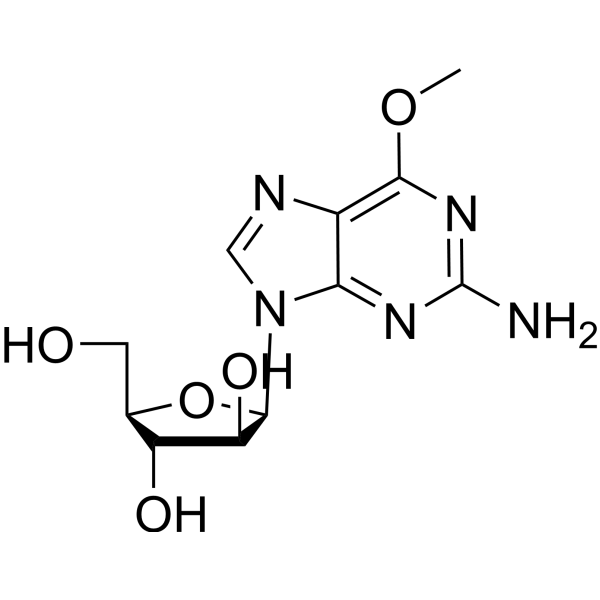
    Nelarabine (506U78) is a nucleoside analogue and can be used for the research of T cell acute lymphoblastic leukemia (T-ALL) .
    Nelarabine
  • HY-137471
    RBPJ Inhibitor-1
    Maximum Cited Publications
    8 Publications Verification

    RIN1

    Notch Cancer
    RBPJ Inhibitor-1 (RIN1), the first RBPJ inhibitor, blocks the functional interaction of RBPJ with SHARP. RBPJ Inhibitor-1 (RIN1) inhibits NOTCH-dependent tumor cell proliferation .
    RBPJ Inhibitor-1
  • HY-176244

    Histone Acetyltransferase Cancer
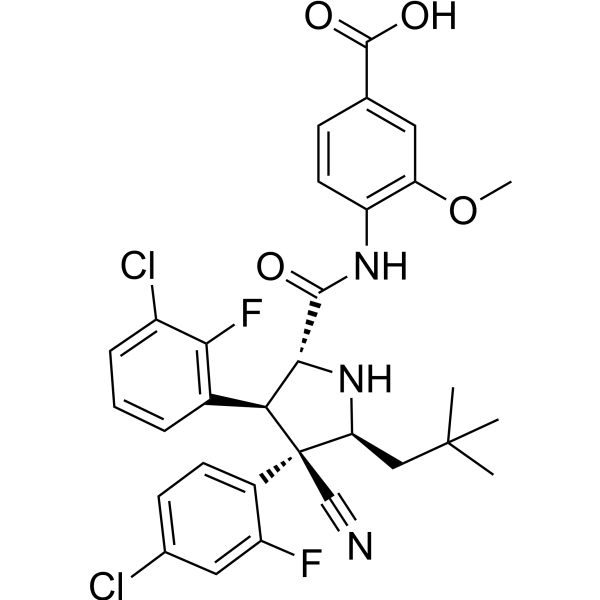
    KI-TOX-A3 is a TOX protein-protein interaction inhibitor that blocks the TOX-KAT7 protein-protein interaction with an IC50 of 0.51 μM. KI-TOX-A3 induces proteasomal degradation of TOX, restores KAT7-mediated H3K14 acetylation, reverses exhaustion of CD8 + T cells, and inhibits the proliferation of T cell acute lymphoblastic leukemia (T-ALL) cells. KI-TOX-A3 shows promise for use in studies of hematological malignancies such as T-ALL .
    KI-TOX-A3
  • HY-P99914

    GNC-038

    PD-1/PD-L1 CD19 TNF Receptor CD3 Interleukin Related IFNAR Inflammation/Immunology Cancer
    Emfizatamab (GNC-038) is a monoclonal antibody against CD19/CD3E/TNFRSF9/PD-L1. Emfizatamab exhibits antitumor activity, being capable of activating CD3 and 4-1BB signals on T cells, as well as targeting the high expression of CD19 or PD-L1 on tumor cells. Emfizatamab functions as a CD19-specific T cell engager by mediating direct antitumor activity. Emfizatamab can also overcome the inhibition of T cells by PD-L1. Emfizatamab can be used in the research of tumors such as R/R non-Hodgkin lymphoma or acute lymphoblastic leukemia .
    Emfizatamab
  • HY-171178

    p38 MAPK Cancer
    DK2403 (compound 25) is a MAP2K7 inhibitor (IC50= 0.01 μM). DK2403 can effectively inhibit MAP2K7 without significantly disrupting the larger kinase group and can be used to study childhood T-cell acute lymphoblastic leukemia .
    DK2403
  • HY-B0971

    Prophenpyridamine maleate; Tripoton maleate

    Histamine Receptor Apoptosis Inflammation/Immunology Endocrinology
    Pheniramine (Prophenpyridamine; Tripoton) maleate is a first-generation histamine H1 receptor antagonist, acts on the central nervous system (CNS) with sedative and hypnotic effect. Pheniramine maleate displays antitumor effect and induces leukemia cells apoptosis. Pheniramine maleate is also a safe and effective local agent that can suppress or relieve pain, with antipruritic effects .
    Pheniramine maleate
  • HY-169789

    PI3K Metabolic Disease Cancer
    PKN3-IN-1 (compound 16) inhibits PKN3 (serine/threonine protein kinase 3) and GAK (cyclin G-associated kinase) with IC50 of 0.014 μM and Ki of 0.0044 μM respectively. PKN3-IN-1 is a potential tool compound to study the cell biology of PKN3 and its role in pancreatic and prostate cancer and T-cell acute lymphoblastic leukemia .
    PKN3-IN-1
  • HY-136522

    Histone Demethylase Apoptosis Cancer
    S2116, a N-alkylated tranylcypromine (TCP) derivative, is a potent lysine-specific demethylase 1 (LSD1) inhibitor. S2116 increases H3K9 methylation and reciprocal H3K27 deacetylation at super-enhancer regions. S2116 induces apoptosis in TCP-resistant T-cell acute lymphoblastic leukemia (T-ALL) cells by repressing transcription of the NOTCH3 and TAL1 genes. S2116 significantly retardes the growth of T-ALL cells in xenotransplanted mice .
    S2116
  • HY-175281

    PROTACs Src Discoidin Domain Receptor Bcr-Abl Apoptosis Cancer
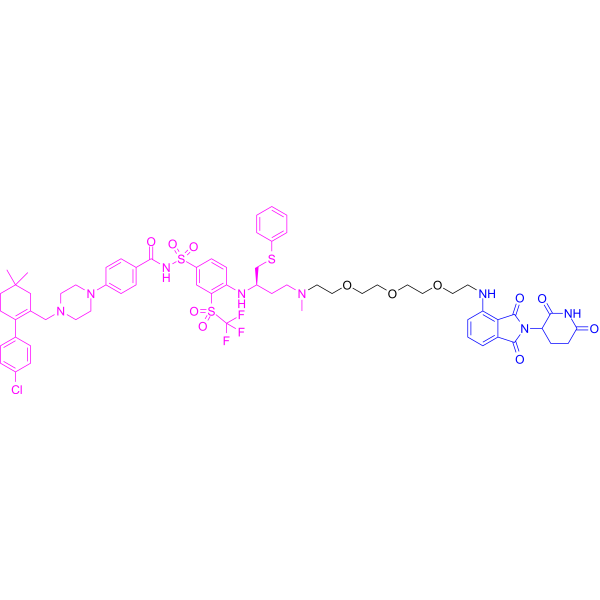
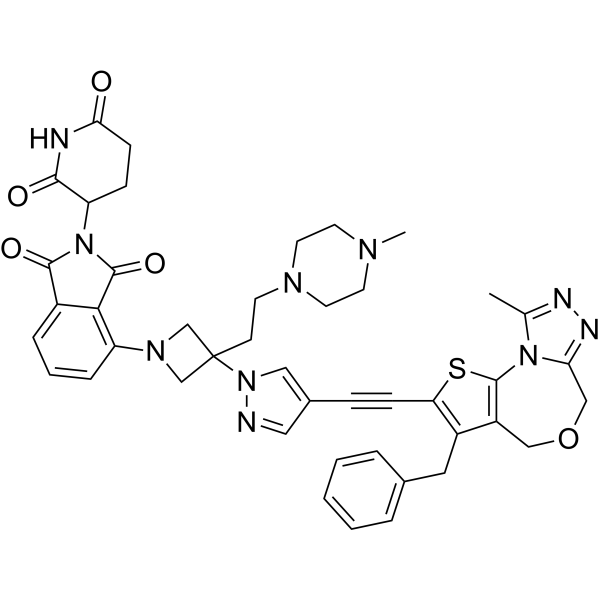
    SJ11646 is a Dasatinib (HY-10181)-based LCK PROTAC degrader with a DC50 of 0.00838 pM. SJ11646 has potent cytotoxicity against LCK-activated T-cell acute lymphoblastic leukemia (T-ALL) cells and primary leukemia samples with drastically prolonged suppression of LCK signaling, and induces T-ALL apoptosis. SJ11646 binds to 51 human kinases with a high affinity (particularly ABL1, KIT, and DDR1). SJ11646 has superior antileukemic efficacy in T-ALL mice model. . Pink: LCK ligand (HY-107447); Blue: CRBN ligase ligand (HY-163169); Black: linker (HY-76667)
    SJ11646
  • HY-162676

    PROTACs Src Cancer
    SJ45566 a potent and orally active PROTAC-based LCK degrader, with a DC50 of 1.21 nM. SJ45566 can be used in the research for T‑Cell Acute Lymphoblastic Leukemia .
    SJ45566
  • HY-175280

    Molecular Glues Src Cancer
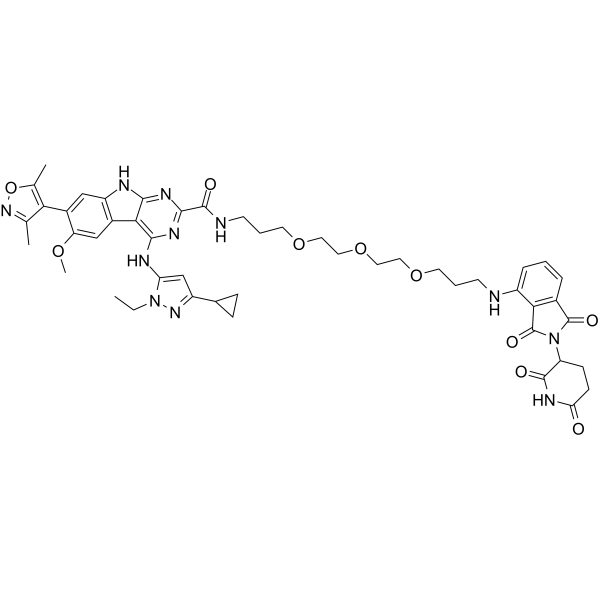
    Lck degrader-1 (Compound 17) is a molecular glue degrader targeting lymphocyte-specific protein tyrosine kinase (LCK) (DC50=23.1 nM). Lck degrader-1 is promising for research of T-cell acute lymphoblastic leukemia (T-ALL) .
    Lck degrader-1
  • HY-164466

    Calcium Channel Notch Cancer
    CAD204520, a SERCA inhibitor (IC50 = 0.34 μM), targets mutated over wild type NOTCH1 proteins in T-cell acute lymphoblastic leukemia (T-ALL) and mantle cell lymphoma (MCL). CAD204520 can be used for T-ALL and MCL research .
    CAD204520
  • HY-151194

    Histone Demethylase Cancer
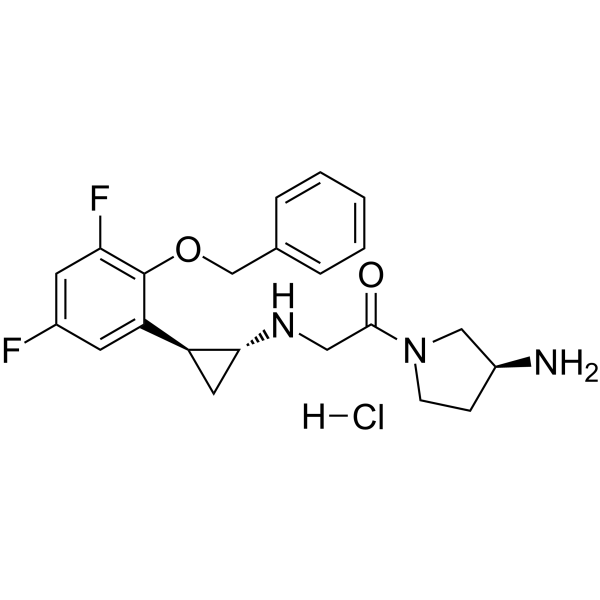
    LSD1/2-IN-4, a PCPA derivative, is an inhibitor of lysine-specific demethylase 1 (LSD1) and lysine-specific demethylase 2 (LSD2). LSD1/2-IN-4 inhibits LSD1 and LSD2 with Ki values of 0.11 μM and 130 μM, respectively. LSD1/2-IN-4 can be used for the research of several cancers including T-cell acute lymphoblastic leukemia (TALL) .
    LSD1/2-IN-4
  • HY-136523

    Histone Demethylase Apoptosis Cancer
    S2157, a N-alkylated tranylcypromine (TCP) derivative, is a potent lysine-specific demethylase 1 (LSD1) inhibitor. S2157 increases H3K9 methylation and reciprocal H3K27 deacetylation at super-enhancer regions. S2157 induces apoptosis in TCP-resistant T-cell acute lymphoblastic leukemia (T-ALL) cells by repressing transcription of the NOTCH3 and TAL1 genes. S2157 efficiently pass through the blood-brain barrier and can almost completely eradicate CNS leukemia in mice transplanted with T-ALL cells .
    S2157
  • HY-P10371

    txCD47

    Reactive Oxygen Species (ROS) Thrombopoietin Receptor Mitochondrial Metabolism HSP HSV CD47 Infection Inflammation/Immunology Cancer
    PKHB1 (txCD47) is a CD47 agonist and Thrombospondin-1 peptide mimetic. PKHB1 activates CD47 and triggers Caspase-independent, calcium-dependent cell death via mitochondrial alterations, ROS production, endoplasmic reticulum morphological changes, and dissipation of mitochondrial membrane potential. PKHB1 induces the exposure of Calreticulin, HSP70, and HSP90, thereby driving immunogenic cell death. PKHB1 promotes intratumoral CD8 + T cell infiltration and inhibits breast tumorigenesis. PKHB1 reduces HSV-1 levels and alleviates the severity of herpes simplex keratitis. PKHB1 can be used in research related to breast cancer, herpes simplex keratitis, and T-cell acute lymphoblastic leukemia .
    PKHB1
  • HY-B0971A

    Prophenpyridamine; Tripoton; Pheniramine solution

    Histamine Receptor Apoptosis Inflammation/Immunology Cancer
    Pheniramine (Prophenpyridamine;Tripoton) is a first-generation histamine H1 receptor antagonist, acts on the central nervous system (CNS) with sedative and hypnotic effect. Pheniramine displays antitumor effect and induces leukemia cells apoptosis. Pheniramine is also a safe and effective local agent that can suppress or relieve pain, with antipruritic effects .
    Pheniramine
  • HY-112255

    Glucocorticoid Receptor Cancer
    J9 is a small molecule that reverses Dexamethasone (HY-14648) resistance in T-cell acute lymphoblastic leukemia. J9 is lethal to CUTLL1 cells only in the presence of Dexamethasone. J9 inhibits CUTLL1 cell growth with an EC50 of 28 μM in combination with Dexamethasone .
    J9
  • HY-179159

    Microtubule/Tubulin Cancer
    Tubulin-IN-60 (Compound 4) is a tubulin polymerization inhibitor, with an IC50 of 0.19 μM. Tubulin-IN-60 has anti-cancer activity against colorectal, pancreatic, T-cell acute lymphoblastic leukemia cancer .
    Tubulin-IN-60
  • HY-13701R

    506U78 (Standard); GW 506U78 (Standard); Nelzarabine (Standard)

    Reference Standards Nucleoside Antimetabolite/Analog Apoptosis Cancer
    Nelarabine (Standard) is the analytical standard of Nelarabine. This product is intended for research and analytical applications. Nelarabine (506U78) is a nucleoside analogue and can be used for the research of T cell acute lymphoblastic leukemia (T-ALL) .
    Nelarabine (Standard)
  • HY-N5134A

    ara-G monophosphate

    Drug Metabolite Apoptosis Inflammation/Immunology Cancer
    ara-GMP (ara-G monophosphate) is a metabolite of Arabinosylguanine (ara-G) (HY-N0097A). ara-GMP incorporates into replicating DNA , initiates S phase-specific apoptosis. ara-GMP can be used for the research of cancer, such as T-cell acute lymphoblastic leukemia .
    ara-GMP
  • HY-151190

    S1024

    Histone Demethylase Cancer
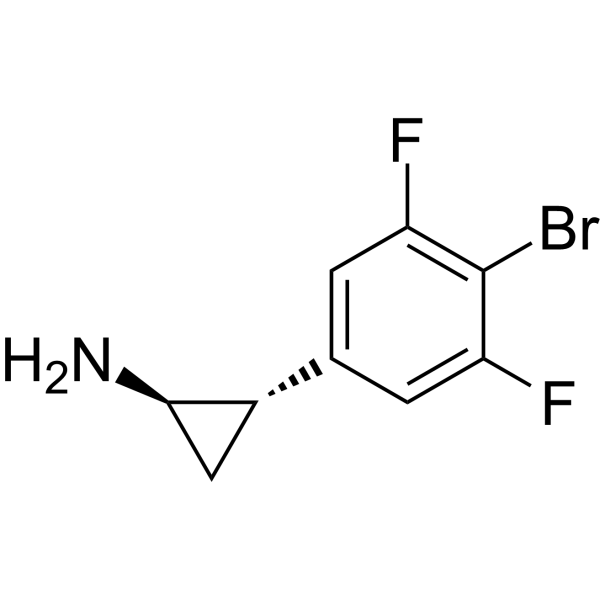
    cis-4-Br-2,5-F2-PCPA (S1024) is a selective inhibitor of lysine-specific demethylase 1 (LSD1), with a Ki value of 94 nM instead of 8.4 μM for LSD2. There is aberrant expression of LSD1 in cancer stem cells, cis-4-Br-2,5-F2-PCPA inhibits LSD1 cell proliferation and by increasing the level of dimethylated histone H3 at K4 (H3K4) in CCRF-CEM cells .
    cis-4-Br-2,5-F2-PCPA
  • HY-151192

    Histone Demethylase Cancer
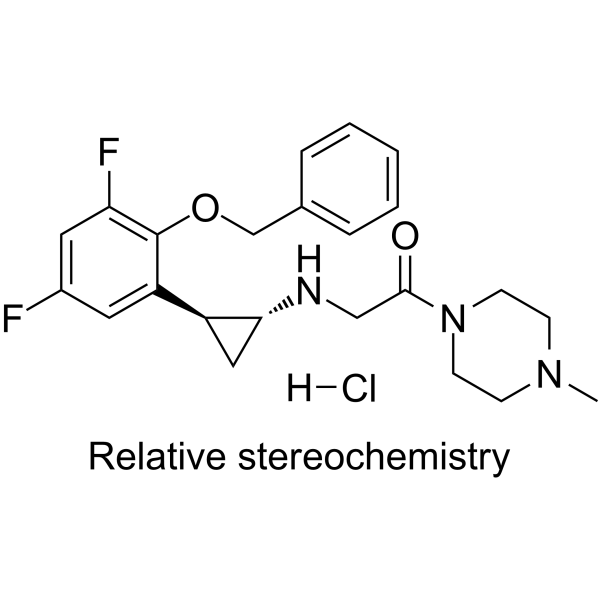
    LSD1/2-IN-3 is a selective inhibitor of lysine-specific demethylase 1 (LSD1), with a Ki value of 11 nM instead of 7 μM for LSD2. There is aberrant expression of LSD1 in cancer stem cells, LSD1/2-IN-1 inhibits LSD1 cell proliferation .
    LSD1/2-IN-3
  • HY-185459

    PARP Epigenetic Reader Domain Cancer
    PCIP-1 is a PARP2 inhibitor. PCIP-1 recruits BET proteins to PARP2 to inhibit DNA repair, acts via event-driven pharmacology, and does not inhibit PARP-catalyzed PARylation. PCIP-1 inhibits DNA repair, thereby inducing synthetic lethality in homologous recombination-deficient cancer cells and increasing the sensitivity of PARP1-knockout cells. PCIP-1 can be used in the research of homologous recombination-deficient cancers, T-cell acute lymphoblastic leukemia, and BRCA-mutant cancers .
    PCIP-1
  • HY-B0971R

    Prophenpyridamine maleate (Standard); Tripoton maleate (Standard); Pheniramine maleate (Standard)

    Reference Standards Histamine Receptor Apoptosis Inflammation/Immunology Endocrinology
    Pheniramine (maleate) (Standard) is the analytical standard of Pheniramine (maleate). This product is intended for research and analytical applications. Pheniramine (Prophenpyridamine; Tripoton) maleate is a first-generation histamine H1 receptor antagonist, acts on the central nervous system (CNS) with sedative and hypnotic effect. Pheniramine maleate displays antitumor effect and induces leukemia cells apoptosis. Pheniramine maleate is also a safe and effective local agent that can suppress or relieve pain, with antipruritic effects .
    Pheniramine maleate (Standard)
  • HY-B0971AR

    Prophenpyridamine (Standard); Tripoton (Standard); Pheniramine solution (Standard)

    Reference Standards Histamine Receptor Apoptosis Inflammation/Immunology Cancer
    Pheniramine (Standard) is the analytical standard of Pheniramine. This product is intended for research and analytical applications. Pheniramine (Prophenpyridamine;Tripoton) is a first-generation histamine H1 receptor antagonist, acts on the central nervous system (CNS) with sedative and hypnotic effect. Pheniramine displays antitumor effect and induces leukemia cells apoptosis. Pheniramine is also a safe and effective local agent that can suppress or relieve pain, with antipruritic effects .
    Pheniramine (Standard)
  • HY-P992275

    γ-secretase Neurological Disease Cancer
    Anti-Nicastrin Antibody (A5226A) is a monoclonal antibody against Nicastrin and an inhibitor of γ-secretase. Anti-Nicastrin Antibody (A5226A) recognizes the fully glycosylated mature presenilin enhancer in the active γ-secretase complex and inhibits its activity via competition for substrate binding. Anti-Nicastrin Antibody (A5226A) abrogates the growth of cancer cells dependent on γ-secretase activity. Anti-Nicastrin Antibody (A5226A) serves as an imaging tool to visualize the endocytic trafficking of active γ-secretase, and also acts as a detection reagent to evaluate the endocytic efficiency of γ-secretase. Anti-Nicastrin Antibody (A5226A) can be used in studies related to non-small cell lung cancer, T-cell acute lymphoblastic leukemia and Alzheimer's disease .
    Anti-Nicastrin Antibody (A5226A)
  • HY-164466A

    Calcium Channel Notch Cancer
    CAD204520 dihydrochloride, a SERCA inhibitor (IC50 = 0.34 μM), targets mutated over wild type NOTCH1 proteins in T-cell acute lymphoblastic leukemia (T-ALL) and mantle cell lymphoma (MCL). CAD204520 dihydrochloride can be used for T-ALL and MCL research .
    CAD204520 dihydrochloride
  • HY-179372

    Microtubule/Tubulin Apoptosis Cancer
    Tubulin polymerization-IN-84 inhibits tubulin polymerization by targeting the colchicine-binding pocket, with anIC50 = 10.9 μM. Tubulin polymerization-IN-84 shows antiproliferative activity against Jurkat, B16-F10, HCT116, and MDA-MB-231 cells (IC50 = 60 nM, 380 nM, 138 nM, and 1.054 μM). Tubulin polymerization-IN-84 induces G2/M-phase arrest and apoptosis in B16-F10 cells. Tubulin polymerization-IN-84 suppresses tumor growth in a B16-F10 melanoma model and potentiates anti-tumor immunity in combination with a PD-L1 mAb for the research of T-cell acute lymphoblastic leukemia, melanoma, colon cancer, and breast cancer.
    Tubulin polymerization-IN-84
  • HY-P10466A

    Sec61 SARS-CoV Interleukin Related TNF Receptor IFNAR Infection Inflammation/Immunology
    KZR-8445 TFA, a cyclic depsipeptide, is a client-selective Sec61 inhibitor. KZR-8445 TFA binds to the fully opened Sec61 lateral gate, blocks lumenal plug domain access, stabilizes lateral gate helices, traps select signal peptides, and disrupts secretory and membrane protein biogenesis. KZR-8445 TFA inhibits pro-inflammatory cytokine secretion in primary immune cells. KZR-8445 TFA inhibits SARS-CoV-2 replication, virus-induced cytotoxicity, and spike protein biogenesis. KZR-8445 TFA blocks disease progression in a mouse model of rheumatoid arthritis. KZR-8445 TFA can be used for the researches of rheumatoid arthritis and SARS-CoV-2 infection .
    KZR-8445 TFA
  • HY-P10466

    Sec61 SARS-CoV Interleukin Related TNF Receptor IFNAR Infection Inflammation/Immunology
    KZR-8445, a cyclic depsipeptide, is a client-selective Sec61 inhibitor. KZR-8445 binds to the fully opened Sec61 lateral gate, blocks lumenal plug domain access, stabilizes lateral gate helices, traps select signal peptides, and disrupts secretory and membrane protein biogenesis. KZR-8445 inhibits pro-inflammatory cytokine secretion in primary immune cells. KZR-8445 inhibits SARS-CoV-2 replication, virus-induced cytotoxicity, and spike protein biogenesis. KZR-8445 blocks disease progression in a mouse model of rheumatoid arthritis. KZR-8445 can be used for the researches of rheumatoid arthritis and SARS-CoV-2 infection .
    KZR-8445

Inquiry Online

Your information is safe with us. * Required Fields.

Salutation


Country or Region *

Applicant Name *


Organization Name *

Department *


Email Address *


Product Name *

Cat. No.


Requested quantity *

Phone Number *


Remarks

Inquiry Online

Inquiry Information

Product Name:
Cat. No.:
Quantity:
MCE Japan Authorized Agent:

