



Sec61
Sec61 complex, SecY, Sec61 channel
Sec61 is a heterotrimeric protein complex located on the endoplasmic reticulum membrane and belongs to the protein transporter family. Sec61 is mainly composed of Sec61α, Sec61β and Sec61γ. Sec61 is closely associated with signal recognition particles (SRP), SRP receptors, BiP, Sec62/Sec63 complex, TRAP, OST, etc. The main function of Sec61 is to assist the entry of nascent polypeptides into the endoplasmic reticulum during protein translation, participate in the transmembrane transport, membrane insertion and folding modification of proteins, and also play a role in the regulation of calcium ion homeostasis, as an endoplasmic reticulum calcium ion leakage channel to affect intracellular calcium signals. Specific Sec61 mutations can disrupt endoplasmic reticulum calcium balance and induce pancreatic β-cell apoptosis. Sec61 mutations interfere with the normal function of B cells. Abnormal expression of Sec61 is closely related to cell proliferation, invasion and drug resistance. Sec61 is closely related to a variety of diseases, including diabetes, immunodeficiency diseases (such as common variable immunodeficiency disease), kidney diseases (such as tubulointerstitial disease), and cancer. [1][2][3][4][5][6].
参考文献:
- [1]. Lang S, et al. Sec61 complexes form ubiquitous ER Ca2+ leak channels. Channels (Austin). 2011 May-Jun;5(3):228-35. [Content Brief]
- [2]. Domenger A, et al. The Sec61 translocon is a therapeutic vulnerability in multiple myeloma. EMBO Mol Med. 2022 Mar 7;14(3):e14740. [Content Brief]
- [3]. Oliver J, et al. The Sec61 complex is essential for the insertion of proteins into the membrane of the endoplasmic reticulum. FEBS Lett. 1995 Apr 3;362(2):126-30. [Content Brief]
- [4]. Lang S, et al. An Update on Sec61 Channel Functions, Mechanisms, and Related Diseases. Front Physiol. 2017 Nov 1;8:887. [Content Brief]
- [5]. Parys JB, et al. Sec61 complex/translocon: The role of an atypical ER Ca2+-leak channel in health and disease. Front Physiol. 2022 Oct 6;13:991149. [Content Brief]
- [6]. Cheng Z. Protein translocation through the Sec61/SecY channel. Biosci Rep. 2010 Feb 17;30(3):201-7. [Content Brief]
All Product Categories
-
Sec61 関連製品 (8)
関連製品 (8)

-
Sec61-IN-3
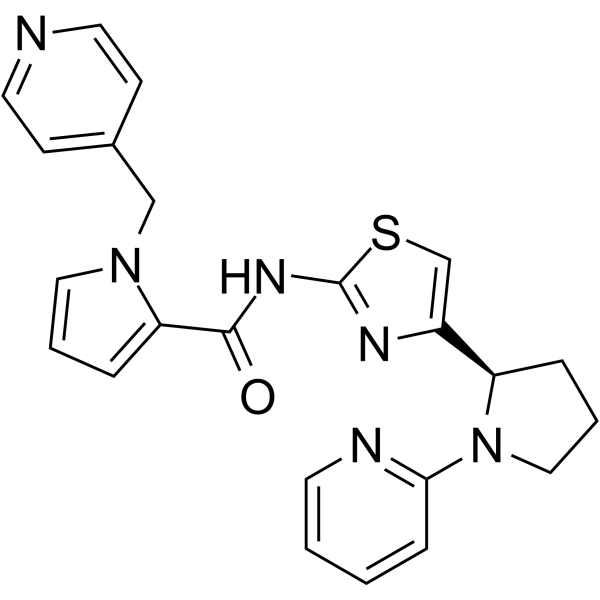
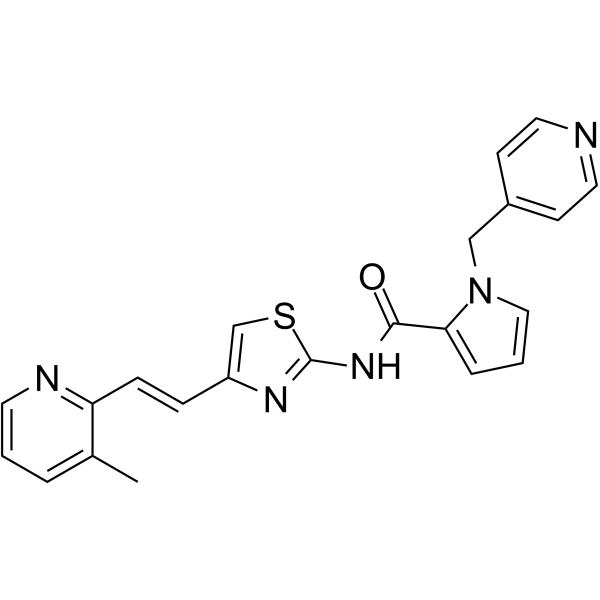
 0 ImagesSec61-IN-3 is a Sec61 inhibitor. Sec61-IN-3 shows a significant inhibitory effect on PD-1 related reporter gene cell models (PD1tsGluc) (IC50 = 42 nM), and also has certain inhibitory activity on Her3 (IC50 = 99 nM), IL2 (IC50 = 144 nM) related reporter pathways, but has a relatively weak inhibitory effect on the TNFα (IC50 = 580 nM) pathway. Sec61-IN-3 can be used for cancer research.
-
KZR-261
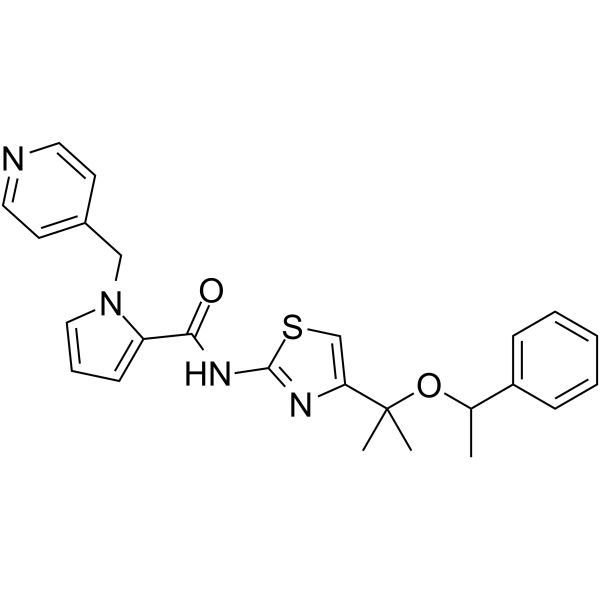
 0 ImagesKZR-261 is a Sec61 translocase inhibitor. KZR-261 binds directly to the Sec61 channel, thereby inhibiting the biosynthesis of certain Sec61 substrate proteins, including oncogenic factors. KZR-261 activates the endoplasmic reticulum stress response. KZR-261 exhibits broad in vitro anticancer activity. KZR-261 shows antitumor efficacy in mouse models of cancer. KZR-261 can be used for the research of multiple myeloma, colorectal cancer, small cell lung cancer, pancreatic cancer, prostate cancer, non-Hodgkin's lymphoma, and mantle cell lymphoma.
-
Cotransin TFA
 0 Images製品番号: HY-P3987A純度: 99.83%Cotransin TFA is a cyclic ester peptide and a Sec61 translocator binder with signal sequence-selective activity to inhibit co-translational protein translocation. Cotransin TFA inhibits the biogenesis of a subset of secretory and membrane proteins in a signal peptide-dependent manner. Cotransin TFA is applicable for cancer-related research.
-
VGD020
 0 Images製品番号: HY-182674CAS 番号: 1322645-32-8VGD020 is a highly potent and selective Sec61 translocon inhibitor. VGD020 suppresses the expression of cell surface CD4 by inhibiting signal peptide-dependent co-translational ER translocation, interferes with the initiation of ER translocation of dengue virus polyprotein, and reduces the expression of Sortilin in breast cancer cells. VGD020 exhibits broad anti-flavivirus and anti-HIV activities. VGD020 can be used in research related to dengue virus infection, Zika virus infection, yellow fever virus infection, human immunodeficiency virus infection, and breast cancer.
-
KZR-8445 TFA
 0 Images製品番号: HY-P10466AKZR-8445 TFA, a cyclic depsipeptide, is a client-selective Sec61 inhibitor. KZR-8445 TFA binds to the fully opened Sec61 lateral gate, blocks lumenal plug domain access, stabilizes lateral gate helices, traps select signal peptides, and disrupts secretory and membrane protein biogenesis. KZR-8445 TFA inhibits pro-inflammatory cytokine secretion in primary immune cells. KZR-8445 TFA inhibits SARS-CoV-2 replication, virus-induced cytotoxicity, and spike protein biogenesis. KZR-8445 TFA blocks disease progression in a mouse model of rheumatoid arthritis. KZR-8445 TFA can be used for the researches of rheumatoid arthritis and SARS-CoV-2 infection.
-
KZR-8445
 0 Images製品番号: HY-P10466CAS 番号: 2377734-91-1KZR-8445, a cyclic depsipeptide, is a client-selective Sec61 inhibitor. KZR-8445 binds to the fully opened Sec61 lateral gate, blocks lumenal plug domain access, stabilizes lateral gate helices, traps select signal peptides, and disrupts secretory and membrane protein biogenesis. KZR-8445 inhibits pro-inflammatory cytokine secretion in primary immune cells. KZR-8445 inhibits SARS-CoV-2 replication, virus-induced cytotoxicity, and spike protein biogenesis. KZR-8445 blocks disease progression in a mouse model of rheumatoid arthritis. KZR-8445 can be used for the researches of rheumatoid arthritis and SARS-CoV-2 infection.



