Search Result
Results for "
Tannin
" in MedChemExpress (MCE) Product Catalog:
1
Bibliotecas de Screening
| Cat. No. |
Nombre del producto |
Target |
Áreas de investigación |
Chemical Structure |
-
- HY-N0527
-
|
Penta-O-galloyl-β-D-glucose; 1,2,3,4,6-Pentagalloyl glucose
|
JAK
Keap1-Nrf2
Apoptosis
β-catenin
Reactive Oxygen Species (ROS)
E1/E2/E3 Enzyme
|
Neurological Disease
Inflammation/Immunology
Cancer
|
|
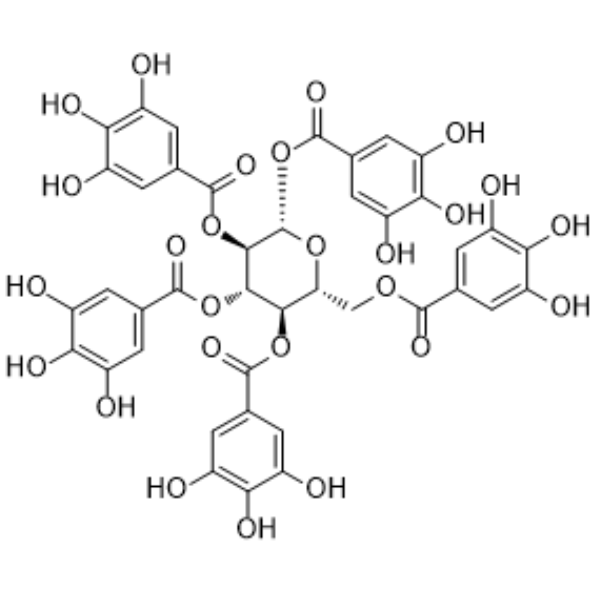
Pentagalloylglucose (Penta-O-galloyl-β-D-glucose) is an orally active gallic tannin compound and an inducer of apoptosis and autophagy. Pentagalloglucose induces cell apoptosis and autophagy through the GSK3β/β-catenin pathway. Pentagalloylglucose inhibits UBE2T-mediated p53 ubiquitination, upregulates p53, downregulates RRM1/RRM2 in pancreatic cancer organoids. Pentagalloglucose has antioxidant, anti mutagenic, anti-inflammatory, anticonvulsant, cardioprotective, anti allergic, cholesterol lowering, and anti-tumor activities .
|
-
-
- HY-P2877
-
|
|
Endogenous Metabolite
|
Others
|
|
Tannase is a tannin acyl hydrolase. Tannase catalyzes the hydrolysis of ester bonds in gallotannins, complex tannins and gallic acid esters to release gallic acid. Tannase plays a role in industrial production, including the manufacture of instant tea, beer, fruit juice, some wines, and the production of gallic acid .
|
-

-
- HY-114760
-
|
Vanillic acid 4-β-D-glucoside
|
Others
|
Others
|
|
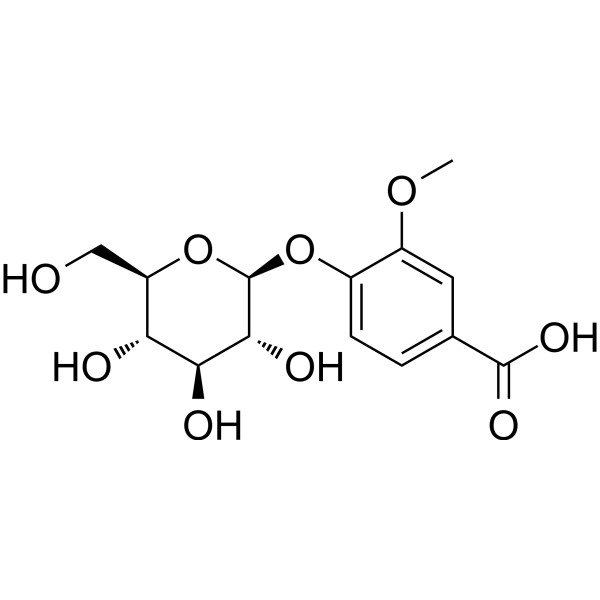
Vanillic acid glucoside (Vanillic acid 4-β-D-glucoside), a hydrolyzable tannin, is isolated from the fruits of C. annuum as well as the leaves of various additional plants. Vanillic acid glucoside can be phytotoxic against different species.
|
-
-
- HY-N16549
-
|
3-O-Galloylprocyanidin B3
|
Others
|
Others
|
|
Procyanidin B3-3-O-gallate is a natural tannin compound found in Sanguisorba officinal .
|
-

-
- HY-N0527R
-
|
Penta-O-galloyl-β-D-glucose (Standard); 1,2,3,4,6-Pentagalloyl glucose (Standard)
|
Reference Standards
JAK
Keap1-Nrf2
Apoptosis
β-catenin
Reactive Oxygen Species (ROS)
|
Neurological Disease
Inflammation/Immunology
Cancer
|
|
Pentagalloylglucose (Standard) is the analytical standard of Pentagalloylglucose. This product is intended for research and analytical applications. Pentagalloylglucose (Penta-O-galloyl-β-D-glucose) is an orally active gallic tannin compound and an inducer of apoptosis and autophagy. Pentagalloglucose induces cell apoptosis and autophagy through the GSK3β/β-catenin pathway. Pentagalloylglucose inhibits UBE2T-mediated p53 ubiquitination, upregulates p53, downregulates RRM1/RRM2 in pancreatic cancer organoids. Pentagalloglucose has antioxidant, anti mutagenic, anti-inflammatory, anticonvulsant, cardioprotective, anti allergic, cholesterol lowering, and anti-tumor activities .
|
-

-
- HY-N12500
-
|
|
Glycosidase
|
Others
|
|
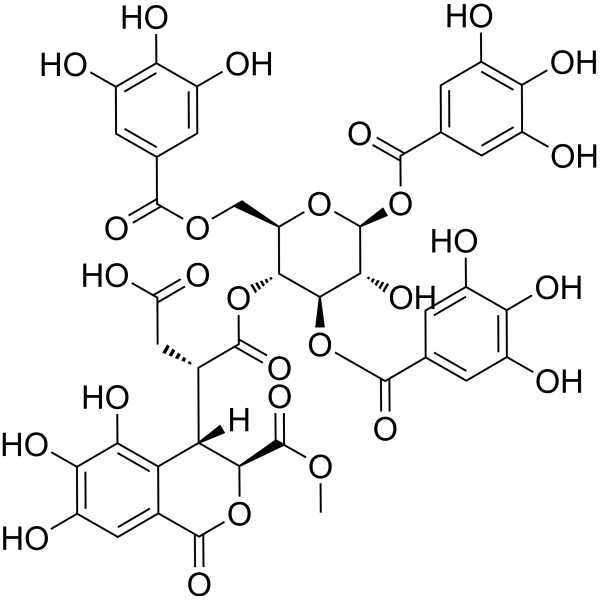
1'-O-Methyl neochebulinate, hydrolyzable tannin, is an α-glucosidase inhibitor with IC50 value of 59.5 μM, isolated from the fruits of Terminalia chebula Retz .
|
-
-
- HY-N9862
-
|
|
Others
|
Others
|
|
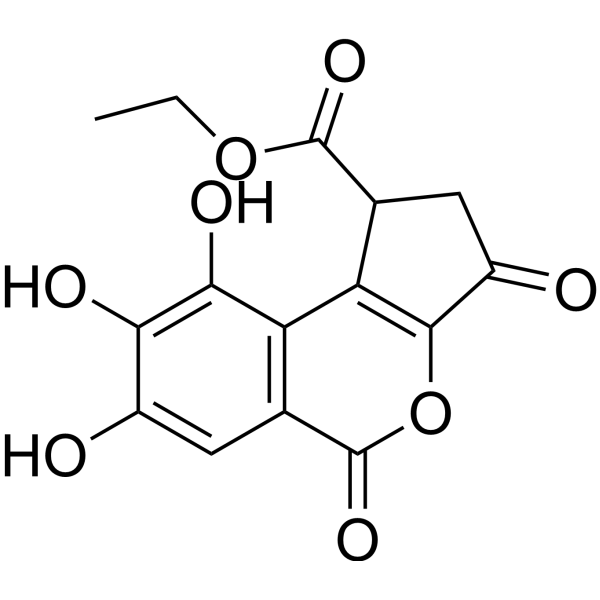
Ethyl brevifolincarboxylate (compound 3) can be isolated from Quercus wutaishanica seeds .
|
-
-
- HY-N17305
-
|
|
Others
|
Others
|
|
Nobotanin D (Compound 23) is a hydrolyzable tannin found in the fresh flowers of Camellia reticulata .
|
-

-
- HY-N17351
-
|
|
Others
|
Others
|
|
3,6-Di-O-galloyl-D-glucopyranoside is a hydrolyzable tannin compound with astringent activity, found in the leaves of Myrtus communis .
|
-

-
- HY-N19661
-
|
|
|
Inflammation/Immunology
|
|
1-O-Caffeoyl-3-O-galloyl-β-D-glucopyranose, a hydrolyzable tannin found in the rhizome of Balanophora harlandii, is a radical scavenger. 1-O-Caffeoyl-3-O-galloyl-β-D-glucopyranose scavenges DPPH (HY-N19661) radicals with a SC50 value of 17.3 μM. 1-O-Caffeoyl-3-O-galloyl-β-D-glucopyranose can be used for antioxidant research .
|
-

-
- HY-N17374
-
|
|
Others
|
Others
|
|
Laevigatin A (Compound 8) is a hydrolyzable tannin found in Rosa laevigata .
|
-

-
- HY-N12220
-
|
|
Others
|
Others
|
|
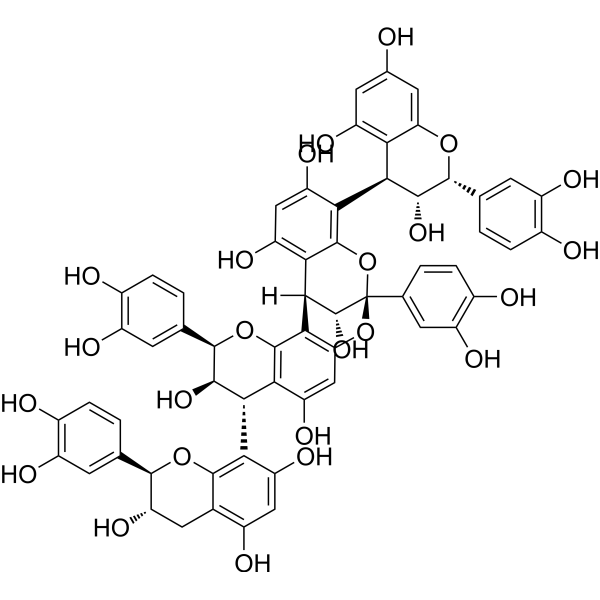
Cinnamtannin D2 (compound 13) is a cinnamon tannin isolated from Vaccinium vitis-idaea L .
|
-
-
- HY-N19050
-
|
|
Bacterial
|
Infection
Inflammation/Immunology
|
|
Acacia catechu extract is rich in bioactive components such as catechins, tannins, and flavonoids, and has astringent, anti-inflammatory, antioxidant, and antibacterial properties.
|
-

-
- HY-N18646
-
|
|
Others
|
Inflammation/Immunology
|
|
Adiantum capillus-veneris extract is rich in flavonoids and tannins, among other bioactive components, and has antioxidant and anti-inflammatory effects.
|
-

-
- HY-N19082
-
|
|
Others
|
Inflammation/Immunology
|
|
Tecomella undulata extract is a natural antioxidant, digestive aid, and potential anti-aging agent. It is rich in bioactive compounds such as flavonoids, polyphenols, tannins, and vitamin C.
|
-

-
- HY-N18754
-
-

-
- HY-N19074
-
|
|
Bacterial
|
Infection
Inflammation/Immunology
|
|
Psidium guajava extract is rich in flavonoids (such as quercetin and kaempferol), tannins, vitamin C, carotenoids, and phenolic acids, which give it antioxidant, anti-inflammatory, antibacterial, and antiviral properties.
|
-

-
- HY-N19077
-
|
|
Bacterial
|
Infection
Inflammation/Immunology
Cancer
|
|
Punica granatum rinds extract is rich in a variety of bioactive compounds, such as punicin, ellagic acid, tannins, and flavonoids, which give it powerful antioxidant, anti-inflammatory, antibacterial, and anticancer properties.
|
-

-
- HY-N19068
-
|
|
Bacterial
|
Metabolic Disease
|
|
Crataeva nurvula extract is rich in active ingredients including flavonoids, saponins, triterpenoids, alkaloids, and tannins. Crataeva nurvula extract helps promote healthy kidney and bladder function.
|
-

-
- HY-N19079
-
|
|
Others
|
Inflammation/Immunology
|
|
Rheum emodi extract has laxative, anti-inflammatory, and antioxidant properties. Its main active ingredients include anthraquinone compounds (such as emodin, chrysophanol, and aloe-emodin), flavonoids, and tannins.
|
-

-
- HY-N18702
-
|
|
Others
|
Metabolic Disease
Inflammation/Immunology
|
|
Pterocarpus marsupium extract is derived from the bark of the Indian rosewood tree. Its active ingredients include pterostilbene, santalin, flavonoids, and tannins, which give it antioxidant, anti-inflammatory, anti-diabetic, and cardioprotective properties.
|
-

-
- HY-N19081
-
|
|
Bacterial
|
Infection
Inflammation/Immunology
|
|
Terminalia belerica extract is rich in various bioactive compounds, such as tannins, gallic acid, ellagic acid, chebulic acid, and various sugars including glucose and fructose. Terminalia belerica extract possesses antioxidant, antibacterial, anti-inflammatory, and hepatoprotective effects.
|
-

-
- HY-N18727
-
|
|
Bacterial
|
Infection
Inflammation/Immunology
|
|
Emblic extract is derived from the fruit of a small tree native to India. Its active ingredients include vitamin C, tannins, flavonoids, polyphenols, and gallic acid, which give it powerful antioxidant, anti-inflammatory, and antibacterial properties.
|
-

-
- HY-N18760
-
|
|
Bacterial
|
Infection
Inflammation/Immunology
|
|
Vitex negundo extract is rich in bioactive compounds such as alkaloids, flavonoids, glycosides, volatile oils, triterpenoids, tannins, polyphenols, flavonoids, and iridoid glycosides. Vitex negundo extract possesses anti-inflammatory, antioxidant, antibacterial, and detoxifying properties.
|
-

-
- HY-N18782
-
|
|
Others
|
Inflammation/Immunology
|
|
Quercus infectoria extract is an extract from the fruit of the oak tree (Quercus infectoria) known for its powerful astringent, anti-inflammatory, and antioxidant properties. The active ingredients in Quercus infectoria extract include tannins (such as ellagic acid and gallic acid), flavonoids, and catechins.
|
-

-
- HY-N18737
-
|
|
Others
|
Inflammation/Immunology
|
|
Phyllanthus niruri extract, extracted from the whole plant of Phyllanthus niruri, is rich in bioactive compounds such as alkaloids, flavonoids, and tannins. Phyllanthus niruri extract has alkalizing properties, which may help prevent the formation of gallstones and acidic kidney stones.
|
-

-
- HY-N18677
-
|
|
Bacterial
|
Infection
Inflammation/Immunology
|
|
Rubia cordifolia extract, derived from the roots of the madder plant, is valued for its anti-inflammatory, antioxidant, antibacterial, and blood-purifying properties. Active ingredients in Rubia cordifolia extract include anthraquinone compounds (such as alizarin and alizarin red), flavonoids, and tannins.
|
-

-
- HY-N17774
-
|
|
Reactive Oxygen Species (ROS)
|
Others
|
|
2,3,4,6-Tetragalloylglucose is a hydrolyzable tannin with antioxidant activity, exhibiting DPPH free radical scavenging activity (IC50=11.35 μM). 2,3,4,6-Tetragalloylglucose can be isolated from the endocarp of Juglans regia (walnut).
|
-

-
- HY-N18732
-
|
|
Others
|
Cardiovascular Disease
|
|
Terminalia arjuna extract is a precious natural compound derived from the bark of the Terminalia arjuna tree, rich in bioactive components such as triterpenoids, flavonoids, tannins, and polyphenols. Terminalia arjuna extract has cardioprotective effects, helping to strengthen the heart muscle, lower cholesterol levels, stabilize blood pressure, and prevent thrombosis.
|
-

-
- HY-N19039
-
|
|
Bacterial
|
Infection
Metabolic Disease
Inflammation/Immunology
|
|
Aerva Lanata Extract is a versatile herbal extract with a wide range of bioactive compounds and medicinal properties. Aerva Lanata Extract contains various phytochemicals such as flavonoids, terpenoids, alkaloids, tannins, and phenolic compounds. Aerva Lanata Extract shows significant antioxidant, antimicrobial, anti-cancer, anti-inflammatory, and anti-diabetic activities.
|
-

-
- HY-N19065
-
|
|
Bacterial
|
Infection
Inflammation/Immunology
|
|
Dalchini extract is rich in various bioactive compounds, including cinnamaldehyde, eugenol, tannins, polyphenols, and aromatic essential oils. Dalchini extract helps regulate blood sugar levels and improve insulin sensitivity. It also possesses anti-inflammatory, antioxidant, and antibacterial properties, which help enhance immune function, prevent infection, and reduce inflammation.
|
-

-
- HY-N18676
-
|
|
Others
|
Metabolic Disease
|
|
Dolichos Biflorus Extract, derived from the seeds of the Dolichos biflorus plant (commonly known as horse gram), is a nutrient-dense herb widely used in Ayurvedic and traditional medicine for its numerous health benefits. Dolichos biflorus extract contains alkaloids, saponins, flavonoids, carbohydrates, proteins, and tannins. It is known for its digestive support, as it promotes healthy digestion, alleviates bloating, and helps with constipation, along with mild diuretic effects that aid detoxification by eliminating excess fluids and waste products from the body.
|
-

-
- HY-N19069
-
|
|
Bacterial
|
Infection
Metabolic Disease
Inflammation/Immunology
|
|
Eugenia jambolana extract, commonly known as jamun or black plum, is derived from the fruit of the Eugenia jambolana tree, native to South Asia. The active compounds in jamun extract include anthocyanins, flavonoids, alkaloids, and tannins, which contribute to its antioxidant, anti-inflammatory, and antimicrobial properties. Jamun extract is most known for its blood sugar-lowering effects, making it popular in traditional medicine for managing diabetes. It is commonly used in supplements, traditional remedies, and skincare products due to its wide range of health benefits.
|
-

-
- HY-N18656
-
|
|
Bacterial
|
Infection
|
|
Terminalia chebula extract, derived from the fruit of the Terminalia chebula tree. Rich in bioactive compounds such as tannins, flavonoids, phenols, and organic acids like gallic acid and ellagic acid, this extract demonstrates a wide range of pharmacological activities. It acts as a natural laxative, supports digestive health, and exhibits potent antioxidant, anti-inflammatory, and antibacterial properties, effectively targeting various pathogenic bacteria, including Helicobacter pylori, Staphylococcus aureus, and Escherichia coli. Terminalia Chebula Extract also shows significant hepatoprotective effects, shielding the liver from damage through antioxidant and anti-inflammatory mechanisms. It has nephroprotective properties, alleviating renal dysfunction and enhancing kidney health by modulating inflammatory pathways. Additionally, the extract demonstrates neuroprotective activity, reducing neuronal damage and improving memory function. It has potential anti-diabetic effects, enhancing glucose uptake and reducing oxidative stress.
|
-

| Cat. No. |
Nombre del producto |
|
-
-
HY-L021L
-
|
|
45 compounds
|
|
Natural products are an attractive source with varied structures that exhibit potent biological activities, and desirable pharmacological profiles. The core scaffold of a natural product can also provide a biologically validated framework upon which to display diverse functional groups. Inspired by bioactive natural products, natural product-like compounds, occupying the same chemical space, are ideally suited to explore and to facilitate understanding of biological pathways.
MCE provides a unique collection of 45 natural product-like compounds that are structurally like Steroids, Tannins, Flavonoids, Quinones, Isoquinolines, etc. This library is an important source of lead compounds for drug discovery.
|
| Cat. No. |
Nombre del producto |
Category |
Target |
Chemical Structure |
-
- HY-N0527
-
|
Penta-O-galloyl-β-D-glucose; 1,2,3,4,6-Pentagalloyl glucose
|
Infection
other families
Classification of Application Fields
Anti-aging
Phenols
Polyphenols
Plants
Disease Research Fields
Source Classification
|
JAK
Keap1-Nrf2
Apoptosis
β-catenin
Reactive Oxygen Species (ROS)
E1/E2/E3 Enzyme
|
|
Pentagalloylglucose (Penta-O-galloyl-β-D-glucose) is an orally active gallic tannin compound and an inducer of apoptosis and autophagy. Pentagalloglucose induces cell apoptosis and autophagy through the GSK3β/β-catenin pathway. Pentagalloylglucose inhibits UBE2T-mediated p53 ubiquitination, upregulates p53, downregulates RRM1/RRM2 in pancreatic cancer organoids. Pentagalloglucose has antioxidant, anti mutagenic, anti-inflammatory, anticonvulsant, cardioprotective, anti allergic, cholesterol lowering, and anti-tumor activities .
|
-
-
- HY-114760
-
-
-
- HY-N16549
-
-
-
- HY-N0527R
-
|
Penta-O-galloyl-β-D-glucose (Standard); 1,2,3,4,6-Pentagalloyl glucose (Standard)
|
Structural Classification
other families
Phenols
Polyphenols
Plants
Source Classification
|
Reference Standards
JAK
Keap1-Nrf2
Apoptosis
β-catenin
Reactive Oxygen Species (ROS)
|
|
Pentagalloylglucose (Standard) is the analytical standard of Pentagalloylglucose. This product is intended for research and analytical applications. Pentagalloylglucose (Penta-O-galloyl-β-D-glucose) is an orally active gallic tannin compound and an inducer of apoptosis and autophagy. Pentagalloglucose induces cell apoptosis and autophagy through the GSK3β/β-catenin pathway. Pentagalloylglucose inhibits UBE2T-mediated p53 ubiquitination, upregulates p53, downregulates RRM1/RRM2 in pancreatic cancer organoids. Pentagalloglucose has antioxidant, anti mutagenic, anti-inflammatory, anticonvulsant, cardioprotective, anti allergic, cholesterol lowering, and anti-tumor activities .
|
-
-
- HY-N12500
-
-
-
- HY-N9862
-
-
-
- HY-N17305
-
-
-
- HY-N17351
-
-
-
- HY-N19661
-
-
-
- HY-N17374
-
-
-
- HY-N12220
-
-
-
- HY-N19050
-
|
|
Structural Classification
Extract
|
Bacterial
|
|
Acacia catechu extract is rich in bioactive components such as catechins, tannins, and flavonoids, and has astringent, anti-inflammatory, antioxidant, and antibacterial properties.
|
-
-
- HY-N18646
-
|
|
Structural Classification
Extract
|
Others
|
|
Adiantum capillus-veneris extract is rich in flavonoids and tannins, among other bioactive components, and has antioxidant and anti-inflammatory effects.
|
-
-
- HY-N19082
-
|
|
Structural Classification
Extract
|
Others
|
|
Tecomella undulata extract is a natural antioxidant, digestive aid, and potential anti-aging agent. It is rich in bioactive compounds such as flavonoids, polyphenols, tannins, and vitamin C.
|
-
-
- HY-N18754
-
|
|
Structural Classification
Extract
|
Bacterial
|
|
Saraca indica extract possesses anti-inflammatory, antioxidant, antibacterial, and antifungal properties; its primary active constituents include flavonoids, saponins, tannins, and alkaloids.
|
-
-
- HY-N19074
-
|
|
Structural Classification
Extract
|
Bacterial
|
|
Psidium guajava extract is rich in flavonoids (such as quercetin and kaempferol), tannins, vitamin C, carotenoids, and phenolic acids, which give it antioxidant, anti-inflammatory, antibacterial, and antiviral properties.
|
-
-
- HY-N19077
-
|
|
Structural Classification
Extract
|
Bacterial
|
|
Punica granatum rinds extract is rich in a variety of bioactive compounds, such as punicin, ellagic acid, tannins, and flavonoids, which give it powerful antioxidant, anti-inflammatory, antibacterial, and anticancer properties.
|
-
-
- HY-N19068
-
|
|
Structural Classification
Extract
|
Bacterial
|
|
Crataeva nurvula extract is rich in active ingredients including flavonoids, saponins, triterpenoids, alkaloids, and tannins. Crataeva nurvula extract helps promote healthy kidney and bladder function.
|
-
-
- HY-N19079
-
|
|
Structural Classification
Extract
|
Others
|
|
Rheum emodi extract has laxative, anti-inflammatory, and antioxidant properties. Its main active ingredients include anthraquinone compounds (such as emodin, chrysophanol, and aloe-emodin), flavonoids, and tannins.
|
-
-
- HY-N18702
-
|
|
Structural Classification
Extract
|
Others
|
|
Pterocarpus marsupium extract is derived from the bark of the Indian rosewood tree. Its active ingredients include pterostilbene, santalin, flavonoids, and tannins, which give it antioxidant, anti-inflammatory, anti-diabetic, and cardioprotective properties.
|
-
-
- HY-N19081
-
|
|
Structural Classification
Extract
|
Bacterial
|
|
Terminalia belerica extract is rich in various bioactive compounds, such as tannins, gallic acid, ellagic acid, chebulic acid, and various sugars including glucose and fructose. Terminalia belerica extract possesses antioxidant, antibacterial, anti-inflammatory, and hepatoprotective effects.
|
-
-
- HY-N18727
-
|
|
Structural Classification
Extract
|
Bacterial
|
|
Emblic extract is derived from the fruit of a small tree native to India. Its active ingredients include vitamin C, tannins, flavonoids, polyphenols, and gallic acid, which give it powerful antioxidant, anti-inflammatory, and antibacterial properties.
|
-
-
- HY-N18760
-
|
|
Structural Classification
Extract
|
Bacterial
|
|
Vitex negundo extract is rich in bioactive compounds such as alkaloids, flavonoids, glycosides, volatile oils, triterpenoids, tannins, polyphenols, flavonoids, and iridoid glycosides. Vitex negundo extract possesses anti-inflammatory, antioxidant, antibacterial, and detoxifying properties.
|
-
-
- HY-N18782
-
-
-
- HY-N18737
-
|
|
Structural Classification
Extract
|
Others
|
|
Phyllanthus niruri extract, extracted from the whole plant of Phyllanthus niruri, is rich in bioactive compounds such as alkaloids, flavonoids, and tannins. Phyllanthus niruri extract has alkalizing properties, which may help prevent the formation of gallstones and acidic kidney stones.
|
-
-
- HY-N18677
-
|
|
Structural Classification
Extract
|
Bacterial
|
|
Rubia cordifolia extract, derived from the roots of the madder plant, is valued for its anti-inflammatory, antioxidant, antibacterial, and blood-purifying properties. Active ingredients in Rubia cordifolia extract include anthraquinone compounds (such as alizarin and alizarin red), flavonoids, and tannins.
|
-
-
- HY-N17774
-
-
-
- HY-N18732
-
|
|
Structural Classification
Extract
|
Others
|
|
Terminalia arjuna extract is a precious natural compound derived from the bark of the Terminalia arjuna tree, rich in bioactive components such as triterpenoids, flavonoids, tannins, and polyphenols. Terminalia arjuna extract has cardioprotective effects, helping to strengthen the heart muscle, lower cholesterol levels, stabilize blood pressure, and prevent thrombosis.
|
-
-
- HY-N19039
-
|
|
Structural Classification
Extract
|
Bacterial
|
|
Aerva Lanata Extract is a versatile herbal extract with a wide range of bioactive compounds and medicinal properties. Aerva Lanata Extract contains various phytochemicals such as flavonoids, terpenoids, alkaloids, tannins, and phenolic compounds. Aerva Lanata Extract shows significant antioxidant, antimicrobial, anti-cancer, anti-inflammatory, and anti-diabetic activities.
|
-
-
- HY-N19065
-
|
|
Structural Classification
Extract
|
Bacterial
|
|
Dalchini extract is rich in various bioactive compounds, including cinnamaldehyde, eugenol, tannins, polyphenols, and aromatic essential oils. Dalchini extract helps regulate blood sugar levels and improve insulin sensitivity. It also possesses anti-inflammatory, antioxidant, and antibacterial properties, which help enhance immune function, prevent infection, and reduce inflammation.
|
-
-
- HY-N18676
-
|
|
Structural Classification
Extract
|
Others
|
|
Dolichos Biflorus Extract, derived from the seeds of the Dolichos biflorus plant (commonly known as horse gram), is a nutrient-dense herb widely used in Ayurvedic and traditional medicine for its numerous health benefits. Dolichos biflorus extract contains alkaloids, saponins, flavonoids, carbohydrates, proteins, and tannins. It is known for its digestive support, as it promotes healthy digestion, alleviates bloating, and helps with constipation, along with mild diuretic effects that aid detoxification by eliminating excess fluids and waste products from the body.
|
-
-
- HY-N19069
-
|
|
Structural Classification
Extract
|
Bacterial
|
|
Eugenia jambolana extract, commonly known as jamun or black plum, is derived from the fruit of the Eugenia jambolana tree, native to South Asia. The active compounds in jamun extract include anthocyanins, flavonoids, alkaloids, and tannins, which contribute to its antioxidant, anti-inflammatory, and antimicrobial properties. Jamun extract is most known for its blood sugar-lowering effects, making it popular in traditional medicine for managing diabetes. It is commonly used in supplements, traditional remedies, and skincare products due to its wide range of health benefits.
|
-
-
- HY-N18656
-
|
|
Structural Classification
Extract
|
Bacterial
|
|
Terminalia chebula extract, derived from the fruit of the Terminalia chebula tree. Rich in bioactive compounds such as tannins, flavonoids, phenols, and organic acids like gallic acid and ellagic acid, this extract demonstrates a wide range of pharmacological activities. It acts as a natural laxative, supports digestive health, and exhibits potent antioxidant, anti-inflammatory, and antibacterial properties, effectively targeting various pathogenic bacteria, including Helicobacter pylori, Staphylococcus aureus, and Escherichia coli. Terminalia Chebula Extract also shows significant hepatoprotective effects, shielding the liver from damage through antioxidant and anti-inflammatory mechanisms. It has nephroprotective properties, alleviating renal dysfunction and enhancing kidney health by modulating inflammatory pathways. Additionally, the extract demonstrates neuroprotective activity, reducing neuronal damage and improving memory function. It has potential anti-diabetic effects, enhancing glucose uptake and reducing oxidative stress.
|
-
Your information is safe with us. * Required Fields.
Inquiry Information
- Nombre del producto:
- Cat. No.:
- Cantidad:
- MCE Japan Authorized Agent:








