1. Search Result
Search Result
Results for "

Weak interactions

" in MedChemExpress (MCE) Product Catalog:

18

Inhibitors & Agonists

3

Biochemical Assay Reagents

1

Peptides

1

Natural
Products

1

Isotope-Labeled Compounds

Cat. No. Product Name Target Research Areas Chemical Structure
  • HY-153714

    BN-104; BNM-1192; Menin-MLL inhibitor 27

    Epigenetic Reader Domain Potassium Channel Cancer
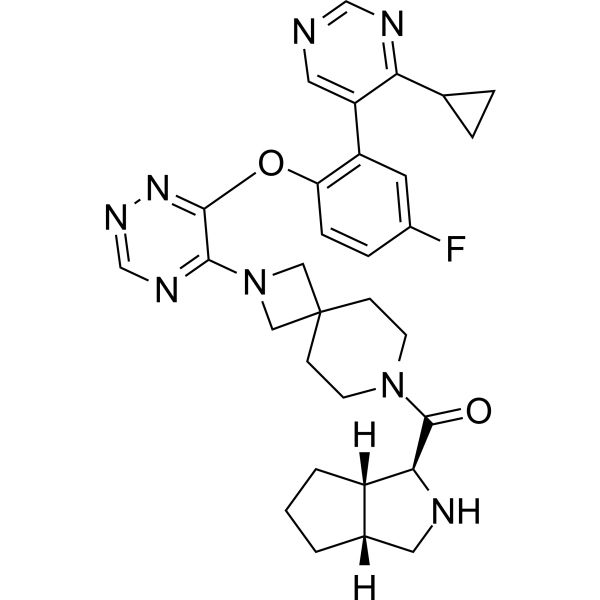
    Zefamenib (BN-104) is an effective selective brain membrane protein inhibitor with oral activity, and it's also a Menin inhibitor, it can block the Menin-MLL interaction and leads to the degradation of Menin protein. Zefamenib is a weak hERG inhibitor, with an IC50 greater than 100 μM. Zefamenib has anti-tumor activity and can be used in cancer research, such as for acute myeloid leukemia .
    Zefamenib
  • HY-111126
    K67
    1 Publications Verification

    p62 Keap1-Nrf2 Cancer
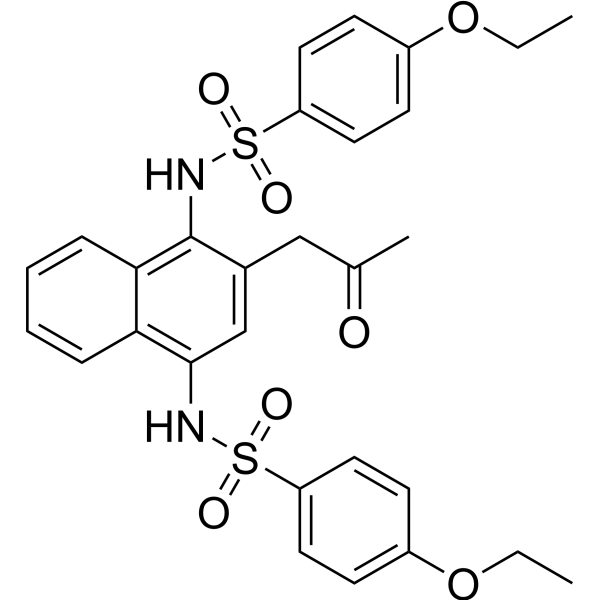
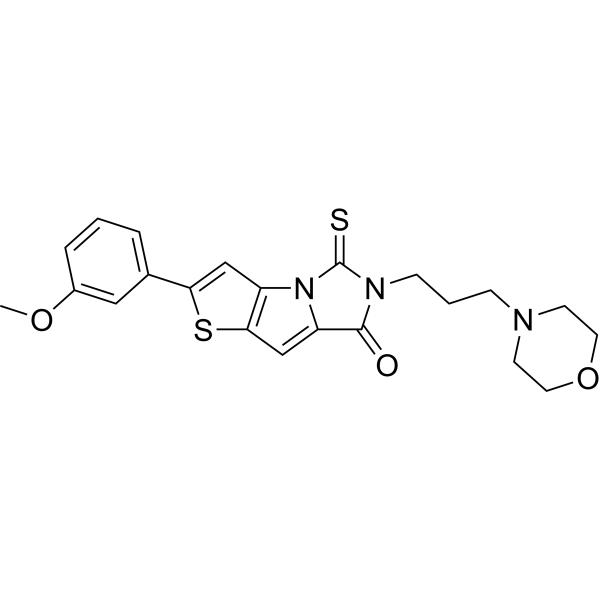
    K67 is a selective the interaction between Keap1 and S349 phosphorylated p62 inhibitor, with an IC50 of 1.5 μM. K67 has a weaker inhibitory effect on the interaction between Keap1 and Nrf2 (IC50 is 6.2 μM). K67 competitively binds to the binding site of Keap1 with p-p62, blocking the abnormal activation of the p62-dependent Nrf2 pathway. K67 inhibits tumor cell proliferation and enhances the sensitivity of hepatocellular carcinoma (HCC) to chemotherapeutic drugs by restoring Keap1-mediated ubiquitination and degradation of Nrf2 .
    K67
  • HY-W020955

    Chloro(triphenylphosphine)gold(I)

    Biochemical Assay Reagents Apoptosis DNA Alkylator/Crosslinker Lipoxygenase Cancer
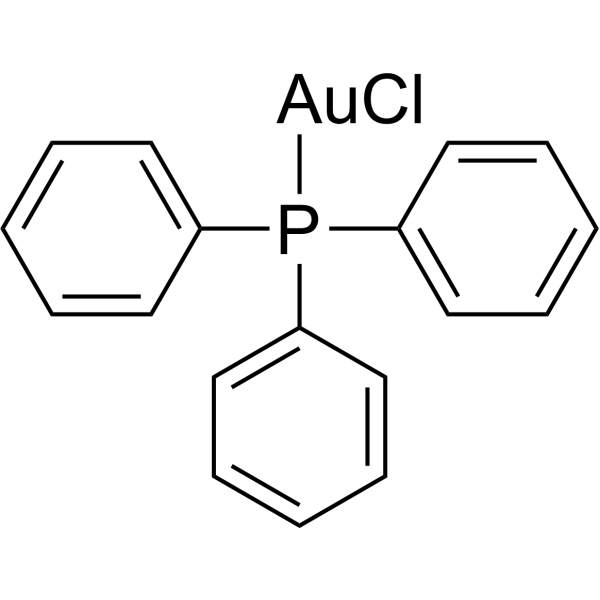
    Triphenylphosphinechlorogold (Chloro(triphenylphosphine)gold(I)) is a gold complex, Apoptosis inducer, and catalyst. Triphenylphosphinechlorogold exhibits high LOX inhibitory activity. Triphenylphosphinechlorogold induces cell cycle arrest and apoptosis. Triphenylphosphinechlorogold catalyzes the peroxidation of linoleic acid. A weak interaction exists between Triphenylphosphinechlorogold and DNA. Triphenylphosphinechlorogold displays antiproliferative activity against breast cancer cells .
    Triphenylphosphinechlorogold
  • HY-108935

    HIV Integrase GLUT Tyrosinase Cancer
    Lavendustin B is an inhibitor of HIV-1 integrase interaction with LEDGF/p75 with an IC50 of 94.07 μM. Lavendustin B is an ATP-competitive GLUT1 inhibitor with a Ki of 15 μM. Lavendustin B is also a weak inhibitor of tyrosine kinases .
    Lavendustin B
  • HY-118922

    TNF Receptor Neurological Disease Inflammation/Immunology Cancer
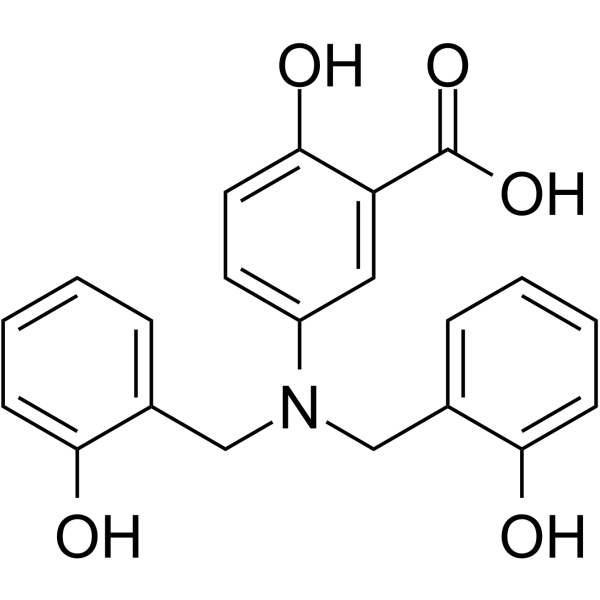
    IW927 is a photochemically enhanced TNF-α-TNFR1 interaction inhibitor that blocks the binding of TNF-α to TNFRc1 with an IC50 value of 50 nM. IW927 binds reversibly to the TNFRc1 with weak affinity (Kd = 40-100 μM), covalently modifies the receptor via a photochemical reaction, and does not bind the related cytokine receptors TNFRc2 or CD40. IW927 disrupts TNFα-induced IκB phosphorylation with an IC50 value of 600 nM. IW927 can be used to develop light-independent inhibitors .
    IW927
  • HY-W243460

    Biochemical Assay Reagents Others
    EDTA copper (II) disodium salt, 97% is a negatively charged copper (II)-ethylenediaminetetraacetic acid chelate and also an adsorption substrate. EDTA copper (II) disodium salt, 97% forms amide bonds with chitosan amino groups in weakly acidic (pH 3-5) solutions, while it forms the CuEDTA (OH) 3− hydroxyl complex in strongly alkaline (pH > 12) solutions. EDTA copper (II) disodium salt, 97% can be adsorbed onto granular activated carbon, with electrostatic interactions dominating its pH-dependent adsorption behavior. EDTA copper (II) disodium salt, 97% can be used to eliminate the inhibition of enzyme-catalyzed reactions caused by trace heavy metals .
    EDTA copper(II) disodium salt, 97%
  • HY-W002000

    Drug Intermediate Others
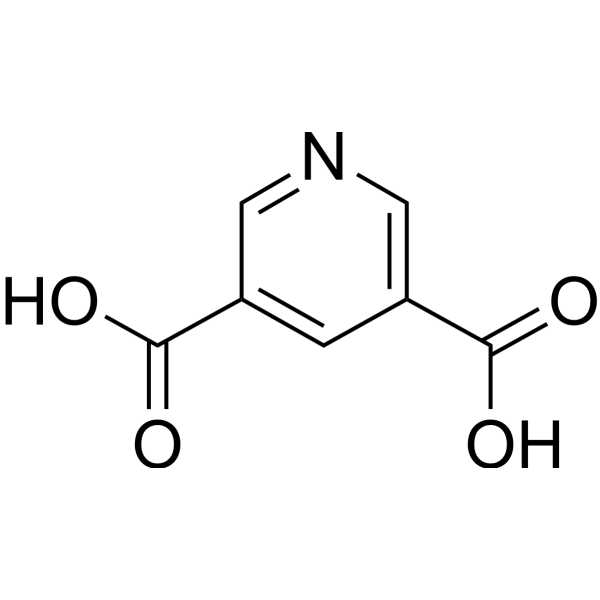
    Pyridine-3,5-dicarboxylic acid is a drug intermediate that can be used to construct new metal-organic framework materials .
    Pyridine-3,5-dicarboxylic acid
  • HY-P2995A

    Biochemical Assay Reagents Others
    Hemoglobin porcine is an oxygen-transporting protein present in the blood of domestic pigs, and also an oxygen carrier with higher oxygen affinity than human hemoglobin. Hemoglobin porcine exhibits cooperative oxygen-binding properties, with weaker heme-heme interactions than those of human hemoglobin .
    Hemoglobin porcine
  • HY-P10399

    Mouse KGYY15; KGYY15 peptide

    TNF Receptor Metabolic Disease
    KGYY15 (Mouse KGYY15) is a CD40 targeting peptide, which weakly inhibits the CD40-CD40L interaction with IC50 of more than 1mM. KGYY15 activates 33% NF-κB pathway at 100 μM .
    KGYY15
  • HY-120510

    PF 4308515

    Glucocorticoid Receptor Interleukin Related PGC-1α Inflammation/Immunology
    PF-04308515 is a glucocorticoid receptor ligand. PF-04308515 inhibits IL-6, IFNγ production. PF-04308515 induces weak PGC1α interaction. PF-04308515 has antiinflammatory activities .
    PF-04308515
  • HY-134921

    Epigenetic Reader Domain Cancer
    MI-nc dihydrochloride is a weak inhibitor of the Menin-MLL fusion protein interaction with an IC50 of 193 μM. MI-nc dihydrochloride can be used as a negative control compound of MI-2 .
    MI-nc dihydrochloride
  • HY-W096997S

    Sodium capryl sulfate-d17

    Isotope-Labeled Compounds Others
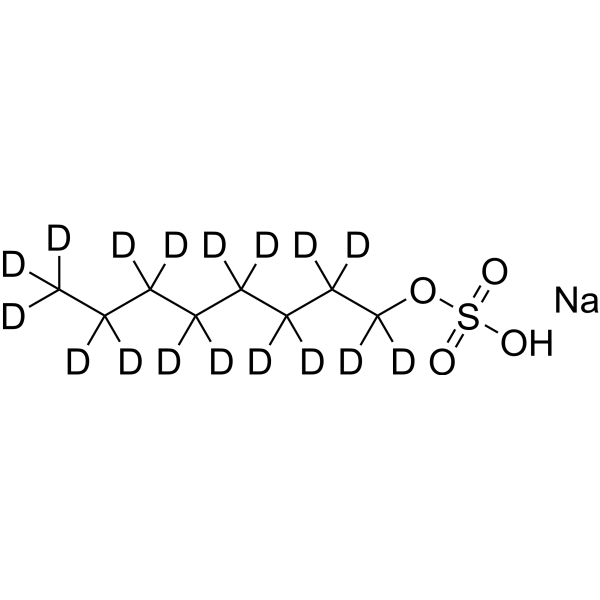
    Sodium octyl sulfate (SOS)-d17 (Sodium capryl sulfate-d17) is the deuterated analogue of Sodium octyl sulfate (SOS). Sodium octyl sulfate (Sodium capryl sulfate; SOS) is a medium‑chain anionic surfactant. Sodium octyl sulfate (SOS) can undergo strong hydrophobic interactions with serum albumins (such as human serum albumin (HSA) and bovine serum albumin (BSA)), while exhibiting weak interactions with other proteins including myoglobin and hemoglobin. As an environmental pollutant in freshwater ecosystems, Sodium octyl sulfate (SOS) can mimic interspecific pheromones released by Daphnia magna and induce the formation of multicellular colonies in green algae.
    Sodium octyl sulfate (SOS)-d17
  • HY-103300

    Endogenous Metabolite Infection
    NPE-caged-proton is a reagent that releases protons under UV light and has the activity of activating the fusion protein GP64 under weak acidic conditions. NPE-caged-proton can promote the binding of enveloped viruses to liposome membranes with acidic phospholipids in an environment of pH 4.0 to 5.5, thereby initiating membrane fusion. The ultraviolet unblocking effect of NPE-caged-proton can lower the environmental pH, thereby triggering the process of viral membrane fusion. When studying the interaction between viruses and cell membranes, NPE-caged-proton provides a valuable tool for revealing the subtle behaviors of viruses in different chemical and biochemical environments .
    NPE-caged-proton
  • HY-136818

    Histamine Receptor Endocrinology
    DA 4643 (hydrochloride) is an H2 receptor antagonist with the chemical name 2-guanidino-4 (3-methylaminomethyleneiminophenyl) thiazole dihydrochloride. It has a weak interaction with cytochrome P-450 and has a less inhibitory effect on P-450 than cimetidine and tiotidine. DA 4643 (hydrochloride) is able to inhibit both enzymatic and non-enzymatic lipid peroxidation reactions. This inhibition may not be achieved by inhibiting agent metabolizing enzymes, but rather due to the antioxidant properties of the compound itself. Compared with other H2 receptor antagonists such as cimetidine, ranitidine and tiotidine, DA 4643 (hydrochloride) shows a unique effect in lipid peroxidation inhibition. These properties make DA 4643 (hydrochloride) a potential H2 receptor antagonist with multiple mechanisms of action.
    DA 4643 dihydrochloride
  • HY-180545

    DNA/RNA Synthesis Neurological Disease
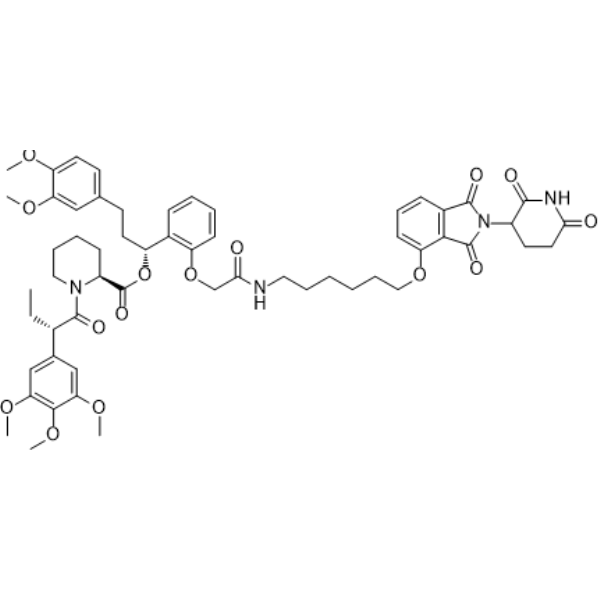
    S-Chromene is a selective DNA polymerase-β (DNA pol-β) inhibitor. S-Chromene exhibits strong electrostatic complementarity with DNA pol-β but weak interaction with primase p58 .
    S-Chromene
  • HY-N15947

    Drug Derivative Metabolic Disease
    Trifunctional sphingosine is a clickable sphingoid base derivative. Trifunctional sphingosine can be used to study the biological function of sphingoid bases. Trifunctional lipids may overcome several challenges in interrogating lipid biology: their fast metabolism, their weak and transient (but functionally important) interactions with proteins, and the difficulty in tagging them without disturbing the cellular location .
    Trifunctional sphingosine
  • HY-182673

    YAP Cancer
    VT102 is a TEAD1 inhibitor with a human IC50 of 391 nM. VT102 inhibits auto-palmitoylation, attenuates YAP/TEAD1 interaction, reduces expression of TEAD target genes, and inhibits YAP-mediated luciferase reporter activity. VT102 exerts weak cell growth inhibitory activity in cancer cells. VT102 can be used for the research of cancer .
    VT102
  • HY-131660

    Monoamine Oxidase Amyloid-β Reactive Oxygen Species (ROS) Neurological Disease
    MAO-B-IN-54 is a selective, reversible and competitiv monoamine oxidase B (MAOB) inhibitor with a human IC50 of 0.052 μM and a Ki of 0.028 μM. MAO-B-IN-54 shows weak activity MAOA. MAO-B-IN-54 occupies both the entrance and substrate cavity of MAOB, forming hydrophobic and hydrogen bonding interactions. MAO-B-IN-54 inhibits aggregation and ROS production. MAO-B-IN-54 can be used for the research of Alzheimer’s disease .
    MAO-B-IN-54

Inquiry Online

Your information is safe with us. * Required Fields.

Salutation


Country or Region *

Applicant Name *


Organization Name *

Department *


Email Address *


Product Name *

Cat. No.


Requested quantity *

Phone Number *


Remarks

Inquiry Online

Inquiry Information

Product Name:
Cat. No.:
Quantity:
MCE Japan Authorized Agent:

