1. Search Result
Search Result
Pathways Recommended: Membrane Transporter/Ion Channel
Results for "

hERG channel inhibition

" in MedChemExpress (MCE) Product Catalog:

21

Inhibitors & Agonists

1

Screening Libraries

1

Natural
Products

1

Isotope-Labeled Compounds

Cat. No. Product Name Target Research Areas Chemical Structure
  • HY-12708
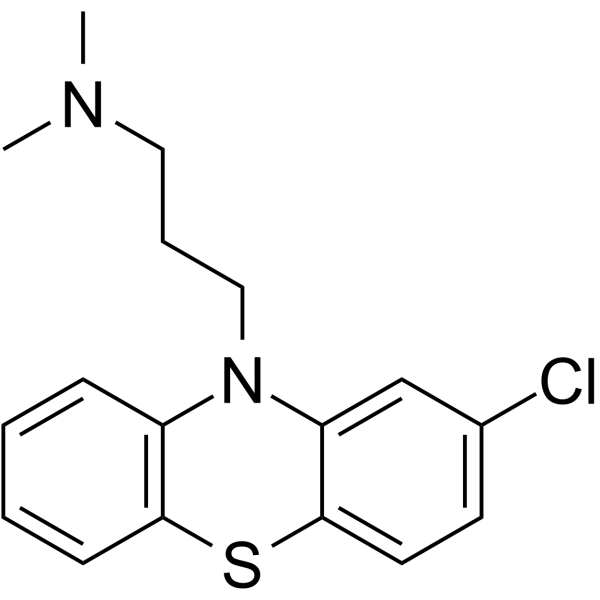
    Chlorpromazine
    Maximum Cited Publications
    128 Publications Verification

    Dopamine Receptor Cytochrome P450 Autophagy 5-HT Receptor Cardiovascular Disease Neurological Disease Cancer
    Chlorpromazine is an orally active, blood-brain barrier-transparent antipsychotic agent that effectively antagonises D2 dopamine receptors and 5-HT2A, which is widely used in schizophrenia and other psychiatric disorders. Chlorpromazine exerts anti-cancer activity through a variety of pathways, including anti-proliferation, induction of autophagy and cycle arrest (G2-M phase), inhibition of cytochrome c oxidase (CcO), inhibition of tumour growth and metastasis, and inhibition of tumour immune escape. Chlorpromazine also blocks hNav1.7 channels (IC50=25.9 μM; concentration-dependent) and HERG potassium channels (IC50=21.6 μM), which has potential for analgesic and cardiac arrhythmic studies. Chlorpromazine also can inhibit clathrin-mediated endocytosis .
    Chlorpromazine
  • HY-B0407A
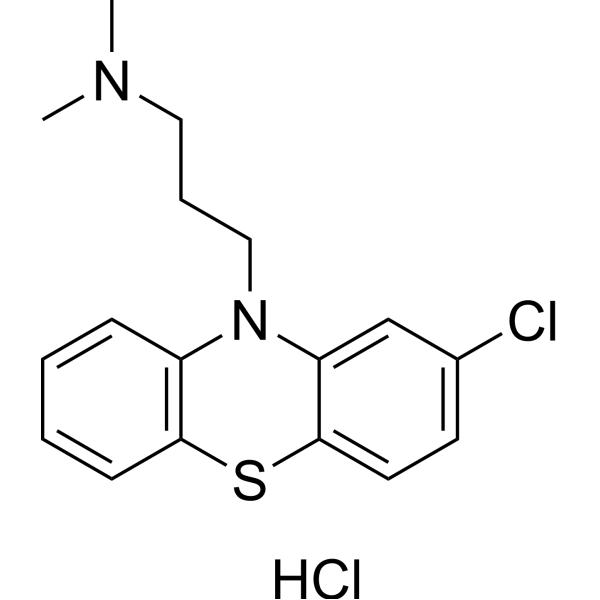
    Chlorpromazine hydrochloride
    Maximum Cited Publications
    128 Publications Verification

    Dopamine Receptor Autophagy Cytochrome P450 5-HT Receptor Cardiovascular Disease Neurological Disease Cancer
    Chlorpromazine hydrochloride is an orally active, blood-brain barrier-transparent antipsychotic agent that effectively antagonises D2 dopamine receptors and 5-HT2A, which is widely used in schizophrenia and other psychiatric disorders. Chlorpromazine hydrochloride exerts anti-cancer activity through a variety of pathways, including anti-proliferation, induction of autophagy and cycle arrest (G2-M phase), inhibition of cytochrome c oxidase (CcO), inhibition of tumour growth and metastasis, and inhibition of tumour immune escape. Chlorpromazine hydrochloride also blocks hNav1.7 channels (IC50=25.9 μM; concentration-dependent) and HERG potassium channels (IC50=21.6 μM), which has potential for analgesic and cardiac arrhythmic studies. Chlorpromazine hydrochloride also can inhibit clathrin-mediated endocytosis .
    Chlorpromazine hydrochloride
  • HY-111747
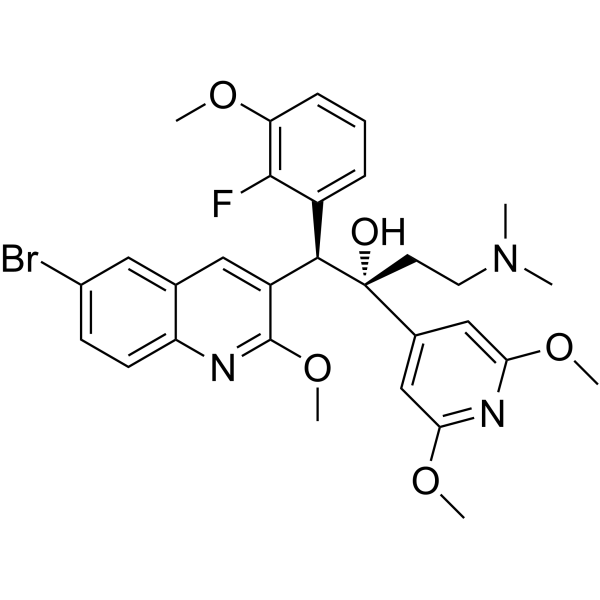
    TBAJ-587
    3 Publications Verification

    Bacterial Infection Cardiovascular Disease
    TBAJ-587, a potent anti-tuberculosis agent, inhibits M.tb strain H37Rv growth with MIC90s of 0.006 and <0.02 μg/mL in MABA and LORA assay, respectively. TBAJ-587 inhibits hERG channel minimally, attenuates inhibition of the cardiac potassium channel protein coded by the hERG, which is important for cardiac repolarization .
    TBAJ-587
  • HY-103309
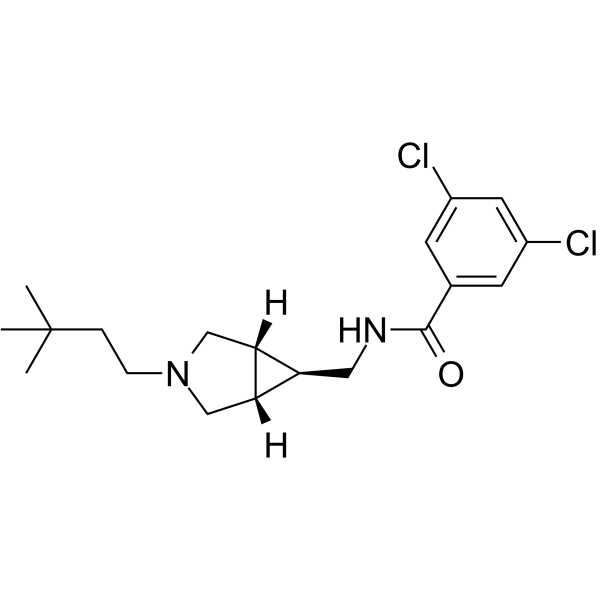
    ML218
    2 Publications Verification

    Calcium Channel Neurological Disease
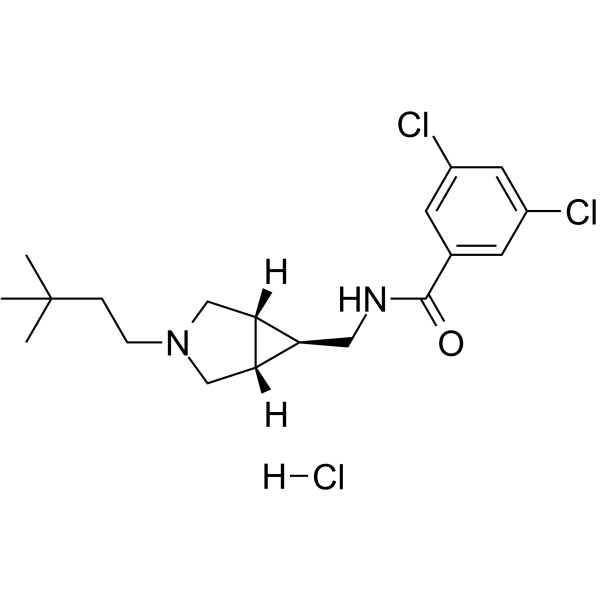
    ML218 is a potent, selective and orally active T-type Ca 2+ channels (Cav3.1, Cav3.2, Cav3.3) inhibitor with IC50s of 310 nM and 270 nM for Cav3.2 and Cav3.3, respectively. ML218 inhibits the burst activity in subthalamic nucleus (STN) neurons. ML218 has no significant inhibition of L- or N-type calcium channels, KATP or hERG potassium channels. ML218 can penetrate the blood-brain barrier .
    ML218
  • HY-175479

    Salt-inducible Kinase (SIK) TNF Receptor Interleukin Related Inflammation/Immunology
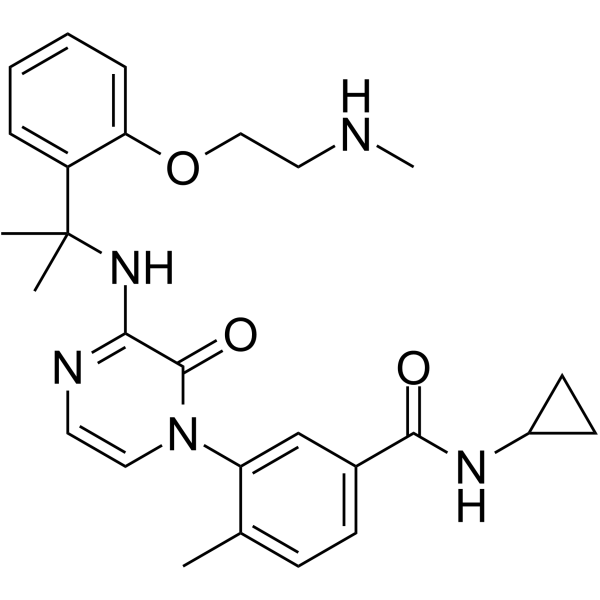
    GLPG4970 is a potent, selective and orally active salt-inducible kinase 2/3 (SIK2/SIK3) dual inhibitor with IC50 values of 0.3 nM and 0.7 nM. GLPG4970 has weak inhibition of hERG channel with an IC50 of 29 μM. GLPG4970 can decrease TNFα release and increase IL-10 release GLPG4970 can be used for the researches of inflammation and immunology, such as colitis .
    GLPG4970
  • HY-131335

    p38 MAPK Inflammation/Immunology
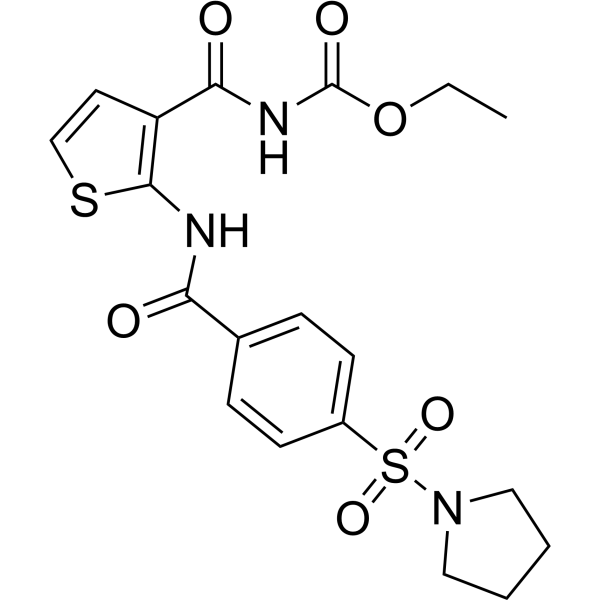
    p38α inhibitor 2 is a highly potent and selective p38α MAPK inhibitor, with a pIC50 of 9.6. p38α inhibitor 2 inhibits the hERG ion channel (IC50=27 μM) and shows a promising selectivity profile when tested in a panel of 51 other protein kinases (<30% inhibition at 10 μM concentration) and a panel of 141 other biological targets .
    p38α inhibitor 2
  • HY-178494

    Sodium Channel Potassium Channel Neurological Disease
    Nav1.7-IN-19 is a potent, selective and orally active Nav1.7 inhibitor with an IC50 of 0.49 μM. Nav1.7-IN-19 shows high selectivity for Nav1.7, with selectivities of 312-fold and 662-fold against Nav1.1 and Nav1.5 in the inactivated state. Nav1.7-IN-19 exhibits weak inhibition on hERG potassium channels. Nav1.7-IN-19 exhibits analgesic effect and can be used for the research of neurological disease .
    Nav1.7-IN-19
  • HY-144341

    Bacterial Infection
    DprE1-IN-1 is a potent, orally active DprE1 inhibitor with favorable hepatocyte stability, low cytotoxicity and low hERG channel inhibition. DprE1-IN-1 displays potent activity against both agent-susceptible and clinically isolated drug-resistant Tuberculosis strains with MICs10 CFU reduction in macrophages.
    DprE1-IN-1
  • HY-W064918

    Bacterial Infection
    NITD-304 is an orally active anti-tuberculosis agent. NITD-304 exerts inhibitory and bactericidal activities gainst Mycobacterium tuberculosis and multidrug-resistant Mycobacterium tuberculosis. NITD-304 inhibits mycobacterial cell wall biosynthesis and demonstrates synergistic or additive growth inhibitory activity with select antibacterial agents. NITD-304 shows low risk of cardiotoxicity and drug-drug interactions, with no inhibition of major cytochrome P-450 enzymes or hERG channel. NITD-304 can be used for the research of tuberculosis and multidrug-resistant tuberculosis .
    NITD-304
  • HY-146380

    Histone Demethylase Cancer
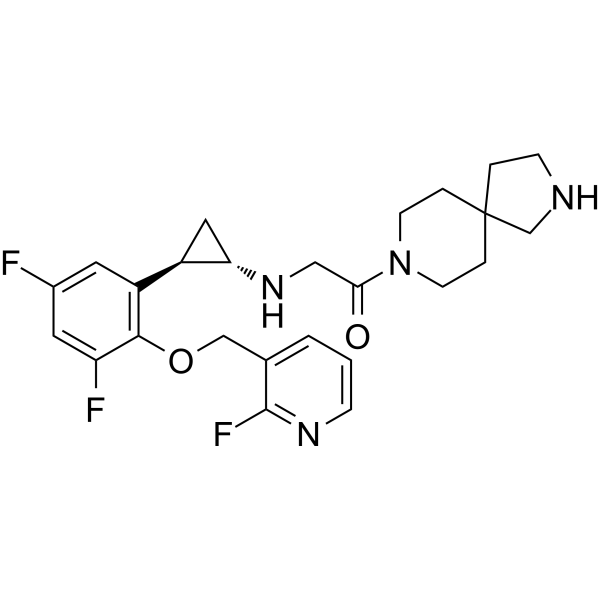
    S1427 is a tranylcypromine-derived LSD1 inhibitor with the IC50 of 390 nM and Ki of 80 nM. S1427 exhibits desirable hERG channel inhibition and microsomal stability profiles. Inhibition of LSD1 partially reduces the proliferation of cancer cells .
    S1427
  • HY-B0407AR

    Reference Standards Dopamine Receptor Autophagy Cytochrome P450 5-HT Receptor Cardiovascular Disease Neurological Disease Cancer
    Chlorpromazine (hydrochloride) (Standard) is the analytical standard of Chlorpromazine (hydrochloride). This product is intended for research and analytical applications. Chlorpromazine hydrochloride is an orally active, blood-brain barrier-transparent antipsychotic agent that effectively antagonises D2 dopamine receptors and 5-HT2A, which is widely used in schizophrenia and other psychiatric disorders. Chlorpromazine hydrochloride exerts anti-cancer activity through a variety of pathways, including anti-proliferation, induction of autophagy and cycle arrest (G2-M phase), inhibition of cytochrome c oxidase (CcO), inhibition of tumour growth and metastasis, and inhibition of tumour immune escape. Chlorpromazine hydrochloride also blocks hNav1.7 channels (IC50=25.9 μM; concentration-dependent) and HERG potassium channels (IC50=21.6 μM), which has potential for analgesic and cardiac arrhythmic studies. Chlorpromazine hydrochloride also can inhibit clathrin-mediated endocytosis .
    Chlorpromazine hydrochloride (Standard)
  • HY-178775

    PI4K Parasite MAP4K PI3K Infection
    PI4K-IN-3 (Compound 27) is an orally active PI4K inhibitor with an IC50 of 1.9  nM for Plasmodium vivax PI4K. PI4K-IN-3 has no hERG channel inhibition and mammalian cytotoxicity. PI4K-IN-3 has significant selectivity against the human MINK1 and MAP4K4 kinases but with low selectivity against human PI3Kα and PI4Kβ. PI4K-IN-3 has potent antimalarial activity and significantly reduces parasitaemia in NSG mice mouse models of Plasmodium falciparum malaria .
    PI4K-IN-3
  • HY-103309A

    Calcium Channel Neurological Disease
    ML218 hydrochloride is a potent, selective and orally active T-type Ca 2+ channels (Cav3.1, Cav3.2, Cav3.3) inhibitor with IC50s of 310 nM and 270 nM for Cav3.2 and Cav3.3, respectively. ML218 hydrochloride inhibits the burst activity in subthalamic nucleus (STN) neurons. ML218 hydrochloride has no significant inhibition of L- or N-type calcium channels, KATP or hERG potassium channels. ML218 hydrochloride can penetrate the blood-brain barrier .
    ML218 hydrochloride
  • HY-103309S

    Calcium Channel Neurological Disease
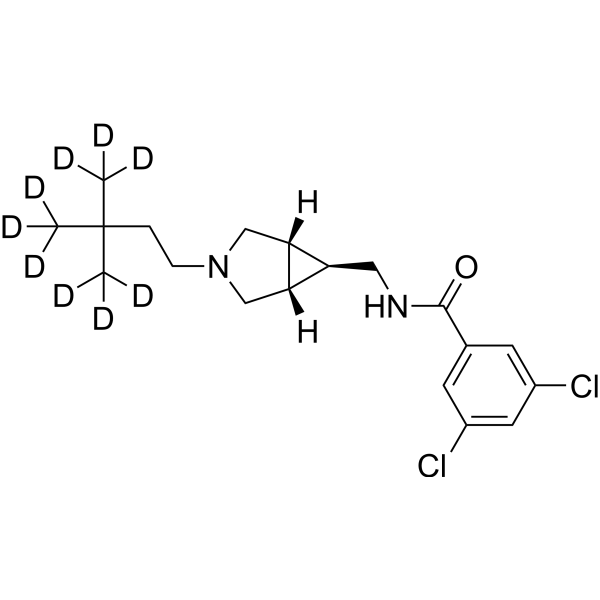
    ML218-d9 is the deuterium labeled ML218. ML218 is a potent, selective and orally active T-type Ca2+ channels (Cav3.1, Cav3.2, Cav3.3) inhibitor with IC50s of 310 nM and 270 nM for Cav3.2 and Cav3.3, respectively. ML218 inhibits the burst activity in subthalamic nucleus (STN) neurons. ML218 has no significant inhibition of L- or N-type calcium channels, KATP or hERG potassium channels. ML218 can penetrate the blood-brain barrier .
    ML218-d9
  • HY-W041470R

    Reference Standards Endogenous Metabolite Metabolic Disease
    Chlorpromazine (hydrochloride) (Standard) is the analytical standard of Chlorpromazine (hydrochloride). This product is intended for research and analytical applications. Chlorpromazine hydrochloride is an orally active, blood-brain barrier-transparent antipsychotic agent that effectively antagonises D2 dopamine receptors and 5-HT2A, which is widely used in schizophrenia and other psychiatric disorders. Chlorpromazine hydrochloride exerts anti-cancer activity through a variety of pathways, including anti-proliferation, induction of autophagy and cycle arrest (G2-M phase), inhibition of cytochrome c oxidase (CcO), inhibition of tumour growth and metastasis, and inhibition of tumour immune escape. Chlorpromazine hydrochloride also blocks hNav1.7 channels (IC50=25.9 μM; concentration-dependent) and HERG potassium channels (IC50=21.6 μM), which has potential for analgesic and cardiac arrhythmic studies. Chlorpromazine hydrochloride also can inhibit clathrin-mediated endocytosis .
    4-Methyl-1-phenyl-2-pentanone (Standard)
  • HY-146468

    Dipeptidyl Peptidase GPR119 Potassium Channel Metabolic Disease
    DPP-4/GPR119 modulator 1 (Compound 22) is an orally active dipeptidyl peptidase IV (DPP-IV) inhibitor and GPR119 agonist. DPP-4/GPR119 modulator 1 shows blood glucose-lowering effect and moderate inhibition on hERG channel with an IC50 of 4.9 μM. DPP-4/GPR119 modulator 1 can be used for diabetes research . DPP-4/GPR119 modulator 1 is a click chemistry reagent, it contains an Alkyne group and can undergo copper-catalyzed azide-alkyne cycloaddition (CuAAc) with molecules containing Azide groups.
    DPP-4/GPR119 modulator 1
  • HY-181745

    Bacterial Infection
    Pks13-IN-3 is a furo[2,3-b]isoquinoline derivative and Pks13 inhibitor with an IC50 of 1.12 μM. Pks13-IN-3 reduces inhibition of the hERG ion channel. Pks13-IN-3 can be used for the research of tuberculosis .
    Pks13-IN-3
  • HY-175804

    SARS-CoV Infection
    M2 ion channel blocker-2 (Compound 10) is a M2 channel blocker. M2 ion channel blocker-2 significantly blocks wild-type and mutant M2 (L27F and V27A) ion channels. M2 ion channel blocker-2 has potent antiviral activity against HCoV-229E (EC50: 4.7  μM in cytopathic effect) but not against influenza A virus. M2 ion channel blocker-2 has no significant inhibition of hERG and cytochrome P450 (CYP1A2, CYP2C19, and CYP3A4) activity .
    M2 ion channel blocker-2
  • HY-103309R

    Reference Standards Calcium Channel Neurological Disease
    ML218 (Standard) is the analytical standard of ML218 (HY-103309). This product is intended for research and analytical applications. ML218 is a potent, selective and orally active T-type Ca2+ channels (Cav3.1, Cav3.2, Cav3.3) inhibitor with IC50s of 310 nM and 270 nM for Cav3.2 and Cav3.3, respectively. ML218 inhibits the burst activity in subthalamic nucleus (STN) neurons. ML218 has no significant inhibition of L- or N-type calcium channels, KATP or hERG potassium channels. ML218 can penetrate the blood-brain barrier .
    ML218 (Standard)
  • HY-179580

    PPAR Phosphodiesterase (PDE) Inflammation/Immunology
    EL244 is a dua Autotaxin (ATX) (IC50 = 50 nM) inhibitor and PPARγ (IC50 = 1.3 μM; Kd = 1.3 μM) agonist. EL244 demonstrates low cytotoxicity in human HepG2 cells (EC50 = 81.2 μM) with minimal inhibition of the cardiac hERG potassium channel (12% at 25 μM). EL244 significantly reduces pulmonary Lysophosphatidic Acid (LPA) levels, attenuates fibrosis, and restores respiratory function with limited systemic absorption in vivo. EL244 can be used for idiopathic pulmonary fibrosis and interstitial lung disease (ILD) research .
    EL244
  • HY-180579

    IRAK TNF Receptor IFNAR Inflammation/Immunology
    IRAK4-IN-33 (Compound 22) is a selective, potent and orally active interleukin-1 receptor-associated kinase 4 (IRAK4) inhibitor with an IC50 0.36 nM. IRAK4-IN-33 can block the pro-inflammatory signaling pathway mediated by IRAK4 and inhibit the release of TNFα and IFNα. IRAK4-IN-33 shows weak inhibition for hERG channel (IC50 > 30 μM). IRAK4-IN-33 can be used for the research of inflammation and immunology, such as rheumatoid arthritis .
    IRAK4-IN-33

Inquiry Online

Your information is safe with us. * Required Fields.

Salutation


Country or Region *

Applicant Name *


Organization Name *

Department *


Email Address *


Product Name *

Cat. No.


Requested quantity *

Phone Number *


Remarks

Inquiry Online

Inquiry Information

Product Name:
Cat. No.:
Quantity:
MCE Japan Authorized Agent:

