



Chlorpromazine hydrochloride (Standard)

Based on 1 Customer Validation
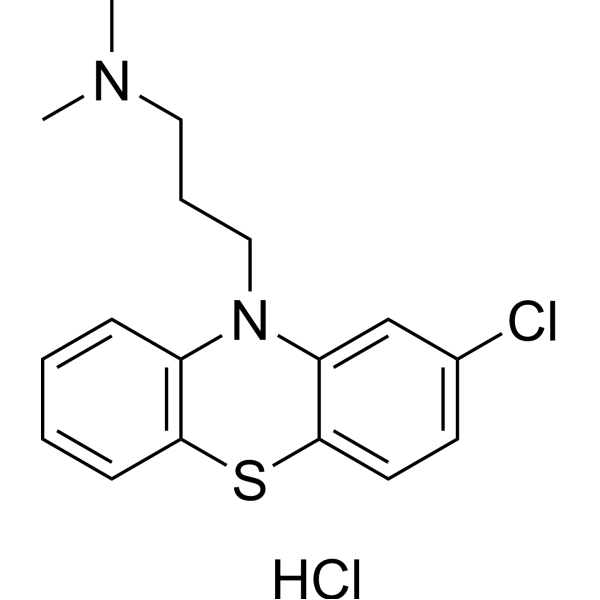
Chlorpromazine (hydrochloride) (Standard) is the analytical standard of Chlorpromazine (hydrochloride). This product is intended for research and analytical applications. Chlorpromazine hydrochloride is an orally active, blood-brain barrier-transparent antipsychotic agent that effectively antagonises D2 dopamine receptors and 5-HT2A, which is widely used in schizophrenia and other psychiatric disorders. Chlorpromazine hydrochloride exerts anti-cancer activity through a variety of pathways, including anti-proliferation, induction of autophagy and cycle arrest (G2-M phase), inhibition of cytochrome c oxidase (CcO), inhibition of tumour growth and metastasis, and inhibition of tumour immune escape. Chlorpromazine hydrochloride also blocks hNav1.7 channels (IC50=25.9 μM; concentration-dependent) and HERG potassium channels (IC50=21.6 μM), which has potential for analgesic and cardiac arrhythmic studies. Chlorpromazine hydrochloride also can inhibit clathrin-mediated endocytosis.
Para uso exclusivo en investigación. No vendemos a pacientes.
- Pureza : 99.39%
- No. CAS: 69-09-0
- Fòrmula: C17H20Cl2N2S
- Peso molecular:355.33
-
Almacenamiento:
Please store the product under the recommended conditions in the Certificate of Analysis.


To place orders, for customer services and technical support, please contact: MedChemExpress USA
Tel: 609-228-6898 E-mail: [email protected] [email protected]


-
 Product Information
-
Chemical Information
- Pureza y Documentación
-
 Help & FAQs


-
HY-B0407A
Chlorpromazine hydrochloride -

HY-B0532AR
Trifluoperazine dihydrochloride (Standard) -
HY-13217
Vanoxerine dihydrochloride -
HY-14539
Clozapine -
HY-B0532A
Trifluoperazine dihydrochloride -
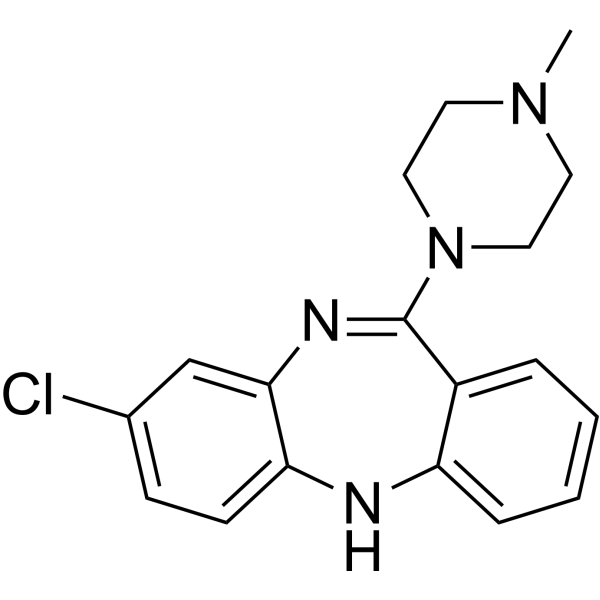
HY-14539R
Clozapine (Standard) -
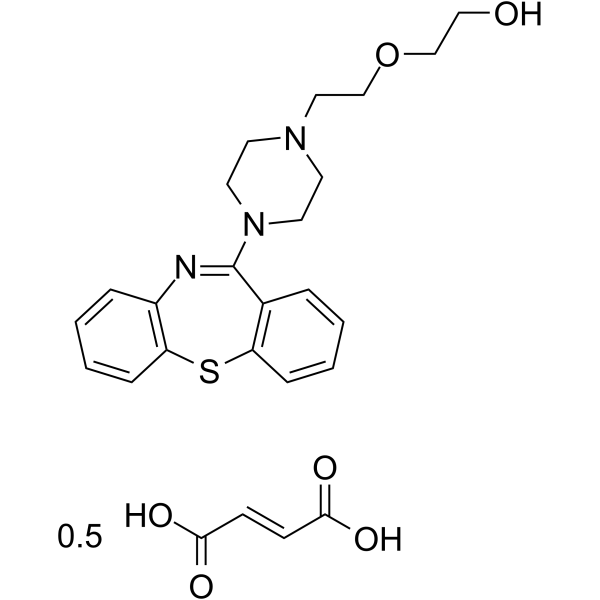
HY-B0031
Quetiapine hemifumarate -
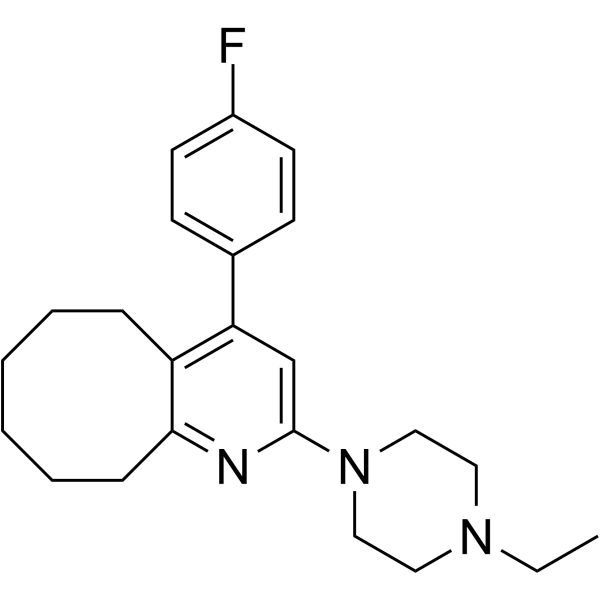
HY-13575
Blonanserin -
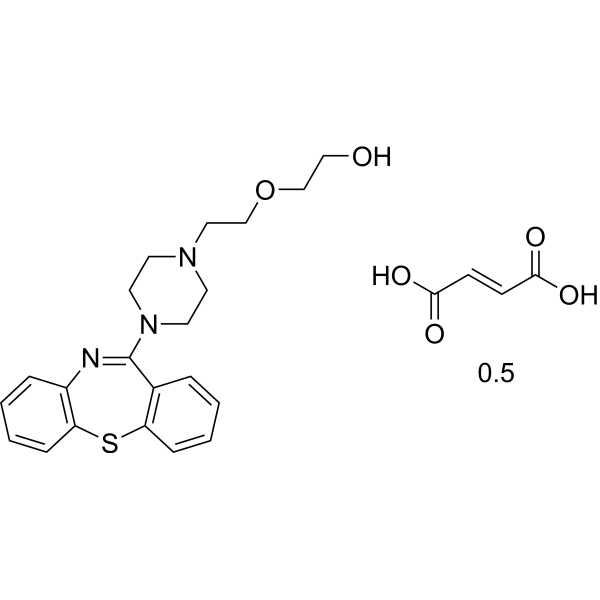
HY-B0031R
Quetiapine hemifumarate (Standard) -

HY-13217R
Vanoxerine dihydrochloride (Standard) -

HY-13575R
Blonanserin (Standard)


Product Information
Information
Aplicación
The compound is the grade of analytical standard, which is the reference standard supplied assay. It is commonly used in qualitative, quantitative and methodological research experiments in HPLC, GC and MS.


Chemical Information
-
No. CAS 69-09-0
-
Appearance Solid
-
Peso molecular 355.33
-
Fòrmula C17H20Cl2N2S
-
Color White to off-white
-
SMILES
CN(C)CCCN1C2=C(C=CC=C2)SC3=CC=C(Cl)C=C13.Cl
-
Envío
Room temperature in continental US; may vary elsewhere.
-
Almacenamiento
Please store the product under the recommended conditions in the Certificate of Analysis.


Pureza y Documentación
-
SDS (480 KB)
- English - EN (480 KB)
- Français - FR (480 KB)
- Deutsch - DE (480 KB)
- Norwegian - NO (480 KB)
- Español - ES (480 KB)
- Swedish - SV (480 KB)
- Italian - IT (480 KB)
- Korean - KR (480 KB)
- Portuguese - PT (480 KB)
-
Instrucciones de manejo (2659 KB)
Referencias
[1]. Kamgar-Dayhoff P, et al. Multifaceted effect of chlorpromazine in cancer: implications for cancer treatment. Oncotarget. 2021 Jul 6;12(14):1406-1426. [Content Brief]
[2]. Shin SY, et al. The antipsychotic agent chlorpromazine induces autophagic cell death by inhibiting the Akt/mTOR pathway in human U-87MG glioma cells. Carcinogenesis. 2013 Sep;34(9):2080-9. [Content Brief]
[3]. Yang Z, et al. Cancer cell-intrinsic XBP1 drives immunosuppressive reprogramming of intratumoral myeloid cells by promoting cholesterol production. Cell Metab. 2022 Nov 2:S1550-4131(22)00461-2. [Content Brief]
[4]. Lee SJ, et al. Mechanism of inhibition by chlorpromazine of the human pain threshold sodium channel, Nav1.7. Neurosci Lett. 2017 Feb 3;639:1-7. [Content Brief]
[5]. Thomas D, et al. The antipsychotic drug chlorpromazine inhibits HERG potassium channels. Br J Pharmacol. 2003 Jun;139(3):567-74. [Content Brief]
[6]. Suzuki H, et al. Comparison of the anti-dopamine D₂ and anti-serotonin 5-HT(2A) activities of chlorpromazine, bromperidol, haloperidol and second-generation antipsychotics parent compounds and metabolites thereof. J Psychopharmacol. 2013 Apr;27(4):396-400. [Content Brief]

Calculators
Concentration (start) × Volume (start) = Concentration (final) × Volume (final)


Chlorpromazine hydrochloride (Standard) Related Classifications
HY-B0407AR Related Classifications
 Powered by Bioz