



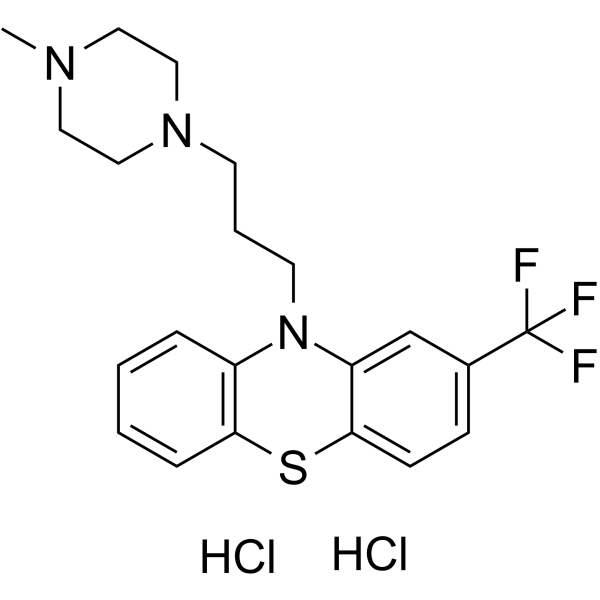
Trifluoperazine dihydrochloride
Based on 10 publication(s) in Google Scholar
Trifluoperazine dihydrochloride, an antipsychotic agent, acts by blocking central dopamine receptors. Trifluoperazine dihydrochloride is a potent α1-adrenergic receptor antagonist. Trifluoperazine dihydrochloride is a potent NUPR1 inhibitor exerting anticancer activity. Trifluoperazine dihydrochloride is a calmodulin inhibitor, and also inhibits P-glycoprotein. Trifluoperazine dihydrochloride can be used for the research of schizophrenia. Trifluoperazine dihydrochloride acts as a reversible inhibitor of influenza virus morphogenesis.
Nos produits utilisent uniquement pour la recherche. Nous ne vendons pas aux patients.
- Pureté : 99.94%
- CAS No.: 440-17-5
- Formule: C21H26Cl2F3N3S
- Masse moléculaire:480.42
-
Stockage:
4°C, sealed storage, away from moisture
* In solvent : -80°C, 6 months; -20°C, 1 month (sealed storage, away from moisture)

To place orders, for customer services and technical support, please contact: MedChemExpress USA
Tel: 609-228-6898 E-mail: [email protected] [email protected]


-
 Activité biologique
-
Chemical Information
-
Solvant et solubilité
- Pureté et documentation
- Références
-
 Help & FAQs


-
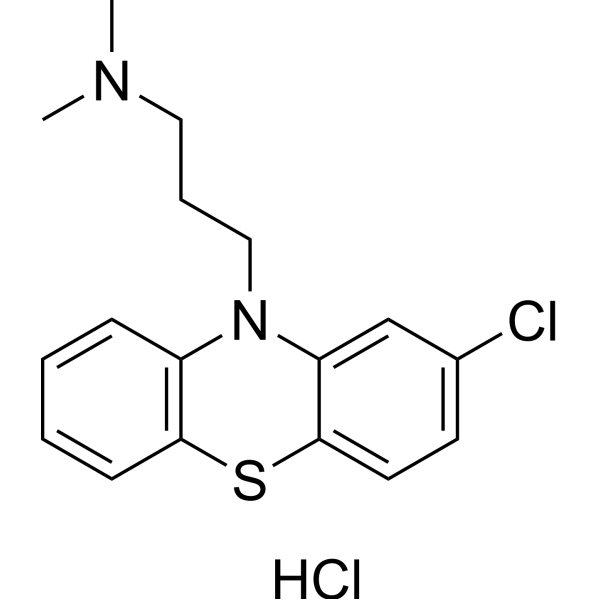
HY-B0407A
Chlorpromazine hydrochlorideAntipsychotic Agent -
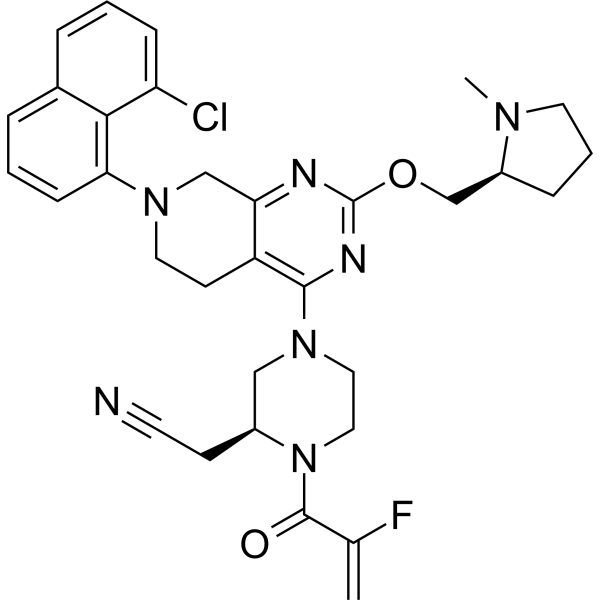
HY-130149
AdagrasibKRAS G12C Inhibitor -
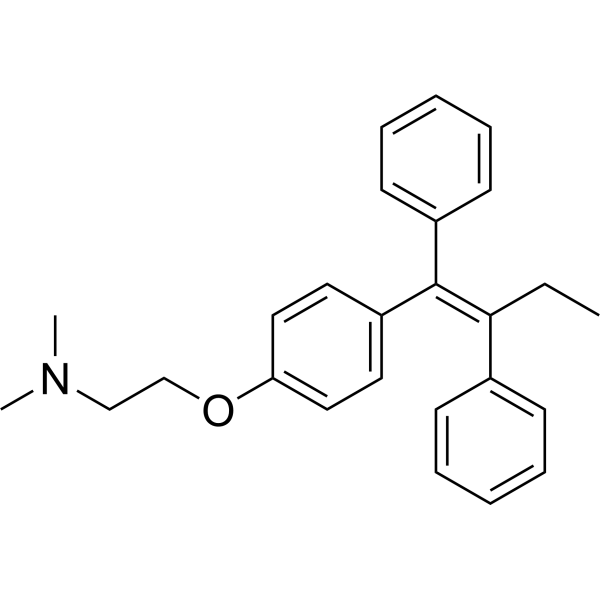
HY-13757A
TamoxifenEstrogen Receptor Modulator -
HY-19545A
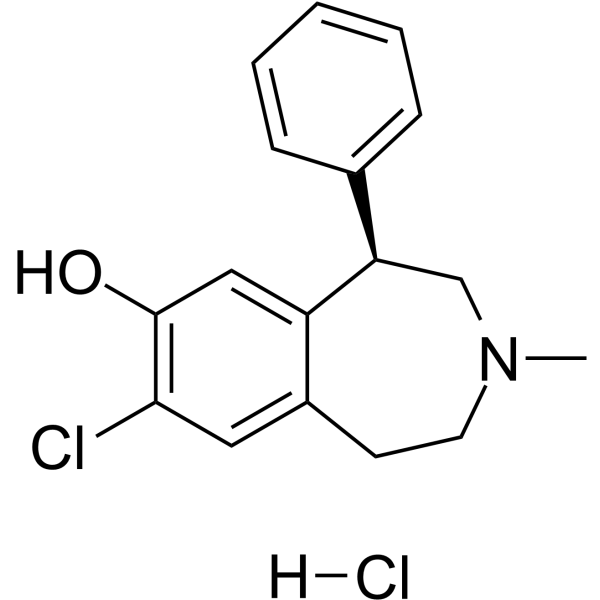
SCH-23390 hydrochlorideDopamine D1 Receptor Antagonist -
HY-B0176A
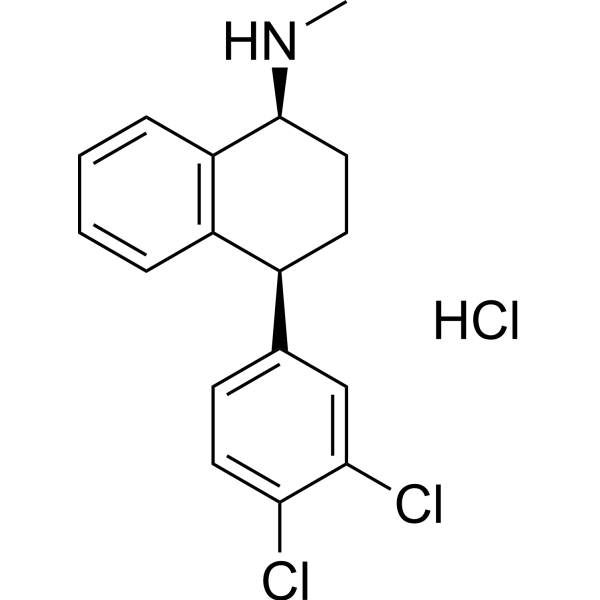
Sertraline hydrochlorideSSRI -

HY-N2364
ArecolinenAChR/mAChR Agonist -

HY-B0532AR
Trifluoperazine dihydrochloride (Standard)Dopamine Receptors Blocker -
HY-B0965
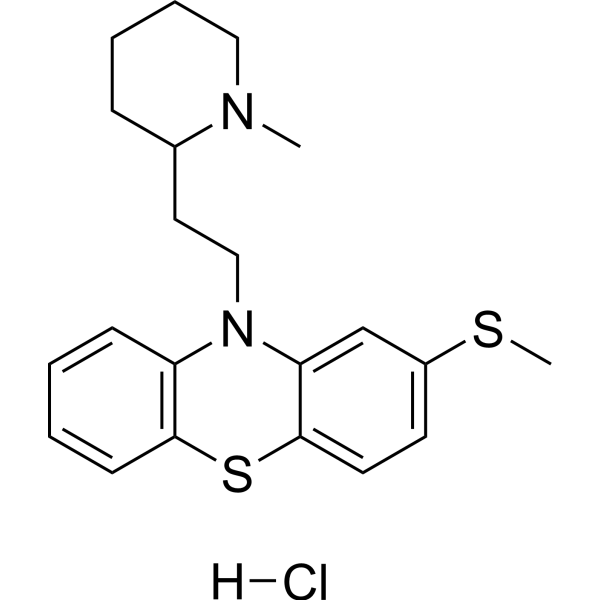
Thioridazine hydrochlorideDopamine Receptor Antagonist -
HY-13406
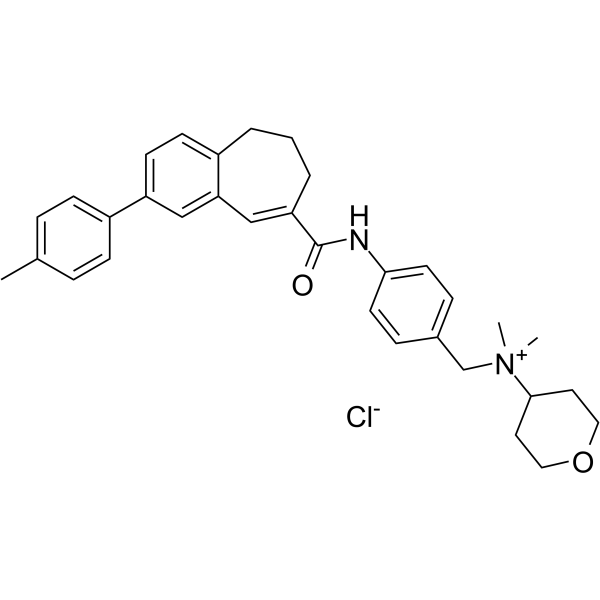
TAK-779CCR5 Antagonist -
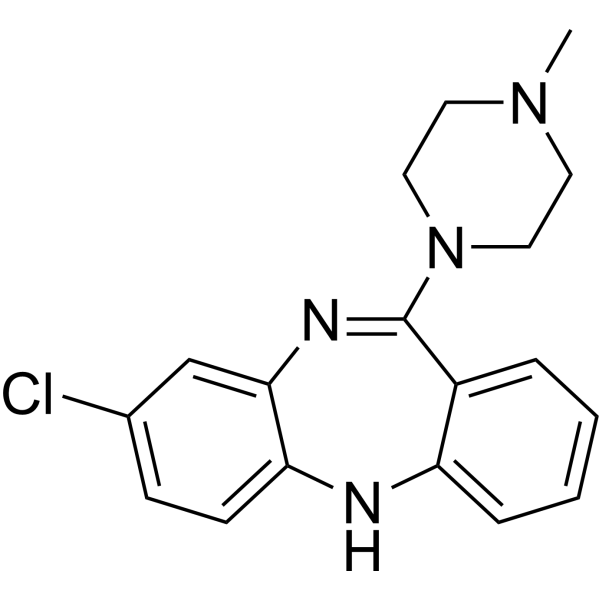
HY-14539
ClozapineAntipsychotic Agent -
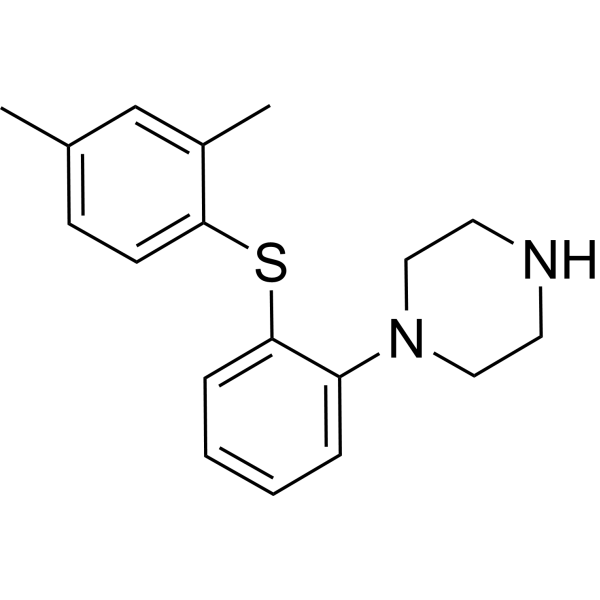
HY-15414
VortioxetineSerotonin Transporter Inhibitor -

HY-B1225
Promazine hydrochlorideDopamine Receptor D2 Antagonist
Publications Citing Use of MedChemExpress (MCE) Trifluoperazine dihydrochloride
More- J Transl Med. 2024 Aug 1;22(1):715. [Abstract]
- Free Radic Biol Med. 2025 Feb 1:227:64-79. [Abstract]
- CNS Neurosci Ther. 2023 Mar;29(3):831-841. [Abstract]
- Food Biosci. 2024 Feb, 57, 103513.
- Chem Biol Interact. 2024 Apr 1:392:110904. [Abstract]
- Mol Med Rep. 2021 May;23(5):319. [Abstract]
- Sci Rep. 2025 May 8;15(1):16053. [Abstract]
- BMC Med Genomics. 2024 Jan 2;17(1):12. [Abstract]
- Tohoku J Exp Med. 2022 Jul 22;257(4):315-326. [Abstract]
- bioRxiv. 2024 June 12.
 Customer Validation & Images

-
IHC

-
IHC

-
In Vivo Efficacy Study

-
In Vivo Efficacy Study

-
Cell Proliferation/Viability Assay

Voir tous les produits spécifiques à Isoform Dopamine Receptor
MoreVoir tous les produits spécifiques à Isoform Adrenergic Receptor
More

Activité biologique
Description
Cellular Effect
|
Cell Line

|
Type | Value | Description | References |
|---|---|---|---|---|
| HL-60 | IC50 |
16 μM
Compound: Trifluoperazine dihydrochloride
|
Cytotoxicity in human HL60 cells by MTT assay
Cytotoxicity in human HL60 cells by MTT assay
|
[PMID: 28964935] |
| KG-1a | IC50 |
4.58 μM
Compound: TFP
|
Antiproliferative activity against human KG1a cells assessed as reduction in cell viability incubated for 2 days by MTT assay
Antiproliferative activity against human KG1a cells assessed as reduction in cell viability incubated for 2 days by MTT assay
|
[PMID: 31541872] |
| MCF7 | IC50 |
11.33 μM
Compound: TFP
|
Antiproliferative activity against human MCF7 cells assessed as reduction in cell viability incubated for 2 days by MTT assay
Antiproliferative activity against human MCF7 cells assessed as reduction in cell viability incubated for 2 days by MTT assay
|
[PMID: 31541872] |
| MDA-MB-231 | IC50 |
21.58 μM
Compound: TFP
|
Antiproliferative activity against human MDA-MB-231 cells assessed as reduction in cell viability incubated for 2 days by MTT assay
Antiproliferative activity against human MDA-MB-231 cells assessed as reduction in cell viability incubated for 2 days by MTT assay
|
[PMID: 31541872] |
| NCI-H1650 | GI50 |
12.2 μM
Compound: Trifluoperazine
|
Cytotoxicity against human NCI-H1650 cells assessed as growth inhibition after 48 hrs by MTT assay
Cytotoxicity against human NCI-H1650 cells assessed as growth inhibition after 48 hrs by MTT assay
|
[PMID: 26372073] |
| Neutrophil | IC50 |
12.2 μM
Compound: TFP
|
Antiinflammatory activity in fMLP/cytochalasin B stimulated rat neutrophils assessed as inhibition of beta-glucuronidase release preincubated for 10 mins measured 45 mins after fMLP/cytochalasin B challenge
Antiinflammatory activity in fMLP/cytochalasin B stimulated rat neutrophils assessed as inhibition of beta-glucuronidase release preincubated for 10 mins measured 45 mins after fMLP/cytochalasin B challenge
|
[PMID: 12662101] |
| Neutrophil | IC50 |
13.2 μM
Compound: TFP
|
Antiinflammatory activity in fMLP/cytochalasin B stimulated rat neutrophils assessed as inhibition of lysozyme release preincubated for 10 mins measured 45 mins after fMLP/cytochalasin B challenge
Antiinflammatory activity in fMLP/cytochalasin B stimulated rat neutrophils assessed as inhibition of lysozyme release preincubated for 10 mins measured 45 mins after fMLP/cytochalasin B challenge
|
[PMID: 12662101] |
| NSC | IC50 |
10.1 μM
Compound: TFP
|
Cytotoxicity against human NSC cells assessed as reduction in cell viability after 24 hrs by MTT assay
Cytotoxicity against human NSC cells assessed as reduction in cell viability after 24 hrs by MTT assay
|
[PMID: 29614416] |
| SK-BR-3 | IC50 |
15.89 μM
Compound: TFP
|
Antiproliferative activity against human SKBR3 cells assessed as reduction in cell viability incubated for 2 days by MTT assay
Antiproliferative activity against human SKBR3 cells assessed as reduction in cell viability incubated for 2 days by MTT assay
|
[PMID: 31541872] |
| SUM-159-PT | IC50 |
17.03 μM
Compound: TFP
|
Antiproliferative activity against human SUM159 cells assessed as reduction in cell viability incubated for 2 days by MTT assay
Antiproliferative activity against human SUM159 cells assessed as reduction in cell viability incubated for 2 days by MTT assay
|
[PMID: 31541872] |
| U-87MG ATCC | EC50 |
13.5 μM
Compound: TFP
|
Induction of intracellular Ca2+ level in human U87MG cells by Fura-2 AM dye-based assay
Induction of intracellular Ca2+ level in human U87MG cells by Fura-2 AM dye-based assay
|
[PMID: 29614416] |
| U-87MG ATCC | IC50 |
9.9 μM
Compound: TFP
|
Cytotoxicity against human U87MG cells assessed as reduction in cell viability after 24 hrs by MTT assay
Cytotoxicity against human U87MG cells assessed as reduction in cell viability after 24 hrs by MTT assay
|
[PMID: 29614416] |
In Vitro
Trifluoperazine dihydrochloride is a long-established, widely used 'conventional' antipsychotic agent. Trifluoperazine dihydrochloride has been an extensively studied drug molecule that has been used as a calmodulin inhibitor[3][4].
Trifluoperazine dihydrochloride acts as a reversible inhibitor of influenza virus morphogenesis, but not budding, by disturbing cellular CaM and/or CaM-dependent functions[5].
MedChemExpress (MCE) has not independently confirmed the accuracy of these methods. They are for reference only. .
Essai clinique
| NCT Number | Sponsor | Condition | Start Date |
Phase
|
|---|---|---|---|---|
| NCT01329991 | Plexxikon| | 2011-05 | PHASE1 |


Chemical Information
-
CAS No. 440-17-5
-
Appearance Solid
-
Masse moléculaire 480.42
-
Formule C21H26Cl2F3N3S
-
Color White to off-white
-
SMILES
FC(C(C=C1N2CCCN3CCN(C)CC3)=CC=C1SC4=C2C=CC=C4)(F)F.Cl.Cl
-
Livraison
Room temperature in continental US; may vary elsewhere.
-
Stockage
4°C, sealed storage, away from moisture
* In solvent : -80°C, 6 months; -20°C, 1 month (sealed storage, away from moisture)


Publications (10)
-
Journal Impact Factor
-
Most Recent
-
J Transl Med
Suppression of NUPR1 in fibroblast-like synoviocytes reduces synovial fibrosis via the Smad3 pathway. [Abstract]2024 Aug 1;22(1):715. PMID: 39090667
Trifluoperazine dihydrochloride purchased from MedChemExpress. Usage Cited in: J Transl Med. 2024 Aug 1;22(1):715. [Abstract]
Representative Masson staining images of mouse knee joints at ×200 magnification (n = 6 mice per group). Scale bar, 50 μm. Mice that underwent DMM received intraperitoneal injections of 1.5 mg/kg TFP (Trifluoperazine dihydrochloride) for 3 days and were euthanized 7 days following DMM.
Trifluoperazine dihydrochloride purchased from MedChemExpress. Usage Cited in: J Transl Med. 2024 Aug 1;22(1):715. [Abstract]
TFP (Trifluoperazine dihydrochloride) treatment significantly lessened synovial hyperplasia, as evidenced by HE staining quantification of synovial thickness.
-
Free Radic Biol Med
Zinc ions facilitate metabolic bioenergetic recovery post spinal cord injury by activating microglial mitophagy through the STAT3-FOXO3a-SOD2 pathway. [Abstract]2025 Feb 1:227:64-79. PMID: 39613048 -
CNS Neurosci Ther
Psilocin suppresses methamphetamine-induced hyperlocomotion and acquisition of conditioned place preference via D2R-mediated ERK signaling. [Abstract]2023 Mar;29(3):831-841. PMID: 36627756
Trifluoperazine dihydrochloride purchased from MedChemExpress. Usage Cited in: CNS Neurosci Ther. 2023 Mar;29(3):831-841. [Abstract]
Effects of TFP‐2HCl (Trifluoperazine dihydrochloride, 2 mg/kg) and SCH772984 on hyperlocomotion induced by acute METH. TFP‐2HCl (Trifluoperazine dihydrochloride) and SCH772984 could inhibit METH‐induced hyperactivity.
Trifluoperazine dihydrochloride purchased from MedChemExpress. Usage Cited in: CNS Neurosci Ther. 2023 Mar;29(3):831-841. [Abstract]
Administration of 2 mg/kg TFP‐2HCl (Trifluoperazine dihydrochloride) and 10 mg/kg SCH772984 before METH significantly inhibited the increase in CPP score of the METH group (p < 0.01 and p < 0.05, respectively). CPP scores of the groups injected with 2 mg/kg TFP‐2HCl and 10 mg/kg SCH772984 prior to METH were not significantly different from those of the control group.
-
-
Chem Biol Interact
Trifluoperazine activates AMPK / mTOR / ULK1 signaling pathway to induce mitophagy in osteosarcoma cells. [Abstract]2024 Apr 1:392:110904. PMID: 38360085 -
Mol Med Rep
Serum from patients with hypertension promotes endothelial dysfunction to induce trophoblast invasion through the miR‑27b‑3p/ATPase plasma membrane Ca2+ transporting 1 axis. [Abstract]2021 May;23(5):319. PMID: 33760199
Trifluoperazine dihydrochloride purchased from MedChemExpress. Usage Cited in: Mol Med Rep. 2021 May;23(5):319. [Abstract]
This demonstrated that miR-27b-3p mimics or TFP (Trifluoperazine dihydrochloride) treatment of HUVECs inhibited the cell proliferation, and similar effects were observed on cell migration and tubular formation.

Trifluoperazine dihydrochloride purchased from MedChemExpress. Usage Cited in: Mol Med Rep. 2021 May;23(5):319. [Abstract]
The invasion of trophoblast HTR-8/SVneo cells was again inhibited by the addition of TFP (Trifluoperazine dihydrochloride).
-
Sci Rep
Estrogen regulates duodenal calcium absorption and improves postmenopausal osteoporosis by the effect of ERβ on PMCA1b. [Abstract]2025 May 8;15(1):16053. PMID: 40341576 -
BMC Med Genomics
Integrated multi-omic analysis and experiment reveals the role of endoplasmic reticulum stress in lung adenocarcinoma. [Abstract]2024 Jan 2;17(1):12. PMID: 38167084 -
Tohoku J Exp Med
Trifluoperazine Synergistically Potentiates Bortezomib-Induced Anti-Cancer Effect in Multiple Myeloma via Inhibiting P38 MAPK/NUPR1. [Abstract]2022 Jul 22;257(4):315-326. PMID: 35644544 -


Solvant et solubilité
In Vitro:
DMSO : 50 mg/mL (104.08 mM; Need ultrasonic; Hygroscopic DMSO has a significant impact on the solubility of product, please use newly opened DMSO)
H2O : 50 mg/mL (104.08 mM; Need ultrasonic)
Please refer to the solubility information to select the appropriate solvent. Once prepared, please aliquot and store the solution to prevent product inactivation from repeated freeze-thaw cycles.
Storage method and period of stock solution: -80°C, 6 months; -20°C, 1 month (sealed storage, away from moisture). When stored at -80°C, please use it within 6 months. When stored at -20°C, please use it within 1 month.
* Note: If you choose water as the stock solution, please dilute it to the working solution, then filter and sterilize it with a 0.22 μm filter before use.
Please refer to the solubility information to select the appropriate solvent. Once prepared, please aliquot and store the solution to prevent product inactivation from repeated freeze-thaw cycles.
Storage method and period of stock solution: -80°C, 6 months; -20°C, 1 month (sealed storage, away from moisture). When stored at -80°C, please use it within 6 months. When stored at -20°C, please use it within 1 month.
* Note: If you choose water as the stock solution, please dilute it to the working solution, then filter and sterilize it with a 0.22 μm filter before use.
Concentration (start) × Volume (start) = Concentration (final) × Volume (final)
In Vivo:
Select the appropriate dissolution method based on your experimental animal and administration route.
- For the following dissolution methods, please ensure to first prepare a clear stock solution using an In Vitro approach and then sequentially add co-solvents:
- To ensure reliable experimental results, the clarified stock solution can be appropriately stored based on storage conditions. As for the working solution for In Vivo experiments, it is recommended to prepare freshly and use it on the same day.
- The percentages shown for the solvents indicate their volumetric ratio in the final prepared solution. If precipitation or phase separation occurs during preparation, heat and/or sonication can be used to aid dissolution.
Add each solvent one by one: 10% DMSO 40% PEG300 5% Tween-80 45% Saline
Solubility: ≥ 2.5 mg/mL (5.20 mM); Clear solution
This protocol yields a clear solution of ≥ 2.5 mg/mL (saturation unknown).
Taking 1 mL working solution as an example, add 100 μL DMSO stock solution (25.0 mg/mL) to 400 μL PEG300, and mix evenly; then add 50 μL Tween-80 and mix evenly; then add 450 μL Saline to adjust the volume to 1 mL.
Preparation of Saline: Dissolve 0.9 g sodium chloride in ddH₂O and dilute to 100 mL to obtain a clear Saline solution.
Add each solvent one by one: 10% DMSO 90% (20% SBE-β-CD in Saline)
Solubility: ≥ 2.5 mg/mL (5.20 mM); Clear solution
This protocol yields a clear solution of ≥ 2.5 mg/mL (saturation unknown).
Taking 1 mL working solution as an example, add 100 μL DMSO stock solution (25.0 mg/mL) to 900 μL 20% SBE-β-CD in Saline, and mix evenly.
Preparation of 20% SBE-β-CD in Saline (4°C, storage for one week): 2 g SBE-β-CD powder is dissolved in 10 mL Saline, completely dissolve until clear.
In Vivo Dissolution Calculator
Please enter the basic information of animal experiments:
-
-
-
-
Recommended: Prepare an additional quantity of animals to account for potential losses during experiments.
Working solution concentration: 0.22 mg/mL
This product has good water solubility, please refer to the measured solubility data in water/PBS/Saline for details.


Pureté et documentation
-
Fiche technique (278 KB)
-
SDS (623 KB)
- English - EN (623 KB)
- Français - FR (623 KB)
- Deutsch - DE (623 KB)
- Norwegian - NO (623 KB)
- Español - ES (623 KB)
- Swedish - SV (623 KB)
- Italian - IT (623 KB)
- Korean - KR (623 KB)
- Portuguese - PT (623 KB)
-
Instruction de manipulation (2659 KB)
Références
[1]. Santofimia-Castaño P, et al. Ligand-based design identifies a potent NUPR1 inhibitor exerting anticancer activity via necroptosis. J Clin Invest. 2019;129(6):2500-2513. Published 2019 Mar 28. [Content Brief]
[2]. Huerta-Bahena J, Villalobos-Molina R, García-Sáinz JA. Trifluoperazine and chlorpromazine antagonize alpha 1- but not alpha2- adrenergic effects. Mol Pharmacol. 1983;23(1):67-70. [Content Brief]
[3]. Marques LO, Lima MS, Soares BG. Trifluoperazine for schizophrenia. Cochrane Database Syst Rev. 2004;2004(1):CD003545. [Content Brief]
[4]. Howland RH. Trifluoperazine: A Sprightly Old Drug. J Psychosoc Nurs Ment Health Serv. 2016;54(1):20-22. [Content Brief]
[5]. Ochiai H, et al. Influence of trifluoperazine on the late stage of influenza virus infection in MDCK cells. Antiviral Res. 1991;15(2):149-160. [Content Brief]


Complete Stock Solution Preparation Table
Please refer to the solubility information to select the appropriate solvent. Once prepared, please aliquot and store the solution to prevent product inactivation from repeated freeze-thaw cycles.
Storage method and period of stock solution: -80°C, 6 months; -20°C, 1 month (sealed storage, away from moisture). When stored at -80°C, please use it within 6 months. When stored at -20°C, please use it within 1 month.
| Optional Solvent | Concentration Solvent Mass | 1 mg | 5 mg | 10 mg | 25 mg |
|---|---|---|---|---|---|
| DMSO / H2O | 1 mM | 2.0815 mL | 10.4076 mL | 20.8151 mL | 52.0378 mL |
| 5 mM | 0.4163 mL | 2.0815 mL | 4.1630 mL | 10.4076 mL | |
| 10 mM | 0.2082 mL | 1.0408 mL | 2.0815 mL | 5.2038 mL | |
| 15 mM | 0.1388 mL | 0.6938 mL | 1.3877 mL | 3.4692 mL | |
| 20 mM | 0.1041 mL | 0.5204 mL | 1.0408 mL | 2.6019 mL | |
| 25 mM | 0.0833 mL | 0.4163 mL | 0.8326 mL | 2.0815 mL | |
| 30 mM | 0.0694 mL | 0.3469 mL | 0.6938 mL | 1.7346 mL | |
| 40 mM | 0.0520 mL | 0.2602 mL | 0.5204 mL | 1.3009 mL | |
| 50 mM | 0.0416 mL | 0.2082 mL | 0.4163 mL | 1.0408 mL | |
| 60 mM | 0.0347 mL | 0.1735 mL | 0.3469 mL | 0.8673 mL | |
| 80 mM | 0.0260 mL | 0.1301 mL | 0.2602 mL | 0.6505 mL | |
| 100 mM | 0.0208 mL | 0.1041 mL | 0.2082 mL | 0.5204 mL |
* Note: If you choose water as the stock solution, please dilute it to the working solution, then filter and sterilize it with a 0.22 μm filter before use.


Trifluoperazine dihydrochloride Related Classifications
HY-B0532A Related Classifications
 Powered by Bioz