



CaMK III/eEF-2K
CaMK III/eEF-2K is a calcium/calmodulin-regulated atypical α-kinase that phosphorylates eEF-2 and impedes translation elongation, thereby reducing global protein synthesis[1][2]. Mechanistically, Ca2+/calmodulin activates eEF-2K autophosphorylation at Thr-348 and Ser-500, which regulates substrate phosphorylation and calcium dependence[3]. Upstream mTOR and MAPK pathways negatively regulate eEF-2K activity, linking nutrient and growth signaling to translational control[2]. In cancer models, eEF-2K regulates autophagy, apoptosis, angiogenesis, invasion, and metastasis, and supports tumor-cell adaptation to hypoxia, nutrient depletion, and acidosis[4]. In Akt-inhibited glioma cells, eEF-2K inhibition suppresses autophagy, promotes apoptosis, and reinforces MK-2206 efficacy[5]. Compared with conventional protein kinases and related CaMK signaling enzymes, eEF-2K is distinguished as an atypical α-kinase and the only calmodulin-dependent member of this family[1][4]. For experimental applications, recombinant human eEF-2K can be purified from E. coli and phosphorylates wheat-germ eEF-2 with kinetic parameters comparable to mammalian enzyme[2]. Small-molecule and natural-product eEF-2K inhibitors provide tools for cancer chemotherapy research and structure-activity relationship studies[4].
References:
- [1]. Tavares CDJ, et al. Signal Integration at Elongation Factor 2 Kinase: THE ROLES OF CALCIUM, CALMODULIN, AND SER-500 PHOSPHORYLATION. J Biol Chem. 2017 Feb 3;292(5):2032-2045. [Content Brief]
- [2]. Abramczyk O, et al. Purification and characterization of tagless recombinant human elongation factor 2 kinase (eEF-2K) expressed in Escherichia coli. Protein Expr Purif. 2011 Oct;79(2):237-44. [Content Brief]
- [3]. Tavares CD, et al. Calcium/calmodulin stimulates the autophosphorylation of elongation factor 2 kinase on Thr-348 and Ser-500 to regulate its activity and calcium dependence. Biochemistry. 2012 Mar 20;51(11):2232-45. [Content Brief]
- [4]. Zhang B, et al. Progress in the Development of Eukaryotic Elongation Factor 2 Kinase (eEF2K) Natural Product and Synthetic Small Molecule Inhibitors for Cancer Chemotherapy. Int J Mol Sci. 2021 Feb 27;22(5):2408. [Content Brief]
- [5]. Cheng Y, et al. eEF-2 kinase, another meddler in the \"yin and yang\" of Akt-mediated cell fate? Autophagy. 2011 Jun;7(6):660-1. [Content Brief]
All Product Categories
-
CaMK III/eEF-2K Related Products (3)
Related Products (3)

-
TYMJ-01
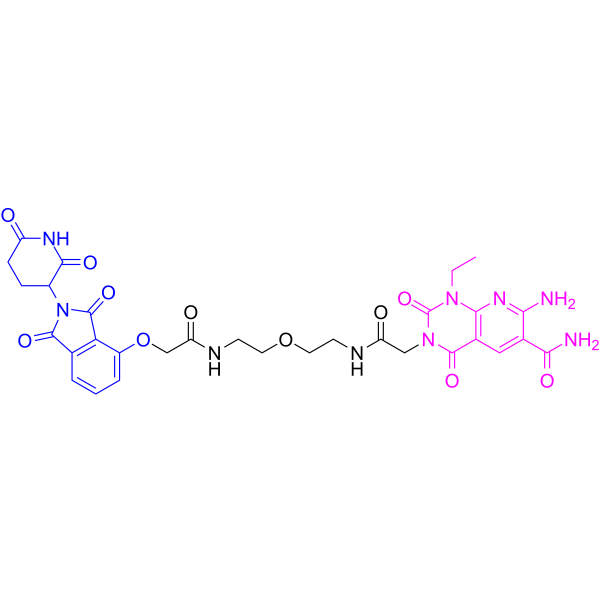
 0 ImagesCat. No.: HY-181506CAS No.: 3109321-90-3TYMJ-01 is a fluorescent probe and eEF2K degrader. TYMJ-01 induces dose-dependent and specific degradation of eEF2K via the ubiquitin-proteasome pathway, with a DC50 of 82 nM. TYMJ-01 inhibits the proliferation, migration and invasion of triple-negative breast cancer cells. TYMJ-01 enables dynamic fluorescent imaging of eEF2K degradation in triple-negative breast cancer cells; it enhances the anti-tumor activity of Paclitaxel (HY-B0015). TYMJ-01 can be used for the research of triple-negative breast cancer.
-
eEF2K ligand-1
 0 ImagesCat. No.: HY-184950CAS No.: 2458170-55-1



