Search Result
Results for "
lipid+ROS
" in MedChemExpress (MCE) Product Catalog:
7
Isotope-Labeled Compounds
| Cat. No. |
Product Name |
Target |
Research Areas |
Chemical Structure |
-
- HY-113308
-
|
|
Calcium Channel
Ferroptosis
PI3K
Akt
HBV
Reactive Oxygen Species (ROS)
|
Cardiovascular Disease
Infection
Inflammation/Immunology
|
|
Taurolithocholic acid is an orally active bile acid and antiviral agent. Taurolithocholic acid upregulates FADS2 by activating the TGR5-PI3K/AKT-SREBP2 signaling axis, inhibits SFTSV-induced ferroptosis (Ferroptosis), viral replication and viral entry of HBV/HDV, while reducing the release of IL-1β, lipid ROS and LDH. While exerting antiviral protective effects, Taurolithocholic acid also stimulates the recycling of hepatocellular membrane transporters, impairs canalicular bile acid secretion function, and induces hepatocyte cholestasis, apoptosis and acute hepatocellular injury. Taurolithocholic acid serves as an experimental model compound for hepatocellular cholestasis. At concentrations ≤200 μM, Taurolithocholic acid shows no cytotoxicity and does not activate the interferon pathway. Taurolithocholic acid not only protects mice from lethal SFTSV infection but also is suitable for studies related to severe fever with thrombocytopenia syndrome and cholestasis .
|
-

-
- HY-113308A
-
|
|
Calcium Channel
Ferroptosis
PI3K
Reactive Oxygen Species (ROS)
Akt
HBV
|
Metabolic Disease
|
|
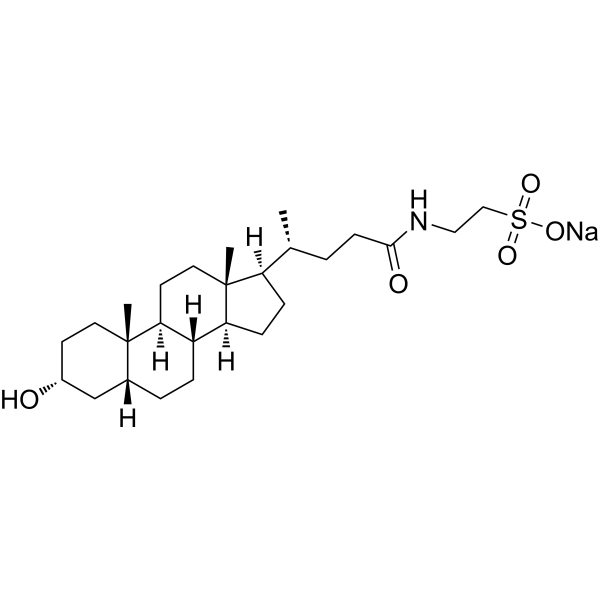
Taurolithocholic acid sodium salt is an orally active bile acid and antiviral agent. Taurolithocholic acid sodium salt upregulates FADS2 by activating the TGR5-PI3K/AKT-SREBP2 signaling axis, inhibits SFTSV-induced ferroptosis, viral replication and viral entry of HBV/HDV, while reducing the release of IL-1β, lipid ROS and LDH. While exerting antiviral protective effects, Taurolithocholic acid sodium salt also stimulates the recycling of hepatocellular membrane transporters, impairs canalicular bile acid secretion function, and induces hepatocyte cholestasis, apoptosis and acute hepatocellular injury. Taurolithocholic acid sodium salt serves as an experimental model compound for hepatocellular cholestasis. At concentrations ≤200 μM, Taurolithocholic acid sodium salt shows no cytotoxicity and does not activate the interferon pathway. Taurolithocholic acid sodium salt not only protects mice from lethal SFTSV infection but also is suitable for studies related to severe fever with thrombocytopenia syndrome and cholestasis .
|
-
-
- HY-B0774
-
-
-
- HY-176557
-
-

-
- HY-W009300
-
|
4-OHE1
|
Endogenous Metabolite
Estrogen Receptor/ERR
Sirtuin
MDM-2/p53
PDI
Ferroptosis
Reactive Oxygen Species (ROS)
|
Neurological Disease
Metabolic Disease
Cancer
|
|
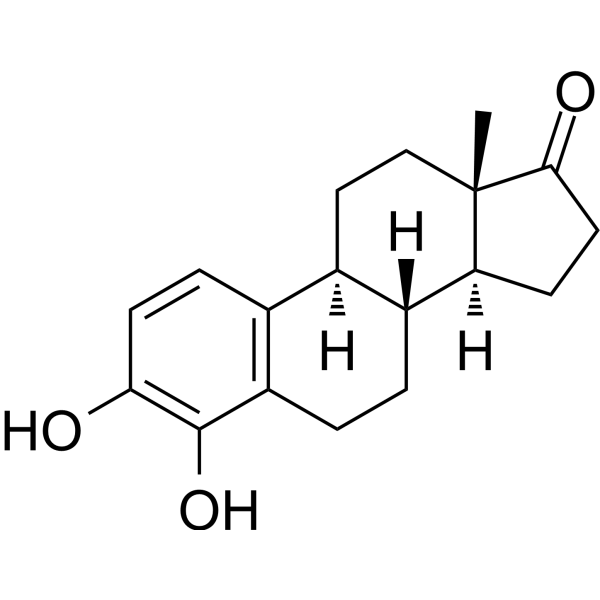
4-Hydroxyestrone (4-OHE1) is a brain-penetrant estrogen metabolite. 4-Hydroxyestrone shows neuroprotective effects involving increased cytoplasmic localization of p53 resulting from SIRT1-mediated p53 deacetylation. 4-Hydroxyestrone relies on PDI to mediate its protective effect against chemically induced ferroptosis in estrogen receptor-negative cancer cells. 4-Hydroxyestrone inhibits lipid peroxidation and lipid-ROS accumulation. 4-Hydroxyestrone blocks preovulatory luteinizing hormone surges in Rattus norvegicus. 4-Hydroxyestrone can be used for the researches of neurodegeneration, breast cancer and endocrine disease .
|
-
-
- HY-163654
-
|
|
Ferroptosis
|
Cancer
|
|
Ferroptosis-IN-8 is a potent ferroptosis inhibitor with an EC50 of 40.49 nM. Ferroptosis-IN-8 effectively reduces lipid ROS levels in cells. Ferroptosis-IN-8 act as an antioxidant by capturing lipid radicals, leading to a reduction in the accumulation of harmful lipid peroxides and, ultimately, inhibiting ferroptosis .
|
-

-
- HY-B0774R
-
-

-
- HY-113308S1
-
|
|
Isotope-Labeled Compounds
Calcium Channel
Ferroptosis
PI3K
Reactive Oxygen Species (ROS)
Akt
HBV
|
Others
|
|
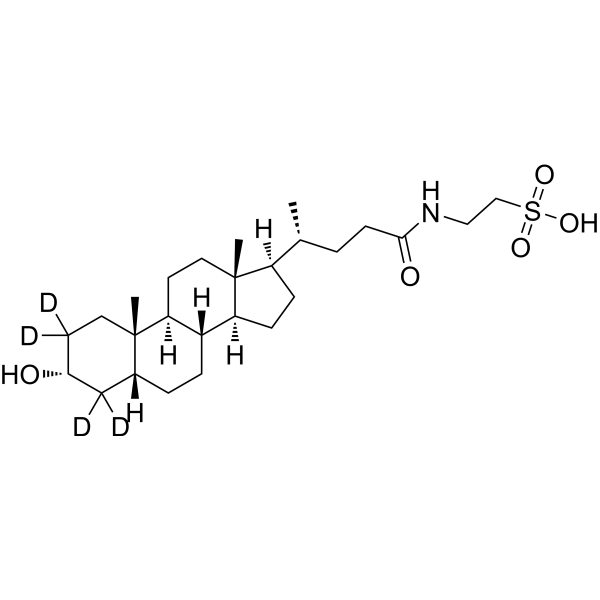
Taurolithocholic acid-d4 is deuterium labeled Taurolithocholic acid. Taurolithocholic acid is an orally active bile acid and antiviral agent. Taurolithocholic acid upregulates FADS2 by activating the TGR5-PI3K/AKT-SREBP2 signaling axis, inhibits SFTSV-induced ferroptosis, viral replication and viral entry of HBV/HDV, while reducing the release of IL-1β, lipid ROS and LDH. While exerting antiviral protective effects, Taurolithocholic acid also stimulates the recycling of hepatocellular membrane transporters, impairs canalicular bile acid secretion function, and induces hepatocyte cholestasis, apoptosis and acute hepatocellular injury. Taurolithocholic acid serves as an experimental model compound for hepatocellular cholestasis. At concentrations ≤200 μM, Taurolithocholic acid shows no cytotoxicity and does not activate the interferon pathway. Taurolithocholic acid not only protects mice from lethal SFTSV infection but also is suitable for studies related to severe fever with thrombocytopenia syndrome and cholestasis .
|
-
-
- HY-178389
-
|
|
Molecular Glues
Glutathione Peroxidase
Ferroptosis
Reactive Oxygen Species (ROS)
|
Cancer
|
|
GPX4-IN-20, a Arctigenin (HY-N0035) derived, is a GPX4& molecular gluedegrader. GPX4-IN-20 induces ferroptosis by increasing lipid ROS levels and suppressing GSH levels. GPX4-IN-20 reduces the protein expression and enzyme activity of GPX4 in a dose-dependent manner without affecting other ferroptosis-related proteins. GPX4-IN-20 induces ubiquitination-dependent proteasomal degradation of GPX4. GPX4-IN-20 also increases the level of malondialdehyde (MDA) in HCT-116 cells. GPX4-IN-20 can be used for the research of colorectal cancer .
|
-

-
- HY-113308AR
-
|
|
Reference Standards
Calcium Channel
Ferroptosis
PI3K
Reactive Oxygen Species (ROS)
Akt
HBV
|
Metabolic Disease
|
|
Taurolithocholic acid (sodium salt) (Standard) is the analytical standard of Taurolithocholic acid (sodium salt). This product is intended for research and analytical applications. Taurolithocholic acid sodium salt is an orally active bile acid and antiviral agent. Taurolithocholic acid sodium salt upregulates FADS2 by activating the TGR5-PI3K/AKT-SREBP2 signaling axis, inhibits SFTSV-induced ferroptosis, viral replication and viral entry of HBV/HDV, while reducing the release of IL-1β, lipid ROS and LDH. While exerting antiviral protective effects, Taurolithocholic acid sodium salt also stimulates the recycling of hepatocellular membrane transporters, impairs canalicular bile acid secretion function, and induces hepatocyte cholestasis, apoptosis and acute hepatocellular injury. Taurolithocholic acid sodium salt serves as an experimental model compound for hepatocellular cholestasis. At concentrations ≤200 μM, Taurolithocholic acid sodium salt shows no cytotoxicity and does not activate the interferon pathway. Taurolithocholic acid sodium salt not only protects mice from lethal SFTSV infection but also is suitable for studies related to severe fever with thrombocytopenia syndrome and cholestasis .
|
-

-
- HY-162310
-
|
|
Ferroptosis
Reactive Oxygen Species (ROS)
Autophagy
|
Cancer
|
|
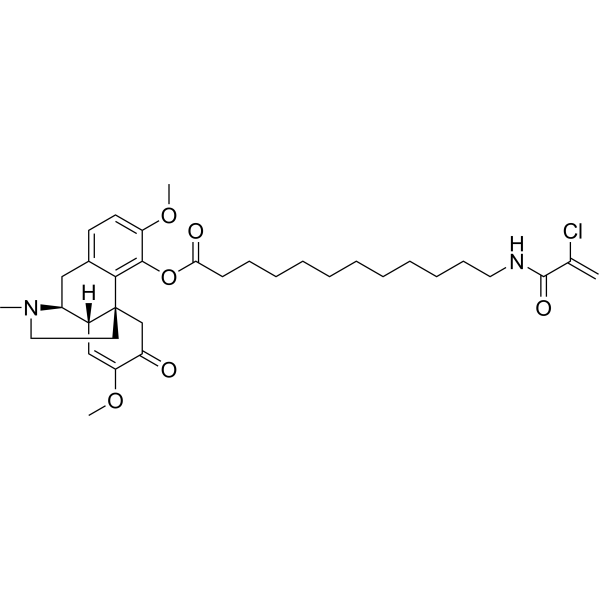
Anticancer agent 193 (compound D3-3) is an inducer of ferritinophagy, eventually triggering ferroptosis. Anticancer agent 193 induces the production of lipid ROS, and significantly promoted colorectal cancer cells to release the ferrous ion in an autophagy-dependent manner .
|
-
-
- HY-174086
-
|
|
Glutathione Peroxidase
Ferroptosis
ROS Kinase
PROTACs
|
Cancer
|
|
PROTAC GPX4 degrader-4 is a GPX4 PROTAC degrader (DC50: 5.32 nM). PROTAC GPX4 degrader-4 inhibits the activity of RT4, T24, and J82 cancer cells (IC50 values are 0.09, 2.97, and 7.58 μM, respectively). PROTAC GPX4 degrader-4 increases lipid ROS levels and induces ferroptosis in T24 and RT4 cells. PROTAC GPX4 degrader-4 has antitumor activity in T24 tumor-bearing BALB/c nude mouse model. PROTAC GPX4 degrader-4 can be used for bladder cancer research. (Pink: target protein ligand (HY-N0193); blue: E3 ligase ligand (HY-1035960); black: linker (HY-W013907); E3 ligase ligand + linker (HY-174087)) .
|
-

-
- HY-113308AS1
-
|
|
Isotope-Labeled Compounds
Calcium Channel
Ferroptosis
PI3K
Reactive Oxygen Species (ROS)
Akt
HBV
|
Metabolic Disease
|
|
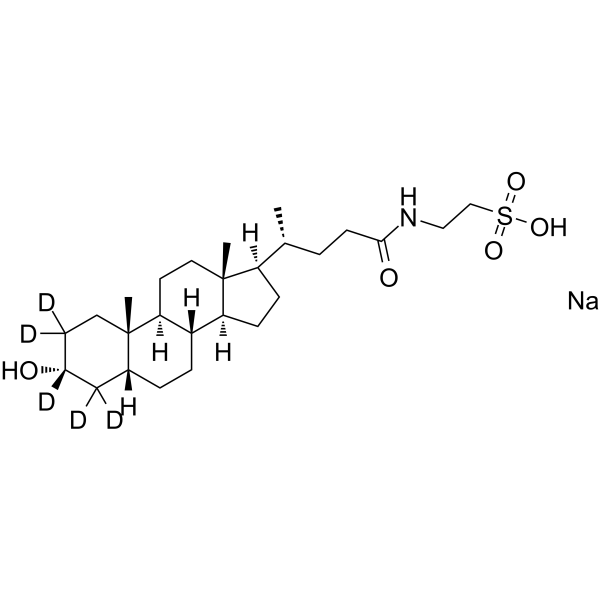
Taurolithocholic Acid-d5 (sodium) is the deuterium labeled Taurolithocholic acid sodium salt. Taurolithocholic Acid sodium salt is an orally active bile acid and antiviral agent. Taurolithocholic Acid sodium salt upregulates FADS2 by activating the TGR5-PI3K/AKT-SREBP2 signaling axis, inhibits SFTSV-induced ferroptosis, viral replication and viral entry of HBV/HDV, while reducing the release of IL-1β, lipid ROS and LDH. While exerting antiviral protective effects, Taurolithocholic Acid sodium salt also stimulates the recycling of hepatocellular membrane transporters, impairs canalicular bile acid secretion function, and induces hepatocyte cholestasis, apoptosis and acute hepatocellular injury. Taurolithocholic Acid sodium salt serves as an experimental model compound for hepatocellular cholestasis. At concentrations ≤200 μM, Taurolithocholic Acid sodium salt shows no cytotoxicity and does not activate the interferon pathway. Taurolithocholic Acid sodium salt not only protects mice from lethal SFTSV infection but also is suitable for studies related to severe fever with thrombocytopenia syndrome and cholestasis .
|
-
-
- HY-W009300S
-
|
4-OHE1-d4
|
Endogenous Metabolite
Isotope-Labeled Compounds
Estrogen Receptor/ERR
Sirtuin
MDM-2/p53
PDI
Ferroptosis
Reactive Oxygen Species (ROS)
|
Neurological Disease
Metabolic Disease
Cancer
|
|
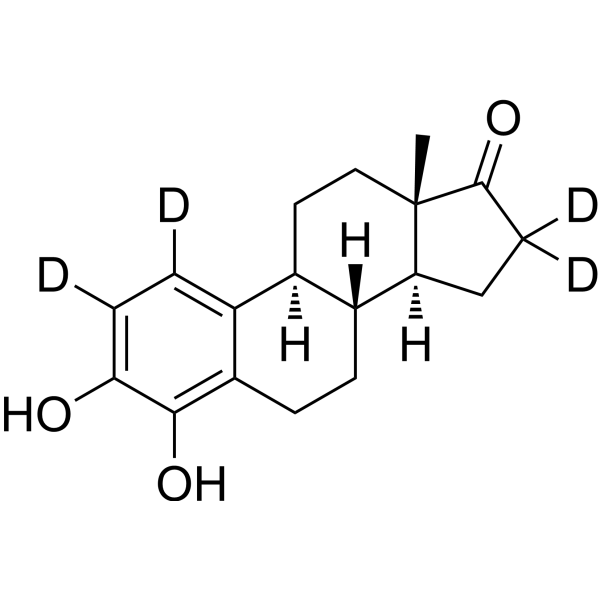
4-Hydroxyestrone (4-OHE1)-d4 is the deuterium labeled 4-Hydroxyestrone (HY-W009300). 4-Hydroxyestrone is a brain-penetrant estrogen metabolite. 4-Hydroxyestrone shows neuroprotective effects involving increased cytoplasmic localization of p53 resulting from SIRT1-mediated p53 deacetylation. 4-Hydroxyestrone relies on PDI to mediate its protective effect against chemically induced ferroptosis in estrogen receptor-negative cancer cells. 4-Hydroxyestrone inhibits lipid peroxidation and lipid-ROS accumulation. 4-Hydroxyestrone blocks preovulatory luteinizing hormone surges in Rattus norvegicus. 4-Hydroxyestrone can be used for the researches of neurodegeneration, breast cancer and endocrine disease .
|
-
-
- HY-W009300S1
-
|
4-OHE1-13C6
|
Isotope-Labeled Compounds
Endogenous Metabolite
Estrogen Receptor/ERR
Sirtuin
MDM-2/p53
PDI
Ferroptosis
Reactive Oxygen Species (ROS)
|
Neurological Disease
Metabolic Disease
Cancer
|
|
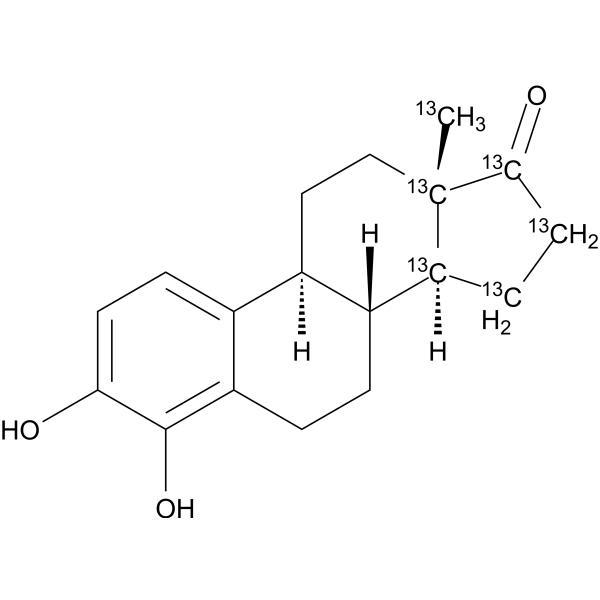
4-Hydroxyestrone (4-OHE1)- 13C6 is a 13C-labeled 4-Hydroxyestrone (HY-W009300). 4-Hydroxyestrone is a brain-penetrant estrogen metabolite. 4-Hydroxyestrone shows neuroprotective effects involving increased cytoplasmic localization of p53 resulting from SIRT1-mediated p53 deacetylation. 4-Hydroxyestrone relies on PDI to mediate its protective effect against chemically induced ferroptosis in estrogen receptor-negative cancer cells. 4-Hydroxyestrone inhibits lipid peroxidation and lipid-ROS accumulation. 4-Hydroxyestrone blocks preovulatory luteinizing hormone surges in Rattus norvegicus. 4-Hydroxyestrone can be used for the researches of neurodegeneration, breast cancer and endocrine disease .
|
-
-
- HY-156286
-
|
|
Ferroptosis
|
Cancer
|
|
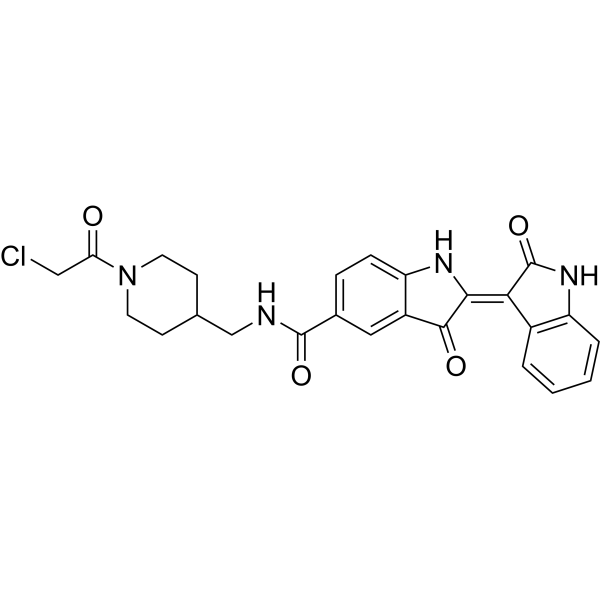
GPX4-IN-7 (Compound 31), indirubin derivative, is a ferroptosis inducer for colon cancer. GPX4-IN-7 has strong antitumor activity against HCT-116 cells with an IC50 value of 0.49 μM. GPX4-IN-7 can promote the degradation of GPX4, causing the accumulation of lipid ROS to induce ferroptosis .
|
-
-
- HY-175852
-
|
|
Ferroptosis
Glutathione Peroxidase
Reactive Oxygen Species (ROS)
|
Cancer
|
|
Ferroptosis inducer-11 is a ferroptosis inducer. Ferroptosis inducer-11 exhibits potent cytotoxicity against HCT-116, NCM-60 and HT-29 cells with IC50 values of 0.43 μM, 3.14 μM and 0.48 μM, respectively. Ferroptosis inducer-11 strongly suppresses GPX4 enzymatic activity with an IC50 of 1.86 μM. Ferroptosis inducer-11 induces ferroptosis, as well as increases intracellular lipid ROS, malondialdehyde (MDA), and Fe 2+ levels, while decreasing glutathione (GSH) levels in colon cancer cells. Ferroptosis inducer-11 can be used for the study of colon cancer .
|
-

-
- HY-113308AS
-
|
|
Isotope-Labeled Compounds
Calcium Channel
Ferroptosis
PI3K
Reactive Oxygen Species (ROS)
Akt
HBV
|
Metabolic Disease
|
|
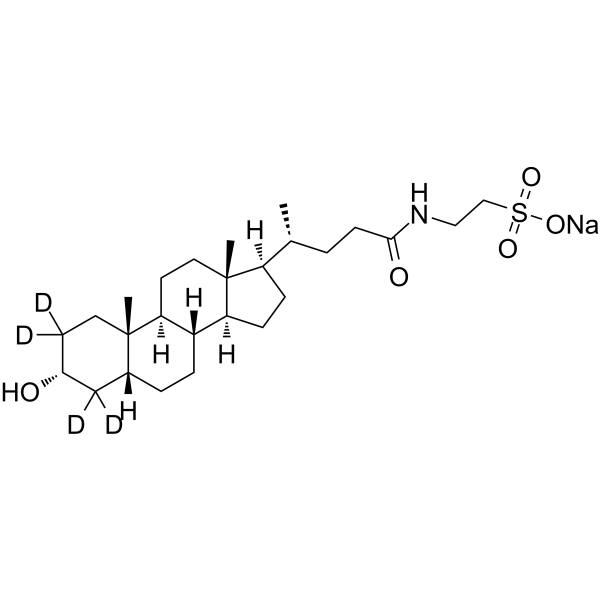
Taurolithocholic acid-d4 (sodium) is the deuterium labeled Taurolithocholic acid (sodium salt). Taurolithocholic acid sodium is an orally active bile acid and antiviral agent. Taurolithocholic acid sodium upregulates FADS2 by activating the TGR5-PI3K/AKT-SREBP2 signaling axis, inhibits SFTSV-induced ferroptosis, viral replication and viral entry of HBV/HDV, while reducing the release of IL-1β, lipid ROS and LDH. While exerting antiviral protective effects, Taurolithocholic acid sodium also stimulates the recycling of hepatocellular membrane transporters, impairs canalicular bile acid secretion function, and induces hepatocyte cholestasis, apoptosis and acute hepatocellular injury. Taurolithocholic acid sodium serves as an experimental model compound for hepatocellular cholestasis. At concentrations ≤200 μM, Taurolithocholic acid sodium shows no cytotoxicity and does not activate the interferon pathway. Taurolithocholic acid sodium not only protects mice from lethal SFTSV infection but also is suitable for studies related to severe fever with thrombocytopenia syndrome and cholestasis .
|
-
-
- HY-113308AS2
-
|
|
Isotope-Labeled Compounds
Calcium Channel
Ferroptosis
PI3K
Reactive Oxygen Species (ROS)
Akt
HBV
|
Metabolic Disease
|
|
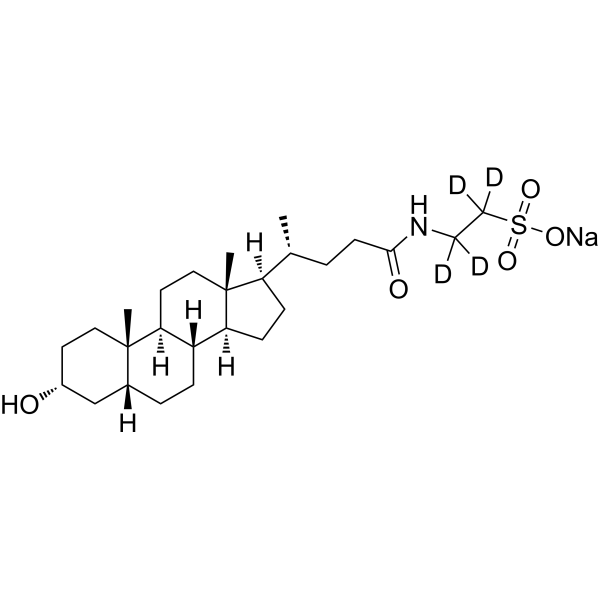
Taurolithocholic acid-d4-1 (sodium) is the deuterium labeled Taurolithocholic acid. Taurolithocholic acid sodium is an orally active bile acid and antiviral agent. Taurolithocholic acid sodium upregulates FADS2 by activating the TGR5-PI3K/AKT-SREBP2 signaling axis, inhibits SFTSV-induced ferroptosis, viral replication and viral entry of HBV/HDV, while reducing the release of IL-1β, lipid ROS and LDH. While exerting antiviral protective effects, Taurolithocholic acid sodium also stimulates the recycling of hepatocellular membrane transporters, impairs canalicular bile acid secretion function, and induces hepatocyte cholestasis, apoptosis and acute hepatocellular injury. Taurolithocholic acid sodium serves as an experimental model compound for hepatocellular cholestasis. At concentrations ≤200 μM, Taurolithocholic acid sodium shows no cytotoxicity and does not activate the interferon pathway. Taurolithocholic acid sodium not only protects mice from lethal SFTSV infection but also is suitable for studies related to severe fever with thrombocytopenia syndrome and cholestasis .
|
-
-
- HY-113308S
-
|
|
Isotope-Labeled Compounds
Calcium Channel
Ferroptosis
PI3K
Reactive Oxygen Species (ROS)
Akt
HBV
|
Others
|
|
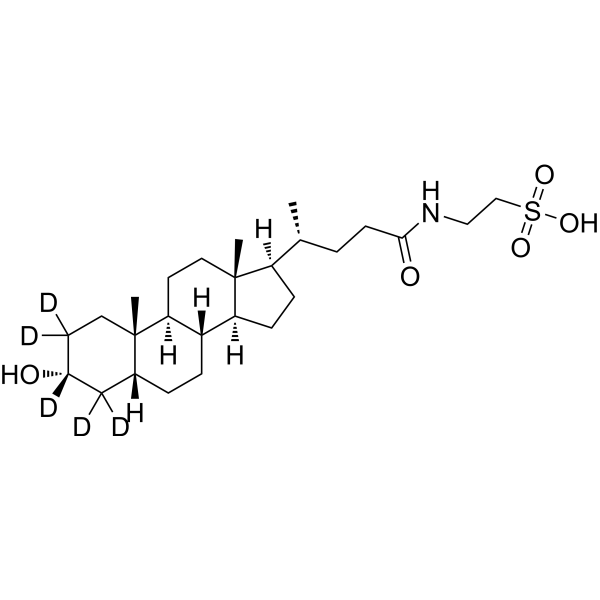
Taurolithocholic acid-d5 is deuterium labeled Taurolithocholic acid. Taurolithocholic acid is an orally active bile acid and antiviral agent. Taurolithocholic acid upregulates FADS2 by activating the TGR5-PI3K/AKT-SREBP2 signaling axis, inhibits SFTSV-induced ferroptosis, viral replication and viral entry of HBV/HDV, while reducing the release of IL-1β, lipid ROS and LDH. While exerting antiviral protective effects, Taurolithocholic acid also stimulates the recycling of hepatocellular membrane transporters, impairs canalicular bile acid secretion function, and induces hepatocyte cholestasis, apoptosis and acute hepatocellular injury. Taurolithocholic acid serves as an experimental model compound for hepatocellular cholestasis. At concentrations ≤200 μM, Taurolithocholic acid shows no cytotoxicity and does not activate the interferon pathway. Taurolithocholic acid not only protects mice from lethal SFTSV infection but also is suitable for studies related to severe fever with thrombocytopenia syndrome and cholestasis .
|
-
-
- HY-161972
-
|
|
HyT
Ferroptosis
Glutathione Peroxidase
|
Cancer
|
|
ZX782 is a HyT GPX4 degrader and a ferroptosis inducer, which induces GPX4 degradation and significantly increases lipid ROS accumulation in HT1080 cells. ZX782 can be used to treat AD by reducing the size and/or number of brain amyloid plaques and by inhibiting the spread of IL-1beta-positive microglial-like cells around amyloid plaques. ZX782 is labeled with hydrophobic benzyl alcohol (HBA) and appears bright blue under acidic conditions, which can be used for quantitative determination . ZX782 is composed of target protein ligand (red part) ML-210 (HY-100003), PROTAC linker (black part) Bromo-PEG2-CH2-Boc (HY-141371) and Hty molecule (blue part) Adamantan-1-ylmethanamine (HY-W037848). The conjugate consisting of Hyt and linker parts is Adamantan-C-amide-PEG2-C-Br (HY-161974), and the activity control of the target protein ligand is Hydroxyl-ML-210 (HY-161973).
|
-

-
- HY-186144
-
|
|
Ferroptosis
Reactive Oxygen Species (ROS)
Drug Derivative
|
Cancer
|
|
WMK-2 is a 1,2,4,5-tetraoxane derivative and ferroptosis inducer with broad-spectrum anticancer activity. WMK-2 generates hydroxyl radicals and lipid ROS to induce ferroptosis in cancer cells and cancer stem cells. WMK-2 can be used for the research of cancer .
|
-

-
- HY-181665
-
|
|
Ferroptosis
Glutathione Peroxidase
Reactive Oxygen Species (ROS)
Apoptosis
|
Neurological Disease
|
|
Ferroptosis-IN-23 is an inhibitor of ferroptosis. Ferroptosis-IN-23 exerts a synergistic effect by simultaneously activating Steap4 and glutathione peroxidase 4 (GPX4), thereby maintaining iron metabolism homeostasis. Ferroptosis-IN-23 reverses neuronal ferroptosis and inhibits lipid ROS accumulation in cells. Ferroptosis-IN-23 inhibits ferroptosis in zebrafish, alleviates neuronal apoptosis, ROS accumulation, and dopaminergic neuron damage in a zebrafish model of Parkinson's disease. Ferroptosis-IN-23 can be used for research on Parkinson's disease .
|
-

-
- HY-181598
-
|
|
HyT
Glutathione Peroxidase
Ferroptosis
Reactive Oxygen Species (ROS)
|
Cancer
|
|
GPX4 degrader-1 (Compound RS-1) is a hydrophobic tagging (HyT)-mediated GPX4 degrader (DC50: 8.9 nM in HT1080 cells) GPX4 degrader-1 induces GPX4 degradation. GPX4 degrader-1 induces Ferroptosis. GPX4 degrader-1 increases lipid ROS. GPX4 degrader-1 demonstrates potent antitumor efficacy in a murine mammary carcinoma model .
|
-

-
- HY-181656
-
|
|
Molecular Glues
Glutathione Peroxidase
Ferroptosis
Reactive Oxygen Species (ROS)
|
Cancer
|
|
GPX4 degrader-2 is a GPX4 molecular glue degrader and ferroptosis inducer. GPX4 degrader-2 suppresses GPX4 enzyme activity, promotes ubiquitination-dependent proteasomal degradation of GPX4 protein. GPX4 degrader-2 indues ferroptosis, increases lipid ROS and MDA levels, suppresses glutathione levels in cancer cells. GPX4 degrader-2 inhibits cancer cells proliferation and colony formation. GPX4 degrader-2 can be used for the research of colorectal cancer .
|
-

| Cat. No. |
Product Name |
Category |
Target |
Chemical Structure |
-
- HY-113308A
-
|
|
Structural Classification
Animals
Classification of Application Fields
Metabolic Disease
Disease Research Fields
Steroids
Source Classification
|
Calcium Channel
Ferroptosis
PI3K
Reactive Oxygen Species (ROS)
Akt
HBV
|
|
Taurolithocholic acid sodium salt is an orally active bile acid and antiviral agent. Taurolithocholic acid sodium salt upregulates FADS2 by activating the TGR5-PI3K/AKT-SREBP2 signaling axis, inhibits SFTSV-induced ferroptosis, viral replication and viral entry of HBV/HDV, while reducing the release of IL-1β, lipid ROS and LDH. While exerting antiviral protective effects, Taurolithocholic acid sodium salt also stimulates the recycling of hepatocellular membrane transporters, impairs canalicular bile acid secretion function, and induces hepatocyte cholestasis, apoptosis and acute hepatocellular injury. Taurolithocholic acid sodium salt serves as an experimental model compound for hepatocellular cholestasis. At concentrations ≤200 μM, Taurolithocholic acid sodium salt shows no cytotoxicity and does not activate the interferon pathway. Taurolithocholic acid sodium salt not only protects mice from lethal SFTSV infection but also is suitable for studies related to severe fever with thrombocytopenia syndrome and cholestasis .
|
-
-
- HY-W009300
-
-
-
- HY-113308AR
-
|
|
Structural Classification
Animals
Steroids
Source Classification
|
Reference Standards
Calcium Channel
Ferroptosis
PI3K
Reactive Oxygen Species (ROS)
Akt
HBV
|
|
Taurolithocholic acid (sodium salt) (Standard) is the analytical standard of Taurolithocholic acid (sodium salt). This product is intended for research and analytical applications. Taurolithocholic acid sodium salt is an orally active bile acid and antiviral agent. Taurolithocholic acid sodium salt upregulates FADS2 by activating the TGR5-PI3K/AKT-SREBP2 signaling axis, inhibits SFTSV-induced ferroptosis, viral replication and viral entry of HBV/HDV, while reducing the release of IL-1β, lipid ROS and LDH. While exerting antiviral protective effects, Taurolithocholic acid sodium salt also stimulates the recycling of hepatocellular membrane transporters, impairs canalicular bile acid secretion function, and induces hepatocyte cholestasis, apoptosis and acute hepatocellular injury. Taurolithocholic acid sodium salt serves as an experimental model compound for hepatocellular cholestasis. At concentrations ≤200 μM, Taurolithocholic acid sodium salt shows no cytotoxicity and does not activate the interferon pathway. Taurolithocholic acid sodium salt not only protects mice from lethal SFTSV infection but also is suitable for studies related to severe fever with thrombocytopenia syndrome and cholestasis .
|
-
| Cat. No. |
Product Name |
Chemical Structure |
-
- HY-113308S1
-
|
|
|
Taurolithocholic acid-d4 is deuterium labeled Taurolithocholic acid. Taurolithocholic acid is an orally active bile acid and antiviral agent. Taurolithocholic acid upregulates FADS2 by activating the TGR5-PI3K/AKT-SREBP2 signaling axis, inhibits SFTSV-induced ferroptosis, viral replication and viral entry of HBV/HDV, while reducing the release of IL-1β, lipid ROS and LDH. While exerting antiviral protective effects, Taurolithocholic acid also stimulates the recycling of hepatocellular membrane transporters, impairs canalicular bile acid secretion function, and induces hepatocyte cholestasis, apoptosis and acute hepatocellular injury. Taurolithocholic acid serves as an experimental model compound for hepatocellular cholestasis. At concentrations ≤200 μM, Taurolithocholic acid shows no cytotoxicity and does not activate the interferon pathway. Taurolithocholic acid not only protects mice from lethal SFTSV infection but also is suitable for studies related to severe fever with thrombocytopenia syndrome and cholestasis .
|
-
-
- HY-113308AS1
-
|
|
|
Taurolithocholic Acid-d5 (sodium) is the deuterium labeled Taurolithocholic acid sodium salt. Taurolithocholic Acid sodium salt is an orally active bile acid and antiviral agent. Taurolithocholic Acid sodium salt upregulates FADS2 by activating the TGR5-PI3K/AKT-SREBP2 signaling axis, inhibits SFTSV-induced ferroptosis, viral replication and viral entry of HBV/HDV, while reducing the release of IL-1β, lipid ROS and LDH. While exerting antiviral protective effects, Taurolithocholic Acid sodium salt also stimulates the recycling of hepatocellular membrane transporters, impairs canalicular bile acid secretion function, and induces hepatocyte cholestasis, apoptosis and acute hepatocellular injury. Taurolithocholic Acid sodium salt serves as an experimental model compound for hepatocellular cholestasis. At concentrations ≤200 μM, Taurolithocholic Acid sodium salt shows no cytotoxicity and does not activate the interferon pathway. Taurolithocholic Acid sodium salt not only protects mice from lethal SFTSV infection but also is suitable for studies related to severe fever with thrombocytopenia syndrome and cholestasis .
|
-
-
- HY-W009300S
-
|
|
|
4-Hydroxyestrone (4-OHE1)-d4 is the deuterium labeled 4-Hydroxyestrone (HY-W009300). 4-Hydroxyestrone is a brain-penetrant estrogen metabolite. 4-Hydroxyestrone shows neuroprotective effects involving increased cytoplasmic localization of p53 resulting from SIRT1-mediated p53 deacetylation. 4-Hydroxyestrone relies on PDI to mediate its protective effect against chemically induced ferroptosis in estrogen receptor-negative cancer cells. 4-Hydroxyestrone inhibits lipid peroxidation and lipid-ROS accumulation. 4-Hydroxyestrone blocks preovulatory luteinizing hormone surges in Rattus norvegicus. 4-Hydroxyestrone can be used for the researches of neurodegeneration, breast cancer and endocrine disease .
|
-
-
- HY-W009300S1
-
|
|
|
4-Hydroxyestrone (4-OHE1)- 13C6 is a 13C-labeled 4-Hydroxyestrone (HY-W009300). 4-Hydroxyestrone is a brain-penetrant estrogen metabolite. 4-Hydroxyestrone shows neuroprotective effects involving increased cytoplasmic localization of p53 resulting from SIRT1-mediated p53 deacetylation. 4-Hydroxyestrone relies on PDI to mediate its protective effect against chemically induced ferroptosis in estrogen receptor-negative cancer cells. 4-Hydroxyestrone inhibits lipid peroxidation and lipid-ROS accumulation. 4-Hydroxyestrone blocks preovulatory luteinizing hormone surges in Rattus norvegicus. 4-Hydroxyestrone can be used for the researches of neurodegeneration, breast cancer and endocrine disease .
|
-
-
- HY-113308AS
-
|
|
|
Taurolithocholic acid-d4 (sodium) is the deuterium labeled Taurolithocholic acid (sodium salt). Taurolithocholic acid sodium is an orally active bile acid and antiviral agent. Taurolithocholic acid sodium upregulates FADS2 by activating the TGR5-PI3K/AKT-SREBP2 signaling axis, inhibits SFTSV-induced ferroptosis, viral replication and viral entry of HBV/HDV, while reducing the release of IL-1β, lipid ROS and LDH. While exerting antiviral protective effects, Taurolithocholic acid sodium also stimulates the recycling of hepatocellular membrane transporters, impairs canalicular bile acid secretion function, and induces hepatocyte cholestasis, apoptosis and acute hepatocellular injury. Taurolithocholic acid sodium serves as an experimental model compound for hepatocellular cholestasis. At concentrations ≤200 μM, Taurolithocholic acid sodium shows no cytotoxicity and does not activate the interferon pathway. Taurolithocholic acid sodium not only protects mice from lethal SFTSV infection but also is suitable for studies related to severe fever with thrombocytopenia syndrome and cholestasis .
|
-
-
- HY-113308AS2
-
|
|
|
Taurolithocholic acid-d4-1 (sodium) is the deuterium labeled Taurolithocholic acid. Taurolithocholic acid sodium is an orally active bile acid and antiviral agent. Taurolithocholic acid sodium upregulates FADS2 by activating the TGR5-PI3K/AKT-SREBP2 signaling axis, inhibits SFTSV-induced ferroptosis, viral replication and viral entry of HBV/HDV, while reducing the release of IL-1β, lipid ROS and LDH. While exerting antiviral protective effects, Taurolithocholic acid sodium also stimulates the recycling of hepatocellular membrane transporters, impairs canalicular bile acid secretion function, and induces hepatocyte cholestasis, apoptosis and acute hepatocellular injury. Taurolithocholic acid sodium serves as an experimental model compound for hepatocellular cholestasis. At concentrations ≤200 μM, Taurolithocholic acid sodium shows no cytotoxicity and does not activate the interferon pathway. Taurolithocholic acid sodium not only protects mice from lethal SFTSV infection but also is suitable for studies related to severe fever with thrombocytopenia syndrome and cholestasis .
|
-
-
- HY-113308S
-
|
|
|
Taurolithocholic acid-d5 is deuterium labeled Taurolithocholic acid. Taurolithocholic acid is an orally active bile acid and antiviral agent. Taurolithocholic acid upregulates FADS2 by activating the TGR5-PI3K/AKT-SREBP2 signaling axis, inhibits SFTSV-induced ferroptosis, viral replication and viral entry of HBV/HDV, while reducing the release of IL-1β, lipid ROS and LDH. While exerting antiviral protective effects, Taurolithocholic acid also stimulates the recycling of hepatocellular membrane transporters, impairs canalicular bile acid secretion function, and induces hepatocyte cholestasis, apoptosis and acute hepatocellular injury. Taurolithocholic acid serves as an experimental model compound for hepatocellular cholestasis. At concentrations ≤200 μM, Taurolithocholic acid shows no cytotoxicity and does not activate the interferon pathway. Taurolithocholic acid not only protects mice from lethal SFTSV infection but also is suitable for studies related to severe fever with thrombocytopenia syndrome and cholestasis .
|
-
| Cat. No. |
Product Name |
|
Classification |
-
- HY-175852
-
|
|
|
Alkynes
|
|
Ferroptosis inducer-11 is a ferroptosis inducer. Ferroptosis inducer-11 exhibits potent cytotoxicity against HCT-116, NCM-60 and HT-29 cells with IC50 values of 0.43 μM, 3.14 μM and 0.48 μM, respectively. Ferroptosis inducer-11 strongly suppresses GPX4 enzymatic activity with an IC50 of 1.86 μM. Ferroptosis inducer-11 induces ferroptosis, as well as increases intracellular lipid ROS, malondialdehyde (MDA), and Fe 2+ levels, while decreasing glutathione (GSH) levels in colon cancer cells. Ferroptosis inducer-11 can be used for the study of colon cancer .
|
Your information is safe with us. * Required Fields.
Inquiry Information
- Product Name:
- Cat. No.:
- Quantity:
- MCE Japan Authorized Agent:








