



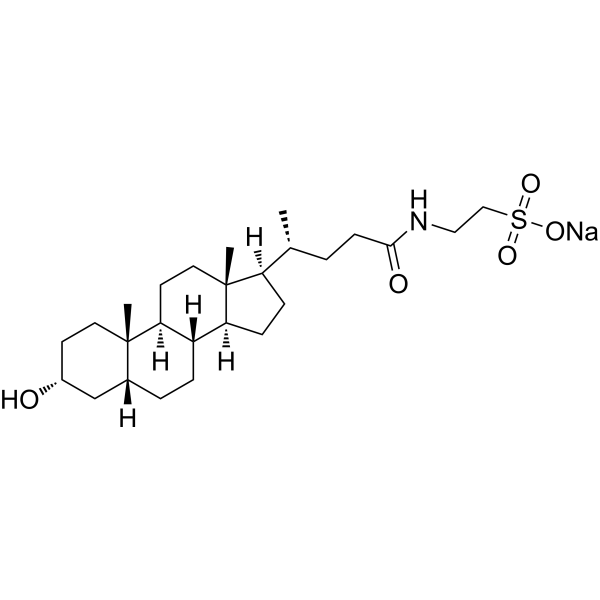
Taurolithocholic acid sodium salt
Based on 6 publication(s) in Google Scholar
Taurolithocholic acid sodium salt is an orally active bile acid and antiviral agent. Taurolithocholic acid sodium salt upregulates FADS2 by activating the TGR5-PI3K/AKT-SREBP2 signaling axis, inhibits SFTSV-induced ferroptosis, viral replication and viral entry of HBV/HDV, while reducing the release of IL-1β, lipid ROS and LDH. While exerting antiviral protective effects, Taurolithocholic acid sodium salt also stimulates the recycling of hepatocellular membrane transporters, impairs canalicular bile acid secretion function, and induces hepatocyte cholestasis, apoptosis and acute hepatocellular injury. Taurolithocholic acid sodium salt serves as an experimental model compound for hepatocellular cholestasis. At concentrations ≤200 μM, Taurolithocholic acid sodium salt shows no cytotoxicity and does not activate the interferon pathway. Taurolithocholic acid sodium salt not only protects mice from lethal SFTSV infection but also is suitable for studies related to severe fever with thrombocytopenia syndrome and cholestasis.
For research use only. We do not sell to patients.
- Purity: 99.81%
- CAS No.: 6042-32-6
- Formula: C26H44NNaO5S
- Molecular Weight:505.69
-
Storage:
4°C, sealed storage, away from moisture and light
* In solvent : -80°C, 6 months; -20°C, 1 month (sealed storage, away from moisture and light)

To place orders, for customer services and technical support, please contact: MedChemExpress USA
Tel: 609-228-6898 E-mail: [email protected] [email protected]


-
 Biological Activity
-
Chemical Information
-
Solvent & Solubility
- Purity & Documentation
- References
-
 Help & FAQs


-
HY-N1423
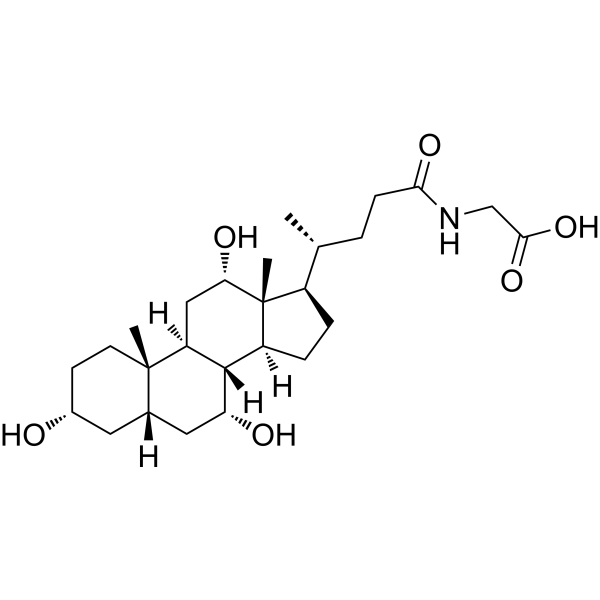
Glycocholic acid -
HY-N0593
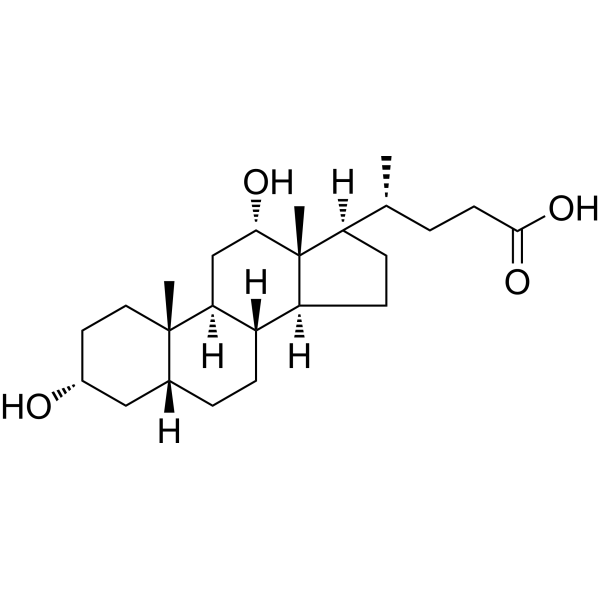
Deoxycholic acid -
HY-19696
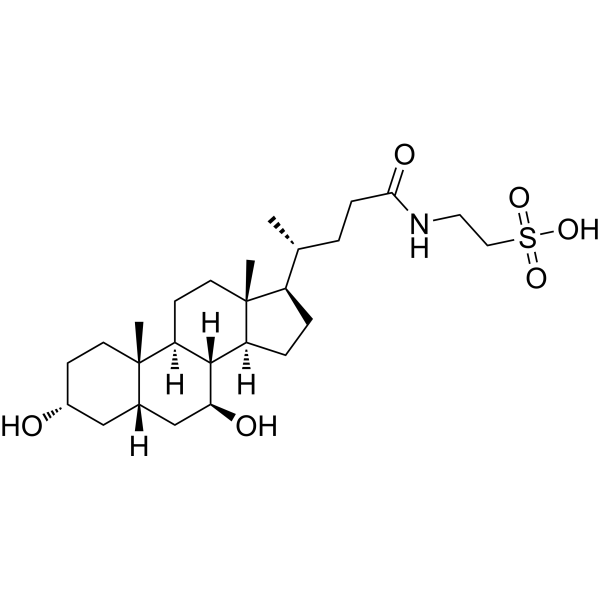
Tauroursodeoxycholate -
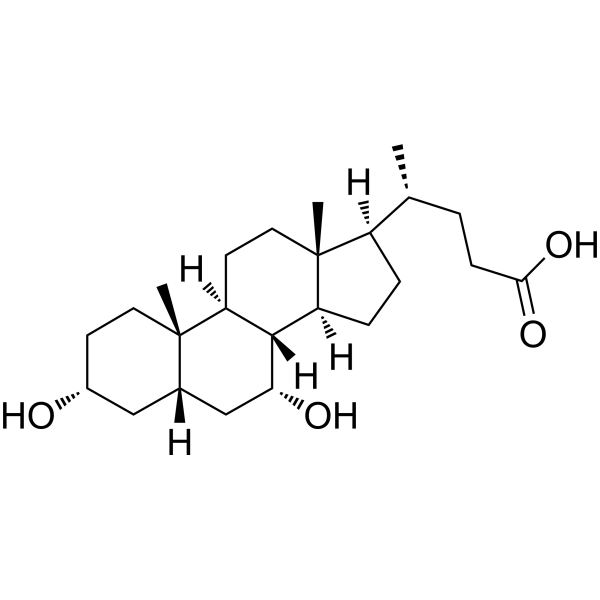
HY-76847
Chenodeoxycholic Acid -
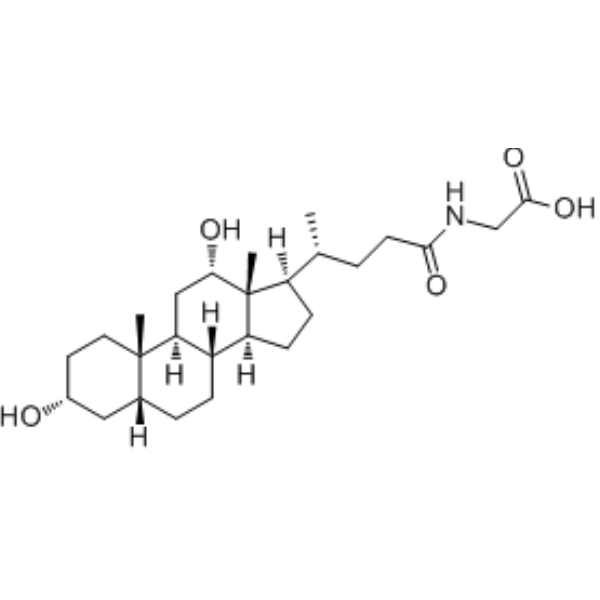
HY-125731
Glycodeoxycholic acid -
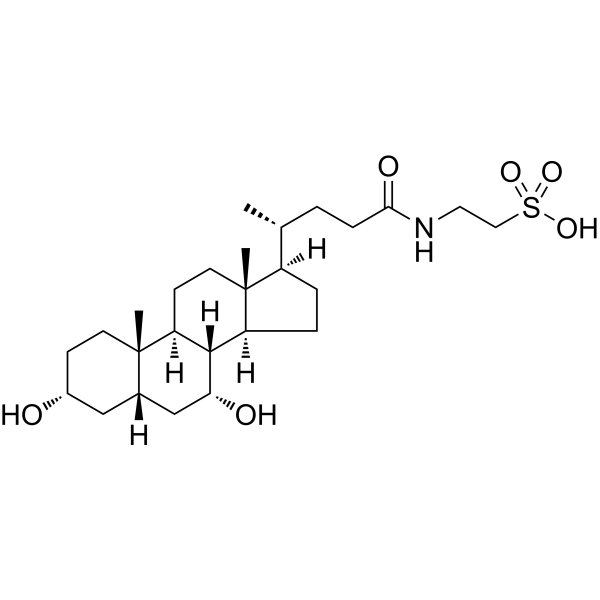
HY-N2027
Taurochenodeoxycholic acid -
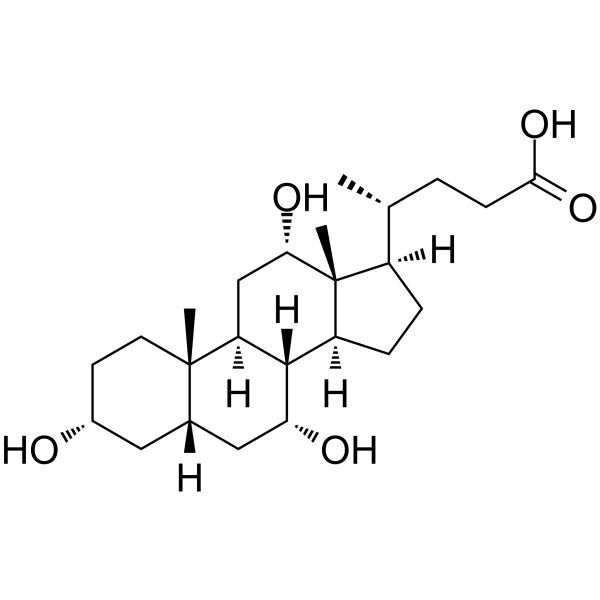
HY-N0324
Cholic acid -
HY-B1788
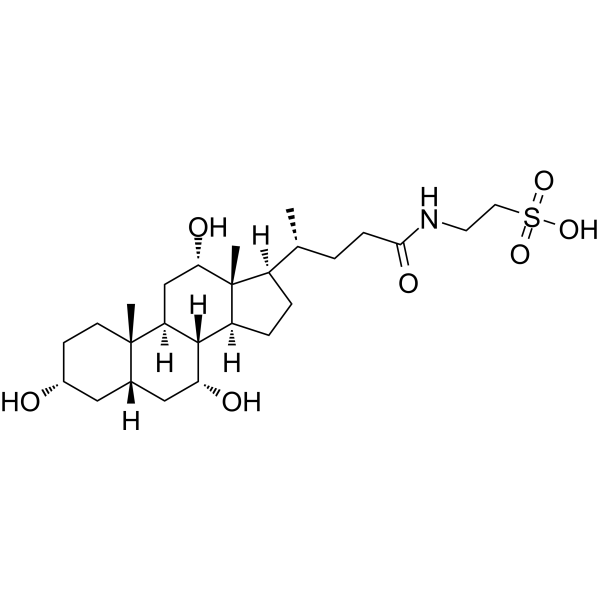
Taurocholic acid -
HY-116374
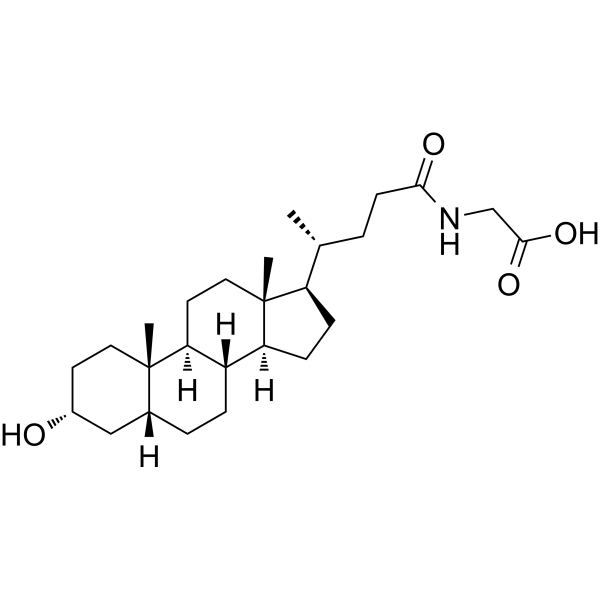
Glycolithocholic acid -
HY-N2334
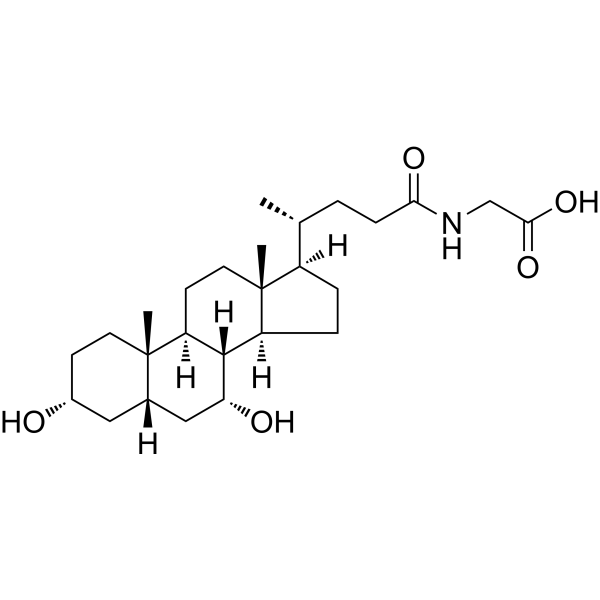
Glycochenodeoxycholic acid -
HY-B0172
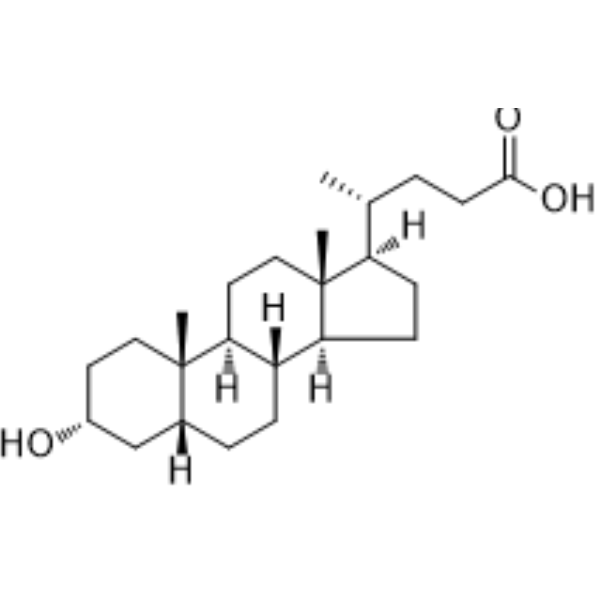
Lithocholic acid -
HY-N1424
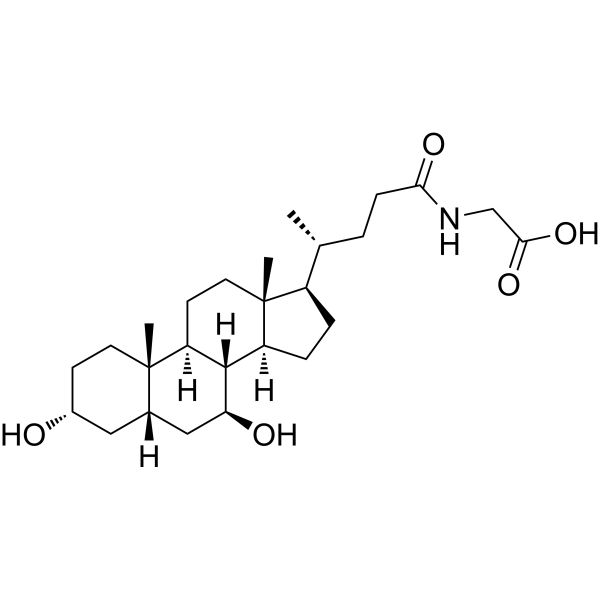
Glycoursodeoxycholic acid
Publications Citing Use of MedChemExpress (MCE) Taurolithocholic acid sodium salt
More Customer Validation & Images

-
RT-PCR
All Calcium Channel Isoforms
More

Biological Activity
Description
IC50 & Target
|
Human Endogenous Metabolite |
In Vitro
Taurolithocholic acid sodium salt (50-200 μM; 24 h) dose-dependently inhibits SFTSV replication in human THP-1 monocytic cells without inducing cytotoxicity[1].
Taurolithocholic acid sodium salt (50-200 μM; 24 h) dose-dependently inhibits HRTV replication in human THP-1 monocytic cells[1].
Taurolithocholic acid sodium salt (16 h) inhibits the post-entry replication stage of SFTSV infection in human THP-1 monocytic cells, reducing intracellular viral RNA levels and infection rate by approximately 50% when added post-infection or throughout the 16 h infection period[1].
Taurolithocholic acid sodium salt (50-200 μM) dose-dependently inhibits SFTSV mini-genome activity in BSR-T7 cells[1].
Taurolithocholic acid sodium salt (50-200 μM; 24 h) dose-dependently suppresses SFTSV-induced IL-1β production and NF-κB activation in human THP-1 monocytic cells[1].
Taurolithocholic acid sodium salt (200 μM; 24 h) upregulates FADS2 expression in SFTSV-infected human THP-1 monocytic cells, reversing SFTSV-induced FADS2 downregulation[1].
Taurolithocholic acid sodium salt (0-24 h) time-dependently activates the TGR5-PI3K/AKT-SREBP2 pathway and upregulates FADS2 in human THP-1 monocytic cells over 0 to 24 h[1].
Taurolithocholic acid sodium salt (100 μM; 24 h) alleviates SFTSV-induced ferroptosis in murine BMDMs, as measured by reduced lipid ROS and LDH release[1].
Taurolithocholic acid sodium salt (100 μM; pre-treatment, followed by 24 h incubation with ferroptosis agonists) inhibits Fe2+- and RSL-3-induced ferroptosis in murine BMDMs via upregulation of FADS2, as shown by reduced lipid ROS and LDH release which is reversed by FADS2 inhibition[1].
Taurolithocholic acid sodium salt (5 μM; 4 h) induces robust apoptosis in Ntcp-transfected HepG2 cells, increasing the percentage of apoptotic cells to 65.5% of total cells[2].
Taurolithocholic acid sodium salt (2.5-5 μmol/liter; 20 min total incubation) impairs canalicular bile acid secretion by 54% and 60%, respectively, without affecting substrate uptake in isolated rat hepatocyte couplets[3].
Taurolithocholic acid sodium salt (5 μmol/liter; 5-60 min) induces sustained activation of PKB/Akt, increasing activity to 194% of control levels after 60 min in isolated rat hepatocytes[3].
MedChemExpress (MCE) has not independently confirmed the accuracy of these methods. They are for reference only.
In Vivo
Taurolithocholic acid (final concentration of 1 μM in cerebrospinal fluid; chronic intracerebroventricular infusion; continuous constant-rate administration; treatment duration of 23 days) sodium salt significantly enhances the uptake of triglyceride-derived fatty acids by brown adipose tissue, upregulates the mRNA expression of thermogenesis-related genes such as Lpl, Tgr5, Dio2 and Ucp1 in brown adipose tissue, and exerts no effect on energy expenditure, body weight or gonadal white adipose tissue weight in male C57Bl/6J mice fed a high-fat diet[4].
MedChemExpress (MCE) has not independently confirmed the accuracy of these methods. They are for reference only.


Chemical Information
-
CAS No. 6042-32-6
-
Appearance Solid
-
Molecular Weight 505.69
-
Formula C26H44NNaO5S
-
Color White to off-white
-
SMILES
C[C@@]12[C@](CC[C@]2([H])[C@H](C)CCC(NCCS(=O)(O[Na])=O)=O)([H])[C@@]3([H])[C@@](CC1)([H])[C@@]4([C@](C[C@@H](CC4)O)([H])CC3)C
-
Structure Classification
-
Initial Source
animals
-
Shipping
Room temperature in continental US; may vary elsewhere.
-
Storage
4°C, sealed storage, away from moisture and light
* In solvent : -80°C, 6 months; -20°C, 1 month (sealed storage, away from moisture and light)


Publications (6)
-
Journal Impact Factor
-
Most Recent
-
Nature
2026 Mar;651(8104):260-267. PMID: 41606328 -
Nature
2025 Jul;643(8070):192-200. PMID: 39695227 -
Nat Microbiol
Taurolithocholic acid protects against viral haemorrhagic fever via inhibition of ferroptosis. [Abstract]2024 Oct;9(10):2583-2599. PMID: 39294459 -
Adv Sci (Weinh)
Targeting FDFT1 Reduces Cholesterol and Bile Acid Production and Delays Hepatocellular Carcinoma Progression Through the HNF4A/ALDOB/AKT1 Axis. [Abstract]2025 Mar;12(12):e2411719. PMID: 39899681
Taurolithocholic acid sodium salt purchased from MedChemExpress. Usage Cited in: Adv Sci (Weinh). 2025 Mar;12(12):e2411719. [Abstract]
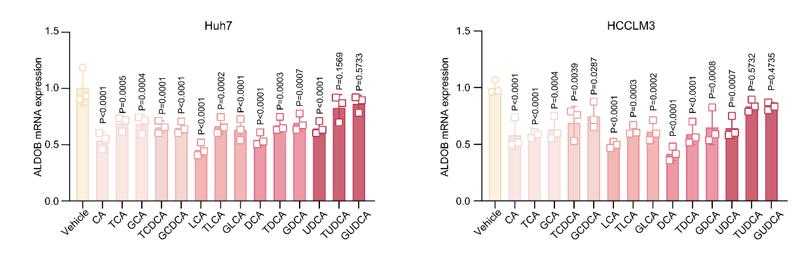
The mRNA levels of ALDOB in Huh7 or HCCLM3 cells treated with various bile acids (100 μM, 24 h). All data are presented as mean ± SD. Data were analyzed by one-way ANOVA with Bonferroni multiple-comparison correction. CA, cholic acid; TCA, taurocholic acid; GCA, glycocholic acid; TCDCA, taurochenodeoxycholic acid; GCDCA, glycochenodeoxycholic acid; LCA, lithocholic acid; TLCA, taurolithocholic acid; GLCA, glycolithocholic acid; DCA, deoxycholic acid; TDCA, taurodeoxycholic acid; GDCA, glycodeoxycholic acid; UDCA, ursodeoxycholic acid; TUDCA, tauroursodeoxycholic acid; GUDCA, glycoursodeoxycholic acid.
-
J Transl Med
Conjugated bile acids alleviate acute pancreatitis through inhibition of TGR5 and NLRP3 mediated inflammation. [Abstract]2024 Dec 20;22(1):1124. PMID: 39707318 -
Biomedicines
2025 Apr 4;13(4):874. PMID: 40299495


Solvent & Solubility
In Vitro:
DMSO : 100 mg/mL (197.75 mM; Need ultrasonic; Hygroscopic DMSO has a significant impact on the solubility of product, please use newly opened DMSO)
Please refer to the solubility information to select the appropriate solvent. Once prepared, please aliquot and store the solution to prevent product inactivation from repeated freeze-thaw cycles.
Storage method and period of stock solution: -80°C, 6 months; -20°C, 1 month (sealed storage, away from moisture and light). When stored at -80°C, please use it within 6 months. When stored at -20°C, please use it within 1 month.
Please refer to the solubility information to select the appropriate solvent. Once prepared, please aliquot and store the solution to prevent product inactivation from repeated freeze-thaw cycles.
Storage method and period of stock solution: -80°C, 6 months; -20°C, 1 month (sealed storage, away from moisture and light). When stored at -80°C, please use it within 6 months. When stored at -20°C, please use it within 1 month.
Concentration (start) × Volume (start) = Concentration (final) × Volume (final)
In Vivo:
Select the appropriate dissolution method based on your experimental animal and administration route.
- For the following dissolution methods, please ensure to first prepare a clear stock solution using an In Vitro approach and then sequentially add co-solvents:
- To ensure reliable experimental results, the clarified stock solution can be appropriately stored based on storage conditions. As for the working solution for In Vivo experiments, it is recommended to prepare freshly and use it on the same day.
- The percentages shown for the solvents indicate their volumetric ratio in the final prepared solution. If precipitation or phase separation occurs during preparation, heat and/or sonication can be used to aid dissolution.
Add each solvent one by one: 10% DMSO 40% PEG300 5% Tween-80 45% Saline
Solubility: ≥ 2.08 mg/mL (4.11 mM); Clear solution
This protocol yields a clear solution of ≥ 2.08 mg/mL (saturation unknown).
Taking 1 mL working solution as an example, add 100 μL DMSO stock solution (20.8 mg/mL) to 400 μL PEG300, and mix evenly; then add 50 μL Tween-80 and mix evenly; then add 450 μL Saline to adjust the volume to 1 mL.
Preparation of Saline: Dissolve 0.9 g sodium chloride in ddH₂O and dilute to 100 mL to obtain a clear Saline solution.
Add each solvent one by one: 10% DMSO 90% (20% SBE-β-CD in Saline)
Solubility: ≥ 2.08 mg/mL (4.11 mM); Clear solution
This protocol yields a clear solution of ≥ 2.08 mg/mL (saturation unknown).
Taking 1 mL working solution as an example, add 100 μL DMSO stock solution (20.8 mg/mL) to 900 μL 20% SBE-β-CD in Saline, and mix evenly.
Preparation of 20% SBE-β-CD in Saline (4°C, storage for one week): 2 g SBE-β-CD powder is dissolved in 10 mL Saline, completely dissolve until clear.
In Vivo Dissolution Calculator
Please enter the basic information of animal experiments:
-
-
-
-
Recommended: Prepare an additional quantity of animals to account for potential losses during experiments.
Please enter your animal formula composition:
-
%DMSO +
Recommended: Keep the proportion of DMSO in working solution below 2% if your animal is weak.
-
%+
-
+%Tween-80 + +
-
%Saline +
The co-solvents required include: DMSO, . All of co-solvents are available by MedChemExpress (MCE). , Tween 80. All of co-solvents are available by MedChemExpress (MCE).
Working solution concentration: 0.22 mg/mL
Method for preparing stock solution: mg drug dissolved in μL DMSO. Stock solution concentration: mg/mL. * In solvent : -80°C, 6 months; -20°C, 1 month (sealed storage, away from moisture and light)
1. Take μL DMSO stock solution;
2. Add μL .
μL , mix evenly;
3. Then add μL Tween 80, mix evenly;
4. Then add μL
Please ensure that the stock solution in the first step is dissolved to a clear state, and add co-solvents in sequence. You can use ultrasonic heating (ultrasonic cleaner, recommended frequency 20-40 kHz), vortexing, etc. to assist dissolution.


Purity & Documentation
-
Data Sheet (279 KB)
-
SDS (393 KB)
- English - EN (393 KB)
- Français - FR (393 KB)
- Deutsch - DE (393 KB)
- Norwegian - NO (393 KB)
- Español - ES (393 KB)
- Swedish - SV (393 KB)
- Italian - IT (393 KB)
- Korean - KR (393 KB)
- Portuguese - PT (393 KB)
-
Handling Instructions (2659 KB)
References
[1]. Zheng X, et al. Taurolithocholic acid protects against viral haemorrhagic fever via inhibition of ferroptosis. Nat Microbiol. 2024;9(10):2583-2599. [Content Brief]
[2]. Denk GU, et al. Conjugation is essential for the anticholestatic effect of NorUrsodeoxycholic acid in taurolithocholic acid-induced cholestasis in rat liver. Hepatology. 2010;52(5):1758-1768. [Content Brief]
[3]. Beuers U, et al. Taurolithocholic acid exerts cholestatic effects via phosphatidylinositol 3-kinase-dependent mechanisms in perfused rat livers and rat hepatocyte couplets. J Biol Chem. 2003;278(20):17810-17818. [Content Brief]


Complete Stock Solution Preparation Table
Please refer to the solubility information to select the appropriate solvent. Once prepared, please aliquot and store the solution to prevent product inactivation from repeated freeze-thaw cycles.
Storage method and period of stock solution: -80°C, 6 months; -20°C, 1 month (sealed storage, away from moisture and light). When stored at -80°C, please use it within 6 months. When stored at -20°C, please use it within 1 month.
| Optional Solvent | Concentration Solvent Mass | 1 mg | 5 mg | 10 mg | 25 mg |
|---|---|---|---|---|---|
| DMSO | 1 mM | 1.9775 mL | 9.8875 mL | 19.7750 mL | 49.4374 mL |
| 5 mM | 0.3955 mL | 1.9775 mL | 3.9550 mL | 9.8875 mL | |
| 10 mM | 0.1977 mL | 0.9887 mL | 1.9775 mL | 4.9437 mL | |
| 15 mM | 0.1318 mL | 0.6592 mL | 1.3183 mL | 3.2958 mL | |
| 20 mM | 0.0989 mL | 0.4944 mL | 0.9887 mL | 2.4719 mL | |
| 25 mM | 0.0791 mL | 0.3955 mL | 0.7910 mL | 1.9775 mL | |
| 30 mM | 0.0659 mL | 0.3296 mL | 0.6592 mL | 1.6479 mL | |
| 40 mM | 0.0494 mL | 0.2472 mL | 0.4944 mL | 1.2359 mL | |
| 50 mM | 0.0395 mL | 0.1977 mL | 0.3955 mL | 0.9887 mL | |
| 60 mM | 0.0330 mL | 0.1648 mL | 0.3296 mL | 0.8240 mL | |
| 80 mM | 0.0247 mL | 0.1236 mL | 0.2472 mL | 0.6180 mL | |
| 100 mM | 0.0198 mL | 0.0989 mL | 0.1977 mL | 0.4944 mL |


Taurolithocholic acid sodium salt Related Classifications
HY-113308A Related Classifications
 Powered by Bioz