
15 Results for "

lung phosphatases

" in MedChemExpress (MCE) Product Catalog:
Products (15)

15 Results for "lung phosphatases" in MCE Product Catalog:

1
1 Cited Publications
Cat. No.: HY-112929B
CAS No.: 1809427-20-0
Purity:  99.77%
Target:  

Phosphatase

Research Areas:  

Cancer

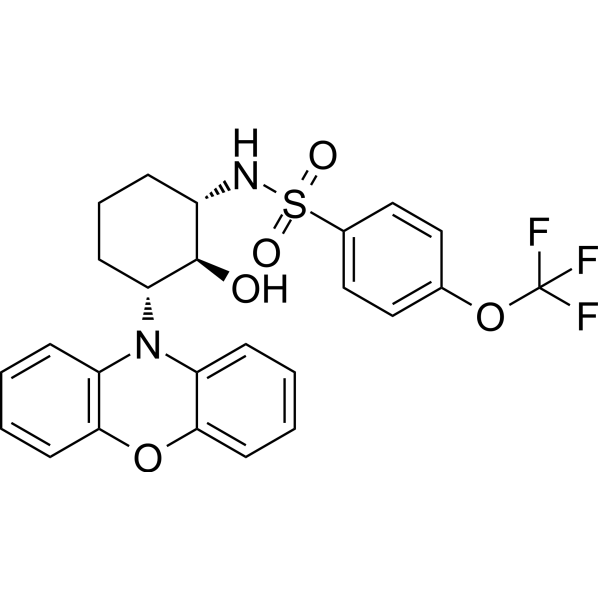
(1S,2S,3R)-DT-061 is an enantiomer of DT-061 (HY-112929). DT-061 is an orally active activator of protein phosphatase 2A (PP2A). (1S,2S,3R)-DT-061 can be used as a negative control in the research of KRAS-mutant and MYC-driven lung cancer tumorigenesis .
loading...
    loading...
Cat. No.: HY-156420
CAS No.: 2910929-53-0
Purity:  99.94%
Target:  

Phosphatase Apoptosis

Research Areas:  

Inflammation/Immunology Cancer

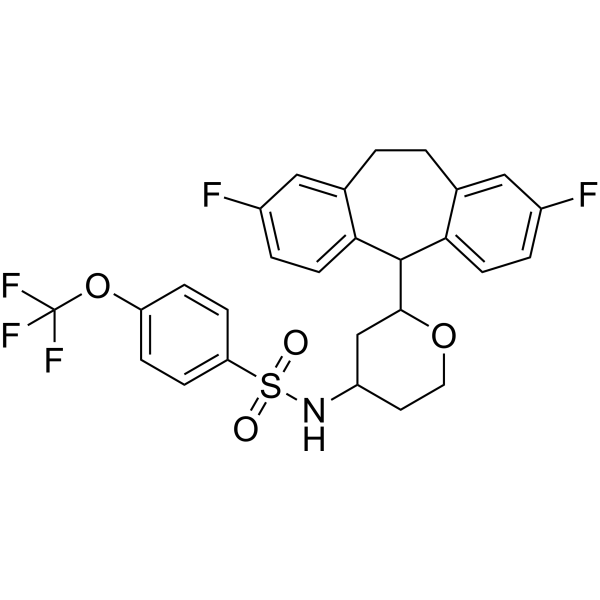
ATUX-1215 is an activator of protein phosphatase 2A (PP2A). ATUX-1215 reduced the phosphorylation of ERK, p38, JNK, and Akt and the secretion of IL-12p70, GM-CSF, and IL1α in Bleomycin hydrochloride (HY-17565A)-treated animals. ATUX-1215 can slow the progression of lung fibrosis .
loading...
    loading...
Cat. No.: HY-133512
CAS No.: 1384864-80-5
Purity:  99.91%
Target:  

Phosphatase

Research Areas:  

Cancer

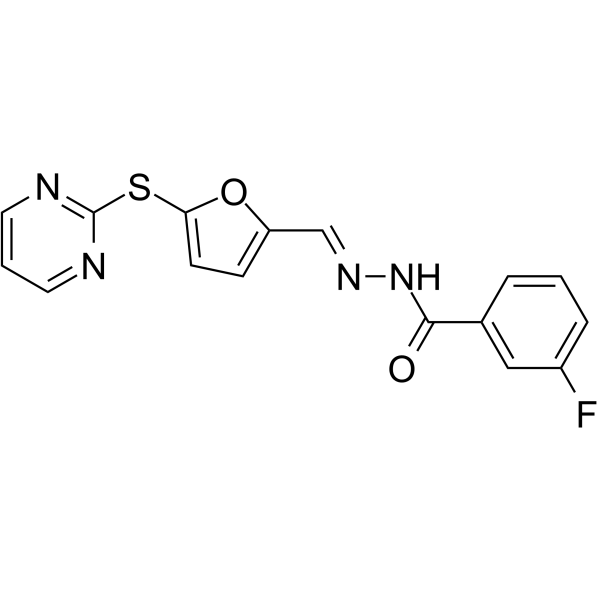
NCGC00249987 is a highly selective and allosteric Tyr phosphatase activity of Eya2 inhibitor with IC50s of 3 μM and 6.9 μM for Eya2 ED and MBP-Eya2 FL. NCGC00249987 specifically targets migration, invadopodia formation, and invasion of lung cancer cells .
loading...
    loading...
Cat. No.: HY-100045
CAS No.: 21064-69-7
Synonyms: 4-Nitrophenylphosphorylcholine; 4-Nitrophenylphosphorylcholine; O-(4-Nitrophenylphosphoryl)choline
p-Nitrophenyl phosphorylcholine (4-Nitrophenylphosphorylcholine) is a chromogenic Phospholipase C substrate. Phospholipase C hydrolyzes p-Nitrophenyl phosphorylcholine to release p-nitrophenol, a yellow chromophore. p-Nitrophenyl phosphorylcholine is used to determine the phospholipase C production of Pseudomonas aeruginosa. It also applies to studies related to Pseudomonas aeruginosa infection .
loading...
    loading...
Cat. No.: HY-138869
CAS No.: 1221591-26-9
Purity:  ≥99.0%
Target:  

Endogenous Metabolite

Research Areas:  

Cancer

AubipyOMe serves as a potent inhibitor of tartrate-resistant acid phosphatase (TRAP/ACP5), a metalloenzyme found in activated osteoclasts and macrophages, demonstrating IC50 values of 1.3 μM for TRAP5a and 1.8 μM for TRAP5b, while effectively inhibiting TRAP activity in extracts from murine macrophages and human lung tissue.
loading...
    loading...
Cat. No.: HY-137990
CAS No.: 3774-64-9
Purity:  97.75%
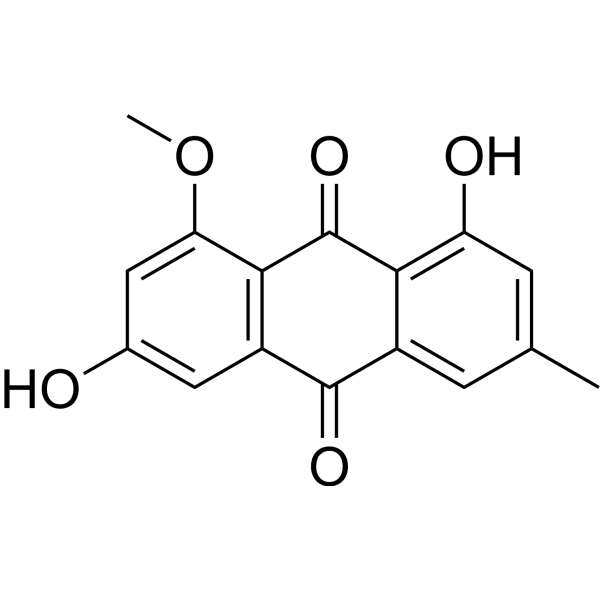
Questin is an anthraquinone compound and antibacterial agent. Questin can be isolated from marine-derived fungi and plants. Questin inhibits Cdc25B phosphatase. Questin exhibits antibacterial activity against V. harveyi, V. anguillarum, V. cholerae, and V. parahemolyticus with MIC values of 31.25 µg/mL, 62.5 µg/mL, 62.5 µg/mL, and 125 µg/mL. Questin displays antiprotozoal activity against the animal protozoan pathogen Tritrichomonas foetus, with a MIC of 12.5 µg/mL. Questin has anticancer activity against lung and colon cancer .
loading...
    loading...
Cat. No.: HY-168207
Research Areas:  

Inflammation/Immunology

TH023 is an inhibitor for the TLR4 signaling pathway, that targets especially the formation of TLR4 homodimer. TH023 inhibits secreted embryonic alkaline phosphatase in cell HEK-Blue hTLR4 with an IC50 of 0.354 μM, and inhibits the NO expression in RAW264.7 with an IC50 of 1.61μM. TH023 also inhibits the activation of NF-κB, reduces the nuclear translocation of NF-κB p65. TH023 exhibits anti-inflammatory efficacy in LPS (HY-D1056)-induced mouse acute sepsis model, and ameliorates the mouse lung injury .
loading...
    loading...
Cat. No.: HY-117085
CAS No.: 522-53-2
Research Areas:  

Cancer

Lobaric acid is a depsipeptide metabolite isolated from Stereocaulon lichen with antioxidant, antiproliferative, antiviral and enzyme inhibitory activities. Lobaric acid scavenges superoxide free radicals (IC50=97.9 μM) and inhibits cancer cell proliferation (EC50 of 15.2-63.9 μg/mL against leukemia, colorectal, gastric, breast, ovarian, prostate, pancreatic and lung cancer cell lines). Lobaric acid inhibits protein tyrosine phosphatase 1B (PTP1B; IC50=0.87 μM for human recombinant enzyme) and 12(S)-HETE produced by 12(S)-lipoxygenase (IC50=28.5 μM). Lobaric acid (250 μM) also reduced pathological changes in tobacco leaves infected with tobacco mosaic virus (TMV).
loading...
    loading...
Cat. No.: HY-160550
CAS No.: 3018836-86-4
Target:  

Phosphatase CXCR

Research Areas:  

Inflammation/Immunology

DPM-1003 is a modulator of protein tyrosine phosphatase 1B (PTP1B) and C-X-C chemokine receptor 4 (CXCR4). DPM-1003 binds to the non-catalytic disordered C-terminal fragment of PTP1B. DPM-1003 inhibits the PI3Kγ-mediated AKT/mTOR signaling pathway downstream of CXCR4. DPM-1003 improves the survival rate of mice in a transfusion-related acute lung injury model, and exerts a lung injury protective effect in preclinical mouse models of acute lung injury and sepsis. DPM-1003 can be used in research related to acute lung injury, acute respiratory distress syndrome, transfusion-related acute lung injury and sepsis .
loading...
    loading...
Cat. No.: HY-P5286
CAS No.: 184870-30-2
BMAP-27 is a cationic amphipathic α-helical antimicrobial peptide with anticancer activity. BMAP-27 disrupts the integrity and permeability of cell membranes, leading to the leakage of intracellular DNA, proteins and alkaline phosphatase. BMAP-27 increases intracellular ROS levels and reduces plasma endotoxin and TNF-α concentrations. BMAP-27 can be used in studies related to Salmonella infection, breast cancer, lung cancer and obstructive jaundice .
loading...
    loading...
Cat. No.: HY-148670
CAS No.: 1201082-00-9
Target:  

Drug Intermediate

Research Areas:  

Cardiovascular Disease

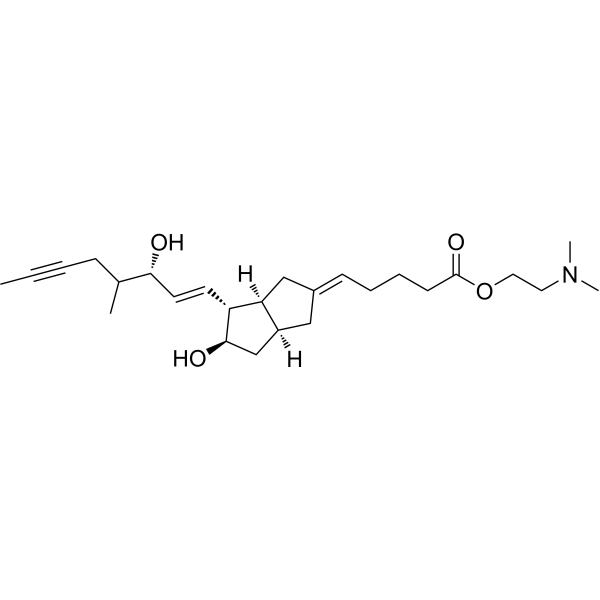
Pulmonary arterial hypertension agent-1 is a phenylphosphate-prodrug of a prostacyclin with activation by lung phosphatases to release prostacyclin. Pulmonary arterial hypertension agent-1 can be used for the research of pulmonary arterial hypertension .
loading...
    loading...
Cat. No.: HY-106064A
CAS No.: 88851-62-1
Synonyms: U 60257B
Target:  

Leukotriene Receptor

Research Areas:  

Inflammation/Immunology

Piriprost (U-60,257B) potassium is an inhibitor of leukotriene synthesis. Piriprost potassium inhibits the release of both leukotriene and histamine with an IC50 of 0.11 μM from isolated porcine lung cells. Piriprost potassium increases alkaline phosphatase (ALP) activity in cultured endometrial stromal cells .
loading...
    loading...
Cat. No.: HY-P5286A
BMAP-27 acetate is a cationic amphipathic α-helical antimicrobial peptide with anticancer activity. BMAP-27 acetate disrupts the integrity and permeability of cell membranes, leading to the leakage of intracellular DNA, proteins and alkaline phosphatase. BMAP-27 acetate increases intracellular ROS levels and reduces plasma endotoxin and TNF-α concentrations. BMAP-27 acetate can be used in studies related to Salmonella infection, breast cancer, lung cancer and obstructive jaundice .
loading...
    loading...
Cat. No.: HY-P5289A
Target:  

Drug Intermediate

pre-BMAP-27 TFA is a precursor to BMAP-27 (HY-P5286). BMAP-27 is a cationic amphipathic α-helical antimicrobial peptide with anticancer activity. BMAP-27 disrupts the integrity and permeability of cell membranes, leading to the leakage of intracellular DNA, proteins and alkaline phosphatase. BMAP-27 increases intracellular ROS levels and reduces plasma endotoxin and TNF-α concentrations. BMAP-27 can be used in studies related to Salmonella infection, breast cancer, lung cancer and obstructive jaundice .
loading...
    loading...
Cat. No.: HY-180169
CAS No.: 3106369-28-9
Research Areas:  

Cancer

Photosensitizer-8 (Compound 4), 2-anthrol derivative, is an alkaline phosphatase (ALP)-activatable photosensitizer. Photosensitizer-8 undergoes a phosphate ester hydrolysis reaction in the presence of ALP, rapidly converting into the active photosensitizer 2-anthrol. Photosensitizer-8 exhibits cytotoxicity against ALP-overexpressing cancer cells (HeLa, A549, HCT116) after light exposure, with IC50 values of 14.3 μM, 21.6 μM and 17.5 μM, respectively, while showing no significant cytotoxicity against normal lung fibroblasts (WI-38) (IC50 ≥ 30 μM). Photosensitizer-8 can be used in photodynamic therapy research for ALP-overexpression-related cancers .
loading...
    loading...
  • 1

