1. Search Result
Search Result
Pathways Recommended: Cytoskeleton
Results for "

microtubule cytoskeleton

" in MedChemExpress (MCE) Product Catalog:

15

Inhibitors & Agonists

1

Screening Libraries

1

Fluorescent Dyes

1

Natural
Products

Cat. No. Product Name Target Research Areas Chemical Structure
  • HY-13627
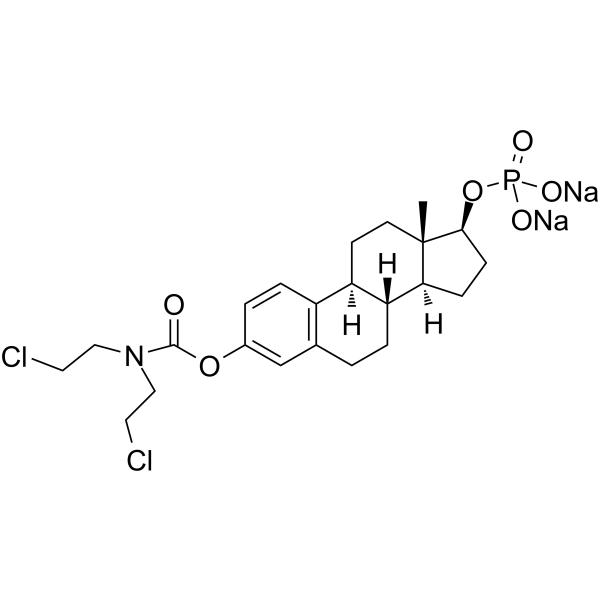
    Estramustine phosphate sodium
    1 Publications Verification

    Apoptosis Microtubule/Tubulin Mitosis Inflammation/Immunology Endocrinology Cancer
    Estramustine phosphate sodium, an estradiol analog, is an orally active antimicrotubule chemotherapy agent. Estramustine phosphate sodium depolymerises microtubules by binding to microtubule associated proteins (MAPs) and/or to tubulin. Estramustine phosphate sodium can interfere mitosis, trigger cell death and induce apoptosis, which can be used for the research of cancer like prostate cancer .
    Estramustine phosphate sodium
  • HY-141860

    PSMA Microtubule/Tubulin Reactive Oxygen Species (ROS) Cytochrome P450 Cancer
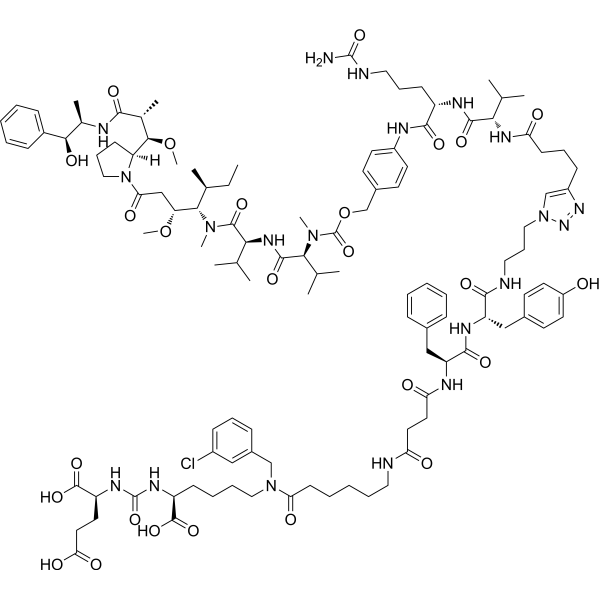
    PSMA-Val-Cit-PAB-MMAE is a small-molecule conjugate targeting PSMA, with Monomethyl auristatin E (MMAE) (HY-15162) as its cytotoxic payload. PSMA-Val-Cit-PAB-MMAE binds to PSMA, thereby being delivered into PSMA-expressing prostate cancer cells. Subsequently, the Val-Cit linker is cleaved under the mediation of cathepsin B, releasing active MMAE. PSMA-Val-Cit-PAB-MMAE inhibits CYP3A4 activity (IC50 = 11.2 μM), induces intracellular ROS production and oxidative stress, disrupts the cytoskeleton through microtubule destabilization, and induces prostate cancer cell death. PSMA-Val-Cit-PAB-MMAE can be used in research related to prostate cancer .
    PSMA-Val-Cit-PAB-MMAE
  • HY-162161

    Fluorescent Dye Microtubule/Tubulin Cancer
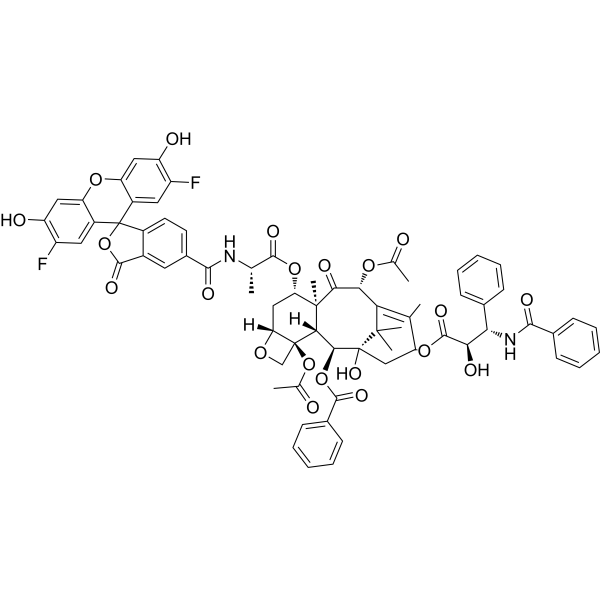
    Flutax-2 is an active fluorescent derivative of Paclitaxel (HY-B0015) that binds to polymerized αβ-tubulin dimers. Flutax-2 is applicable for imaging microtubules in live cells, isolated cytoskeletons and parasites (Ex/Em=496/526 nm) .
    Flutax-2
  • HY-111935

    Microtubule/Tubulin Neurological Disease
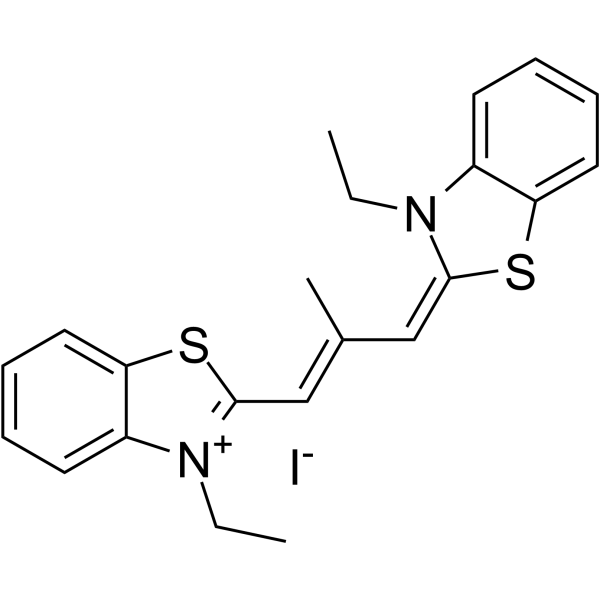
    3,3'-Diethyl-9-methylthiacarbocyanine iodide is a cyanine dye, also a tau aggregation inhibitor, with an IC50 value of 0.28 μM for tau. 3,3'-Diethyl-9-methylthiacarbocyanine iodide can cause misfunction of the microtubule cytoskeleton. 3,3'-Diethyl-9-methylthiacarbocyanine iodide can be used for researching Alzheimer’s disease .
    3,3'-Diethyl-9-methylthiacarbocyanine iodide
  • HY-120921

    RH-7281

    Fungal Microtubule/Tubulin Infection
    Zoxamide (RH-7281) is an oomycete Fungicide and covalent β-tubulin inhibitor. RH-7281 inhibits the assembly of tubulin into microtubules in vitro. Zoxamide binds covalently to β-tubulin, disrupting microtubule assembly and the cytoskeleton. Zoxamide blocks nuclear division in germinated hyphae of Phytophthora capsici and inhibits hyphal growth of Phytophthora capsici .
    Zoxamide
  • HY-N15657

    Apoptosis COX Caspase Microtubule/Tubulin Monoamine Oxidase Cancer
    Geiparvarin is an anticancer agent and an inhibitor of MAO-B (pIC50 = 6.84 μM). Geiparvarin exerts anti-tumor effects by downregulating COX2 expression and inhibiting angiogenesis. Geiparvarin blocks the cell cycle at the G1 phase and induces apoptosis of cancer cells. Geiparvarin has anti-microtubule activity and destroys the cytoskeleton to exert anti-proliferative effects. Geiparvarin has research significance for lung cancer, leukemia, and breast cancer .
    Geiparvarin
  • HY-120921R

    RH-7281 (Standard)

    Fungal Reference Standards Infection
    Zoxamide (Standard) is the analytical standard of Zoxamide. This product is intended for research and analytical applications. Zoxamide (RH-7281) is an oomycete fungicide. Zoxamide arrests nuclear division in Phytophthora capsici germlings and destroyed the microtubule cytoskeleton .
    Zoxamide (Standard)
  • HY-14919

    MN-029 free base

    Microtubule/Tubulin Cancer
    Denibulin, a novel vascular-disrupting agent, inhibits microtubule assembly reversibly, disrupting tumor vascular endothelial cell cytoskeletons. Denibulin demonstrated tolerability and potential anti-vascular effects, warranting further investigation in cancer therapy .
    Denibulin
  • HY-121801

    Fungal Microtubule/Tubulin Mitosis Infection
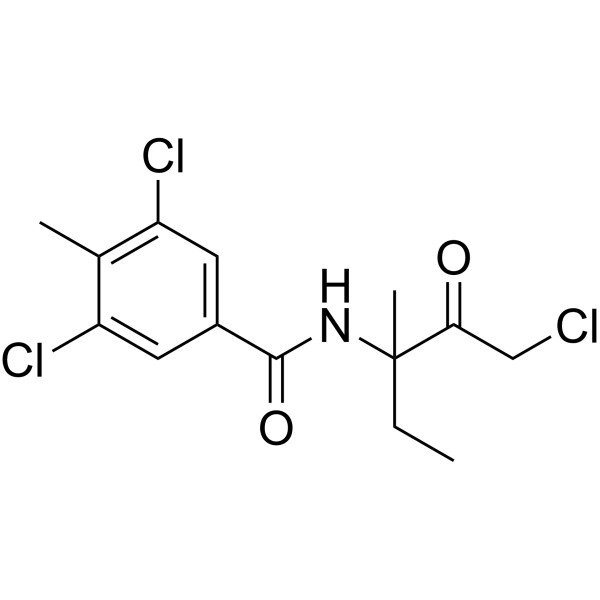
    Zarilamid is a fungicide which is active against a broad spectrum of Oomycete fungi. Zarilamid inhibits nuclear division in germinating zoospore cysts of Phytophthora capsici. Zarilamide inhibits growth of tobacco roots and causes swelling of the root tips, destructs microtubule cytoskeleton and inhibits mitosis .
    Zarilamid
  • HY-E70841

    LIM Kinase (LIMK) Cancer
    LIM kinase 2 (LIMK2) is a serine/threonine and tyrosine kinases. LIMK2 plays a crucial role in the regulation of cytoskeleton dynamics by controlling actin filaments and microtubule turnover, especially through the phosphorylation of cofilin, an actin depolymerising factor. LIMK2 Recombinant Human Active Protein Kinase is a recombinant LIMK2 protein that can be used to study LIMK2-related functions .
    LIMK2 Recombinant Human Active Protein Kinase
  • HY-148595

    Cytochrome P450 Cancer
    CYP1A1-IN-2 (Compound 14) is a competitive inhibitor of CYP1A1 (Ki: 1.4 μM). CYP1A1-IN-2 exhibits potent antimitotic activity and arrests cell in the G2/M phase. CYP1A1-IN-2 disrupts the microtubule and the cytoskeleton in CYP1A1-expressing breast cancer cells .
    CYP1A1-IN-2
  • HY-D3306

    Fluorescent Dye Others
    Tubulin-RedTracker is a paclitaxel-derived fluorescent microtubule-binding probe. Tubulin-RedTracker induces F-actin cytoskeleton defects at relatively high concentrations. (Ex/Em=652/669) .
    Tubulin-RedTracker
  • HY-13627A

    Apoptosis Microtubule/Tubulin Mitosis Metabolic Disease Inflammation/Immunology Cancer
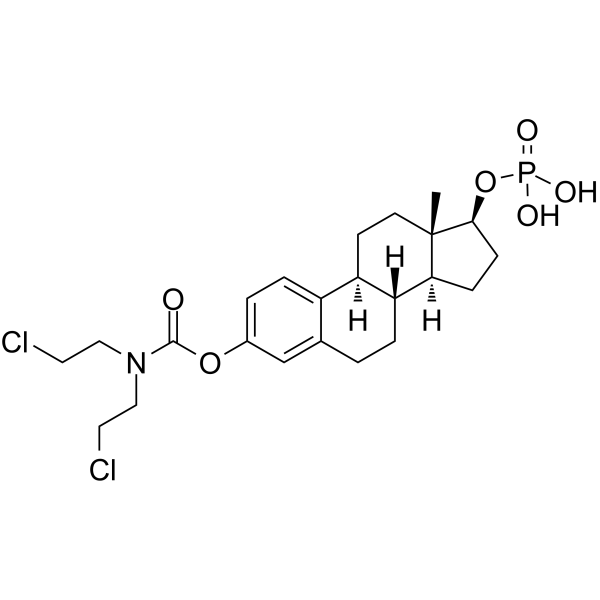
    Estramustine phosphate, an estradiol analog, is an orally active antimicrotubule chemotherapy agent. Estramustine phosphate depolymerises microtubules by binding to microtubule associated proteins (MAPs) and/or to tubulin. Estramustine phosphate can interfere mitosis, trigger cell death and induce apoptosis, which can be used for the research of cancer like prostate cancer .
    Estramustine phosphate
  • HY-180193

    Microtubule/Tubulin Apoptosis Cancer
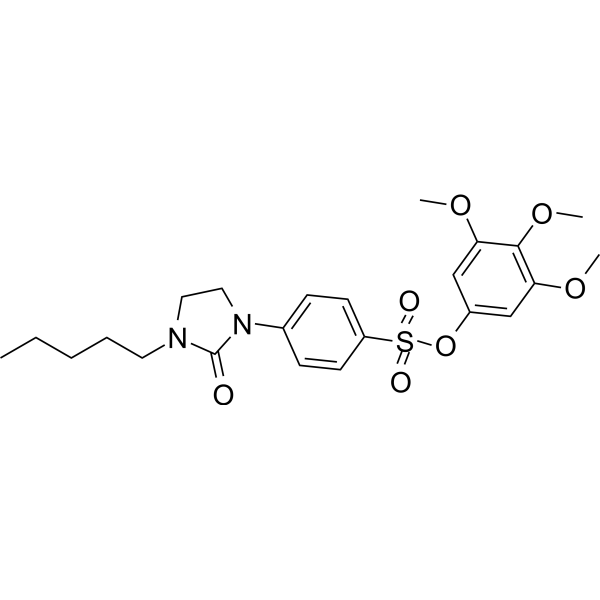
    Tubulin polymerization-IN-86 (Compound B6) is an effective inhibitor of tubulin polymerization. Tubulin polymerization-IN-86 effectively inhibits microtubulin polymerization by binding to the colchicine binding sites on microtubulin, thereby disrupting the microtubule cytoskeleton within the cell. Tubulin polymerization-IN-86 exhibits potent anti-proliferative activity against a variety of cancer cell lines. Tubulin polymerization-IN-86 induces cell cycle arrest, apoptosis, inhibits cell migration, invasion, and long-term survival ability. Tubulin polymerization-IN-86 inhibits tumor growth in mice and can be used for the study of melanoma .
    Tubulin polymerization-IN-86
  • HY-183147A

    Amino acid Transporter Cancer
    LAT1-IN-2 hydrochloride is an orally active anticancer agent, as well as a LAT1 substrate and tubulin-binding agent. LAT1-IN-2 hydrochloride relies on LAT1 for cellular uptake, disrupts microtubule formation by binding to the colchicine site of tubulin, and induces actin depolymerization to transform cells into a spherical shape. LAT1-IN-2 hydrochloride effectively inhibits tumor growth in xenograft mice. Compared with Etoposide (HY-13629), LAT1-IN-2 hydrochloride shows higher distribution in tumor tissues, lower distribution in major organs, and better tolerability. LAT1-IN-2 hydrochloride has been applied in studies related to esophageal cancer .
    LAT1-IN-2 hydrochloride

Inquiry Online

Your information is safe with us. * Required Fields.

Salutation


Country or Region *

Applicant Name *


Organization Name *

Department *


Email Address *


Product Name *

Cat. No.


Requested quantity *

Phone Number *


Remarks

Inquiry Online

Inquiry Information

Product Name:
Cat. No.:
Quantity:
MCE Japan Authorized Agent:

