Search Result
Results for "
motor behavior
" in MedChemExpress (MCE) Product Catalog:
2
Isotope-Labeled Compounds
| Cat. No. |
Product Name |
Target |
Research Areas |
Chemical Structure |
-
- HY-B0978
-
|
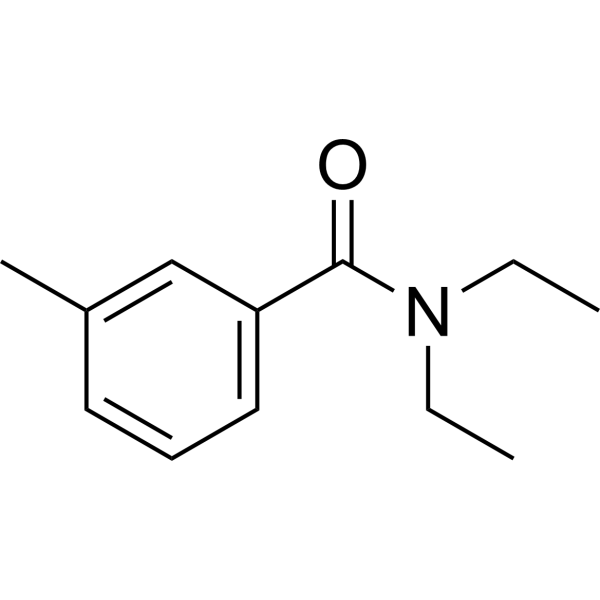
DEET; N,N-Diethyl-m-toluamide
|
Environmental Pollutants
Parasite
|
Infection
Neurological Disease
|
|
Diethyltoluamide (DEET) is the most common active ingredient in insect repellents. It is intended to provide protection against mosquitoes, ticks, fleas, chiggers, leeches, and many other biting insects. Diethyltoluamide is toxic to hepatocytes and can lead to many physiological, pharmacological, and behavioral abnormalities, particularly motor deficits and learning and memory dysfunction .
|
-
-
- HY-B0863
-
|
|
Environmental Pollutants
Necroptosis
Apoptosis
Autophagy
|
Neurological Disease
|
|
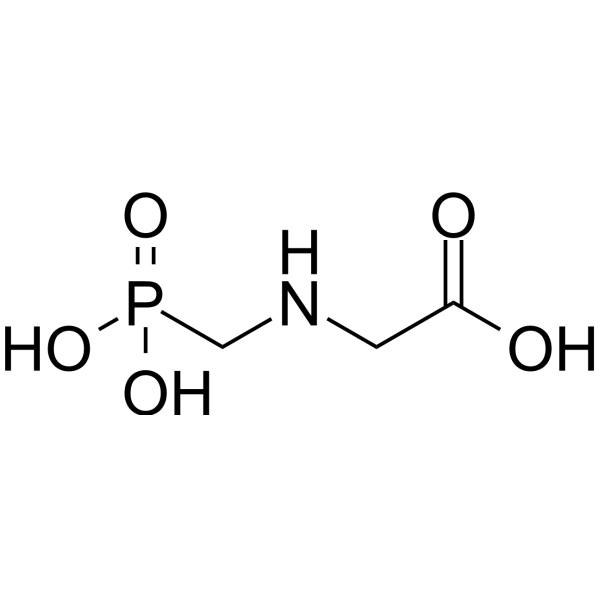
Glyphosate, a non-selective systemic biocide with broad-spectrum activity, is an herbicidal derivative of the amino acid glycine. Glyphosate inhibits the enzymatic activity of the 5-endopyruvylshikimate 3-phosphate synthase (EPSPS) in the shikimic acid pathway, preventing the synthesis of the aromatic amino acids tyrosine, phenylalanine, and tryptophan. Glyphosate induces oxidative stress, neuroinflammation, and mitochondrial dysfunction, processes that lead to neuronal death by autophagia, necrosis, or apoptosis, as well as the appearance of behavioral and motor disorders .
|
-
-
- HY-113413
-
|
Imidazolyl-4-acetic acid
|
Endogenous Metabolite
GABA Receptor
|
Cardiovascular Disease
Neurological Disease
Metabolic Disease
|
|
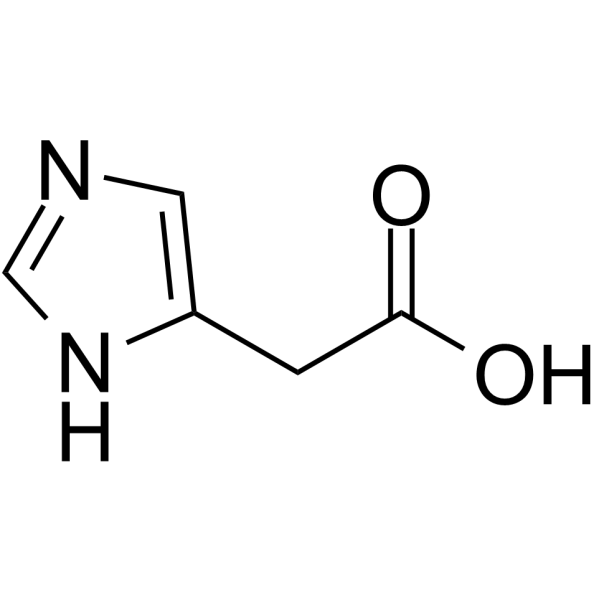
Imidazoleacetic acid (Imidazolyl-4-acetic acid) is a blood-brain barrier-permeable full agonist of the GABAA receptor. Imidazoleacetic acid forms via histamine oxidation in the mouse brain. Imidazoleacetic acid exerts multiple neurochemical and behavioral effects. Imidazoleacetic acid induces a range of centrally mediated effects, including analgesia, sedation, hypnosis, as well as reductions in blood pressure, body temperature, isolation-induced aggression and motor activity .
|
-
-
- HY-P4058
-
|
CGRP free acid
|
CGRP Receptor
|
Neurological Disease
|
|
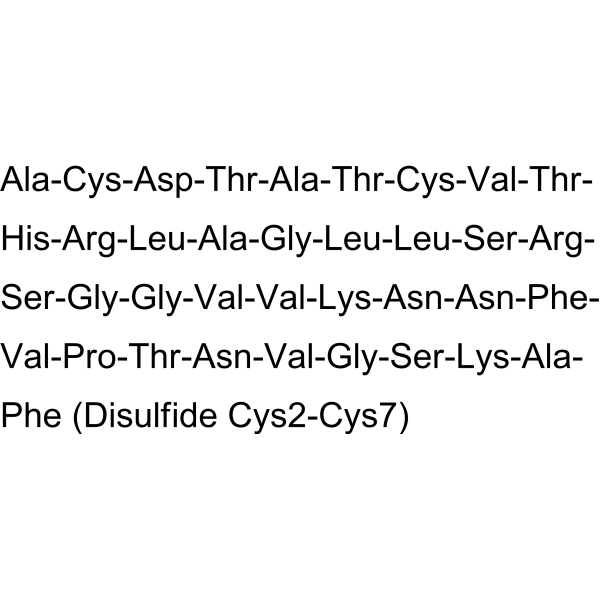
Calcitonin gene-related peptide (CGRP) free acid is a 37-amino acid neuropeptide, which represents the deamidated form of α-CGRP (human) (HY-P1071). Calcitonin gene-related peptide free acid is produced in the central and peripheral nervous systems of rats, and localizes to specific sensory, integrative and motor neuron systems, including those involved in nociception/thermoreception, feeding behavior, olfaction and visceral motor functions .
|
-
-
- HY-W017424
-
|
|
Drug Intermediate
Caspase
Apoptosis
|
Neurological Disease
Cancer
|
|
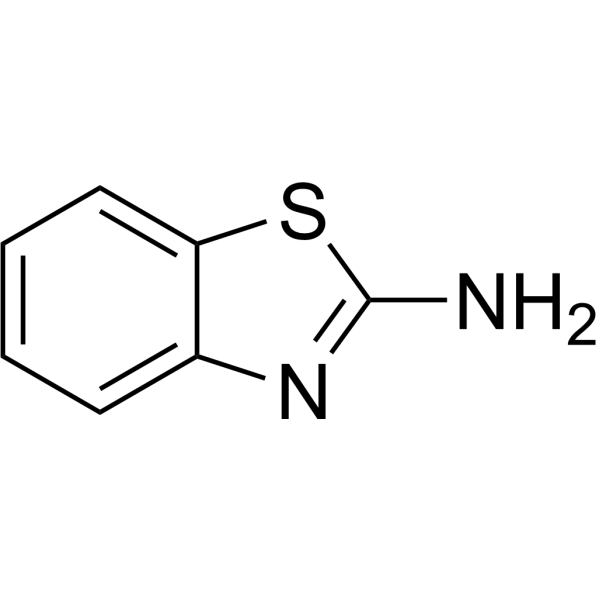
2-Aminobenzothiazole acts as a caspase 3/7 activator, an anticancer cytotoxic agent, and also exhibits neurotoxicity. 2-Aminobenzothiazole drives the apoptotic pathway by activating caspase 3/7, induces mitochondrial inner membrane depolarization, and triggers both early and late apoptosis via a caspase-dependent pathway. In zebrafish models, 2-Aminobenzothiazole induces oxidative damage in brain tissues and inhibits genes related to GABA and 5-HT synthesis pathways. Long-term exposure to 2-Aminobenzothiazole impairs motor ability, social behavior, anxiety-like state and cognitive function. 2-Aminobenzothiazole can be used in studies of human laryngeal carcinoma and related neurotoxicity .
|
-
-
- HY-145016
-
|
|
Potassium Channel
|
Neurological Disease
|
|
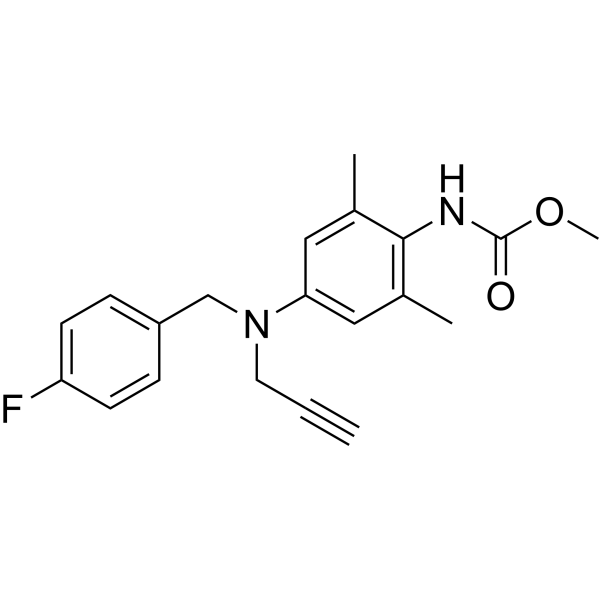
HN37 as a potent and chemically stable antiepileptic agent candidate, with an EC50 of 37 nM for KCNQ2 . HN37 is a click chemistry reagent, it contains an Alkyne group and can undergo copper-catalyzed azide-alkyne cycloaddition (CuAAc) with molecules containing Azide groups.
|
-
-
- HY-W747676
-
|
|
Isotope-Labeled Compounds
Apoptosis
Autophagy
Necroptosis
|
Neurological Disease
|
|
Glyphosate- 13C is the 13C-labeled Glyphosate (HY-B0863). Glyphosate, a non-selective systemic biocide with broad-spectrum activity, is an herbicidal derivative of the amino acid glycine. Glyphosate inhibits the enzymatic activity of the 5-endopyruvylshikimate 3-phosphate synthase (EPSPS) in the shikimic acid pathway, preventing the synthesis of the aromatic amino acids tyrosine, phenylalanine, and tryptophan. Glyphosate induces oxidative stress, neuroinflammation, and mitochondrial dysfunction, processes that lead to neuronal death by autophagia, necrosis, or apoptosis, as well as the appearance of behavioral and motor disorders .
|
-

-
- HY-119902
-
|
|
Insecticide
|
Infection
|
|
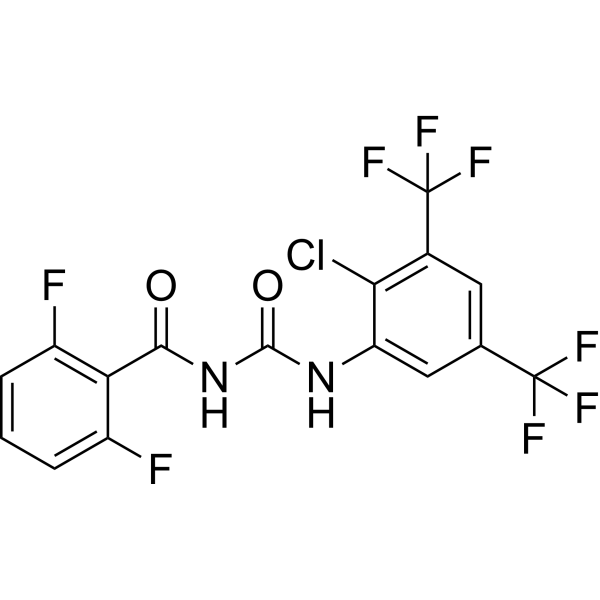
Bistrifluron is a benzoylphenylurea compound and orally active insecticide with activity against termites. At a concentration of 5,000 ppm, Bistrifluron acts as a bait toxicant against workers of the Formosan subterranean termite (Coptotermes formosanus), and also inhibits the grooming behavior of termites and impairs their motor ability prematurely .
|
-
-
- HY-B0978R
-
|
DEET (Standard); N,N-Diethyl-m-toluamide (Standard)
|
Reference Standards
Parasite
|
Infection
Neurological Disease
|
|
Diethyltoluamide (Standard) is the analytical standard of Diethyltoluamide. This product is intended for research and analytical applications. Diethyltoluamide (DEET) is the most common active ingredient in insect repellents. It is intended to provide protection against mosquitoes, ticks, fleas, chiggers, leeches, and many other biting insects. Diethyltoluamide is toxic to hepatocytes and can lead to many physiological, pharmacological, and behavioral abnormal ities, particularly motor deficits and learning and memory dysfunction .
|
-

-
- HY-P3641A
-
|
|
GnRH Receptor
|
Neurological Disease
Metabolic Disease
|
|
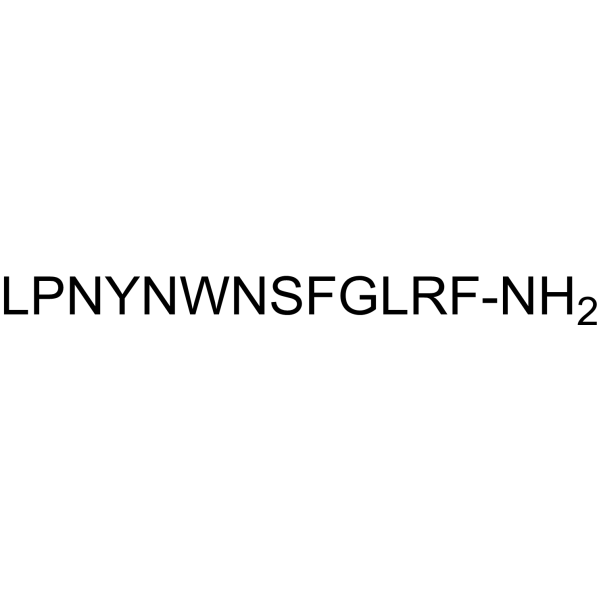
Kisspeptin 13 TFA is the TFA salt form of Kisspeptin 13 (HY-P3641). Kisspeptin-13 TFA inhibits glucose-induced insulin secretion with an IC50 of 1.2 nM. Kisspeptin 13 TFA activates the hypothalamic-pituitary-adrenal (HPA) axis, causes hyperthermia, motor behavior and anxiety in rats. Kisspeptin 13 TFA interacts with α2-adrenergic and 5-HT2 serotonin receptors, exhibits antidepressant efficacy. Kisspeptin 13 TFA is an activator for GPR54 and GnRH receptor, which enhances memory and can be used in Alzheimer's disease research .
|
-

-
- HY-P3801
-
|
DiMe-C7
|
Neurokinin Receptor
|
Neurological Disease
Metabolic Disease
|
|
[Glp5,(Me)Phe8,Sar9] Substance P (5-11) (DiMe-C7) is a Substance P (HY-P0201) analogue that has approximately the same effects as Substance P (HY-P0201) on neurokinin 1 receptor (NK1R) in rat brain, but with a much longer duration of action. [Glp5,(Me)Phe8,Sar9] Substance P (5-11) selectively activates dopamine metabolism in the mesencephalon and midbrain cortex of the rat brain. [Glp5,(Me)Phe8,Sar9] Substance P (5-11) also increases motor activity and induces recovery of addictive agent-seeking behavior in rats .
|
-
![[Glp5,(Me)Phe8,Sar9] Substance P (5-11)](//file.medchemexpress.com/product_pic/hy-p3801.gif)
-
- HY-P3641
-
|
|
GnRH Receptor
|
Neurological Disease
Metabolic Disease
|
|
Kisspeptin 13 inhibits glucose-induced insulin secretion with an IC50 of 1.2 nM. Kisspeptin 13 activates the hypothalamic-pituitary-adrenal (HPA) axis, causes hyperthermia, motor behavior and anxiety in rats. Kisspeptin 13 interacts with α2-adrenergic and 5-HT2 serotonin receptors, exhibits antidepressant efficacy. Kisspeptin 13 is an activator for GPR54 and GnRH receptor, which enhances memory and can be used in Alzheimer's disease research .
|
-
-
- HY-B0863B
-
|
|
Apoptosis
Autophagy
Necroptosis
|
Neurological Disease
|
|
Glyphosate isopropylammonium, a non-selective systemic biocide with broad-spectrum activity, is an herbicidal derivative of the amino acid glycine. Glyphosate isopropylammonium inhibits the enzymatic activity of the 5-endopyruvylshikimate 3-phosphate synthase (EPSPS) in the shikimic acid pathway, preventing the synthesis of the aromatic amino acids tyrosine, phenylalanine, and tryptophan. Glyphosate isopropylammonium induces oxidative stress, neuroinflammation, and mitochondrial dysfunction, processes that lead to neuronal death by autophagia, necrosis, or apoptosis, as well as the appearance of behavioral and motor disorders .
|
-

-
- HY-124406
-
|
|
mGluR
|
Neurological Disease
|
|
A-794282 is a compound with analgesic activity and is a selective mGlu1 receptor antagonist that significantly reduces pain behaviors in a postoperative pain model, but motor side effects may occur at higher doses.
|
-

-
- HY-119902R
-
|
|
Insecticide
Reference Standards
|
Infection
|
|
Bistrifluron (Standard) is the analytical standard of Bistrifluron. This product is intended for research and analytical applications. Bistrifluron is a benzoylphenylurea compound and orally active insecticide with activity against termites. At a concentration of 5,000 ppm, Bistrifluron acts as a bait toxicant against workers of the Formosan subterranean termite (Coptotermes formosanus), and also inhibits the grooming behavior of termites and impairs their motor ability prematurely .
|
-

-
- HY-110010
-
|
|
Dopamine Receptor
|
Neurological Disease
|
|
Nafadotride is a dopamine D3 receptor antagonist. Nafadotrode regulates dopamine signaling primarily by antagonizing dopamine D3 receptors. The dopamine D3 receptor plays an important role in regulating emotion, motivation, reward, and certain motor functions. By blocking these receptors, Nafadotrode may affect neurotransmission processes associated with these functions. Nafadotrode can be used to explore the role of dopamine D3 receptors in various behavioral and neuropsychiatric disorders .
|
-

-
- HY-171472
-
|
|
Dopamine Receptor
|
Neurological Disease
|
|
A-86929 is a highly potent and selective dopamine D1 receptor agonist with a pKi value of 7.3. In the 6-OHDA (HY-B1081)-induced unilateral nigrostriatal lesion rat model, A-86929 significantly induces rotational behavior. It also improves motor function in the MPTP (HY-15608)-induced Parkinson's disease marmoset model. Additionally, A-86929 demonstrates potential therapeutic value in reducing cocaine-seeking behavior in rats and reversing Haloperidol (HY-14538)-induced cognitive deficits in rhesus monkeys. A-86929 can be used for research in neurological disorders .
|
-

-
- HY-113413R
-
|
Imidazolyl-4-acetic acid (Standard)
|
Reference Standards
Endogenous Metabolite
GABA Receptor
|
Cardiovascular Disease
Neurological Disease
Metabolic Disease
|
|
Imidazoleacetic acid (Standard) is the analytical standard of Imidazoleacetic acid (HY-113413). This product is intended for research and analytical applications. Imidazoleacetic acid (Imidazolyl-4-acetic acid) is a blood-brain barrier-permeable full agonist of the GABAA receptor. Imidazoleacetic acid forms via histamine oxidation in the mouse brain. Imidazoleacetic acid exerts multiple neurochemical and behavioral effects. Imidazoleacetic acid induces a range of centrally mediated effects, including analgesia, sedation, hypnosis, as well as reductions in blood pressure, body temperature, isolation-induced aggression and motor activity .
|
-

-
- HY-115860
-
|
|
iGluR
|
Neurological Disease
|
|
TAS-4 is a potent and selective mGluR4 positive allosteric modulator with significant anti-Parkinson's disease activity. TAS-4 is able to show efficacy when used alone or in combination with l-DOPA. TAS-4 is able to reverse haloperidol-induced spasticity when administered alone. TAS-4 enhances the contralateral rotation behavior induced by l-DOPA in a dose-dependent manner. TAS-4 combined with low-dose l-DOPA shows anti-Parkinson's effects similar to full-dose l-DOPA without exacerbating abnormal motor side effects .
|
-

-
- HY-B0863S5
-
|
|
Isotope-Labeled Compounds
Apoptosis
Autophagy
Necroptosis
|
Neurological Disease
|
|
Glyphosate- 13C, 15N-1 is the 13C- and 15N-labeled Glyphosate (HY-B0863). Glyphosate, a non-selective systemic biocide with broad-spectrum activity, is an herbicidal derivative of the amino acid glycine. Glyphosate inhibits the enzymatic activity of the 5-endopyruvylshikimate 3-phosphate synthase (EPSPS) in the shikimic acid pathway, preventing the synthesis of the aromatic amino acids tyrosine, phenylalanine, and tryptophan. Glyphosate induces oxidative stress, neuroinflammation, and mitochondrial dysfunction, processes that lead to neuronal death by autophagia, necrosis, or apoptosis, as well as the appearance of behavioral and motor disorders .
|
-

-
- HY-173513
-
|
|
Indoleamine 2,3-Dioxygenase (IDO)
|
Neurological Disease
|
|
IDO1/TDO-IN-8 (Compound CZ-17) is a dual IDO1 and TDO inhibitor that can penetrate the blood-brain barrier, with EC50 values of 0.33 μM and 1.78 μM, respectively. IDO1/TDO-IN-8 reduces the kynurenine/tryptophan ratio by regulating the kynurenine pathway of tryptophan metabolism. IDO1/TDO-IN-8 has a neuroprotective effect and can alleviate motor dysfunction and improve depressive behavior. IDO1/TDO-IN-8 can be used in the study of Parkinson's disease combined with depression .
|
-

-
- HY-W017424R
-
|
|
Reference Standards
Apoptosis
Drug Intermediate
Caspase
|
Others
|
|
2-Aminobenzothiazole (Standard) is the analytical standard of 2-Aminobenzothiazole. This product is intended for research and analytical applications. 2-Aminobenzothiazole acts as a caspase 3/7 activator, an anticancer cytotoxic agent, and also exhibits neurotoxicity. 2-Aminobenzothiazole drives the apoptotic pathway by activating caspase 3/7, induces mitochondrial inner membrane depolarization, and triggers both early and late apoptosis via a caspase-dependent pathway. In zebrafish models, 2-Aminobenzothiazole induces oxidative damage in brain tissues and inhibits genes related to GABA and 5-HT synthesis pathways. Long-term exposure to 2-Aminobenzothiazole impairs motor ability, social behavior, anxiety-like state and cognitive function. 2-Aminobenzothiazole can be used in studies of human laryngeal carcinoma and related neurotoxicity .
|
-

-
- HY-167973
-
|
|
GABA Receptor
|
Neurological Disease
|
|
GABA-palmitamide is a GABA-responsive compound. GABA-palmitamide exhibits a dose-dependent bidirectional regulatory effect on the stereotyped behavior induced by Apomorphine (HY-12723): high doses inhibit motor behavior, while low doses enhance stereotyped behaviors in the oral cavity. GABA-palmitamide can be used in research on behavior regulation .
|
-

-
- HY-105857
-
|
|
GABA Receptor
|
Neurological Disease
|
|
Thiazesim is a benzothiazepine compound with a thiophene structure and acts as a GABAA receptor inhibitor, exerting anticonvulsant and antidepressant effects. Thiazesim exhibits specific pharmacological properties in animal experiments. Thiazesim reduces motor activity in rats and effectively inhibits rat killing responses, with a ratio of 2.1 between the ED50 in rotarod tests and the ED50 for anti-killing behavior. Thiazesim can be widely used in basic and clinical studies related to epilepsy .
|
-

-
- HY-105857A
-
|
|
GABA Receptor
|
Neurological Disease
|
|
Thiazesim hydrochloride is a benzothiazepine compound with a thiophene structure and acts as a GABAA receptor inhibitor, exerting anticonvulsant and antidepressant effects. Thiazesim hydrochloride exhibits specific pharmacological properties in animal experiments. Thiazesim hydrochloride reduces motor activity in rats and effectively inhibits rat killing responses, with a ratio of 2.1 between the ED50 in rotarod tests and the ED50 for anti-killing behavior. Thiazesim hydrochloride can be widely used in basic and clinical studies related to epilepsy .
|
-

-
- HY-108942
-
|
|
Adenosine Receptor
|
Cardiovascular Disease
Neurological Disease
|
|
ASP5854 is an orally active, blood-brain barrier permeable adenosine A1/A2a dual receptor antagonist. ASP5854 blocks receptor activity and agonist-induced intracellular calcium elevation, and exhibits the characteristic of slow dissociation from striatal A2a receptors in primates. ASP5854 reverses catalepsy, enhances cognitive ability, improves motor function and exerts neuroprotective effects, while also alleviating dyskinesia and increasing contralateral turning behavior. ASP5854 is mainly used in studies related to ischemic stroke and Parkinson's disease .
|
-

-
- HY-181878
-
|
Z7149
|
Serotonin Transporter
Adrenergic Receptor
5-HT Receptor
|
Neurological Disease
|
Z8779877149 (Z7149) is a blood-brain barrier-permeable multi-target ligand that targets SERT (Ki=198 nM), α2A adrenergic receptor (Ki=180 nM; EC50=440 nM) and 5-HT2A receptor (EC50=172 nM, Emax=76%). Z8779877149 inhibits 5-HT reuptake and activates Gi and Gq protein signaling pathways, respectively. Z8779877149 effectively alleviates pain responses as well as depression- and anxiety-like behaviors, while exhibiting favorable safety without inducing sedation or motor impairment. Z8779877149 is available for the research of pain, depression and anxiety disorders .
|
-

-
- HY-182677
-
|
|
5-HT Receptor
Dopamine Receptor
|
Neurological Disease
|
|
EF-7412 is a dual antagonist of the 5-HT1A receptor and dopamine D2 receptor, with Ki values of 27 nM and 22 nM, respectively. EF-7412 acts as an antagonist at both pre- and postsynaptic 5-HT1A receptor sites, blocking 8-OH-DPAT (HY-112061)-induced hypothermia, behavioral syndrome, and corticosterone elevation in vivo. EF-7412 increases hypothalamic 5-HIAA/5-HT and DOPAC/DA ratios, alters 5-HT and DA neuronal activity, and slightly decreases spontaneous motor activity. EF-7412 can be used for research on 5-HT1A/D2 receptor regulation and related neural pathways .
|
-

| Cat. No. |
Product Name |
Target |
Research Area |
-
- HY-P4058
-
|
CGRP free acid
|
CGRP Receptor
|
Neurological Disease
|
|
Calcitonin gene-related peptide (CGRP) free acid is a 37-amino acid neuropeptide, which represents the deamidated form of α-CGRP (human) (HY-P1071). Calcitonin gene-related peptide free acid is produced in the central and peripheral nervous systems of rats, and localizes to specific sensory, integrative and motor neuron systems, including those involved in nociception/thermoreception, feeding behavior, olfaction and visceral motor functions .
|
-
- HY-P3641A
-
|
|
GnRH Receptor
|
Neurological Disease
Metabolic Disease
|
|
Kisspeptin 13 TFA is the TFA salt form of Kisspeptin 13 (HY-P3641). Kisspeptin-13 TFA inhibits glucose-induced insulin secretion with an IC50 of 1.2 nM. Kisspeptin 13 TFA activates the hypothalamic-pituitary-adrenal (HPA) axis, causes hyperthermia, motor behavior and anxiety in rats. Kisspeptin 13 TFA interacts with α2-adrenergic and 5-HT2 serotonin receptors, exhibits antidepressant efficacy. Kisspeptin 13 TFA is an activator for GPR54 and GnRH receptor, which enhances memory and can be used in Alzheimer's disease research .
|
-
- HY-P3801
-
|
DiMe-C7
|
Neurokinin Receptor
|
Neurological Disease
Metabolic Disease
|
|
[Glp5,(Me)Phe8,Sar9] Substance P (5-11) (DiMe-C7) is a Substance P (HY-P0201) analogue that has approximately the same effects as Substance P (HY-P0201) on neurokinin 1 receptor (NK1R) in rat brain, but with a much longer duration of action. [Glp5,(Me)Phe8,Sar9] Substance P (5-11) selectively activates dopamine metabolism in the mesencephalon and midbrain cortex of the rat brain. [Glp5,(Me)Phe8,Sar9] Substance P (5-11) also increases motor activity and induces recovery of addictive agent-seeking behavior in rats .
|
-
- HY-P3641
-
|
|
GnRH Receptor
|
Neurological Disease
Metabolic Disease
|
|
Kisspeptin 13 inhibits glucose-induced insulin secretion with an IC50 of 1.2 nM. Kisspeptin 13 activates the hypothalamic-pituitary-adrenal (HPA) axis, causes hyperthermia, motor behavior and anxiety in rats. Kisspeptin 13 interacts with α2-adrenergic and 5-HT2 serotonin receptors, exhibits antidepressant efficacy. Kisspeptin 13 is an activator for GPR54 and GnRH receptor, which enhances memory and can be used in Alzheimer's disease research .
|
| Cat. No. |
Product Name |
Category |
Target |
Chemical Structure |
| Cat. No. |
Product Name |
Chemical Structure |
-
- HY-W747676
-
|
|
|
Glyphosate- 13C is the 13C-labeled Glyphosate (HY-B0863). Glyphosate, a non-selective systemic biocide with broad-spectrum activity, is an herbicidal derivative of the amino acid glycine. Glyphosate inhibits the enzymatic activity of the 5-endopyruvylshikimate 3-phosphate synthase (EPSPS) in the shikimic acid pathway, preventing the synthesis of the aromatic amino acids tyrosine, phenylalanine, and tryptophan. Glyphosate induces oxidative stress, neuroinflammation, and mitochondrial dysfunction, processes that lead to neuronal death by autophagia, necrosis, or apoptosis, as well as the appearance of behavioral and motor disorders .
|
-
-
- HY-B0863S5
-
|
|
|
Glyphosate- 13C, 15N-1 is the 13C- and 15N-labeled Glyphosate (HY-B0863). Glyphosate, a non-selective systemic biocide with broad-spectrum activity, is an herbicidal derivative of the amino acid glycine. Glyphosate inhibits the enzymatic activity of the 5-endopyruvylshikimate 3-phosphate synthase (EPSPS) in the shikimic acid pathway, preventing the synthesis of the aromatic amino acids tyrosine, phenylalanine, and tryptophan. Glyphosate induces oxidative stress, neuroinflammation, and mitochondrial dysfunction, processes that lead to neuronal death by autophagia, necrosis, or apoptosis, as well as the appearance of behavioral and motor disorders .
|
-
| Cat. No. |
Product Name |
|
Classification |
-
- HY-145016
-
|
|
|
Alkynes
|
|
HN37 as a potent and chemically stable antiepileptic agent candidate, with an EC50 of 37 nM for KCNQ2 . HN37 is a click chemistry reagent, it contains an Alkyne group and can undergo copper-catalyzed azide-alkyne cycloaddition (CuAAc) with molecules containing Azide groups.
|
Your information is safe with us. * Required Fields.
Inquiry Information
- Product Name:
- Cat. No.:
- Quantity:
- MCE Japan Authorized Agent:





![[Glp5,(Me)Phe8,Sar9] Substance P (5-11)](http://file.medchemexpress.com/product_pic/hy-p3801.gif)





