
1. Search Result
Search Result
Results for "

oocyte maturation

" in MedChemExpress (MCE) Product Catalog:

17

Inhibitors & Agonists

1

Peptides

4

Natural
Products

1

Isotope-Labeled Compounds

1

Oligonucleotides

Cat. No. Product Name Target Research Areas Chemical Structure
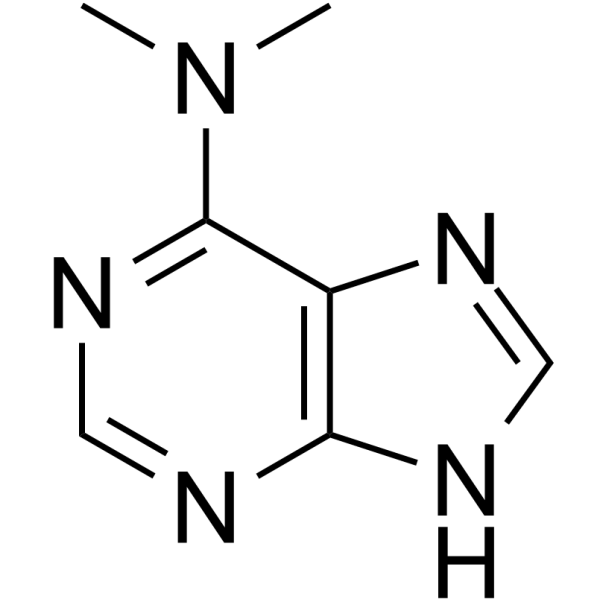
  • HY-W010128

    6-Dimethylaminopurine; 6-DMAP

    CDK DNA/RNA Synthesis Apoptosis Cancer
    6-(Dimethylamino) purine (6-Dimethylaminopurine) is a serine threonine protein kinase inhibitor. 6-(Dimethylamino) purine can inhibit prolactin induced expression of lactoprotein genes in rabbit mammary gland cells. 6-(Dimethylamino) purine can affect the maturation of mammalian oocytes. 6-(Dimethylamino) purine can lead to downregulation of genes related to cell proliferation and cell cycle progression, such as proliferating cell nuclear antigen, insulin-like gene 1, and serine protease inhibitor 2 genes, and induce apoptosis in lymphoma cells (apoptosis) .
    6-(Dimethylamino)purine
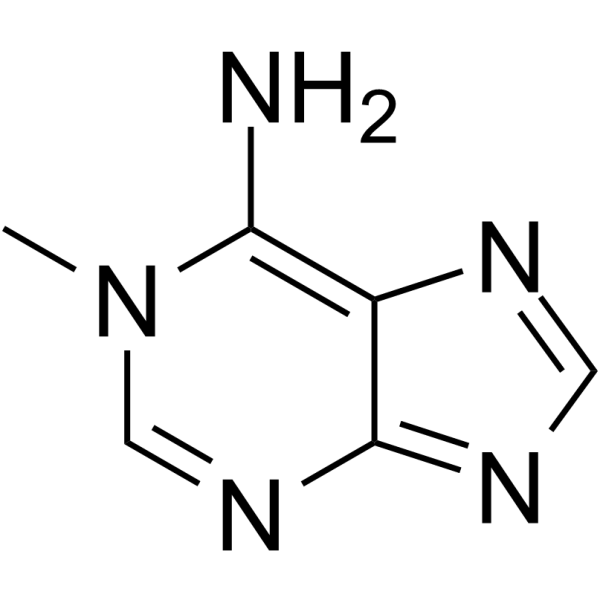
  • HY-113306

    Endogenous Metabolite Others
    1-Methyladenine is a gonad maturation-promoting regulator. 1-Methyladenine is produced in testes and ovarian follicle cells of starfish under the induction of gonad-stimulating substance (GSS). 1-Methyladenine promotes starfish oocyte maturation and spawning, and modifies bases that regulate DNA structure. 1-Methyladenine converts T-A base pairs in double-stranded DNA into non-disruptive T (anti)m1A (syn) Hoogsteen conformation. If this conformational base is not repaired in a timely manner, 1-Methyladenine transforms into cytotoxic DNA damage and blocks the replication process .
    1-Methyladenine
  • HY-110135
    NBI-31772
    3 Publications Verification

    IGF-1R Neurological Disease Inflammation/Immunology
    NBI-31772 is a non-selective IGFBP inhibitor (Ki=47 nM). NBI-31772 has neuroprotective effects and reduces infarct volume during cerebral ischemia. NBI-31772 can also restore or enhance proteoglycan synthesis in osteoarticular chondrocytes. In addition, NBI-31772 also increases the effect of IGF3 on zebrafish oocyte maturation .
    NBI-31772
  • HY-131686

    Akt mTOR EGFR ERK Infection Neurological Disease Metabolic Disease Inflammation/Immunology Cancer
    Ganglioside GT1b (bovine) ammonium is a member of the ganglioside family. Ganglioside GT1b (bovine) ammonium acts as a protective signal against nerve injury-induced spinal synapse elimination. Ganglioside GT1b (bovine) ammonium induces HA synthesis and the phosphorylation of Akt/mTOR in orbital fibroblasts. Ganglioside GT1b (bovine) ammonium enhances porcine oocyte maturation and induce activation of EGFR and ERK1/2 signaling. Ganglioside GT1b (bovine) ammonium is a putative host cell receptor for the Merkel cell polyomavirus. Ganglioside GT1b (bovine) ammonium can be used for the researches of cancer, infection, immunology, endocrinology and neurological disease, such as Thyroid eye disease .
    Ganglioside GT1b (bovine) ammonium
  • HY-145757
    Elevenostat
    1 Publications Verification

    JB3-22

    HDAC Apoptosis Caspase Cancer
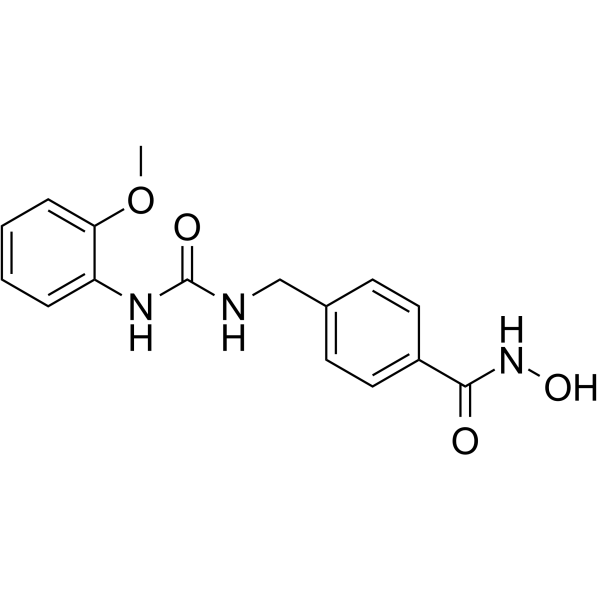
    Elevenostat (JB3-22) is a selective HDAC11 inhibitor with an IC50 of 0.235 µM. Elevenostat can induce apoptosis of multiple myeloma cells and has anti-tumor effect. In addition, Elevenostat inhibits the maturation of mouse oocytes .
    Elevenostat
  • HY-N0500

    Glycosidase Autophagy Metabolic Disease Endocrinology
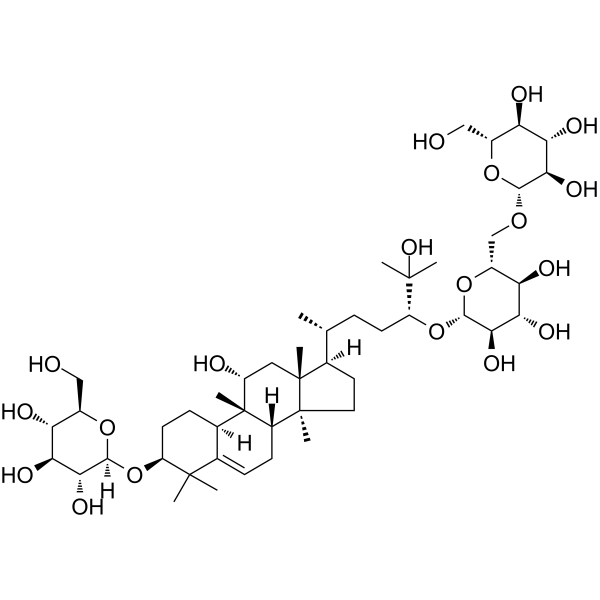
    Mogroside III is a triterpenoid glycoside. Mogroside III exhibits maltase inhibitory effect with an IC50 value of 1.6 mM. Mogroside III enhances oocyte developmental potential by promoting autophagy in cumulus cells. Mogroside III, as the active ingredient of the low-polarity glycoside component (L-SGgly), L-SGgly can increase serum GLP-1 levels, improve insulin resistance, and reduce IL-6 levels, and has hypoglycemic, lipid-regulating and anti-inflammatory effects. Mogroside III can be used for the studies of type 2 diabetes mellitus (T2DM) and assisted reproductive technology .
    Mogroside III
  • HY-N7710

    Others Metabolic Disease
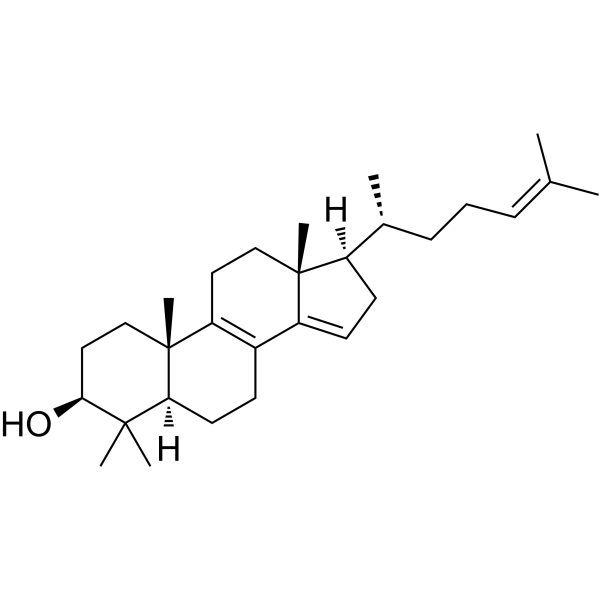
    FF-MAS is a potent meiotic maturation agonist. FF-MAS promotes meiotic maturation and preimplantation development of mouse oocytes maturing in vitro. FF-MAS promotes the completion of meiotic maturation to metaphase II (MII) and improves competence to complete the 2-cell stage to blastocyst transition .
    FF-MAS
  • HY-A0287

    Clomifene; (Z/E)-Enclomiphene; (Z/E)-Enclomifene

    Estrogen Receptor/ERR Metabolic Disease Cancer
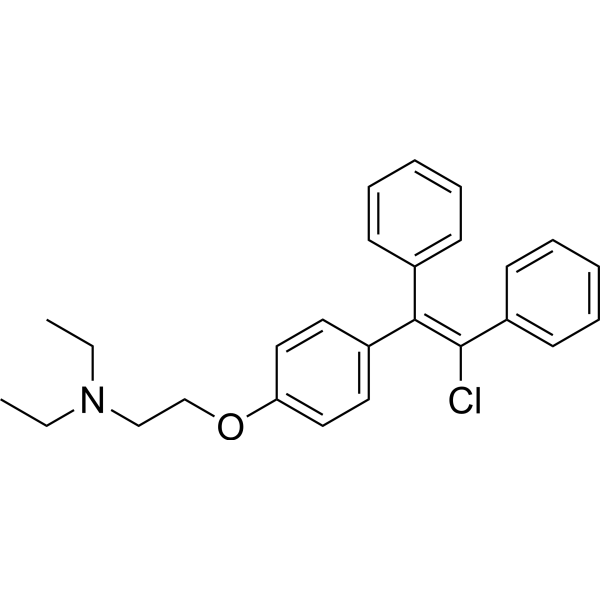
    Clomiphene (Clomifene; (Z/E)-Enclomiphene; (Z/E)-Enclomifene) is an orally active ovulation-inducing agent. Clomiphene binds to hypothalamic estrogen receptors to elevate FSH levels, and exhibits antiestrogenic or estrogenic properties. Clomiphene can induce erturbations during meiotic maturation and cytogenetic abnormalities in mouse oocytes. Clomiphene ameliorates memory impairment in PCOS models. Clomiphene mobilizes cytosolic calcium and reduces viability in prostate cancer cells. Clomiphene can be used for the research of polycystic ovary syndrome (PCOS) and prostate cancer .
    Clomiphene
  • HY-A0287S

    Clomifene-d5 hydrochloride; (Z/E)-Enclomiphene-d5 hydrochloride; (Z/E)-Enclomifene-d5 hydrochloride

    Isotope-Labeled Compounds Estrogen Receptor/ERR Metabolic Disease Cancer
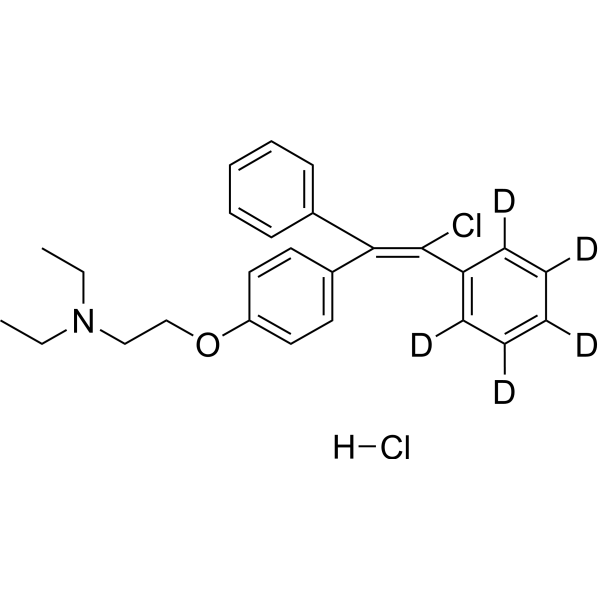
    Clomifene (Clomifene; (Z/E)-Enclomiphene; (Z/E)-Enclomifene)-d5 hydrochloride is a deuterium labeled Clomifene hydrochloride (HY-A0287A). Clomiphene hydrochloride is an orally active ovulation-inducing agent. Clomiphene hydrochloride binds to hypothalamic estrogen receptors to elevate FSH levels, and exhibits antiestrogenic or estrogenic properties. Clomiphene hydrochloride can induce erturbations during meiotic maturation and cytogenetic abnormalities in mouse oocytes. Clomiphene hydrochloride ameliorates memory impairment in PCOS models. Clomiphene hydrochloride mobilizes cytosolic calcium and reduces viability in prostate cancer cells. Clomiphene hydrochloride can be used for the research of polycystic ovary syndrome (PCOS) and prostate cancer .
    Clomiphene-d5 hydrochloride
  • HY-105191

    RS-21607

    Cytochrome P450 Reactive Oxygen Species (ROS) Metabolic Disease
    Azalanstat (RS-21607) is an inhibitor of heme oxygenase and lanosterol 14α-demethylase, with inhibitory activity against HO-1 (IC50 = 5.5 µM) and HO-2 (IC50 = 24.5 µM). Azalanstat reduces the maturation rate of rat oocytes, increases rat oocyte degeneration, and partially inhibits progesterone production in preovulatory follicles of rats .
    Azalanstat
  • HY-A0287A

    Clomifene hydrochloride; (Z/E)-Enclomiphene hydrochloride; (Z/E)-Enclomifene hydrochloride

    Estrogen Receptor/ERR Metabolic Disease Cancer
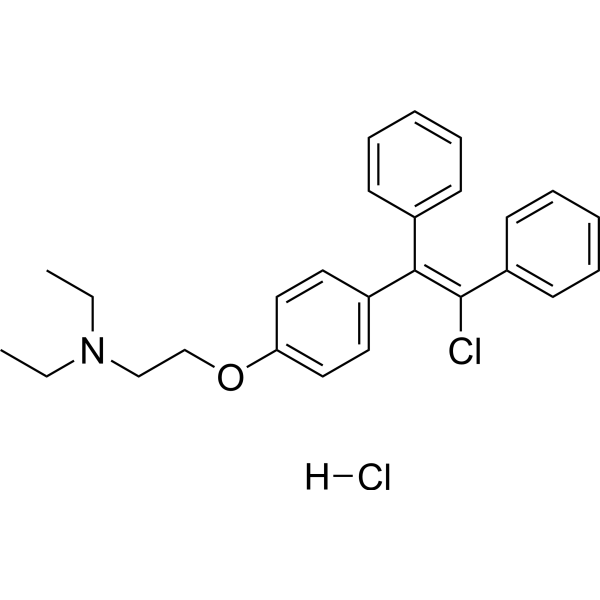
    Clomiphene (Clomifene; (Z/E)-Enclomiphene; (Z/E)-Enclomifene) hydrochloride is an orally active ovulation-inducing agent. Clomiphene hydrochloride binds to hypothalamic estrogen receptors to elevate FSH levels, and exhibits antiestrogenic or estrogenic properties. Clomiphene hydrochloride can induce erturbations during meiotic maturation and cytogenetic abnormalities in mouse oocytes. Clomiphene hydrochloride ameliorates memory impairment in PCOS models. Clomiphene hydrochloride mobilizes cytosolic calcium and reduces viability in prostate cancer cells. Clomiphene hydrochloride can be used for the research of polycystic ovary syndrome (PCOS) and prostate cancer .
    Clomiphene hydrochloride
  • HY-131686A

    Akt mTOR EGFR ERK Infection Neurological Disease Metabolic Disease Inflammation/Immunology Cancer
    Ganglioside GT1b (porcine) ammonium is a member of the ganglioside family. Ganglioside GT1b (porcine) ammonium acts as a protective signal against nerve injury-induced spinal synapse elimination. Ganglioside GT1b (porcine) ammonium induces HA synthesis and the phosphorylation of Akt/mTOR in orbital fibroblasts. Ganglioside GT1b (porcine) ammonium enhances porcine oocyte maturation and induces activation of EGFR and ERK1/2 signaling. Ganglioside GT1b (porcine) ammonium is a putative host cell receptor for the Merkel cell polyomavirus. Ganglioside GT1b (porcine) ammonium can be used for the researches of cancer, infection, immunology, endocrinology and neurological disease, such as Thyroid eye disease .
    Ganglioside GT1b (porcine) ammonium
  • HY-174716

    mRNA Inflammation/Immunology
    Human EREG mRNA encodes the human epiregulin (EREG) protein, a member of the epidermal growth factor family. EREG may be involved in a wide range of biological processes including inflammation, wound healing, oocyte maturation, and cell proliferation.
    Human EREG mRNA
  • HY-120029

    Phosphodiesterase (PDE) Endocrinology
    Org-9935 is a selective inhibitor of PDE3 with an IC50 of 50 nM. Org-9935 inhibits maturation of oocyte in naturally selected dominant follicle in rhesus macaques. Org-9935 can augment glucose-induced insulin release in isolated rat islets with an EC50 of 20 μM .
    Org-9935
  • HY-110135R

    IGF-1R Neurological Disease Inflammation/Immunology
    NBI-31772 (Standard) is the analytical standard of NBI-31772. This product is intended for research and analytical applications. NBI-31772 is a non-selective IGFBP inhibitor (Ki=47 nM). NBI-31772 has neuroprotective effects and reduces infarct volume during cerebral ischemia. NBI-31772 can also restore or enhance proteoglycan synthesis in osteoarticular chondrocytes. In addition, NBI-31772 also increases the effect of IGF3 on zebrafish oocyte maturation .
    NBI-31772 (Standard)
  • HY-W010128R

    6-Dimethylaminopurine (Standard); 6-DMAP (Standard)

    Reference Standards CDK DNA/RNA Synthesis Apoptosis Cancer
    6-(Dimethylamino) purine (6-Dimethylaminopurine) is a serine threonine protein kinase inhibitor. 6-(Dimethylamino) purine can inhibit prolactin induced expression of lactoprotein genes in rabbit mammary gland cells. 6-(Dimethylamino) purine can affect the maturation of mammalian oocytes. 6-(Dimethylamino) purine can lead to downregulation of genes related to cell proliferation and cell cycle progression, such as proliferating cell nuclear antigen, insulin-like gene 1, and serine protease inhibitor 2 genes, and induce apoptosis in lymphoma cells (apoptosis) .
    6-(Dimethylamino)purine (Standard)
  • HY-105191A

    RS-21607 dihydrochloride

    Heme Oxygenase (HO) Metabolic Disease
    Azalanstat dihydrochloride (RS-21607 dihydrochloride) is an inhibitor of heme oxygenase and lanosterol 14α-demethylase, with inhibitory activity against HO-1 (IC50 = 5.5 µM) and HO-2 (IC50 = 24.5 µM). Azalanstat dihydrochloride reduces the maturation rate of rat oocytes, increases rat oocyte degeneration, and partially inhibits progesterone production in preovulatory follicles of rats .
    Azalanstat dihydrochloride

Inquiry Online

Your information is safe with us. * Required Fields.

Salutation


Country or Region *

Applicant Name *


Organization Name *

Department *


Email Address *


Product Name *

Cat. No.


Requested quantity *

Phone Number *


Remarks

Inquiry Online

Inquiry Information

Product Name:
Cat. No.:
Quantity:
MCE Japan Authorized Agent:

