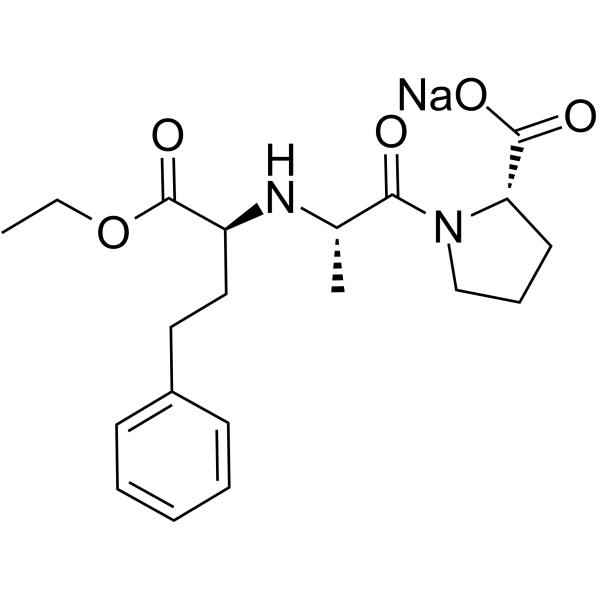
Search Result
Results for "
plasma renin
" in MedChemExpress (MCE) Product Catalog:
4
Isotope-Labeled Compounds
| Cat. No. |
Product Name |
Target |
Research Areas |
Chemical Structure |
-
- HY-B1203
-
|
9α-Fludrocortisone; 9α-Fluorcortisol
|
Mineralocorticoid Receptor
Glucocorticoid Receptor
Apoptosis
|
Neurological Disease
Metabolic Disease
Inflammation/Immunology
Cancer
|
|
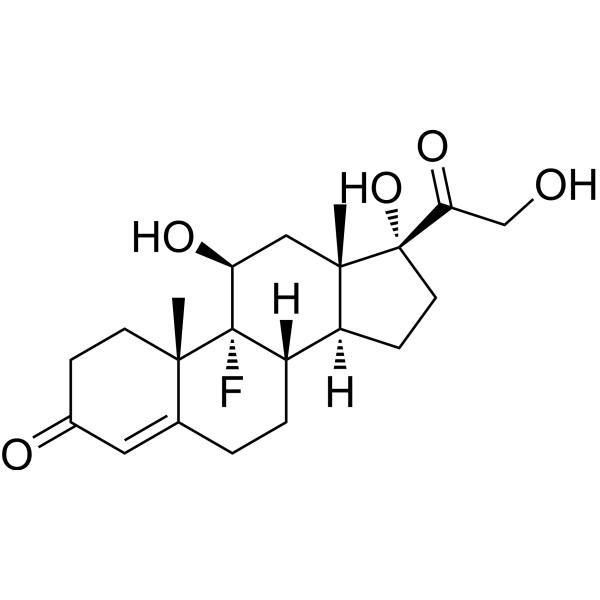
Fludrocortisone (9α-Fludrocortisone) is an orally active mineralocorticoid and glucocorticoid receptor agonist. Fludrocortisone suppresses pro-inflammatory cytokine expression, reduces CCL2, IL-6, IL-8 levels, upregulates mineralocorticoid receptor (MR) expression, induces PI3K/Akt, GSK-3β, CREB, ERK1/2, mTOR phosphorylation, blocks Tau hyperphosphorylation, prevents apoptosis, promotes survival and proliferation, enhances renal sodium and water transport, increases plasma volume and blood pressure, reduces plasma potassium and renin activity, stimulates erythropoietin expression, modulates uterine receptivity genes, and reverses PP242-induced MUC1 upregulation. Fludrocortisone can be used for the research of congenital adrenal hyperplasia, postural hypotension, and adrenal insufficiency .
|
-
-
- HY-12765
-
|
E-3174; EXP-3174
|
Drug Metabolite
Angiotensin Receptor
|
Cardiovascular Disease
|
|
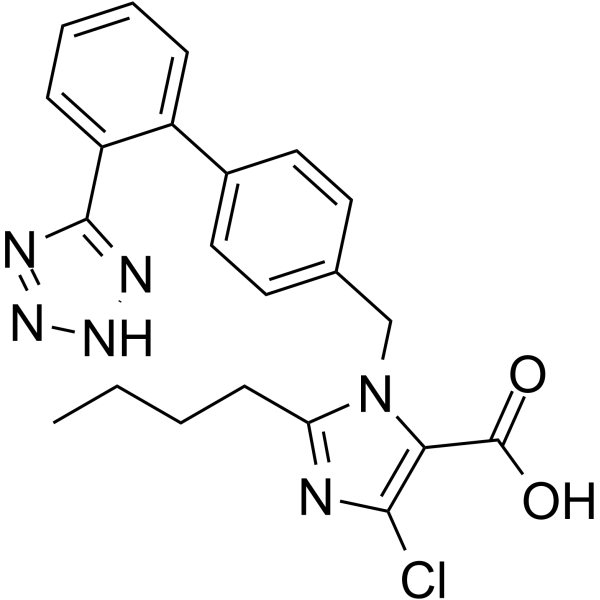
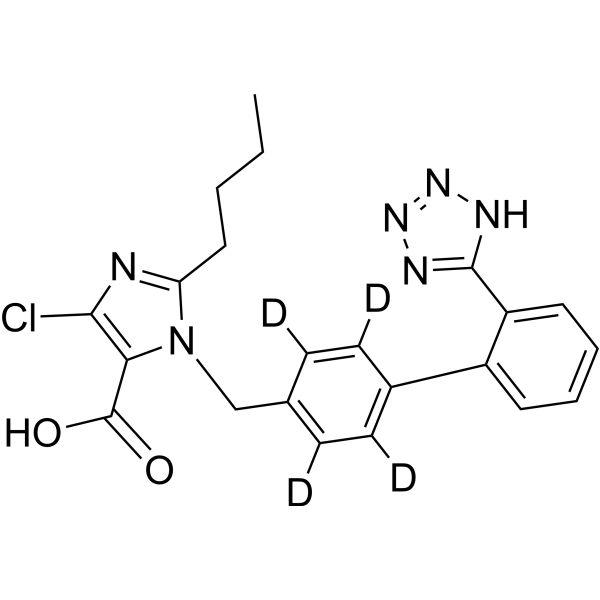
Losartan Carboxylic Acid (E-3174), an active carboxylic acid metabolite of Losartan, is an angiotensin II receptor type 1 (AT1) antagonist. The Ki values are 0.97, 0.57, 0.67 nM for rat AT1B/AT1A and human AT1, respectively. Losartan Carboxylic Acid blocks the angiotensin II-induced responses in vascular smoothmuscle cells (VSMC). Losartan Carboxylic Acid elevates plasma renin activities and reduces mean arterial pressure .
|
-
-
- HY-12765S
-
|
E-3174 d4; EXP-3174 d4
|
Angiotensin Receptor
|
Cardiovascular Disease
Endocrinology
Cancer
|
|
Losartan-d4 carboxylic acid (E-3174-d4) is the deuterium labeled Losartan Carboxylic Acid (HY-12765). Losartan Carboxylic Acid (E-3174), an active carboxylic acid metabolite of Losartan, is an angiotensin II receptor type 1 (AT1) antagonist. The Ki values are 0.97, 0.57, 0.67 nM for rat AT1B/AT1A and human AT1, respectively. Losartan Carboxylic Acid blocks the angiotensin II-induced responses in vascular smoothmuscle cells (VSMC). Losartan Carboxylic Acid elevates plasma renin activities and reduces mean arterial pressure.
|
-
-
- HY-151111
-
|
|
Renin
|
Cardiovascular Disease
|
|
SPH3127 (DRI 18) is a novel, highly potent, and orally active direct renin inhibitor (recombinant human-renin IC50=0.4 nM, human plasma renin activity IC50=0.45 nM). SPH3127 shows antihypertensive effect and can be used in essential hypertension research .
|
-
-
- HY-177326
-
|
Ro 44-9375
|
Renin
|
Cardiovascular Disease
|
|
Ciprokiren (Ro 44-9375) is a Renin inhibitor with IC50s of 0.07 and 0.65 nM for hRenin in buffer and plasma, respectively. Ciprokiren be applied transdermally with similar hemodynamic effects without decrease of plasma renin activity or plasma immunoreactive angiotensin II. Ciprokiren has antihypertensive efficacy and can be used for hypertension research .
|
-
-
- HY-A0184
-
|
Ro 42-5892; Ro 42-5892/001
|
Renin
|
Cardiovascular Disease
|
|
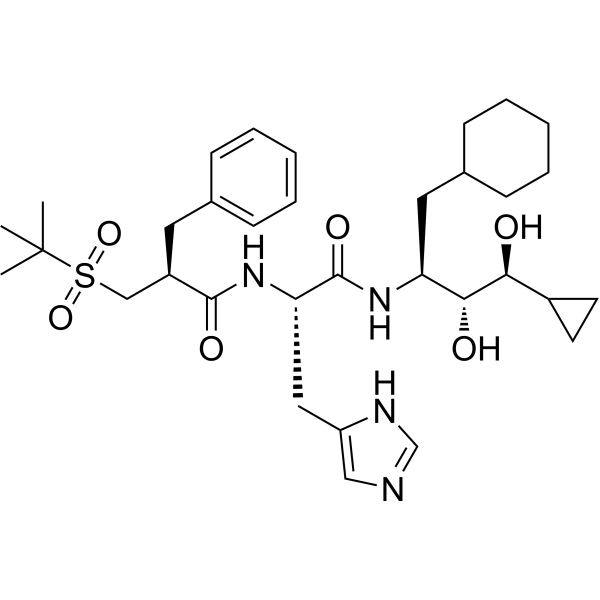
Remikiren (Ro 42-5892) is an orally active and highly specific renin inhibitor. Remikiren specifically inhibits human reninand human plasma renin with IC50 values of 0.7 and 0.8 nM, respectively. Remikiren also reduces mean arterial blood pressure in sodium-depleted marmosets and squirrel monkeys. Remikiren can be used in study of hypertension .
|
-
-
- HY-76652
-
|
|
Renin
|
Cardiovascular Disease
Inflammation/Immunology
|
|
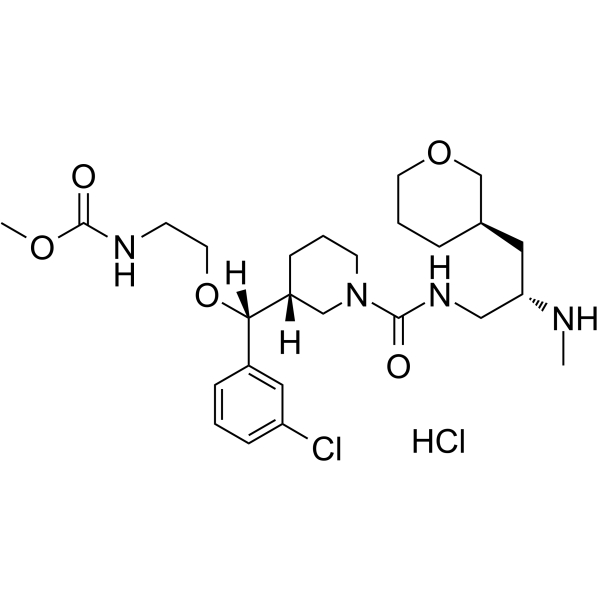
VTP-27999 Hydrochloride is an orally active renin inhibitor. VTP-27999 Hydrochloride functionally inhibits renin and acid-activated prorenin, suppresses plasma renin activity and modulates plasma and urinary aldosterone levels. VTP-27999 Hydrochloride reduces mean arterial blood pressure, induces plasma renin concentration increases, decreases plasma angiotensin II levels and enhances renin immunoreactivity. VTP-27999 (Hydrochloride) can be used for the research of hypertension and chronic renal disease .
|
-
-
- HY-167886
-
|
|
Angiotensin Receptor
|
Cardiovascular Disease
|
|
GA 0113 is a potent and orally active angiotensin II (Ang II) AT1-receptor antagonist. GA 0113 inhibits the Ang II (HY-13948)-induced pressor response with ID50 of 0.032 mg/kg and dose-dependently increases plasma renin activity for 48 h .
|
-
-
- HY-117913
-
|
|
Renin
|
Cardiovascular Disease
|
|
ES-8891 is a renin inhibitor. Oral administration of ES-8891 to normotensive sodium-depleted macaques for one week significantly reduced plasma renin activity, immunoreactive renin concentrations, and plasma angiotensin I concentrations, while mean blood pressure decreased significantly, without significant changes in heart rate. ES-8891 regulates blood pressure by inhibiting plasma renin levels and renal renin synthesis .
|
-
-
- HY-136676
-
|
|
Renin
|
Cancer
|
|
Cgp 38560 methanesulfonate is a well-tolerated renin inhibitor. Cgp 38560 methanesulfonate caused a dose-dependent decrease in angiotensin II and plasma renin activity, and a dose-dependent increase in active renin.
|
-
-
- HY-105259
-
|
|
Renin
|
Cardiovascular Disease
|
|
SR 43845 is a renin inhibitor. SR 43845 decreases blood pressure and inhibits plasma renin activity. SR 43845 can be used for hypertension research .
|
-
-
- HY-118185
-
|
|
Renin
|
Others
|
|
SQ 31844 is a novel renin inhibitor belonging to the imidazolidinol class. This compound, which contains an imidazole ring in its active site binding group, has potent in vitro inhibition of primate renin, but not rat, pig, or dog renin. In conscious, sodium-deprived cynomolgus monkeys, both compounds produced dose-related inhibition of plasma renin activity (PRA) over a dose range of 0.001 to 1.0 μmol/kg, administered intravenously, with complete inhibition observed at the highest dose. However, a reduction in blood pressure was only observed when 10 μmol/kg was administered intravenously or by infusion. In sodium-replete monkeys, SQ 30774 inhibited the increase in arterial blood pressure and PRA following administration of exogenous monkey renin. When the compounds were administered orally at 50 μmol/kg, only SQ 31844 significantly inhibited PRA (80%). In summary, the imidazolidinol renin inhibitors have potent inhibitory effects on renin in vitro and inhibit PRA and reduce arterial blood pressure in vivo.
|
-
-
- HY-116790B
-
|
(Rac)-Penbutolol; (±)-Isopenbutolol
|
Adrenergic Receptor
|
Cardiovascular Disease
|
|
(±)-Penbutolol ((Rac)-Penbutolol) is the racemic mixture of Penbutolol. (±)-Penbutolol is an orally active β-adrenergic receptor antagonist. (±)-Penbutolol antagonizes exercise-induced tachycardia, reduces the increase in peak expiratory flow rate (PEFR) caused by exercise, and decreases resting plasma renin activity (PRA). (±)-Penbutolol reaches peak plasma concentration 1 hour after oral administration, with a half-life of 4.5 hours, and is converted into an active metabolite in the body. (±)-Penbutolol can be used in cardiovascular-related disease research .
|
-
-
- HY-106720
-
|
YM 09538
|
Adrenergic Receptor
|
Cardiovascular Disease
|
|
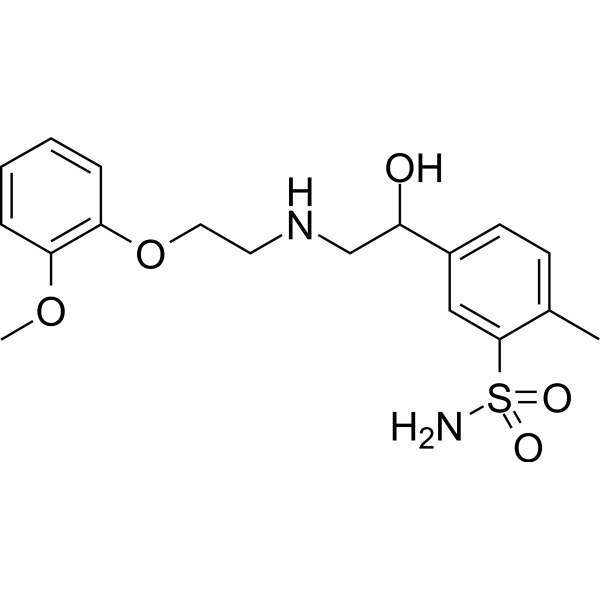
Amosulalol (YM 09538) is an orally active and dual inhibitor of α1/β1-Adrenergic Receptor. Amosulalol exhibits antihypertensive activity via α1-Adrenergic Receptor inhibition. Amosulalol decreases reflexogenic increases in heart rate and plasma renin activity (PRA) via β1-Adrenergic Receptor inhibition in spontaneously hypertensive rats (SHR) .
|
-
-
- HY-106720A
-
|
YM 09538 hydrochloride
|
Adrenergic Receptor
|
Cardiovascular Disease
|
|
Amosulalol (YM 09538) hydrochloride is an orally active and dual inhibitor of α1/β1-Adrenergic Receptor. Amosulalol hydrochloride exhibits antihypertensive activity via α1-Adrenergic Receptor inhibition. Amosulalol hydrochloride decreases reflexogenic increases in heart rate and plasma renin activity (PRA) via β1-Adrenergic Receptor inhibition in spontaneously hypertensive rats (SHR) .
|
-
-
- HY-106720C
-
|
(+)-YM 09538
|
Adrenergic Receptor
|
Others
|
|
(+)-Amosulalol ((+)-YM 09538) is an isomer of Amosulalol (HY-106720), an orally active dual inhibitor of α1/β1-adrenergic receptors. Amosulalol exhibits antihypertensive activity by inhibiting α1-adrenergic receptors. Amosulalol reduces the reflex increase in heart rate and plasma renin activity (PRA) in spontaneously hypertensive rats (SHR) by inhibiting β1-adrenergic receptors.
|
-
-
- HY-106720B
-
|
(-)-YM 09538
|
Adrenergic Receptor
|
Others
|
|
(-)-Amosulalol ((-)-YM 09538) is an isomer of Amosulalol (HY-106720), an orally active dual inhibitor of α1/β1-adrenergic receptors. Amosulalol exhibits antihypertensive activity by inhibiting α1-adrenergic receptors. Amosulalol reduces the reflex increase in heart rate and plasma renin activity (PRA) in spontaneously hypertensive rats (SHR) by inhibiting β1-adrenergic receptors.
|
-
-
- HY-183978
-
|
|
Renin
|
Cardiovascular Disease
|
|
KRI-1314 is an orally active human renin inhibitor with selectivity for primate renin over non-primate renin. KRI-1314 competitively inhibits the binding of recombinant human renin to its substrate, reduces plasma renin activity, lowers blood pressure, and exhibits high stability in tissue homogenates. KRI-1314 is applicable to research on renin-dependent hypertension and hypertension-related studies .
|
-
-
- HY-12765S1
-
|
|
Isotope-Labeled Compounds
Angiotensin Receptor
|
Cardiovascular Disease
|
|
Losartan carboxylic acid-d4 (hydrochloride) is deuterium labeled Losartan Carboxylic Acid. Losartan Carboxylic Acid (E-3174), an active carboxylic acid metabolite of Losartan, is an angiotensin II receptor type 1 (AT1) antagonist. The Ki values are 0.97, 0.57, 0.67 nM for rat AT1B/AT1A and human AT1, respectively. Losartan Carboxylic Acid blocks the angiotensin II-induced responses in vascular smoothmuscle cells (VSMC). Losartan Carboxylic Acid elevates plasma renin activities and reduces mean arterial pressure .
|
-
-
- HY-12765R
-
|
E-3174 (Standard); EXP-3174 (Standard)
|
Drug Metabolite
Reference Standards
Angiotensin Receptor
|
Cardiovascular Disease
|
|
Losartan Carboxylic Acid (Standard) is the analytical standard of Losartan Carboxylic Acid. This product is intended for research and analytical applications. Losartan Carboxylic Acid (E-3174), an active carboxylic acid metabolite of Losartan, is an angiotensin II receptor type 1 (AT1) antagonist. The Ki values are 0.97, 0.57, 0.67 nM for rat AT1B/AT1A and human AT1, respectively. Losartan Carboxylic Acid blocks the angiotensin II-induced responses in vascular smoothmuscle cells (VSMC). Losartan Carboxylic Acid elevates plasma renin activities and reduces mean arterial pressure [4].
|
-
-
- HY-B1203S
-
|
9α-Fludrocortisone-d5; 9α-Fluorcortisol-d5
|
Isotope-Labeled Compounds
Mineralocorticoid Receptor
Glucocorticoid Receptor
Apoptosis
|
Metabolic Disease
Inflammation/Immunology
Cancer
|
|
Fludrocortisone-d5 (9α-Fludrocortisone-d5) is the deuterium labeled Fludrocortisone (HY-B1203). Fludrocortisone is an orally active mineralocorticoid and glucocorticoid receptor agonist. Fludrocortisone suppresses pro-inflammatory cytokine expression, reduces CCL2, IL-6, IL-8 levels, upregulates mineralocorticoid receptor (MR) expression, induces PI3K/Akt, GSK-3β, CREB, ERK1/2, mTOR phosphorylation, blocks Tau hyperphosphorylation, prevents apoptosis, promotes survival and proliferation, enhances renal sodium and water transport, increases plasma volume and blood pressure, reduces plasma potassium and renin activity, stimulates erythropoietin expression, modulates uterine receptivity genes, and reverses PP242-induced MUC1 upregulation. Fludrocortisone can be used for the research of congenital adrenal hyperplasia, postural hypotension, and adrenal insufficiency.
|
-
-
- HY-B1203R
-
|
9α-Fludrocortisone (Standard); 9α-Fluorcortisol (Standard)
|
Reference Standards
Mineralocorticoid Receptor
Glucocorticoid Receptor
Apoptosis
|
Metabolic Disease
Inflammation/Immunology
Cancer
|
|
Fludrocortisone (Standard) (9α-Fludrocortisone (Standard)) is the analytical standard of Fludrocortisone (HY-B1203). This product is intended for research and analytical applications. Fludrocortisone is an orally active mineralocorticoid and glucocorticoid receptor agonist. Fludrocortisone suppresses pro-inflammatory cytokine expression, reduces CCL2, IL-6, IL-8 levels, upregulates mineralocorticoid receptor (MR) expression, induces PI3K/Akt, GSK-3β, CREB, ERK1/2, mTOR phosphorylation, blocks Tau hyperphosphorylation, prevents apoptosis, promotes survival and proliferation, enhances renal sodium and water transport, increases plasma volume and blood pressure, reduces plasma potassium and renin activity, stimulates erythropoietin expression, modulates uterine receptivity genes, and reverses PP242-induced MUC1 upregulation. Fludrocortisone can be used for the research of congenital adrenal hyperplasia, postural hypotension, and adrenal insufficiency.
|
-
-
- HY-B1203S1
-
|
9α-Fludrocortisone-d2; 9α-Fluorcortisol-d2
|
Isotope-Labeled Compounds
Mineralocorticoid Receptor
Glucocorticoid Receptor
Apoptosis
|
Metabolic Disease
Inflammation/Immunology
Cancer
|
|
Fludrocortisone-d2 (9α-Fludrocortisone-d2) is the deuterium labeled Fludrocortisone (HY-B1203). Fludrocortisone is an orally active mineralocorticoid and glucocorticoid receptor agonist. Fludrocortisone suppresses pro-inflammatory cytokine expression, reduces CCL2, IL-6, IL-8 levels, upregulates mineralocorticoid receptor (MR) expression, induces PI3K/Akt, GSK-3β, CREB, ERK1/2, mTOR phosphorylation, blocks Tau hyperphosphorylation, prevents apoptosis, promotes survival and proliferation, enhances renal sodium and water transport, increases plasma volume and blood pressure, reduces plasma potassium and renin activity, stimulates erythropoietin expression, modulates uterine receptivity genes, and reverses PP242-induced MUC1 upregulation. Fludrocortisone can be used for the research of congenital adrenal hyperplasia, postural hypotension, and adrenal insufficiency.
|
-
-
- HY-182301
-
|
|
Renin
|
Cardiovascular Disease
|
|
CP 71362 is a renin inhibitor, a highly potent substrate-analog transition state mimic with antihypertensive properties. CP 71362 exhibits significant inhibitory activity against plasma renin from rats, dogs, and humans (IC50 values are 3 nM, 0.0033 nM, and 20 nM, respectively). CP 71362 reduces the mean arterial pressure of anesthetized and conscious sodium-depleted animals in a dose-dependent manner, and has pharmacokinetic characteristics of rapid elimination and short duration of action. CP 71362 can be used in research related to hypertension and congestive heart failure .
|
-
-
- HY-P1609
-
|
|
Renin
Enteropeptidase
|
Cardiovascular Disease
|
|
CP-69799 is an azahomostatine-containing oligopeptide transition-state analogue inhibitor with a hog renin IC50 of 6e-9 M, human plasma renin IC50 of 3e-7 M and Ki of 0.310 μM, and endothiapepsin Ki of 0.27 μM. CP-69799 binds endothiapepsin’s active site cleft in extended conformation, fills S4 to S3' pockets, displaces native solvent molecules, induces domain rotation, and reduces thermal mobility of endothiapepsin’s flap and helix regions. CP-69799 acts as a transition-state analogue inhibitor of hog renin and human plasma renin. CP-69799 contains a polar lysine residue at the P2' position, with a nitrogen atom replacing the P1' Cα atom of the hydroxyethylene dipeptide isostere. CP-69799 can be used for the research of hypertension .
|
-
-
- HY-129737
-
|
|
Endogenous Metabolite
|
Cardiovascular Disease
|
|
A-62198 is a potent and selective renin inhibitor with antihypertensive activity. A-62198 reduces mean arterial pressure (MAP) in anesthetized, salt-deprived monkeys in a dose-dependent manner. A-62198 induced MAP reduction in normal monkeys that reached statistical significance at the highest dose and significantly inhibited plasma renin activity (PRA) at all doses .
|
-
-
- HY-117641
-
|
|
Ser/Thr Protease
|
Cardiovascular Disease
|
|
CP 81282 is a tripeptide aspartic protease inhibitor, with an IC50 of 1 nM against human renin and an IC50 of 11 nM against endopeptidase. CP 81282 is applicable to the research of hypertension .
|
-
-
- HY-105111
-
|
|
Parasite
Angiotensin-converting Enzyme (ACE)
HSV
DNA/RNA Synthesis
|
Cardiovascular Disease
Metabolic Disease
|
|
P-536 is a ACE inhibitor that also inhibits herpes simplex virus HSV-1 thymidine kinase and Trypanosoma cruzi RNA polymerase. By inhibiting the renin-angiotensin system, downregulating the expression of AT1R and NOX4, and reducing oxidative stress (decreasing plasma hydrogen peroxide (H2O2) and 8-isoprostaglandin levels), P-536 effectively reduces systolic blood pressure and improves vascular reactivity. P-536 also inhibits the replication of DNA/RNA viruses such as HSV-1 by blocking nucleotide metabolism and nucleic acid synthesis, competitively inhibits RNA synthesis in Trypanosoma cruzi, and inhibits amastigote replication, thereby impeding its growth. P-536 is suitable for research on hypertension, insulin resistance, and Chagas disease .
|
-
| Cat. No. |
Product Name |
Target |
Research Area |
-
- HY-P1609
-
|
|
Renin
Enteropeptidase
|
Cardiovascular Disease
|
|
CP-69799 is an azahomostatine-containing oligopeptide transition-state analogue inhibitor with a hog renin IC50 of 6e-9 M, human plasma renin IC50 of 3e-7 M and Ki of 0.310 μM, and endothiapepsin Ki of 0.27 μM. CP-69799 binds endothiapepsin’s active site cleft in extended conformation, fills S4 to S3' pockets, displaces native solvent molecules, induces domain rotation, and reduces thermal mobility of endothiapepsin’s flap and helix regions. CP-69799 acts as a transition-state analogue inhibitor of hog renin and human plasma renin. CP-69799 contains a polar lysine residue at the P2' position, with a nitrogen atom replacing the P1' Cα atom of the hydroxyethylene dipeptide isostere. CP-69799 can be used for the research of hypertension .
|
| Cat. No. |
Product Name |
Chemical Structure |
-
- HY-12765S
-
|
|
|
Losartan-d4 carboxylic acid (E-3174-d4) is the deuterium labeled Losartan Carboxylic Acid (HY-12765). Losartan Carboxylic Acid (E-3174), an active carboxylic acid metabolite of Losartan, is an angiotensin II receptor type 1 (AT1) antagonist. The Ki values are 0.97, 0.57, 0.67 nM for rat AT1B/AT1A and human AT1, respectively. Losartan Carboxylic Acid blocks the angiotensin II-induced responses in vascular smoothmuscle cells (VSMC). Losartan Carboxylic Acid elevates plasma renin activities and reduces mean arterial pressure.
|
-
-
- HY-12765S1
-
|
|
|
Losartan carboxylic acid-d4 (hydrochloride) is deuterium labeled Losartan Carboxylic Acid. Losartan Carboxylic Acid (E-3174), an active carboxylic acid metabolite of Losartan, is an angiotensin II receptor type 1 (AT1) antagonist. The Ki values are 0.97, 0.57, 0.67 nM for rat AT1B/AT1A and human AT1, respectively. Losartan Carboxylic Acid blocks the angiotensin II-induced responses in vascular smoothmuscle cells (VSMC). Losartan Carboxylic Acid elevates plasma renin activities and reduces mean arterial pressure .
|
-
-
- HY-B1203S
-
|
|
|
Fludrocortisone-d5 (9α-Fludrocortisone-d5) is the deuterium labeled Fludrocortisone (HY-B1203). Fludrocortisone is an orally active mineralocorticoid and glucocorticoid receptor agonist. Fludrocortisone suppresses pro-inflammatory cytokine expression, reduces CCL2, IL-6, IL-8 levels, upregulates mineralocorticoid receptor (MR) expression, induces PI3K/Akt, GSK-3β, CREB, ERK1/2, mTOR phosphorylation, blocks Tau hyperphosphorylation, prevents apoptosis, promotes survival and proliferation, enhances renal sodium and water transport, increases plasma volume and blood pressure, reduces plasma potassium and renin activity, stimulates erythropoietin expression, modulates uterine receptivity genes, and reverses PP242-induced MUC1 upregulation. Fludrocortisone can be used for the research of congenital adrenal hyperplasia, postural hypotension, and adrenal insufficiency.
|
-
-
- HY-B1203S1
-
|
|
|
Fludrocortisone-d2 (9α-Fludrocortisone-d2) is the deuterium labeled Fludrocortisone (HY-B1203). Fludrocortisone is an orally active mineralocorticoid and glucocorticoid receptor agonist. Fludrocortisone suppresses pro-inflammatory cytokine expression, reduces CCL2, IL-6, IL-8 levels, upregulates mineralocorticoid receptor (MR) expression, induces PI3K/Akt, GSK-3β, CREB, ERK1/2, mTOR phosphorylation, blocks Tau hyperphosphorylation, prevents apoptosis, promotes survival and proliferation, enhances renal sodium and water transport, increases plasma volume and blood pressure, reduces plasma potassium and renin activity, stimulates erythropoietin expression, modulates uterine receptivity genes, and reverses PP242-induced MUC1 upregulation. Fludrocortisone can be used for the research of congenital adrenal hyperplasia, postural hypotension, and adrenal insufficiency.
|
-
| Cat. No. |
Product Name |
|
Classification |
-
- HY-129737
-
|
|
|
Azide
|
|
A-62198 is a potent and selective renin inhibitor with antihypertensive activity. A-62198 reduces mean arterial pressure (MAP) in anesthetized, salt-deprived monkeys in a dose-dependent manner. A-62198 induced MAP reduction in normal monkeys that reached statistical significance at the highest dose and significantly inhibited plasma renin activity (PRA) at all doses .
|
Your information is safe with us. * Required Fields.
Inquiry Information
- Product Name:
- Cat. No.:
- Quantity:
- MCE Japan Authorized Agent:

