



Losartan Carboxylic Acid

Based on 1 Customer Validation
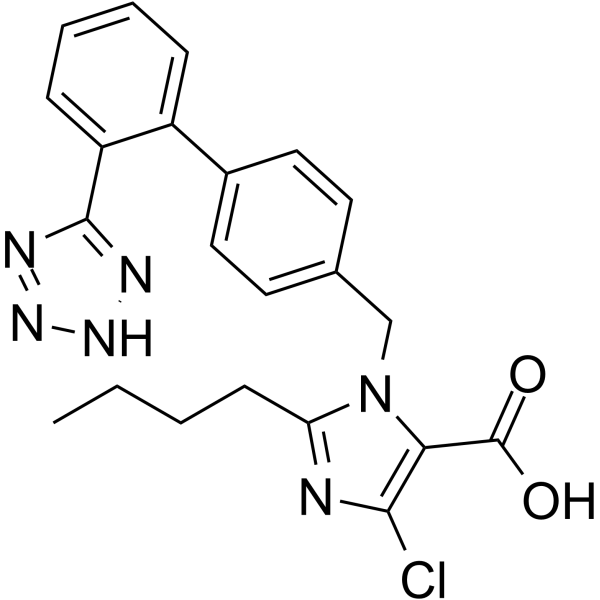
Losartan Carboxylic Acid (E-3174), an active carboxylic acid metabolite of Losartan, is an angiotensin II receptor type 1 (AT1) antagonist. The Ki values are 0.97, 0.57, 0.67 nM for rat AT1B/AT1A and human AT1, respectively. Losartan Carboxylic Acid blocks the angiotensin II-induced responses in vascular smoothmuscle cells (VSMC). Losartan Carboxylic Acid elevates plasma renin activities and reduces mean arterial pressure.
For research use only. We do not sell to patients.
- Purity : 99.48%
- CAS No.: 124750-92-1
- Formula: C22H21ClN6O2
- Molecular Weight:436.89
-
Storage:Powder -20°C, 3 years , 4°C, 2 years ; In solvent -80°C, 2 years , -20°C, 1 year

To place orders, for customer services and technical support, please contact: MedChemExpress USA
Tel: 609-228-6898 E-mail: [email protected] [email protected]


-
 Biological Activity
-
Chemical Information
-
Solvent & Solubility
- Purity & Documentation
- References
-
 Help & FAQs


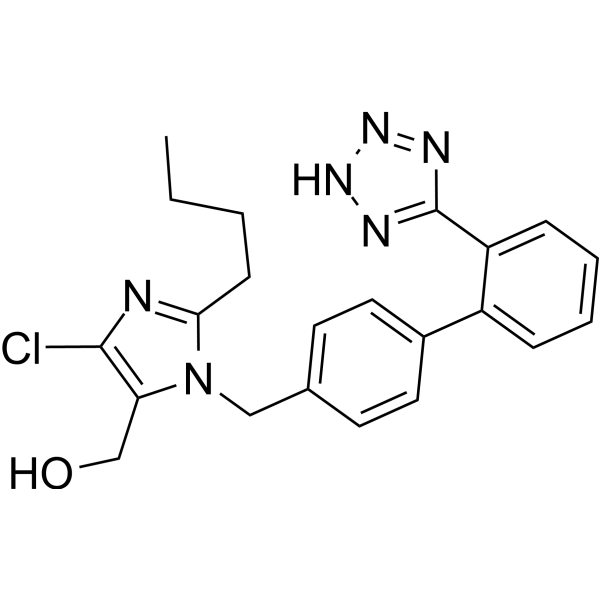
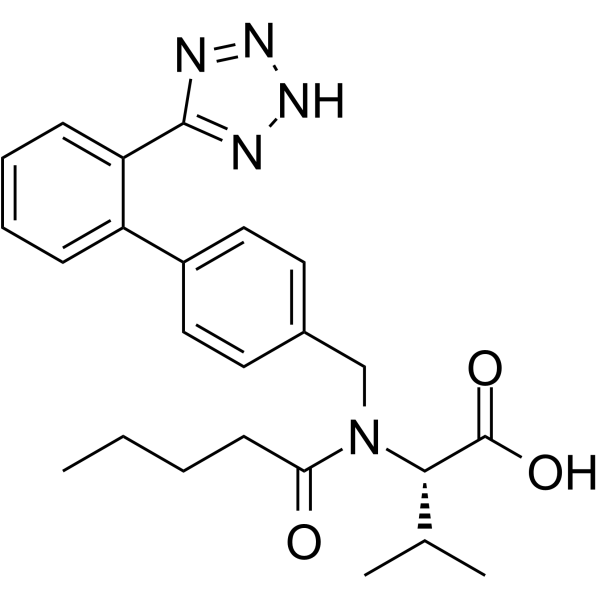
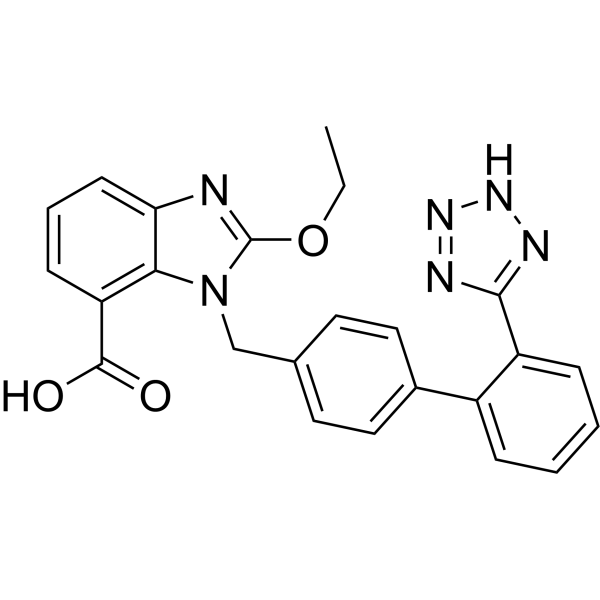
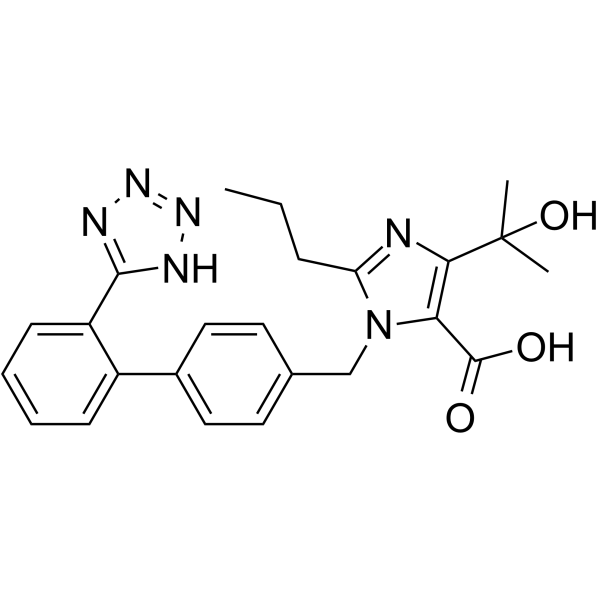
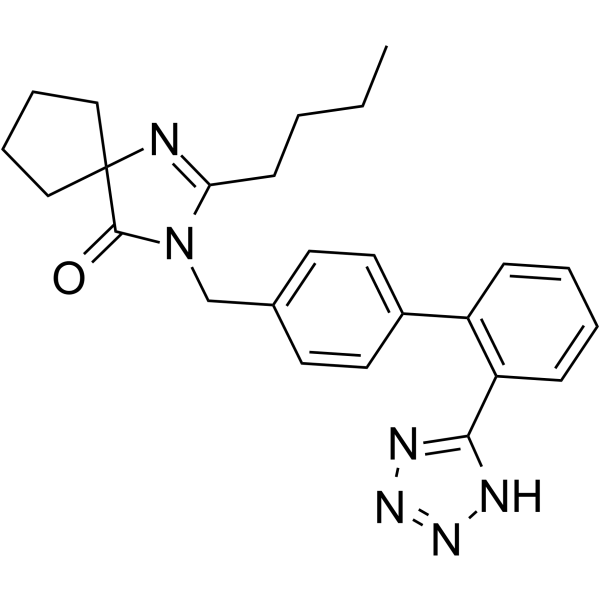
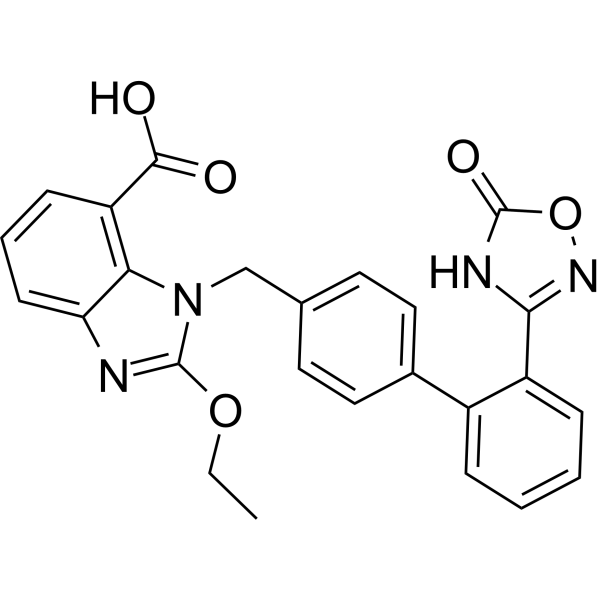

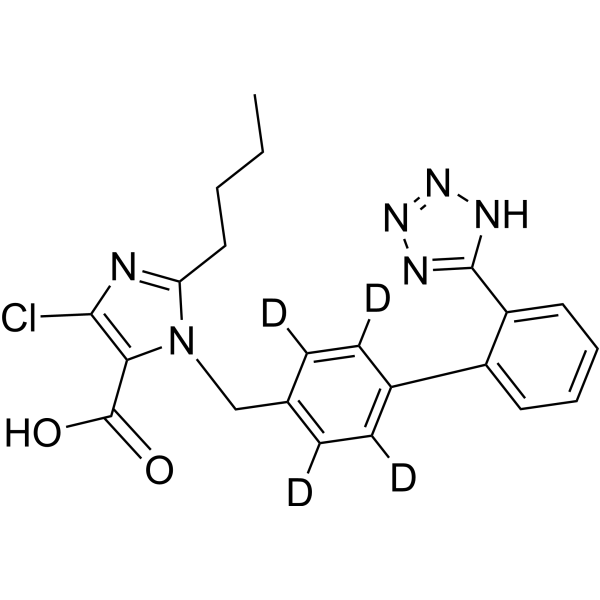
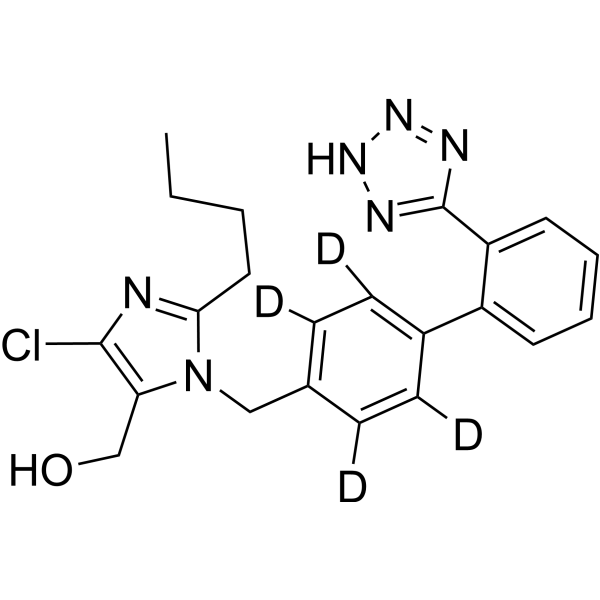
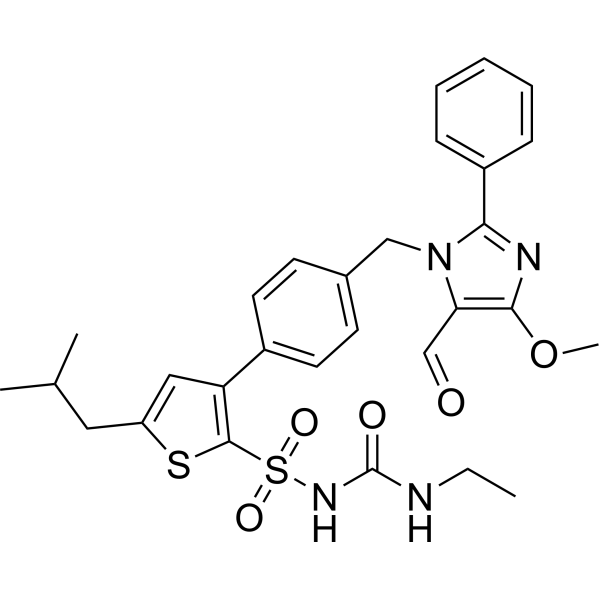
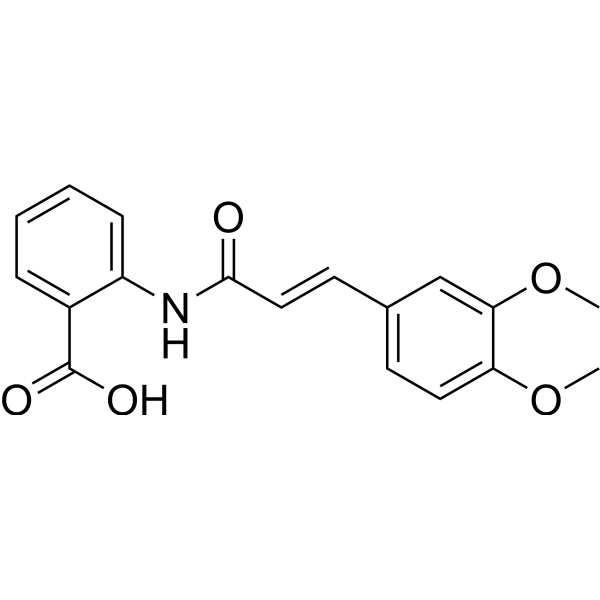
All Angiotensin Receptor Isoforms
More

Biological Activity
Description
IC50 & Target
Angiotensin II receptor type 1[1]
In Vitro
The specific binding of [125I]-angiotensin II to VSMC is inhibited by Losartan Carboxylic Acid (E-3174) with an IC50 of 1.1 nM. Losartan Carboxylic Acid abolishes the angiotensin II-induced formation of inositolphosphates in VSMC. Losartan Carboxylic Acid inhibits the angiotensin II-induced elevation of intracellular cytosolic Ca2+ concentration with an IC50 of 5 nM. Losartan Carboxylic Acid is more effective than losartan in blocking the angiotensin II-induced increase in Egr-1 mRNA. Losartan Carboxylic Acid inhibits the angiotensin II-induced cell protein synthesis with an IC50 of 3 nM[1].
MedChemExpress (MCE) has not independently confirmed the accuracy of these methods. They are for reference only.
In Vivo
Intravenous Losartan Carboxylic Acid (0.1 mg/kg+0.01 mg/kg/min) is infused in anesthetized dogs with recent (8.1±0.4 days) anterior myocardial infarction. Electrolytic injury of the left circumflex coronary artery to induce thrombotic occlusion and posterolateral ischemia is initiated 1 h after the start of treatment[4].
MedChemExpress (MCE) has not independently confirmed the accuracy of these methods. They are for reference only.
-
Animal Model:Mongrel dogs of either sex, weighing 15-25 kg[3]
-
Dosage:0.1 mg/kg (followed by 0.02 mg/kg/h)
-
Administration:i.v. for 5.5 hours
-
Result:The pressor response was reduced by 87±4%.


Chemical Information
-
CAS No. 124750-92-1
-
Appearance Solid
-
Molecular Weight 436.89
-
Formula C22H21ClN6O2
-
Color White to off-white
-
SMILES
O=C(C1=C(Cl)N=C(CCCC)N1CC2=CC=C(C3=CC=CC=C3C4=NNN=N4)C=C2)O
-
Synonyms
E-3174; EXP-3174
-
Shipping
Room temperature in continental US; may vary elsewhere.
-
Storage
Powder -20°C 3 years 4°C 2 years In solvent -80°C 2 years -20°C 1 year


Solvent & Solubility
In Vitro:
DMSO : 100 mg/mL (228.89 mM; Need ultrasonic; Hygroscopic DMSO has a significant impact on the solubility of product, please use newly opened DMSO)
Please refer to the solubility information to select the appropriate solvent. Once prepared, please aliquot and store the solution to prevent product inactivation from repeated freeze-thaw cycles.
Storage method and period of stock solution: -80°C, 2 years; -20°C, 1 year. When stored at -80°C, please use it within 2 years. When stored at -20°C, please use it within 1 year.
Please refer to the solubility information to select the appropriate solvent. Once prepared, please aliquot and store the solution to prevent product inactivation from repeated freeze-thaw cycles.
Storage method and period of stock solution: -80°C, 2 years; -20°C, 1 year. When stored at -80°C, please use it within 2 years. When stored at -20°C, please use it within 1 year.
Concentration (start) × Volume (start) = Concentration (final) × Volume (final)
In Vivo:
Select the appropriate dissolution method based on your experimental animal and administration route.
- For the following dissolution methods, please ensure to first prepare a clear stock solution using an In Vitro approach and then sequentially add co-solvents:
- To ensure reliable experimental results, the clarified stock solution can be appropriately stored based on storage conditions. As for the working solution for In Vivo experiments, it is recommended to prepare freshly and use it on the same day.
- The percentages shown for the solvents indicate their volumetric ratio in the final prepared solution. If precipitation or phase separation occurs during preparation, heat and/or sonication can be used to aid dissolution.
Add each solvent one by one: 10% DMSO 40% PEG300 5% Tween-80 45% Saline
Solubility: ≥ 2.08 mg/mL (4.76 mM); Clear solution
This protocol yields a clear solution of ≥ 2.08 mg/mL (saturation unknown).
Taking 1 mL working solution as an example, add 100 μL DMSO stock solution (20.8 mg/mL) to 400 μL PEG300, and mix evenly; then add 50 μL Tween-80 and mix evenly; then add 450 μL Saline to adjust the volume to 1 mL.
Preparation of Saline: Dissolve 0.9 g sodium chloride in ddH₂O and dilute to 100 mL to obtain a clear Saline solution.
In Vivo Dissolution Calculator
Please enter the basic information of animal experiments:
-
-
-
-
Recommended: Prepare an additional quantity of animals to account for potential losses during experiments.
Please enter your animal formula composition:
-
%DMSO +
Recommended: Keep the proportion of DMSO in working solution below 2% if your animal is weak.
-
%+
-
+%Tween-80 + +
-
%Saline +
The co-solvents required include: DMSO, . All of co-solvents are available by MedChemExpress (MCE). , Tween 80. All of co-solvents are available by MedChemExpress (MCE).
Working solution concentration: 0.22 mg/mL
Method for preparing stock solution: mg drug dissolved in μL DMSO. Stock solution concentration: mg/mL.
1. Take μL DMSO stock solution;
2. Add μL .
μL , mix evenly;
3. Then add μL Tween 80, mix evenly;
4. Then add μL
Please ensure that the stock solution in the first step is dissolved to a clear state, and add co-solvents in sequence. You can use ultrasonic heating (ultrasonic cleaner, recommended frequency 20-40 kHz), vortexing, etc. to assist dissolution.


Purity & Documentation
-
Data Sheet (284 KB)
-
SDS (557 KB)
- English - EN (557 KB)
- Français - FR (557 KB)
- Deutsch - DE (557 KB)
- Norwegian - NO (557 KB)
- Español - ES (557 KB)
- Swedish - SV (557 KB)
- Italian - IT (557 KB)
- Korean - KR (557 KB)
- Portuguese - PT (557 KB)
-
Handling Instructions (2659 KB)
References
[1]. Sachinidis A, et al. EXP3174, a metabolite of losartan (MK 954, DuP 753) is more potent than losartan in blockingthe angiotensin II-induced responses in vascular smooth muscle cells. J Hypertens. 1993 Feb;11(2):155-62. [Content Brief]
[2]. Inada Y, et al. Binding of KRH-594, an antagonist of the angiotensin II type 1 receptor, to cloned human and rat angiotensin II receptors. Fundam Clin Pharmacol. 2002 Aug;16(4):317-23. [Content Brief]
[3]. Richard V, et al. Comparison of the effects of EXP3174, an angiotensin II antagonist and enalaprilat on myocardial infarct size in anaesthetized dogs. Br J Pharmacol. 1993 Nov;110(3):969-74. [Content Brief]
[4]. Lynch JJ Jr, et al. EXP3174, the AII antagonist human metabolite of losartan, but not losartan nor the angiotensin-converting enzyme inhibitor captopril, prevents the development of lethal ischemic ventricular arrhythmias in a canine model of recent myocardial infarction. J Am Coll Cardiol. 1999 Sep;34(3):876-84. [Content Brief]


Complete Stock Solution Preparation Table
Please refer to the solubility information to select the appropriate solvent. Once prepared, please aliquot and store the solution to prevent product inactivation from repeated freeze-thaw cycles.
Storage method and period of stock solution: -80°C, 2 years; -20°C, 1 year. When stored at -80°C, please use it within 2 years. When stored at -20°C, please use it within 1 year.
| Optional Solvent | Concentration Solvent Mass | 1 mg | 5 mg | 10 mg | 25 mg |
|---|---|---|---|---|---|
| DMSO | 1 mM | 2.2889 mL | 11.4445 mL | 22.8891 mL | 57.2226 mL |
| 5 mM | 0.4578 mL | 2.2889 mL | 4.5778 mL | 11.4445 mL | |
| 10 mM | 0.2289 mL | 1.1445 mL | 2.2889 mL | 5.7223 mL | |
| 15 mM | 0.1526 mL | 0.7630 mL | 1.5259 mL | 3.8148 mL | |
| 20 mM | 0.1144 mL | 0.5722 mL | 1.1445 mL | 2.8611 mL | |
| 25 mM | 0.0916 mL | 0.4578 mL | 0.9156 mL | 2.2889 mL | |
| 30 mM | 0.0763 mL | 0.3815 mL | 0.7630 mL | 1.9074 mL | |
| 40 mM | 0.0572 mL | 0.2861 mL | 0.5722 mL | 1.4306 mL | |
| 50 mM | 0.0458 mL | 0.2289 mL | 0.4578 mL | 1.1445 mL | |
| 60 mM | 0.0381 mL | 0.1907 mL | 0.3815 mL | 0.9537 mL | |
| 80 mM | 0.0286 mL | 0.1431 mL | 0.2861 mL | 0.7153 mL | |
| 100 mM | 0.0229 mL | 0.1144 mL | 0.2289 mL | 0.5722 mL |


Losartan Carboxylic Acid Related Classifications
HY-12765 Related Classifications
 Powered by Bioz