1. Search Result
Search Result
Results for "

quinolone agent

" in MedChemExpress (MCE) Product Catalog:

38

Inhibitors & Agonists

2

Isotope-Labeled Compounds

Cat. No. Product Name Target Research Areas Chemical Structure
  • HY-B1085
    Cinoxacin
    1 Publications Verification

    Compound 64716

    Bacterial Antibiotic DNA/RNA Synthesis Infection
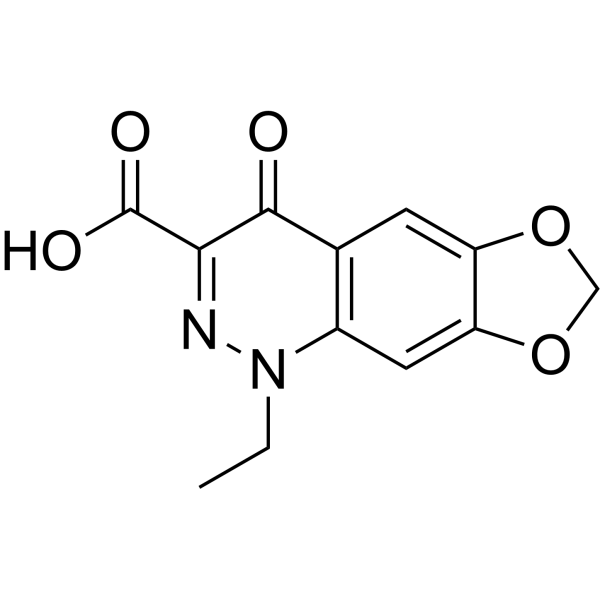
    Cinoxacin (Compound 64716), a synthetic antimicrobial related to the quinolone class of orally active antibacterial agent. Cinoxacin has antibacterial activity against many gram-negative aerobic bacteria and inhibits bacterial DNA synthesis. Cinoxacin can be used for the research of urinary tract infections and bacterial prostatitis .
    Cinoxacin
  • HY-16487

    TMFX; TA-167 free acid; A-62254 free acid

    Bacterial Antibiotic Infection
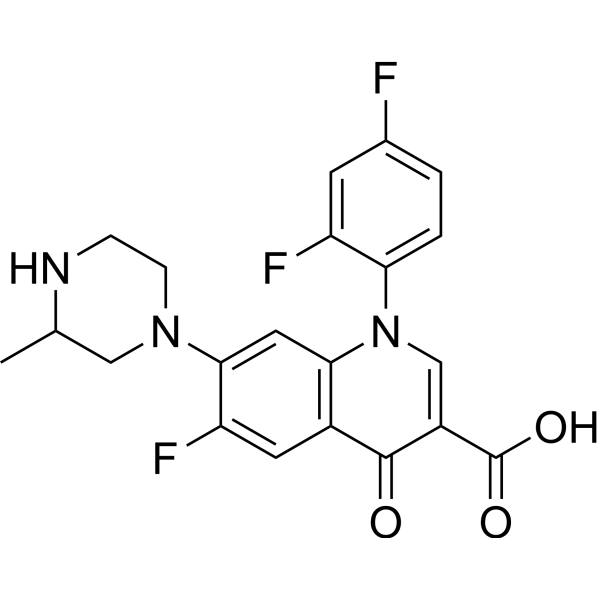
    Temafloxacin (TMFX) is an orally active quinolone broad-spectrum antibacterial agent. Temafloxacin is well tolerated in lower respiratory and genitourinary tract infections .
    Temafloxacin
  • HY-16745

    KRP-AM1977

    Beta-lactamase Bacterial Antibiotic Infection
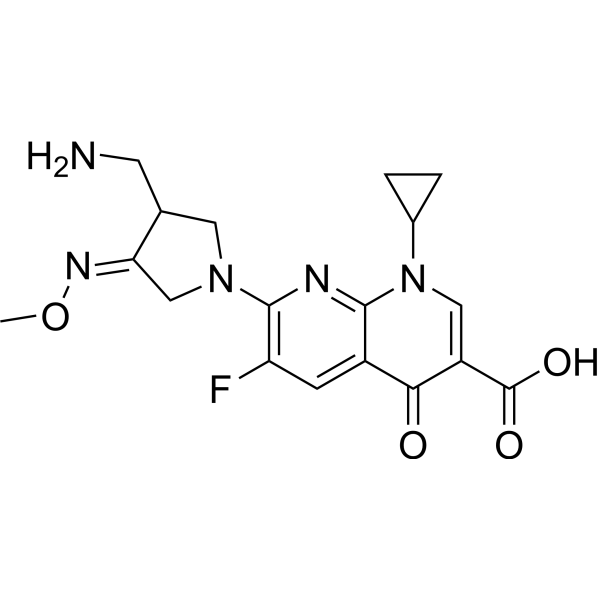
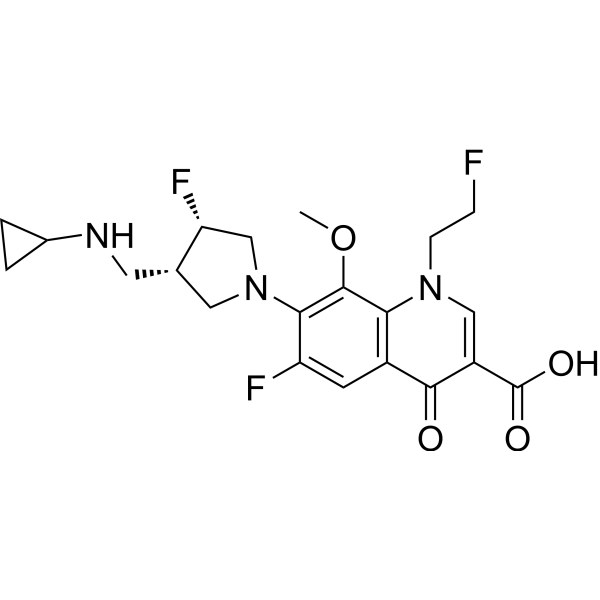
    Lascufloxacin (KRP-AM1977X) is a potent and orally active fluoroquinolone antibacterial agent. Lascufloxacin potently inhibits infections caused by various pathogens, including quinolone-resistant strains. Lascufloxacin has the potential for various infectious diseases treatment, including lower respiratory tract infections .
    Lascufloxacin
  • HY-116228

    Caderofloxacin; CS-940

    Bacterial Infection
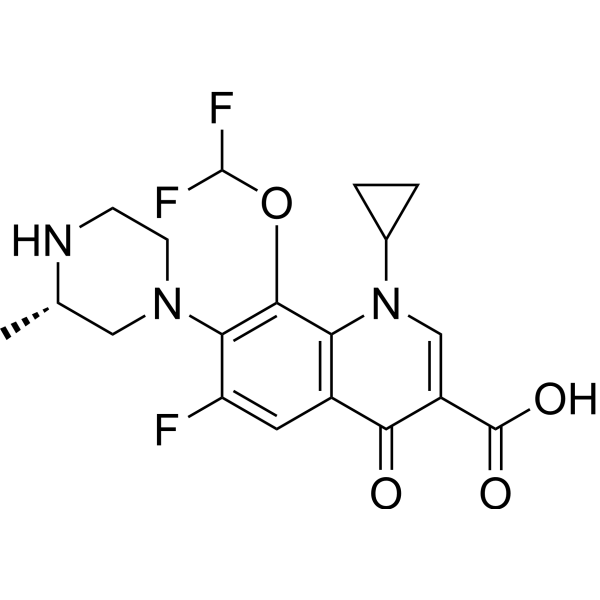
    Cadrofloxacin (Caderofloxacin; CS-940) is an orally active antibacterial agent with significant bactericidal activity against quinolone-resistant Staphylococcus aureus, Gram-positive bacteria, Gram-negative bacteria and anaerobic bacteria. Cadrofloxacin effectively improves systemic infection and experimental Klebsiella pneumoniae pneumonia in mice. Cadrofloxacin can be widely used in research related to systemic bacterial infections and bacterial pneumonia .
    Cadrofloxacin
  • HY-U00221

    Win49375

    Bacterial Infection
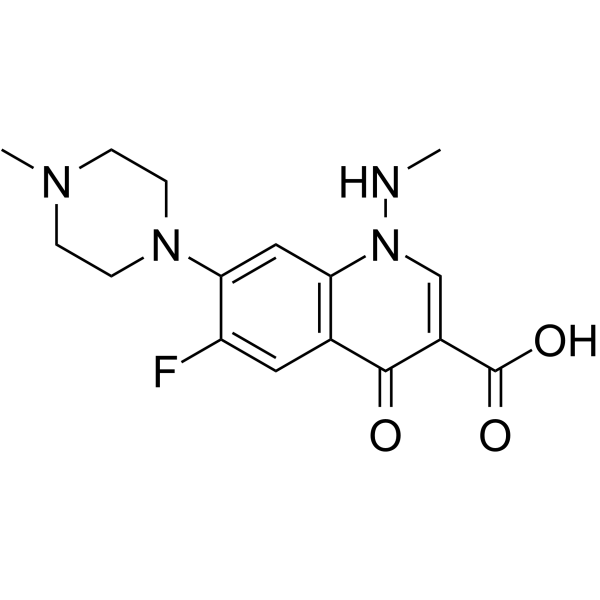
    Amifloxacin (Win49375) is a synthetic antibacterial agent of the quinolone class.
    Amifloxacin
  • HY-W004769

    α-Naphthoquinoline

    Environmental Pollutants Drug Intermediate Others
    Benzo[h]quinolone is a widespread environmental pollutant. Benzo[h]quinolone is mutagenic. Benzo(h)quinoline derivatives can serve as G-quadruplex binding agents .
    Benzo[h]quinoline
  • HY-116229

    SB-265805; LB20304

    Antibiotic Bacterial Infection
    Gemifloxacin, a fluoroquinolone, is a potent and orally active antipneumococcal agent. Gemifloxacin shows bactericidal activity against highly quinolone-resistant pneumococci.Gemifloxacin can be used for the research of respiratory infections, such as community-acquired pneumonia (CAP) and acute exacerbation of chronic bronchitis (AECB) .
    Gemifloxacin
  • HY-113595

    TMFX hydrochloride; TA-167; A-62254

    Antibiotic Bacterial Infection
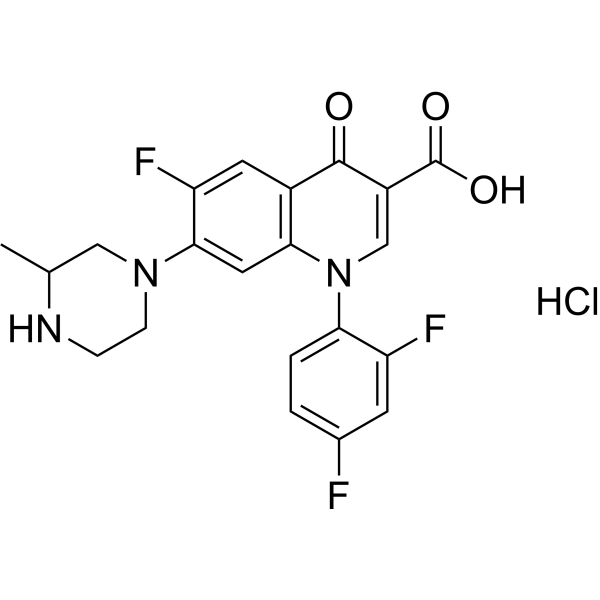
    Temafloxacin (TMFX) hydrochloride is an orally active quinolone broad-spectrum antibacterial agent. Temafloxacin hydrochloride is well tolerated in lower respiratory and genitourinary tract infections .
    Temafloxacin hydrochloride
  • HY-171190

    Parasite Infection
    ELQ-316 is an endochinlike quinolone compound and an anti-parasite agent. ELQ-316 demonstrates a great efficacy against acute and chronic experimental toxoplasmosis .
    ELQ-316
  • HY-122260

    Bacterial Infection
    S-25932 is a potent 4-quinolones antibacterial agent. S-25932 shows broad gram-negative antibacterial activity. S-25932 shows inhibition for Enterobacter aerogenes, Enterobacter addlomerans, Enterobacter coloacae, Escherichia coli with MIC90 values of 1.0, 2.0, 1.0, 0.25 µg/mL, respectively .
    S-25932
  • HY-B0343AR

    A-56620 hydrochloride (Standard)

    Reference Standards Bacterial Antibiotic Infection
    Sarafloxacin (hydrochloride) (Standard) is the analytical standard of Sarafloxacin (hydrochloride). This product is intended for research and analytical applications. Sarafloxacin (hydrochloride) (A-56620 (hydrochloride)) is a quinolone antibiotic agent.
    Sarafloxacin hydrochloride (Standard)
  • HY-179070

    Apoptosis Cancer
    Anticancer agent 280 TFA (Compound 65) is an anti-cancer agent targeting triple-negative breast cancer (TNBC). Anticancer agent 280 TFA exhibits IC50 values of Anticancer agent 280 TFA for MDA-MB-231, MDA-MB-231/LM2-4, Jurkat, and MCF-7 of 7.1, 11.65, 6.99, and 21.51 μM respectively. Anticancer agent 280 TFA can cause significant arrest of cells in the S phase and induce cell apoptosis. Anticancer agent 280 TFA can be used for the study of TNBC .
    Anticancer agent 281 TFA
  • HY-179062

    Apoptosis Cancer
    Anticancer agent 280 (Compound 65) is an anti-cancer agent targeting triple-negative breast cancer (TNBC). Anticancer agent 280 exhibits IC50 values of Anticancer agent 280 for MDA-MB-231, MDA-MB-231/LM2-4, Jurkat, and MCF-7 of 7.1, 11.65, 6.99, and 21.51 μM respectively. Anticancer agent 280 can cause significant arrest of cells in the S phase and induce cell apoptosis. Anticancer agent 280 can be used for the study of TNBC .
    Anticancer agent 280
  • HY-123614

    Bacterial Infection
    PD 140248 hydrochloride is a quinolone broad-spectrum antibacterial agent with good in vitro bacteriostatic activity, especially having a significant inhibitory effect on Gram-positive bacteria .
    PD 140248 hydrochloride
  • HY-113642

    Topoisomerase Cancer
    CP-67804 is a quinolone derivative, is a topoisomerase II-targeted agent. CP-67804 effectively enhances DNA cleavage mediated by eukaryotic topoisomerase II. CP-67804 has potential as an antineoplastic agent .
    CP-67804
  • HY-W018677S

    Antibiotic Infection
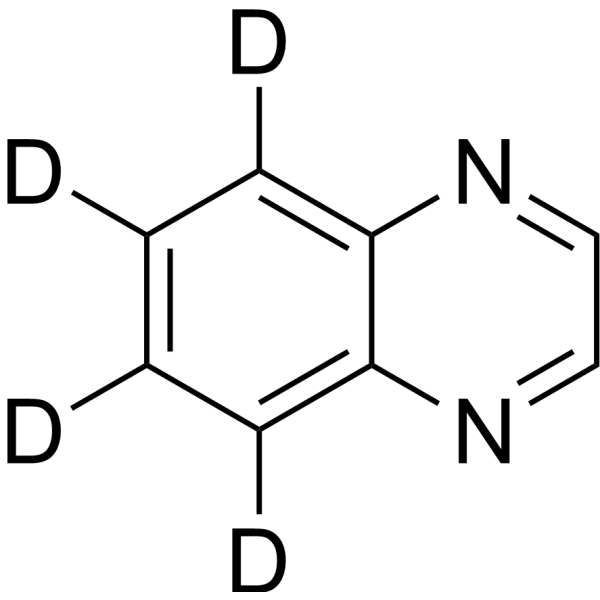
    Quinoxaline-d4 is the deuterium labeled Quinoxaline . Quinoxaline is a chemical compound that acts as an intermediate for anti-tuberculosis agent Pyrazinamide. Quinoxaline presents a structure that is similar to quinolone antibiotics .
    Quinoxaline-d4
  • HY-162130

    Bacterial Infection
    Antibacterial agent 176 (Compound 6f) is a potent PqsR antagonist. Antibacterial agent 176 has a good inhibitory effect on P. aeruginosa CF, and a significant inhibitory effect on the production of pyocyanin, 2-alkyl-4 (1H) -quinolones .
    Antibacterial agent 176
  • HY-105033

    Pirfloxacin

    Bacterial Infection
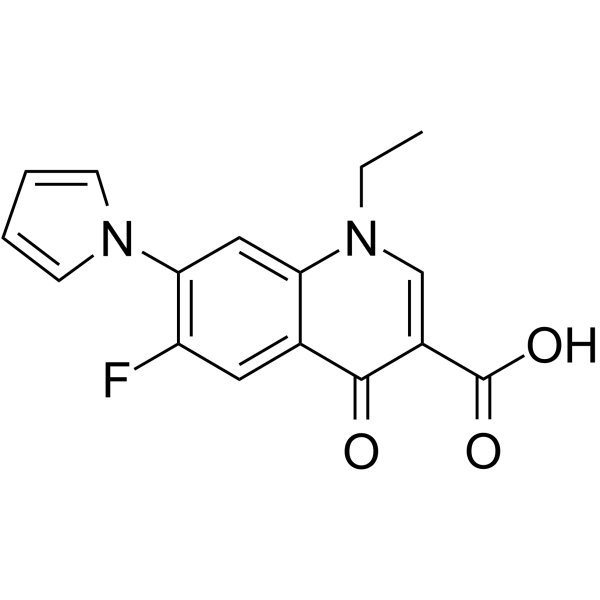
    Irloxacin (Pirfloxacin) is a quinolone antibacterial agent. Irloxacin shows greater activity with an acid pH. Irloxacin has a good in vitro antimicrobial spectrum against both gram-positive and gram-negative bacteria. Orally active .
    Irloxacin
  • HY-16487R

    TMFX (Standard); TA-167 free acid (Standard); A-62254 free acid (Standard)

    Reference Standards Bacterial Antibiotic Infection
    Temafloxacin (Standard) is the analytical standard of Temafloxacin. This product is intended for research and analytical applications. Temafloxacin (TMFX) is an orally active quinolone broad-spectrum antibacterial agent. Temafloxacin is well tolerated in lower respiratory and genitourinary tract infections .
    Temafloxacin (Standard)
  • HY-161258

    Bacterial Infection
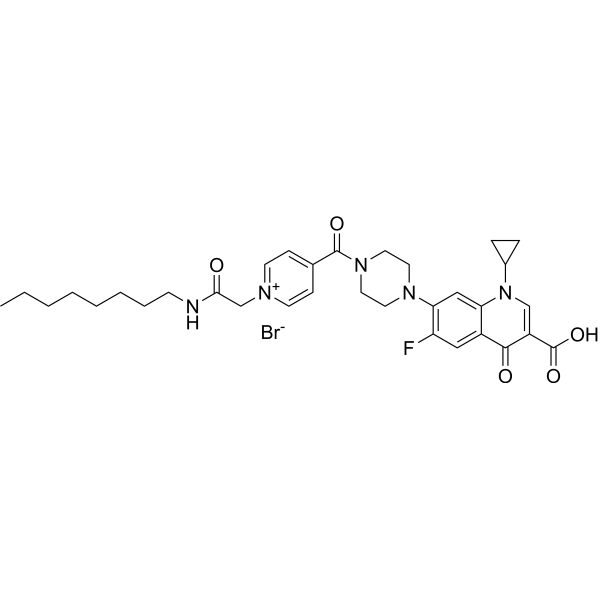
    Antibacterial agent 181 (Compound 3f) is a potent ciprofloxacin cationic antibacterial agent with low cytotoxicity. The MIC values of Antibacterial agent 181 against Staphylococcus aureus and Escherichia coli are both 2 μg/mL .
    Antibacterial agent 181
  • HY-105434

    Bacterial Infection
    CP-74667 is a quinolone antibacterial agent. CP-74667 shows high activity against Xanthomonas maltophilia (MIC50 = 1 μg/mL), Staphylococcus spp. (MIC50 = 0.06-0.12 μg/mL) and enterococci (MIC50 = 0.5-4 μg/mL) .
    CP-74667
  • HY-113703

    Antibiotic Cancer
    PD117588 is a quinolone antibacterial agent with a broad range of antibacterial activity. PD117588 exhibits excellent activity against a variety of Gram-positive and Gram-negative bacteria from cancer patients, especially against all Gram-positive strains, including methicillin-resistant Staphylococcus aureus, coagulase-negative Staphylococci, and Enterococci. PD117588 is also very effective against most Gram-negative bacilli, although ciprofloxacin shows stronger activity against Pseudomonas aeruginosa. Compared with other quinolone antibiotics, the minimum inhibitory concentration of PD117588 outperforms most of the tested microorganisms, including imipenem and ceftazidime .
    PD117588
  • HY-108021

    Bacterial Infection
    HT-61 is a quinolone antibacterial agent. HT-61 exhibits bactericidal activity against gram-positive bacteria including methicillin-susceptible Staphylococcus aureus (MSSA) and methicillin-resistant Staphylococcus aureus (MRSA). HT-61 can enhance the effect of Tobramycin (HY-B0441) against Pseudomonas aeruginosa .
    HT-61
  • HY-U00092

    Bacterial Infection
    BAY-Y 3118 is a quinolone antibacterial agent. BAY-Y 3118 has a broad antibacterial spectrum in vitro. BAY-Y 3118 exhibits high activity against gram-positive cocci and anaerobes. BAY-Y 3118 shows moderate activity against Enterobacteriaceae and Pseudomonas aeruginosa. BAY-Y 3118 can be used in the research of infectious diseases .
    BAY-Y 3118
  • HY-117657

    Topoisomerase Bacterial Inflammation/Immunology Cancer
    (-)-BO 2367, an antimicrobial quinolone, is a strong mammalian and bacterial topoisomerase II inhibitor. (-)-BO 2367 shows IC50 values with 3.8 μM, 0.5 μM, and 1 μM against the DNA relaxation activity of L1210 topoisomerase II and the supercoiling activities of Escherichia coli gyrase and Micrococcus luteus gyrase, respectively. (-)-BO 2367 is a potent antitumor agent .
    (-)-BO 2367
  • HY-B1085R

    Compound 64716 (Standard)

    Reference Standards Bacterial Antibiotic DNA/RNA Synthesis Infection
    Cinoxacin (Standard) is the analytical standard of Cinoxacin. This product is intended for research and analytical applications. Cinoxacin (Compound 64716), a synthetic antimicrobial related to the quinolone class of orally active antibacterial agent. Cinoxacin has antibacterial activity against many gram-negative aerobic bacteria and inhibits bacterial DNA synthesis. Cinoxacin can be used for the research of urinary tract infections and bacterial prostatitis .
    Cinoxacin (Standard)
  • HY-146098

    Bacterial Antibiotic Infection
    Antibacterial agent 105 (Compound 17) is a phenanthrolinic analog of quinolones show antibacterial activity against M. tuberculosis with antibacterial activity (MIC90=2.64 μM). Antibacterial agent 105 exhibits antibacterial activities against different bacterial species with MIC90s of 11.18, 11.18, 0.70, 1.40, 44.70, and 22.35 μM for M. smegmatis, M. aurum, M. marinum, BCG, E. aerogenes and S. aureus, respectively .
    Antibacterial agent 105
  • HY-B1085S

    Isotope-Labeled Compounds Infection
    Cinoxacin-d5 is the deuterium-labeled Cinoxacin (HY-B1085) . Cinoxacin (Compound 64716),a synthetic antimicrobial related to the quinolone class of orally active antibacterial agent. Cinoxacin has antibacterial activity against many gram-negative aerobic bacteria and inhibits bacterial DNA synthesis. Cinoxacin can be used for the research of urinary tract infections and bacterial prostatitis .
    Cinoxacin-d5
  • HY-113718

    Bacterial Topoisomerase DNA/RNA Synthesis Infection
    DS21412020 is a fluoroquinolone antibacterial agent. DS21412020 inhibits bacterial DNA gyrase (GyrA) and topoisomerase IV, leading to DNA breaks. DS21412020 exhibits significant activity against Gram-positive bacteria such as Staphylococcus aureus (MIC = 0.006 μg/mL), Streptococcus pneumoniae (MIC = 0.05 μg/mL), and Methicillin (HY-121544)-resistant Staphylococcus aureus (MIC = 0.2 μg/mL), and Gram-negative bacteria such as Escherichia coli (MIC = 0.006 μg/mL) and Pseudomonas aeruginosa (MIC = 0.78 μg/mL). DS21412020 significantly reduces bacterial load in mouse pneumonia and MRSA infection models. DS21412020 can be used in the development of next-generation quinolone antibiotics .
    DS21412020
  • HY-106655

    Bacterial Infection
    PGE 9262932 is a quinolone antibacterial agent. PGE 9262932 can be used for the research of infection .
    PGE 9262932
  • HY-106773

    Bacterial Infection
    Norfloxacin succinil is a quinolone antibacterial agent. Norfloxacin succinil can be used in the research of infectious diseases such as urinary tract infections .
    Norfloxacin succinil
  • HY-177967

    Drug Derivative Cancer
    Antitumor agent-209 (Compound 10g), a quinolone derivative, is an antitumor agent. Antitumor agent-209 can inhibit proliferation of HCT-116, RKO, DLD1, HepG2, BGC-823, NCI-H1650 and SK-OV-3 cells with IC50 values of 0.37, 0.58, 0.81, 0.79, 0.89, 0.78 and 0.89 μM .
    Antitumor agent-209
  • HY-W683763

    HSR-903 free base

    Bacterial Infection
    Olamufloxacin (HSR-903) is an orally active fluoroquinolone antibacterial agent. Olamufloxacin inhibits DNA supercoiling activity. Olamufloxacin exhibits activity against Gram-positive, Gram-negative, chlamydial, and quinolone-resistant bacterial strains. Olamufloxacin can be used for the research of bacterial infections .
    Olamufloxacin
  • HY-105033R

    Pirfloxacin (Standard)

    Reference Standards Bacterial Infection
    Irloxacin (Standard) is the analytical standard of Irloxacin (HY-105033). This product is intended for research and analytical applications. Irloxacin (Pirfloxacin) is a quinolone antibacterial agent. Irloxacin shows greater activity with an acid pH. Irloxacin has a good in vitro antimicrobial spectrum against both gram-positive and gram-negative bacteria. Orally active .
    Irloxacin (Standard)
  • HY-W683763A

    HSR-903

    Bacterial Infection
    Olamufloxacin (HSR-903) methanesulfonate is an orally active fluoroquinolone antibacterial agent. Olamufloxacin methanesulfonate inhibits DNA supercoiling activity. Olamufloxacin methanesulfonate exhibits activity against Gram-positive, Gram-negative, chlamydial, and quinolone-resistant bacterial strains. Olamufloxacin methanesulfonate can be used for the research of bacterial infections .
    Olamufloxacin methanesulfonate
  • HY-U00092A

    Bacterial Infection
    BAY-Y 3118 hydrochloride is a quinolone antibacterial agent. BAY-Y 3118 hydrochloride has a broad antibacterial spectrum in vitro. BAY-Y 3118 hydrochloride exhibits high activity against gram-positive cocci and anaerobes. BAY-Y 3118 hydrochloride shows moderate activity against Enterobacteriaceae and Pseudomonas aeruginosa. BAY-Y 3118 hydrochloride can be used in the research of infectious diseases .
    BAY-Y 3118 hydrochloride
  • HY-116228A

    Caderofloxacin (hydrochloride); CS-940 (hydrochloride)

    Bacterial Infection
    Cadrofloxacin (Caderofloxacin; CS-940) hydrochloride is an orally active antibacterial agent with significant bactericidal activity against quinolone-resistant Staphylococcus aureus, Gram-positive bacteria, Gram-negative bacteria and anaerobic bacteria. Cadrofloxacin hydrochloride effectively improves systemic infection and experimental Klebsiella pneumoniae pneumonia in mice. Cadrofloxacin hydrochloride can be widely used in research related to systemic bacterial infections and bacterial pneumonia .
    Cadrofloxacin (hydrochloride)
  • HY-W098807

    Drug Derivative Cancer
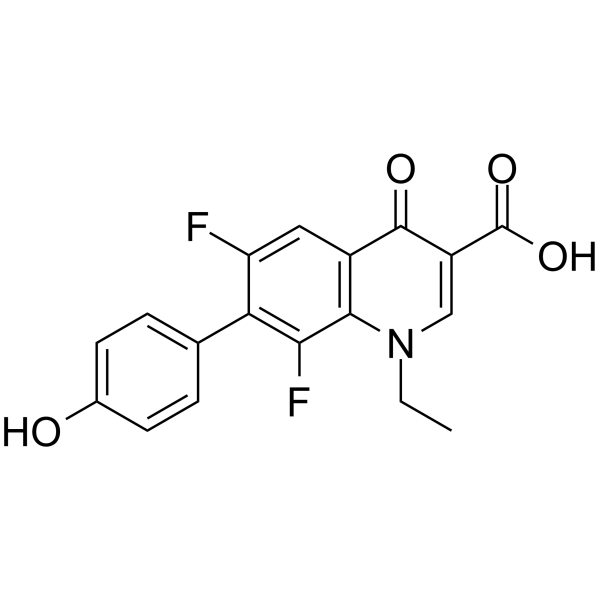
    4-Chloro-7-ethoxyquinoline (Compound 9a), a quinolone derivative, is an anticancer agent. 4-Chloro-7-ethoxyquinoline can inhibit proliferation of HCT-116, RKO, DLD1, HepG2, BGC-823, NCI-H1650 and SK-OV-3 cells with IC50 values of 3.16, 3.87, 2.75, 2.66, 3.91, 3.34 and 3.46μM .
    4-Chloro-7-ethoxyquinoline

Inquiry Online

Your information is safe with us. * Required Fields.

Salutation


Country or Region *

Applicant Name *


Organization Name *

Department *


Email Address *


Product Name *

Cat. No.


Requested quantity *

Phone Number *


Remarks

Inquiry Online

Inquiry Information

Product Name:
Cat. No.:
Quantity:
MCE Japan Authorized Agent: