1. Search Result
Search Result
Results for "

sodium currents (I_Na)

" in MedChemExpress (MCE) Product Catalog:

21

Inhibitors & Agonists

1

Natural
Products

5

Isotope-Labeled Compounds

Cat. No. Product Name Target Research Areas Chemical Structure
  • HY-B0280
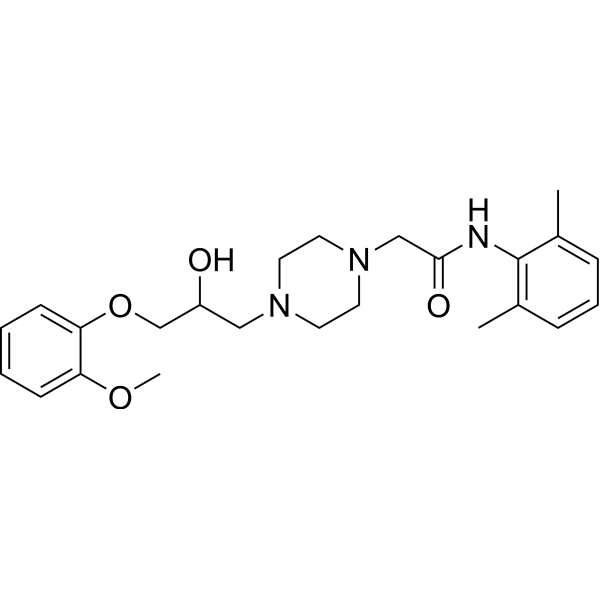
    Ranolazine
    4 Publications Verification

    CVT 303; RS 43285-003

    Sodium Channel Calcium Channel Cardiovascular Disease Cancer
    Ranolazine (CVT 303) is an anti-angina drug that achieves its effects by inhibiting the late phase of inward sodium current (INa and IKr with IC50 values of 6 μM and 12 μM, respectively) without affecting heart rate or blood pressure (BP) . Ranolazine is also a partial fatty acid oxidation (FAO) inhibitor . Antianginal agent.
    Ranolazine
  • HY-100001
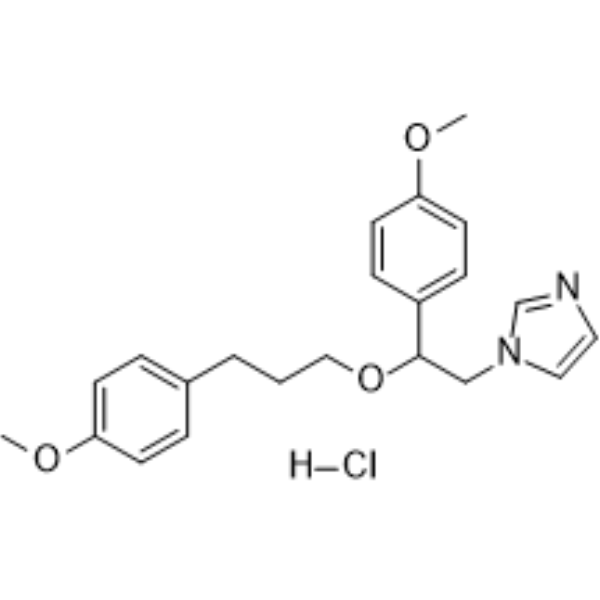
    SKF-96365 (hydrochloride)
    Maximum Cited Publications
    27 Publications Verification

    TRP Channel CRAC Channel Autophagy CaMK Akt Apoptosis Na+/Ca2+ Exchanger Calcium Channel Neurological Disease Inflammation/Immunology Cancer
    SKF-96365 hydrochloride is a TRPC channel antagonist and store-operated calcium entry (SOCE) inhibitor. SKF-96365 hydrochloride reduces calcium ion influx by inhibiting the activity and expression of TRPC6, STIM1 and Orai1. SKF-96365 hydrochloride inhibits voltage-gated sodium current (cardiac INa/NaV1.5) and slows myocardial conduction. SKF-96365 hydrochloride inhibits phosphorylation/activation of CaMKIIγ and suppresses the downstream AKT signaling pathway. SKF-96365 hydrochloride induces G2/M phase cell cycle arrest, apoptosis and cytoprotective autophagy in colorectal cancer cells. SKF-96365 hydrochloride alleviates allergic rhinitis symptoms by reducing inflammatory cytokine levels. SKF-96365 hydrochloride reduces intracellular calcium overload, inhibits Homer1 expression, prevents nuclear damage and suppresses apoptosis. SKF-96365 hydrochloride inhibits the growth of colorectal cancer xenografts in nude mice . SKF-96365 hydrochloride is applicable to research related to allergic rhinitis, colorectal cancer, Parkinson's disease, persistent spontaneous nociception and hyperalgesia .
    SKF-96365 (hydrochloride)
  • HY-12593
    GS967
    5+ Cited Publications

    Sodium Channel Cardiovascular Disease
    GS967 (GS-458967) is a potent, and selective inhibitor of cardiac late sodium current (late INa ) with IC50 values of 0.13 and 0.21 μM for ventricular myocytes and isolated hearts, respectively.
    GS967
  • HY-17401
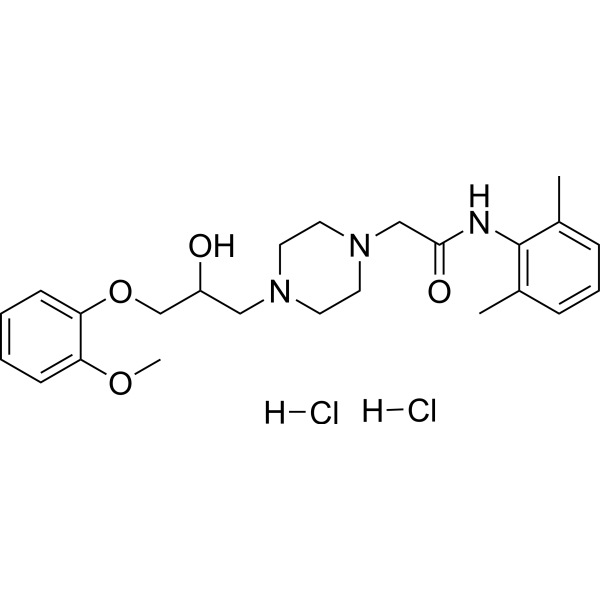
    Ranolazine dihydrochloride
    4 Publications Verification

    CVT 303 dihydrochloride; RS 43285

    Calcium Channel Sodium Channel Autophagy Cardiovascular Disease Cancer
    Ranolazine dihydrochloride (CVT 303 dihydrochloride) is an anti-angina agent that achieves its effects by inhibiting the late phase of inward sodium current (INa and IKr with IC50 values of 6 μM and 12 μM, respectively) without affecting heart rate or blood pressure (BP) . Ranolazine dihydrochloride is also a partial fatty acid oxidation inhibitor .
    Ranolazine dihydrochloride
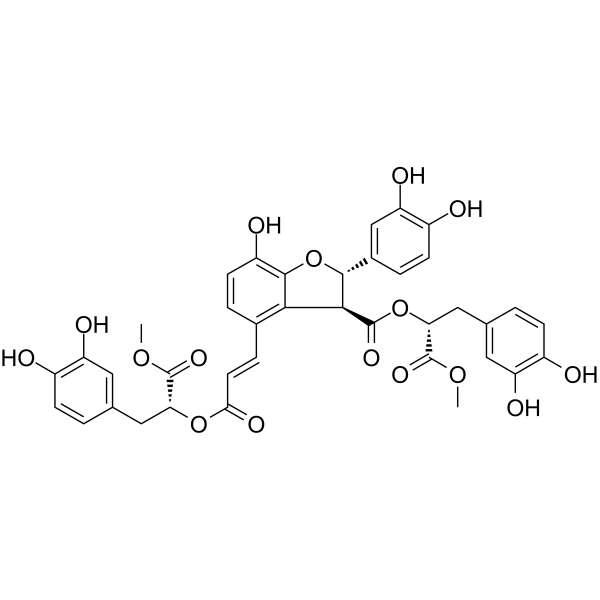
  • HY-N6868

    dmLSB

    Sodium Channel Cardiovascular Disease
    Dimethyl lithospermate B (dmLSB) is a selective Na + channel agonist. Dimethyl lithospermate B slows inactivation of sodium current (INa), leading to increased inward current during the early phases of the action potential (AP) .
    Dimethyl lithospermate B
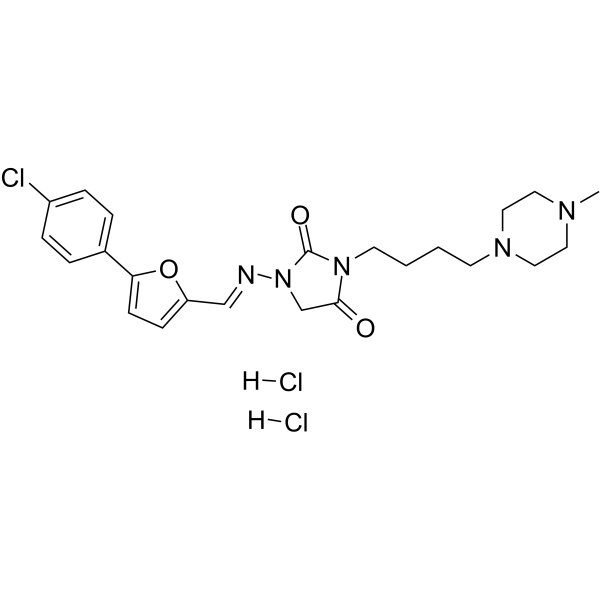
  • HY-18600A
    Azimilide dihydrochloride
    2 Publications Verification

    NE-10064 dihydrochloride

    Potassium Channel Calcium Channel Sodium Channel Cardiovascular Disease
    Azimilide (NE-10064) dihydrochloride is a class III antiarrhythmic agent, which works by blocking potassium channels in the heart. Azimilide dihydrochloride is a dual blocker of IKs (IC50 = 2.6 μM (2mM [K⁺]ₑ)) and IKr (IC50 = 1 μM (4 mM [K⁺])). Azimilide dihydrochloride blocked HERG channel at 0.1 and 1 Hz with IC50s of 1.4 μM and 5.2 μM respectively. Azimilide dihydrochloride also inhibits L-type calcium current (ICa) (IC50 = 17.8 μM) and sodium current (INa) (IC50 = 19 μM). Azimilide dihydrochloride can be used for the study of atrial fibrillation and ventricular fibrillation .
    Azimilide dihydrochloride
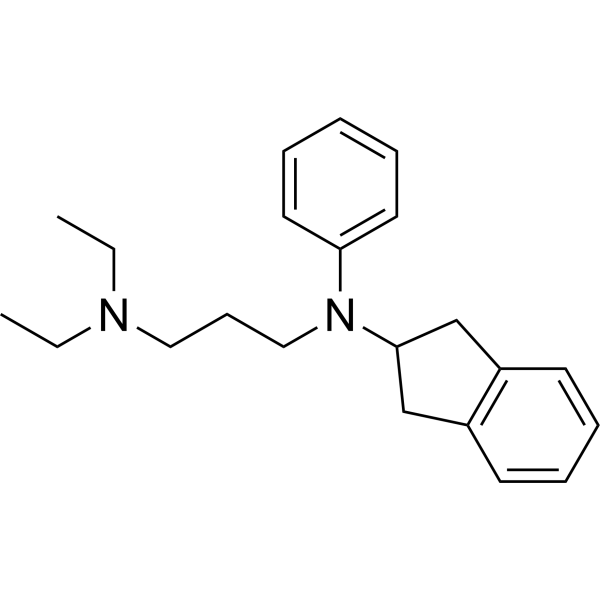
  • HY-A0236

    Sodium Channel Potassium Channel Calcium Channel Calmodulin Cardiovascular Disease
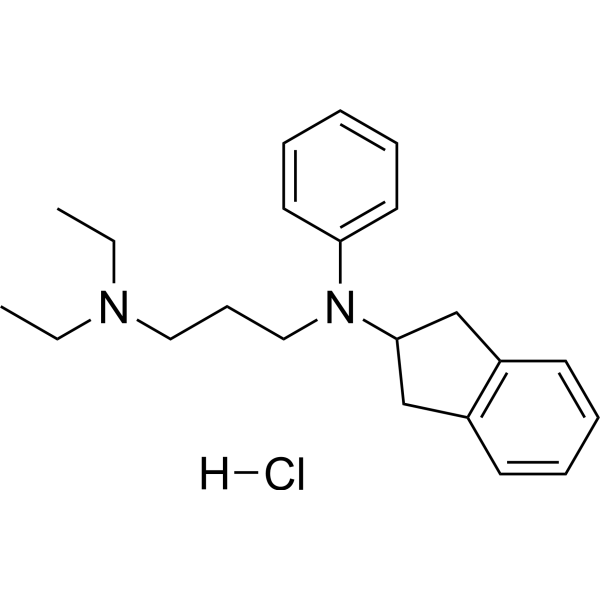
    Aprindine is an Ib-class anti-arrhythmic agent. Aprindine mainly exerts its effect by blocking sodium channels (INa), thereby reducing the excitability and conduction velocity of cardiac muscle cells. Aprindine significantly inhibits delayed potassium currents, which helps to prolong the atrial effective refractory period (AERP) and inhibit the occurrence of atrial fibrillation. Aprindine can also regulate intracellular calcium ion concentration by inhibiting Na +/Ca 2+ exchange current (INCX), thereby further stabilizing cardiac electrical activity. Aprindine can be used for the study of atrial fibrillation (AF) and ventricular arrhythmias .
    Aprindine
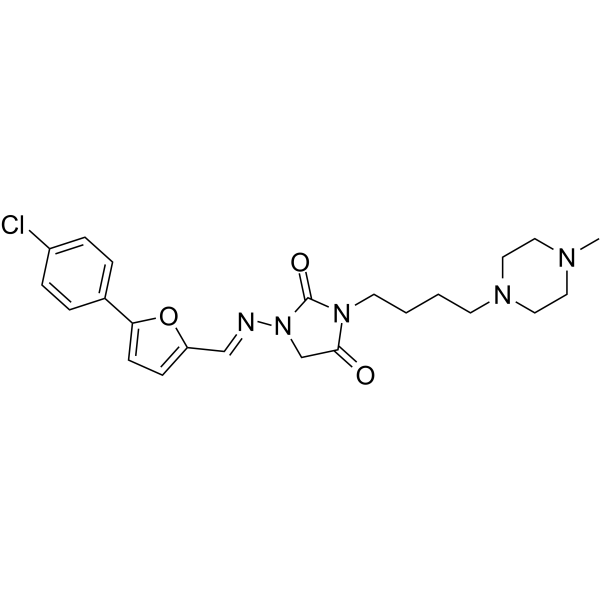
  • HY-18600
    Azimilide
    2 Publications Verification

    NE-10064

    Potassium Channel Calcium Channel Sodium Channel Cardiovascular Disease
    Azimilide (NE-10064) is a class III antiarrhythmic agent, which works by blocking potassium channels in the heart. Azimilide is a dual blocker of IKs (IC50 = 2.6 μM (2mM [K⁺]ₑ)) and IKr (IC50 = 1 μM (4 mM [K⁺])). Azimilide blocked HERG channel at 0.1 and 1 Hz with IC50s of 1.4 μM and 5.2 μM respectively. Azimilide also inhibits L-type calcium current (ICa) (IC50 = 17.8 μM) and sodium current (INa) (IC50 = 19 μM). Azimilide can be used for the study of atrial fibrillation and ventricular fibrillation .
    Azimilide
  • HY-125942
    SKF-96365
    Maximum Cited Publications
    27 Publications Verification

    CRAC Channel TRP Channel CaMK Akt Apoptosis Autophagy Na+/Ca2+ Exchanger Calcium Channel Neurological Disease Inflammation/Immunology Cancer
    SKF-96365 is a TRPC channel antagonist and store-operated calcium entry (SOCE) inhibitor. SKF-96365 reduces calcium ion influx by inhibiting the activity and expression of TRPC6, STIM1 and Orai1. SKF-96365 inhibits voltage-gated sodium current (cardiac INa/NaV1.5) and slows myocardial conduction. SKF-96365 inhibits phosphorylation/activation of CaMKIIγ and suppresses the downstream AKT signaling pathway. SKF-96365 induces G2/M phase cell cycle arrest, apoptosis and cytoprotective autophagy in colorectal cancer cells. SKF-96365 alleviates allergic rhinitis symptoms by reducing inflammatory cytokine levels. SKF-96365 reduces intracellular calcium overload, inhibits Homer1 expression, prevents nuclear damage and suppresses apoptosis. SKF-96365 inhibits the growth of colorectal cancer xenografts in nude mice . SKF-96365 is applicable to research related to allergic rhinitis, colorectal cancer, Parkinson's disease, persistent spontaneous nociception and hyperalgesia .
    SKF-96365
  • HY-A0236A

    Sodium Channel Potassium Channel Calcium Channel Calmodulin Cardiovascular Disease
    Aprindine hydrochloride is an Ib-class anti-arrhythmic agent. Aprindine hydrochloride mainly exerts its effect by blocking sodium channels (INa), thereby reducing the excitability and conduction velocity of cardiac muscle cells. Aprindine hydrochloride significantly inhibits delayed potassium currents, which helps to prolong the atrial effective refractory period (AERP) and inhibit the occurrence of atrial fibrillation. Aprindine hydrochloride can also regulate intracellular calcium ion concentration by inhibiting Na +/Ca 2+ exchange current (INCX), thereby further stabilizing cardiac electrical activity. Aprindine hydrochloride can be used for the study of atrial fibrillation (AF) and ventricular arrhythmias .
    Aprindine hydrochloride
  • HY-17401S

    CVT 303-d8 dihydrochloride; RS 43285-d8

    Calcium Channel Sodium Channel Autophagy Cardiovascular Disease Cancer
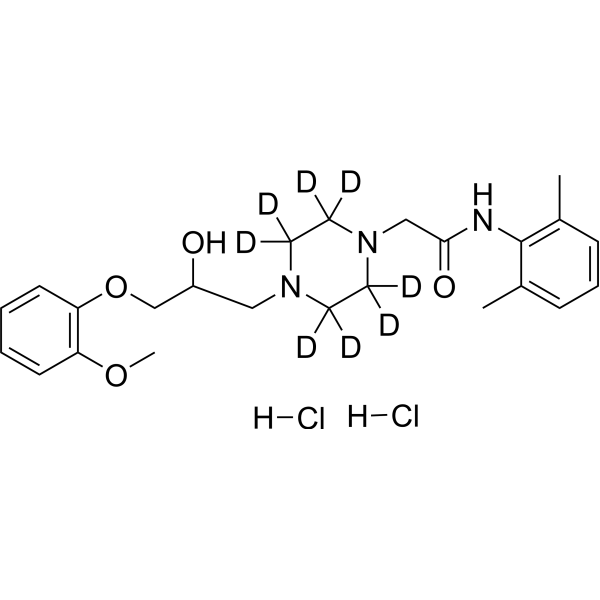
    Ranolazine-d8 (dihydrochloride) is the deuterium labeled Ranolazine dihydrochloride. Ranolazine dihydrochloride (CVT 303 dihydrochloride) is an anti-angina agent that achieves its effects by inhibiting the late phase of inward sodium current (INa and IKr with IC50 values of 6 μM and 12 μM, respectively) without affecting heart rate or blood pressure (BP) . Ranolazine dihydrochloride is also a partial fatty acid oxidation inhibitor .
    Ranolazine-d8 dihydrochloride
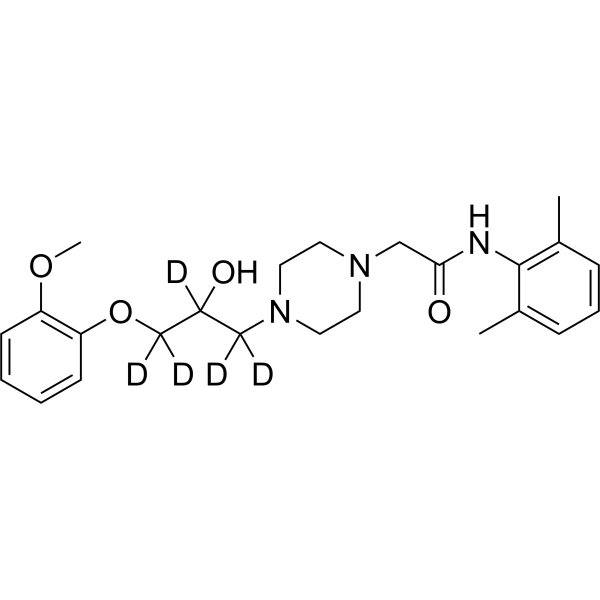
  • HY-B0280S2

    Sodium Channel Calcium Channel Cardiovascular Disease Cancer
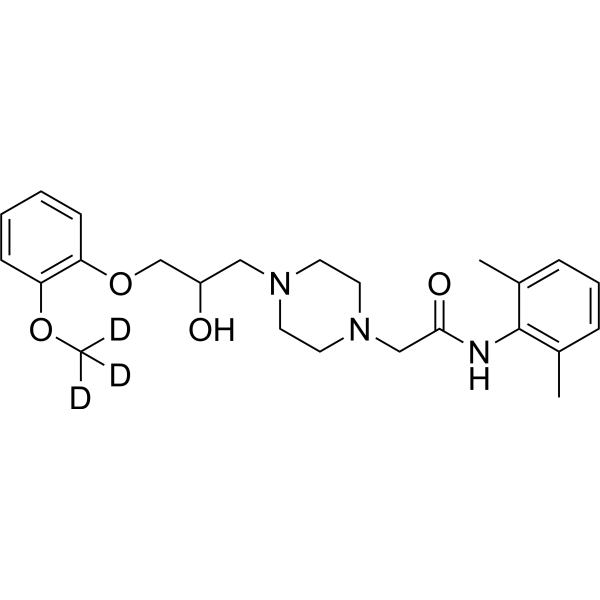
    Ranolazine-d3 is the deuterium labeled Ranolazine. Ranolazine (CVT 303) is an anti-angina agent that achieves its effects by inhibiting the late phase of inward sodium current (INa and IKr with IC50 values of 6 μM and 12 μM, respectively) without affecting heart rate or blood pressure (BP) . Ranolazine is also a partial fatty acid oxidation (FAO) inhibitor . Antianginal agent.
    Ranolazine-d3
  • HY-B0280S1

    Isotope-Labeled Compounds Sodium Channel Calcium Channel Cardiovascular Disease Cancer
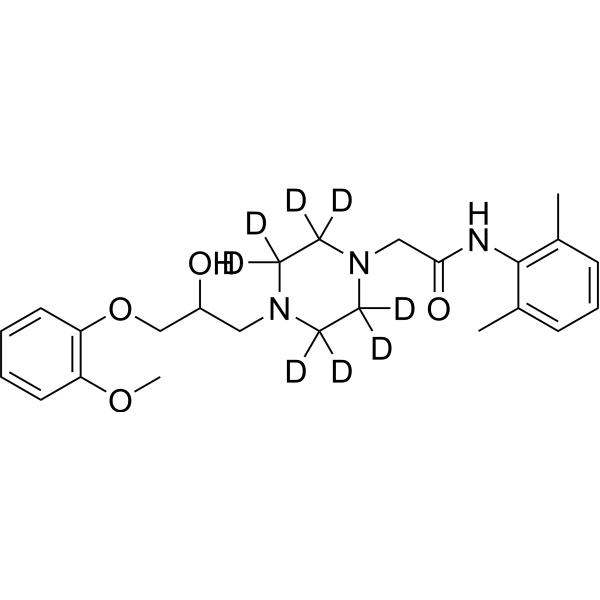
    Ranolazine-d8 is the deuterium labeled Ranolazine. Ranolazine (CVT 303) is an anti-angina agent that achieves its effects by inhibiting the late phase of inward sodium current (INa and IKr with IC50 values of 6 μM and 12 μM, respectively) without affecting heart rate or blood pressure (BP) . Ranolazine is also a partial fatty acid oxidation (FAO) inhibitor . Antianginal agent.
    Ranolazine-d8
  • HY-17401R

    CVT 303 dihydrochloride (Standard); RS 43285 (Standard)

    Calcium Channel Sodium Channel Autophagy Reference Standards Cardiovascular Disease Cancer
    Ranolazine (dihydrochloride) (Standard) is the analytical standard of Ranolazine (dihydrochloride). This product is intended for research and analytical applications. Ranolazine dihydrochloride (CVT 303 dihydrochloride) is an anti-angina agent that achieves its effects by inhibiting the late phase of inward sodium current (INa and IKr with IC50 values of 6 μM and 12 μM, respectively) without affecting heart rate or blood pressure (BP) . Ranolazine dihydrochloride is also a partial fatty acid oxidation inhibitor .
    Ranolazine dihydrochloride (Standard)
  • HY-B0280S

    CVT 303-d5; RS 43285-003-d5

    Isotope-Labeled Compounds Sodium Channel Calcium Channel Cardiovascular Disease Cancer
    Ranolazine-d5 is the deuterium labeled Ranolazine. Ranolazine (CVT 303) is an anti-angina drug that achieves its effects by inhibiting the late phase of inward sodium current (INa and IKr with IC50 values of 6 μM and 12 μM, respectively) without affecting heart rate or blood pressure (BP) . Ranolazine is also a partial fatty acid oxidation (FAO) inhibitor . Antianginal agent.
    Ranolazine-d5
  • HY-12593R

    Sodium Channel Cardiovascular Disease
    GS967 (Standard) is the analytical standard of GS967. This product is intended for research and analytical applications. GS967 (GS-458967) is a potent, and selective inhibitor of cardiac late sodium current (late INa ) with IC50 values of 0.13 and 0.21 μM for ventricular myocytes and isolated hearts, respectively.
    GS967 (Standard)
  • HY-126005

    Sodium Channel Cancer
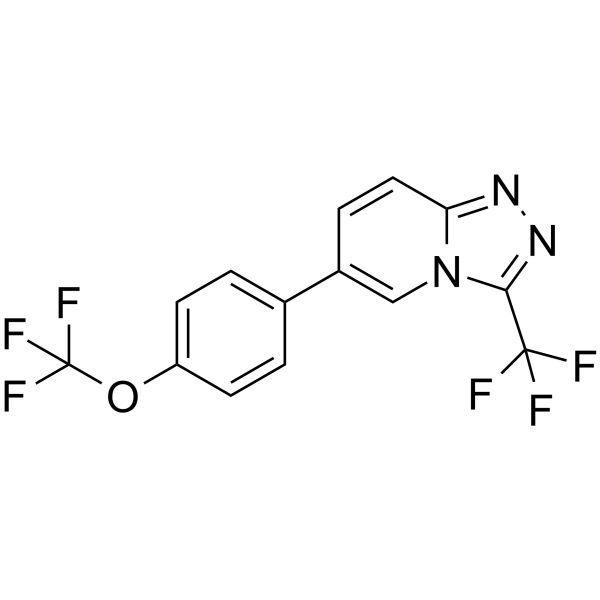
    VGSC blocker-1 is a potent and small molecule blocker of neonatal isoform of the VGSC subtype, Nav1.5 (nNav1.5). VGSC blocker-1 blocks INa peak currents 34.9% at 1 μM and inhibits cell invasion 0.3% at 1 μM in human breast cancer cell line MDA-MB-231, without affecting the cell viability .
    VGSC blocker-1
  • HY-B0280R

    CVT 303 (Standard); RS 43285-003 (Standard)

    Reference Standards Sodium Channel Calcium Channel Cardiovascular Disease Cancer
    Ranolazine (Standard) is the analytical standard of Ranolazine. This product is intended for research and analytical applications. Ranolazine (CVT 303) is an anti-angina drug that achieves its effects by inhibiting the late phase of inward sodium current (INa and IKr with IC50 values of 6 μM and 12 μM, respectively) without affecting heart rate or blood pressure (BP) . Ranolazine is also a partial fatty acid oxidation (FAO) inhibitor . Antianginal agent.
    Ranolazine (Standard)
  • HY-18600AS

    NE-10064-d8 dihydrochloride

    Isotope-Labeled Compounds Potassium Channel Calcium Channel Sodium Channel Cardiovascular Disease
    Azimilide-d8 (NE-10064-d8) dihydrochloride is the deuterium labeled Azimilide dihydrochloride (HY-18600A). Azimilide dihydrochloride is a class III antiarrhythmic agent, which works by blocking potassium channels in the heart. Azimilide dihydrochloride is a dual blocker of IKs (IC50 = 2.6 μM (2mM [K⁺]ₑ)) and IKr (IC50 = 1 μM (4 mM [K⁺])). Azimilide dihydrochloride blocked HERG channel at 0.1 and 1 Hz with IC50s of 1.4 μM and 5.2 μM respectively. Azimilide dihydrochloride also inhibits L-type calcium current (ICa) (IC50 = 17.8 μM) and sodium current (INa) (IC50 = 19 μM). Azimilide dihydrochloride can be used for the study of atrial fibrillation and ventricular fibrillation .
    Azimilide-d8 dihydrochloride
  • HY-A0236AR

    Reference Standards Sodium Channel Potassium Channel Calcium Channel Calmodulin Cardiovascular Disease
    Aprindine hydrochloride (Standard) is the analytical reference standard of Aprindine hydrochloride (HY-A0236A). This product is used for research and analytical applications. Aprindine hydrochloride is an Ib-class anti-arrhythmic agent. Aprindine hydrochloride mainly exerts its effect by blocking sodium channels (INa), thereby reducing the excitability and conduction velocity of cardiac muscle cells. Aprindine hydrochloride significantly inhibits delayed potassium currents, which helps to prolong the atrial effective refractory period (AERP) and inhibit the occurrence of atrial fibrillation. Aprindine hydrochloride can also regulate intracellular calcium ion concentration by inhibiting Na +/Ca 2+ exchange current (INCX), thereby further stabilizing cardiac electrical activity. Aprindine hydrochloride can be used for the study of atrial fibrillation (AF) and ventricular arrhythmias.
    Aprindine hydrochloride (Standard)
  • HY-124940

    Calcium Channel Potassium Channel Cardiovascular Disease
    CPU-228 is a complex class III antiarrhythmic agent. CPU-228 concentration-dependently blocks the activities of the rapid component 50 of the delayed rectifier potassium channel (IKr) and the L-type calcium channel (ICa,L), with an IC50 value of 0.909 μM for ICa,L current. CPU-228 produces negative inotropic effects and induces mild, non-frequency-dependent prolongation of the effective refractory period (ERP) in isolated left atria. CPU-228 reduces the incidence of torsades de pointes (TDP) in anesthetized rabbits and inhibits ischemia/reperfusion-induced arrhythmias in rats. CPU-228 can be used in studies related to torsades de pointes .
    CPU-228

Inquiry Online

Your information is safe with us. * Required Fields.

Salutation


Country or Region *

Applicant Name *


Organization Name *

Department *


Email Address *


Product Name *

Cat. No.


Requested quantity *

Phone Number *


Remarks

Inquiry Online

Inquiry Information

Product Name:
Cat. No.:
Quantity:
MCE Japan Authorized Agent:

