



SKF-96365 (hydrochloride)
Based on 29 publication(s) in Google Scholar
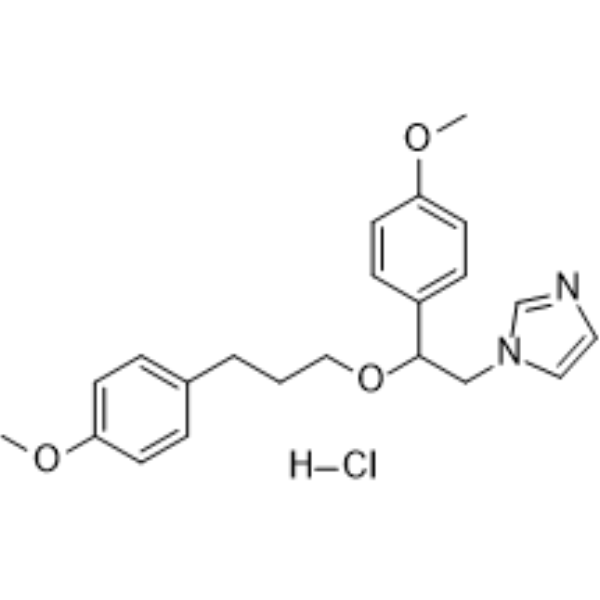
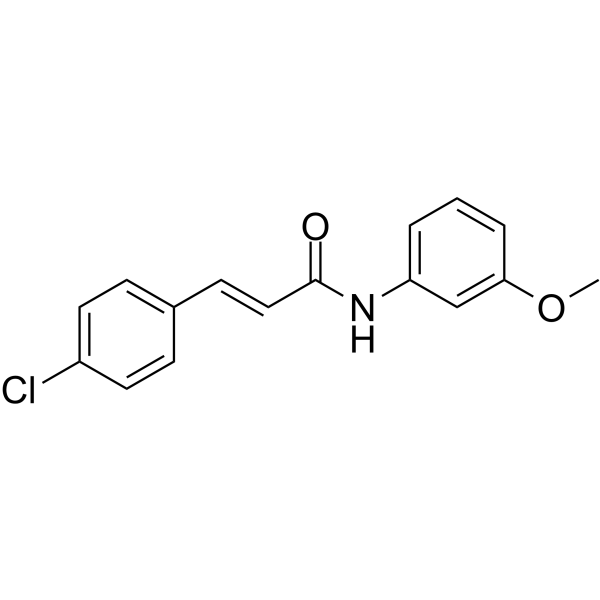
SKF-96365 hydrochloride is a TRPC channel antagonist and store-operated calcium entry (SOCE) inhibitor. SKF-96365 hydrochloride reduces calcium ion influx by inhibiting the activity and expression of TRPC6, STIM1 and Orai1. SKF-96365 hydrochloride inhibits voltage-gated sodium current (cardiac INa/NaV1.5) and slows myocardial conduction. SKF-96365 hydrochloride inhibits phosphorylation/activation of CaMKIIγ and suppresses the downstream AKT signaling pathway. SKF-96365 hydrochloride induces G2/M phase cell cycle arrest, apoptosis and cytoprotective autophagy in colorectal cancer cells. SKF-96365 hydrochloride alleviates allergic rhinitis symptoms by reducing inflammatory cytokine levels. SKF-96365 hydrochloride reduces intracellular calcium overload, inhibits Homer1 expression, prevents nuclear damage and suppresses apoptosis. SKF-96365 hydrochloride inhibits the growth of colorectal cancer xenografts in nude mice. SKF-96365 hydrochloride is applicable to research related to allergic rhinitis, colorectal cancer, Parkinson's disease, persistent spontaneous nociception and hyperalgesia.
For research use only. We do not sell to patients.
- Purity : 99.93%
- CAS No.: 130495-35-1
- Formula: C22H27ClN2O3
- Molecular Weight:402.91
-
Storage:
4°C, sealed storage, away from moisture
* In solvent : -80°C, 6 months; -20°C, 1 month (sealed storage, away from moisture)

To place orders, for customer services and technical support, please contact: MedChemExpress USA
Tel: 609-228-6898 E-mail: [email protected] [email protected]


-
 Biological Activity
-
Chemical Information
-
Solvent & Solubility
- Purity & Documentation
- References
-
 Help & FAQs


Publications Citing Use of MedChemExpress (MCE) SKF-96365 (hydrochloride)
More- Nat Immunol. 2026 May;27(5):949-960. [Abstract]
- Bioact Mater. 2021 Apr 21;6(11):4073-4082. [Abstract]
- Autophagy. 2021 Nov;17(11):3592-3606. [Abstract]
- ACS Nano. 2026 Jul 7.
- Theranostics. 2021 May 25;11(15):7379-7390. [Abstract]
- Theranostics. 2021 Mar 5;11(10):5045-5060. [Abstract]
- Theranostics. 2020 May 16;10(14):6483-6499. [Abstract]
- Adv Sci (Weinh). 2025 Dec 22:e09056. [Abstract]
- Adv Sci (Weinh). 2022 Oct 19;e2202857. [Abstract]
- Cell Death Differ. 2025 Nov 10. [Abstract]
- Stem Cell Res Ther. 2025 Apr 24;16(1):206. [Abstract]
- Cell Rep. 2024 Apr 23;43(4):114095. [Abstract]
- Br J Pharmacol. 2021 Jan;178(2):346-362. [Abstract]
- J Agric Food Chem. 2024 Jan 10;72(1):140-152. [Abstract]
- Cells. 2023 May 24;12(11):1461. [Abstract]
- Eur J Pharmacol. 2025 Sep 15:1003:177900. [Abstract]
- Acta Physiol. 2023 Apr;237(4):e13926. [Abstract]
- Front Pharmacol. 2021 Jul 14:12:684538. [Abstract]
- Chem Biol Interact. 2025 Sep 5:418:111577. [Abstract]
- J Neuroendocrinol. 2020 Jun;32(6):e12876. [Abstract]
- Mol Cell Biochem. 2024 Sep;479(9):2365-2379. [Abstract]
- Acta Biochim Biophys Sin (Shanghai). 2019 Aug 5;51(8):767-777. [Abstract]
- Front Physiol. 2021 Mar 9:12:639857. [Abstract]
- FASEB J. 2019 Sep;33(9):9775-9784. [Abstract]
- J Pharm Pharmacol. 2023 Dec 8;75(12):1530-1543. [Abstract]
- Biochem Biophys Res Commun. 2025 Sep 19:785:152676. [Abstract]
- Physiol Rep. 2026 Jun;14(11):e70975. [Abstract]
- Res Sq. 2024 Jun 11.
- Heliyon. 2024 Jul 6;10(14):e33994. [Abstract]
 Customer Validation & Images

-
WB
-
IF
-
RT-PCR
-
WB
-
Cell Migration/Invasion Assay
All Calcium Channel Isoforms
More

Biological Activity
Description
In Vitro
SKF-96365 (0-10 μM; applied until steady-state inhibition is reached) hydrochloride inhibits hNaV1.5 currents stably expressed in HEK 293 cells, with an IC50 of 0.94 μM[2].
SKF-96365 (0-20 μM) hydrochloride dose-dependently inhibits store-operated calcium entry in human colorectal cancer cell lines HCT116 and HT29[3].
SKF-96365 (0-40 μM, 48-72 h) hydrochloride inhibits the growth of human colorectal cancer cells HCT116 (IC50 = 10.88 μM) and HT29 (IC50 = 14.56 μM), and exhibits significantly lower toxicity against normal colonic epithelial cells NCM460[3].
SKF-96365 (0-20 μM, 48 h) hydrochloride induces G2/M cell cycle arrest in human colorectal cancer cells HCT116 and HT29 by regulating key G2/M transition proteins, including upregulating p21waf/Cip1 and downregulating p-Cdc25c, Cdc25c, and Cyclin B[3].
SKF-96365 (10 μM, 0-24 h) hydrochloride induces apoptosis in human colorectal cancer cell lines HCT116 and HT29 via the endogenous mitochondrial pathway, a process characterized by early (12 h) mitochondrial membrane depolarization, Bax translocation and cytochrome c release, followed by caspase activation and marked apoptosis (24 h)[3].
SKF-96365 (0-20 μM, 12 h) hydrochloride induces cytoprotective autophagy in human colorectal cancer cells HCT116 and HT29. This effect appears as early as 12 h (prior to apoptosis) and antagonizes apoptosis by sequestering mitochondria into autophagosomes to reduce cytosolic cytochrome c levels[3].
SKF-96365 (0-20 μM, 24 h) hydrochloride inhibits the AKT/mTOR signaling pathway and the calcium/Ca2+/CaMKIIγ/AKT signaling pathway in human colorectal cancer cell lines HCT116 and HT29[3].
SKF-96365 (1-50 μM, 24 h) hydrochloride significantly increases the survival rate of PC12 cells treated with MPP+, reduces LDH release, alleviates nuclear damage, membrane damage, and late apoptotic cell death, mitigates intracellular calcium overload, and decreases the mRNA and protein expression levels of Homer1[4].
SKF-96365 (1-10 µM) hydrochloride inhibits melittin-induced inward currents in acutely isolated small and medium-sized dorsal root ganglion cells of rats in a dose-dependent manner[5].
SKF-96365 (10 µM) hydrochloride inhibits melittin-induced intracellular Ca2+ elevation, and the proportion of cells exhibiting this inhibitory effect reaches 46.5% in acutely isolated rat dorsal root ganglion cells sensitive to melittin[5].
MedChemExpress (MCE) has not independently confirmed the accuracy of these methods. They are for reference only.
-
Cell Line:PC12 (adrenal gland pheochromocytoma) cells
-
Concentration:1 μM, 10 μM, 50 μM
-
Incubation Time:30 min pretreatment before MPP+ insult; 24 h post-MPP+ measurement
-
Result:Significantly inhibited the MPP+-induced decrease in cell viability at 10 μM and 50 μM, with viability levels significantly higher than the MPP+-treated vehicle group.
Did not show a significant effect on cell viability compared to the vehicle group at 1 μM.
Did not affect cell viability in untreated normal PC12 cells at all tested concentrations.
-
Cell Line:PC12 cells
-
Concentration:50 μM
-
Incubation Time:30 min pretreatment before MPP+ insult; 24 h post-MPP+ flow cytometry
-
Result:Increased the percentage of normal (AV-/PI-) cells compared to the MPP+-treated vehicle group.
Decreased the percentage of late apoptotic (AV+/PI+) cells compared to the MPP+-treated vehicle group.
Showed no significant effect on necrotic (AV-/PI+) cells.
-
Cell Line:PC12 cells
-
Concentration:50 μM
-
Incubation Time:30 min pretreatment before MPP+ insult; measured at 3 h, 6 h, 12 h post-MPP+
-
Result:Significantly decreased Homer1 mRNA expression in a time-dependent manner, with significant reductions observed at 3 h, 6 h, and 12 h post-MPP+ insult compared to the MPP+-treated vehicle group.
MPP+ alone did not alter Homer1 mRNA expression compared to untreated control cells.
-
Cell Line:PC12 cells
-
Concentration:50 μM
-
Incubation Time:30 min pretreatment before MPP+ insult; 24 h post-MPP+ measurement
-
Result:Significantly decreased Homer1 protein expression in a time-dependent manner, with significant reductions observed at 3 h, 6 h, and 12 h post-MPP+ insult compared to the MPP+-treated vehicle group.
MPP+ alone did not alter Homer1 protein expression compared to untreated control cells.
In Vivo
SKF-96365 (20 mg/kg; i.p.; once daily for 14 consecutive days) hydrochloride inhibits the growth of colorectal cancer xenografts in athymic BALB/c nude mice by inducing cell cycle arrest, apoptosis and protective autophagy via suppressing the CaMKIIγ/AKT-mediated pathway[3].
MedChemExpress (MCE) has not independently confirmed the accuracy of these methods. They are for reference only.
-
Animal Model:BALB/c (female; allergic rhinitis model via intraperitoneal sensitization and intranasal challenge)[1]
-
Dosage:200 μg; 400 μg
-
Administration:i.n.; once daily; 8 days (1 hour before ovalbumin challenge)
-
Result:Significantly reduced frequencies of sneezing and nasal rubbing compared to untreated allergic rhinitis mice, with the 400 μg dose being more effective than the 200 μg dose.
Significantly decreased serum levels of OVA-specific IgE, histamine, and LTC4 compared to untreated allergic rhinitis mice, with greater reductions observed in the 400 μg group.
Significantly decreased nasal lavage fluid levels of OVA-specific IgE, IL-4, IL-5, IL-6, IL-13, and IL-33 compared to untreated allergic rhinitis mice, with greater reductions observed in the 400 μg group.
Significantly decreased counts of total inflammatory cells, eosinophils, macrophages, neutrophils, and lymphocytes in nasal lavage fluid compared to untreated allergic rhinitis mice, with greater reductions observed in the 400 μg group.
Reduced eosinophil counts in nasal mucosa compared to untreated allergic rhinitis mice, with the 400 μg dose producing more pronounced effects than the 200 μg dose.
Downregulated TRPC6 immunolabeling in nasal mucosa compared to untreated allergic rhinitis mice, with the 400 μg dose producing more pronounced effects than the 200 μg dose.
Decreased nasal mucosa mRNA levels of TRPC6, STIM1, and Orai1 compared to untreated allergic rhinitis mice, with the 400 μg dose producing more pronounced effects than the 200 μg dose.


Chemical Information
-
CAS No. 130495-35-1
-
Appearance Solid
-
Molecular Weight 402.91
-
Formula C22H27ClN2O3
-
Color White to light yellow
-
SMILES
COC1=CC=C(CCCOC(C2=CC=C(OC)C=C2)CN3C=CN=C3)C=C1.[H]Cl
-
Shipping
Room temperature in continental US; may vary elsewhere.
-
Storage
4°C, sealed storage, away from moisture
* In solvent : -80°C, 6 months; -20°C, 1 month (sealed storage, away from moisture)


Publications (29)
-
Journal Impact Factor
-
Most Recent
-
Nat Immunol
Lipid asymmetry disruption by XKR8 orchestrates neutrophil extracellular trap formation and inhibits fungal infection. [Abstract]2026 May;27(5):949-960. PMID: 41781710 -
Bioact Mater
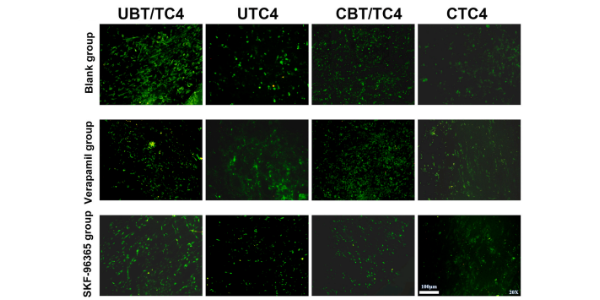
Improved activity of MC3T3-E1 cells by the exciting piezoelectric BaTiO3/TC4 using low-intensity pulsed ultrasound. [Abstract]2021 Apr 21;6(11):4073-4082. PMID: 33997494
SKF-96365 (hydrochloride) purchased from MedChemExpress. Usage Cited in: Bioact Mater. 2021 Apr 21;6(11):4073-4082. [Abstract]
Intracellular calcium fluorescence staining of MC3T3-E1 cells on day 1 in a blank and samples inhibited by verapamil (10 μmol/L, 24 h) or SKF-96365 (10 μmol/L, 24 h).
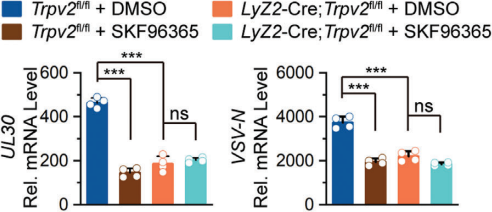
SKF-96365 (hydrochloride) purchased from MedChemExpress. Usage Cited in: Bioact Mater. 2021 Apr 21;6(11):4073-4082. [Abstract]
SKF-96365 (100 μM; 2 h) significantly inhibits the mRNA levels of the HSV-1 UL30 gene in Trpv2fl/fl BMDCs but not in Lyz2-Cre;Trpv2fl/fl BMDCs.
-
Autophagy
Cannabidiol inhibits human glioma by induction of lethal mitophagy through activating TRPV4. [Abstract]2021 Nov;17(11):3592-3606. PMID: 33629929 -
-
Theranostics
TRPV2-spike protein interaction mediates the entry of SARS-CoV-2 into macrophages in febrile conditions. [Abstract]2021 May 25;11(15):7379-7390. PMID: 34158856 -
Theranostics
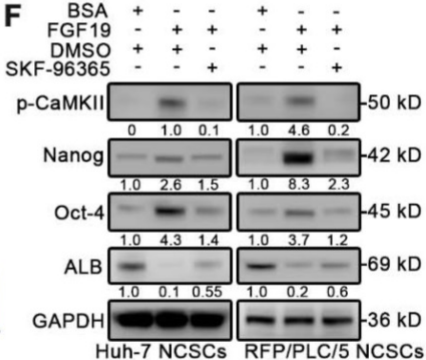
FGF19/SOCE/NFATc2 signaling circuit facilitates the self-renewal of liver cancer stem cells. [Abstract]2021 Mar 5;11(10):5045-5060. PMID: 33754043
SKF-96365 (hydrochloride) purchased from MedChemExpress. Usage Cited in: Theranostics. 2021 Mar 5;11(10):5045-5060. [Abstract]
WB were applied to measure levels of Nanog, Oct-4, Sox2 and ALB in FGF19 (100 ng/ml) treated NCSCs, in the presence of SKF-96365 (5 µM) or not.
-
Theranostics
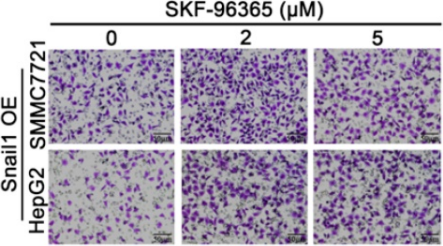
STIM1 is a metabolic checkpoint regulating the invasion and metastasis of hepatocellular carcinoma. [Abstract]2020 May 16;10(14):6483-6499. PMID: 32483465
SKF-96365 (hydrochloride) purchased from MedChemExpress. Usage Cited in: Theranostics. 2020 May 16;10(14):6483-6499. [Abstract]
Transwell assays were performed to detect the effects of different concentrations SKF-96365 on the invasion ability of Snail1 OE-SMMC7721 and HepG2 cells. The results show that SKF-96365 (2-5 μM) enhances the invasive ability of hepatocellular carcinoma cells with Snail1 overexpression.
-
Adv Sci (Weinh)
Hyperviscous Diabetic Bone Marrow Niche Impairs BMSCs Osteogenesis via TRPV2-Mediated Cytoskeletal-Nuclear Mechanotransduction. [Abstract]2025 Dec 22:e09056. PMID: 41431162 -
Adv Sci (Weinh)
The Transient Receptor Potential Vanilloid 2 (TRPV2) Channel Facilitates Virus Infection Through the Ca2+ -LRMDA Axis in Myeloid Cells. [Abstract]2022 Oct 19;e2202857. PMID: 36261399 -
Cell Death Differ
OR2T6 modulates autophagy through the PPP3CA-mediated pathways to suppress gastric cancer. [Abstract]2025 Nov 10. PMID: 41214150 -
Stem Cell Res Ther
2025 Apr 24;16(1):206. PMID: 40275329
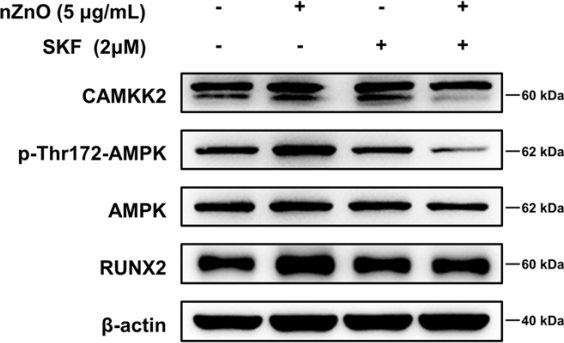
SKF-96365 (hydrochloride) purchased from MedChemExpress. Usage Cited in: Stem Cell Res Ther. 2025 Apr 24;16(1):206. [Abstract]
Western blot analysis of CaMKK2, AMPK activation and RUNX2 in MSCs after osteogenic differentiation for 72 h treated with TRP channel blocker SKF-96,365 hydrochloride (SKF, 2 µM) under control and nZnO (5 µg/mL) conditions.
-
Cell Rep
Viral infection and spread are inhibited by the polyubiquitination and downregulation of TRPV2 channel by the interferon-stimulated gene TRIM21. [Abstract]2024 Apr 23;43(4):114095. PMID: 38613787 -
Br J Pharmacol
Small intestinal glucose and sodium absorption through calcium-induced calcium release and store-operated Ca2+ entry mechanisms. [Abstract]2021 Jan;178(2):346-362. PMID: 33080043 -
J Agric Food Chem
miR-2765 Modulates the Seasonal Polyphenism in Cacopsylla chinensis by Targeting a Novel Cold Rreceptor CcTRPC3. [Abstract]2024 Jan 10;72(1):140-152. PMID: 38118125 -
Cells
Impact of Short-Term (+)-JQ1 Exposure on Mouse Aorta: Unanticipated Inhibition of Smooth Muscle Contractility. [Abstract]2023 May 24;12(11):1461. PMID: 37296583 -
Eur J Pharmacol
Novel mechanisms of metformin-induced vasorelaxation of mesenteric arterioles via endothelium-dependent hyperpolarization to treat murine colitis. [Abstract]2025 Sep 15:1003:177900. PMID: 40617384 -
Acta Physiol
2023 Apr;237(4):e13926. PMID: 36606511 -
Front Pharmacol
Role of Serosal TRPV4-Constituted SOCE Mechanism in Secretagogues-Stimulated Intestinal Epithelial Anion Secretion. [Abstract]2021 Jul 14:12:684538. PMID: 34335254 -
Chem Biol Interact
Platycodin D reverses tumor necrosis factor-α-induced endothelial dysfunction by increasing nitric oxide through G protein-coupled estrogen receptor-mediated eNOS activity. [Abstract]2025 Sep 5:418:111577. PMID: 40447174 -
J Neuroendocrinol
The caudal neurosecretory system: A novel thermosensitive tissue and its signal pathway in olive flounder (Paralichthys olivaceus). [Abstract]2020 Jun;32(6):e12876. PMID: 32542811 -
Mol Cell Biochem
Inhibition of STIM1 alleviates high glucose-induced proliferation and fibrosis by inducing autophagy in mesangial cells. [Abstract]2024 Sep;479(9):2365-2379. PMID: 37736800 -
Acta Biochim Biophys Sin (Shanghai)
Combined bone marrow stromal cells and oxiracetam treatments ameliorates acute cerebral ischemia/reperfusion injury through TRPC6. [Abstract]2019 Aug 5;51(8):767-777. PMID: 31236585 -
Front Physiol
Cyclopiazonic Acid-Induced Ca2+ Store Depletion Initiates Endothelium-Dependent Hyperpolarization-Mediated Vasorelaxation of Mesenteric Arteries in Healthy and Colitis Mice. [Abstract]2021 Mar 9:12:639857. PMID: 33767636 -
FASEB J
2019 Sep;33(9):9775-9784. PMID: 31166814 -
J Pharm Pharmacol
Homoplantaginin attenuates high glucose-induced vascular endothelial dysfunction via inhibiting store-operated calcium entry channel and endoplasmic reticulum stress. [Abstract]2023 Dec 8;75(12):1530-1543. PMID: 37774413 -
Biochem Biophys Res Commun
Glucose transports in the ileum: mechanism, regulation and physiological role of ileal glucose absorption. [Abstract]2025 Sep 19:785:152676. PMID: 41005286 -
Physiol Rep
Monosodium glutamate-mediated Ca2+-dependent intestinal epithelial ion transports in health and IBS-D in male mice. [Abstract]2026 Jun;14(11):e70975. PMID: 42281391 -
-
Heliyon
N,N,N',N'-Tetrakis(2-pyridylmethyl)ethylenediamine induces endothelium-dependent hyperpolarization-mediated vasorelaxation via store-operated calcium entry mechanism in healthy and intestinal inflammatory mice. [Abstract]2024 Jul 6;10(14):e33994. PMID: 39108891


Solvent & Solubility
In Vitro:
H2O : 100 mg/mL (248.19 mM; Need ultrasonic; DMSO can inactivate SKF-96365 (hydrochloride)'s activity)
Please refer to the solubility information to select the appropriate solvent. Once prepared, please aliquot and store the solution to prevent product inactivation from repeated freeze-thaw cycles.
Storage method and period of stock solution: -80°C, 6 months; -20°C, 1 month (sealed storage, away from moisture). When stored at -80°C, please use it within 6 months. When stored at -20°C, please use it within 1 month.
* Note: If you choose water as the stock solution, please dilute it to the working solution, then filter and sterilize it with a 0.22 μm filter before use.
Please refer to the solubility information to select the appropriate solvent. Once prepared, please aliquot and store the solution to prevent product inactivation from repeated freeze-thaw cycles.
Storage method and period of stock solution: -80°C, 6 months; -20°C, 1 month (sealed storage, away from moisture). When stored at -80°C, please use it within 6 months. When stored at -20°C, please use it within 1 month.
* Note: If you choose water as the stock solution, please dilute it to the working solution, then filter and sterilize it with a 0.22 μm filter before use.
Concentration (start) × Volume (start) = Concentration (final) × Volume (final)
In Vivo:
For the following dissolution methods, please prepare the working solution directly:
It is recommended to prepare fresh solutions and use them promptly within a short period of time.
The percentages shown for the solvents indicate their volumetric ratio in the final prepared solution. If precipitation or phase separation occurs during preparation, heat and/or sonication can be used to aid dissolution.
Add each solvent one by one: Saline
Solubility: 100 mg/mL (248.19 mM); Clear solution; Need ultrasonic


Purity & Documentation
-
Data Sheet (286 KB)
-
SDS (394 KB)
- English - EN (394 KB)
- Français - FR (394 KB)
- Deutsch - DE (394 KB)
- Norwegian - NO (394 KB)
- Español - ES (394 KB)
- Swedish - SV (394 KB)
- Italian - IT (394 KB)
- Korean - KR (394 KB)
- Portuguese - PT (394 KB)
-
Handling Instructions (2659 KB)
References
[1]. Ba G, et al. Therapeutic effects of SKF-96365 on murine allergic rhinitis induced by OVA. Int J Immunopathol Pharmacol. 2021;35:20587384211015054. [Content Brief]
[2]. Chen KH, et al. SKF-96365 strongly inhibits voltage-gated sodium current in rat ventricular myocytes. Pflugers Arch. 2015;467(6):1227-1236. [Content Brief]
[3]. Jing Z, et al. SKF-96365 activates cytoprotective autophagy to delay apoptosis in colorectal cancer cells through inhibition of the calcium/CaMKIIγ/AKT-mediated pathway. Cancer Lett. 2016;372(2):226-238. [Content Brief]
[4]. Chen T, et al. Protective effects of SKF-96365, a non-specific inhibitor of SOCE, against MPP+-induced cytotoxicity in PC12 cells: potential role of Homer1. PLoS One. 2013;8(1):e55601. [Content Brief]
[5]. Ding J, et al. Effects of SKF-96365, a TRPC inhibitor, on melittin-induced inward current and intracellular Ca2+ rise in primary sensory cells. Neurosci Bull. 2011;27(3):135-142. [Content Brief]


Complete Stock Solution Preparation Table
Please refer to the solubility information to select the appropriate solvent. Once prepared, please aliquot and store the solution to prevent product inactivation from repeated freeze-thaw cycles.
Storage method and period of stock solution: -80°C, 6 months; -20°C, 1 month (sealed storage, away from moisture). When stored at -80°C, please use it within 6 months. When stored at -20°C, please use it within 1 month.
| Optional Solvent | Concentration Solvent Mass | 1 mg | 5 mg | 10 mg | 25 mg |
|---|---|---|---|---|---|
| H2O | 1 mM | 2.4819 mL | 12.4097 mL | 24.8194 mL | 62.0486 mL |
| 5 mM | 0.4964 mL | 2.4819 mL | 4.9639 mL | 12.4097 mL | |
| 10 mM | 0.2482 mL | 1.2410 mL | 2.4819 mL | 6.2049 mL | |
| 15 mM | 0.1655 mL | 0.8273 mL | 1.6546 mL | 4.1366 mL | |
| 20 mM | 0.1241 mL | 0.6205 mL | 1.2410 mL | 3.1024 mL | |
| 25 mM | 0.0993 mL | 0.4964 mL | 0.9928 mL | 2.4819 mL | |
| 30 mM | 0.0827 mL | 0.4137 mL | 0.8273 mL | 2.0683 mL | |
| 40 mM | 0.0620 mL | 0.3102 mL | 0.6205 mL | 1.5512 mL | |
| 50 mM | 0.0496 mL | 0.2482 mL | 0.4964 mL | 1.2410 mL | |
| 60 mM | 0.0414 mL | 0.2068 mL | 0.4137 mL | 1.0341 mL | |
| 80 mM | 0.0310 mL | 0.1551 mL | 0.3102 mL | 0.7756 mL | |
| 100 mM | 0.0248 mL | 0.1241 mL | 0.2482 mL | 0.6205 mL |
* Note: If you choose water as the stock solution, please dilute it to the working solution, then filter and sterilize it with a 0.22 μm filter before use.


SKF-96365 (hydrochloride) Related Classifications
HY-100001 Related Classifications
 Powered by Bioz